

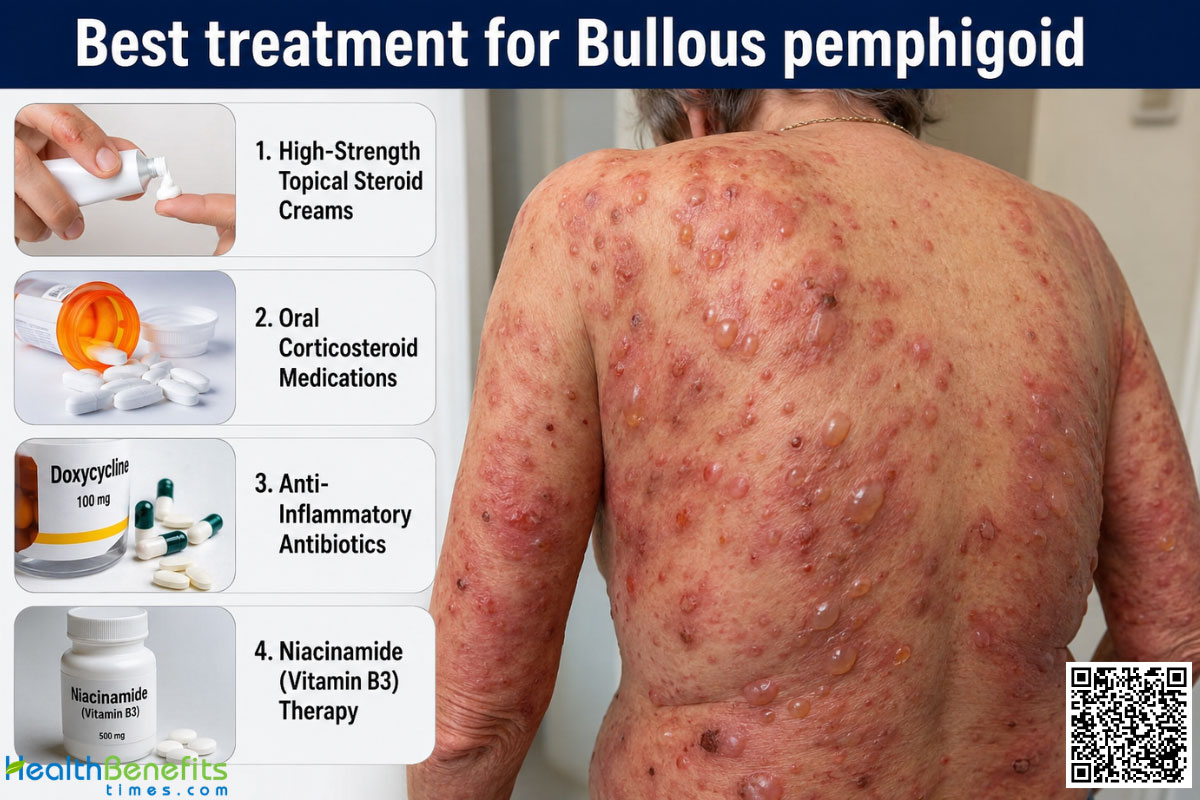
Bullous pemphigoid is a chronic autoimmune disorder that causes large, fluid-filled blisters, known as bullae, to form on the skin. This condition primarily affects older adults, most commonly developing in individuals over the age of 60 1. The disease occurs when the immune system mistakenly produces antibodies that attack the vital structural proteins responsible for anchoring the outer layer of skin (epidermis) to the underlying tissue (dermis) 2.
As these skin layers detach, a localized inflammatory response triggers intense itching and the eruption of tight, swollen blisters. These skin lesions characteristically appear on the folding areas of the body, particularly the lower abdomen, inner thighs, and armpits 3. While the precise cause of this immune malfunction remains unknown, clinical research indicates that the condition can be triggered by a combination of underlying genetic predisposition, specific prescription medications, and environmental factors 4.
Causes of bullous pemphigoid
1. Autoimmune System Malfunction
The primary underlying cause is an inappropriate immune system response where the body produces autoantibodies that mistakenly attack the structural proteins holding the upper and lower layers of skin together 5.
2. Prescription Medications
The onset of the disease can be drug-induced, most strongly associated with diabetes medications known as DPP-4 inhibitors (gliptins), certain diuretics used to reduce fluid buildup, penicillin-based antibiotics, and specific systemic immunotherapies used in cancer treatment 6.
3. Neurological Disorders
Clinical studies establish a significant association between this skin condition and degenerative diseases of the central nervous system, particularly Parkinson’s disease, Alzheimer’s disease, various forms of dementia, and a history of strokes 7.
4. Physical Skin Trauma
In some cases, localized outbreaks of the blisters are directly triggered by intense external stress to the skin, including ultraviolet (UV) light therapy, localized radiation therapy for cancer, severe thermal burns, or trauma from surgical incisions 8.
5. Co-existing Skin Conditions
A preceding history of other chronic, inflammatory skin diseases—most notably psoriasis—can alter the skin’s immune environment and increase the likelihood of developing these blistering eruptions 9.
Symptoms of bullous pemphigoid
1. Intense Itching (Pruritus)
Severe, relentless itching is typically the earliest warning sign of the disorder, frequently developing weeks or even months before any visible blisters begin to form on the skin 1.
2. Firm, Fluid-Filled Blisters
The hallmark physical symptom is the eruption of large, thick-walled blisters that are highly pressurized and do not easily break or pop when touched 10. The fluid contained within these blisters is usually clear, although it can occasionally become clouded or tinged with blood 11.
3. Hive-Like Skin Rashes
Before or during the blister phase, individuals often develop raised, red, and swollen patches of skin that closely resemble hives or severe eczema eruptions 5.
4. Localized Skin Eruptions
The rashes and subsequent blisters predominantly cluster in the natural creases and bending areas of the body, most commonly affecting the lower abdomen, groin, inner thighs, and armpits 1.
5. Mouth and Mucosal Sores
While less common than external skin lesions, approximately 10 to 30 percent of affected individuals will develop painful blisters and open sores on the mucous membranes lining the inside of the mouth, throat, or other mucosal surfaces 1.
Best treatment for bullous pemphigoid
1. High-Strength Topical Steroid Creams
How it may help
Potent topical corticosteroids, such as clobetasol propionate, are applied directly to the skin to halt the immune system’s localized attack. By reducing inflammation precisely where blisters form, these creams effectively heal active lesions, prevent new eruptions, and provide rapid relief from severe itching without unnecessarily suppressing the entire body’s immune system.
What research says
Extensive clinical trials establish super-potent topical corticosteroids as the optimal first-line treatment. Research concludes that using high-strength topical creams is highly effective at controlling the disease and significantly reduces the risk of death, severe infections, and major heart complications compared to standard oral steroid pills 12.
How to use it safely
The cream is typically applied to all affected skin areas daily. Once new blisters stop forming and existing lesions heal, the application frequency is gradually reduced over several months to safely maintain remission and prevent the disease from returning 13.
Potential precautions or side effects
Prolonged application can cause localized skin thinning, stretch marks, and discoloration. However, topical treatments successfully avoid the severe, life-threatening internal complications associated with long-term systemic oral steroid use 14.
2. Oral Corticosteroid Medications
How it may help
Oral corticosteroids, such as prednisone, work to suppress the overactive immune response throughout the entire body. These daily pills rapidly reduce widespread inflammation, stop the formation of new fluid-filled blisters, and relieve intense itching in severe or rapidly spreading cases where skin creams alone are insufficient.
What research says
Clinical guidelines state that systemic corticosteroids effectively control widespread disease, with a daily starting dose of 0.5 milligrams per kilogram of body weight achieving remission in most patients 10. However, research confirms prolonged use carries higher mortality rates compared to topical therapies 12.
How to use it safely
If your doctor prescribes oral steroids, take the exact dosage daily to establish initial control. Once blisters stop forming, the dosage must be slowly and carefully reduced over many months to safely taper off the medication and prevent sudden disease flare-ups 5.
Potential precautions or side effects
Long-term oral steroid use strongly increases the risk of severe infections, bone weakening, high blood pressure, and diabetes, requiring close medical monitoring throughout the entire treatment process 1.
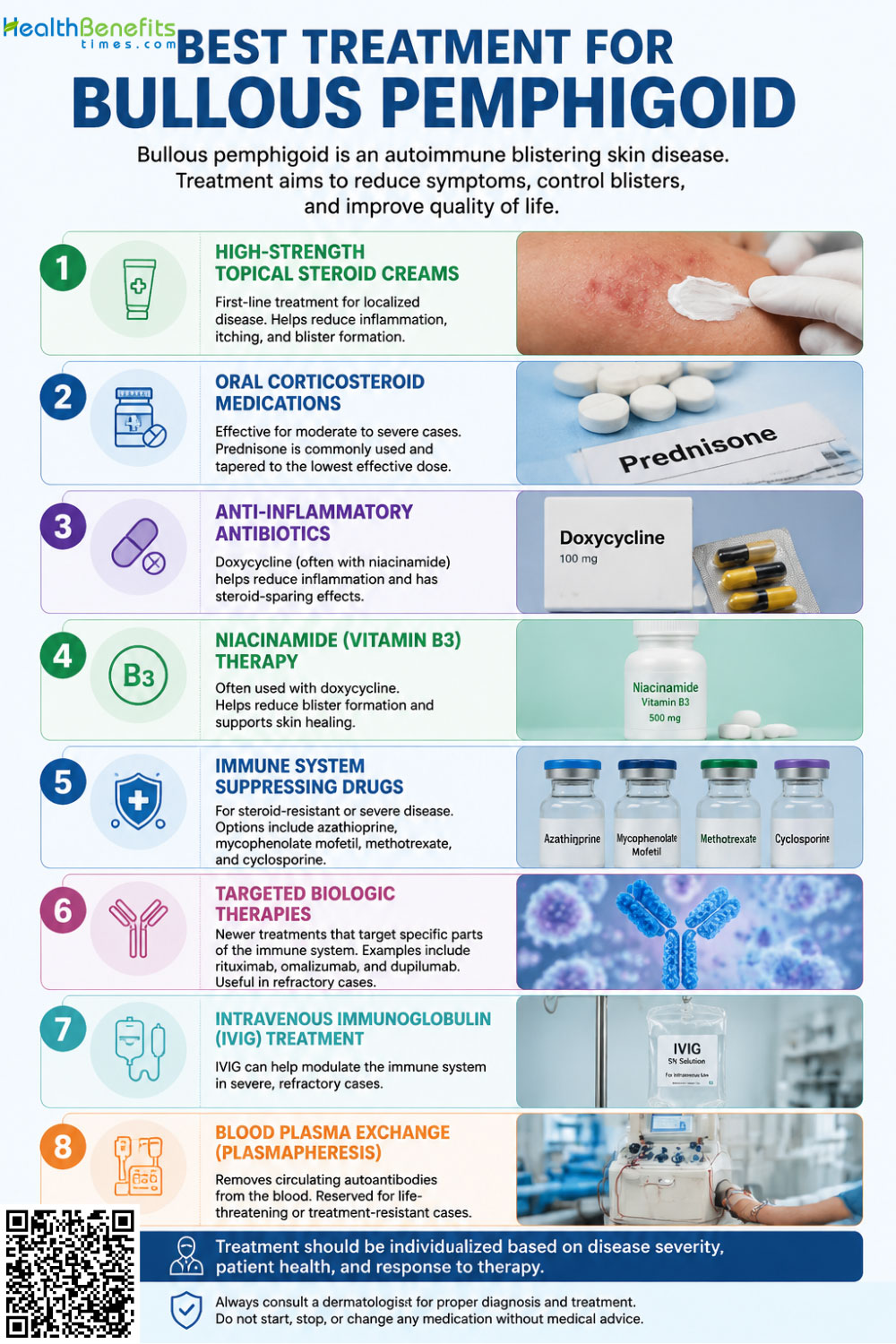
3. Anti-Inflammatory Antibiotics
How it may help
Antibiotics in the tetracycline family, specifically doxycycline, provide strong anti-inflammatory effects rather than just fighting bacterial infections. These medications help stop the immune system from attacking the skin by suppressing the inflammatory response at the cellular level, thereby preventing the formation of new blisters 15.
What research says
A major clinical trial found that starting treatment with daily doxycycline is nearly as effective as oral steroids for short-term blister control. More importantly, research confirms that doxycycline is considerably safer long-term, causing significantly fewer severe, life-threatening, or fatal side effects compared to standard oral steroids 16.
How to use it safely
If your doctor prescribes doxycycline, take the standard dose of 200 milligrams daily as directed to effectively control your symptoms 16. You should strictly follow the treatment schedule and attend regular medical checkups to monitor your healing progress.
Potential precautions or side effects
These medications frequently cause stomach upset, headaches, and extreme sun sensitivity 17. You must use strict sun protection daily to prevent severe, light-induced skin damage and rashes 18.
4. Niacinamide (Vitamin B3) Therapy
How it may help
Niacinamide, a form of vitamin B3, is almost always combined with tetracycline antibiotics. Together, they block the chemical signals that attract damaging white blood cells to the skin. This combination efficiently stops localized inflammation and prevents new blisters without dangerously suppressing the entire immune system 15.
What research says
Clinical trials demonstrate that combining niacinamide with tetracycline is a highly effective alternative to oral steroids. Research confirms this therapy achieves comparable disease control but results in a significantly better survival rate and fewer severe side effects than prolonged oral steroid use 19 20.
How to use it safely
If your doctor prescribes this treatment, take the pills exactly as directed, typically in multiple daily doses. Drink plenty of water to prevent throat irritation. Once your skin clears, your doctor will gradually decrease your dose over several months to safely maintain remission 19.
Potential precautions or side effects
This therapy can cause stomach upset, nausea, and headaches. Because the treatment involves a tetracycline antibiotic, you must strictly use sun protection to prevent severe skin burns 17.
5. Immune System Suppressing Drugs
How it may help
Immune-suppressing medicines, such as azathioprine and methotrexate, are powerful treatments that lower your need for steroids 21. They work by calming the body’s overactive immune response and stopping the production of harmful antibodies, which helps heal current blisters and prevents new skin damage 22.
What research says
Clinical studies show that these medications are highly effective at reducing the need for long-term, high-dose steroids, which helps prevent severe steroid-related health problems 23. Research also confirms that using these immune-suppressing drugs significantly lowers the risk of the disease returning and helps maintain long-term healing 21.
How to use it safely
Take these medications exactly as prescribed, usually alongside a slowly decreasing dose of steroids. You must attend regular medical appointments for routine blood tests to closely monitor your liver and blood health. Your doctor will carefully adjust your dose based on your specific test results and healing progress 22.
Potential precautions or side effects
Because these drugs weaken the immune system, they significantly increase your risk of severe infections. Other potential side effects include liver damage, stomach upset, and dangerously low blood counts 22.
6. Targeted Biologic Therapies
How it may help
Targeted biologic therapies—such as rituximab, omalizumab, and dupilumab—disrupt specific immune pathways causing the disease. Rituximab eliminates immune cells that produce harmful antibodies, omalizumab blocks allergic inflammatory responses, and dupilumab inhibits inflammatory signals to stop blister formation and rapidly reduce severe itching 24.
What research says
Systematic reviews show these biologics achieve complete healing in nearly 70 percent of patients 25. Rituximab provides long-lasting healing but carries a higher risk of disease return. Dupilumab and omalizumab are emerging as highly effective alternatives with significantly lower rates of severe adverse events 24.
How to use it safely
These therapies are administered through intravenous infusions or injections under the skin on a strict clinical schedule 24. They are often prescribed to reduce reliance on oral steroids. Patients must attend regular checkups to monitor immune function and track healing progress 26.
Potential precautions or side effects
Because rituximab severely weakens parts of the immune system, it significantly increases the risk of dangerous infections 25. Omalizumab and dupilumab may cause localized injection-site reactions.
7. Intravenous Immunoglobulin (IVIG) Treatment
How it may help
Intravenous immunoglobulin contains healthy antibodies from blood donors. It treats bullous pemphigoid by neutralizing harmful antibodies attacking the skin and accelerating their removal from the body 27. IVIG also calms the immune system by altering chemical signals, reducing skin inflammation and preventing new blisters without traditional immunosuppression risks (Li et al., 2018) 27.
What research says
Clinical guidelines and studies endorse IVIG as an effective, safe alternative for severe or treatment-resistant bullous pemphigoid. Research demonstrates that IVIG rapidly decreases harmful autoantibody levels and significantly reduces the need for long-term oral steroids 28. Many patients achieve sustained healing with fewer life-threatening side effects compared to prolonged corticosteroid therapy 29.
How to use it safely
IVIG is administered slowly through a vein at a clinic. A standard dose is typically spread over two to five days and repeated monthly 30. It is often used alongside a decreasing dose of steroids to safely maintain disease control and prevent relapses 28.
Potential precautions or side effects
While generally safe, IVIG may cause temporary headaches, nausea, and vomiting 29. Severe allergic reactions or fluid overload rarely occur, requiring close medical monitoring during the infusion 30.
8. Blood Plasma Exchange (Plasmapheresis)
How it may help
Plasmapheresis works by physically filtering the blood to rapidly remove circulating autoantibodies that mistakenly attack the skin. By clearing these harmful antibodies from the bloodstream, this therapy can quickly halt new blister formation, promote healing of existing lesions, and provide immediate relief from intense itching 31.
What research says
Clinical studies confirm that plasma exchange successfully lowers autoantibody levels and controls symptoms in treatment-resistant cases. Furthermore, current dermatological guidelines recognize plasmapheresis as an effective adjunctive rescue therapy for severe bullous pemphigoid when high-dose systemic corticosteroids and standard immunosuppressant medications fail to stop disease progression 32.
How to use it safely
This procedure involves connecting to a machine that removes your plasma and substitutes it with a replacement solution like albumin. It is typically performed over multiple sessions and must be combined with standard immunosuppressive medications to prevent harmful autoantibodies from rapidly returning after filtration 33.
Potential precautions or side effects
This treatment occasionally causes temporary drops in blood calcium levels, bleeding abnormalities, or allergic reactions to replacement fluids, requiring continuous medical monitoring during the entire procedure 31.
Foods to Avoid When You suffer from Bullous pemphigoid
Clinical research demonstrates that bullous pemphigoid is not directly caused by specific dietary triggers. However, dietary modifications are essential during active disease flares and medical treatment. You must avoid specific food categories to manage painful oral blisters and to safely prevent severe metabolic complications associated with long-term corticosteroid therapies 34.
1. Hard and Crunchy Foods
Avoid rough items like chips or crusty bread. These can physically tear delicate mucous membranes and worsen painful mouth blisters during a flare-up 34.
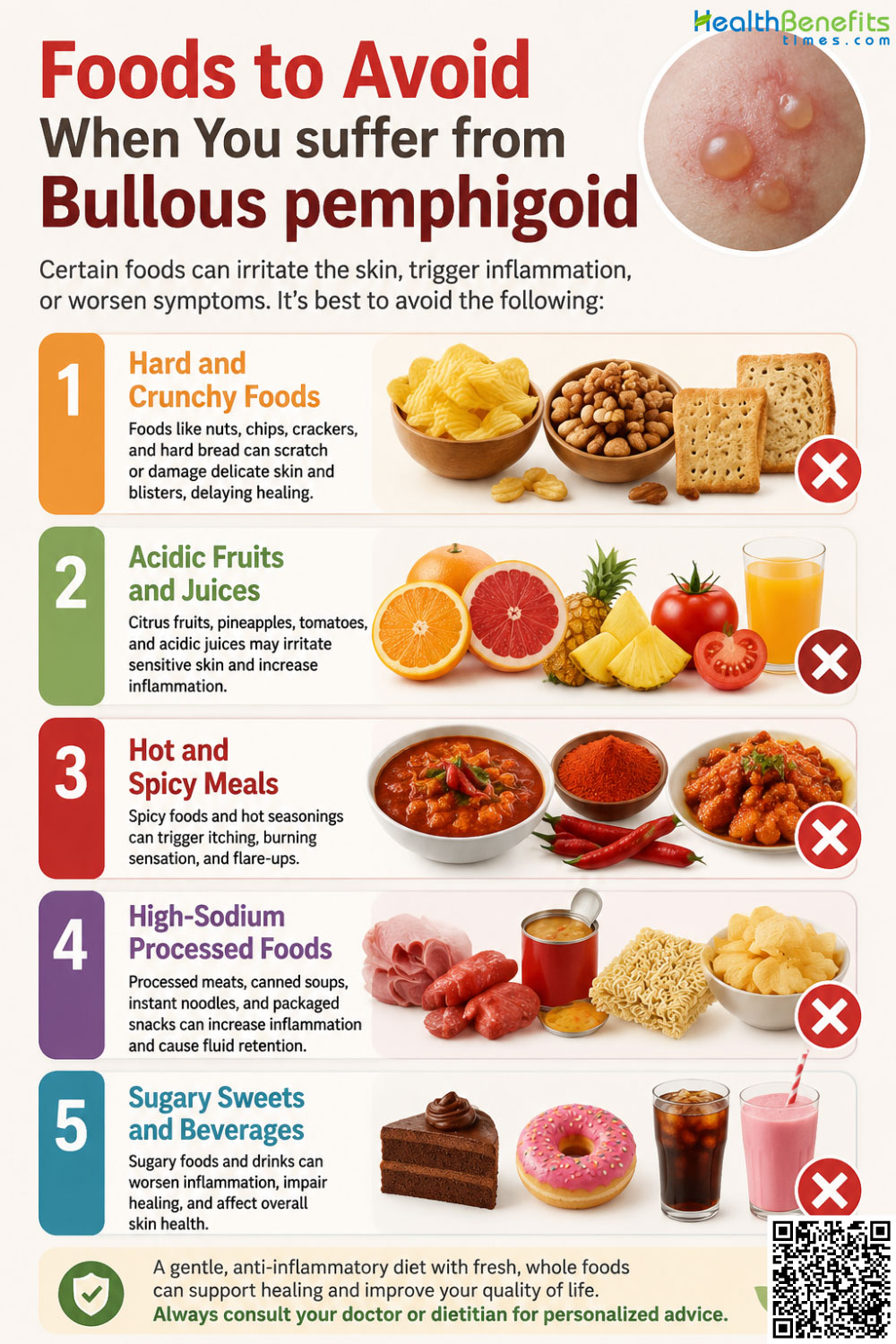
2. Acidic Fruits and Juices
Citrus fruits and tomatoes contain natural acids. These severely burn and irritate open mucosal sores, making swallowing and eating highly painful 34.
3. Hot and Spicy Meals
Heavy spices and chili peppers chemically irritate the sensitive oral cavity. This significantly increases inflammation and discomfort when mouth blisters are actively present 34.
4. High-Sodium Processed Foods
Standard corticosteroid therapies cause significant fluid retention. Avoiding excess dietary salt helps prevent severe bodily swelling and dangerous spikes in blood pressure 34.
5. Sugary Sweets and Beverages
Long-term oral steroid medications frequently elevate blood glucose levels. Restricting refined sugars is essential to reduce the significant risk of developing drug-induced diabetes 1.
When To see Doctor when you suffer from Bullous pemphigoid
Because bullous pemphigoid is a chronic autoimmune condition that severely compromises the skin’s protective barrier, it requires continuous medical supervision. You must promptly consult a healthcare professional to manage unpredictable disease flare-ups, prevent dangerous secondary complications, and monitor your body for adverse reactions to strong immunosuppressive medications.
1. Signs of Bacterial Infection
Open sores increase the risk of severe bacterial infections. Seek immediate care if blisters produce yellow pus, become excessively red, or if you suddenly develop a fever 1.
2. Rapid Disease Spread
Contact your doctor if new fluid-filled blisters rapidly multiply or spread to previously unaffected body areas, indicating your current medication dosage is failing to control the disease 10.
3. Mucosal Membrane Involvement
Medical evaluation is urgent if blisters develop inside your mouth, throat, or eyes. This mucosal involvement causes severe pain, potential scarring, and dangerous complications with eating or vision 11.
4. Medication Side Effects
You must report sudden weight changes, severe stomach pain, or extreme fatigue. These symptoms indicate potentially dangerous metabolic complications from long-term oral corticosteroid or immunosuppressive drug therapies 5.