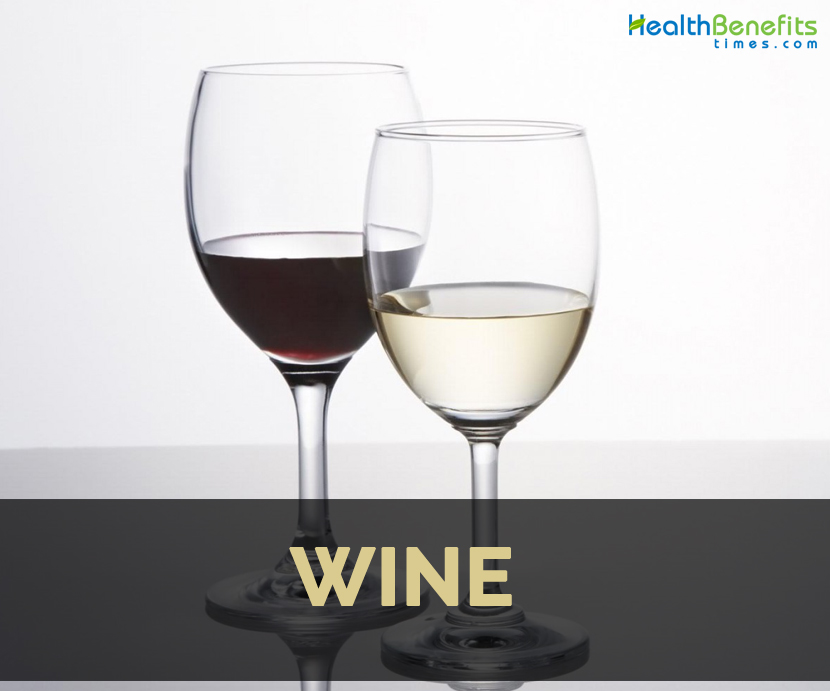
Wine is made by fermenting the grapes. It is fermented without adding acids, sugars, water, enzymes and nutrients because the sugar is consumed by the grapes which are converted into carbon dioxide and ethanol. The various strain of yeasts and grapes forms various wine styles. The fruits and rice is used to produce wine.
The evidence shows that the wine production was started in Iran, Georgia, Armenia and Greece. From its origin, wine is regarded as religious due to the altered consciousness. The wine was consumed as a ritual in the Jewish since the times of Biblical. Nominally Islam banned its consumption or production of wine in the Golden Age. Turkic Uyghurs introduced viticulture to China from Tang dynasty. The intake and production of wine increases in the 15th century with the expansion of Europe.
Nutritional value
In 148 gm, it contains 128.14 g of moisture, 123 calories, 0.1 g of protein, 0.36 g of ash, 4.03 g of carbohydrate and 1.17 of total sugars. It contains 8% of manganese, 6.88% of iron, 6.15% of vitamin B6, 5.67% of fluoride, 4.29% of phosphorus, 3.81% of magnesium, 3.13% of potassium, 3.10% of carbohydrate, 2.62% of Vitamin B2, 1.73% of zinc, 1.54% of niacin, 1.35% of choline, 1.20% of calcium, 1.11% of copper and 1.10% of Vitamin B5.
Health Benefits of Wine
Wine possesses various therapeutic properties which help to treat heart ailments and coronary ailments. The women should consume only one glass and two glasses by men in a day. The moderate intake of wine leads to early death, metabolic syndrome, diabetes mellitus, stroke and heart disease.
Lowers depression
The study shows that the intake of wine helps to lower the chances of depression. The consumption of alcohol helps to promote the mental health. The women and men who took 2-7 glasses in a week helps to lower the depression.
Prevent colon cancer
The research shows that the adequate intake of red wine helps to lower the chances of bowel tumors by 50 percent.
Anti-aging properties
The red wine possesses anti-aging activities which has various beneficial uses. Cranberries, blueberries and nuts are the great source of resveratrol. It contains procyanidins that helps to maintain the healthy blood vessels.
Prevent breast cancer
The daily intake of alcohol increases the chances of breast cancer. The seeds and skins of red wine help to lower the level of estrogen and raise the testosterone in the premenstrual women that lowers the chances of breast cancer. The intake of alcoholic drinks by the breast cancer patients increase the level of estrogen.
Prevent dementia
The intake of red wine lowers the chances of dementia. It lowers the dementia in the red wine drinkers. It reduces the blood platelets stickiness and helps to maintain flexibility in the blood vessels. It assists in the transport of blood to the brain. The red grapes skin has high content of resveratrol. The wine lowers the chances of dementia by about 23 percent in comparison to the non-drinkers.
Prevent sunburn
The wine lowers the effects of UV rays on the skin. It activates the reactive oxygen species. Grapes and wines has flavonoids that hinder the ROS formation in the skin cells which are exposed to the sunlight.
Prevent blindness
Wine prevents the growth of blood vessels in the eye that may lead to blindness that is the result of overgrowth of blood vessels in an eye. Wine contains resveratrol that prevents the vision health. Peanuts, grapes and blueberries have high content in resveratrol.
Prevent stroke
The wine prevents the stroke. Resveratrol increases the heme oxygenase level which is an enzyme that prevents the brain cell damage. The brain prevents itself when stroke is occurred due to the high content of enzyme.
Prevent lung cancer
Wine has resveratrol which is helpful for the lung function. The intake of wine in moderate amounts helps to assist the function of lungs. The antioxidant properties found in red wine helps to prevent the lung cancer.
Prevent liver ailments
The consumption of wine lowers the chances of non-alcoholic fatty liver ailments. The moderate amount of wine lowers the chances of liver disease.
Prevent prostate cancer
The wine lowers the chances of prostate cancer by 52%. One should consume about seven glasses in a week. It is associated with lowering the chances of prostate cancer.
Prevent type 2 diabetes
Red wine enhances the insulin sensitivity which is vital for lowering the chances of type 2 diabetes. It increases the SIRT level that enhances the sensitivity of insulin in mice.
It is the red grape and widely popular wine in the world. It has bold tannins. It has the taste of Black Currant, Black Cherry, Baking Spices and Cedar.
Syrah
It is the red wines which have intense flavor as well as middle weight tannins. It is blended with Mourvedre and Grenache to form red Rhone blend. It has meaty quality.
Zinfandel
It is the red wine of medium bodied which was originated in Croatia. It is red grape variety.
Pinot Noir
It is the dry and light bodied red wine with high content of acid and low tannins.
Chardonnay
It is the white wine which is dry and full bodied that is produced from white grapes of Burgundy.
Sauvignon Blanc
It is the white wine that is dry, tart having the flavors of green fruit.
Pinot Gr
It is light bodied wine that is made from white grape. It has middle weight with bitter flavor.
Riesling
When it is made as table wine, it has high content of acid.