


Connective tissue disease is a broad category of autoimmune and inflammatory disorders that target the structural tissues holding the body together, primarily affecting proteins like collagen and elastin. These conditions develop when the immune system mistakenly attacks healthy mesenchymal tissues, resulting in widespread inflammation and abnormal function 1. This umbrella term includes specific disorders such as rheumatoid arthritis, lupus, Sjögren’s syndrome, and scleroderma, though some patients experience overlapping symptoms classified as mixed or undifferentiated connective tissue disease 2. Clinically, these diseases present various symptoms, commonly including joint pain, muscle weakness, and fatigue. While some cases primarily affect the skin and joints, progressive forms can cause severe complications in major organs like the lungs, kidneys, and central nervous system 3. Although the exact pathogenesis remains polygenic and complex, early intervention is essential to manage systemic symptoms and limit long-term damage (Reddy & Hantash, 2009) 4.
Causes of Connective Tissue Disease
1. Autoimmune Dysfunction
The central mechanism of these diseases involves the immune system mistakenly producing autoantibodies that attack the body’s own healthy tissues. This is often driven by the abnormal activation and dysregulation of immune cells, specifically T-cells and B-cells 5.
2. Genetic Susceptibility
Most connective tissue diseases are polygenic, meaning they are linked to variations in multiple genes. While the diseases themselves are not strictly inherited, these genetic variations predispose individuals to exaggerated autoimmune responses.
3. Environmental Triggers
Exposure to specific outside factors can initiate the disease in genetically vulnerable individuals. Known environmental triggers include ultraviolet (UV) light, cigarette smoke, air pollutants, and exposure to harmful chemicals 6.
4. Hormonal Influences
There is a strong biological predisposition for these diseases to occur in females. Women develop connective tissue diseases at significantly higher rates than men—sometimes up to a 15:1 ratio—suggesting that female sex hormones play a critical role in promoting autoimmune activity 4.
5. Viral Infections
Chronic inflammation or continuous immune stimulation resulting from specific viral infections, such as the Epstein-Barr virus (EBV), acts as a potential environmental trigger that can initiate the immune system’s attack on structural tissues.
Symptoms of Connective Tissue Disease
1. Joint and Muscle Pain
Individuals frequently experience widespread joint aching, joint swelling, morning stiffness, and noticeable muscle weakness or tenderness 7.
2. Raynaud’s Phenomenon
This blood vessel reaction causes the fingers and toes to change color—typically turning white, then blue, and finally red—in response to cold temperatures or emotional stress 8.
3. Skin Changes
Common skin reactions include noticeably puffy and swollen fingers, the abnormal tightening or hardening of the skin, and distinct rashes, such as a butterfly-shaped red rash across the cheeks and nose 9.
4. Systemic Fatigue and Fever
Patients often report a general feeling of severe tiredness, recurring low-grade fevers, and unintentional weight loss during periods of active inflammation 10.
5. Digestive Discomfort
Internal inflammation can disrupt normal muscle movement in the esophagus, leading to difficulty swallowing, severe heartburn, and chronic acid reflux 3.
6. Cardiopulmonary Issues
When the disease affects internal organs, it often causes shortness of breath, a persistent dry cough, and chest pain due to inflammation in the tissues surrounding the lungs and heart 11.
7. Dryness of Eyes and Mouth
Reduced moisture production by the body’s glands frequently results in chronic dry eyes and a persistent dry mouth, which can make eating and speaking uncomfortable 12.
Natural Remedies for Connective Tissue Disease
1. Omega-3 Fatty Acids and Fish Oil Supplements
How It May Help
Omega-3 fatty acids, particularly EPA and DHA found in fish oil, interrupt the body’s inflammatory pathways. By lowering the production of inflammatory proteins, these supplements can help reduce the severe joint swelling, morning stiffness, and muscle pain commonly associated with connective tissue diseases 13.
What Research Says
Clinical studies conclude that taking daily omega-3 supplements significantly decreases joint tenderness and reliance on standard pain medications in patients with autoimmune joint disorders 14. Furthermore, research indicates fish oil helps regulate the overactive immune responses seen in lupus and rheumatoid arthritis 15.
How to Use It Safely
For managing symptoms, you should take high-quality fish oil supplements with meals to improve absorption and minimize stomach upset. Adults are generally advised to consume up to 3 grams of combined EPA and DHA daily, but always consult your doctor first 16.
Potential Precautions or Side Effects
High doses can thin your blood and increase bleeding risks, especially if you take blood-thinning medications. Mild side effects include bad breath, heartburn, nausea, and a fishy aftertaste 17.
2. Vitamin D Supplementation for Immune Regulation
How It May Help
Vitamin D functions as a hormone that actively regulates the immune system. It helps prevent immune cells from mistakenly attacking healthy structural tissues by reducing inflammation and suppressing abnormal autoimmune responses. Maintaining optimal levels supports tissue repair and limits the severity of joint and muscle damage 18.
What Research Says
Clinical trials demonstrate that taking vitamin D supplements significantly reduces the incidence of new autoimmune diseases 19. Furthermore, researchers report that patients with connective tissue diseases frequently have severe vitamin D deficiencies, and correcting this deficiency can improve immune tolerance and lower overall disease activity 20.
How to Use It Safely
Before starting supplementation, you should request a blood test from your doctor to determine your current vitamin D levels. To maximize absorption, take the supplement alongside a meal containing healthy fats. Follow your physician’s specific dosing instructions closely 21.
Potential Precautions or Side Effects
Excessive intake can cause hypercalcemia, a dangerous buildup of calcium in the blood that may lead to kidney stones, nausea, and irregular heart rhythms 22.
3. Anti-Inflammatory Diets for Symptom Management
How It May Help
An anti-inflammatory diet focuses on nutrient-dense whole foods that naturally support the body. By eliminating processed items and sugars that trigger widespread swelling, this dietary approach actively reduces the joint stiffness, muscle pain, and severe fatigue commonly associated with autoimmune conditions 23.
What Research Says
Clinical studies confirm that adopting a Mediterranean-style diet significantly decreases inflammatory markers in the bloodstream. Researchers conclude that patients with autoimmune joint diseases experience improved physical mobility and a measurable reduction in overall disease activity when strictly following these nutritional patterns 24.
How to Use It Safely
To safely transition, you should gradually replace processed carbohydrates and red meats with fresh vegetables, fruits, and lean proteins. Consult a registered dietitian to ensure your modified meal plan provides all essential vitamins and maintains an adequate caloric intake 25.
Potential Precautions or Side Effects
Highly restrictive eating patterns may cause unintended weight loss or dangerous nutrient deficiencies. You must avoid eliminating entire food groups without professional medical supervision to prevent malnourishment 26.
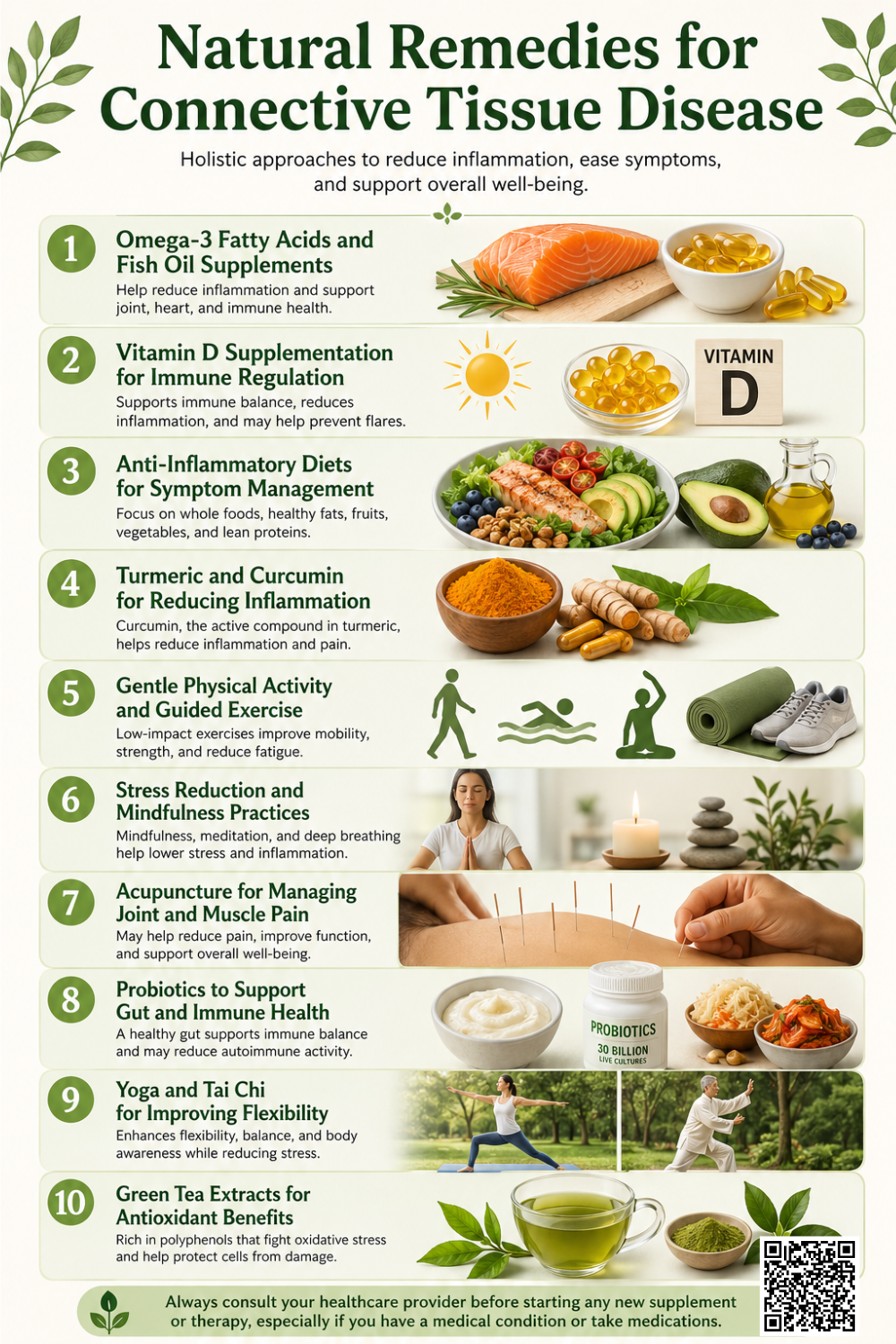 4. Turmeric and Curcumin for Reducing Inflammation
How It May Help
Turmeric contains a powerful active compound called curcumin, which acts as a natural antioxidant. By directly blocking inflammatory pathways in the body, curcumin helps reduce the excessive immune response that targets connective tissues, effectively easing joint swelling, morning stiffness, and chronic muscle pain 27.
What Research Says
Clinical studies reveal that curcumin supplementation significantly lowers inflammatory markers in patients with rheumatoid arthritis and lupus. Researchers conclude that curcumin reduces joint tenderness and improves mobility, frequently improving symptoms as effectively as standard anti-inflammatory medications without causing severe gastrointestinal distress 28.
How to Use It Safely
To maximize its benefits, consume turmeric with black pepper, which contains piperine to significantly boost absorption. You can add it to meals or take oral supplements. Always consult your doctor before starting, generally aiming for a standard daily dose between 500 and 1,000 milligrams 29.
Potential Precautions or Side Effects
High doses can cause stomach upset or nausea. Highly bioavailable supplements may increase bleeding risks or cause liver damage, particularly when interacting with blood thinners or other prescription medications.
5. Gentle Physical Activity and Guided Exercise
How It May Help
Gentle physical activity, such as water aerobics or walking, increases blood flow to stiff tissues and strengthens the muscles supporting vulnerable joints. By promoting joint lubrication, these exercises actively reduce chronic morning stiffness and help prevent long-term physical disability 30.
What Research Says
Clinical trials conclude that supervised, low-impact exercise programs significantly improve physical function and reduce severe fatigue in patients with systemic autoimmune diseases. Researchers consistently report that guided physical activity decreases overall pain levels without triggering disease flares or accelerating structural joint damage 31.
How to Use It Safely
You should collaborate with a physical therapist to design a customized, low-impact routine. Begin with short sessions of walking or swimming. Always warm up your muscles thoroughly before starting and prioritize slow stretching to protect vulnerable connective tissues 32.
Potential Precautions or Side Effects
Pushing beyond your physical limits can trigger severe pain and disease flares. You must stop exercising immediately if you experience sharp joint pain or unusual joint swelling 33.
6. Stress Reduction and Mindfulness Practices
How It May Help
Psychological stress directly triggers the release of inflammatory hormones that worsen autoimmune responses. By calming the nervous system, mindfulness practices and active stress reduction techniques help lower overall inflammation, thereby decreasing the frequency and severity of joint pain and fatigue in connective tissue disorders 34.
What Research Says
Clinical trials indicate that mindfulness-based stress reduction significantly improves pain tolerance and physical functioning in patients with chronic autoimmune diseases. Researchers conclude that regular meditation and relaxation therapies measurably decrease psychological distress and lower circulating inflammatory markers compared to standard care alone 35.
How to Use It Safely
You should begin by incorporating just ten to fifteen minutes of guided meditation or deep breathing exercises into your daily routine. Consider joining a certified mindfulness program tailored for chronic pain to ensure you learn techniques that best support your specific needs 36.
Potential Precautions or Side Effects
While generally safe, deep relaxation may occasionally trigger unexpected emotional distress or anxiety. You must never use mindfulness as a complete substitute for your prescribed medical treatments.
7. Acupuncture for Managing Joint and Muscle Pain
How It May Help
Acupuncture involves inserting extremely thin needles into specific points on the body. This process stimulates the central nervous system to release endorphins, which act as natural painkillers. By improving local blood flow and reducing muscle tension, this therapy actively eases the severe joint stiffness caused by connective tissue inflammation 37.
What Research Says
Clinical trials confirm that acupuncture significantly reduces joint swelling and improves daily physical function in patients with autoimmune arthritis. Researchers conclude it is an effective supplementary treatment that lowers circulating inflammatory markers and decreases reliance on traditional pain medications without interfering with standard medical therapies 38.
How to Use It Safely
You should only receive treatments from a licensed, certified acupuncturist who strictly uses sterile, disposable needles. Always consult your rheumatologist before beginning sessions. For the best results, safely integrate these routine treatments into your broader medical management plan 39.
Potential Precautions or Side Effects
Common side effects include mild soreness, minor bleeding, or bruising at needle insertion sites. You must consult your doctor first if you take blood-thinning medications or have bleeding disorders.
8. Probiotics to Support Gut and Immune Health
How It May Help
A significant portion of the immune system resides in the digestive tract. Probiotics introduce beneficial bacteria that restore intestinal balance and strengthen the gut barrier. By preventing harmful bacteria from triggering systemic inflammation, these supplements help calm the overactive immune responses that attack joints and structural tissues 40.
What Research Says
Clinical trials demonstrate that daily probiotic supplementation significantly lowers circulating inflammatory markers in patients with systemic autoimmune conditions. Researchers conclude that specific bacterial strains, particularly Lactobacillus and Bifidobacterium, measurably improve joint pain and reduce overall disease activity when combined with standard medical therapies 41.
How to Use It Safely
You should select broad-spectrum probiotic supplements containing at least one billion colony-forming units. For optimal absorption, take the supplement shortly before or during a meal. Always consult your rheumatologist to ensure the chosen strains will not interfere with your prescribed immunosuppressive medications 42.
Potential Precautions or Side Effects
Mild side effects include temporary gas, bloating, and stomach upset. You must avoid probiotics if you are severely immunocompromised due to a rare risk of systemic bacterial infection 43.
9. Yoga and Tai Chi for Improving Flexibility
How It May Help
Yoga and Tai Chi involve slow, controlled movements combined with deep breathing. These mind-body practices actively stretch tight tissues and improve joint lubrication. By gently expanding the body’s range of motion, they effectively relieve the severe morning stiffness and physical restriction caused by connective tissue inflammation 44.
What Research Says
Clinical trials demonstrate that regular participation in Tai Chi and modified yoga significantly improves physical mobility in patients with systemic autoimmune conditions. Researchers conclude these practices measurably reduce chronic joint pain and decrease overall disease severity without causing additional structural joint damage 45.
How to Use It Safely
You should begin by joining classes led by instructors certified in modifying exercises for joint conditions. Always use supportive props, like chairs or blocks, to adapt difficult poses. Focus strictly on slow, gentle movements and never force a stretch beyond your comfort level 46.
Potential Precautions or Side Effects
Forcing the body into painful positions can strain fragile ligaments or trigger disease flares. You must stop the exercise immediately if you experience sharp joint pain 47.
10. Green Tea Extracts for Antioxidant Benefits
How It May Help
Green tea contains epigallocatechin-3-gallate (EGCG), a powerful antioxidant that protects the body from cellular damage. By neutralizing harmful free radicals and blocking internal inflammatory pathways, this extract helps prevent the immune system from attacking healthy structural proteins, actively reducing the joint swelling associated with connective tissue diseases 48.
What Research Says
Clinical trials demonstrate that green tea extracts significantly suppress the production of inflammatory chemicals in the bloodstream. Researchers conclude that regular consumption of EGCG effectively decreases severe joint tenderness, limits bone and cartilage degradation, and measurably improves overall physical mobility in patients with autoimmune joint disorders 49.
How to Use It Safely
You should drink up to four cups of brewed green tea daily or take a standardized supplement containing 250 to 500 milligrams of catechins. To avoid stomach upset and optimize absorption, always take concentrated green tea extracts alongside a full meal. Consult your rheumatologist before starting supplementation 50.
Potential Precautions or Side Effects
Taking high doses of concentrated extracts can cause rare but severe liver damage. Green tea also contains caffeine, which may trigger insomnia or interact with certain prescribed blood pressure medications.
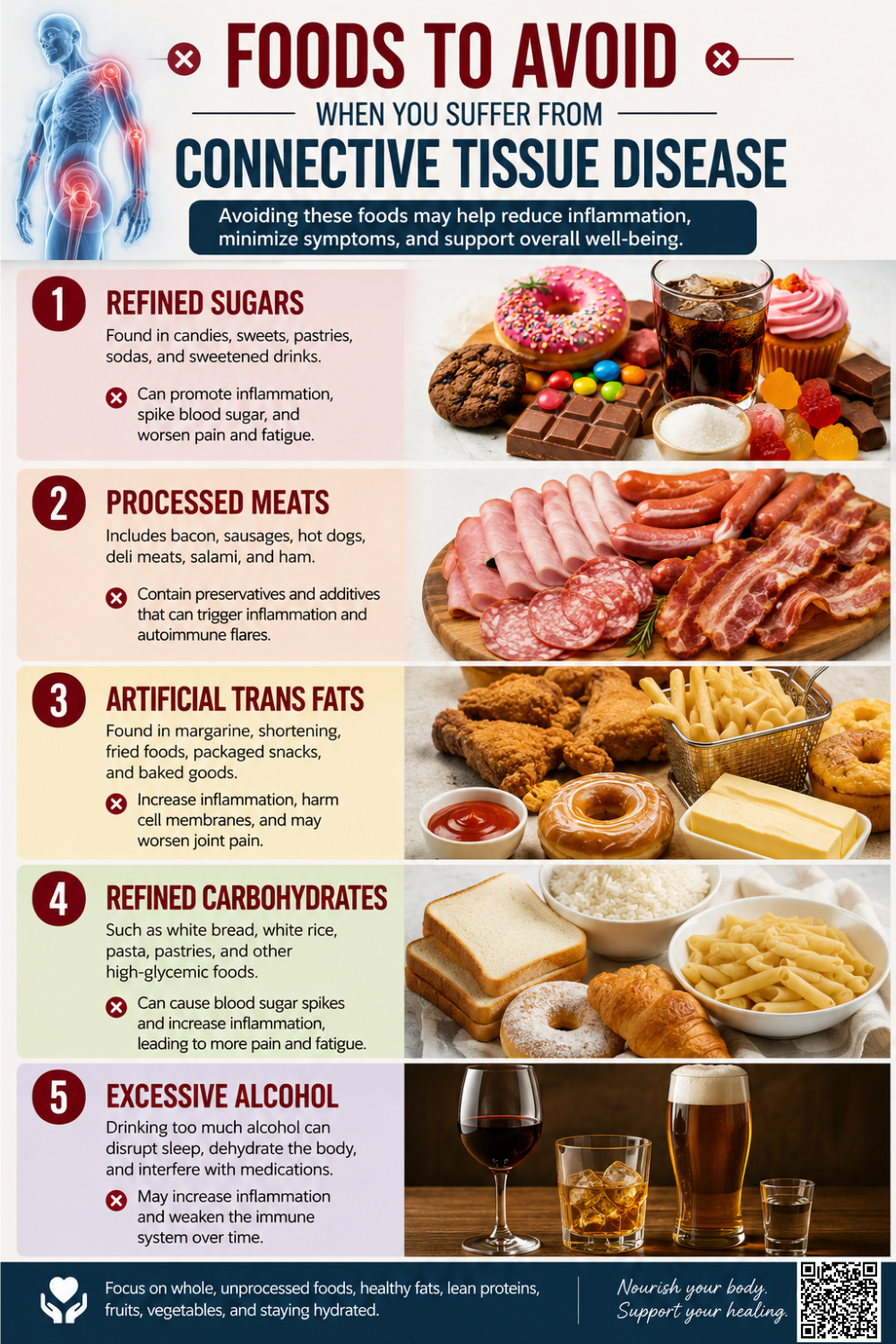 Foods to Avoid When You Suffer From Connective Tissue Disease
1. Refined Sugars
Refined sugars stimulate the release of inflammatory proteins called cytokines. Clinical research demonstrates that high dietary sugar intake significantly worsens joint swelling and overall autoimmune disease severity 51.
2. Processed Meats
Processed meats contain advanced glycation end products. Studies conclude these compounds trigger aggressive immune responses, measurably increasing systemic inflammation and accelerating structural tissue damage in autoimmune patients 52.
3. Artificial Trans Fats
Artificial trans fats disrupt healthy cellular function. Researchers confirm that consuming these fats elevates circulating inflammatory markers, directly aggravating chronic pain and joint stiffness in connective tissue disorders 53.
4. Refined Carbohydrates
White flour and stripped grains cause rapid blood sugar spikes. Clinical evidence shows this instability promotes chronic inflammation, consistently exacerbating muscle tenderness and joint fatigue in autoimmune conditions.
5. Excessive Alcohol
Heavy alcohol consumption impairs liver function and damages the intestinal barrier. Research concludes this disruption permits harmful bacteria into the bloodstream, severely intensifying systemic autoimmune inflammation 54.
When to See a Doctor When You Suffer From Connective Tissue Disease
1. Sudden Breathing Difficulties
Seek urgent care if you develop severe shortness of breath or sharp chest pain, as these indicate potentially life-threatening lung or heart inflammation 55.
2. Unexplained High Fever
Contact your physician immediately if you experience a persistent fever over 100.4°F (38°C), which strongly signals a severe disease flare or an underlying infection 56.
3. New or Worsening Rashes
Consult a doctor if you develop spreading facial rashes or open skin sores, as these require prompt medical intervention to prevent permanent tissue damage 57.
4. Severe Muscle Weakness
Request a medical evaluation if you suddenly struggle to climb stairs or lift objects. This indicates aggressive muscle inflammation that necessitates immediate clinical treatment 58.
5. Neurological Changes
Go to an emergency room if you experience sudden confusion, severe headaches, or visual disturbances, as these strongly suggest critical central nervous system involvement 59.