

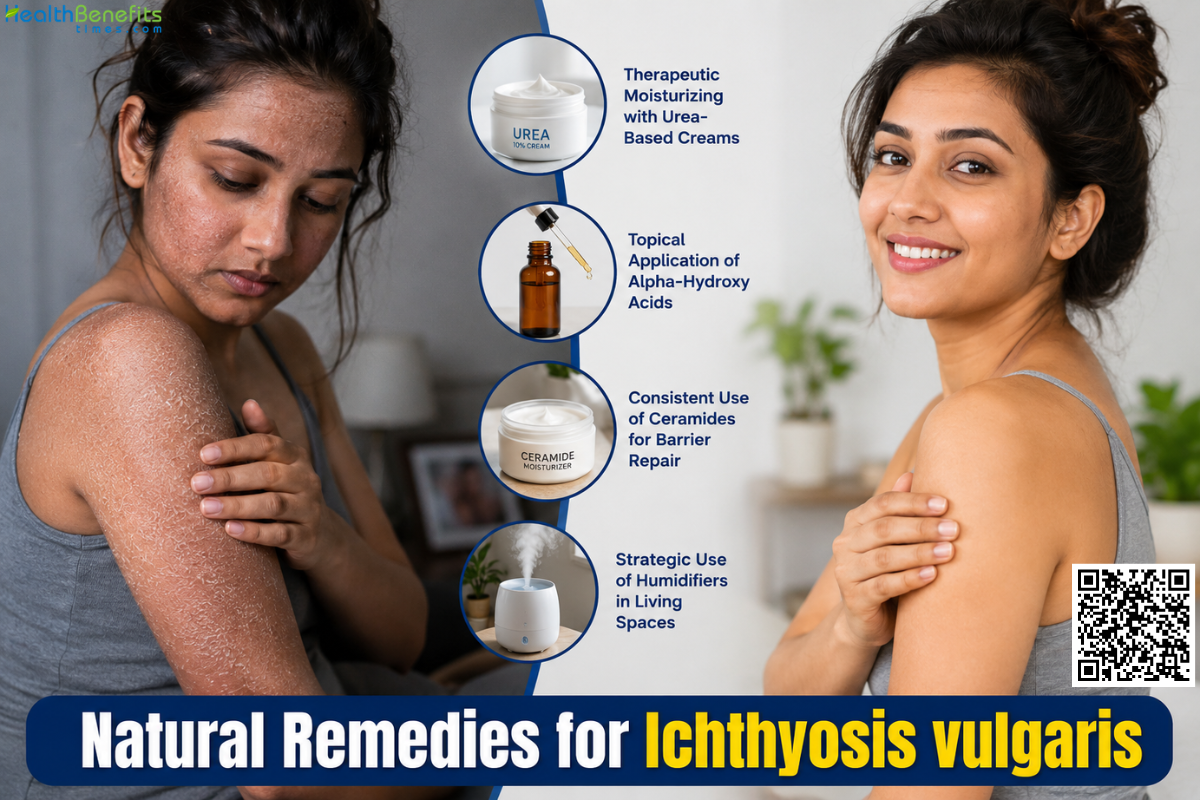
Ichthyosis vulgaris is a common inherited condition that causes dead skin cells to accumulate in thick, dry scales on the skin’s surface. Usually appearing in early childhood, it accounts for more than 95 percent of all ichthyosis cases 1. The disorder stems from a specific mutation in the filaggrin gene, which normally provides instructions for making a protein that protects the skin’s moisture barrier 2. Without adequate levels of this essential protein, the skin cannot hold water effectively, leading to extreme dryness and an increased vulnerability to allergic conditions like eczema or asthma 3. While there is no known cure for the disease, symptoms are highly manageable. Standard lifelong treatment focuses on consistent daily hydration, specifically using heavy moisturizers and specialty creams containing urea or ceramides to dissolve the hardened scales and replenish lost moisture 4.
Causes of Ichthyosis vulgaris
1. Genetic Mutations (Hereditary Ichthyosis)
The vast majority of cases are inherited and develop in early childhood due to a specific mutation in the FLG gene. This gene provides instructions for making filaggrin, a critical protein that helps the skin retain water and maintain a protective barrier; without enough filaggrin, the skin rapidly loses moisture and thickens into scales.
2. Systemic Diseases (Acquired Ichthyosis)
In rare instances, individuals develop the condition later in life without any genetic predisposition. This acquired form is typically triggered by a serious underlying internal illness, which can include:
- Cancers: Malignant tumors, particularly blood and lymph node cancers such as Hodgkin’s disease, multiple myeloma, and cutaneous T-cell lymphoma 5.
- Autoimmune and Inflammatory Conditions: Diseases in which the immune system mistakenly attacks healthy tissue, such as systemic lupus erythematosus and dermatomyositis 6.
- Endocrine and Metabolic Disorders: Systemic issues that disrupt normal hormone production or organ function, including hypothyroidism, type 1 diabetes, and chronic kidney failure 7.
- Severe Infections: Chronic systemic infections that suppress the immune system, most notably HIV and leprosy.
3. Prescription Medications
Acquired ichthyosis can occasionally emerge as an adverse drug reaction. The most commonly reported medical triggers include cholesterol-lowering medications, targeted cancer therapies (such as EGFR and BRAF inhibitors), and allopurinol, which is commonly prescribed to treat gout.
Symptoms of Ichthyosis vulgaris
1. Excessive Dryness
The skin exhibits chronic, severe dryness, often characterized by a rough or “parched” texture that feels tight, particularly after bathing or in low-humidity environments.
2. Scale Formation
The hallmark clinical finding is the presence of fine, white, or light-colored scales that resemble fish scales. These are typically most prominent on the shins, forearms, and thighs, though they may also appear on the scalp or forehead.
3. Skin Fissures
Deep cracks or creases, known as fissures, often develop in the skin, especially on the palms of the hands and the soles of the feet. These cracks can be painful and may become sites for secondary infections if not properly managed.
4. Keratosis Pilaris
Many affected individuals experience small, rough, sandpaper-like bumps around hair follicles, commonly occurring on the outer upper arms, thighs, or buttocks.
5. Increased Skin Markings
The lines on the palms and soles may appear deeper and more prominent than usual, a condition known as hyperlinearity, which is a frequent clinical indicator of this disorder.
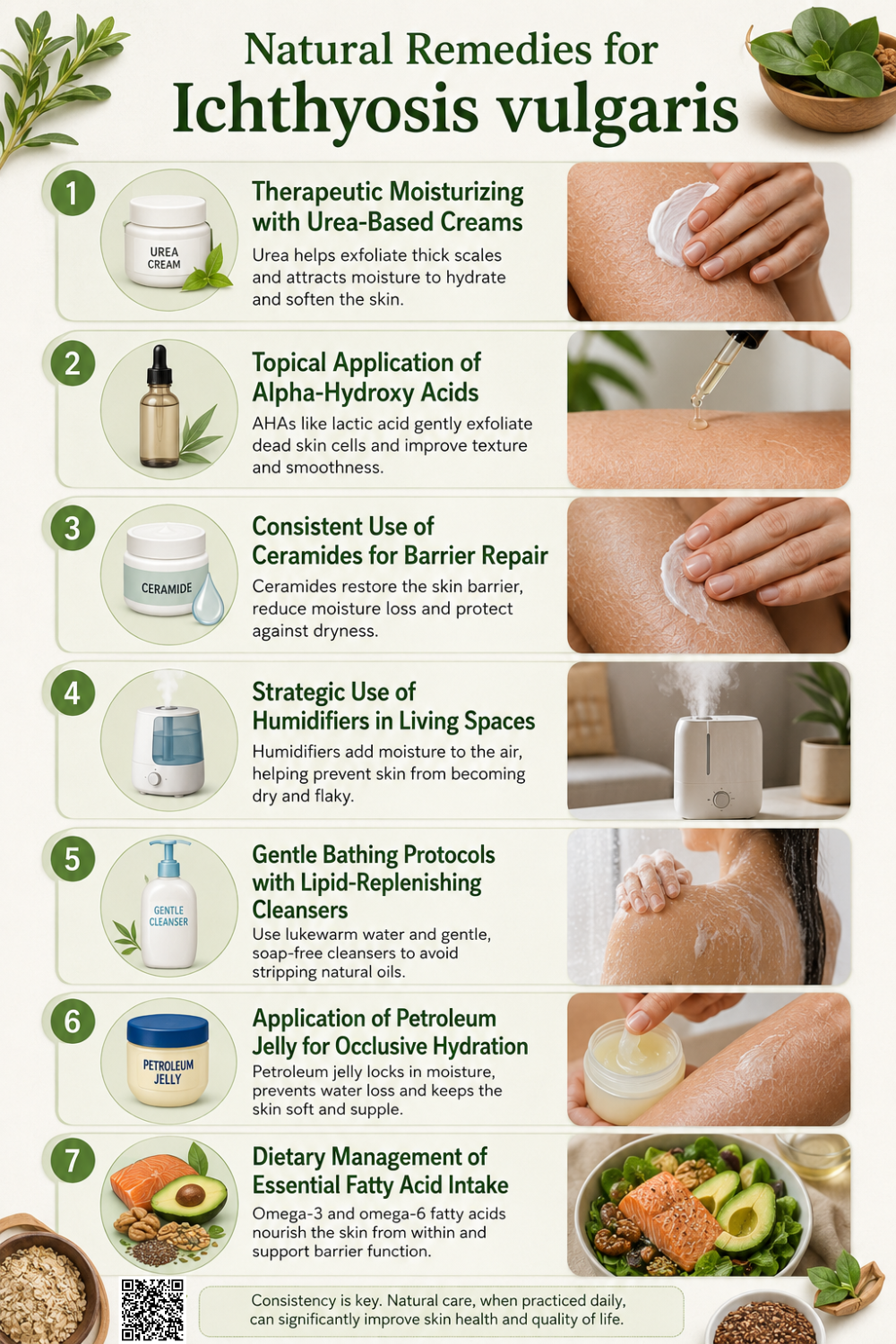 Natural Remedies for Ichthyosis vulgaris
1. Therapeutic Moisturizing with Urea-Based Creams
How it may help
Urea-based creams act as potent humectants that draw water into the skin while gently breaking down hardened proteins. This process softens thick, scaly patches and improves the skin’s texture and flexibility, providing essential relief for the chronic dryness associated with ichthyosis vulgaris.
What research says
Clinical research demonstrates that urea effectively increases skin hydration and reduces scaling. Studies indicate that concentrations between 10% and 25% are particularly successful in improving skin barrier function and overall comfort for patients with inherited ichthyosis.
How to use it safely
For best results, apply the cream immediately after bathing while the skin is still damp to lock in moisture. Gently rub a thin layer into the affected areas once or twice daily to maintain hydration and manage scale buildup.
Potential precautions or side effects
While generally well-tolerated, some individuals may experience mild stinging, redness, or irritation upon application, particularly if the skin is cracked or inflamed. Discontinue use if persistent burning occurs.
2. Topical Application of Alpha-Hydroxy Acids
How it may help
Alpha-hydroxy acids (AHAs), such as lactic or glycolic acid, help by loosening the bonds between dead skin cells. This encourages the shedding of thick scales and prevents future buildup, effectively smoothing the skin surface and allowing deeper hydration to penetrate the hardened layers common in ichthyosis vulgaris.
What research says
Clinical consensus confirms that topical AHAs significantly improve scaling and roughness. Evidence-based guidelines identify these compounds as highly effective treatments for reducing hyperkeratosis, often serving as a primary therapeutic approach to normalize skin cell turnover in patients with this condition.
How to use it safely
Apply the product to clean, dry skin once daily or as directed. Start with a lower concentration to allow your skin to adjust. Always follow with a broad-spectrum sunscreen during the day, as these acids can increase the skin’s sensitivity to ultraviolet light.
Potential precautions or side effects
Common side effects include mild stinging, itching, or redness. Avoid application on open sores or cracked skin to prevent excessive irritation, and discontinue use if a severe reaction develops.
3. Consistent Use of Ceramides for Barrier Repair
How it may help
Ceramides are essential fats that act as “mortar” between skin cells, sealing in moisture and protecting against environmental irritants. In ichthyosis vulgaris, the skin’s natural barrier is often weak; supplementing with topical ceramides helps restore this structure, significantly reducing water loss and preventing the skin from becoming excessively dry, cracked, and irritated.
What research says
Clinical evidence highlights that ceramide-containing moisturizers are superior for repairing the skin’s barrier function in patients with genetic skin conditions. Studies show that these products effectively improve skin hydration levels and overall integrity, making them a cornerstone therapy for managing chronic dryness and reducing symptoms like itching and inflammation.
How to use it safely
Apply a ceramide-rich cream or lotion liberally to the entire body at least twice daily. For maximum benefit, use the product immediately after bathing to help seal moisture into the skin. Consistent, daily application is necessary to maintain a healthy protective barrier over time.
Potential precautions or side effects
Ceramides are typically well-tolerated with very few risks. Side effects are rare but may include mild localized irritation or allergic reactions in individuals with extremely sensitive skin.
4. Strategic Use of Humidifiers in Living Spaces
How it may help
Using a humidifier increases ambient moisture levels, which directly counters the rapid evaporation of water from the skin. By maintaining higher indoor humidity, the air becomes less drying, helping to keep the skin’s outer layer supple and reducing the severity of scale formation and tightness, especially during colder months or in climate-controlled environments.
What research says
Clinical observations emphasize that low humidity levels exacerbate skin barrier dysfunction in patients with ichthyosis. Research suggests that optimizing environmental conditions by maintaining appropriate humidity levels is a necessary supportive measure to stabilize skin hydration and minimize the physical discomfort caused by excessive dryness in clinical and home settings.
How to use it safely
Place the humidifier in rooms where you spend the most time, particularly the bedroom. Maintain indoor humidity levels between 40% and 60% for optimal results. Ensure you clean the device regularly according to the manufacturer’s instructions to prevent the growth of bacteria and mold.
Potential precautions or side effects
Improperly cleaned humidifiers can disperse mold or bacteria, potentially triggering respiratory issues. Additionally, excessive humidity can encourage indoor mold growth; ensure you monitor levels to stay within recommended ranges.
5. Gentle Bathing Protocols with Lipid-Replenishing Cleansers
How it may help
Proper bathing cleanses the skin without stripping away essential natural oils. Using soap-free, lipid-replenishing cleansers helps maintain the skin’s moisture barrier, preventing the further dehydration that worsens scaling. By gently removing dead cells while depositing fats, these products keep the skin soft and reduce the intense dryness characteristic of ichthyosis vulgaris.
What research says
Clinical guidelines suggest that bathing routines must be balanced to prevent barrier damage. Research indicates that using mild, non-irritating cleansers—often referred to as syndets—is essential for individuals with ichthyosis to avoid disrupting the skin’s pH balance and fat composition, which are necessary to preserve long-term skin health .
How to use it safely
Limit baths to lukewarm water for ten to fifteen minutes. Avoid hot water, which dries the skin. Gently pat the skin partially dry with a soft towel, then apply a moisturizer immediately while the skin is still damp to seal in necessary hydration.
Potential precautions or side effects
Avoid scrubbing the skin harshly with loofahs or brushes, as this causes physical trauma and inflammation. Discontinue any cleanser that causes stinging or increased redness during or after use.
6. Application of Petroleum Jelly for Occlusive Hydration
How it may help
Petroleum jelly serves as a highly effective occlusive agent, creating a physical barrier on the skin’s surface. This layer prevents transepidermal water loss, effectively trapping moisture within the skin. For those with ichthyosis vulgaris, this helps soften hard, scaly patches and provides a protective shield against environmental dryness, significantly improving skin texture and comfort.
What research says
Clinical guidance identifies occlusives like petroleum jelly as fundamental in the management of ichthyosis. Research confirms that applying these agents after hydration is superior for maintaining long-term skin barrier integrity, as they minimize water evaporation and allow the underlying skin to remain moisturized and supple throughout the day.
How to use it safely
Apply a thin layer of pure petroleum jelly to affected areas immediately after bathing while the skin remains damp. Reapply as needed throughout the day, particularly in dry or cold weather, to ensure a continuous protective seal that locks in essential moisture.
Potential precautions or side effects
Petroleum jelly is non-irritating and rarely causes side effects. However, it may feel heavy or greasy, and individuals prone to acne should be cautious applying it to the face.
7. Dietary Management of Essential Fatty Acid Intake
How it may help
Essential fatty acids, particularly omega-3s, are vital components of the skin’s lipid barrier. Increasing their intake may help reduce systemic inflammation and support better skin moisture retention. By addressing the deficiency of these fats, the body is better equipped to support the structural integrity of skin cells and improve overall skin softness and elasticity.
What research says
Clinical research indicates that systemic administration of essential fatty acids can contribute to the improvement of skin surface conditions in specific genetic disorders. Studies highlight that balanced fatty acid supplementation may assist in normalizing skin lipid composition, potentially alleviating symptoms of dryness and scaling for individuals with inherited skin fragility.
How to use it safely
Prioritize a diet rich in cold-water fish, flaxseeds, and walnuts. If considering supplements, consult a healthcare provider first to determine the correct dosage. It is essential to ensure that any supplement is of high quality and appropriate for your specific health needs and age.
Potential precautions or side effects
While generally safe, high-dose fatty acid supplements can cause digestive discomfort, such as nausea or loose stools, and may interact with blood-thinning medications. Always seek professional medical guidance.
 Foods to Avoid When You Suffer from Ichthyosis vulgaris
1. Highly Processed Foods
These often contain excessive salt and chemical additives that may promote systemic inflammation, potentially aggravating sensitive skin and worsening the discomfort associated with chronic dryness.
2. Sugary Snacks and Beverages
Diets high in refined sugars can trigger inflammatory responses in the body. Reducing sugar intake may help maintain a more stable environment for skin barrier repair.
3. Known Food Allergens
For individuals with concurrent conditions like eczema, identifying and avoiding personal food triggers is essential. Common allergens like dairy or gluten may exacerbate skin inflammation in sensitive patients.
4. Excessive Alcohol Consumption
Alcohol can lead to systemic dehydration, which directly impacts the skin’s ability to retain moisture. Limiting alcohol intake helps ensure the skin stays adequately hydrated from within.
When To See a Doctor When You Suffer from Ichthyosis vulgaris
1. Signs of Secondary Infection
Seek medical care if you observe increased redness, swelling, warmth, yellow crusting, or fluid-filled bumps, as these suggest bacterial colonization of skin fissures.
2. Unmanageable Pain or Discomfort
Consult a healthcare provider if deep skin cracks become painful, bleed, or persistently interfere with daily activities despite consistent application of recommended moisturizers and ointments.
3. Sudden Onset in Adulthood
If you develop skin scaling for the first time as an adult, it is vital to see a doctor to rule out underlying systemic or internal diseases.
4. Failure of Standard Treatments
If your skin condition does not show improvement with over-the-counter urea or ceramide-based treatments, a dermatologist may need to prescribe stronger topical or oral medications.