

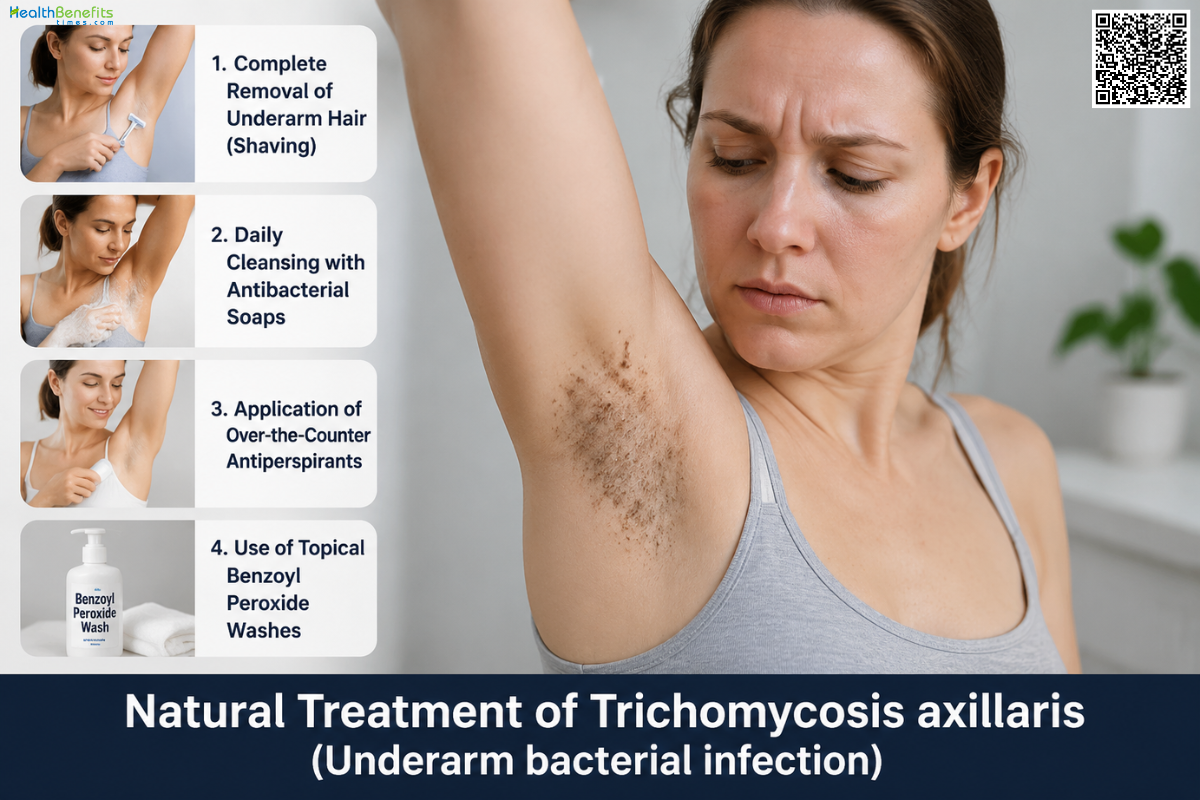
Trichomycosis axillaris, more accurately termed trichobacteriosis, is a superficial bacterial infection that primarily affects the hair shafts in the underarms. Despite its name suggesting a fungal origin, it is strictly a bacterial condition caused by the overgrowth of Corynebacterium species, most notably Corynebacterium flavescens 1. The hallmark of the infection is the formation of firmly attached yellow, red, or black nodular concretions around individual hair shafts, which gives the hair a thickened or beaded texture 2. These bacteria thrive in moist, enclosed environments, making heavy sweating (hyperhidrosis) and high humidity primary risk factors for development 3. While the infection is physically painless, the bacteria metabolize local sweat to produce a distinct, rancid odor and may occasionally stain clothing 4. Because the bacteria remain on the outer surface of the hair and do not invade the skin, the condition is typically resolved quickly by shaving the affected hair and applying targeted topical antibiotics 1.
Causes of Trichomycosis Axillaris
1. Bacterial Infection
The primary trigger for this condition is a localized bacterial overgrowth. Clinical studies confirm that the rapid multiplication of Corynebacterium species—specifically Corynebacterium flavescens—directly causes the formation of hard, colored nodules that firmly attach to the axillary hair shafts 1.
2. Excessive Sweating (Hyperhidrosis)
High levels of perspiration strongly predispose individuals to this infection. Research indicates that a persistently wet underarm environment provides the exact moisture and organic nutrients required for Corynebacterium to thrive and aggressively colonize hair fibers 4.
3. Inadequate Personal Hygiene
Insufficient cleansing of the underarm area is a major contributing factor. Dermatological evaluations demonstrate that failing to routinely remove trapped sweat and skin debris allows the bacterial population to grow undisturbed and secrete the cement-like substance that binds to the hair 2.
4. Environmental Heat and Humidity
Living in or frequently experiencing tropical climates accelerates the development of the condition. Medical observations show that high environmental heat and humidity prevent sweat evaporation, creating a continuous incubator effect that significantly increases bacterial reproduction rates 4.
5. Non-Breathable Clothing
The choice of daily attire can directly influence bacterial growth in the axillary region. Evidence shows that wearing tight, synthetic fabrics traps body heat and moisture against the skin, blocking air circulation and heavily promoting the survival of Corynebacterium colonies on the hair shafts 1.
Symptoms of Trichomycosis Axillaris
- Visible Nodules on Hair Shafts: The most definitive clinical sign is the development of small, firm, bead-like growths attached directly to the underarm hair. These granular nodules, created by dense bacterial colonies, are typically yellow, but can occasionally present as red or black 1.
- Thickened or Matted Hair Texture: As the bacterial material accumulates, the affected hair shafts lose their normal texture, appearing unusually thick, dull, or rough. In advanced stages, the sticky nature of the bacterial concretions can cause multiple hairs to clump and mat together 2.
- Foul Underarm Odor: A strong, rancid smell often accompanies the physical changes to the hair. This odor is produced when the colonizing Corynebacterium species break down apocrine sweat, releasing volatile chemical compounds into the surrounding area 4.
- Discolored Clothing Stains: The pigmented bacterial growths and altered sweat can easily transfer from the underarm hair onto fabric. This frequently results in persistent yellow, red, or black staining on the armpit areas of shirts and undergarments 4.
- Absence of Skin Discomfort: Because the bacteria only colonize the outer surface of the hair shaft and do not invade the living skin tissue underneath, the infection is characteristically asymptomatic. It generally does not cause pain, itching, redness, or skin inflammation 1.
Natural Remedies for Trichomycosis Axillaris (Underarm Bacterial Infection)
1. Complete Removal of Underarm Hair (Shaving)
How it may help
Trichomycosis axillaris strictly colonizes the hair shaft, not the underlying skin. Shaving physically removes the entire bacterial colony and its host environment at once, instantly eliminating the infection and stopping the bacteria from further interacting with sweat to produce foul odors.
What research says
Clinical protocols establish shaving as the most effective first-line treatment for trichobacteriosis. Studies confirm that because Corynebacterium overgrowth is completely confined to the hair cuticle, mechanical removal of the affected hair immediately eradicates the infection and cures the condition without requiring systemic antibiotics 1.
How to use it safely
Use a clean, new razor and a gentle shaving cream to carefully remove all underarm hair. Shave in the direction of hair growth to prevent micro-tears. Afterward, wash the area with mild soap and water, then pat the skin completely dry.
Potential precautions or side effects
Shaving may cause minor skin irritation, razor burn, or ingrown hairs. Avoid applying harsh antiperspirants immediately afterward to prevent stinging, chemical irritation, or contact dermatitis.
2. Daily Cleansing with Antibacterial Soaps
How it may help
Daily use of antibacterial soaps directly targets and inhibits the growth of the Corynebacterium species responsible for the infection. By washing away accumulated sweat and breaking down the bacterial concretions on the hair shafts, this practice removes the microbes’ food source and eliminates the associated foul odor.
What research says
Clinical studies highlight strict hygiene with antibacterial agents as a highly effective treatment for trichobacteriosis. Dermatological guidelines recommend daily cleansing with antibacterial soaps to reduce the colonization of Corynebacterium on the hair shaft, serving as a primary conservative treatment for patients who prefer not to shave their underarms 2.
How to use it safely
Lather the antibacterial soap onto wet underarms during your daily shower. Allow the lather to remain on the skin and hair for one to two minutes before rinsing thoroughly. Always pat the area completely dry, as lingering moisture encourages further bacterial growth.
Potential precautions or side effects
Excessive use of antibacterial soaps can strip the skin of natural oils, leading to localized dryness, redness, and a compromised skin barrier or contact dermatitis.
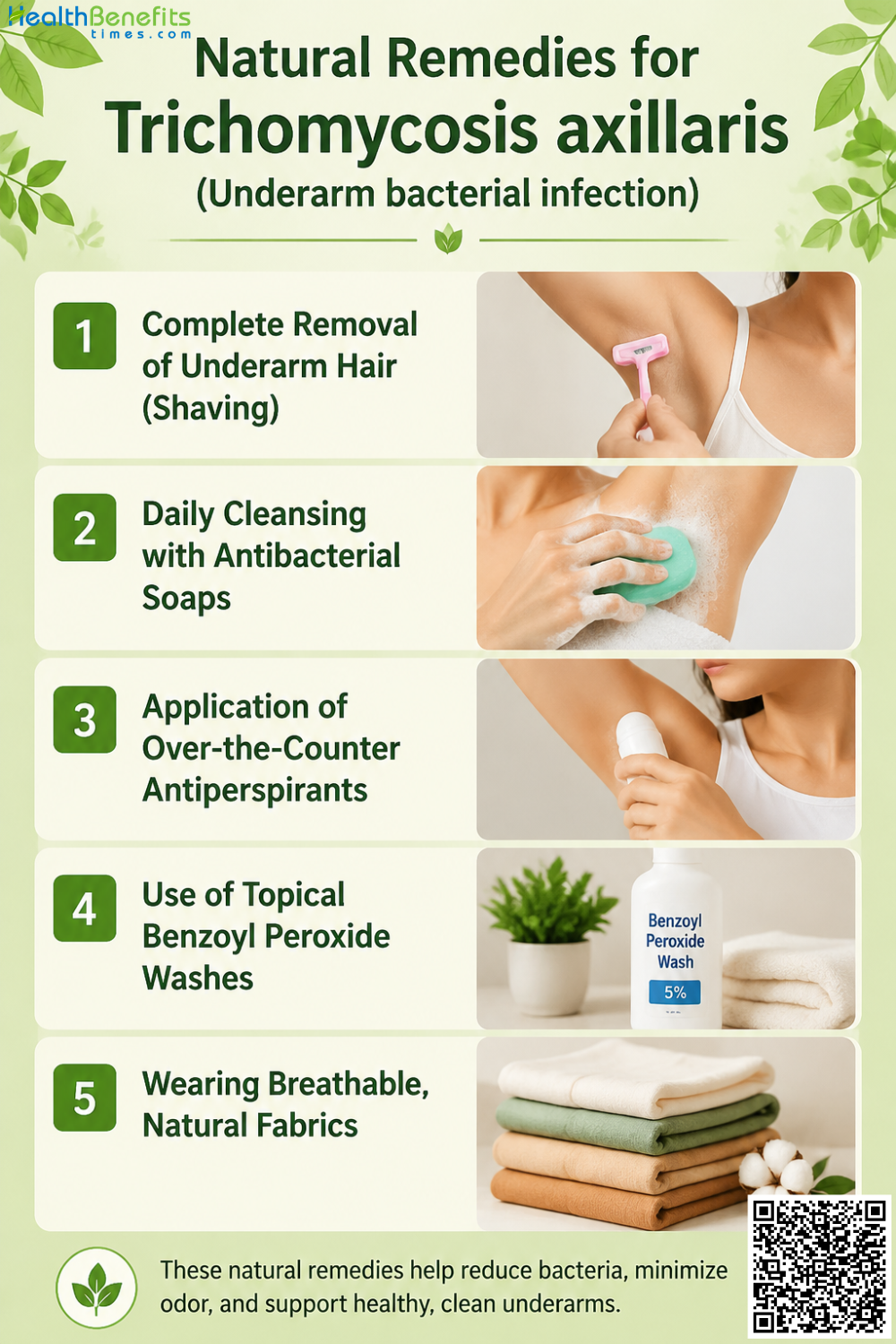
3. Application of Over-the-Counter Antiperspirants
How it may help
Over-the-counter antiperspirants use aluminum-based compounds to temporarily block sweat ducts, significantly reducing underarm moisture. Because the Corynebacterium species responsible for this infection require a persistently damp environment to multiply and attach to hair shafts, eliminating excess sweat directly halts bacterial growth and prevents symptom recurrence.
What research says
Clinical studies identify heavy sweating as the primary predisposing factor for trichomycosis axillaris. Medical guidelines confirm that applying topical aluminum chloride antiperspirants effectively manages this underlying moisture, making it a critical preventative treatment to disrupt the specific environment that allows bacterial colonization 4.
How to use it safely
Apply an antiperspirant to clean, completely dry underarms at night, as sweat glands are less active during sleep. This allows the active ingredients to absorb properly. Wash the area normally the following morning.
Potential precautions or side effects
Aluminum-based antiperspirants often cause mild skin irritation or itching. Applying these products to damp or freshly shaved skin severely increases the risk of painful burning and contact dermatitis.
4. Use of Topical Benzoyl Peroxide Washes
How it may help
Benzoyl peroxide acts as a potent antimicrobial agent that destroys the Corynebacterium species responsible for the infection. By chemically breaking down the bacterial colonies attached to the hair shafts, this wash clears the physical nodules and neutralizes the foul-smelling byproducts of the infection.
What research says
Clinical dermatology guidelines recommend benzoyl peroxide as an effective topical therapy for trichomycosis axillaris, particularly for patients who prefer not to shave. Research demonstrates that its antibacterial properties successfully eradicate the Corynebacterium overgrowth and dissolve the bacterial concretions from the hair shafts 2.
How to use it safely
Apply a low-concentration (4% to 5%) benzoyl peroxide wash to your wet underarm hair during a shower. Massage it in gently, leave it on for one to two minutes to act on the bacteria, and then rinse thoroughly. Always dry your underarms completely afterward.
Potential precautions or side effects
Benzoyl peroxide has strong bleaching properties and will permanently discolor towels or clothing if not thoroughly rinsed. It can also cause localized skin dryness, redness, or peeling.
5. Wearing Breathable, Natural Fabrics
How it may help
Breathable, natural fabrics allow air to circulate freely and sweat to evaporate quickly. By preventing moisture from becoming trapped in the underarm area, these materials eliminate the persistently damp, humid environment that Corynebacterium species require to survive, multiply, and bind to hair shafts.
What research says
Clinical evidence identifies poor underarm ventilation and high local humidity as primary environmental triggers for trichobacteriosis. Medical research confirms that wearing tight or synthetic clothing accelerates bacterial overgrowth, whereas breathable garments successfully lower axillary moisture and help prevent the recurrence of this localized infection 1.
How to use it safely
Choose loose-fitting shirts made entirely from natural fibers, such as cotton, bamboo, or linen. Change your clothing promptly after heavy sweating or physical exertion. Wash your garments thoroughly after a single use to remove any transferred sweat and bacteria.
Potential precautions or side effects
While extremely safe, natural fibers like cotton can absorb and hold heavy sweat. If the fabric becomes entirely saturated during exercise, change it immediately to prevent prolonged skin dampness.
Foods to Avoid When You Suffer from Trichomycosis Axillaris
While diet does not directly cause trichomycosis axillaris, avoiding foods and beverages that trigger excessive sweating (hyperhidrosis) is clinically recommended to eliminate the moist environment required for bacterial overgrowth.
1. Spicy Foods
Ingredients containing capsaicin trigger the body’s cooling system, inducing heavy sweating. This excess axillary moisture creates an ideal breeding ground for Corynebacterium overgrowth on hair shafts 4.

2. Caffeinated Beverages
Caffeine stimulates the nervous system and activates sweat glands. The resulting increase in underarm perspiration provides the exact humidity necessary for the bacterial infection to spread rapidly 4.
3. Alcohol
Alcohol dilates blood vessels and raises skin temperature, prompting a strong sweating response. This continuous dampness prevents underarms from remaining dry, allowing the bacterial concretions to persist 4.
4. Hot Beverages
Consuming high-temperature liquids raises core body heat, triggering sweat production to cool the skin. This additional moisture directly supports the survival and expansion of axillary bacterial colonies 4.
When to See a Doctor When You Suffer from Trichomycosis Axillaris
1. Failure of Home Treatments
If shaving and daily antibacterial cleansing fail to clear the colored nodules, a physician may need to prescribe targeted topical antibiotics like clindamycin or erythromycin 1.
2. Spread to Other Body Areas
Medical evaluation is necessary if similar granular growths appear on pubic hair, as the bacterial infection can spread to other moist, hair-bearing regions of the body 2.
3. Skin Irritation or Rashes
Because this condition only affects hair, the development of skin redness, rashes, or pain indicates a secondary infection or a different dermatological issue requiring accurate diagnosis 4.
4. Severe Excessive Sweating
If profuse sweating prevents the infection from resolving, a dermatologist can prescribe medical-grade antiperspirants or therapies to control the underlying moisture problem responsible for bacterial overgrowth 4.
5. Signs of Co-infections
The presence of red, scaly skin patches or pitted soles suggests the co-occurrence of erythrasma or pitted keratolysis, requiring a comprehensive clinical antibacterial treatment plan 1.