


An enlarged prostate, clinically termed benign prostatic hyperplasia (BPH), is a non-cancerous condition where the prostate gland slowly increases in size 1. Because the prostate naturally surrounds the urethra, its continued enlargement can squeeze this internal tube and severely restrict normal urine flow 2. BPH is a standard part of the aging process for most males, affecting roughly 50% of men in their 60s and up to 90% of those over age 70 1. Although the exact mechanism remains unclear, research points to age-related hormonal changes as the primary driver for this cellular growth 3. Crucially, this condition is entirely distinct from prostate cancer and does not increase cancer risk. However, the resulting physical obstruction frequently causes lower urinary tract symptoms such as a weak stream, frequent nighttime urination, and incomplete bladder emptying which can significantly disrupt daily life 4.
Causes of Enlarged Prostate
- Aging: Advancing age is the primary cause of an enlarged prostate, as the prostate gland naturally undergoes continuous, slow growth throughout a man’s adult life 1.
- Hormonal Imbalances: As men age, the amount of active testosterone in the blood decreases, leading to a higher proportion of estrogen. This shifting hormone balance directly promotes the growth of prostate cells 3.
- Dihydrotestosterone (DHT) Accumulation: DHT is a potent male hormone derived from testosterone. Research shows that even when blood testosterone levels fall, older men continue to produce and accumulate high levels of DHT in the prostate, which encourages continuous cell multiplication 5.
- Genetics and Family History: Having a direct blood relative, such as a father or a brother, who has experienced an enlarged prostate significantly increases a person’s risk of developing the condition 6.
- Metabolic Syndrome and Obesity: Excess body weight, type 2 diabetes, and high blood pressure are strongly linked to prostate enlargement 7. Increased body fat causes systemic inflammation and alters hormone processing, which can accelerate prostate tissue growth 8.
- Physical Inactivity: A sedentary lifestyle contributes to a higher risk of developing severe urinary symptoms related to prostate growth, while regular exercise helps regulate hormonal pathways and manage weight to lower this risk 2.
Symptoms of Enlarged Prostate
- Frequent Urination: The need to urinate more often than normal, typically defined as eight or more times a day, caused by the bladder wall thickening and losing its capacity to hold standard amounts of fluid 5.
- Nighttime Urination (Nocturia): Waking up two or more times during the night with an immediate need to use the bathroom, which frequently disrupts deep sleep cycles 4.
- Urinary Urgency: A sudden, intense, and compelling need to urinate that is extremely difficult to delay, resulting from physical irritation to the bladder muscle 1.
- Weak Urine Stream: A noticeable decrease in the pressure and speed of the urine flow because the enlarged prostate physically squeezes the urethra and narrows the fluid passageway 2.
- Hesitancy: Difficulty initiating the urine flow, often requiring a person to wait several seconds or strain abdominal muscles before the stream actually begins 1.
- Incomplete Bladder Emptying: A persistent physical sensation that urine remains in the bladder immediately after finishing urination, occurring when the weakened bladder fails to push out all contained fluid 4.
- Starting and Stopping (Intermittency): A urine stream that involuntarily stops and restarts multiple times during a single trip to the bathroom 5.
- Acute Urinary Retention: In severe or advanced cases, a total inability to pass any urine despite having a full bladder, which is considered a medical emergency requiring immediate catheterization to prevent severe kidney damage 6.
Natural Remedies for Enlarged Prostate
1. Plant Sterols (Beta-sitosterol) Supplements
How It May Help
Beta-sitosterol is a natural plant extract that helps relieve bothersome symptoms of an enlarged prostate, such as frequent urination and a weak urine stream, by reducing inflammation in the prostate tissue 9. However, it only manages urinary symptoms and does not physically shrink the prostate gland 10.
What Research Says
Clinical studies confirm that beta-sitosterol significantly improves urinary symptom scores and increases urine flow rates in men with mild to moderate prostate enlargement 10. Extensive reviews conclude that these plant sterols provide reliable relief for urinary difficulties, though they do not reverse the underlying prostate growth 9.
How to Use It Safely
You should always consult your doctor before taking beta-sitosterol to prevent unexpected interactions with your current medications. Standard doses generally range from 60 to 130 milligrams daily, divided into two or three smaller doses taken alongside meals to improve bodily absorption 10.
Potential Precautions or Side Effects
These plant sterol supplements are typically well-tolerated. Occasionally, they can cause mild stomach discomfort, including nausea, indigestion, or constipation, and very rarely, a slight decline in sexual function 9.
2. Saw Palmetto Berry Extract
How It May Help
Saw palmetto extract is believed to block the specific enzyme that converts testosterone into dihydrotestosterone (DHT), the hormone largely responsible for prostate cell growth 11. By lowering localized DHT levels, this berry extract attempts to halt further prostate enlargement and reduce internal inflammation to ease urinary symptoms 12.
What Research Says
Despite its popularity, high-quality research indicates that saw palmetto is generally ineffective for enlarged prostate symptoms. Comprehensive clinical trials and systematic reviews consistently conclude that taking this extract provides no more relief for urinary difficulties or nighttime urination than a non-active placebo pill 13 12.
How to Use It Safely
You must consult your doctor before using saw palmetto to ensure your symptoms are not actually caused by prostate cancer. When medically approved, the widely studied dosage is 320 milligrams once daily, taken with food to improve absorption and minimize stomach irritation 11.
Potential Precautions or Side Effects
Saw palmetto is generally safe but can occasionally cause mild side effects like headaches, digestive issues, or nausea 12. It may also interact dangerously with blood-thinning medications 11.
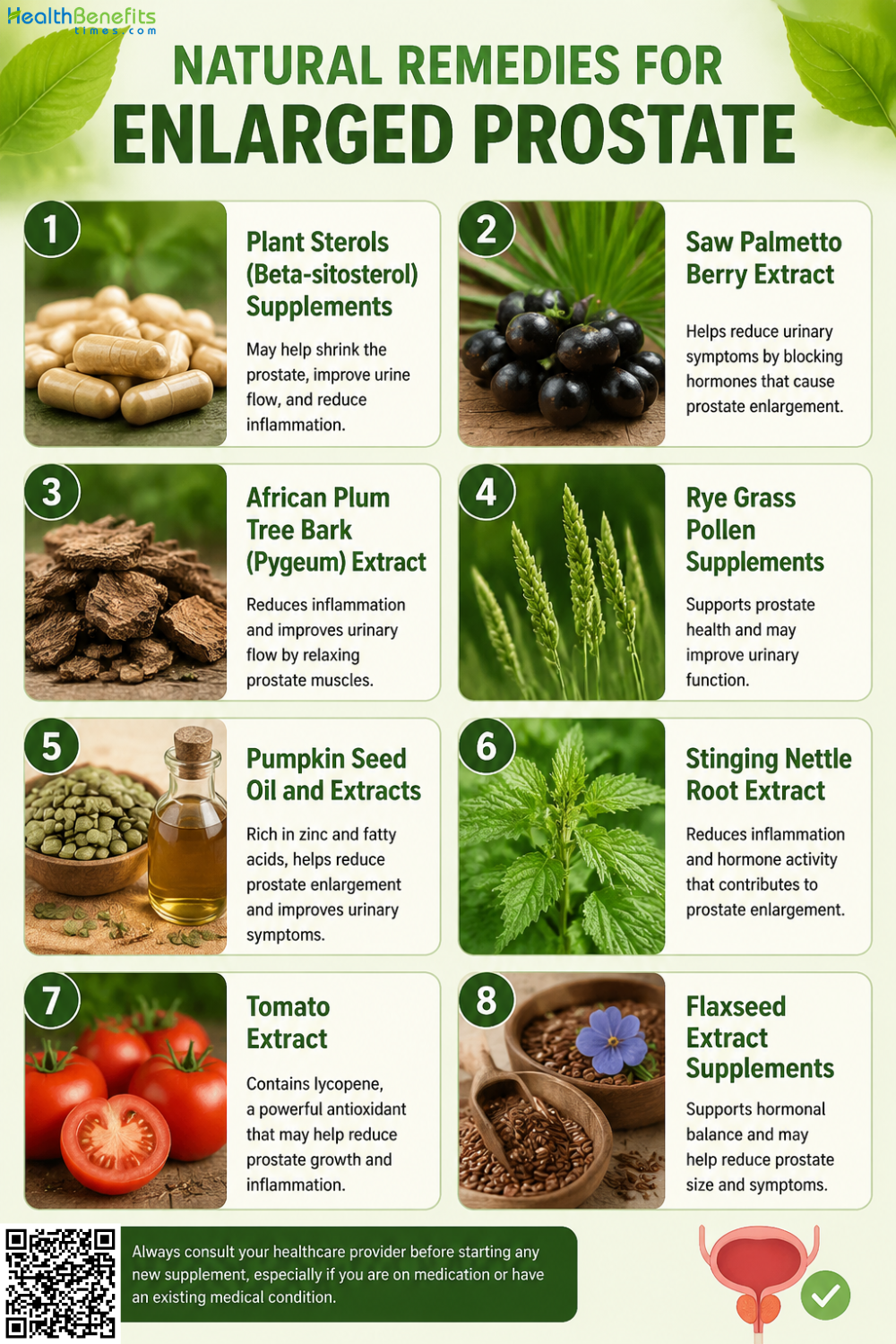
3. African Plum Tree Bark (Pygeum) Extract
How It May Help
African plum tree bark extract, widely known as Pygeum, works by reducing internal inflammation and relaxing the smooth muscles of the bladder. It contains specific plant compounds that decrease prostate swelling, making it easier to empty the bladder completely and reducing the constant urge to urinate 14.
What Research Says
Extensive reviews of clinical trials conclude that Pygeum provides moderate but significant relief for enlarged prostate symptoms. Studies demonstrate that men taking this herbal extract are more than twice as likely to report overall improvements in urine flow and nighttime waking compared to those taking a placebo 14.
How to Use It Safely
You should consult your doctor before trying Pygeum to ensure it does not interfere with your current medical treatments. The standard clinical dosage typically ranges from 75 to 200 milligrams daily, taken in divided doses with meals to improve absorption and prevent stomach upset 14.
Potential Precautions or Side Effects
Pygeum is generally considered very safe for long-term use. When side effects do occur, they are usually mild digestive issues, such as stomach pain, nausea, or diarrhea 14.
4. Rye Grass Pollen Supplements
How It May Help
Rye grass pollen extract helps manage enlarged prostate symptoms by relaxing the smooth muscles lining the internal urinary tube and improving bladder muscle contraction. It contains natural anti-inflammatory compounds that reduce localized swelling within the prostate tissue, which eases the physical blockage and improves urine flow 15.
What Research Says
Clinical trials demonstrate that rye grass pollen extract provides a modest improvement in self-reported urinary symptoms, particularly in reducing the frequency of nighttime urination. However, studies show it does not consistently increase maximum urine flow pressure or physically shrink the size of the prostate gland 16.
How to Use It Safely
You must consult your doctor before starting this extract to ensure it fits your treatment plan. The standard researched dosage is typically 126 milligrams taken three times daily, or up to 375 milligrams twice daily, swallowed with meals to optimize absorption 17.
Potential Precautions or Side Effects
This supplement is highly tolerated by most men. Rare side effects include mild digestive disturbances, like nausea or heartburn, and potential allergic reactions in severely pollen-sensitive individuals 17.
5. Pumpkin Seed Oil and Extracts
How It May Help
Pumpkin seed oil contains specific plant sterols that appear to block the enzyme responsible for converting testosterone into the hormone that drives prostate growth 18. Additionally, the oil provides natural anti-inflammatory effects that help relax the bladder muscles, easing urinary obstruction and decreasing the constant urge to urinate 19.
What Research Says
Clinical trials demonstrate that pumpkin seed oil significantly improves lower urinary tract symptoms and quality of life in men with enlarged prostates. While it effectively reduces nighttime urination and improves flow rates, studies note it is slightly less effective than standard prescription medications and does not shrink overall prostate volume 20.
How to Use It Safely
You should always discuss starting any new supplement with your healthcare provider. Based on clinical studies, an effective and standard dose is 320 to 360 milligrams taken once or twice daily 20. Swallow the capsules alongside your meals to maximize absorption and minimize stomach irritation.
Potential Precautions or Side Effects
Pumpkin seed extracts are highly safe and very well tolerated. On rare occasions, individuals may experience mild digestive disturbances, such as minor stomach upset, nausea, or loose stools 21.
6. Stinging Nettle Root Extract
How It May Help
Stinging nettle root extract contains plant compounds that reduce inflammation and interact with prostate hormones. It helps relax the smooth muscle tissue around the urinary tract and lowers localized swelling, which can relieve the physical blockage and make urination easier for men with an enlarged prostate 22.
What Research Says
Extensive clinical trials demonstrate that stinging nettle root significantly improves lower urinary tract symptoms compared to a placebo. Studies show men taking the extract experience better maximum urine flow, fewer nighttime trips to the bathroom, and a noticeable reduction in urine left in the bladder 22.
How to Use It Safely
You should consult a healthcare provider before taking stinging nettle to rule out other medical issues. The clinically studied dosage is typically 300 to 600 milligrams per day, often taken in capsule form with meals to enhance absorption and ensure consistent results over several months 23.
Potential Precautions or Side Effects
Stinging nettle root is generally safe and well-tolerated. When side effects occur, they are typically mild and limited to minor stomach upset, sweating, or an occasional skin rash 23.
7. Tomato Extract
How It May Help
Tomato extract is rich in lycopene, a powerful antioxidant that protects cells from damage. It helps control an enlarged prostate by reducing internal swelling and blocking specific growth factors that cause prostate tissues to multiply, which ultimately eases pressure on the lower urinary tract 24.
What Research Says
Clinical trials demonstrate that daily lycopene supplementation can effectively halt the physical growth of the prostate gland in men with early-stage enlargement. Research confirms that it significantly improves urinary symptoms and prevents the condition from progressing, though it does not completely reverse existing growth 25.
How to Use It Safely
You should consult your healthcare provider before starting tomato extract supplements. The clinically studied dosage is generally 15 milligrams of lycopene per day 25. Take these supplements with meals that contain natural fats, as this significantly improves how well your body absorbs the extract 26.
Potential Precautions or Side Effects
Tomato extract is highly safe for most men. Extremely large doses may cause mild stomach upset or a harmless, temporary orange skin discoloration that resolves once usage is reduced 26.
8. Flaxseed Extract Supplements
How It May Help
Flaxseed extract contains high concentrations of lignans, specific plant compounds that naturally alter hormone metabolism. These lignans help balance the specific hormones that drive prostate growth and provide strong anti-inflammatory effects, which ultimately relieves physical pressure on the bladder and lower urinary tract 27.
What Research Says
Clinical trials demonstrate that taking a standardized flaxseed lignan extract significantly improves urinary symptoms and overall quality of life for men with an enlarged prostate. Research shows the symptom relief can be comparable to standard prescription medications, although it does not significantly increase maximum urine flow rates 28.
How to Use It Safely
You should consult your doctor before using flaxseed extracts to ensure they do not interfere with other treatments. Clinical studies demonstrate symptom improvement using 300 to 600 milligrams of standardized flaxseed lignan extract daily 28. Take these supplements consistently to maintain symptom relief.
Potential Precautions or Side Effects
Flaxseed lignan extracts are highly safe and well-tolerated. Occasionally, individuals may experience minor digestive disturbances, such as bloating, increased gas, or mild stomach discomfort when taking higher daily doses 29.
Foods to Avoid When You Suffer from Enlarged Prostate
1. Red and Processed Meats
High consumption elevates systemic inflammation and alters hormone levels, significantly increasing prostate enlargement and the severity of lower urinary tract symptoms 30.
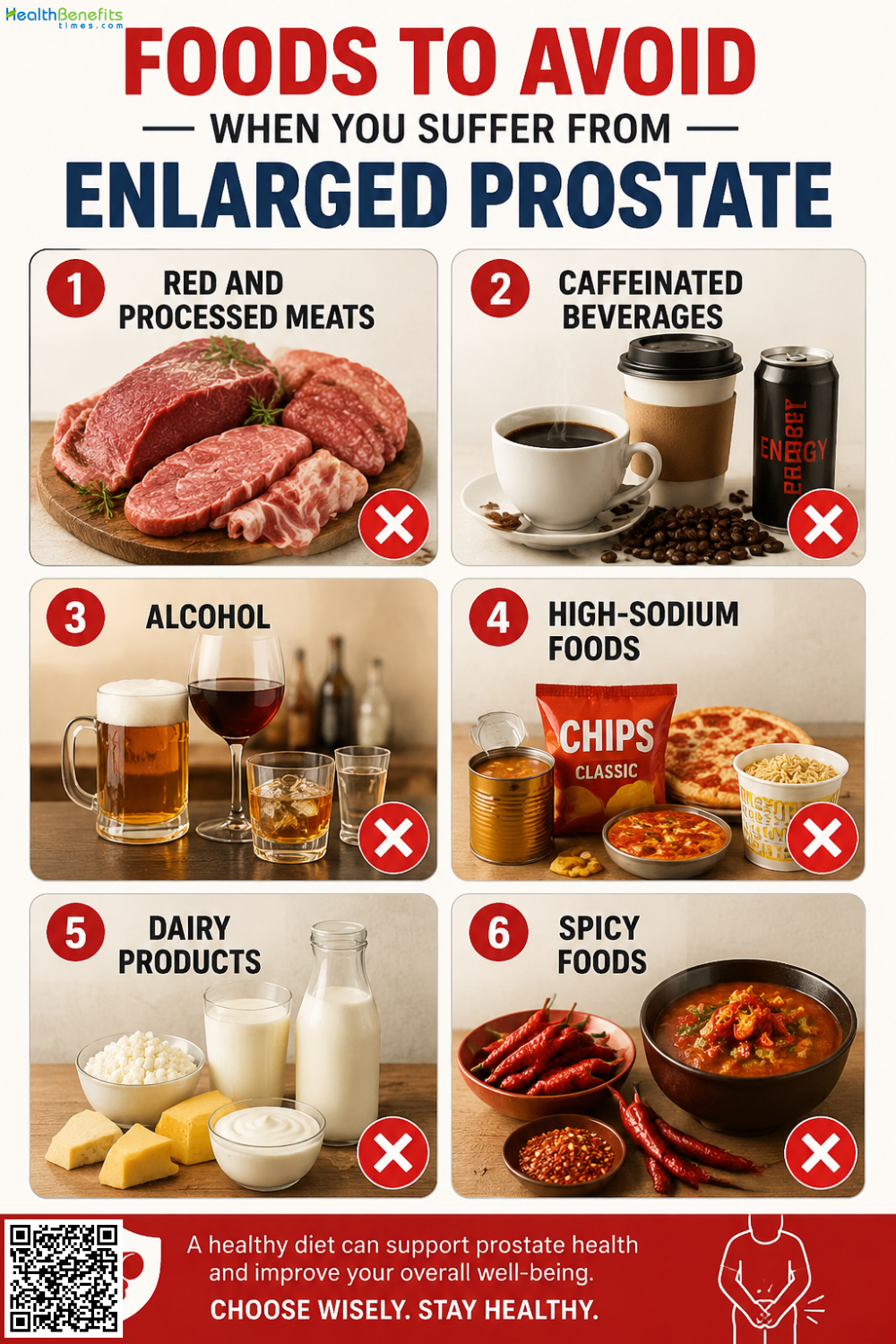
2. Caffeinated Beverages
Coffee and energy drinks act as strong diuretics, increasing urine production and irritating the bladder, which rapidly worsens urinary urgency and frequency 5.
3. Alcohol
Alcohol relaxes bladder muscles and stimulates urine production. This combination makes fully emptying the bladder difficult while increasing the immediate need to urinate 5.
4. High-Sodium Foods
Excessive salt intake forces the kidneys to produce more urine and directly contributes to more frequent nighttime waking to use the bathroom 31.
5. Dairy Products
Diets high in milk and cheese elevate hormones that stimulate cell multiplication, which can accelerate continued prostate growth and worsen urinary blockage 32.
6. Spicy Foods
Hot peppers and intensely spicy dishes contain compounds that directly irritate the bladder lining, triggering painful urination and aggravating sudden urinary urges 32.
When to See a Doctor When You Struggle from Enlarged Prostate
You should seek medical evaluation if urinary symptoms begin to interfere with your daily life, and seek immediate emergency care if you experience severe warning signs.
1. Total Inability to Urinate
Seek emergency care immediately if you cannot pass any urine. This dangerous physical blockage can cause permanent, severe kidney damage if not treated promptly 5.
2. Blood in the Urine
Visible blood in your urine requires an immediate medical evaluation to rule out more serious underlying conditions, such as severe infections or prostate cancer 5.
3. Painful Urination
Experiencing a burning sensation or physical pain while urinating strongly indicates a urinary tract infection, which frequently develops when an enlarged prostate traps fluid 4.
4. Loss of Bladder Control
Consult a doctor if you experience involuntary urine leakage, as chronic fluid pressure from a blocked prostate can permanently weaken or damage bladder muscles 1.
5. Disruptive Symptoms
Schedule a visit if frequent nighttime urination or a weak stream begins disrupting your sleep, as safe medical treatments can significantly improve your quality of life 5.