

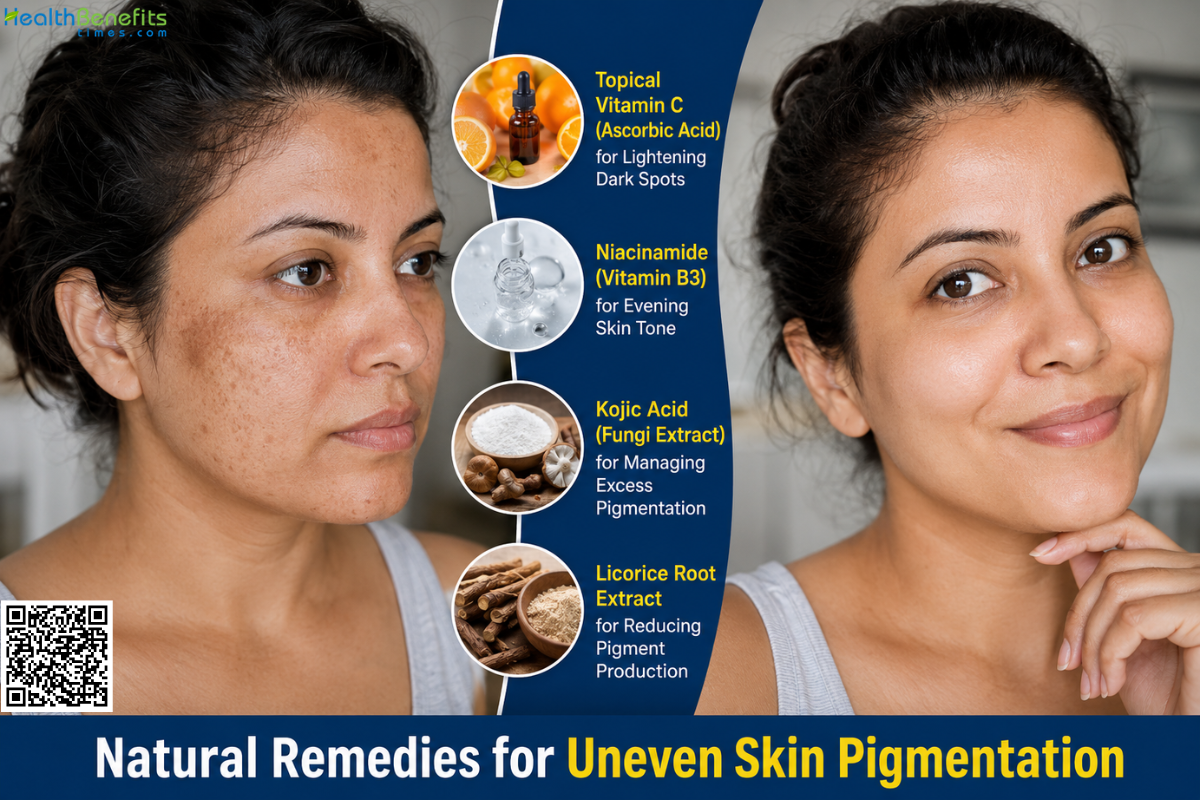
Uneven skin pigmentation is a condition characterized by patches of skin that appear noticeably darker or lighter than the surrounding tissue. This variation is directly controlled by melanin, the natural pigment synthesized by specialized skin cells known as melanocytes located within the outer layer of the skin 1. While melanin’s primary biological role is to absorb and protect the body from harmful ultraviolet (UV) radiation, localized disruptions in its production cause visible color differences. When melanocytes overproduce melanin, it creates dark spots known as hyperpigmentation; conversely, a drop in melanin production results in lighter areas called hypopigmentation. Clinical research confirms that these cellular imbalances are primarily triggered by cumulative UV exposure, genetic factors, hormonal fluctuations, and healing responses following skin inflammation 2. Addressing these pigment irregularities requires understanding the specific external and internal triggers that alter normal melanin synthesis.
Causes of Uneven Skin Pigmentation
1. Ultraviolet (UV) Radiation Exposure
Repeated exposure to sunlight acts as the primary external trigger for pigment irregularities. UV rays stimulate melanocytes to produce excess melanin as a biological defense mechanism, which frequently accumulates in concentrated patches to form visible sun spots or age spots 3.
2. Hormonal Fluctuations
Internal hormonal changes, especially those involving estrogen and progesterone, can significantly overstimulate melanin production. This biological shift frequently results in melasma, a distinct pattern of hyperpigmentation that commonly develops during pregnancy or alongside the use of hormonal contraceptives 4.
3. Post-Inflammatory Responses
Skin trauma resulting from acne, eczema, allergic reactions, or physical injuries often triggers an overactive cellular healing response that produces excess pigment. This reaction, clinically known as post-inflammatory hyperpigmentation, leaves noticeably darker skin patches that remain visible long after the original inflammation has completely resolved 5.
4. Systemic Medical Conditions
Certain internal diseases directly disrupt the body’s normal pigment regulation. Autoimmune disorders like vitiligo mistakenly attack and destroy pigment-producing cells, creating distinct patches of completely lightened skin 6. Conversely, endocrine disorders such as Addison’s disease alter hormone balances in a way that overstimulates melanocytes, leading to widespread skin darkening 7.
5. Medication Side Effects
The use of specific prescription treatments, including antimalarial drugs, certain broad-spectrum antibiotics, and chemotherapy medications, can interfere with normal melanin synthesis. These pharmaceutical agents can trigger systemic chemical reactions that abnormally deposit pigment into the skin layers as a documented side effect 8.
Symptoms of Uneven Skin Pigmentation
1. Symmetrical Brown or Gray Facial Patches
Flat, distinct dark spots commonly appear on sun-exposed areas of the face, particularly the cheeks, upper lip, and chin. This specific symptom frequently worsens gradually during periods of increased ultraviolet (UV) radiation or visible light exposure.
2. Irregular Darkening Following Skin Injury
Tan, brown, or dark brown patches often develop precisely where previous skin inflammation, acne, or physical trauma occurred. When excess pigment remains in the upper skin layers, the area appears brown, whereas deeper pigment accumulation beneath the surface creates a more permanent blue-gray hue 9.
3. Localized Discoloration on Extremities or Mucous Membranes
Abnormal pigment changes can manifest as diffuse darkening on the nails, the inside of the mouth (oral mucosa), the palms of the hands, or the soles of the feet. Depending on how deeply the pigment is deposited within the skin tissues, these affected regions may appear brown, gray, blue, or purplish 10.
4. Linear or Whip-Like Dark Streaks
Unusual, distinct hyperpigmented streaks that sometimes resemble whip marks can develop on the torso or lower back. These specific visual patterns typically emerge as residual darkening following acute inflammatory reactions to certain medications.
5. Sharply Demarcated Lighter Skin Patches
Specific areas of the skin can become noticeably lighter than the individual’s baseline skin tone, presenting as asymmetrical streaks or swirling patterns. This symptom reflects a localized failure in normal pigment production while generally sparing the palms of the hands and the soles of the feet 11.
6. Permanent Depigmentation in Scarred Areas
Lasting patches of abnormally light or completely white skin frequently remain after severe physical trauma, such as deep thermal burns. This symptom occurs because severe injury permanently destroys the pigment-producing cells normally housed within the upper skin layers and hair follicles 12.
Natural Remedies for Uneven Skin Pigmentation
1. Topical Vitamin C (Ascorbic Acid) for Lightening Dark Spots
How it may help
Vitamin C, also known as ascorbic acid, blocks tyrosinase, an enzyme necessary for making skin pigment. By interrupting this process, it prevents the overproduction of melanin, which causes dark spots. It also acts as an antioxidant, neutralizing harmful molecules from sun exposure that trigger excess pigmentation 13.
What research says
Clinical evidence confirms that applying vitamin C directly to the skin safely fades dark spots and evens skin tone. Research concludes it is an effective, well-tolerated treatment for short-term and long-term hyperpigmentation management, particularly when combined with other skin-lightening ingredients like soy or licorice extract.
How to use it safely
Apply a vitamin C serum with a concentration between 10% and 20% to clean, dry skin once daily. You should use it in the morning, followed by a broad-spectrum sunscreen, as this combination provides the best defense against daytime ultraviolet light damage.
Potential precautions or side effects
Some individuals may experience mild stinging, redness, or dryness. You should avoid concentrations higher than 20%, as they increase skin irritation without providing any additional lightening benefits.
2. Niacinamide (Vitamin B3) for Evening Skin Tone
How it may help
Niacinamide, a form of vitamin B3, prevents dark spots by stopping pigment from transferring into the top layers of the skin. Unlike other remedies that block pigment production, niacinamide works by keeping the already-produced pigment from reaching the skin’s surface, resulting in a more even tone.
What research says
Clinical studies demonstrate that applying niacinamide significantly lightens dark spots and reduces uneven pigmentation. Researchers concluded that using a daily topical product containing niacinamide noticeably improves skin color and reduces visible hyperpigmentation after just four weeks of continuous treatment.
How to use it safely
You should apply a product containing a 2% to 5% concentration of niacinamide to your clean skin twice daily. You can safely combine it with your daily moisturizer and sunscreen to maintain results and protect against further sun damage.
Potential precautions or side effects
Niacinamide is highly stable and generally very gentle. However, you might experience mild redness, itching, or slight burning if you use concentrations much higher than the recommended amounts.
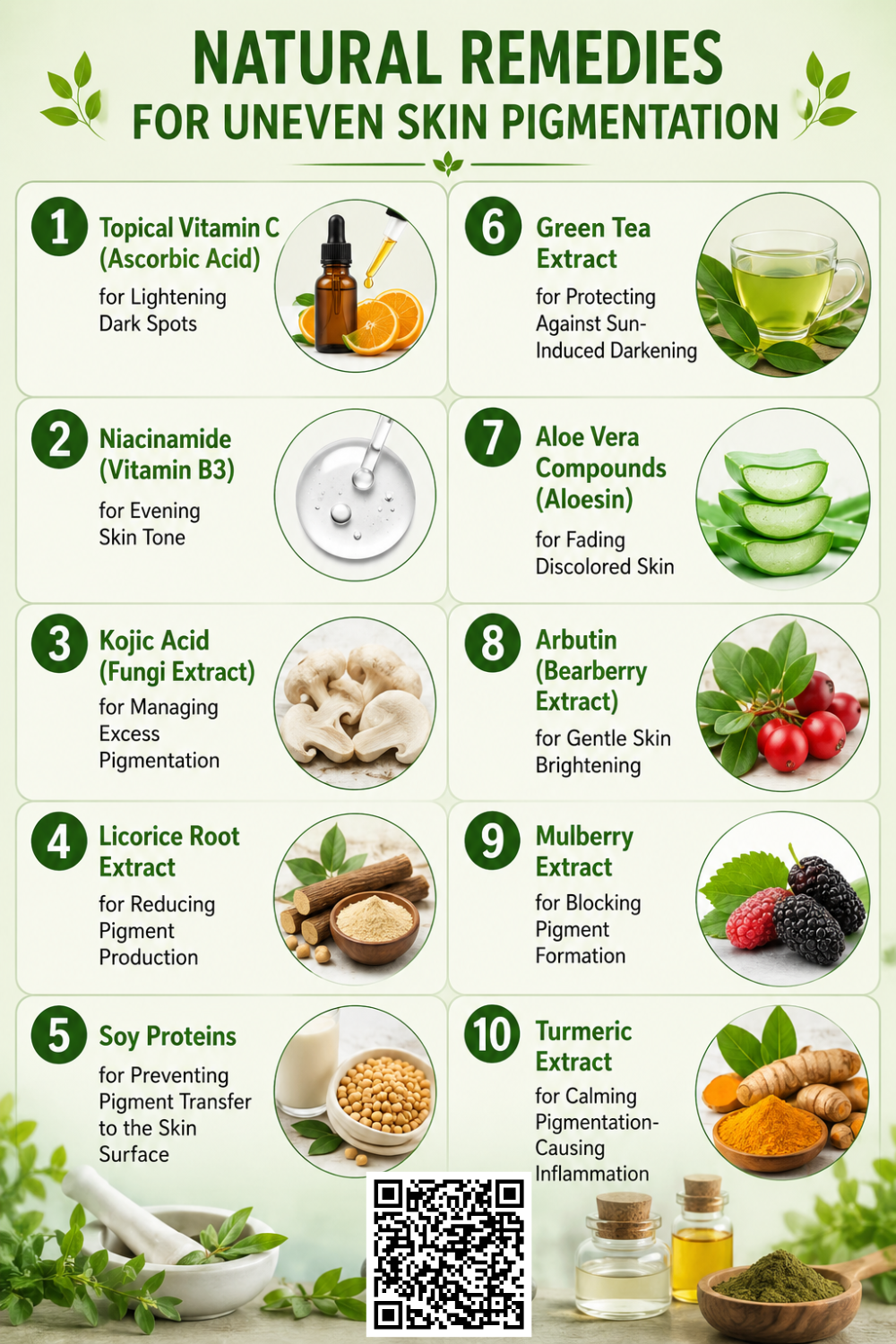 3. Kojic Acid (Fungi Extract) for Managing Excess Pigmentation
How it may help
Kojic acid, a natural byproduct derived from certain types of fungi, effectively reduces skin discoloration. It works by blocking tyrosinase, the crucial enzyme required for producing melanin. By preventing this pigment formation, it gradually lightens existing dark spots and prevents new hyperpigmentation from developing.
What research says
Clinical studies confirm that kojic acid is a highly effective treatment for reducing localized hyperpigmentation, such as melasma and sun spots. Researchers conclude that it produces significant skin-lightening results, offering a reliable natural alternative to synthetic bleaching agents when used consistently over several months.
How to use it safely
You should choose over-the-counter topical products containing a safe kojic acid concentration of 1% to 2%. Apply it directly to the darkened areas once or twice daily. Always apply a broad-spectrum sunscreen afterward, as this treatment makes your skin more vulnerable to sun damage.
Potential precautions or side effects
You may experience redness, mild irritation, or contact dermatitis, especially if you have sensitive skin. Stop using the product completely if severe itching or prolonged inflammation develops.
4. Licorice Root Extract for Reducing Pigment Production
How it may help
Licorice root extract contains active compounds like glabridin and liquiritin that naturally interrupt the skin’s pigment-producing processes. Glabridin prevents tyrosinase, the enzyme responsible for making melanin, from functioning properly, while liquiritin helps disperse existing pigment in the upper layers of the skin, gradually fading dark spots 14.
What research says
Clinical research confirms that licorice extract serves as a highly effective, non-toxic alternative to synthetic skin-lightening chemical agents. Studies conclude that consistent topical application significantly reduces melasma, sun spots, and general hyperpigmentation without damaging pigment cells, making it a reliable natural treatment for evening out skin color.
How to use it safely
You should look for topical serums or creams containing pure licorice root extract or its active component, glabridin. Apply a thin layer directly to the dark spots on your clean skin once or twice daily, and always follow up with a broad-spectrum sunscreen to protect your progress.
Potential precautions or side effects
Licorice extract is generally very safe and well-tolerated by most skin types. However, you should immediately stop using the product if you develop uncharacteristic redness, persistent itching, or an allergic rash.
5. Soy Proteins for Preventing Pigment Transfer to the Skin Surface
How it may help
Active proteins found in natural soy interact with the skin to stop dark pigment from reaching the upper skin layers. Instead of halting pigment production, these specific proteins prevent pigment-making cells from transferring their color to surrounding skin cells, keeping the visible skin surface even.
What research says
Clinical studies show that unpasteurized soy extracts significantly reduce uneven skin pigmentation. Researchers conclude that applying fresh soy continuously over twelve weeks successfully lightens dark patches and improves overall skin tone, offering a highly tolerable natural alternative to harsh chemical skin-bleaching agents.
How to use it safely
You should choose lotions containing “active soy” or unpasteurized soy extract, because standard heating processes destroy the helpful proteins. Apply the product daily to clean skin, and always wear a broad-spectrum sunscreen to protect the treated areas from further sun damage.
Potential precautions or side effects
Soy is exceptionally gentle and rarely causes adverse reactions. However, you should completely avoid these topical products if you have a known soybean allergy to prevent itching or rashes.
6. Green Tea Extract for Protecting Against Sun-Induced Darkening
How it may help
Green tea extract contains a powerful antioxidant called EGCG. This active compound protects the skin by neutralizing harmful molecules generated by sun exposure. By calming sun-induced inflammation, green tea extract effectively interrupts the internal signals that cause skin cells to overproduce dark pigment.
What research says
Clinical research concludes that the active components in green tea significantly decrease melanin production. Studies demonstrate that applying green tea extract topically prevents ultraviolet light from triggering new dark spots and helps fade existing uneven pigmentation, making it a highly effective protective botanical remedy.
How to use it safely
You should apply creams or serums containing pure green tea extract directly to clean skin every morning. Because its primary benefit is preventing sun-induced darkening, always layer the product underneath a broad-spectrum sunscreen to maximize its daily protective effects.
Potential precautions or side effects
Topical green tea extract is exceptionally gentle and safe for daily use. However, you should stop applying the product completely if you develop unusual redness, stinging, or an allergic rash.
7. Aloe Vera Compounds (Aloesin) for Fading Discolored Skin
How it may help
Aloesin, an active compound naturally derived from the aloe vera plant, directly slows down the skin’s pigment-making process. It works by blocking tyrosinase, the main enzyme responsible for producing melanin. By disrupting this enzyme, aloesin prevents dark spots from forming and gently fades existing uneven pigmentation 15.
What research says
Clinical studies demonstrate that applying aloesin to the skin effectively reduces excessive pigmentation. Researchers conclude that it produces visible skin-lightening results, especially for sun-induced dark spots, and works even more successfully when combined with other natural agents like arbutin without causing cell damage.
How to use it safely
You should look for serums or creams specifically listing aloesin as an active ingredient, rather than relying on raw aloe gel. Apply the product directly to dark patches on clean skin up to four times daily. Always apply a broad-spectrum sunscreen afterward to protect your progress.
Potential precautions or side effects
Aloesin is exceptionally gentle and typically safe for all skin types. However, you should completely discontinue use if you experience uncommon redness, itching, or an allergic reaction.
8. Arbutin (Bearberry Extract) for Gentle Skin Brightening
How it may help
Arbutin, a natural compound extracted from the bearberry plant, acts as a gentle skin brightener. It works by actively blocking tyrosinase, the essential enzyme required for producing dark pigment. By interrupting this chemical pathway, it stops excess melanin from forming and helps fade existing dark spots.
What research says
Clinical research confirms that arbutin effectively reduces skin darkening, especially for sun spots and melasma. Scientists conclude that it provides a safer, natural alternative to synthetic bleaching agents, as it successfully lightens hyperpigmentation while posing a significantly lower risk of cellular toxicity and severe skin irritation.
How to use it safely
You should apply topical serums or creams containing a 2% concentration of arbutin to your clean skin twice daily. To maintain these brightening effects and prevent further discoloration, you must always layer a broad-spectrum sunscreen over the treated areas before daytime sun exposure.
Potential precautions or side effects
Arbutin is generally well-tolerated by most skin types. However, you might experience mild redness or dryness. Discontinue use immediately if you develop severe itching, swelling, or an allergic rash.
9. Mulberry Extract for Blocking Pigment Formation
How it may help
Mulberry extract, derived from the roots and leaves of the mulberry plant, naturally brightens the skin. It works by actively blocking tyrosinase, the main enzyme the skin uses to produce dark pigment. By slowing down this enzyme, it prevents new dark spots from forming and fades existing discoloration.
What research says
Clinical studies demonstrate that mulberry extract significantly reduces excess skin pigment. Researchers conclude that its active compounds are highly effective at lightening sun spots and melasma, offering a gentle, well-tolerated alternative to harsh chemical treatments with minimal risk of irritating the surrounding skin.
How to use it safely
You should apply a cream or serum containing mulberry extract to your clean skin up to twice daily. To achieve the best results, use it consistently and always wear a broad-spectrum sunscreen during the day to protect your fading spots from new sun damage.
Potential precautions or side effects
Mulberry extract is generally very safe and exceptionally gentle on the skin. However, you should stop using the product completely if you experience unusual redness, swelling, or an allergic rash.
10. Turmeric Extract for Calming Pigmentation-Causing Inflammation
How it may help
Curcumin, the primary active compound in turmeric, limits dark spots by calming underlying skin inflammation. Because environmental stress and physical injury trigger the skin to produce excess pigment as a defense mechanism, turmeric neutralizes this inflammatory response. It also actively blocks tyrosinase, the enzyme required for melanin production 16.
What research says
Clinical studies indicate that topical turmeric extract significantly decreases excessive skin pigment caused by inflammation and sun exposure. Researchers conclude that curcumin effectively improves uneven skin tone and lightens hyperpigmentation without damaging surrounding skin tissues, providing a well-tolerated, natural treatment for chronic dark spots.
How to use it safely
You should select formulated skincare creams containing purified curcumin extract rather than raw turmeric powder, which can temporarily stain your skin yellow. Apply the product to clean skin once daily, and consistently use a broad-spectrum sunscreen to prevent further sun-induced inflammation.
Potential precautions or side effects
Turmeric extract is generally very safe for daily topical use. However, you should completely discontinue application if you experience localized redness, stinging, or an allergic contact rash.
 Foods to Avoid When You suffer from Uneven Skin Pigmentation
1. High-Glycemic Carbohydrates
Sugary foods and refined grains rapidly spike blood sugar. This triggers whole-body inflammation and hormonal changes that severely worsen dark skin patches and post-injury hyperpigmentation 17.
2. Deep-Fried Foods
Frying creates harmful compounds called advanced glycation end products. These toxic molecules accumulate in skin tissues, increasing cellular damage and worsening sun spots, dullness, and uneven discoloration 18.
3. Alcoholic Beverages
Alcohol causes blood vessels to widen and increases internal inflammation. Recent clinical evidence identifies regular alcohol consumption as a direct trigger that significantly worsens facial melasma patches 19.
4. Highly Processed Meats
Meats processed at high temperatures contain immense amounts of harmful dietary toxins. These molecules overwhelm natural cellular defenses, causing severe stress that accelerates skin aging and dark discoloration 20.
5. Excessive Dairy Products
Heavy dairy consumption elevates specific growth hormones that severely worsen inflammatory skin conditions like acne. This intense inflammation frequently leaves behind lasting, dark post-inflammatory hyperpigmentation scars 21.
When To see Doctor when you suffer from Uneven Skin Pigmentation
1. Rapid Size or Color Changes
Seek immediate evaluation if a dark spot rapidly changes in size, shape, or color, or develops irregular borders. These shifts strongly indicate potential skin cancer 22.
2. Bleeding or Painful Patches
You should consult a physician if pigmented areas become painful, itch, or spontaneously bleed. These active symptoms require clinical biopsy to rule out dangerous cellular mutations.
3. Sudden Widespread Darkening
Schedule a medical examination if diffuse skin darkening suddenly appears alongside severe fatigue or weight loss. This combination often signals serious adrenal gland disorders requiring immediate intervention 23.
4. Medication-Induced Discoloration
Contact your doctor if uneven pigmentation develops after starting new medications. Certain systemic drugs cause toxic pigment accumulation requiring professional dosage adjustments to prevent permanent discoloration.
5. Treatment-Resistant Spots
You should seek dermatological care if dark patches persist despite months of standard treatments. Specialists can prescribe stronger, clinically proven therapies to break down stubborn excess pigment.