

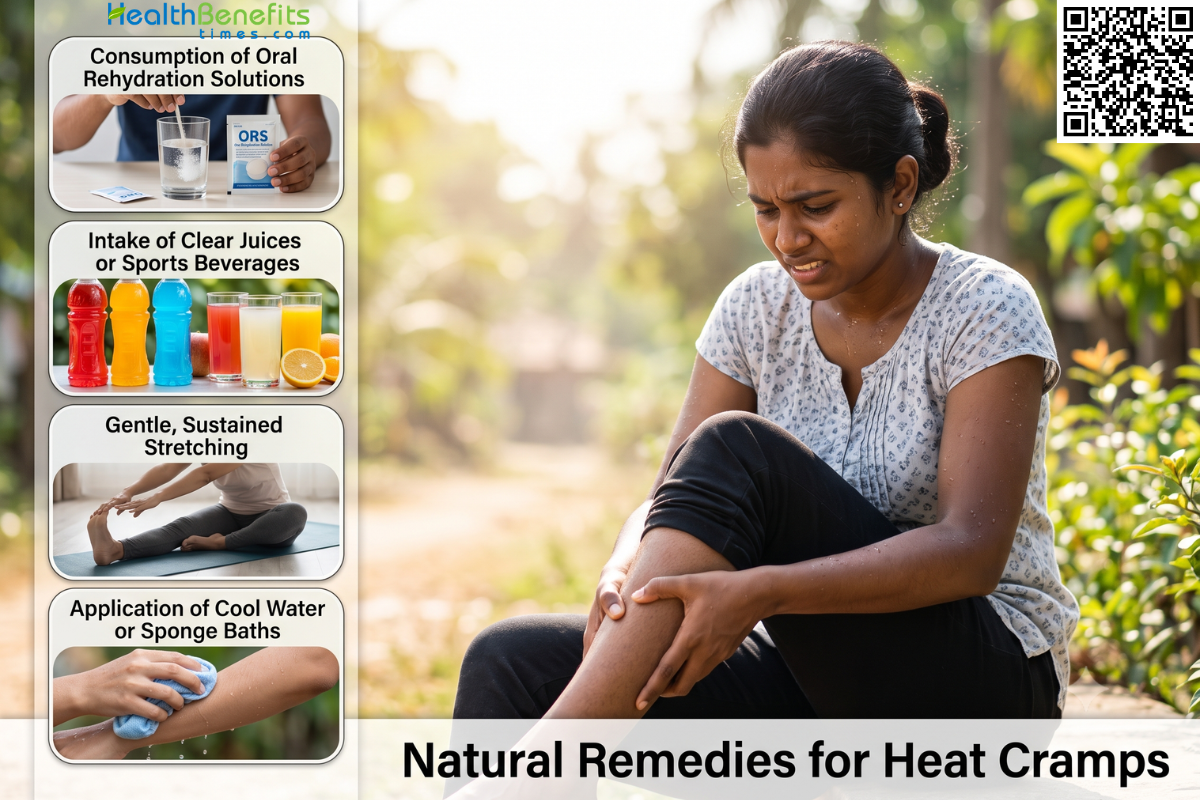
Heat cramps are painful, involuntary muscle spasms that typically occur during or after intense physical exertion in high-temperature environments. These cramps develop when the body loses significant amounts of water and essential salts, such as sodium, through profuse sweating. This depletion of vital electrolytes disrupts the normal chemical signaling within muscle fibers, leading to sudden, sharp contractions. While most common in the calves, arms, abdomen, and back, these spasms serve as a critical warning sign from the body. If left unaddressed, the continued loss of fluids and salts can progress into more severe heat-related conditions, such as heat exhaustion or life-threatening heat stroke. Recognizing these early physical signals and responding with appropriate cooling and rehydration measures is essential for maintaining physiological stability and preventing the escalation of heat-related medical emergencies.
Causes of Heat Cramps
- Excessive Perspiration: Heavy and prolonged sweating leads to a significant loss of water, which reduces total blood volume and forces the body to struggle with temperature regulation 1.
- Electrolyte Imbalance: The loss of essential minerals, specifically sodium and chloride, through sweat disrupts the electrical signals required for proper muscle contraction and relaxation 2.
- High Ambient Temperatures: Exposure to intense heat or working in hot, humid environments increases the body’s internal core temperature, placing extreme physiological stress on the muscular and circulatory systems 3.
- Inadequate Fluid Replacement: Failing to replenish lost fluids and minerals during physical activity prevents the body from restoring its natural balance, keeping the muscles in a state of high irritability 4.
- Physical Overexertion: Engaging in strenuous, repetitive physical activity causes muscles to fatigue rapidly, which increases their susceptibility to involuntary spasms when the body is already dealing with thermal stress 5.
Symptoms of Heat Cramps
- Sudden, Involuntary Muscle Spasms: Brief, intense, and painful contractions typically occur in the muscles that are being heavily used, such as the calves, arms, abdomen, or back 1.
- Localized Muscle Tenderness: The affected muscle area often remains sensitive to touch or movement even after the initial spasm has subsided, indicating localized physical stress 4.
- Brief and Intermittent Pain: The cramps are generally characterized by sharp, fleeting pain that may come and go, often coinciding with periods of physical activity in the heat 3.
- Heavy Sweating: Profuse perspiration is a hallmark sign that accompanies the onset of muscle cramps, signaling significant fluid and electrolyte loss from the body 5.
- Physical Fatigue: A feeling of exhaustion or general weakness often occurs alongside cramping as the body struggles to maintain core temperature and physiological function under thermal strain 4.
Natural Remedies for Heat Cramps
1. Immediate Cessation of Strenuous Physical Activity
How it may help
Stopping exercise immediately halts further physical exertion, which lowers internal body temperature and reduces sweating. This critical pause prevents additional fluid and electrolyte loss, allowing overworked muscles to relax and begin the recovery process before spasms worsen.
What research says
Clinical guidelines emphasize that resting is the most essential first step in treating heat-related muscle spasms. Continuing physical activity despite cramping significantly increases the risk of developing life-threatening conditions, such as heat exhaustion or heat stroke 1.
How to use it safely
At the first sign of painful muscle spasms, you should stop all physical movement right away. Move carefully to a shaded or air-conditioned area. Sit or lie down comfortably to remove all physical strain from the affected muscle groups.
Potential precautions or side effects
Do not return to strenuous activity for several hours after cramps resolve. Resuming exercise too soon can trigger a rapid return of spasms or severe heat illness 4.
2. Relocation to a Cool, Shaded, or Air-Conditioned Environment
How it may help
Moving to a cooler area helps lower the body’s core temperature by reducing the environmental heat load. This action facilitates cooling through convection and radiation, which decreases the body’s demand for active sweating, thereby stabilizing electrolyte levels and allowing the nervous system to ease muscle tension.
What research says
Public health authorities confirm that rapid cooling is essential to prevent heat cramps from progressing to more severe heat-related illnesses. Controlling the ambient temperature is a primary clinical intervention to stabilize physiological function when thermoregulation is compromised 6.
How to use it safely
Seek a cool, shaded environment or an air-conditioned building immediately. If you are outdoors, find a breezy, shaded spot. Remain in this controlled climate until your body temperature returns to normal and the muscle spasms have fully stopped.
Potential precautions or side effects
Avoid sudden exposure to extreme cold or ice-water immersion unless directed by medical personnel, as this may cause shivering, which can inadvertently increase internal body heat.
3. Consumption of Oral Rehydration Solutions
How it may help
Oral rehydration solutions restore the balance of water and essential salts, such as sodium, lost through excessive sweating. By replenishing these electrolytes, the solution helps correct the chemical imbalances within muscle cells that trigger involuntary contractions, effectively calming the spasms and supporting normal nerve and muscle function.
What research says
Clinical research indicates that fluid replacement with appropriate electrolyte concentrations is the standard approach for treating exercise-associated muscle cramps. Restoring sodium levels is critical, as simple water intake alone may not effectively address the electrolyte deficits contributing to the condition 2.
How to use it safely
Drink the rehydration solution in small, frequent sips rather than large gulps. Follow the mixing instructions on the packet or bottle precisely to ensure the correct concentration of salts and sugar. Continue drinking until your thirst is quenched and the muscle spasms have fully subsided.
Potential precautions or side effects
Avoid consuming highly concentrated sugar drinks, which can delay fluid absorption. Consult a healthcare professional if you have kidney disease or are on a sodium-restricted diet.
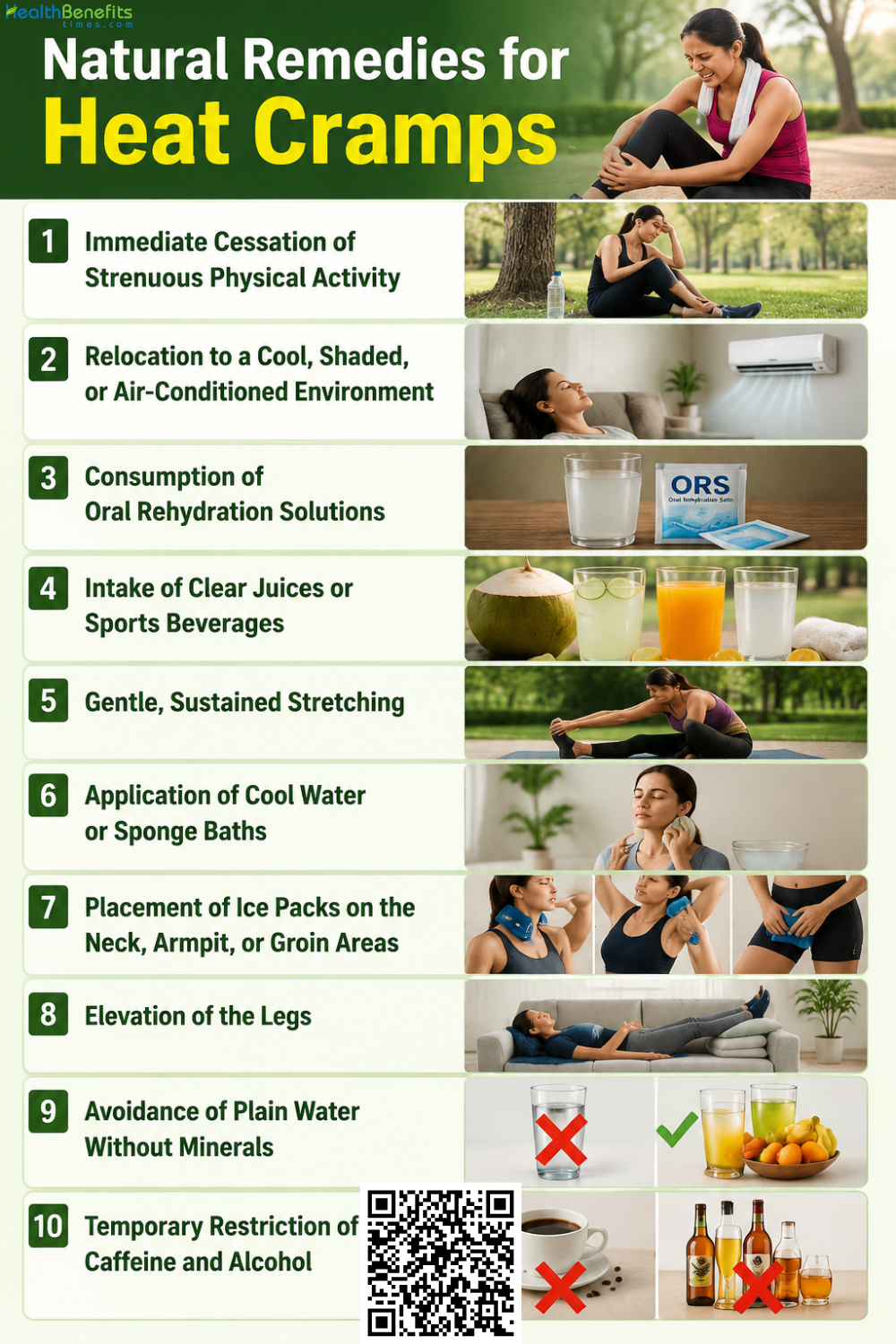
4. Intake of Clear Juices or Sports Beverages
How it may help
Sports beverages provide a rapid source of water, carbohydrates, and electrolytes, particularly sodium, which is essential for muscle function. By replacing these lost components, such drinks help stabilize the body’s internal chemistry, reducing the irritability of muscle cells and effectively alleviating the involuntary contractions associated with heat-related cramping.
What research says
Public health guidelines suggest that beverages containing electrolytes are superior to plain water for replacing sweat losses during prolonged physical exertion in heat. Ensuring adequate sodium intake is a key recommendation for the management and prevention of heat-induced muscle spasms in active individuals 5.
How to use it safely
Consume a commercial sports drink or a diluted fruit juice immediately upon feeling a cramp. Sip the fluid slowly to allow for steady absorption. Continue to monitor your symptoms and ensure you are not consuming excessive amounts of sugar, which can sometimes slow fluid intake.
Potential precautions or side effects
Individuals with health conditions like high blood pressure or diabetes should seek medical guidance, as these drinks can contain significant amounts of sodium and added sugars.
5. Gentle, Sustained Stretching
How it may help
Gentle, sustained stretching helps by mechanically lengthening the hyper-contracted muscle fibers. This action stimulates the body’s sensory receptors that signal muscles to relax, effectively interrupting the involuntary spasm cycle. By applying controlled tension, the muscle is encouraged to return to its resting state, providing immediate relief from pain and tightness.
What research says
Clinical observations suggest that manual stretching is an effective immediate intervention for exercise-associated muscle cramps. While the exact physiological mechanism is still being studied, evidence supports that passive tension helps inhibit the overactive nerve impulses causing the painful muscle contractions during heat-related fatigue 7.
How to use it safely
Locate the cramped muscle and slowly extend it until you feel a mild, comfortable pull. Hold this position steadily without bouncing or forcing the movement. Breathe deeply and maintain the stretch for 15 to 30 seconds until the tension subsides. Repeat if necessary, but never push into sharp pain.
Potential precautions or side effects
Avoid aggressive or ballistic stretching, as this can tear muscle fibers or worsen the injury. Stop immediately if the pain increases or feels sharp.
6. Application of Cool Water or Sponge Baths
How it may help
Applying cool water or wet cloths to the skin promotes heat loss through evaporation and conduction. By reducing surface skin temperature, the body can more effectively release excess internal heat. This rapid cooling helps lower the overall thermal strain on the body, which can assist in stabilizing muscle function and reducing the intensity of spasms.
What research says
Clinical protocols for managing heat-related conditions emphasize rapid cooling methods to normalize body temperature. When individuals experience symptoms of heat distress, applying cool water to the skin is a recognized, non-invasive technique to prevent the progression of heat cramps into more severe medical emergencies like heat stroke 8.
How to use it safely
Dampen a clean cloth with cool water and gently apply it to your skin, especially the forehead, neck, and underarms. You may also use a spray bottle to mist yourself. Continue this until you feel your body temperature drop and the muscle spasms have eased.
Potential precautions or side effects
Avoid using ice-cold water, which may cause shivering and potentially increase internal temperature. Cease immediately if you experience dizziness, confusion, or if symptoms worsen.
7. Placement of Ice Packs on the Neck, Armpit, or Groin Areas
How it may help
Placing ice packs on the neck, armpits, and groin—areas where large blood vessels are close to the skin—helps rapidly cool the blood as it circulates. This technique efficiently lowers the core body temperature, reducing the physiological strain that contributes to muscle irritability and the recurrence of heat-related spasms.
What research says
Clinical guidelines for heat illness management identify cooling the body’s major blood vessels as a priority for thermal stabilization. Cooling these specific regions is an effective clinical strategy to manage heat distress and prevent the progression of localized muscle cramping into more severe, systemic heat-related conditions 8.
How to use it safely
Wrap ice packs or cold gel packs in a thin towel to protect your skin from direct frostbite. Apply them gently to the neck, armpits, or groin for 10 to 15 minutes at a time. Rotate these locations if you need longer cooling periods to maintain comfort.
Potential precautions or side effects
Never apply ice directly to the skin for extended periods, as this can cause tissue damage. Stop immediately if you experience skin numbness, intense shivering, or skin discoloration.
8. Elevation of the Legs
How it may help
Elevating the legs above the level of the heart uses gravity to improve blood flow back toward the center of the body. This helps reduce any swelling associated with heat stress and eases the workload on the circulatory system, which can help relax cramped muscles in the lower limbs.
What research says
Clinical advice for managing heat-related distress often includes resting in a supine position with the legs raised. This approach helps stabilize circulation when the body is under thermal strain, assisting in the resolution of muscle fatigue and cramping while the individual is recovering in a cooler environment 3.
How to use it safely
Lie down on a flat, firm surface in a cool area. Prop your legs up on a stack of pillows or a sturdy chair so that your feet are higher than your heart level. Stay in this position until you feel the muscle spasms stop and your discomfort eases.
Potential precautions or side effects
Avoid keeping your legs elevated for excessively long periods if you feel lightheaded. If you experience persistent dizziness or chest pain, seek medical attention immediately.
9. Avoidance of Plain Water Without Minerals
How it may help
Drinking only plain water during intense heat can dilute the remaining salt levels in your body. By avoiding plain water in favor of fluids containing electrolytes, you prevent a further drop in blood sodium concentration, which is vital for stopping the involuntary muscle contractions that cause heat cramps.
What research says
Clinical studies indicate that replacing fluid losses with electrolyte-containing solutions is more effective than plain water for managing exercise-associated muscle cramps. Consuming plain water without adequate salt replacement may increase the risk of hyponatremia, a condition where blood sodium levels become dangerously low during heavy, prolonged sweating 2.
How to use it safely
When you are sweating heavily or already experiencing cramps, prioritize drinking sports beverages or oral rehydration solutions that contain sodium and other minerals. Reserve plain water for times when you are not physically active or for supplemental hydration throughout the day when you are also eating balanced meals.
Potential precautions or side effects
Avoid over-consuming any single fluid type. If you have specific health conditions or are on a restricted-sodium diet, consult a doctor regarding appropriate hydration strategies.
10. Temporary Restriction of Caffeine and Alcohol
How it may help
Both caffeine and alcohol act as diuretics, which increase fluid loss through urination. By temporarily avoiding these substances, you help the body retain necessary fluids and electrolytes. This reduction in fluid loss supports overall hydration levels and prevents the circulatory strain that can exacerbate muscle spasms during periods of extreme heat.
What research says
Public health guidelines explicitly advise against consuming alcoholic or caffeinated beverages when working or exercising in hot environments. These substances are known to accelerate dehydration, which can worsen heat-related symptoms and interfere with the body’s natural ability to regulate its internal temperature during heat stress 3.
How to use it safely
Choose water, diluted fruit juices, or electrolyte-balanced sports drinks instead of coffee, tea, soda, or alcoholic beverages while you are in hot weather. If you have been consuming these substances, switch immediately to plain water or rehydration solutions until your symptoms of cramping have completely resolved.
Potential precautions or side effects
Be aware that abruptly stopping caffeine may cause mild headaches. Ensure you increase your intake of water to offset the effects of previous consumption.
Foods to Avoid When You Suffer from Heat Cramps
When experiencing heat cramps, certain foods can negatively affect your hydration status and internal temperature regulation. Prioritize foods that support fluid balance and avoid those that may increase metabolic heat production or contribute to dehydration.
1. High-Protein Foods
Digestion of high-protein meals increases metabolic heat production, which may raise core body temperature and impose additional thermal stress on the body during heat illness 3.
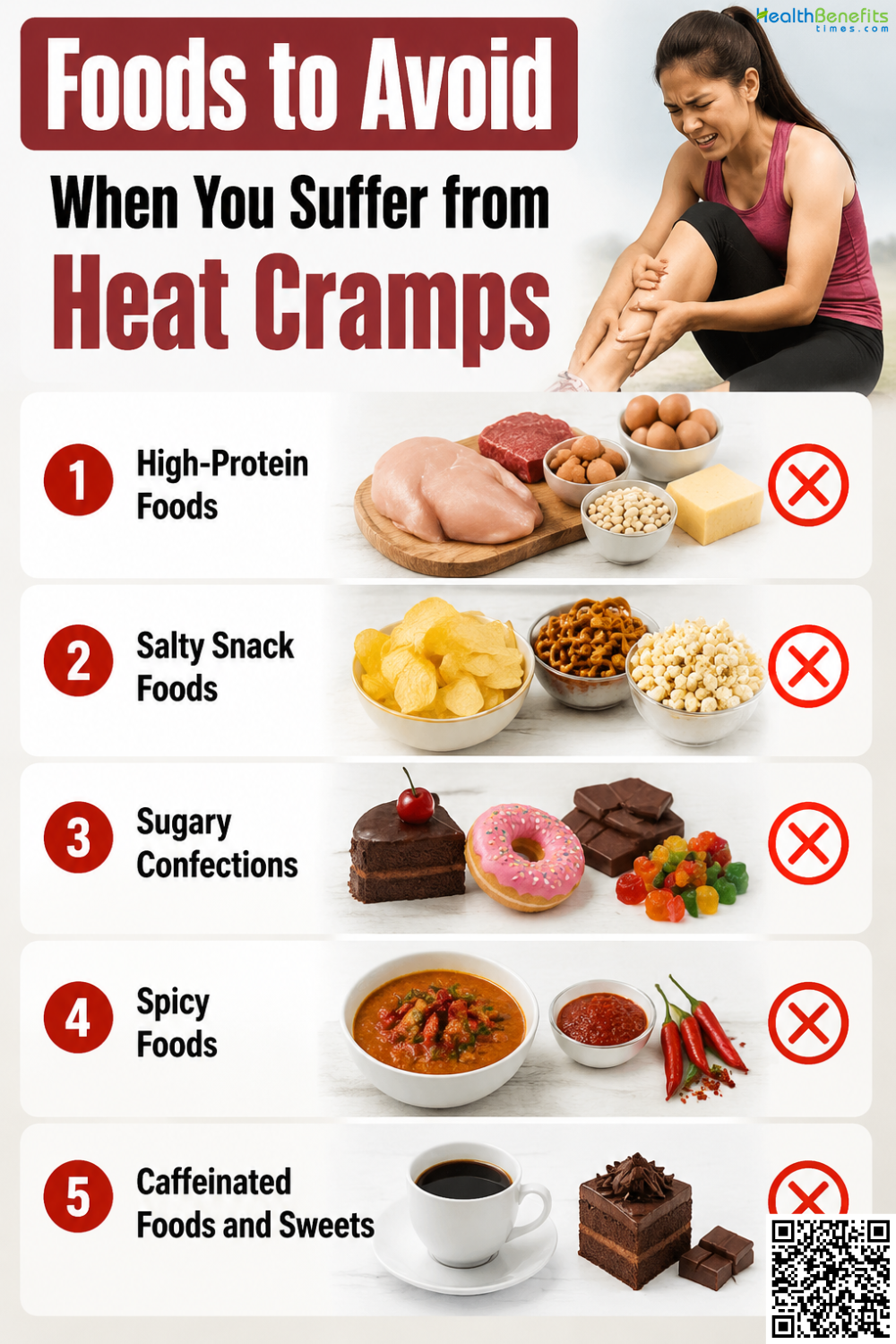
2. Salty Snack Foods
While sodium is necessary, excessive intake from highly processed, dry snacks can worsen dehydration if not accompanied by sufficient fluid intake to maintain proper osmotic balance 4.
3. Sugary Confections
Foods with very high sugar content can slow the rate at which fluids empty from the stomach, potentially delaying the absorption of water needed to alleviate muscle spasms 5.
4. Spicy Foods
Consumption of spicy ingredients can increase body temperature and trigger perspiration, leading to further fluid and electrolyte loss that may exacerbate existing muscle cramps 3.
5. Caffeinated Foods and Sweets
Items containing significant caffeine, such as certain chocolates or energy-dense snacks, act as diuretics, promoting fluid loss and hindering effective rehydration during recovery 3.
When to Seek Medical Attention for Heat Cramps
While mild heat cramps often resolve with rest and fluids, certain symptoms indicate a medical emergency requiring professional intervention. Monitor your condition closely and seek care if you experience any of the following:
1. Prolonged Symptoms
Seek medical evaluation if cramps persist for longer than one hour despite resting in a cool environment and consuming electrolyte-rich fluids 5.
2. Symptoms of Heat Exhaustion
If you experience heavy sweating, rapid pulse, dizziness, nausea, or headache, these are signs of heat exhaustion and require immediate medical assessment 3.
3. Signs of Heat Stroke
If you or another person shows signs of confusion, loss of consciousness, or skin that has stopped sweating and become hot and red, call emergency services immediately 9.
4. Underlying Health Conditions
Individuals with pre-existing heart, kidney, or circulatory issues should consult a physician if cramps occur, as these conditions can complicate safe rehydration and heat management 3.
5. Inability to Retain Fluids
If you are unable to drink fluids or if you experience persistent vomiting, seek medical care to prevent dangerous levels of dehydration and electrolyte imbalance 6.