

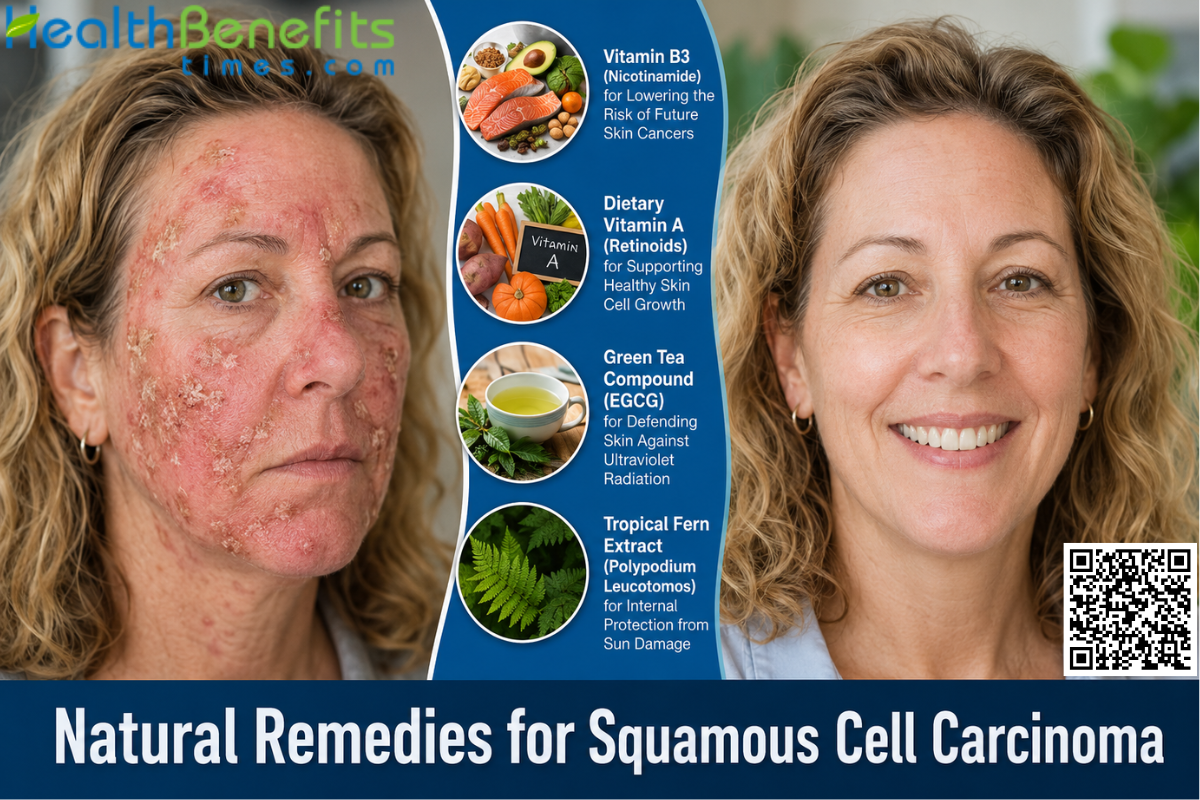
Squamous cell carcinoma (SCC) is a common type of cancer that originates in the squamous cells, which are the flat cells making up the outer layer of the skin and the lining of several internal organs. While it can affect various parts of the body, including the lungs, mouth, and throat, it is most widely recognized as the second most common form of skin cancer 1. Cutaneous (skin) SCC typically develops in areas frequently exposed to the sun and is primarily caused by cumulative damage from ultraviolet (UV) radiation over a person’s lifetime 2. Though highly treatable when detected early, untreated skin SCC can invade deeper tissues and spread to other parts of the body, necessitating prompt medical intervention to prevent severe complications or metastasis 3.
Causes of Squamous Cell Carcinoma
1. Ultraviolet Radiation Exposure
Chronic exposure to ultraviolet (UV) radiation from sunlight or tanning beds is the primary cause of cutaneous squamous cell carcinoma. UV radiation causes direct DNA damage, specifically point mutations in the tumor-suppressor genes, and impairs the skin’s local immune defense system 4. This combination of genetic alteration and decreased immune surveillance allows abnormal skin cells to multiply unchecked and form malignant tumors 5.
2. Tobacco and Alcohol Consumption
The extensive use of tobacco products is a primary chemical catalyst for squamous cell carcinomas of the lungs, oral cavity, and esophagus. Cigarette smoke introduces dozens of known chemical carcinogens into the respiratory tract, directly triggering the cellular transformation of healthy squamous cells 6. Furthermore, the concurrent use of heavy tobacco and excessive alcohol creates a compounding effect, vastly increasing the likelihood of malignant transformation in the head, neck, and upper digestive tract compared to the use of either substance alone 7.
3. Human Papillomavirus (HPV) Infection
Viral infections play a critical role in the development of specific mucosal squamous cell carcinomas. Infection with high-risk human papillomavirus strains, predominantly HPV-16 and HPV-18, is a highly documented cause of tumors in the oropharynx, cervix, anus, and genitalia 8. The virus integrates its genetic material into human cells, bypassing normal cellular safeguards and promoting unregulated cellular division.
4. Immunosuppression
A weakened immune system profoundly increases a patient’s vulnerability to squamous cell carcinoma. Solid organ transplant recipients who require long-term immunosuppressive medications face up to a 250-fold increased risk of developing skin squamous cell carcinoma compared to the healthy population. Conditions that chronically compromise immune function, such as chronic lymphocytic leukemia and advanced HIV/AIDS, also severely limit the body’s ability to detect and destroy early precancerous cells.
5. Chronic Inflammation and Tissue Scarring
Prolonged tissue damage and chronic inflammation create an environment susceptible to malignant changes. Squamous cell carcinomas known as Marjolin ulcers frequently develop within severe burn scars, non-healing venous ulcers, and areas previously subjected to radiation therapy. Additionally, persistent inflammatory diseases of the mucous membranes, such as oral lichen planus and discoid lupus erythematosus, carry a measurable risk of eventually progressing into invasive carcinomas.
6. Chemical Carcinogen Exposure
Prolonged occupational or environmental exposure to specific toxic agents drives the mutation of squamous cells. Sustained physical contact with arsenic, industrial soot, and polycyclic aromatic hydrocarbons is a documented risk factor for cutaneous malignancies. Similarly, inhalation of hazardous materials such as asbestos and heavy metal particles significantly accelerates the cellular deterioration that causes squamous cell lung cancer.
7. Genetic Susceptibility Syndromes
Inherited genetic abnormalities can severely impair the body’s natural cellular repair mechanisms. Rare hereditary conditions, including xeroderma pigmentosum and oculocutaneous albinism, prevent the body from efficiently repairing DNA damaged by UV light, leading to exceptionally high rates of skin cancer. Additionally, syndromes like Fanconi anemia disrupt genomic stability, causing affected individuals to experience a 500- to 700-fold increased risk of developing head and neck squamous cell carcinomas.
Symptoms of Squamous Cell Carcinoma
1. Firm, Red Skin Nodules
Cutaneous squamous cell carcinoma often initially presents as a solid, raised bump on the skin, frequently appearing on sun-exposed areas such as the face, ears, neck, and hands. These nodules generally feel hard to the touch and can easily bleed if they are scratched or bumped.
2. Scaly, Crusting Persistent Sores
Another hallmark skin symptom is a flat, reddish patch of skin that develops a rough, scaly surface or crust. Unlike normal scabs that eventually disappear, these precancerous or cancerous sores persist for weeks or months, often healing temporarily before breaking open again.
3. Changes in Existing Scars
The development of a new sore, ulcer, or raised lump within an old scar, chronic skin ulcer, or previous severe burn site can indicate a Marjolin ulcer, an aggressive type of squamous cell carcinoma.
4. Rough Patches on the Lip
Squamous cell carcinoma affecting the lip frequently begins as a thickened, persistently chapped, and rough patch, predominantly on the lower lip due to higher cumulative sun exposure, which can eventually progress into an open, bleeding ulcer 9.
5. Discolored Patches Inside the Mouth
Oral squamous cell carcinoma typically appears as distinct white patches (leukoplakia) or red patches (erythroplakia) on the gums, tongue, or inner lining of the cheeks. These lesions do not rub off, fail to heal over time, and can progress into painful, open mouth sores.
6. Chronic Cough and Coughing Up Blood
When squamous cell carcinoma originates in the lungs, tumors typically form in the central airways, obstructing airflow and irritating the lung tissue 6. This results in respiratory symptoms such as a chronic, worsening cough, coughing up blood (hemoptysis), persistent chest pain, and shortness of breath 10.
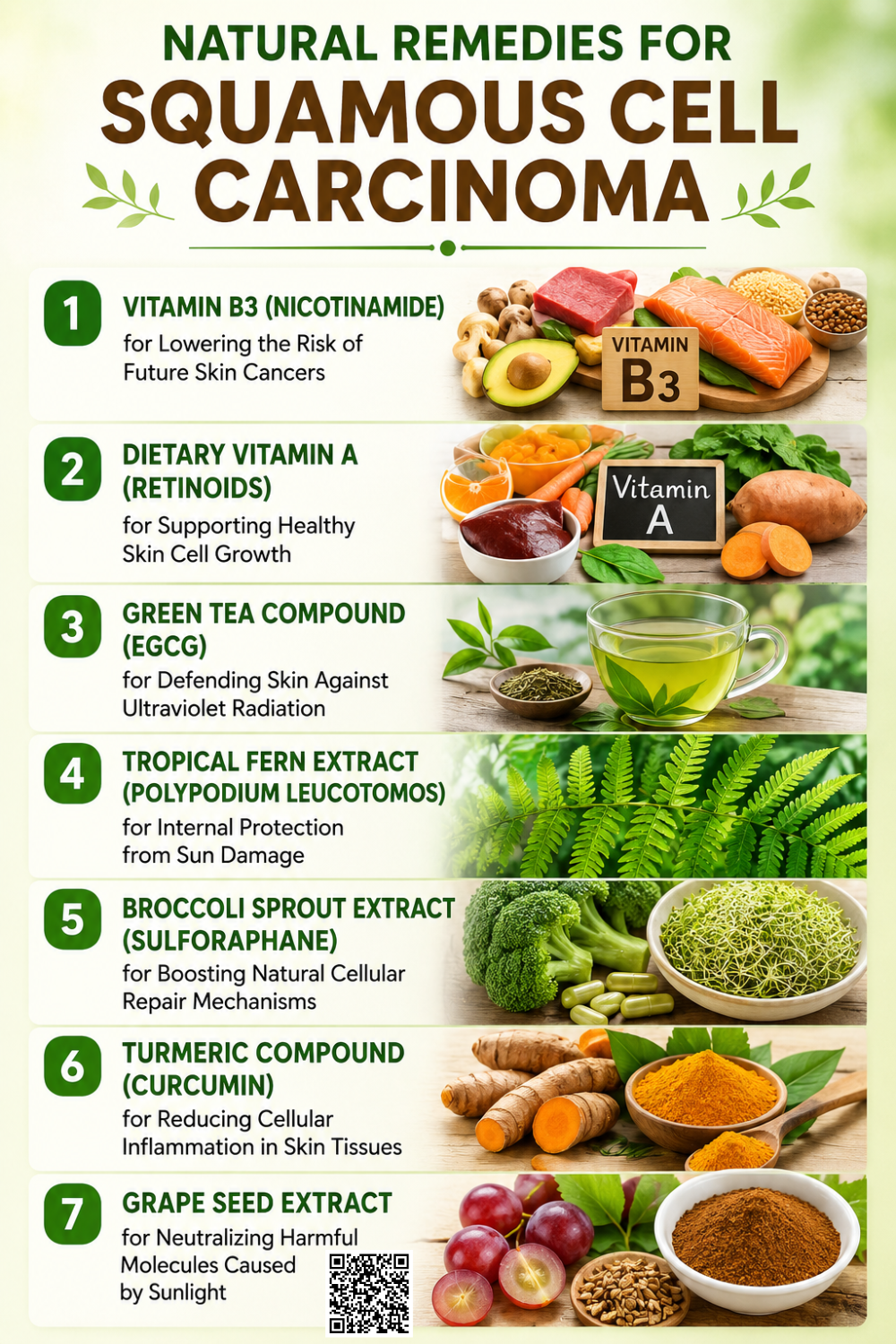 Natural Remedies for Squamous Cell Carcinoma
1. Vitamin B3 (Nicotinamide) for Lowering the Risk of Future Skin Cancers
How it may help
Nicotinamide, a form of vitamin B3, enhances the natural repair of DNA damaged by ultraviolet radiation. By boosting cellular energy and improving skin immune function, it helps the body better identify and eliminate precancerous cells before they progress into invasive squamous cell carcinomas.
What research says
Clinical research demonstrates that oral nicotinamide significantly reduces the development of new non-melanoma skin cancers in high-risk patients. A landmark study found that taking 500 mg twice daily reduced the rate of new squamous cell carcinomas and basal cell carcinomas by approximately 23% compared to a placebo 11.
How to use it safely
Always consult your dermatologist or primary care provider before starting supplementation to ensure it is appropriate for your specific health profile. The standard dosage utilized in clinical trials is 500 mg of nicotinamide taken twice daily. Do not exceed recommended doses without professional medical supervision.
Potential precautions or side effects
Nicotinamide is generally well-tolerated and does not cause “niacin flush.” Rare side effects may include mild nausea, indigestion, or headaches. Consult a doctor regarding any existing medical conditions.
2. Dietary Vitamin A (Retinoids) for Supporting Healthy Skin Cell Growth
How it may help
Dietary Vitamin A and its active forms, known as retinoids, are essential for regulating normal skin cell growth and maturation. By controlling how cells divide, Vitamin A helps prevent abnormal, precancerous squamous cells from multiplying unchecked, supporting the skin’s natural ability to maintain a healthy outer layer.
What research says
Scientific studies indicate that diets high in Vitamin A are associated with a reduced risk of developing cutaneous squamous cell carcinoma. Research confirms that individuals with the highest intake of dietary Vitamin A have a significantly lower chance of developing this skin cancer compared to those with the lowest intake 12.
How to use it safely
Focus on obtaining Vitamin A through a balanced diet rich in carrots, sweet potatoes, spinach, and dairy products. If you are considering oral Vitamin A supplements, you must consult your healthcare provider first to determine the correct and safe dosage for your specific needs.
Potential precautions or side effects
Excessive intake of Vitamin A supplements can lead to severe toxicity, causing liver damage, joint pain, and dangerous birth defects. Pregnant women should strictly avoid high-dose Vitamin A supplements.
3. Green Tea Compound (EGCG) for Defending Skin Against Ultraviolet Radiation
How it may help
Epigallocatechin gallate (EGCG), the most potent antioxidant found in green tea, defends skin against ultraviolet (UV) radiation by neutralizing harmful molecules and reducing tissue inflammation. It protects cellular integrity, preventing the extensive DNA damage and structural mutations in outer skin cells that drive the formation of squamous cell carcinoma.
What research says
Clinical research indicates that EGCG significantly inhibits UV-induced skin carcinogenesis. Studies confirm that this specific compound actively enhances natural DNA repair processes and forces damaged, precancerous skin cells to naturally self-destruct before they can uncontrollably multiply into aggressive squamous cell carcinomas [7] 13.
How to use it safely
You can obtain EGCG by drinking two to three cups of brewed green tea daily or by applying specifically formulated topical skin creams. If you are considering highly concentrated oral extract supplements, consult your healthcare provider first to determine a safe dosage for your body.
Potential precautions or side effects
High-dose EGCG supplements can cause liver toxicity, upset stomach, or interact with blood-thinning medications. Pregnant individuals should avoid concentrated extracts, as they can disrupt essential folic acid absorption.
4. Tropical Fern Extract (Polypodium Leucotomos) for Internal Protection from Sun Damage
How it may help
Polypodium leucotomos, a tropical fern extract, acts as an internal sun protectant. It neutralizes harmful free radicals generated by ultraviolet radiation and reduces severe skin inflammation. By defending the skin’s immune system and preventing structural DNA damage, it helps stop healthy cells from transforming into squamous cell carcinomas.
What research says
Scientific studies confirm that oral administration of this fern extract significantly diminishes cellular damage caused by UV exposure. Research demonstrates that it enhances the body’s natural removal of mutated DNA and blocks inflammatory pathways, actively reducing the formation of ultraviolet-induced skin cancers [1] 14.
How to use it safely
The extract is widely available as an oral supplement. A standard clinical dosage is 240 mg taken each morning roughly thirty minutes before sun exposure, often with a second capsule later. You should consult a dermatologist or healthcare provider before adding this to your daily routine.
Potential precautions or side effects
The supplement is generally considered safe. Rare and minor adverse reactions include mild stomach upset, bloating, or fatigue. Pregnant individuals should strictly avoid use without obtaining prior medical clearance.
5. Broccoli Sprout Extract (Sulforaphane) for Boosting Natural Cellular Repair Mechanisms
How it may help
Sulforaphane, a powerful compound naturally abundant in broccoli sprouts, activates the Nrf2 pathway, which serves as the body’s master regulator of cellular defense. This activation boosts internal antioxidant production, enhances DNA repair, and triggers the self-destruction of damaged skin cells before they can develop into squamous cell carcinomas.
What research says
Clinical and laboratory studies demonstrate that sulforaphane significantly reduces the incidence of ultraviolet-induced skin cancers and chemically induced squamous cell carcinomas. Research confirms that this compound actively protects skin tissue during early-stage tumor initiation by enhancing the body’s natural defense and cellular repair mechanisms 15.
How to use it safely
You can safely increase your natural sulforaphane intake by consuming fresh, thoroughly chewed broccoli sprouts or lightly steamed cruciferous vegetables daily. If you choose to utilize concentrated broccoli sprout extracts or oral supplements, discuss the appropriate dosage with your healthcare provider first.
Potential precautions or side effects
Sulforaphane is broadly considered safe when consumed as food. However, high-dose supplements may occasionally cause mild digestive upset, gas, or bloating. Consult a doctor if you have thyroid conditions.
6. Turmeric Compound (Curcumin) for Reducing Cellular Inflammation in Skin Tissues
How it may help
Curcumin, the primary active compound in turmeric, functions as a powerful anti-inflammatory and antioxidant agent. It helps control squamous cell carcinoma by suppressing the severe cellular inflammation that fuels tumor development. Furthermore, it disrupts abnormal growth signals, forcing damaged, precancerous skin cells to undergo natural cell death.
What research says
Scientific studies conclude that curcumin effectively inhibits the growth and spread of squamous cell carcinoma cells. Research demonstrates that it blocks specific proteins responsible for tumor inflammation and progression, significantly reducing cancer cell survival rates and preventing the transformation of healthy tissue into malignant tumors 16.
How to use it safely
You can easily incorporate dietary turmeric into your daily meals. If you choose oral curcumin supplements, look for formulations containing black pepper extract (piperine) to improve absorption. Always consult your healthcare provider before starting clinical supplementation to establish the correct and safest dosage for your body.
Potential precautions or side effects
High doses can cause stomach upset, nausea, or increase bleeding risks. You should avoid concentrated curcumin supplements if you take blood-thinning medications or are scheduling a surgical procedure.
7. Grape Seed Extract for Neutralizing Harmful Molecules Caused by Sunlight
How it may help
Grape seed extract contains powerful antioxidants called proanthocyanidins. These plant compounds protect the skin by neutralizing harmful reactive oxygen molecules generated by solar ultraviolet radiation. By limiting this severe oxidative stress, the extract helps prevent the cellular DNA damage and chronic tissue inflammation that directly lead to squamous cell carcinoma.
What research says
Scientific studies demonstrate that grape seed proanthocyanidins actively suppress the development of ultraviolet-induced skin cancers. Research indicates these compounds enhance natural DNA repair, reactivate dormant tumor-suppressor genes within squamous cell carcinoma cells, and force malignant cells into natural self-destruction without harming surrounding healthy skin tissues 17.
How to use it safely
Grape seed extract is available as an oral supplement, typically taken in doses ranging from 100 to 300 milligrams daily. You must consult your primary care doctor or dermatologist before initiating supplementation to ensure the correct dosage and avoid negative interactions with your current medications.
Potential precautions or side effects
Grape seed extract can significantly increase bleeding risks. You should strictly avoid this supplement if you take blood-thinning medications, have bleeding disorders, or are preparing for a surgical procedure.
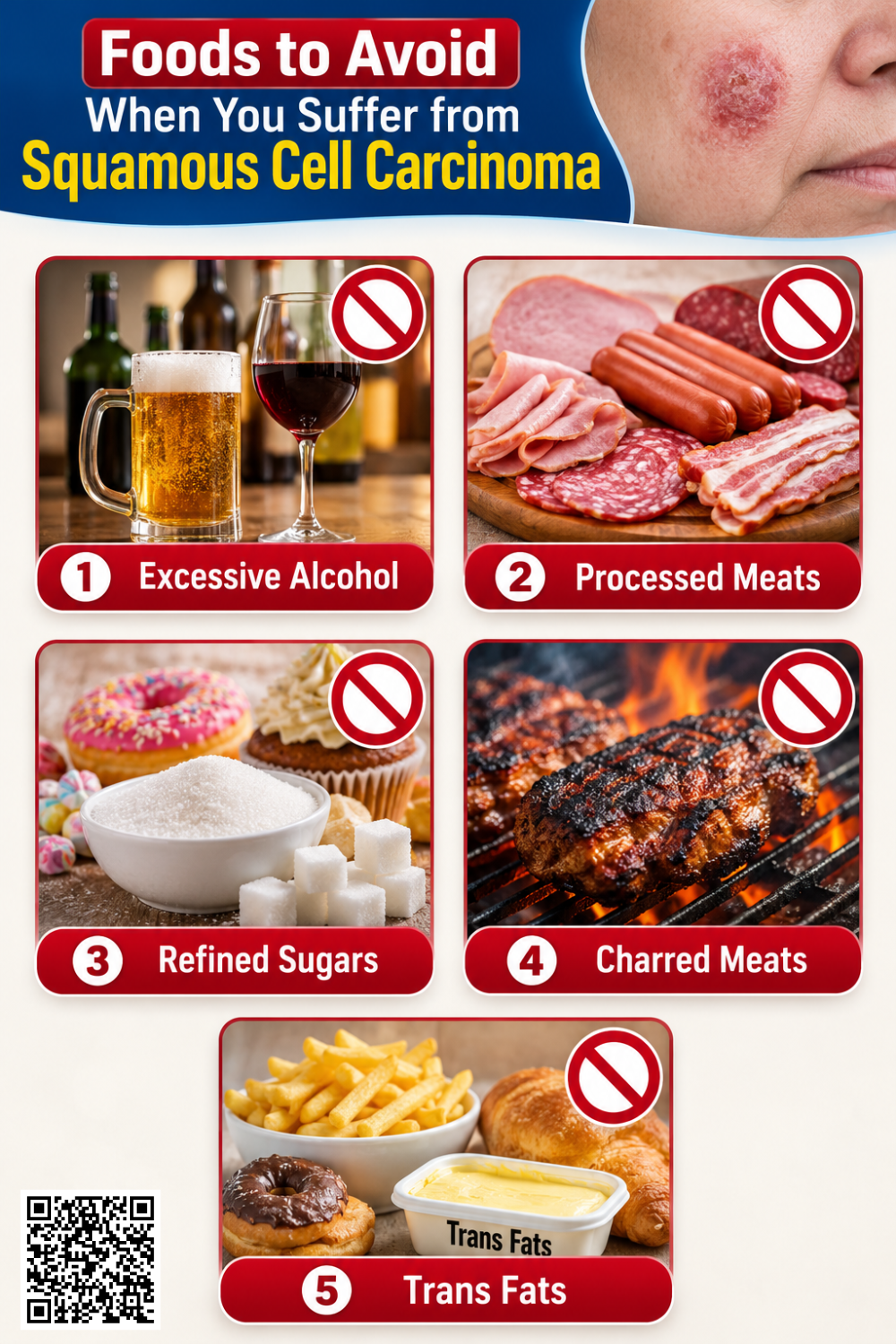 Foods to Avoid When You Suffer From Squamous Cell Carcinoma
1. Excessive Alcohol
Heavy alcohol consumption significantly weakens the immune system’s ability to destroy cancer cells and acts as a primary catalyst for mucosal squamous cell carcinomas.
2. Processed Meats
Meats preserved through smoking or curing contain carcinogenic chemical compounds that promote systemic inflammation, complicating the body’s natural cellular defense mechanisms against cancer 18.
3. Refined Sugars
High-sugar diets cause rapid blood glucose spikes, triggering widespread cellular inflammation that heavily suppresses the critical immune system responses required during cancer recovery 19.
4. Charred Meats
Cooking muscle meats at extremely high temperatures creates heterocyclic amines, potent chemical carcinogens that cause further DNA mutation and negatively impact overall cancer progression 20.
5. Trans Fats
Artificial trans fats found in ultra-processed snacks sustain chronic systemic inflammation, actively hindering the immune system’s ability to heal healthy tissues and fight malignant tumors 21.
When To See a Doctor When You Suffer From Squamous Cell Carcinoma
1. Rapid Growth or Changes
Seek immediate medical evaluation if an existing skin lesion, nodule, or diagnosed squamous cell carcinoma begins expanding rapidly in size, thickness, or changes color.
2. Persistent Bleeding or Non-Healing Sores
Consult your dermatologist if a tumor or treated area constantly oozes, bleeds spontaneously, or develops a crust that repeatedly breaks open without fully healing over time.
3. New Pain or Numbness
Unexplained sharp pain, tingling, or sudden numbness around the tumor site requires urgent assessment, as these symptoms indicate the cancer may be invading underlying nerve networks 22.
4. Swollen Lymph Nodes
Schedule an appointment if you discover hard, swollen, or painless lumps beneath the skin near the cancer site, which strongly suggests the disease has spread locally.
5. Post-Treatment Infection Signs
Contact your doctor immediately if you experience expanding redness, severe pain, pus discharge, or a high fever following a surgical excision or biopsy of a carcinoma.