

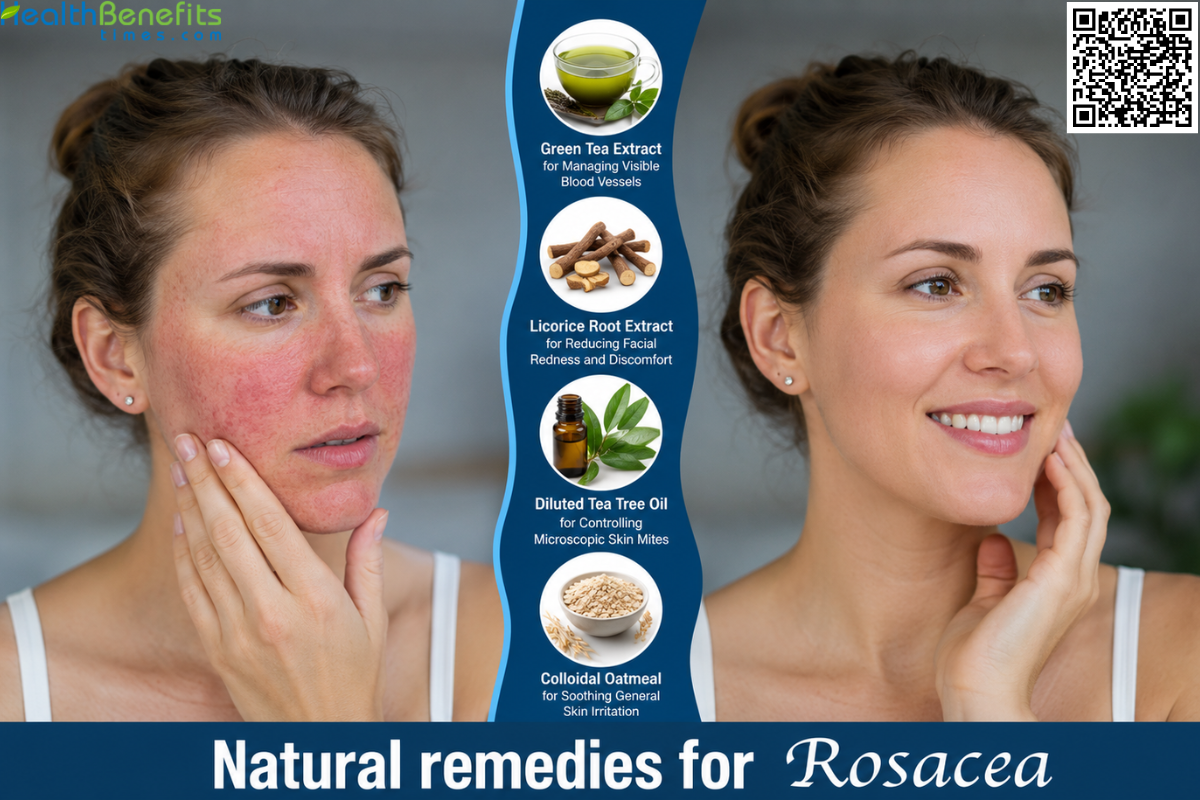
Rosacea is a common, long-lasting skin condition that primarily affects the central face, causing persistent redness and visible blood vessels. In many cases, the disease produces small, pus-filled bumps that are frequently mistaken for acne. While the exact cause remains unknown, clinical research indicates it results from a combination of genetic traits, environmental factors, and an overactive immune system 1. The condition typically flares up in cycles, where symptoms worsen for weeks or months before temporarily improving. Although anyone can develop this disorder, it most frequently impacts middle-aged adults with lighter skin tones 2. There is currently no permanent cure for rosacea, but patients can effectively manage flare-ups through prescribed medical treatments and by avoiding known lifestyle triggers such as direct sunlight, hot beverages, spicy foods, and alcohol.
Causes of Rosacea
1. Genetics and Family History
Research indicates that rosacea frequently runs in families, suggesting that inherited genetic traits play a significant role in determining who develops the condition.
2. Immune System Reactions
An overactive immune response can cause persistent skin inflammation. Patients with rosacea often display abnormal immune system reactions that trigger facial swelling, redness, and bumps.
3. Microscopic Skin Mites
A common, microscopic mite called Demodex folliculorum naturally lives on human skin. However, patients with rosacea often have unusually high numbers of these mites on their faces, which may irritate the skin and provoke an inflammatory response.
4. Blood Vessel Abnormalities
Structural issues with the small blood vessels in the face can cause them to expand too easily. This vascular hyper-reactivity leads to the visible flushing and prominent veins that are characteristic of the disorder.
5. Environmental and Lifestyle Triggers
While these do not cause the underlying disease, specific everyday factors routinely trigger or worsen symptoms. Clinical observations show that direct sun exposure, extreme weather, emotional stress, hot beverages, alcohol consumption, and spicy foods frequently cause sudden flare-ups.
Symptoms of Rosacea
1. Persistent Facial Redness
The most common early sign is frequent flushing or a persistent redness in the center of the face that resembles a lasting blush or sunburn.
2. Visible Blood Vessels
The small blood vessels situated under the skin of the nose and cheeks often expand, swell, and become clearly visible on the surface of the skin.
3. Swollen, Acne-Like Bumps
Patients frequently develop solid, red bumps or pus-filled pimples across their face. Unlike typical adolescent acne, these bumps do not contain blackheads and are often accompanied by facial stinging.
4. Eye Irritation (Ocular Rosacea)
The condition frequently impacts the eyes, causing them to become watery, bloodshot, or excessively dry. The eyelids may swell, and individuals often describe a gritty sensation, feeling as if sand or dirt is trapped in their eyes 3.
5. Thickened Skin
Over time, continuous inflammation can cause the facial skin to thicken and develop a rough, bumpy texture. This most commonly occurs on the nose, causing it to appear enlarged and bulbous—a complication that develops more frequently in men than in women.
6. Skin Sensitivity
The affected facial skin is typically highly sensitive to environmental changes and topical products. Patients routinely experience burning, tight, or stinging sensations during active flare-ups.
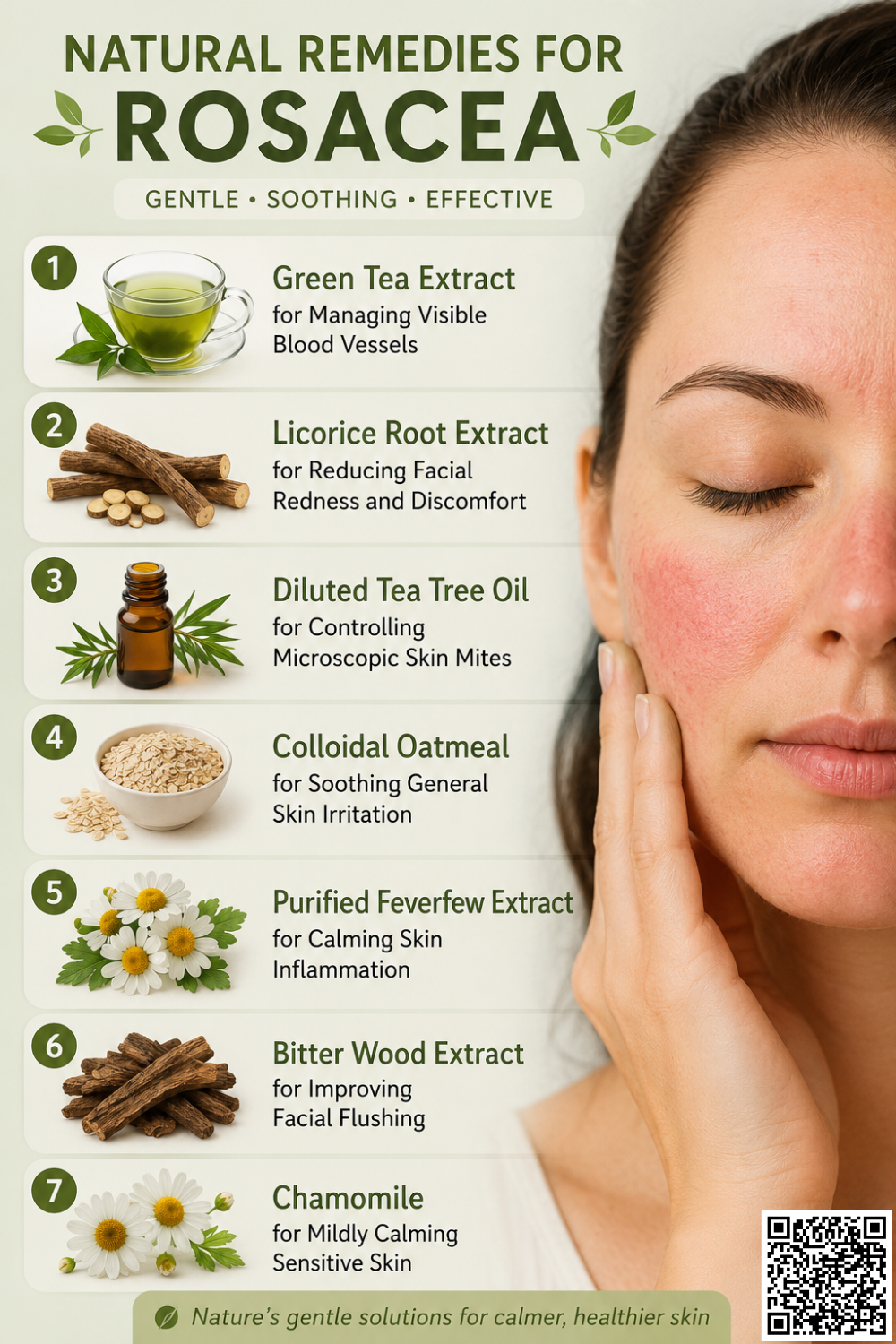 Natural remedies for Rosacea
1. Green Tea Extract for Managing Visible Blood Vessels
How may it help
Green tea extract helps manage rosacea due to its high concentration of polyphenols, which possess strong anti-inflammatory and antioxidant properties. By stabilizing the skin barrier and reducing blood vessel swelling, these compounds help decrease the persistent redness, flushing, and visible veins commonly associated with the condition 4.
What research says
Clinical research indicates that topical formulations containing green tea extract significantly improve skin hydration and reduce overall facial redness. Evidence suggests that regular application effectively modulates the skin’s inflammatory response, providing a therapeutic benefit for those struggling with the chronic symptoms of vascular rosacea.
How to use it safely
Apply a high-quality, fragrance-free topical product containing green tea extract to clean, dry skin. Start by applying a small amount to a patch of skin on your neck or arm to monitor for any reaction before applying it to your face twice daily as part of your skincare routine.
Potential precautions or side effects
While generally considered safe, some individuals may experience mild contact dermatitis or skin irritation. If you notice increased redness, itching, or swelling, discontinue use immediately and consult a healthcare professional.
2. Licorice Root Extract for Reducing Facial Redness and Discomfort
How it may help
Licorice root extract contains active compounds like licochalcone A, which possess powerful anti-inflammatory properties. These elements calm the skin’s overactive sensory pathways and reduce the release of inflammatory signals. This action helps soothe hypersensitive skin, decreasing the burning, stinging, and visible flushing commonly experienced during rosacea flare-ups 5.
What research says
Clinical studies demonstrate that topical regimens containing licochalcone A significantly improve rosacea symptoms. Research concludes that patients using this extract daily experience a measurable reduction in persistent facial redness and skin roughness. The compound successfully improves overall skin appearance and tolerability for individuals with mild to moderate rosacea 6.
How to use it safely
Select gentle, fragrance-free moisturizers or serums formulated with licorice root extract or licochalcone A. Apply the product twice daily to clean, dry skin. Always perform a small patch test on your inner forearm before facial application to ensure the ingredients do not provoke an unexpected allergic reaction.
Potential precautions or side effects
Topical licorice extract is generally well-tolerated. However, rare instances of mild contact dermatitis can occur. Discontinue use immediately if you experience increased itching, localized swelling, or worsening facial redness.
3. Diluted Tea Tree Oil for Controlling Microscopic Skin Mites
How it may help
Tea tree oil acts as an anti-parasitic and anti-inflammatory agent, specifically targeting Demodex mites that reside in the skin. By reducing the density of these mites, which are often found in higher numbers on the faces of people with rosacea, the oil helps decrease associated inflammation, skin bumps, and overall irritation 7.
What research says
Clinical research concludes that regular application of tea tree oil significantly reduces the population of skin mites and alleviates clinical symptoms. Studies show that its consistent use leads to a measurable decrease in facial inflammation and improved skin appearance for patients struggling with chronic rosacea flare-ups linked to mite overgrowth.
How to use it safely
Never apply pure, undiluted tea tree oil to your skin. You must dilute it in a carrier oil or a gentle, fragrance-free lotion to a low concentration, typically 5% or less. Apply a small amount to clean skin as directed, carefully avoiding the delicate areas directly around your eyes.
Potential precautions or side effects
Tea tree oil can cause severe contact dermatitis and skin irritation. If you notice any burning, itching, or redness, wash the product off immediately and avoid further use.
4. Colloidal Oatmeal for Soothing General Skin Irritation
How it may help
Colloidal oatmeal functions as a skin protectant that helps restore the natural moisture barrier. By forming a protective film on the surface, it prevents water loss and helps shield the skin from harsh environmental factors. Its anti-inflammatory and antioxidant properties work to quickly soothe the burning, stinging, and itching sensations common in rosacea-affected areas 8.
What research says
Clinical evidence confirms that colloidal oatmeal effectively reduces skin redness and improves the overall health of the skin barrier. Research indicates that its specific chemical composition provides significant relief for inflamed, sensitive skin, helping to calm flare-ups and increase patient comfort when used as part of a daily maintenance routine.
How to use it safely
Select a high-quality, clinical-grade moisturizer or face mask formulated with colloidal oatmeal. Apply a thin, even layer to clean skin as instructed by the product label. It is most effective when used consistently as a gentle treatment to maintain skin hydration and reduce daily irritation.
Potential precautions or side effects
Colloidal oatmeal is exceptionally well-tolerated and carries a low risk of side effects. If you experience an unexpected increase in redness or itching, stop using the product and consult a healthcare professional.
5. Purified Feverfew Extract for Calming Skin Inflammation
How it may help
Feverfew extract is recognized for its ability to calm irritated skin through potent antioxidant and anti-inflammatory activity. By inhibiting specific inflammatory pathways, it helps decrease the visible redness and stinging sensations frequently associated with rosacea, providing a soothing effect on sensitive facial skin without the common risks linked to harsh chemical irritants.
What research says
Clinical findings demonstrate that purified feverfew, specifically when processed to remove contact allergens, is highly effective for reducing skin sensitivity. Research shows that it significantly improves the tolerance of the skin barrier, helping to maintain hydration and minimize the severity of redness and general inflammatory discomfort in individuals managing chronic rosacea conditions.
How to use it safely
Ensure you use only “parthenolide-free” or “purified” feverfew extract products, as raw extracts can cause allergic reactions. Apply the cream or serum to clean, dry skin as directed on the packaging. Use it as a gentle, calming layer in your daily skincare routine to help manage recurring flare-ups.
Potential precautions or side effects
While purified versions are safe for most, raw feverfew can cause contact dermatitis. Discontinue use if you notice worsening redness, itching, or swelling on the treated skin.
6. Bitter Wood Extract for Improving Facial Flushing
How it may help
Bitter wood extract, derived from Quassia amara, acts as a natural anti-parasitic and anti-inflammatory agent. It specifically targets the microscopic mites often associated with rosacea, helping to reduce the skin inflammation that triggers frequent, intense facial flushing. By calming these reactions, it assists in normalizing the skin’s response to environmental stimuli.
What research says
Clinical research indicates that topical applications containing bitter wood extract significantly improve the management of rosacea symptoms. Studies conclude that its consistent use effectively reduces the frequency and severity of facial flushing episodes, leading to a visible improvement in skin clarity and a decrease in associated inflammatory bumps for many patients.
How to use it safely
Apply a gel or cream formulated with purified bitter wood extract to clean, dry skin twice daily. Follow the specific instructions provided with your product, ensuring you apply it only to affected facial areas. If you are using other treatments, wait a few minutes between applications to allow for proper absorption.
Potential precautions or side effects
While generally safe, some may experience mild skin irritation or dryness. Discontinue use if you notice increased burning, stinging, or redness, and consult a medical professional.
7. Chamomile for Mildly Calming Sensitive Skin
How it may help
Chamomile contains compounds that exert mild anti-inflammatory effects by inhibiting pathways involved in skin irritation. For individuals with rosacea, these soothing properties help decrease the redness, heat, and discomfort associated with reactive skin. It serves as a gentle, calming topical agent that supports the skin’s natural barrier without causing further irritation.
What research says
Clinical research supports the use of chamomile extracts for managing skin inflammation. Studies conclude that consistent topical application significantly reduces sensitivity, helping to soothe the inflammatory responses that often exacerbate rosacea flare-ups. The evidence suggests it is an effective, well-tolerated botanical ingredient for improving the comfort of sensitive, reddened facial skin.
How to use it safely
Choose fragrance-free, clinically formulated products that use chamomile extract rather than raw essential oils. Apply the moisturizer or serum to clean skin once or twice daily. Always perform a patch test on a small area of skin before applying it to your entire face to ensure compatibility.
Potential precautions or side effects
While chamomile is typically gentle, it can cause allergic contact dermatitis, especially in those with allergies to related plants like ragweed. Discontinue use if irritation develops.
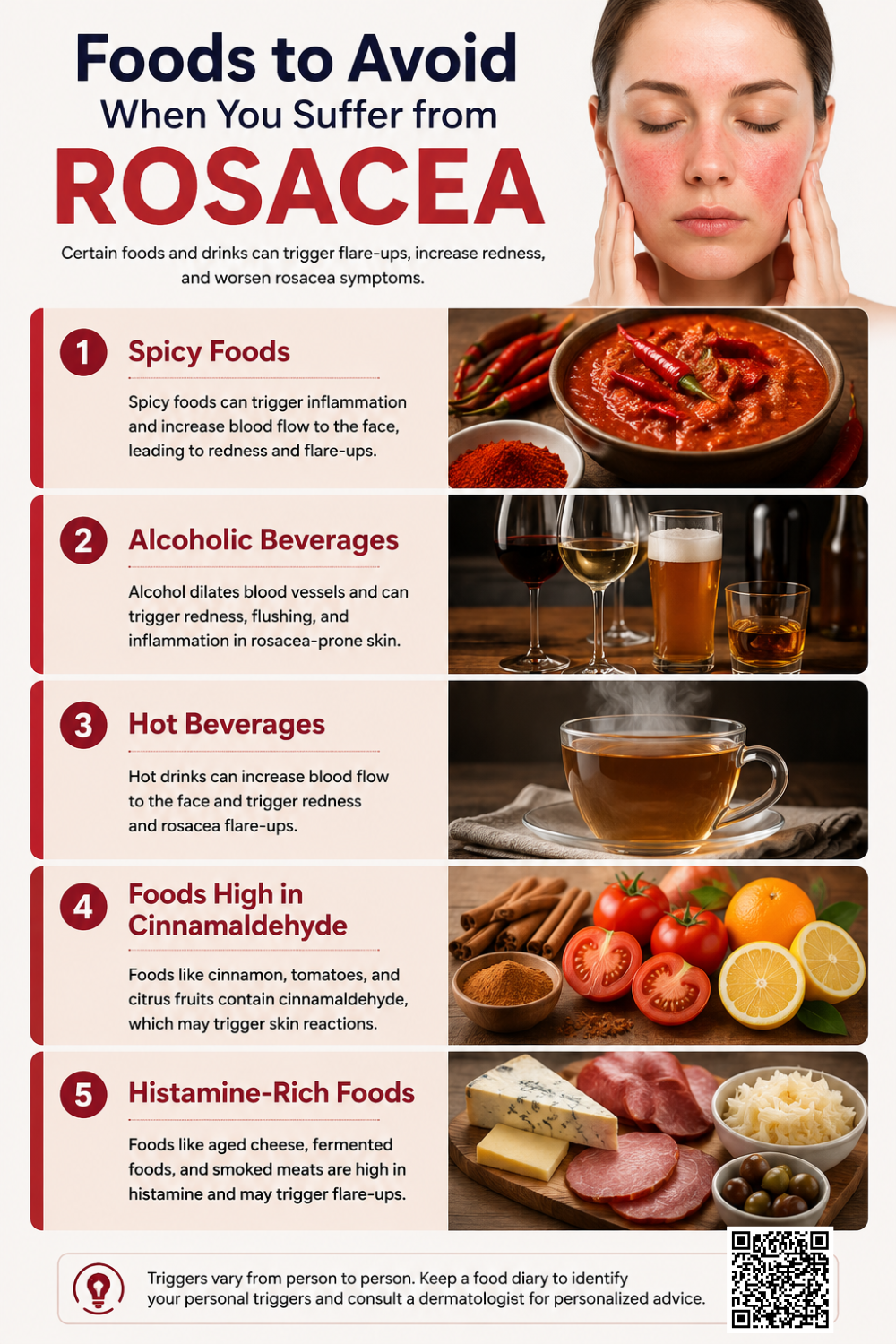 Foods to Avoid When You Suffer from Rosacea
1. Spicy Foods
Capsaicin, the compound that makes food spicy, can trigger the body’s pain receptors and cause immediate facial flushing and blood vessel dilation in those with rosacea.
2. Alcoholic Beverages
Alcohol acts as a vasodilator, widening blood vessels and increasing blood flow to the skin, which frequently leads to noticeable redness and persistent flushing episodes.
3. Hot Beverages
Consuming coffee, tea, or cocoa at very high temperatures triggers a thermal response in the body, which can prompt an immediate increase in facial redness.
4. Foods High in Cinnamaldehyde
Ingredients such as cinnamon, tomatoes, citrus fruits, and chocolate contain cinnamaldehyde, which may provoke inflammatory responses and cause flushing in many individuals with this skin condition .
5. Histamine-Rich Foods
Aged cheeses, cured meats, and fermented foods contain high levels of histamine, which can cause skin redness and exacerbate existing inflammation in sensitive individuals.
When to See a Doctor When You Suffer From Rosacea
1. Persistent or Worsening Symptoms
If your facial redness becomes permanent, spreads to new areas, or fails to improve with non-medical skincare, you should consult a dermatologist for a professional evaluation.
2. Development of Ocular Symptoms
Seek medical attention immediately if you experience eye redness, dryness, light sensitivity, or blurred vision, as untreated ocular rosacea can potentially lead to serious vision complications.
3. Visible Skin Thickening
If you notice the skin on your nose or cheeks beginning to thicken, become bumpy, or appear enlarged, consult a doctor to prevent permanent tissue changes.
4. Significant Emotional or Social Distress
If your skin condition interferes with your daily activities, mental well-being, or confidence, a medical provider can offer support and clinical treatment plans to improve your quality of life.
5. Frequent or Painful Flare-ups
If you experience frequent, intense outbreaks accompanied by pain, burning, or stinging sensations, a doctor can prescribe medications to better manage and control the inflammatory response.