

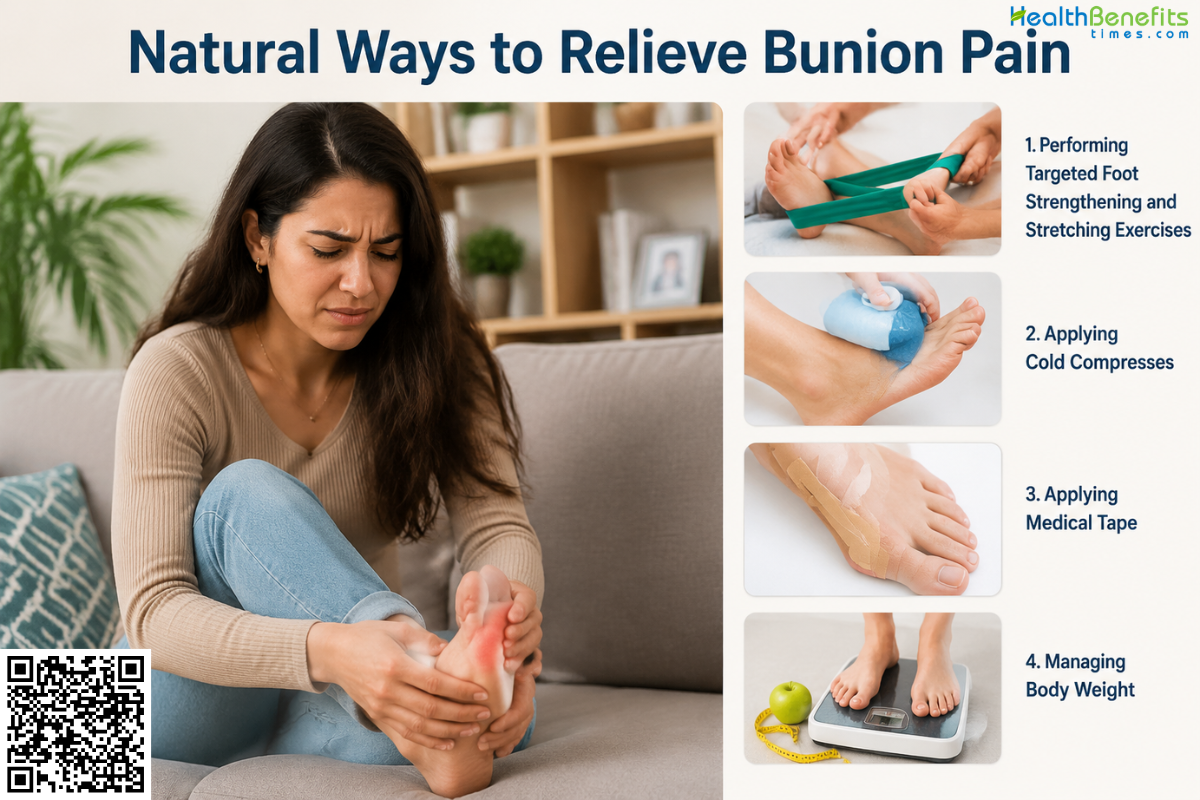
A bunion, clinically diagnosed as hallux valgus, is a progressive structural deformity characterized by a bony bump forming at the metatarsophalangeal joint at the base of the big toe 1. Bunion pain occurs when the big toe angles inward toward the second toe, forcing the lower joint to protrude outward and rub forcefully against footwear. This constant mechanical friction and altered foot biomechanics lead to localized inflammation, swelling, and a painful condition called bursitis, which is the irritation of the fluid-filled sac surrounding the joint 2. As the deformity worsens, individuals typically experience a deep, throbbing ache, severe burning sensations, and restricted joint mobility that directly impairs walking and standing 3. Without proper mechanical offloading or intervention, this persistent joint malalignment accelerates internal cartilage breakdown, frequently culminating in localized osteoarthritis and chronic daily pain 1.
Causes of Bunion Pain
- Genetic Predisposition and Foot Structure: Inherited foot shapes, such as flat feet, shortened bones, or naturally loose ligaments, create internal physical imbalances that make individuals highly susceptible to developing bunions over time 1.
- Improper Footwear: Wearing narrow, pointed-toe shoes or high heels forces the toes into an unnatural, restricted position and applies severe physical stress to the joint, acting as a major aggravating factor that accelerates the deformity 4.
- Inflammatory Joint Diseases: Autoimmune conditions like rheumatoid arthritis or gout cause chronic inflammation that directly destroys joint tissue and weakens the supporting ligaments, leading to severe toe misalignment 1.
- Neuromuscular Conditions: Medical issues that disrupt normal nerve and muscle control, such as a previous stroke or cerebral palsy, cause uneven muscle pulling on the foot bones, which systematically forces the big toe out of its proper position 1.
- Connective Tissue Disorders: Genetic conditions that affect how the body builds structural support tissues, including Marfan syndrome and Ehlers-Danlos syndrome, cause unusually flexible joints that fail to keep the foot bones securely aligned during movement 1.
- Physical Trauma and Biomechanical Stress: Prior foot injuries, repeated trauma, or physical conditions that cause abnormal walking patterns place continuous, uneven pressure on the front of the foot, gradually pushing the toe joint outward 1.
Symptoms of Bunion Pain
- Visible Bony Protrusion: A noticeable, hard bump develops on the inner side of the foot at the base of the big toe, representing the misaligned metatarsal bone 1.
- Localized Joint Pain and Tenderness: Individuals experience a constant dull ache or sharp pain at the joint, which significantly worsens when wearing restrictive shoes or standing for extended periods 1.
- Inflammation and Redness: Constant friction against footwear causes the fluid-filled sac surrounding the joint to swell, leading to visible redness, localized heat, and painful bursitis 2.
- Corns and Calluses: Thickened patches of skin frequently develop where the misaligned big toe forcefully rubs against the adjacent second toe or along the sole of the foot 1.
- Restricted Joint Mobility: As the structural deformity progresses and secondary osteoarthritis develops, the big toe loses normal flexibility, severely limiting its ability to bend during a normal walking stride 1.
- Numbness or Burning Sensations: The protruding joint and surrounding tissue swelling can physically compress local sensory nerves, causing chronic tingling, numbness, or a burning feeling radiating into the toe 1.
Natural Ways to Relieve Bunion Pain
1. Switching to Footwear with a Wide Toe Box and Low Heels
How it may help
A wide toe box eliminates direct mechanical pressure on the protruding bunion joint, reducing friction and localized tissue inflammation 1. Low heels prevent the body’s weight from shifting forward, which otherwise forces the toes into a narrow space and severely aggravates the joint misalignment 2.
What research says
Clinical guidelines confirm that footwear modification is the most effective initial, non-surgical treatment for managing bunion symptoms 1. Studies conclude that avoiding high heels and utilizing wide-fitting shoes significantly decreases acute joint pain and helps slow the physical progression of the toe deformity 2.
How to use it safely
You should purchase shoes featuring a rounded or square toe box made from soft, stretchable materials. Ensure the heel height remains under one inch. Always fit your shoes at the end of the day when your feet are naturally at their largest to guarantee proper clearance.
Potential precautions or side effects
Transitioning immediately from high heels to completely flat shoes may temporarily cause Achilles tendon strain. You should lower heel heights gradually to allow natural muscle adaptation.
2. Utilizing Orthotic Shoe
How it may help
Orthotic shoe inserts provide biomechanical support by correcting the foot’s structural alignment 5. They help stabilize the first metatarsal bone, correct excessive foot pronation, and redistribute pressure away from the prominent bunion joint 1. This mechanical offloading reduces localized friction and prevents further aggravation of the deformed toe.
What research says
Clinical studies conclude that custom and over-the-counter foot orthoses effectively relieve joint pain and improve physical function 6. However, research consistently indicates that while orthotic inserts successfully manage symptoms and slow degeneration, they cannot permanently reverse or correct the underlying structural bone deformity of the bunion 7.
How to use it safely
You should consult a podiatrist to determine whether a custom or over-the-counter orthotic is best for your specific foot structure. Ensure your shoes have removable insoles to accommodate the added thickness of the device without squeezing your toes or creating new pressure points.
Potential precautions or side effects
Improperly fitted orthotics can worsen foot mechanics, potentially leading to new pressure sores, arch pain, or ankle instability. While a brief break-in period is normal, persistent pain requires medical readjustment.
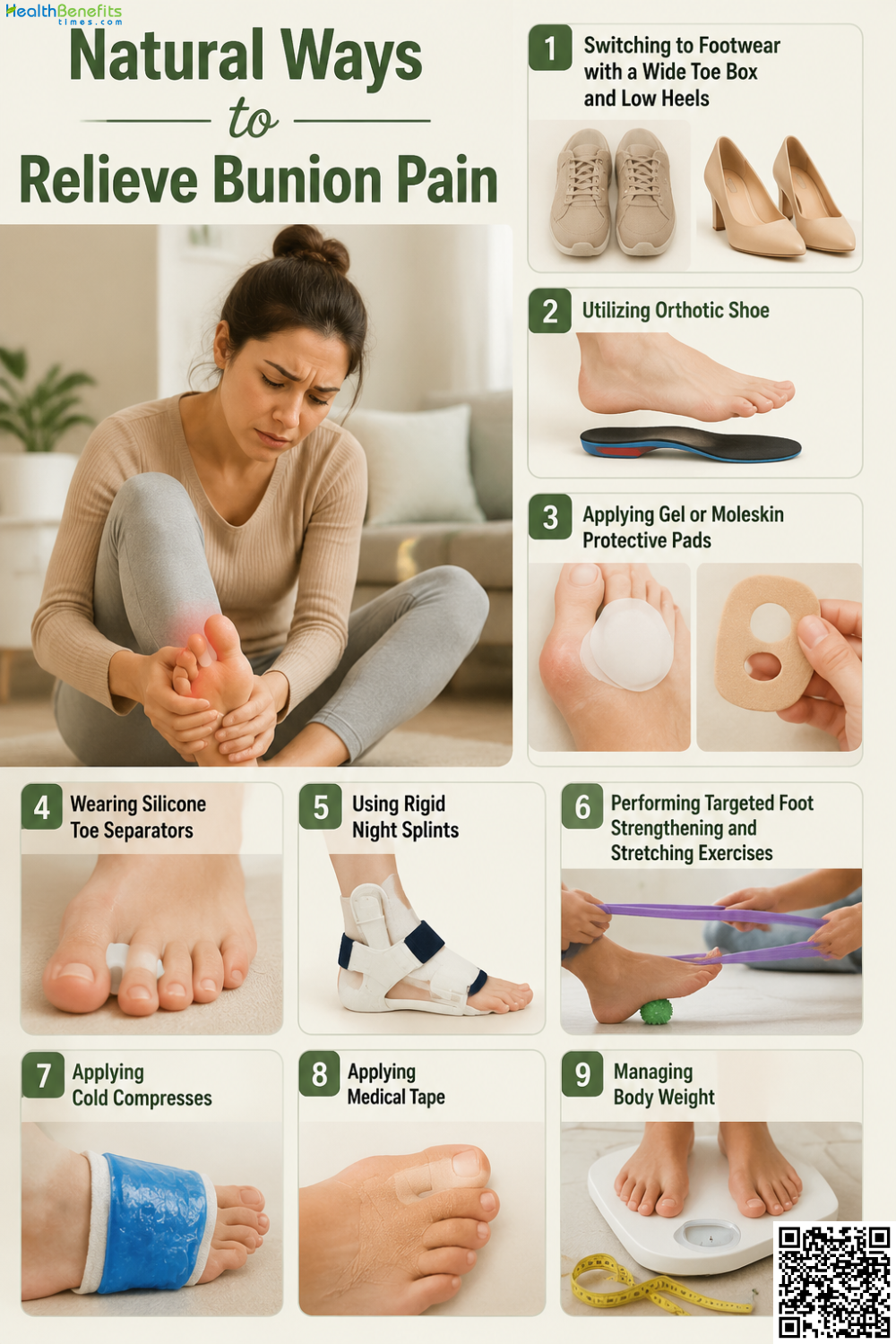
3. Applying Gel or Moleskin Protective Pads
How it may help
Gel or moleskin pads act as a direct physical barrier over the bony protrusion, providing cushioning that absorbs mechanical shoe pressure 1. By significantly reducing surface friction, these protective layers help prevent painful skin irritation, blister formation, and the worsening of localized joint inflammation 2.
What research says
Clinical guidelines consistently recommend protective padding as a primary conservative intervention for immediate symptom management 1. While studies confirm that these physical barriers effectively decrease surface pain and improve walking comfort, they emphasize that padding cannot correct the underlying structural bone deformity or halt its progression 2.
How to use it safely
You should apply pads only to clean, completely dry skin to ensure proper adhesion. Position the cushion directly over the bony bump. You must wear shoes with a sufficiently wide toe box, as adding thick padding inside narrow shoes will actively increase joint pressure.
Potential precautions or side effects
Prolonged use of adhesive pads may cause mild skin irritation or allergic reactions. You should never apply them over broken skin or open blisters to prevent bacterial infections.
4. Wearing Silicone Toe Separators
How it may help
Silicone toe separators are physically wedged between the big and second toes to temporarily restore proper joint alignment 1. By preventing the toes from overlapping, these devices stretch tight tendons, reduce mechanical friction, and alleviate the intense pressure placed on the deformed bunion joint during daily movement 2.
What research says
Clinical studies indicate that wearing toe separators provides significant short-term pain relief and improves walking comfort 2. However, research concludes that these devices only hold the toe in proper position while worn; they cannot permanently realign the foot bones, reverse the structural deformity, or halt bunion progression 1.
How to use it safely
You should start by wearing the separators for only a few hours daily to let your foot muscles adapt. Wash the silicone regularly with mild soap to prevent bacterial growth. Ensure you wear them inside wide-toe shoes, as forcing them into narrow footwear will severely increase joint pain.
Potential precautions or side effects
Wearing separators in restrictive shoes can cause skin blisters and reduce blood circulation. You must discontinue use if you experience numbness, tingling, or increased joint throbbing.
5. Using Rigid Night Splints
How it may help
Rigid night splints physically hold the big toe in a straight, corrected alignment during rest 1. This continuous mechanical positioning gently stretches tight ligaments on the outside of the joint, helping to relieve overnight stiffness and prevent the toe from turning further inward during sleep 2.
What research says
Clinical evaluations conclude that night splinting effectively reduces morning joint pain and temporarily improves toe flexibility 2. However, research confirms that these devices only provide symptomatic relief; they cannot permanently realign the foot bones or reverse an established bunion deformity in adult patients 1.
How to use it safely
You should apply the splint exclusively while sleeping or sitting, as the rigid materials cannot support body weight. Fasten the straps loosely during the first week to let your muscles adapt, gradually increasing the tension to avoid painful overnight cramping.
Potential precautions or side effects
Fastening the straps too tightly can restrict blood circulation. You must remove the splint immediately if you develop numbness, tingling, or severe throbbing in your toes.
6. Performing Targeted Foot Strengthening and Stretching Exercises
How it may help
Targeted foot exercises strengthen the small muscles supporting the toe joints and improve overall flexibility. By correcting muscle imbalances that pull the big toe inward, these movements help realign the foot naturally. This reduces daily pressure on the bunion, limits joint stiffness, and effectively alleviates pain during walking or standing.
What research says
Clinical studies demonstrate that specific foot exercises, such as toe spreading, can decrease the angle of the bunion and reduce pain. Evidence shows that strengthening the muscle responsible for moving the big toe outward improves joint function, offering an effective non-surgical option for mild to moderate bunions 8.
How to use it safely
Start your routine slowly with gentle movements like towel curls or manually pulling the big toe outward. Perform these stretches daily, stretching only to the point of mild tension. Never force a movement, and stop immediately if you experience any sharp, sudden pain during the exercise.
Potential precautions or side effects
Overstretching can cause muscle strain or worsen joint inflammation. If you have severe arthritis or an advanced bunion, consult a physical therapist before starting these exercises.
7. Applying Cold Compresses
How it may help
Applying cold compresses works by constricting blood vessels, which reduces blood flow to the inflamed toe joint. This mechanism numbs local nerve endings to provide immediate pain relief and actively shrinks swelling and redness around the bunion, particularly after prolonged periods of standing or walking.
What research says
Clinical evidence supports cold therapy for managing acute musculoskeletal joint pain. Research confirms that applying cold temperatures slows cellular metabolism and decreases nerve conduction velocity, which effectively reduces local inflammation and dulls pain signals sent from the affected joint to the brain 9.
How to use it safely
Wrap an ice pack or a bag of frozen vegetables in a thin towel before placing it on your bunion. Leave the compress on the joint for 15 to 20 minutes at a time. You can repeat this process several times a day as needed for pain relief.
Potential precautions or side effects
Never apply ice directly to bare skin, as this can cause frostbite. Avoid cold therapy if you have poor circulation, diabetes, or nerve damage in your feet.
8. Applying Medical Tape
How it may help
Applying medical tape, such as kinesiology tape, gently pulls the big toe into a straighter alignment. This physical correction temporarily reduces the outward bulge of the bunion, decreases painful friction against footwear, and relieves abnormal mechanical pressure on the inflamed joint capsule during movement.
What research says
Clinical studies conclude that kinesiology taping significantly reduces pain intensity and improves walking function in patients with mild to moderate bunions. Research confirms that taping effectively corrects toe angulation in the short term, leading to decreased mechanical stress and improved joint biomechanics 10.
How to use it safely
Clean and dry your foot thoroughly. Manually move your big toe into a straight position, then apply the tape from the toe along the inside of your foot to hold the alignment. Remove the tape gently by pressing down on the skin to avoid irritation.
Potential precautions or side effects
Tape adhesives can cause allergic skin reactions, redness, or blisters. Never wrap the tape too tightly around the toe, as this can severely restrict healthy blood circulation.
9. Managing Body Weight
How it may help
Carrying excess body mass increases the mechanical load placed on the feet. Maintaining a healthy weight reduces the downward pressure exerted on the big toe joint. This decreased physical stress minimizes local inflammation, prevents the deformity from worsening rapidly, and significantly reduces overall walking pain.
What research says
Clinical research indicates a direct correlation between high body mass index (BMI) and increased foot pressure. Studies conclude that reducing body weight significantly decreases mechanical loading on the forefoot, which effectively relieves chronic joint pain and improves physical function in individuals with structural foot disorders 11.
How to use it safely
Achieve weight loss through a balanced diet and low-impact cardiovascular exercises, such as swimming or stationary cycling, that avoid stressing the toe joint. Consult a healthcare provider to develop a personalized, gradual weight management plan that safely supports your overall health.
Potential precautions or side effects
Avoid high-impact exercises like running or jumping during weight loss efforts, as these actively worsen bunion pain. Avoid restrictive crash diets, which can cause severe nutritional deficiencies.
Foods to Avoid When You Suffer from Bunion Pain
Dietary choices significantly impact systemic inflammation, which can influence the severity of joint pain and swelling associated with bunions.
- Processed Meats: Processed meats contain advanced glycation end products, which directly trigger systemic inflammatory responses that worsen localized joint swelling and pain 12.
- Refined Sugars: High dietary sugar intake stimulates the release of pro-inflammatory cytokines, chemical messengers that actively intensify swelling and exacerbate chronic joint discomfort 13.
- Artificial Trans Fats: Found in commercial fried foods, trans fats strongly provoke systemic inflammation, which aggravates joint capsule pressure and increases pain in structural foot deformities 14.
- Refined Carbohydrates: Foods like white bread cause rapid blood glucose spikes, promoting a sustained inflammatory state in the body that heightens sensitivity in affected joints 15.
- Excessive Alcohol: Heavy alcohol consumption disrupts natural immune function and increases markers of systemic inflammation, which can delay tissue repair and amplify inflammatory joint pain 16.
When to See a Doctor When You Struggle from Bunion Pain
While conservative measures effectively manage mild symptoms, a medical evaluation is required when bunion pain severely impacts daily function or indicates progressive joint complications.
- Persistent or Severe Pain: Seek care if severe foot pain continues despite changing footwear and using conservative treatments, as this indicates worsening joint degeneration and inflammation 17.
- Restricted Foot Mobility: Consult a physician if joint stiffness severely restricts normal walking or causes a noticeably altered gait, which increases the risk of secondary joint complications 18.
- Signs of Localized Infection: Immediate medical attention is necessary if the bunion develops open sores, excessive redness, or warmth, which signals potential infection, particularly in individuals with diabetes 19.
- Progressive Structural Deformity: A doctor should evaluate the foot if the big toe aggressively crosses over adjacent toes, causing secondary structural deformities that require clinical intervention 20.