


Epilepsy is a chronic neurological disorder characterized by recurrent, unprovoked seizures. These seizures are caused by temporary disruptions in the brain’s normal electrical activity, leading to involuntary muscle movements, altered sensations, or periods of unconsciousness 1. Rather than a single disease, epilepsy represents a complex spectrum of disorders that vary significantly in severity and impact 2. A clinical diagnosis typically requires an individual to experience at least two unprovoked seizures occurring more than 24 hours apart 3. The condition can originate from structural damage or genetic factors—such as strokes, brain tumors, traumatic head injuries, or central nervous system infections—though the exact cause remains unknown in approximately 60% of cases. While experiencing a single seizure does not mean a person has epilepsy, those properly diagnosed often require long-term care with daily antiepileptic medications, which can successfully control seizures in up to 70% of patients.
Causes of Epilepsy
1. Genetic Factors
Inherited gene mutations can alter how brain cells communicate, disrupting normal electrical signals and significantly increasing a person’s vulnerability to recurrent seizures 4.
2. Cerebrovascular Diseases
Strokes and other conditions that block blood flow to the brain cause localized brain cell death and scar tissue formation, making this the most common cause of new-onset epilepsy in older adults 5.
3. Central Nervous System Infections
Severe brain inflammation caused by bacterial, viral, or parasitic infections—such as meningitis, encephalitis, and neurocysticercosis (a tapeworm infection)—permanently damages brain structures and is a leading cause of epilepsy worldwide 6.
4. Traumatic Brain Injury
Severe blows to the head from falls, accidents, or physical injuries can cause internal bleeding and damage to brain tissue, frequently triggering seizures that may not appear until months or years after the initial impact.
5. Brain Tumors
The physical growth of primary brain tumors or cancers that have spread from other parts of the body compresses and irritates surrounding healthy brain tissue, which can provoke uncontrolled electrical discharges.
6. Prenatal and Birth Injuries
Brain damage sustained before or during birth—often resulting from maternal infections, severe oxygen deprivation, or low birth weight—can disrupt normal brain development and directly lead to childhood epilepsy 7.
Symptoms of Epilepsy
1. Temporary Confusion
A short period of disorientation, mental fog, or trouble thinking clearly immediately following a seizure event 8.
2. Staring Spells
Brief episodes characterized by a blank look or staring absently into space without responding to external surroundings.
3. Uncontrolled Muscle Movements
Involuntary jerking, twitching, or shaking of the arms, legs, or facial muscles that the person cannot stop.
4. Muscle Stiffening
Sudden tightening or rigidity of the muscles in the back, arms, and legs, which frequently causes a person to lose their balance and fall 9.
5. Loss of Consciousness or Awareness
A complete blackout or an altered state of awareness where the individual temporarily loses touch with their environment and cannot recall the event.
6. Sensory Disruptions and Auras
Unusual pre-seizure sensations—known as auras—that involve sudden changes in vision, odd smells, strange tastes, dizziness, or tingling feelings.
7. Sudden Emotional Changes
Unexplained psychological symptoms such as intense fear, sudden anxiety, or a powerful feeling of déjà vu before or during a seizure episode.
8. Automatic Repetitive Behaviors
Involuntary, routine actions performed during a state of impaired awareness, such as lip-smacking, chewing, hand-rubbing, or walking in circles.
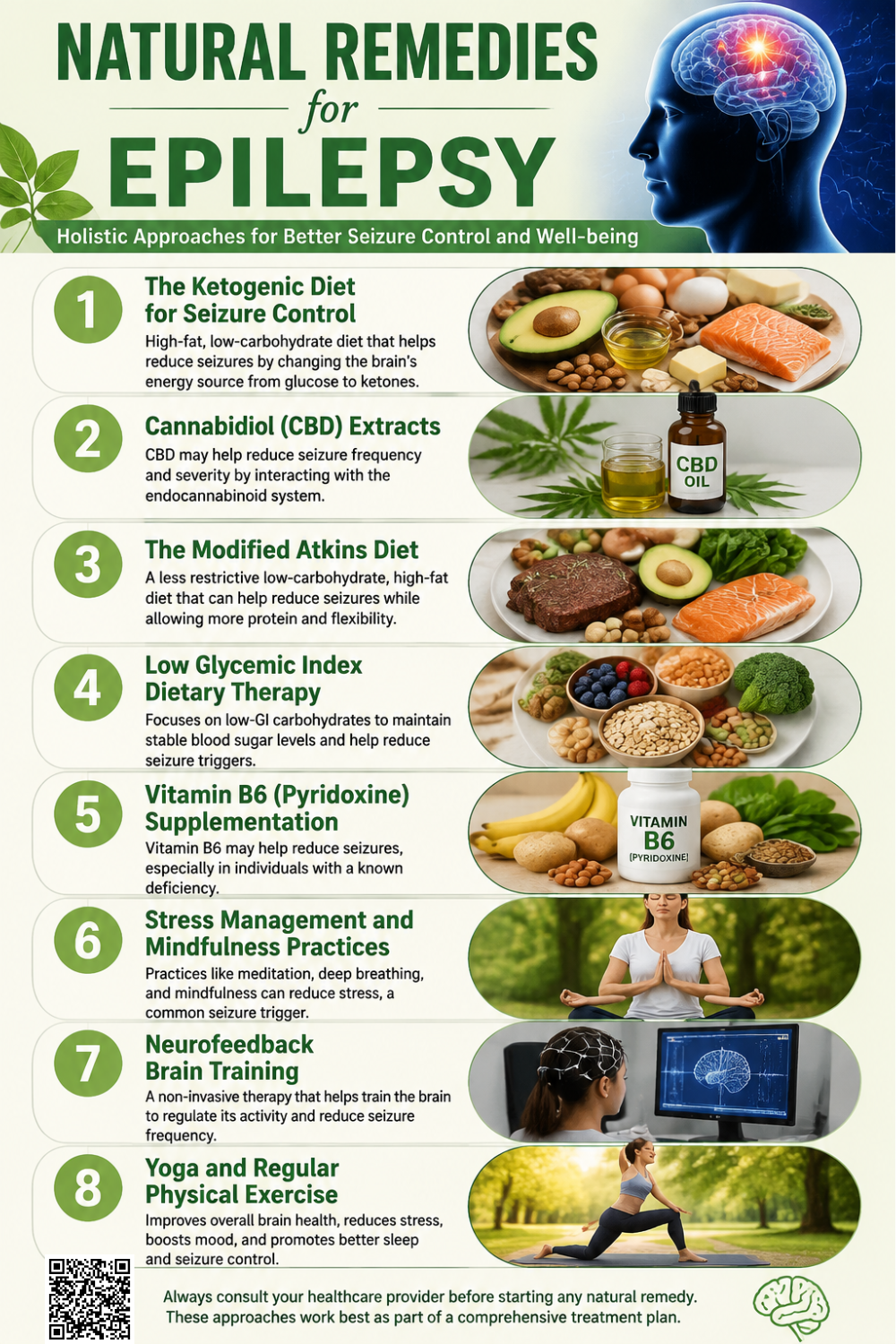 Natural Remedies for Epilepsy
1. The Ketogenic Diet for Seizure Control
How it may help
The ketogenic diet shifts the body’s primary fuel source from carbohydrates to fats, producing chemical byproducts called ketones. These ketones alter how brain cells generate energy, stabilizing abnormal electrical activity and making the brain less likely to trigger involuntary seizures 10.
What research says
Clinical research demonstrates this approach is highly effective for patients who do not respond to standard medications. Studies show that approximately half of children following the diet experience a 50% or greater reduction in seizure frequency, with up to 15% achieving complete seizure freedom 11.
How to use it safely
To use this diet safely, you must work directly with a neurologist and a specialized dietitian. Because the regimen requires exact fat-to-carbohydrate ratios, you should never attempt it without medical supervision to ensure you meet essential nutritional needs.
Potential precautions or side effects
Common early side effects include constipation, dehydration, and fatigue. Long-term risks involve kidney stones and decreased bone density, requiring routine medical monitoring and specific vitamin supplementation.
2. Cannabidiol (CBD) Extracts
How it may help
Cannabidiol (CBD) is a plant-derived compound that does not cause a “high.” It interacts with the brain’s receptor systems to calm overactive nerve cells. By regulating how electrical signals and calcium flow between neurons, CBD helps prevent the abnormal electrical spikes that trigger involuntary seizures 12.
What research says
Clinical trials confirm that highly purified CBD significantly reduces seizure frequency in severe, hard-to-treat childhood disorders, including Dravet syndrome and Lennox-Gastaut syndrome 13. Based on these outcomes, medical authorities have approved specific pharmaceutical-grade CBD medications as an effective add-on treatment for patients who fail to respond to traditional therapies 14.
How to use it safely
To use CBD safely, you must obtain a prescription for an FDA-approved formulation rather than relying on unregulated commercial supplements. Always consult your neurologist before starting, as they need to monitor your dosage and adjust your current medications to prevent dangerous interactions.
Potential precautions or side effects
Common side effects include extreme drowsiness, diarrhea, and loss of appetite. When combined with certain other epilepsy medications, CBD can cause elevated liver enzymes and potential liver damage.
3. The Modified Atkins Diet
How it may help
The modified Atkins diet is a high-fat, low-carbohydrate therapy that serves as a less restrictive alternative to the classic ketogenic diet. By drastically limiting carbohydrates while allowing normal protein intake, it forces the body to burn fats. This produces ketones, which stabilize brain cells and reduce abnormal electrical impulses 15.
What research says
Clinical trials demonstrate that this diet effectively treats drug-resistant epilepsy in both children and adults. Systematic reviews show that approximately half of patients experience a 50% or greater reduction in seizure frequency, making it a proven supplementary treatment for those who fail to respond to standard medications 16.
How to use it safely
Because this diet alters your metabolism, you must implement it under the strict supervision of a neurologist and a registered dietitian. These professionals will safely monitor your daily carbohydrate limits, track your urinary ketones, and adjust your existing seizure medications.
Potential precautions or side effects
Common side effects include fatigue, unintended weight loss, constipation, and elevated cholesterol. Regular medical monitoring is necessary to evaluate your blood chemistry and prevent potential vitamin deficiencies 17.
4. Low Glycemic Index Dietary Therapy
How it may help
Low Glycemic Index Treatment (LGIT) helps control epilepsy by focusing on carbohydrates that digest slowly. This dietary approach prevents rapid spikes in blood sugar. Maintaining stable blood glucose levels alters brain metabolism and helps reduce the excessive electrical excitability that triggers involuntary seizures 18.
What research says
Clinical studies demonstrate that this diet is an effective therapy for drug-resistant epilepsy. Research shows that approximately half of patients experience a 50% or greater reduction in seizure frequency. Systematic reviews indicate it offers comparable seizure control to the ketogenic diet but is significantly easier for patients to tolerate 19.
How to use it safely
Because this therapy strictly limits specific carbohydrates while balancing fats and proteins, you must implement it under the direct supervision of a neurologist and a specialized dietitian. These professionals will correctly formulate your meals and monitor your overall health to prevent nutritional imbalances.
Potential precautions or side effects
Side effects are generally mild compared to other epilepsy diets but can include brief periods of diarrhea, fatigue, or elevated blood urea levels, requiring routine medical monitoring 20.
5. Vitamin B6 (Pyridoxine) Supplementation
How it may help
Vitamin B6, or pyridoxine, is an essential cofactor the brain uses to convert glutamate—an excitatory chemical—into gamma-aminobutyric acid (GABA), which has a calming effect. By boosting GABA levels, vitamin B6 prevents neurons from firing excessively and helps stabilize electrical activity, thereby reducing the likelihood of involuntary seizures 21.
What research says
Clinical studies demonstrate that high-dose vitamin B6 supplementation immediately stops seizures in infants with rare genetic pyridoxine-dependent epilepsies 22. Additionally, research indicates that targeted supplementation significantly improves seizure control in critically ill adults whose intractable seizures are directly caused by severe pyridoxine deficiencies.
How to use it safely
To use vitamin B6 safely for epilepsy, you must undergo specific medical testing to confirm a metabolic dependency or severe deficiency. You should only take high-dose supplements under the direct supervision of a neurologist, who carefully calculates your exact daily requirements to ensure safe, long-term effectiveness 23.
Potential precautions or side effects
Extremely high doses can cause severe nerve damage, leading to numbness and poor coordination. Initial treatments in infants may also trigger sudden breathing interruptions, requiring immediate medical support 24.
6. Stress Management and Mindfulness Practices
How it may help
Stress is a leading trigger for seizures, as stress hormones like cortisol increase brain cell excitability 25. Mindfulness practices help calm the central nervous system, lower these stress hormones, and reduce the brain’s overall vulnerability to sudden, involuntary electrical discharges 26.
What research says
Clinical trials demonstrate that mindfulness-based cognitive therapies significantly reduce seizure frequency in patients with drug-resistant epilepsy 27. Research confirms that participating in short-term relaxation and mindfulness programs not only decreases seizures but also substantially improves memory, mood, and overall quality of life 28.
How to use it safely
You can safely practice daily deep breathing, progressive muscle relaxation, or guided meditation at home. However, you must always use these behavioral techniques as a supportive addition to your prescribed anti-seizure medications, never as a replacement, and maintain regular check-ups with your neurologist 29.
Potential precautions or side effects
While generally safe, intense hyperventilation during certain deep-breathing exercises can occasionally trigger seizures in highly susceptible individuals. Stick to gentle, controlled relaxation techniques to avoid unnecessary physical stress 30.
7. Neurofeedback Brain Training
How it may help
Neurofeedback, or EEG biofeedback, trains the brain to consciously regulate its own electrical activity. Using real-time monitoring, patients learn to increase stabilizing brain waves—such as the sensorimotor rhythm—and suppress abnormal patterns, which effectively raises the brain’s threshold against involuntary seizures 31.
What research says
Clinical reviews and meta-analyses show that neurofeedback significantly reduces seizure frequency, especially in patients with drug-resistant epilepsy. Research indicates that approximately 74% of patients whose seizures do not respond to standard medications experience fewer weekly seizures after completing specialized biofeedback training programs 32.
How to use it safely
To use neurofeedback safely, you must work directly with a certified clinical practitioner. You should only use this method as a supplementary therapy. Never reduce or stop taking your prescribed anti-seizure medications without medical approval, as sudden medication changes can cause severe seizure relapses 33.
Potential precautions or side effects
Side effects are generally mild but can include temporary mental fatigue, headaches, or mild anxiety following training sessions. Incorrect training by unqualified providers could potentially worsen abnormal brain wave activity.
8. Yoga and Regular Physical Exercise
How it may help
Yoga and aerobic exercise reduce physical and psychological stress, which are major seizure triggers. Regular physical activity balances the nervous system and promotes the release of calming brain chemicals, creating a more stable neurological environment that actively resists sudden, involuntary electrical spikes 34.
What research says
Clinical reviews demonstrate that yoga and moderate aerobic exercise can significantly decrease seizure frequency and duration. Research confirms that, contrary to outdated clinical beliefs, regular physical activity does not increase seizure prevalence and instead substantially improves cardiovascular health, memory, and overall quality of life 35.
How to use it safely
Always obtain medical clearance from your neurologist before starting a new fitness routine. You should gradually increase your workout intensity to avoid physical overexertion, stay well-hydrated, regulate your body temperature, and consistently take your prescribed anti-seizure medications.
Potential precautions or side effects
Extreme exhaustion, hyperventilation, or severe dehydration during workouts can occasionally trigger seizures. You must strictly avoid high-risk activities like scuba diving, solo swimming, or rock climbing to prevent life-threatening accidents 36.
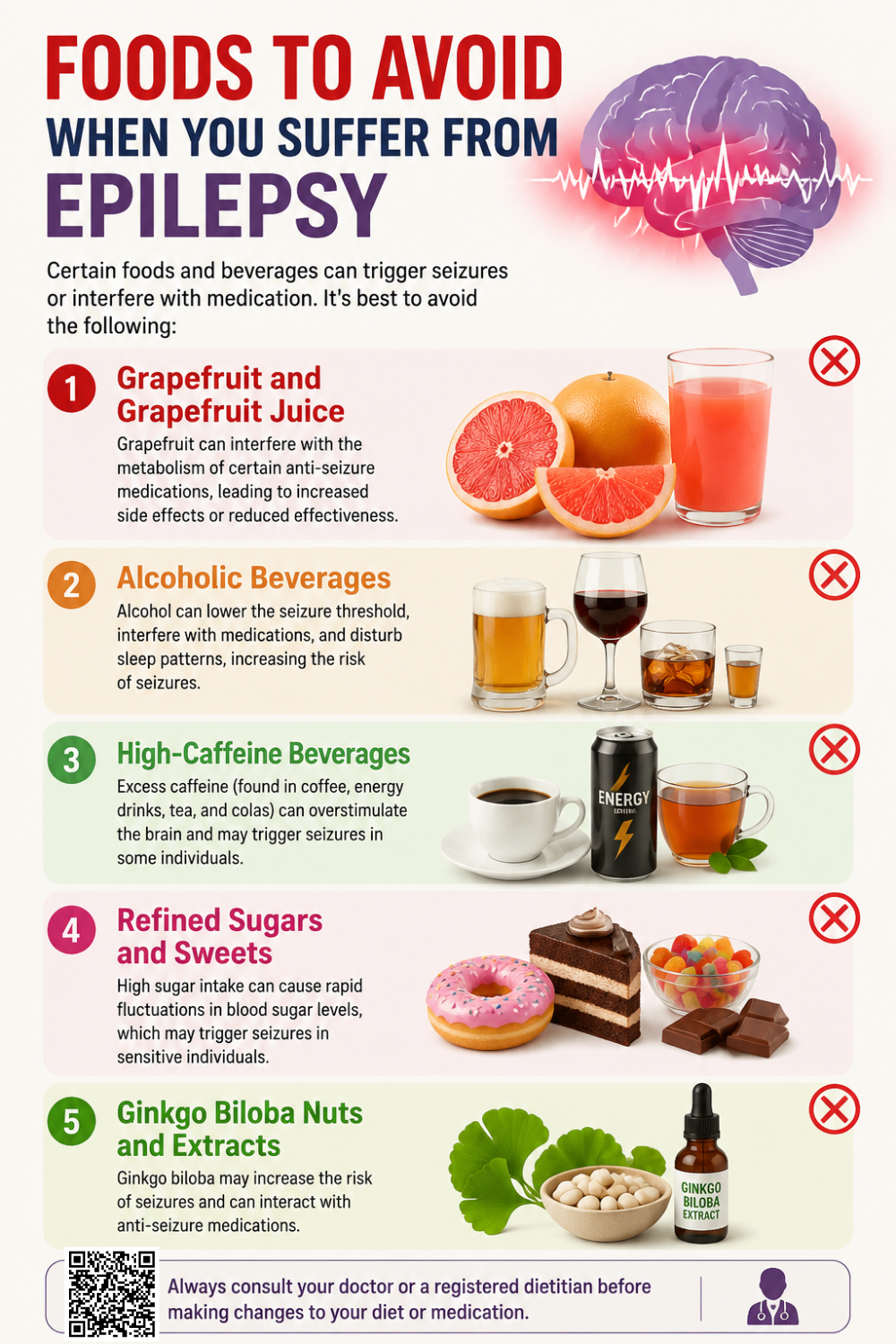 Foods to Avoid When You suffer from Epilepsy
1. Grapefruit and Grapefruit Juice
Grapefruit inhibits liver enzymes needed to process certain anti-seizure medications, which can cause toxic drug buildups in the bloodstream and increase severe side effects 37.
2. Alcoholic Beverages
Consuming alcohol can directly lower the brain’s seizure threshold and dangerously amplify the sedative effects of prescribed anti-epileptic medications, significantly increasing the risk of uncontrolled seizures.
3. High-Caffeine Beverages
Excessive caffeine acts as a powerful nervous system stimulant that can reduce the seizure threshold, increasing the likelihood of involuntary convulsions in highly susceptible individuals 38.
4. Refined Sugars and Sweets
Rapid blood sugar fluctuations from high-sugar foods can provoke seizures in sensitive patients and actively disrupt the seizure-controlling mechanisms of therapeutic medical ketogenic diets 39.
5. Ginkgo Biloba Nuts and Extracts
Ginkgo seeds contain a powerful neurotoxin called ginkgotoxin that depletes vitamin B6 in the brain, which can directly induce severe, potentially fatal epileptic convulsions 40.
When To see Doctor when you suffer from Epilepsy
1. First-Time Seizures
Seek immediate emergency medical evaluation if you or someone else experiences a seizure for the first time to identify the underlying cause and establish a clinical diagnosis 41.
2. Prolonged Seizures
Call emergency services if a seizure lasts longer than five minutes, as this prolonged state can escalate into status epilepticus and cause severe brain damage.
3. Breathing Difficulties
Request urgent medical care if you struggle to breathe normally or if your consciousness does not fully return after the physical seizure activity stops.
4. Consecutive Seizures
Get immediate medical help if a second seizure begins shortly after the first one without you regaining full consciousness and mental awareness between the two episodes.
5. Seizures in Water
If you suffer a seizure while swimming or bathing, request emergency medical assistance immediately, as this significantly increases the risk of silent water inhalation and drowning.
6. High-Risk Medical Conditions
See a doctor immediately if you experience a seizure while pregnant or if you have diabetes, as these conditions drastically increase the risk of life-threatening systemic complications.
7. Physical Injuries
Visit an emergency department if you sustain a physical injury, such as severe head trauma or a broken bone, from a sudden fall during a seizure episode.