


Forgetfulness is a common, often harmless cognitive experience where a person temporarily loses the ability to recall specific information, events, or facts. Minor memory lapses—such as misplacing household items, occasionally forgetting an acquaintance’s name, or taking longer to learn new skills—are considered a normal part of the natural aging process 1. Unlike dementia or Alzheimer’s disease, typical age-related forgetfulness does not severely disrupt daily routines, independent living, or social relationships. However, when memory loss becomes progressive, persistent, or is accompanied by significant confusion and difficulty completing familiar tasks, it transitions from benign forgetfulness to a potential symptom of a more serious neurological condition that requires formal clinical evaluation 2.
Causes of Forgetfulness
- Normal Aging: As the brain ages, minor structural and chemical changes occur that can cause occasional memory lapses, such as taking longer to recall a name or learn a new skill 1.
- Emotional Distress: Severe stress, anxiety, or depression can overwhelm the brain, causing confusion and temporary memory problems that are frequently mistaken for early dementia 1.
- Medication Side Effects: Certain over-the-counter and prescription drugs, particularly sedatives, antidepressants, antihistamines, and some blood pressure medications, can interfere with brain function and cause memory loss 1.
- Vitamin B12 Deficiency: A lack of Vitamin B12, which is critical for maintaining healthy nerve cells and red blood cells, can lead to cognitive decline and memory problems that are often reversible with proper supplementation 3.
- Sleep Deprivation: Failing to get enough high-quality sleep prevents the brain from properly consolidating and storing memories, leading to noticeable short-term forgetfulness and reduced daytime focus 4.
- Underactive Thyroid (Hypothyroidism): When the thyroid gland fails to produce sufficient hormones, it slows down metabolism and neurological processes, which can result in sluggish thinking and memory issues 5.
- Alcohol Abuse: Chronic, heavy alcohol consumption damages brain tissue over time and impairs the brain’s ability to form new memories, sometimes leading to permanent cognitive deficits 6.
- Head Injuries: A hard blow to the head, such as a concussion sustained from a fall or accident, can disrupt normal brain function and cause both short-term and long-term memory loss 7.
Symptoms of Forgetfulness
- Transitory Memory Lapses: Temporarily struggling to recall a specific word during a conversation or forgetting an acquaintance’s name, but successfully remembering it later, is a typical symptom of benign age-related forgetfulness.
- Misplacing Objects: Occasionally losing everyday items, such as keys or reading glasses, while still retaining the ability to logically retrace steps to locate them, represents normal memory variation.
- Repetitive Questioning: Asking the exact same questions repeatedly within a short time span, or continuously repeating the same stories without realizing it, indicates a more severe breakdown in short-term memory encoding 2.
- Getting Lost in Familiar Environments: Wandering or becoming completely disoriented in previously well-known locations, such as a local grocery store or one’s own neighborhood, is a serious symptom that often points to cognitive impairment 1.
- Inability to Complete Routine Tasks: Finding it suddenly difficult to perform familiar, multi-step activities—such as following a standard recipe, managing daily finances, or operating a household appliance—signals pathological memory loss 1.
- Confusion Regarding Time or Place: Losing track of the current date, the season, or the general passage of time, as well as forgetting where one is or how they arrived there, are primary symptoms of progressive dementias like Alzheimer’s disease 2.
- Neglecting Personal Care: A noticeable decline in personal hygiene, forgetting to eat regular meals, or failing to take prescribed medications safely can manifest when severe forgetfulness impacts independent living skills 1.
Natural Remedies for Forgetfulness
1. Regular Physical Activity and Aerobic Exercise
How It May Help
Regular aerobic exercise increases blood flow to the brain, delivering essential oxygen and nutrients. It stimulates the release of proteins that encourage the survival of new brain cells and the growth of new blood vessels, which directly supports memory function and overall cognitive health 8.
What Research Says
Clinical studies demonstrate that routine, moderate-intensity physical activity significantly reduces the risk of age-related cognitive decline and helps protect against dementia. Research concludes that physically active adults maintain greater brain volume over time and consistently score higher on memory evaluations than inactive individuals 9.
How to Use It Safely
You should aim for 150 minutes of moderate-intensity aerobic exercise, like brisk walking, per week 10. Begin slowly and gradually increase your activity. Always consult your healthcare provider before starting a new routine to ensure the exercises are appropriate for your specific health status.
Potential Precautions or Side Effects
Overexertion may cause muscle strains or joint injuries. If you experience chest pain, dizziness, or extreme shortness of breath while exercising, stop immediately and seek prompt medical evaluation.
2. Adopting a Mediterranean-Style Diet
How It May Help
The Mediterranean diet focuses on plant-based foods, healthy fats, and lean proteins, which provide essential nutrients that reduce inflammation and protect brain cells. By supporting cardiovascular health, this eating pattern ensures a steady supply of blood and oxygen to the brain, helping to maintain memory and overall cognitive function 11.
What Research Says
Clinical research consistently concludes that strict adherence to a Mediterranean-style diet significantly slows age-related cognitive decline and lowers the risk of developing Alzheimer’s disease. Studies demonstrate that individuals following this nutritional approach retain better memory recall and overall brain volume compared to those consuming standard Western diets 12.
How to Use It Safely
You should center your daily meals around vegetables, fruits, whole grains, and healthy fats like extra virgin olive oil. Eat fish and poultry at least twice weekly. Limit your intake of red meat, processed foods, and added sugars to maximize the cognitive benefits 13.
Potential Precautions or Side Effects
Be mindful of potential food allergies, particularly to tree nuts and seafood. If you consume large amounts of fish, choose varieties low in mercury to prevent heavy metal toxicity.
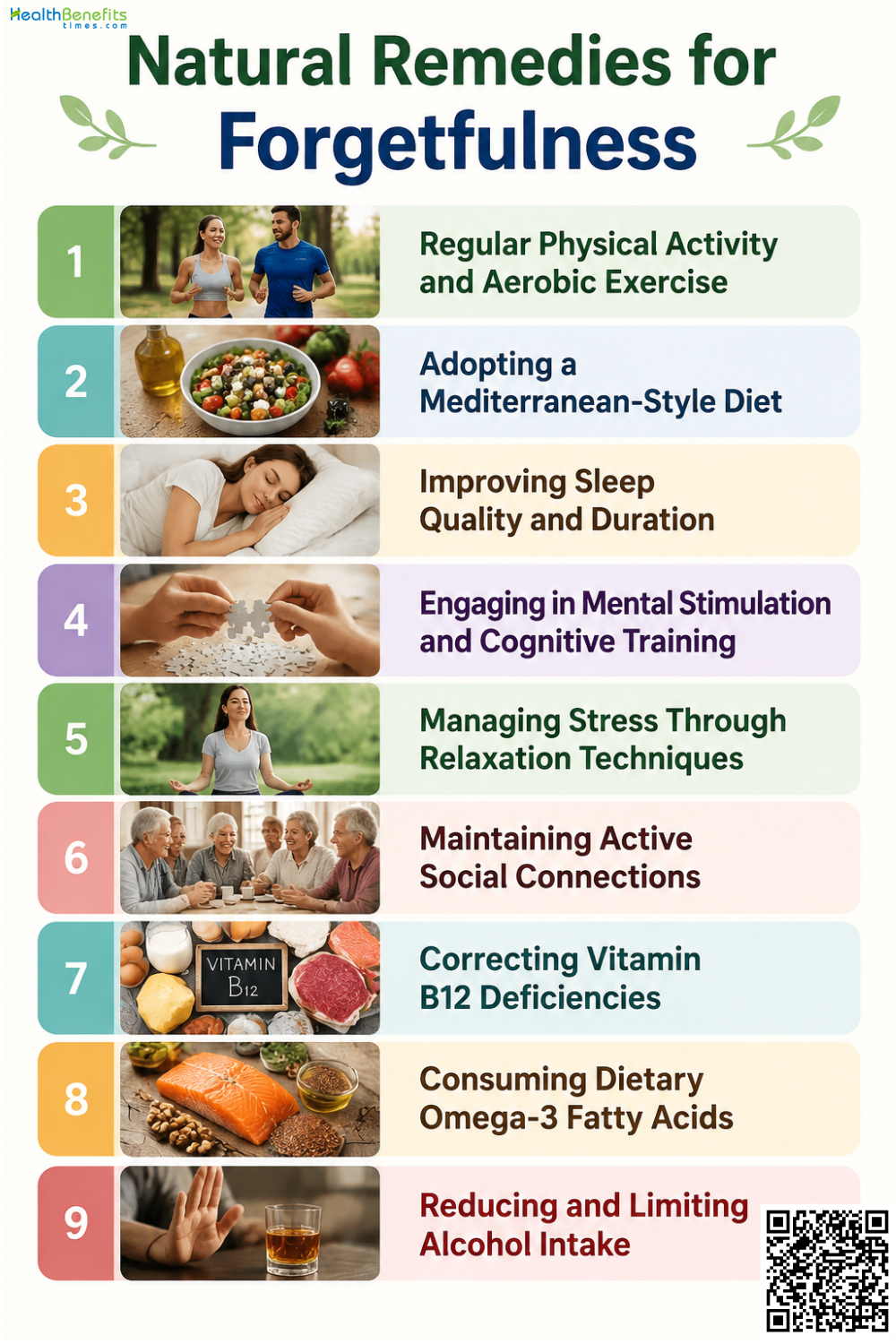
3. Improving Sleep Quality and Duration
How It May Help
Sleep is essential for memory consolidation, a biological process where the brain transfers daily information from short-term to long-term storage. Adequate rest also allows the brain to clear metabolic waste products that accumulate during waking hours, preventing toxic buildup that can impair memory recall and overall cognitive function 14.
What Research Says
Clinical research concludes that chronic sleep deprivation significantly impairs attention, learning, and memory recall. Studies show that individuals consistently getting less than six hours of sleep per night face a substantially higher risk of developing cognitive decline and dementia in later life compared to those maintaining adequate sleep duration 15.
How to Use It Safely
You should aim for seven to nine hours of continuous sleep each night 16. Establish a consistent bedtime schedule, keep your bedroom cool and dark, and avoid electronic screens, caffeine, and heavy meals at least one hour before attempting to sleep to improve overall rest quality.
Potential Precautions or Side Effects
If you rely on over-the-counter sleep supplements, prolonged use may cause daytime grogginess. Persistent insomnia or chronic snoring may indicate underlying medical conditions like sleep apnea, requiring professional clinical evaluation.
4. Engaging in Mental Stimulation and Cognitive Training
How it may help
Mental stimulation exercises the brain by creating new neural connections and strengthening existing ones. This mechanism, known as neuroplasticity, helps maintain memory and thinking skills 17. Activities that challenge the brain can improve focus, enhance information processing speed, and delay age-related cognitive decline.
What research says
Scientific evidence indicates that participating in intellectually engaging activities lowers the risk of developing cognitive impairment 8. Research concludes that continuous learning and targeted cognitive training programs directly preserve memory recall, reasoning, and problem-solving abilities in older adults over extended periods.
How to use it safely
You should incorporate a variety of mentally stimulating activities into your daily routine, such as reading, solving puzzles, or learning a new skill. Start with manageable tasks to prevent frustration, and gradually increase the difficulty to keep your brain actively challenged and engaged.
Potential precautions or side effects
Cognitive training is entirely safe for most people. However, excessive mental exertion without adequate rest can lead to cognitive fatigue and stress. Balance brain exercises with sufficient relaxation.
5. Managing Stress through Relaxation Techniques
How it may help
Chronic stress elevates cortisol levels, a hormone that can physically damage the brain’s memory center, the hippocampus 18. Relaxation techniques, such as deep breathing or mindfulness, lower stress hormone production. This reduction protects brain cells, improves concentration, and allows the brain to recall information effectively.
What research says
Clinical studies confirm that prolonged psychological stress accelerates cognitive decline 8. Research concludes that practicing relaxation methods, like mindfulness meditation, increases gray matter density in brain areas responsible for memory and learning, effectively counteracting stress-induced forgetfulness 19.
How to use it safely
You should practice relaxation techniques, like mindful breathing or meditation, for 10 to 20 minutes daily. Find a quiet, comfortable space free from distractions. Consistency matters most, so smoothly integrate brief stress-reduction exercises into your regular routine to maximize cognitive benefits.
Potential precautions or side effects
Relaxation exercises are highly safe. Rarely, intense focus on internal thoughts or breathing may trigger mild anxiety. If you feel uncomfortable, stop the practice and try a different calming activity.
6. Maintaining Active Social Connections
How it may help
Engaging in regular social interaction stimulates multiple brain regions involved in memory and attention 8. These connections reduce isolation-induced stress and depression, which directly contribute to memory loss. Frequent conversations require active listening and rapid information processing, providing a natural cognitive workout that maintains mental sharpness.
What research says
Clinical evidence demonstrates that strong social networks significantly lower the risk of developing dementia and cognitive decline 20. Researchers conclude that isolated individuals experience faster rates of memory deterioration, confirming that consistent social engagement actively preserves brain resilience and overall memory function 21.
How to use it safely
You should regularly participate in group activities, such as joining local clubs, volunteering, or attending community classes. Schedule consistent interactions with friends and family. Start with small, manageable gatherings to build comfort, ensuring these interactions remain enjoyable and do not become a source of stress.
Potential precautions or side effects
Socializing is exceptionally safe. However, forced or highly demanding social situations can induce anxiety or emotional exhaustion. Prioritize positive, supportive environments and always allow time for solitary rest.
7. Correcting Vitamin B12 Deficiencies
How it may help
Vitamin B12 is vital for maintaining healthy nerve cells and producing myelin, a protective sheath around nerves. A deficiency impairs nerve signaling and shrinks brain tissue, directly causing memory problems and confusion 3. Restoring adequate B12 levels repairs these neural pathways, thereby improving memory and cognitive function.
What research says
Clinical studies identify a strong link between low vitamin B12 levels and an increased risk of cognitive decline and dementia 8. Research concludes that early detection and supplementation effectively reverse memory loss in deficient individuals, though long-term severe deficiency may cause irreversible neurological damage 22.
How to use it safely
You should consult a healthcare provider for a blood test before starting supplements. If deficient, consume B12-rich foods like fish, poultry, eggs, and fortified cereals. For clinically diagnosed deficiencies, take oral supplements or receive intramuscular injections strictly as prescribed by your doctor to safely restore optimal levels.
Potential precautions or side effects
Vitamin B12 is water-soluble and generally safe. However, exceptionally high doses may cause headaches or nausea. Certain medications, like acid reducers and metformin, can interfere with its absorption.
8. Consuming Dietary Omega-3 Fatty Acids
How it may help
Omega-3 fatty acids, particularly DHA, are crucial building blocks for brain cell membranes. They reduce brain inflammation and promote the growth of new neural pathways 23. By improving cellular communication and protecting brain tissue from damage, these essential fats actively support cognitive function and help maintain memory recall.
What research says
Clinical studies indicate that higher dietary intake of omega-3 fatty acids is associated with a lower risk of cognitive decline 8. Research concludes that regular consumption of DHA significantly improves memory and learning capabilities in older adults experiencing mild, age-related forgetfulness 24.
How to use it safely
You should aim to eat fatty fish, such as salmon or sardines, at least twice a week. If you prefer supplements, choose high-quality fish oil or algal oil. Always consult your doctor before starting supplements to determine the appropriate dosage for your specific health needs.
Potential precautions or side effects
High doses of omega-3 supplements can cause digestive upset or increase bleeding risks 25. You must consult your doctor first if you currently take blood-thinning medications.
9. Reducing and Limiting Alcohol Intake
How it may help
Excessive alcohol damages the hippocampus, the brain area responsible for forming new memories, and stops short-term information from becoming long-term memories 26. Limiting alcohol protects brain cells from toxic damage. This helps maintain healthy nerve connections needed for clear thinking and reliable memory recall.
What research says
Studies show that heavy, long-term drinking shrinks brain tissue and significantly raises the risk of early dementia 27. Research concludes that cutting back on alcohol protects the brain from physical damage and slows memory loss, helping people keep their reasoning and recall skills intact over time 28.
How to use it safely
You should drink only in moderation or choose not to drink at all. Standard guidelines suggest a maximum of two drinks daily for men and one for women. If cutting back is difficult, you should ask your doctor for safe strategies and counseling support to reduce your intake.
Potential precautions or side effects
Stopping alcohol suddenly after heavy, long-term drinking can cause dangerous withdrawal symptoms, including severe shaking or seizures. You must seek medical supervision if you plan to quit heavy drinking.
Foods to Avoid When You Suffer from Forgetfulness
1. Sugary Beverages
High sugar intake spikes blood glucose, leading to brain inflammation and impaired memory function 29. It significantly increases the risk of early cognitive decline.
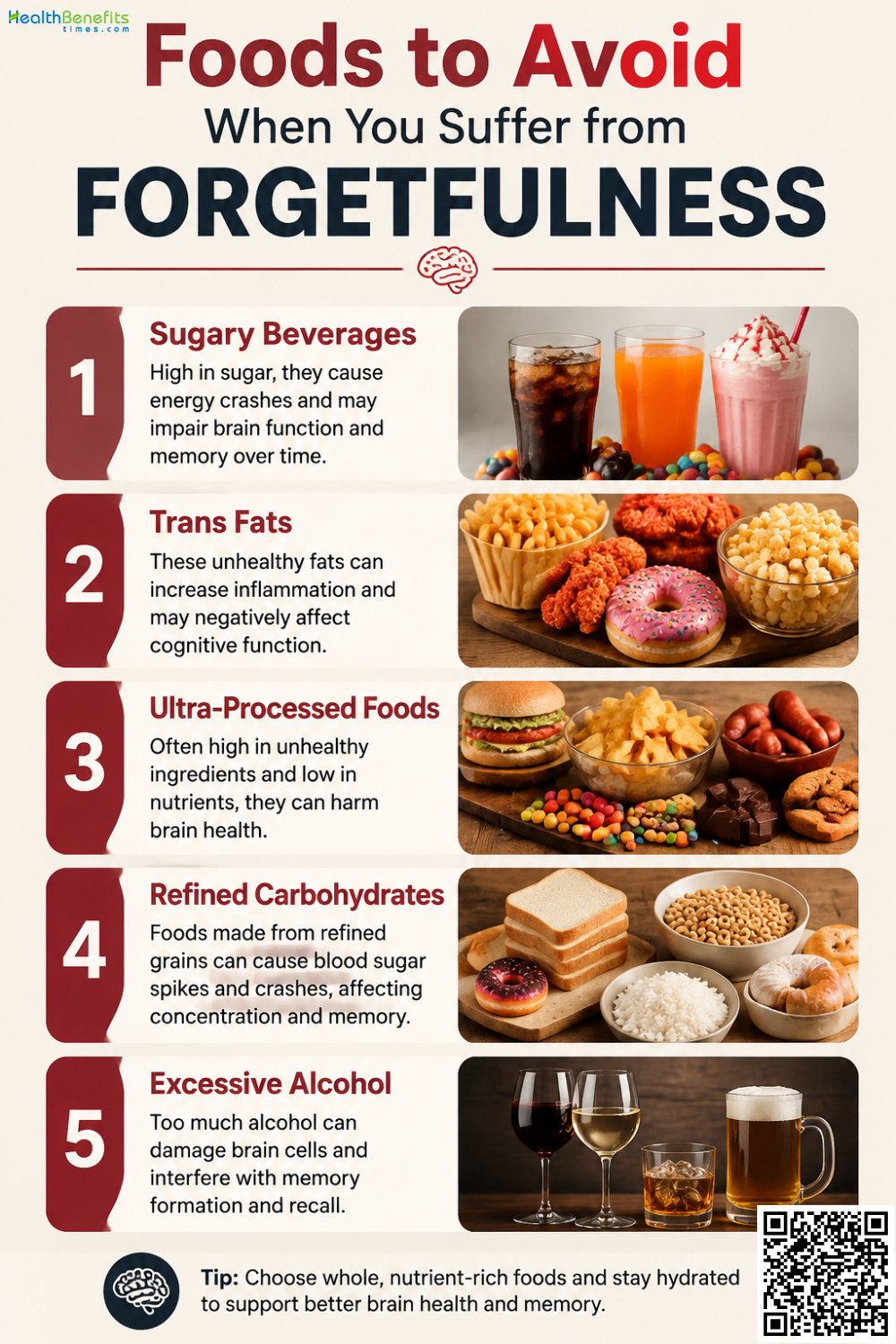
2. Trans Fats
Artificial trans fats, found in baked goods, promote cellular inflammation. Research links them directly to poorer memory performance and brain shrinkage in older adults 30.
3. Ultra-Processed Foods
These foods lack vital nutrients and contain inflammatory additives. Studies confirm that heavy consumption actively accelerates cognitive aging and reduces daily memory capacity 31.
4. Refined Carbohydrates
Foods like white bread cause rapid blood sugar spikes. This metabolic stress damages brain blood vessels, hindering short-term memory and spatial reasoning 32.
5. Excessive Alcohol
Heavy alcohol consumption is neurotoxic. It physically damages the hippocampus, the brain’s memory center, directly causing severe memory deficits and accelerating dementia onset 6.
When to See a Doctor When You Struggle from Forgetfulness
You should schedule a medical evaluation if memory issues begin to disrupt your daily routine or if you experience any of the following warning signs.
- Inability to Complete Familiar Tasks: See a doctor if forgetfulness prevents you from performing daily routines, like managing finances or navigating to well-known locations 33.
- Repeating Information: Asking the exact same questions repeatedly or relying heavily on memory aids indicates abnormal cognitive decline requiring professional medical assessment 34.
- Getting Lost in Familiar Places: Wandering or becoming lost in previously familiar environments is a severe symptom of dementia that necessitates an immediate neurological examination 34.
- Confusion About Time or Place: Losing track of dates, seasons, or current locations is a clinical warning sign of a progressive memory disorder requiring medical evaluation 33.
- Poor Judgment and Safety Risks: Exhibiting poor judgment, such as neglecting personal hygiene or making severe financial mistakes, signals compromised brain function needing clinical intervention 35.