


Eyestrain, medically known as asthenopia, is a common visual disorder that occurs when the eyes become fatigued from intense, prolonged use. It most frequently develops after extended periods of reading, driving, or looking at digital screens, which forces the visual system to work harder than normal. When focusing on a close object for a long time, the ciliary muscles inside the eyes must maintain constant tension, eventually leading to muscle fatigue and accommodative insufficiency 1. Because the accommodative system struggles to sustain a clear focus, this fatigue triggers a range of uncomfortable symptoms. Clinical presentations often include blurred vision, localized frontal headaches, dry or watery eyes, and an increased sensitivity to light 2. Although highly disruptive to daily reading and work performance, eyestrain does not cause permanent structural damage and typically resolves completely with adequate visual rest.
Causes of Eyestrain
- Prolonged Near-Vision Tasks: Extended periods of reading, writing, or focusing on objects at a close distance force the eye muscles to maintain constant tension without adequate rest 3.
- Digital Screen Use: Sustained engagement with computers, smartphones, and tablets significantly reduces the frequency and completeness of natural blinking, which destabilizes the tear film and causes ocular surface dryness 4.
- Uncorrected Vision Problems: Underlying refractive errors—such as nearsightedness (myopia), farsightedness (hyperopia), or astigmatism—force the visual system to continuously overcompensate in order to maintain a clear image 5.
- Poor Lighting and Glare: Inadequate background brightness, excessive screen contrast, or harsh light reflecting off digital devices and physical workspaces increase the physical demand on the visual system 6.
- Focusing and Coordination Dysfunctions: Pre-existing clinical issues with how the eyes adjust focus (accommodation) or turn inward together (convergence) make routine near-vision activities significantly more exhausting 5.
- Improper Ergonomics: Incorrect viewing distances, poor seating posture, or inappropriate screen positioning contribute heavily to both structural musculoskeletal strain and visual fatigue 7.
Symptoms of Eyestrain
- Blurred or Double Vision: Temporary loss of visual sharpness or seeing overlapping images often occurs as the eye muscles struggle to sustain continuous focus on near objects 8.
- Ocular Discomfort: The physical sensation of the eyes feeling sore, tired, aching, or burning is a primary clinical indicator of muscle exhaustion from prolonged visual tasks 1.
- Headaches: Tension-type headaches, typically located in the frontal region or around the temples, frequently develop from the continuous overworking of the muscles used for focusing and eye alignment 1.
- Dry or Watery Eyes: Because intense visual concentration on screens or books significantly reduces the natural blink rate, the protective tear film evaporates too quickly, resulting in gritty dryness or reactive, excessive tearing 9.
- Light Sensitivity: An increased intolerance to normal indoor lighting or glare from digital screens, known clinically as photophobia, frequently accompanies fatigued visual systems 10.
- Neck and Shoulder Pain: Stiffness or aching in the neck, shoulders, and upper back is strongly associated with visual fatigue, as individuals unconsciously alter their posture and lean forward to compensate for focusing difficulties 8.
Natural Remedies for Eyestrain
1. The 20-20-20 Rule
How it may help
The 20-20-20 rule requires shifting visual focus to an object at least 20 feet away for 20 seconds every 20 minutes of near-vision work. This scheduled break relaxes the focusing muscles inside the eye, reduces muscle spasms, and naturally restores a normal blink rate to replenish the protective tear film 10.
What research says
Clinical studies confirm that taking frequent, structured visual breaks significantly decreases the severity of digital eye strain symptoms, including dry eyes, blurred vision, and ocular discomfort 10. Research concludes that routine micro-breaks are highly effective at preventing the accumulation of visual fatigue during extended screen use 9.
How to use it safely
To implement this habit effectively, set a repeating timer or use software reminders to prompt your visual breaks every 20 minutes. Look out a window or down a hallway, and consciously blink several times during the 20-second resting period to maximize moisture retention on the eye surface.
Potential precautions or side effects
There are no adverse side effects to this practice. However, if severe visual discomfort persists despite taking regular breaks, consult an eye care professional to evaluate for underlying vision problems.
2. Conscious and Frequent Blinking Techniques
How it may help
When focusing intently on digital screens, the natural blink rate drops significantly. Conscious blinking manually forces the eyelids to close completely, which evenly distributes essential tears across the ocular surface. This lubrication prevents the tear film from evaporating rapidly, thereby minimizing the friction and dryness that cause severe eye discomfort 8.
What research says
Clinical studies demonstrate that reading on electronic displays reduces the average blink rate by up to 60 percent and increases incomplete blinks. Research confirms that actively performing complete, intentional blinks during screen use effectively stabilizes the tear film and significantly reduces symptoms of dry eye and visual fatigue 11.
How to use it safely
To practice this technique, consciously remind yourself to close your eyes fully and gently squeeze them shut for a moment before reopening. Perform a sequence of ten slow, complete blinks every twenty minutes during periods of intense visual concentration to consistently replenish eye moisture.
Potential precautions or side effects
This natural technique is entirely safe and carries no side effects. If severe dryness continues despite frequent blinking, seek medical evaluation to rule out chronic dry eye disease.
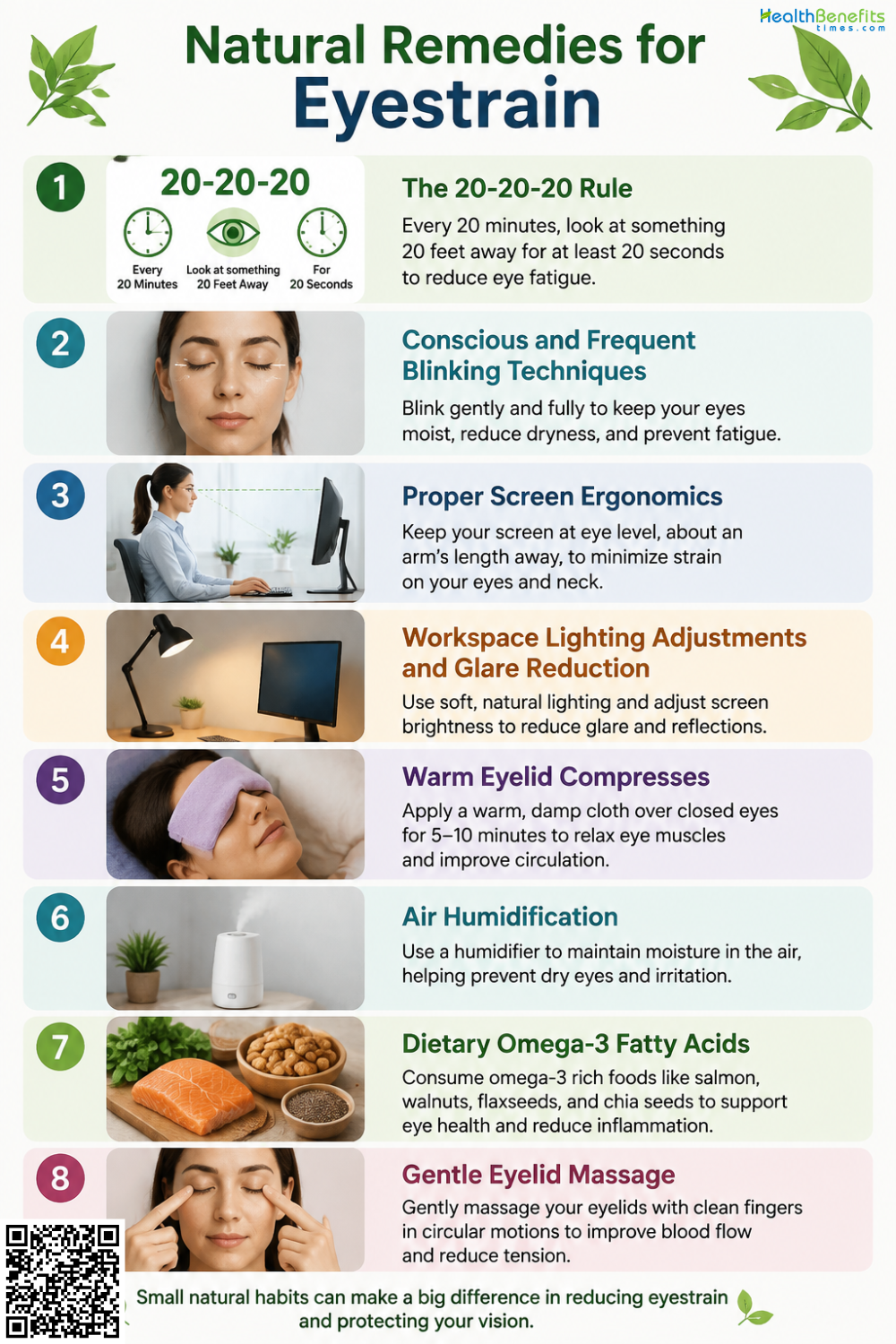
3. Proper Screen Ergonomics
How it may help
Proper screen ergonomics reduces the intense physical demand placed on the eye muscles responsible for focusing and alignment. Positioning a monitor at an optimal distance and a slightly downward angle allows the eyelids to cover more of the eye surface, significantly minimizing tear evaporation and dryness 12.
What research says
Clinical reviews confirm that incorrect viewing distances and awkward screen angles are primary contributors to visual fatigue. Research demonstrates that establishing an ergonomic workstation directly decreases the incidence of accommodation spasms, blurred vision, and musculoskeletal discomfort associated with prolonged digital device usage 13.
How to use it safely
Place your digital screen approximately an arm’s length away (20 to 26 inches) from your face. Adjust the monitor height so the center rests 15 to 20 degrees below your direct eye level, allowing you to gaze slightly downward while keeping your neck straight.
Potential precautions or side effects
Ergonomic adjustments carry no medical risks. However, ensure that changing your monitor height does not compromise your overall seating posture or cause secondary lower back or shoulder strain.
4. Workspace Lighting Adjustments and Glare Reduction
How it may help
Proper lighting reduces the harsh contrast between a digital screen and the surrounding environment. Minimizing glare and reflections on a monitor ensures the visual system does not have to struggle to decipher text. This prevents the over-exertion of focusing muscles and significantly reduces visual fatigue 8.
What research says
Clinical studies identify excessive ambient light and screen glare as primary environmental triggers for visual discomfort. Research concludes that optimizing workspace lighting and matching screen brightness to room illumination significantly decreases the severity of headaches, blurred vision, and general digital eyestrain 14.
How to use it safely
Position your monitor so that windows are situated to the side, rather than directly in front of or behind you. Adjust the screen’s brightness to match the room, and apply a matte, anti-glare filter to your display to block harsh reflections.
Potential precautions or side effects
Avoid working in complete darkness. High contrast between a bright screen and a dark room forces the pupils to constantly adjust, which can worsen eye fatigue and trigger headaches.
5. Warm Eyelid Compresses
How it may help
Applying a warm compress directly to the closed eyelids helps unclog the tiny oil glands located along the lash line. This releases essential natural oils into the tear film, which prevents moisture from evaporating too quickly and relieves the dry, gritty sensation associated with visual fatigue 15.
What research says
Clinical evidence demonstrates that consistent use of warm eyelid compresses significantly improves tear film stability and overall lipid layer thickness. Research confirms this therapy effectively reduces rapid tear evaporation rates, providing substantial relief from the ocular surface discomfort and severe dryness that commonly trigger eyestrain 16.
How to use it safely
Soak a clean, soft cloth in warm water and wring out the excess. Close your eyes and gently place the damp cloth over your eyelids for five to ten minutes. Reheat the cloth with warm water as needed to maintain a comfortable, soothing temperature.
Potential precautions or side effects
Always test the temperature on your wrist first. Using water that is excessively hot can easily burn the delicate eyelid skin or cause serious thermal injury to the eye.
6. Air Humidification
How it may help
Using a humidifier adds essential moisture to the surrounding air. In dry indoor environments, the protective tear film on the eye evaporates rapidly, causing severe dryness and friction. Increasing ambient humidity slows this evaporation, keeping the eyes continuously lubricated and reducing the mechanical strain on the visual system 8.
What research says
Clinical studies indicate that low environmental humidity significantly accelerates tear evaporation, directly exacerbating digital eye strain and dry eye syndrome. Research concludes that maintaining indoor humidity levels between 40 and 60 percent effectively stabilizes the tear film, improving overall ocular comfort and reducing the frequency of visual fatigue 10.
How to use it safely
Place a cool-mist humidifier in your primary workspace or bedroom to maintain indoor humidity between 40 and 60 percent. Clean the device’s water tank at least once a week using distilled white vinegar or a mild bleach solution to prevent the growth of harmful bacteria and mold.
Potential precautions or side effects
Avoid over-humidifying the room above 60 percent, as excessive moisture promotes dust mite and mold growth, which can trigger severe allergic reactions and worsen overall ocular irritation.
7. Dietary Omega-3 Fatty Acids
How it may help
Dietary Omega-3 fatty acids reduce cellular inflammation and improve the function of the oil glands located in the eyelids. This produces a healthier, thicker oil layer over the tear film, which prevents essential eye moisture from evaporating. Maintaining this lubrication directly reduces the dry, burning sensations that exacerbate visual fatigue 17.
What research says
Clinical trials demonstrate that routine consumption of Omega-3 supplements significantly improves tear film stability and increases overall tear production. Research concludes that these essential fatty acids effectively decrease the severity of ocular dryness and surface irritation, which are primary physiological triggers for digital eyestrain 18.
How to use it safely
Incorporate natural dietary sources like salmon, mackerel, chia seeds, or walnuts into your weekly meals. If utilizing dietary supplements, take standard doses of high-quality fish oil or algae-based Omega-3 capsules alongside food to enhance absorption and prevent minor gastrointestinal upset.
Potential precautions or side effects
High doses of Omega-3 supplements can mildly thin the blood and increase bleeding risks. Always consult a medical professional before starting supplementation, especially if you take prescription blood thinners.
8. Gentle Eyelid Massage
How it may help
Gentle massage of the eyelids mechanically stimulates the tiny oil-producing glands located near the eyelashes. This physical pressure helps release trapped lipids into the tear film. A healthy oil layer prevents the rapid evaporation of tears, ensuring the eyes remain well-lubricated and protected from the friction that causes visual fatigue 15.
What research says
Clinical studies demonstrate that routine eyelid massage, particularly when performed after applying a warm compress, significantly improves the function of the meibomian glands. Research confirms this mechanical stimulation increases the thickness of the tear film’s lipid layer, directly reducing the dry eye symptoms heavily associated with digital eyestrain 16.
How to use it safely
First, wash your hands thoroughly. Close your eyes and use your fingertips to apply very light, rolling pressure along the edges of your eyelids near the lashes. Sweep gently downward on the upper lids and upward on the lower lids to manually encourage oil flow.
Potential precautions or side effects
Never apply heavy pressure directly to the eyeball, as this can cause structural damage or blurry vision. Avoid massaging your eyelids if you have an active eye infection.
Foods to Avoid When You suffer from Eyestrain
1. Alcoholic Beverages
Alcohol acts as a systemic diuretic that decreases tear production and significantly exacerbates the ocular surface dryness responsible for visual fatigue 9.
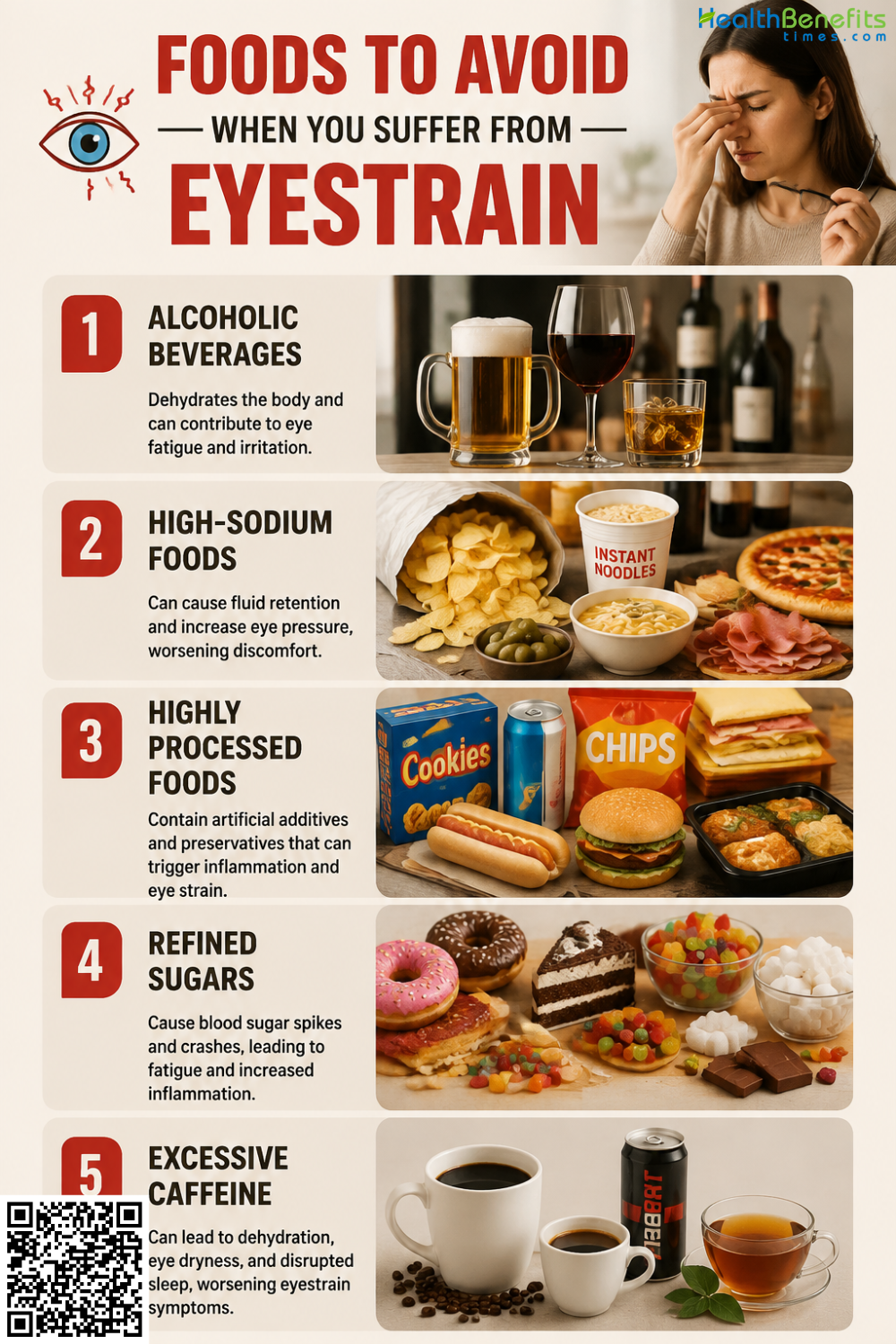
2. High-Sodium Foods
Excessive salt intake disrupts cellular hydration and alters the osmolarity of the tear film, leading to increased eye friction and strain 8.
3. Highly Processed Foods
Processed foods contain unhealthy fats that promote systemic inflammation, directly impairing eyelid oil glands and worsening the dry eye symptoms associated with eyestrain 17.
4. Refined Sugars
Diets high in refined sugars trigger chronic inflammation that degrades the protective lipid layer of the tear film, thereby increasing overall visual discomfort 16.
5. Excessive Caffeine
High caffeine consumption heavily promotes fluid loss, which reduces natural tear volume and aggravates the ocular surface dryness associated with digital eyestrain 18.
When to see Doctor when you struggle from Eyestrain
1. Persistent Visual Changes
Seek medical evaluation if blurred or double vision persists even after resting, as this may indicate underlying refractive errors requiring a professional diagnosis 1.
2. Severe Ocular Pain
Consult a clinician if you experience sharp eye pain rather than mild fatigue, because this can signal urgent conditions requiring immediate medical intervention 1.
Unresolving Headaches
Schedule an eye exam if headaches become severe or fail to resolve with visual rest, which may indicate vision dysfunctions necessitating corrective lenses 1.
Extreme Light Sensitivity
Seek care for sudden or extreme sensitivity to light, because it can be a primary symptom of serious intraocular inflammation or significant eye surface damage 10.
Failure of Natural Remedies
Visit a specialist if your discomfort remains unchanged despite practicing ergonomic adjustments, taking frequent visual breaks, and utilizing standard warm compresses consistently 8.