

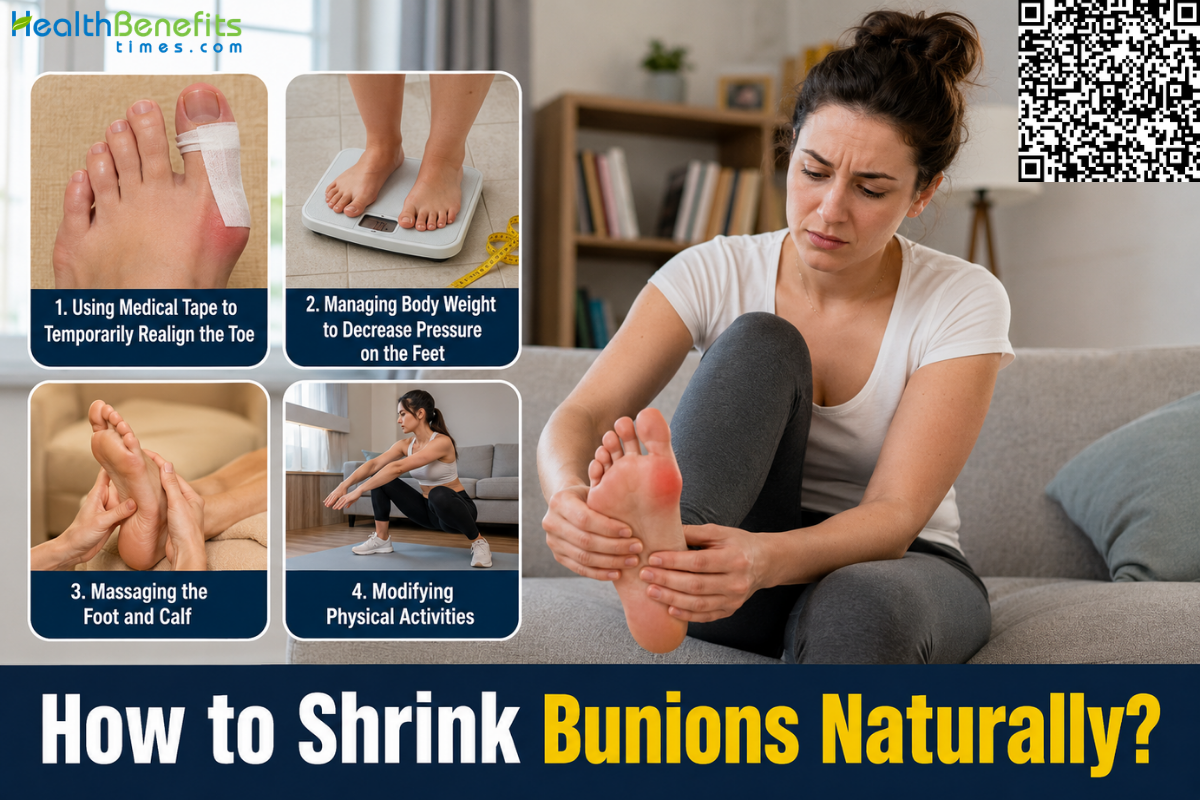
A bunion is a visible bony bump that develops on the joint at the base of the big toe. This progressive foot deformity occurs when the big toe drifts toward the smaller toes, forcing the joint to shift out of its normal alignment and bulge outward 1. Over time, factors such as inherited foot anatomy, joint stress, and footwear choices can aggravate this structural shift, resulting in localized inflammation, tenderness, and mechanical discomfort 2. While many people experience minimal discomfort, severe cases can significantly restrict mobility and alter foot mechanics, necessitating professional medical assessment 3.
Causes of Bunions
- Inherited Foot Mechanics: Inheriting specific structural foot types, such as flat feet, low arches, or overly flexible joints, creates an abnormal weight distribution that continuously forces the big toe joint out of its natural alignment over time 4.
- Improper Footwear: Constantly wearing high-heeled shoes or footwear with narrow, pointed toe boxes actively compresses the toes into an unnatural position, which accelerates joint misalignment and heavily contributes to bunion development 5.
- Inflammatory Joint Diseases: Systemic autoimmune conditions, particularly rheumatoid arthritis, severely degrade the protective cartilage and weaken the supportive ligaments within the foot, making the big toe joint highly susceptible to structural deformity 6.
- Physical Trauma or Injury: Sustaining a severe structural injury, repetitive stress, or localized nerve damage to the foot can permanently alter the mechanical stability of the big toe joint, triggering the progressive outward bulging associated with bunions 3.
Symptoms of Bunions
- Visible Bony Bump: The primary symptom is a noticeable, bulging bony growth that forms on the inner edge of the foot at the base of the big toe as the joint shifts permanently out of alignment 3.
- Localized Pain and Tenderness: Individuals often experience chronic, deep, or sharp pain within the affected joint, which typically intensifies during walking, standing for prolonged periods, or wearing restrictive shoes 7.
- Swelling and Discoloration: The soft tissue surrounding the misaligned joint frequently becomes inflamed, causing visible swelling, physical warmth, and red discoloration over the protruding bump 1.
- Restricted Toe Mobility: As the structural deformity worsens, the big toe joint gradually stiffens, severely reducing the toe’s normal range of motion and making bending the foot a painful effort 3.
- Corns and Calluses: Because the misaligned big toe leans inward and crowds the smaller toes, thickened layers of hard skin frequently develop where the toes physically rub together or directly beneath the ball of the foot 1.
- Nerve Irritation: The physical outward bulging and chronic inflammation can actively compress local nerves, frequently resulting in a burning sensation, tingling, or localized numbness along the side of the affected toe 7.
How to Shrink Bunions Naturally?
1. Switching to Shoes with a Wide Toe Box
How it may help
Switching to footwear with a wide toe box immediately relieves direct mechanical pressure on the misaligned big toe joint. By providing ample space, these shoes prevent the toes from squeezing together, which slows the progression of the structural deformity and significantly reduces painful friction over the protruding bony bulge 7.
What research says
Clinical studies confirm that modifying footwear is a highly effective non-surgical intervention for managing bunion symptoms. Research demonstrates that wearing shoes with a wide and deep toe area significantly reduces localized joint pain and decreases the chronic soft tissue inflammation caused by continuous mechanical compression 5.
How to use it safely
To properly manage your bunion symptoms, you should select shoes with a toe area wide enough that your toes do not touch the sides. Choose footwear made from soft, flexible materials to maintain comfortable and stable foot mechanics during daily activities 3.
Potential precautions or side effects
Avoid buying shoes that are too loose. If your foot slides forward while walking, this unintended movement creates painful blisters and increases harmful friction against the existing bunion 7.
2. Using Custom Shoe Inserts to Support Foot Arches
How it may help
Custom shoe inserts, or orthotics, correct abnormal foot mechanics by stabilizing the heel and supporting the arch. This structural realignment evenly distributes body weight across the foot, significantly reducing the mechanical stress and direct downward pressure on the big toe joint to prevent the bunion from worsening 7.
What research says
Clinical research demonstrates that custom orthotics effectively manage bunion symptoms by improving lower limb biomechanics. Studies conclude that properly fitted arch supports significantly decrease localized joint pain, enhance overall foot function, and reduce the progressive structural deformity caused by repetitive weight-bearing stress 5.
How to use it safely
To safely support your foot arches, you should obtain a precise prescription from a podiatrist rather than relying on generic insoles. Place the custom orthotics into supportive shoes with a wide toe box, ensuring they fit securely without crowding your toes 8.
Potential precautions or side effects
You may experience mild foot or arch aching initially. Discontinue use and consult your doctor immediately if the rigid inserts cause severe joint pain or create new skin blisters 4.
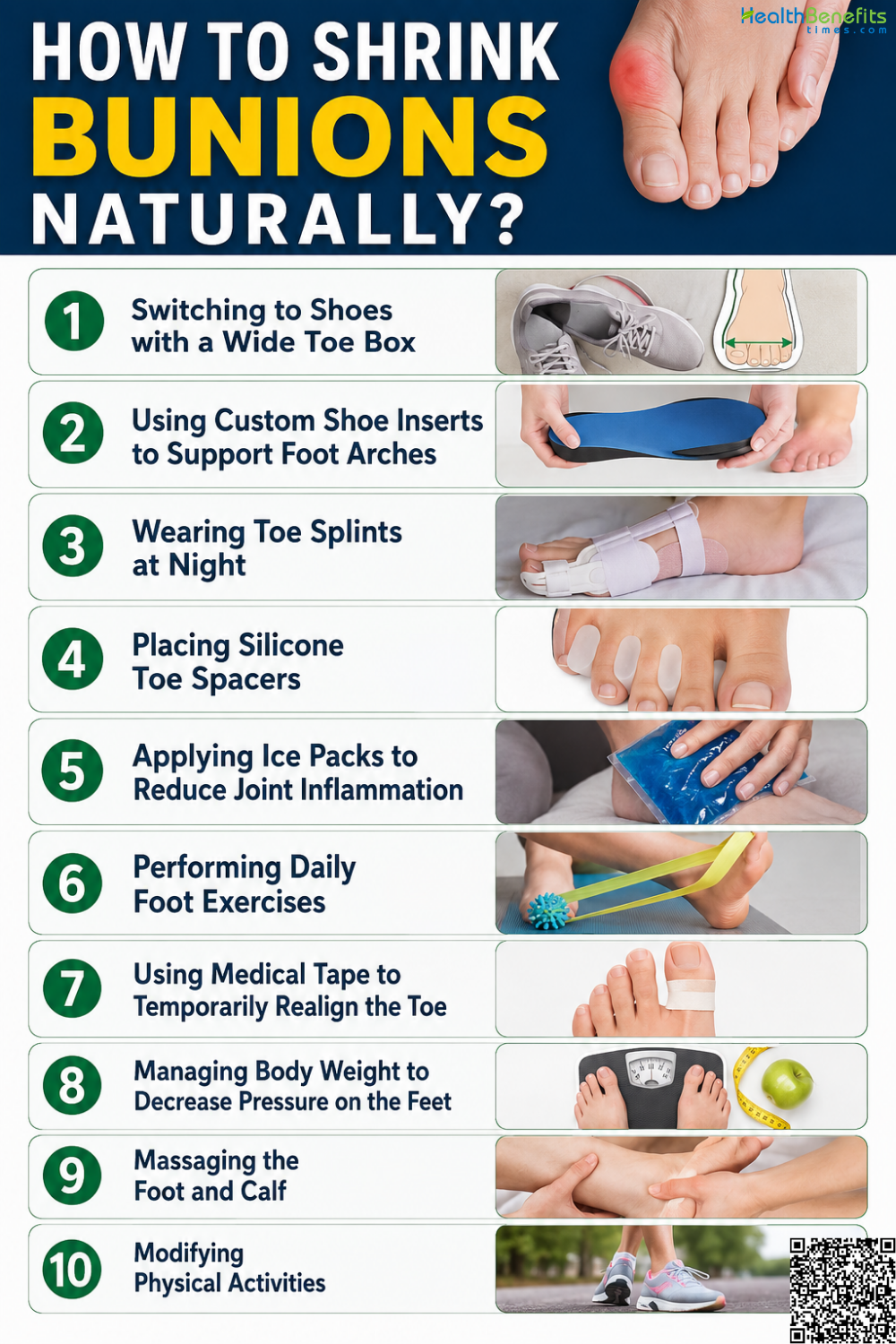
3. Wearing Toe Splints at Night
How it may help
Night splints physically hold the misaligned big toe in a straight, neutral position during sleep. This gentle, prolonged stretching of tight ligaments and tendons temporarily relieves joint stiffness, reduces morning pain, and helps slow the progressive structural worsening of the underlying bunion deformity 7.
What research says
Clinical studies indicate that while night splints effectively reduce localized joint pain and improve temporary toe flexibility, they cannot permanently shrink the bony protrusion. Research confirms that conservative splinting serves primarily as a supportive measure to manage severe symptoms rather than a structural cure 9.
How to use it safely
To safely use a night splint, you should fasten the device securely around your big toe and foot before bedtime. Ensure the straps are snug but not excessively tight to maintain proper blood circulation throughout the night, removing it upon waking 3.
Potential precautions or side effects
You must avoid over-tightening the splint, which causes nerve numbness or restricted blood flow. Discontinue use immediately if you experience increased joint pain or localized skin irritation 7.
4. Placing Silicone Toe Spacers
How it may help
Silicone toe spacers physically separate the big toe from the adjacent toes, immediately reducing localized friction. By forcing a temporary structural realignment, these flexible devices alleviate mechanical joint pressure and actively prevent the formation of painful corns or calluses between severely compressed toes 7.
What research says
Clinical studies demonstrate that silicone toe spacers effectively decrease localized joint pain and improve overall walking comfort. Research confirms that while these devices successfully manage soft tissue inflammation and reduce mechanical stress, they cannot permanently shrink or reverse the underlying bony deformity 10.
How to use it safely
To safely manage your bunion, you should wedge the clean silicone spacer directly between your big and second toes. You must wear them exclusively inside footwear featuring a wide toe box to prevent the device from adding further harmful compression 3.
Potential precautions or side effects
You must avoid wearing spacers inside narrow shoes, which severely restricts blood flow. Discontinue use immediately if you develop skin blisters, localized redness, or continuous nerve numbness 7.
5. Applying Ice Packs to Reduce Joint Inflammation
How it may help
Applying ice packs directly to a bunion induces immediate localized vasoconstriction, narrowing blood vessels to reduce blood flow. This cold therapy effectively numbs affected nerve endings, temporarily relieving severe joint pain and visibly decreasing the chronic swelling surrounding the inflamed bony protrusion 11.
What research says
Clinical orthopedic guidelines confirm that cryotherapy is a proven conservative treatment for managing acute joint inflammation. Research demonstrates that localized ice application successfully decreases metabolic tissue demand and mitigates pain signaling, though it cannot structurally shrink the underlying bony deformity 7.
How to use it safely
To safely reduce your bunion swelling, you should wrap a cold pack in a thin towel before applying it. Hold the compress against the inflamed joint for exactly fifteen minutes multiple times a day, particularly after prolonged walking 3.
Potential precautions or side effects
You must never apply ice directly to bare skin to prevent severe frostbite. Avoid cold therapy entirely if you have diagnosed nerve damage or poor localized blood circulation 12.
6. Performing Daily Foot Exercises
How it may help
Performing specific foot exercises strengthens the small intrinsic muscles and supportive tendons surrounding the big toe joint. By maintaining localized flexibility and correcting abnormal muscle imbalances, these daily stretches prevent further joint stiffness and actively slow the progressive outward shifting of the structural bunion deformity 13.
What research says
Clinical physical therapy research confirms that while conservative foot exercises cannot structurally shrink the existing bony protrusion, they significantly improve functional joint mobility. Studies demonstrate that consistent toe-stretching routines successfully decrease chronic pain and prevent the severe mechanical stiffening associated with advanced bunion deformities 14.
How to use it safely
To safely improve your foot mechanics, you should perform gentle routines like picking up small objects with your toes or manually stretching the big toe into a straight alignment. Complete these exercises daily on a flat surface, ensuring movements remain entirely within a pain-free range 3.
Potential precautions or side effects
You must avoid forcing your toe joint beyond its natural range of motion. Stop exercising immediately if you experience sharp, shooting pain or newly increased localized swelling 7.
7. Using Medical Tape to Temporarily Realign the Toe
How it may help
Medical taping applies gentle, continuous mechanical tension to physically pull the big toe away from the smaller toes. By temporarily restoring a straighter joint alignment during weight-bearing activities, this supportive method immediately reduces painful friction and relieves localized joint pressure, slowing the progression of the deformity 6.
What research says
Clinical trials confirm that therapeutic taping successfully decreases acute pain and improves walking mechanics in individuals with mild to moderate bunions. However, research concludes that while taping effectively manages soft tissue symptoms and temporary alignment, it cannot permanently shrink the underlying structural bone deformity 15.
How to use it safely
To correctly tape your foot, you should apply medical-grade athletic tape starting from the big toe, pulling it gently along the inner side of your foot. Ensure your skin is completely clean and dry before application to maximize adhesion and maintain joint stability 3.
Potential precautions or side effects
You must avoid wrapping the tape too tightly, which dangerously restricts blood circulation. Discontinue use immediately if you develop persistent itching or noticeable skin irritation beneath the adhesive 7.
8. Managing Body Weight to Decrease Pressure on the Feet
How it may help
Maintaining a healthy body weight directly reduces the mechanical load placed on the lower extremities during daily movement. By decreasing this constant downward pressure, weight management prevents the big toe joint from flattening further, effectively slowing the structural progression of the bunion deformity and minimizing chronic joint pain 7.
What research says
Clinical studies indicate a direct correlation between an elevated body mass index and increased severity of foot deformities. Research concludes that while weight reduction cannot physically shrink the existing bony protrusion, it significantly decreases abnormal joint loading and successfully relieves the mechanical stress that aggravates severe bunion symptoms 16.
How to use it safely
To safely reduce foot pressure, you should adopt a medically approved weight loss plan focusing on balanced nutrition and low-impact cardiovascular exercises. Engage in activities like swimming or stationary cycling, which effectively burn calories without placing additional harmful mechanical stress on your misaligned toe joint 17.
Potential precautions or side effects
You must avoid high-impact exercises like running or jumping, which rapidly accelerate joint damage and worsen bunion pain. Always consult your doctor before beginning any new fitness routine 11.
9. Massaging the Foot and Calf
How it may help
Deep tissue massage releases chronic muscle tension within the calf and foot arch. By relaxing the tight tendons that forcefully pull the big toe out of alignment, regular manual therapy significantly reduces localized joint pressure and relieves the mechanical stress that worsens bunion deformities 5.
What research says
Clinical research indicates that manual soft tissue therapy effectively decreases foot pain and improves joint flexibility. However, studies confirm that while therapeutic massage successfully manages severe inflammatory symptoms and muscle tightness, it cannot permanently reverse or physically shrink the underlying structural bone deformity 7.
How to use it safely
To safely relieve foot tension, you should gently massage your calves and foot arches daily using steady, firm pressure. Use a tennis ball under your foot to roll out tight muscles, ensuring you completely avoid pressing directly on the inflamed bunion bump 3.
Potential precautions or side effects
You must avoid massaging the area if the skin is broken or severely swollen. Stop immediately if rubbing the foot causes sharp pain or increases joint inflammation 11.
10. Modifying Physical Activities
How it may help
Modifying physical activities directly reduces the repetitive mechanical stress placed upon the big toe joint. By replacing high-impact movements with low-impact alternatives, you significantly decrease the abnormal weight-bearing forces that actively worsen joint misalignment and cause chronic bunion inflammation 7.
What research says
Clinical orthopedic research concludes that reducing mechanical joint loading effectively manages hallux valgus symptoms. Studies demonstrate that while modifying physical activities successfully prevents severe disease progression and minimizes localized joint pain, it cannot permanently reverse the underlying structural bone deformity 5.
How to use it safely
To safely protect your foot joints, you should replace high-impact exercises like running with low-impact alternatives such as swimming, cycling, or stationary rowing. Always wear wide-toed, supportive athletic shoes during any physical movement to ensure proper biomechanical alignment 11.
Potential precautions or side effects
You must stop any physical activity immediately if it triggers sharp joint pain or localized swelling. Ignoring acute pain signals can cause permanent structural cartilage damage 3.
Foods to Avoid When You Suffer from Bunions
1. Refined Sugars
Consuming excessive sugar triggers the release of inflammatory cytokines. This chronic systemic inflammation significantly worsens the localized joint pain and tissue swelling surrounding a structural bunion deformity 18.

2. Purine-Rich Meats
Red and organ meats contain high purine levels that elevate blood uric acid. This frequently triggers gout in the big toe, severely magnifying existing bunion joint pain 19.
3. Trans Fats
Artificial trans fats found in fried foods provoke severe systemic tissue inflammation. This biochemical immune response directly aggravates the inflamed, painful soft tissues overlying the misaligned toe joint 20.
4. Ultra-Processed Carbohydrates
Heavily processed carbohydrates promote rapid weight gain. Excess body mass increases the mechanical downward pressure placed directly on the foot, significantly accelerating the structural worsening of bunions 21.
When to See a Doctor When You Struggle from Bunions
- Persistent Pain: You should seek a medical evaluation if severe foot pain persists despite footwear changes. Chronic pain frequently indicates advanced joint degeneration or arthritis requiring professional intervention 1.
- Decreased Toe Mobility: Schedule a clinical assessment if your big toe becomes completely stiff or cannot bend normally. This severe restriction signals significant structural cartilage damage that alters healthy walking mechanics 3.
- Signs of Infection: You must consult a physician immediately if the skin over the bunion develops open sores, intense redness, or warmth, as these strongly indicate a dangerous localized soft tissue infection 7.
- Inability to Fit Shoes: See a specialist if the bony protrusion enlarges significantly, making it impossible to find fitting footwear. Extreme structural deformity frequently requires surgical correction to restore normal foot function 12.