

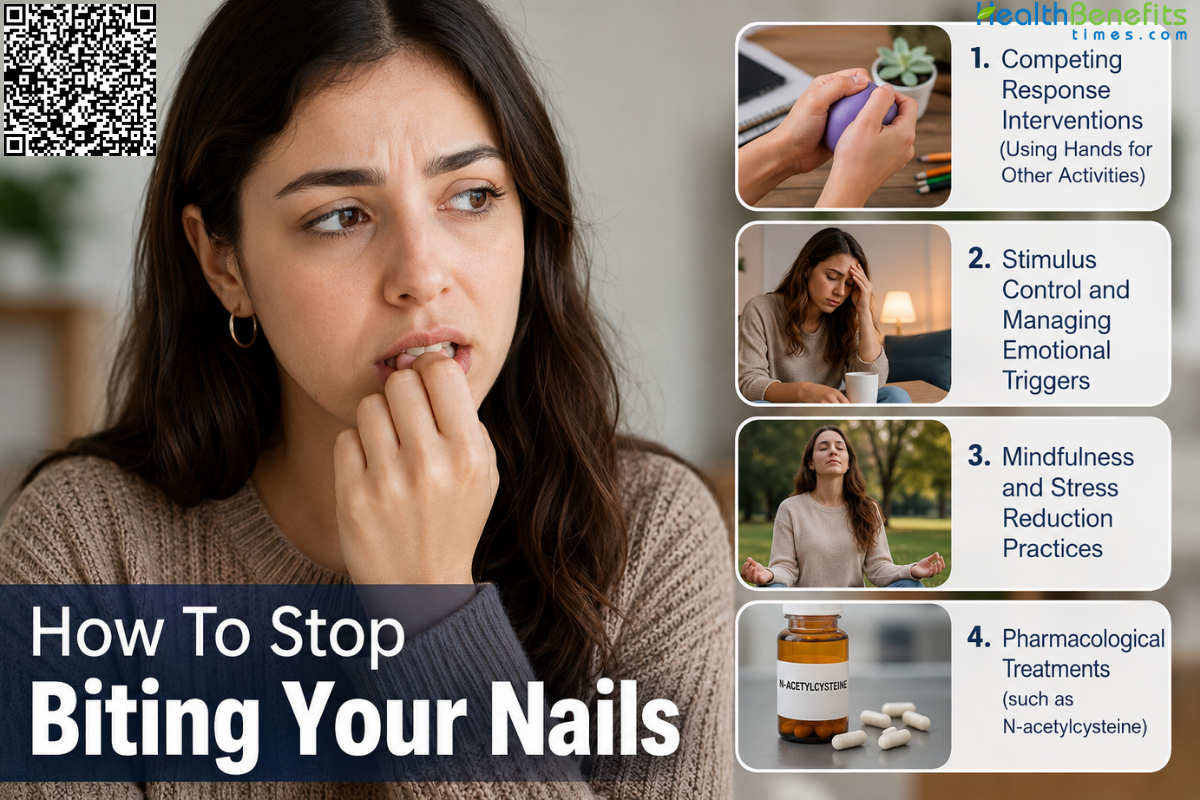
Nail biting, clinically known as onychophagia, is a chronic and repetitive condition characterized by the compulsive habit of biting one’s fingernails. This behavioral disorder is highly common, affecting an estimated 20% to 30% of the population across all age groups, though it most frequently begins in childhood 1. While often dismissed as a harmless nervous habit, persistent nail biting is clinically classified as a body-focused repetitive behavior and may be linked to underlying stress, anxiety, or obsessive-compulsive traits 2. Over time, chronic onychophagia can lead to significant physical complications, including distorted nail beds, localized skin infections, chipped teeth, and an increased risk of oral infections due to the transfer of bacteria 2. To successfully manage this condition, you should identify your specific behavioral triggers and adopt healthier stress-reduction techniques to protect your physical and dental well-being.
Causes of biting the nails
- Stress and Anxiety: Nail biting frequently serves as an unconscious coping mechanism used to manage emotional tension, nervousness, or acute stress, as the repetitive action provides a temporary soothing effect 2.
- Genetic Predisposition: Heredity plays a significant role in the likelihood of developing this behavior, as the risk of compulsive nail biting increases up to four-fold if both parents also exhibit the condition 2.
- Psychiatric and Neurodevelopmental Conditions: Chronic nail biting is classified alongside other obsessive-compulsive related disorders and is frequently associated with underlying mental health conditions, including Obsessive-Compulsive Disorder (OCD), Attention Deficit Hyperactivity Disorder (ADHD), and severe anxiety 3.
- Boredom and Under-Stimulation: The habit often occurs during periods of physical inactivity or boredom, acting as a simple motor outlet to keep the hands and mouth occupied when a person is under-stimulated 4.
- Perfectionism and Frustration: Certain personality traits, particularly perfectionism, can trigger the behavior when an individual experiences emotional frustration or feels a sudden urge to “fix” a rough, torn, or poorly manicured nail 5.
- Learned Behavior: In early childhood, nail biting can originate simply as a learned habit acquired by observing and directly imitating family members or peers who bite their nails 6.
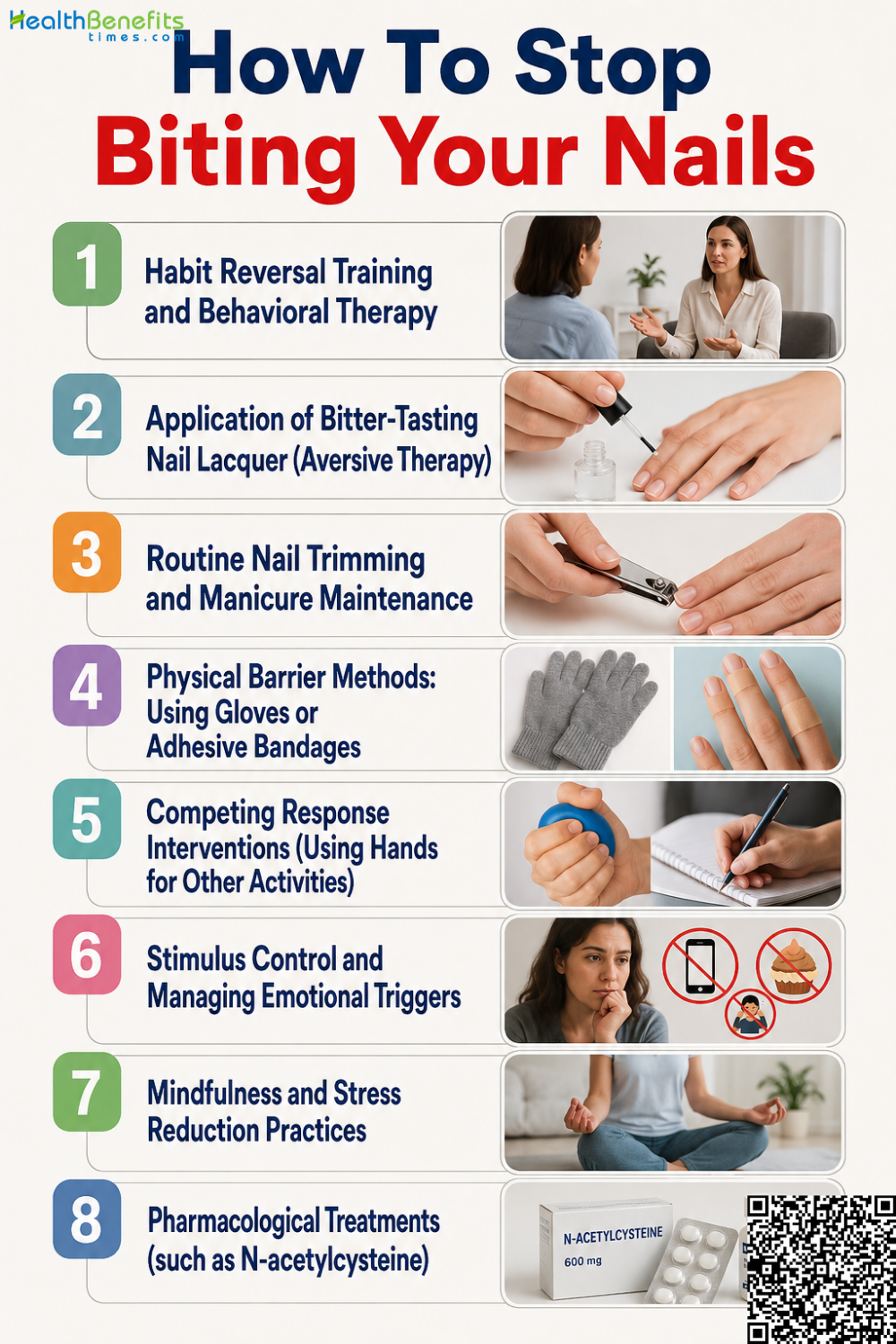
How To Stop Biting Your Nails
1. Habit Reversal Training and Behavioral Therapy
How it may help
Habit reversal training helps you recognize the exact moments you unconsciously bite your nails and teaches you to replace that action with a harmless physical movement. This behavioral therapy focuses on building awareness of your emotional triggers, allowing you to intercept the compulsive habit before it physically starts 2.
What research says
Clinical studies consistently demonstrate that habit reversal training is the most effective psychological intervention for body-focused repetitive behaviors. Research concludes that individuals participating in these structured behavioral therapies experience significant, long-lasting reductions in compulsive nail-biting frequency compared to those using only negative reinforcement or no treatment 7.
How to use it safely
To safely implement this method, you should work with a licensed mental health professional to develop a personalized competing response, such as clenching your fists. Practice this alternative movement consistently whenever you feel stressed, ensuring the new behavior causes no physical harm 3.
Potential precautions or side effects
While behavioral therapy is highly safe, emotional fatigue can occur initially. If confronting underlying stress triggers temporarily increases your anxiety, consult your healthcare provider to adjust the therapy’s pacing 2.
2. Application of Bitter-Tasting Nail Lacquer (Aversive Therapy)
How it may help
Bitter-tasting nail lacquer serves as a straightforward form of aversive therapy by creating a highly unpleasant sensory experience. When an individual unconsciously places their fingers in their mouth, the strong, foul taste acts as an immediate physical deterrent, helping to disrupt the automatic cycle of compulsive nail biting 6.
What research says
Clinical evaluations conclude that aversive therapies utilizing bitter lacquers provide moderate success for mild nail-biting habits. Research indicates that while the unpleasant taste temporarily deters the physical action, long-term cessation is most successful when this physical barrier is combined with psychological interventions like habit reversal training 2.
How to use it safely
To use this treatment safely, you should apply a thin, even layer of the bitter lacquer over clean, dry nails according to the product instructions. Always avoid touching your eyes or face after application to prevent severe mucous membrane irritation or stinging 3.
Potential precautions or side effects
Bitter lacquers can occasionally cause mild nausea, localized skin irritation, or allergic contact dermatitis. You should discontinue application immediately if redness or swelling develops around your nail beds 2.
3. Routine Nail Trimming and Manicure Maintenance
How it may help
Routine nail trimming and regular manicure maintenance effectively minimize the physical nail surface available to bite. By consistently maintaining short, smoothly filed nails, individuals successfully eliminate jagged edges, hangnails, and uneven cuticles. Removing these structural imperfections eliminates the primary tactile triggers that frequently provoke the compulsive urge to bite 2.
What research says
Clinical reviews indicate that conservative maintenance methods, such as regular manicures, serve as a practical first-line behavioral intervention. Research concludes that minimizing free nail edges significantly reduces the frequency of onychophagia episodes by actively eliminating the physical stimulus and structural imperfections necessary to initiate this repetitive habit 1.
How to use it safely
To maintain your nails safely, you should strictly use sanitized clippers to trim them straight across, and gently round the edges using a clean file. Ensure all manicure tools are thoroughly disinfected before use to prevent introducing harmful bacteria or fungal infections into vulnerable skin folds 8.
Potential precautions or side effects
You should avoid cutting the cuticles or trimming nails too close to the nail bed. Excessive trimming causes severe pain, ingrown nails, and increased susceptibility to painful localized bacterial infections 8.
4. Physical Barrier Methods: Using Gloves or Adhesive Bandages
How it may help
Physical barriers, such as gloves or adhesive bandages, act as immediate tactile reminders and direct physical blocks between the fingers and the mouth. These methods effectively interrupt the unconscious habit loop of onychophagia by preventing the individual from physically accessing the nail bed during sudden episodes of stress or boredom 2.
What research says
Clinical studies conclude that physical barrier interventions successfully create immediate, short-term reductions in nail-biting frequency by increasing patient awareness of unconscious hand movements. However, research indicates these physical deterrents are most effective for long-term cessation when combined with structured psychological treatments, such as habit reversal training 4.
How to use it safely
To use physical barriers safely, you should wash your hands thoroughly before applying clean, breathable adhesive bandages directly over the affected nails. You must change these bandages daily or whenever they become wet to maintain proper hygiene and prevent trapped moisture 9.
Potential precautions or side effects
You should monitor your fingers for allergic reactions to adhesives or moisture buildup. Prolonged use of damp bandages increases the risk of localized fungal or bacterial skin infections 2.
5. Competing Response Interventions (Using Hands for Other Activities)
How it may help
Competing response interventions help by requiring the individual to perform a harmless physical action that is completely incompatible with nail biting. Whenever the urge to bite arises, actively redirecting the hands to clench a fist, grip an object, or squeeze a stress ball successfully blocks the automatic hand-to-mouth movement and breaks the compulsive cycle 10.
What research says
Clinical research demonstrates that competing response interventions are highly effective for treating body-focused repetitive behaviors. Studies conclude that consistently engaging the hands in alternative motor activities significantly reduces the frequency of onychophagia by actively overwriting the established neurological habit loop with a safe, harmless physical substitute 7.
How to use it safely
To safely apply this technique, you should choose a comfortable, discreet action, such as tightly clasping your hands or holding a smooth object. You must perform this alternative movement continuously for at least one minute whenever you experience the sudden urge to bite your nails 2.
Potential precautions or side effects
You should regularly monitor the alternative hand movement to ensure it does not evolve into a new harmful compulsive behavior, such as severe skin picking or excessive joint strain 10.
6. Stimulus Control and Managing Emotional Triggers
How it may help
Stimulus control helps stop nail biting by actively identifying and removing the specific environmental or emotional factors that provoke the habit. By modifying a person’s surroundings and managing emotional triggers like stress or boredom, individuals can prevent the compulsive urge from initiating, effectively breaking the automatic behavioral loop 2.
What research says
Clinical research demonstrates that stimulus control interventions are highly effective components of behavioral therapy for body-focused repetitive behaviors. Studies conclude that proactively managing environmental triggers and emotional stressors significantly decreases the frequency of onychophagia by disrupting the established cue-response cycle before the physical action begins 7.
How to use it safely
To safely utilize stimulus control, you should track your daily habits to identify specific situations or emotions that trigger your nail biting. Actively modify your environment to avoid these specific triggers, and practice healthy relaxation techniques when confronting unavoidable psychological stress 3.
Potential precautions or side effects
You should avoid extreme environmental avoidance, as isolating yourself from all daily stressors can negatively impact your routine and unintentionally worsen your underlying anxiety or emotional distress 10.
7. Mindfulness and Stress Reduction Practices
How it may help
Mindfulness and stress reduction practices help stop nail biting by increasing a person’s conscious awareness of their automatic hand movements and underlying emotional states. By actively lowering overall psychological tension, these behavioral techniques effectively diminish the acute anxiety that frequently triggers compulsive onychophagia episodes 2.
What research says
Clinical research demonstrates that mindfulness-based interventions successfully reduce the severity of body-focused repetitive behaviors. Studies conclude that individuals utilizing structured stress reduction therapies experience a significant decrease in compulsive nail biting, as these methods successfully separate the emotional distress from the automatic physical response 11.
How to use it safely
To safely implement these practices, you should incorporate daily deep-breathing exercises or progressive muscle relaxation into your routine. Consistently utilize brief meditation sessions to manage acute stress, ensuring you remain in a comfortable environment when actively confronting your emotional triggers 12.
Potential precautions or side effects
You should not use stress reduction practices to replace professional psychiatric treatment if your chronic nail biting stems from severe psychological trauma or a diagnosed clinical anxiety disorder 13.
8. Pharmacological Treatments (such as N-acetylcysteine)
How it may help
Pharmacological treatments, specifically N-acetylcysteine (NAC), work by acting as a glutamate modulator within the brain. By regulating this critical neurotransmitter, NAC decreases underlying impulsivity and significantly reduces the unconscious urge or craving to engage in repetitive, body-focused behavioral disorders such as chronic nail biting 2.
What research says
Clinical research indicates that oral NAC supplementation is an effective, emerging treatment for severe onychophagia. Retrospective reviews and clinical trials conclude that a significant majority of patients using NAC experience marked, long-term reductions in habit-driven behaviors, making it a promising pharmacological option when conventional behavioral therapies prove insufficient 14.
How to use it safely
To use this medication safely, you must consult a licensed healthcare provider to obtain the correct oral dosage tailored to your specific age and weight. You should begin with a lower baseline dose and gradually increase it over several weeks under direct medical supervision 15.
Potential precautions or side effects
While generally safe, oral NAC can occasionally cause mild gastrointestinal side effects, including nausea or diarrhea. You should immediately report any severe allergic reactions or persistent stomach discomfort to your doctor 14.
When to see a Doctor when you struggle from nail Biting
While occasional nail biting is common, you should seek professional medical evaluation if you experience any of the following physical or psychological complications.
- Signs of Infection: Consult a doctor if you experience localized redness, swelling, severe pain, or pus, as these indicate bacterial infections requiring prompt medical treatment 2.
- Severe Tissue Damage: Seek medical care if chronic biting causes persistent bleeding, deep skin tears, or permanently distorted nail beds that prevent normal nail growth 1.
- Dental and Oral Complications: Visit a professional if the habit results in chipped teeth, significant jaw pain, or frequent oral infections caused by transferred hand bacteria 2.
- Significant Psychological Distress: Contact a mental health professional if the behavior is accompanied by severe anxiety, obsessive-compulsive symptoms, or an inability to stop despite significant physical pain 7.