Health Benefits
    Facebook Twitter Instagram
    Friday, December 5
    Facebook Twitter Pinterest
    Health Benefits
    • Home
    • Dental Health
    • Mental Health
    • Weight Loss
    • Health Wiki
    • Nutrition
    • Healthy Recipe
    • BMI Calculator
    Health Benefits
    Home»Herbs and Spices»Facts about Barringtonia
    Herbs and Spices

    Facts about Barringtonia

    By SylviaJuly 22, 2019Updated:July 22, 2019No Comments6 Mins Read
    Facebook Twitter Pinterest LinkedIn Tumblr Email

    Barringtonia asiatica commonly known as fish poison tree, putat or sea poison tree is a species of genus Barringtonia and Lecythidaceae family. The plant is native to mangrove habitats on the tropical coasts and islands of the Indian Ocean and western Pacific Ocean extending from Zanzibar in the east to Taiwan and the Philippines (where it is locally known as botong or bitoón), Japan’s Yaeyama Islands and Ogasawara Islands (where it is locally known as gobannoashi), Fiji, New Caledonia, Solomon Islands, Tuvalu, the Cook Islands, Wallis and Futuna and French Polynesiain the west. The plant is grown along streets for decorative and shade purposes in some parts of India, for instance in some towns on the southeastern shore.

    The plant has got several common names including Balubiton, Barringtonia, Box Fruit, Butong, Butun, Fish Poison Tree, Fish-Killer Tree, Fish- Poison Tree, Fish-Poison-Tree, Langasat, Lugo, Motong-Botong, Pertun, Putat Laut, Sea Poison Tree, Sea Putat, Vuton, Asian barringtonia, Beach Barringtonia, Mango bark, Mango pine and Box Fruit tree. It is also known as Box Fruit due to the distinct box-shaped fruit it produces. The local name futu is the source of the name for the Polynesian island Futuna.  The genus Barringtonia was named in honor of Hon. Daines Barrington (1727-1800). The specific epithet asiatica Asian: referring to the natural distribution of the plant.

    Plant Description

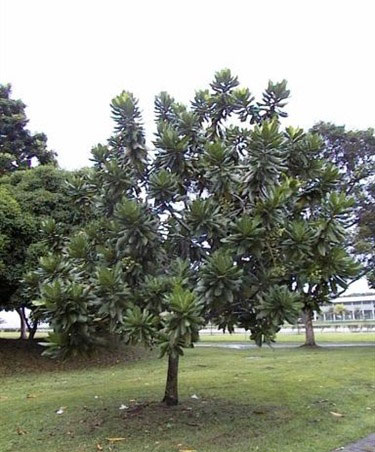
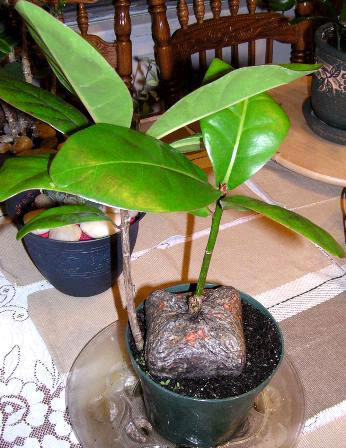
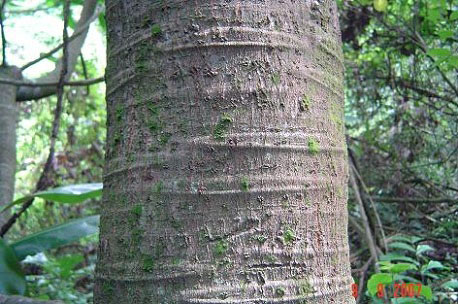
    Barringtonia is a small to medium-sized, evergreen, perennial tree that grows about 7–20 m high with a cylindrical bole of 30 cm diameter. The plant is found growing in littoral sandy beaches, coral sand flats or river banks, in mangrove swamps at sea level and also inland near rivers on limestone hillsides. It grows best in a fertile, humid and well-drained soil. Bark surface off the plant is slightly grooved and longitudinally fissured, cracked or scaly, thick, lenticels often distinctly diamond-shaped, brown, red-brown or grey, sometimes tinged with pink; inner bark finely, firmly fibrous, yellow-brown to pink or white with yellowish streaks, without exudate.

    Leaves

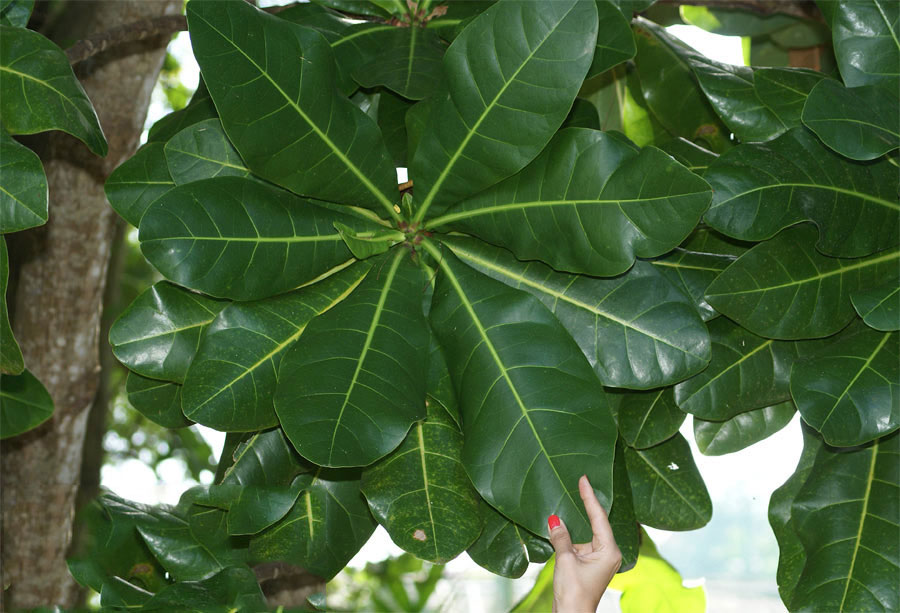
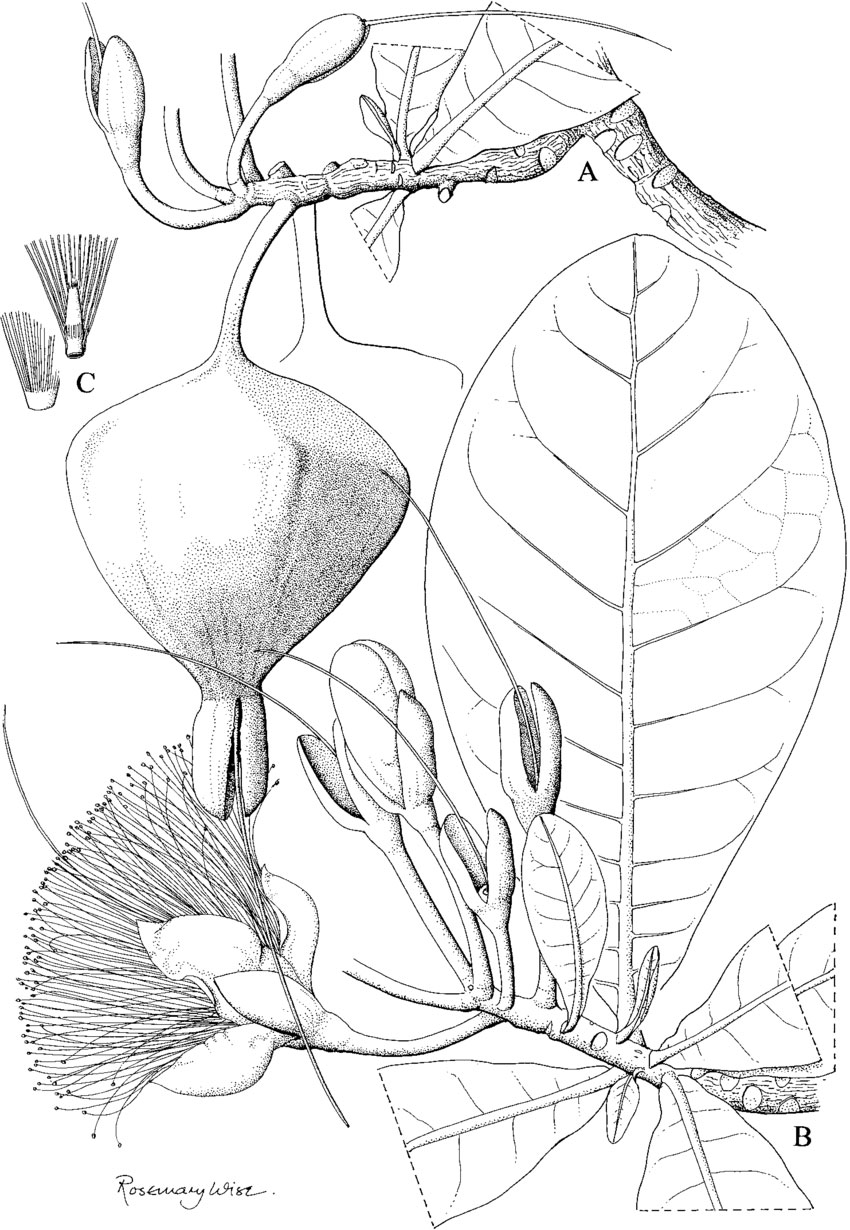
    Leaves are opposite to sub-opposite, sessile, simple, dark green above, paler dull green below, obovate to obovate-oblong, 20–40 cm long and  10–20 cm wide, leathery, shiny, base cuneate, margin entire, apex obtuse or broadly rounded with pinnate venation. Young leaves may be pinkish olive with pink veins. Older leaves wither yellow or pale orange.

    Flowers

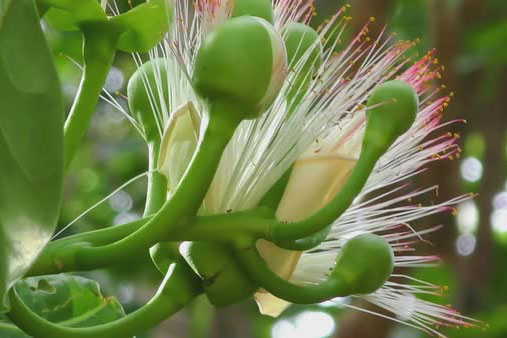
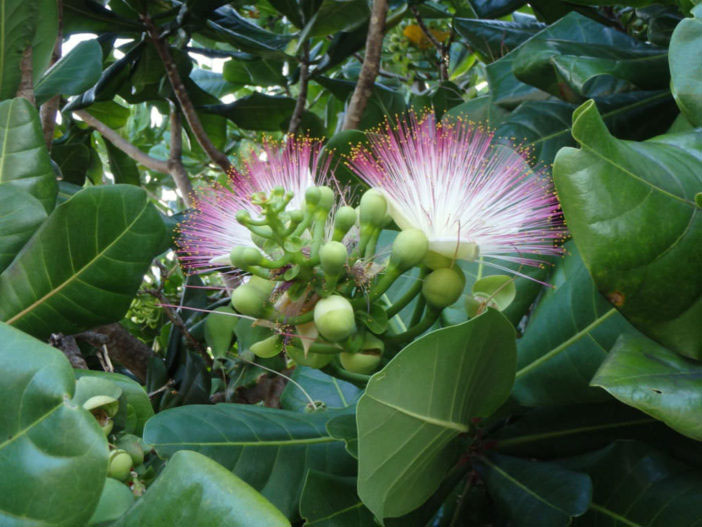
    Flowers very showy with four white petals and lots of fine, pink-tipped stamens forming a pom-pom shape (10-15cm). According to Corners “the buds beginning to swell at noon, but the petals and stamens do not unfold until nearly sunset when the heavy perfume becomes noticeable”. By sunrise the next day, the entire circle of stamens and petals fall off the tree.

    Fruit

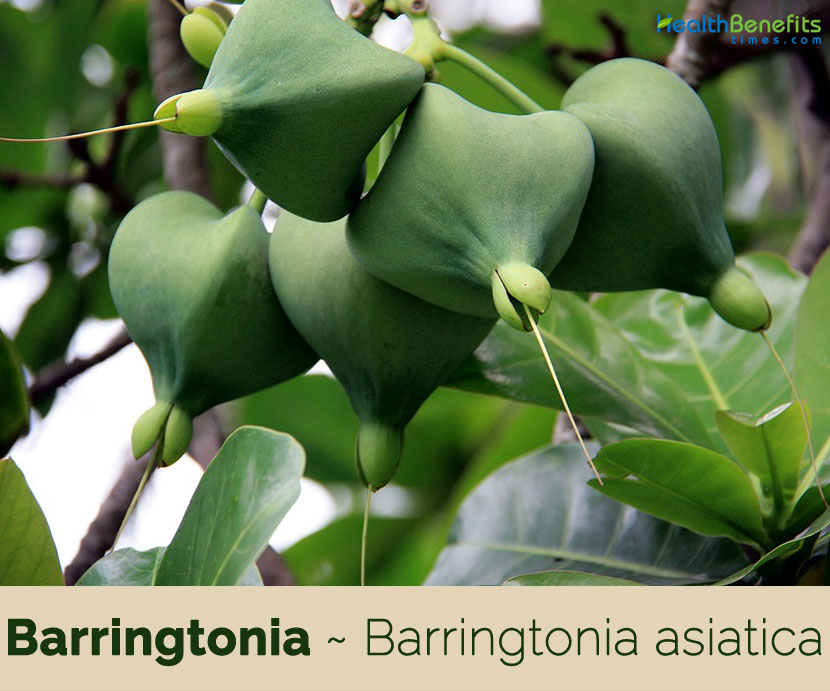
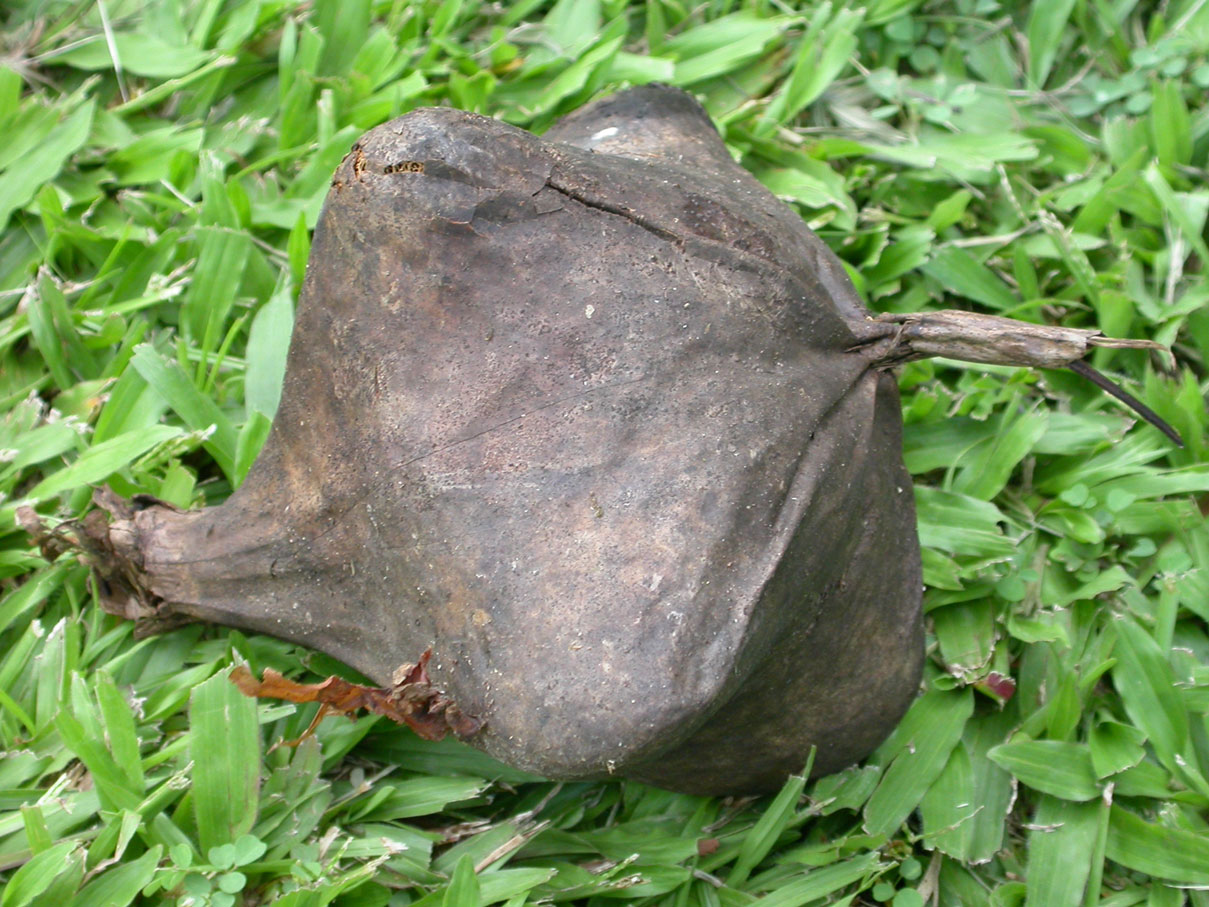
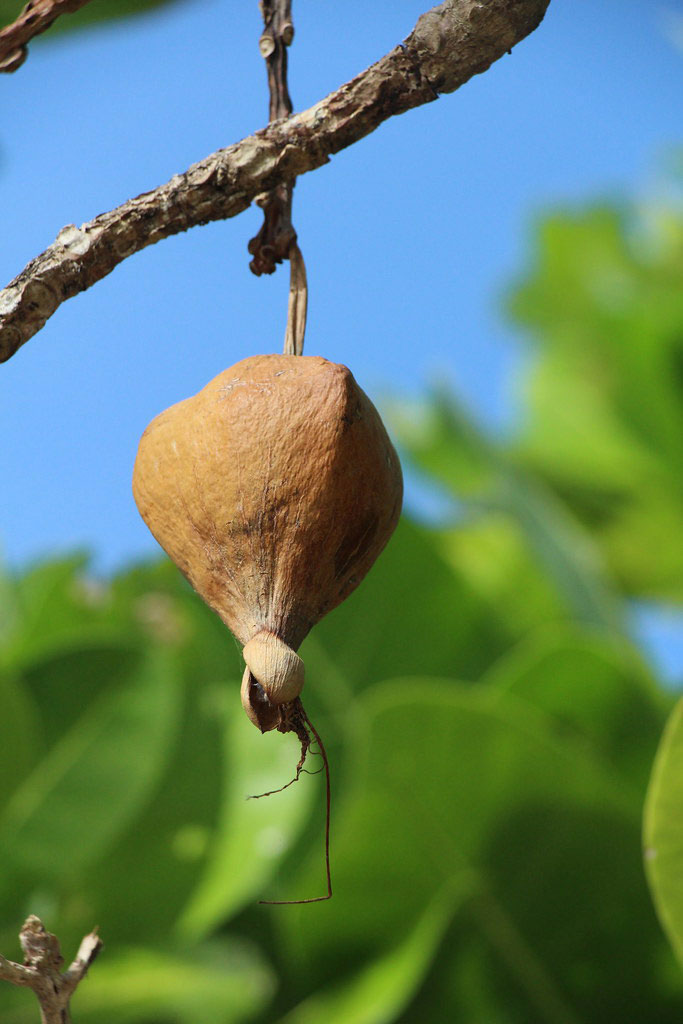
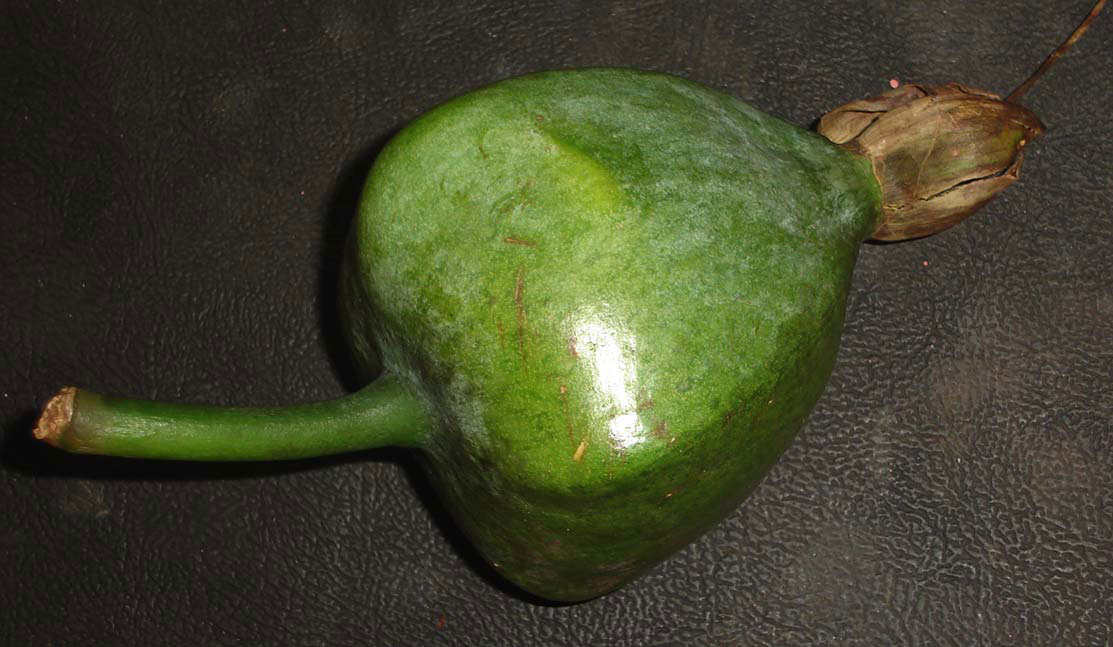
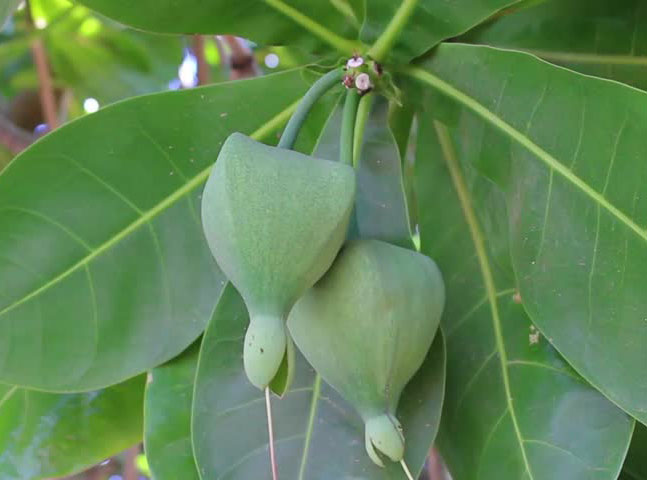
    Fruits are broadly pyramidal, 4–5 angled, indehiscent, fibrous, smooth, 9–11 cm in diameter, apex tapering and crowned by calyx; pericarp spongy, fibrous. They hang from branches, and have a tough, corky-fibrous husk that aids in their dispersal by water. The fruit floats and the softer outer layers rot in the water, so the fruit is stranded on a faraway shore as a fibrous basket surrounding the seed. Fruits are green when young turning to brown as they mature. The fruit consists of seeds that are oblong, 4–5 cm long.

    Barringtonia Image Gallery
    Barringtonia-plant Barringtonia-plant
    Flower-and-flowering-buds-of-Barringtonia Flower-and-flowering-buds-of-Barringtonia
    Flower-of-Barringtonia Flower-of-Barringtonia
    Leaves-of-Barringtonia Leaves-of-Barringtonia
    Mature-Barringtonia-fruit Mature-Barringtonia-fruit
    Mature-Barringtonia-fruit-on-the-tree Mature-Barringtonia-fruit-on-the-tree
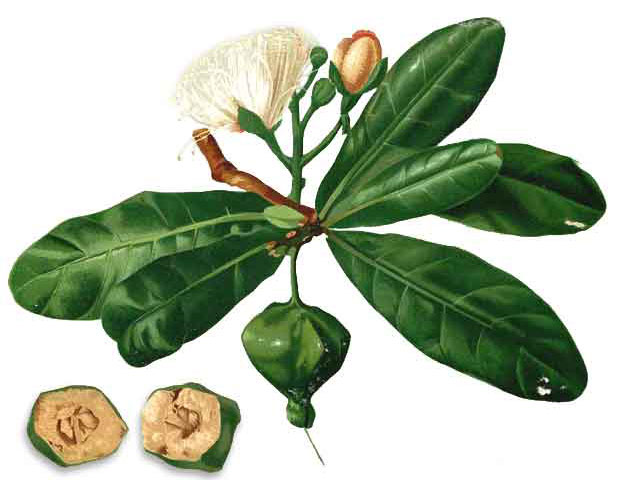
    Plant-Illustration-of-Barringtonia Plant-Illustration-of-Barringtonia
    Sketch-of-Barringtonia Sketch-of-Barringtonia
    Small-Barringtonia-plant Small-Barringtonia-plant
    Trunk-of-Barringtonia Trunk-of-Barringtonia
    Unripe-Barringtonia-fruit Unripe-Barringtonia-fruit
    Unripe-Barringtonia-fruit-on-the-tree Unripe-Barringtonia-fruit-on-the-tree
    Traditional uses and benefits of Barringtonia

    • Various parts of the tree are used in folkloric medicine in its native area of habitation.
    • Leaves are heated and applied externally for stomach-ache in Philippines.
    • Fresh fruit is scraped and applied topically to sores in Bismarck Archipelago.
    • Dried fruit is ground and mixed with water and taken for coughs, influenza, sore throats and bronchitis.
    • Externally it is applied to wounds and a swollen spleen.
    • The aborigines used the plant as a fish poison and sometimes to alleviate headache in Australia.
    • Decoction of the leaves is used to treat hernia in Fiji.
    • Bark decoction is used for constipation and epilepsy.
    • Fresh leaves are topically applied against rheumatism, and the seeds are used as a vermifuge.
    • Fruit or seed is used as a fish poison in Indonesia and Philippines.
    • Externally it is applied to wounds and a swollen spleen after an attack of malaria.
    • Backaches and sore joints can be treated using the bark, leaves, and fruits.
    • Rheumatism can be treated using the fresh leaves, while their juices are used to treat diarrhea.
    • Fruits are applied externally as a treatment for sores.
    • Used externally, the fresh nut is scraped and applied to a swollen spleen after an attack of malaria.
    • Bark is used externally for treating sores.
    • Leaf material of this species was active against some tumors.
    • Pounded leaves are said to cure chickenpox.
    • An infusion of the leaves and bark has been used by aborigines in Australia to treat chest pains and fever.
    • Juice of the wood was formerly used to blacken teeth in Kalimantan.
    • Pacific Islanders treat inflammation of the ear and headache by using the leaves of B. asiatica.
    • Fruit of B. asiatica is poisonous to fish, and the juice is used to control scabies.
    • Juice of the fruit is used to treat parasitic skin problems.
    • Bark is used to treat tuberculosis.
    • Juice of the bark is given for chest pains or for vomiting from heart trouble.
    • Sap from the bark has been used for treating ciguatera poisoning, coughs, and urinary infections, and the red-leafed form is used as a contraceptive and for abortion.

    Culinary Uses

    • Fruits are eaten as a vegetable after prolonged cooking to remove the saponins in Indo-China.
    • In Indo-China the young fruits are consumed as a vegetable after prolonged cooking.
    • Fruit can be used as a flavoring in food.
    • Young leaves and shoots of some Barringtonia are eaten as a salad or in chutneys.

    Other facts

    • Tree is planted as shade and avenue and boulevard trees along the beach.
    • Wood is of little economic value but in some places e.g. in Kediri, Java, in the Nicobars and the Philippines it is used for native huts.
    • Also if impregnated it is suggested that it would make good tiles, paving blocks and cabinets.
    • All parts of the tree are poisonous, the active poisons including saponin.
    • Fruit or seeds are used as fish poison.
    • Ground seeds are used to stun fish for easy capture.
    • Its flowers emit a sickly, sweet smell that attracts bats and moths pollinators at night.
    • It is often planted as a shade tree along boulevards and avenues along the sea.
    • Wood is light and soft and is used for light work, carving and turnery.
    • Oil from the seeds is used for lighting lamps.
    • Wood is used in boat making.
    • Mature trees yield about 500 – 2,000 fruits per year.
    • Wood of Barringtonia is used for local house building, general planking, flooring, boat building, moldings, interior finish, household utensils, agricultural implements, boxes, crates and wooden pallets.
    • In the Nicobar Islands, New Guinea and Pacific islands, the bole is used to make canoes.

    • It can survive afloat for up to fifteen years.

    References:

    https://www.itis.gov/servlet/SingleRpt/SingleRpt?search_topic=TSN&search_value=507272#null

    https://davesgarden.com/guides/pf/go/55645/

    https://www.cabi.org/isc/datasheet/8468

    https://plants.usda.gov/core/profile?symbol=BAAS3

    https://en.wikipedia.org/wiki/Barringtonia_asiatica

    75%
    75%
    Awesome

    Comments

    comments

    B Herbs and Spices
    Share. Facebook Twitter Pinterest LinkedIn Tumblr Email
    Previous ArticleHealth Benefits of Strychnine tree
    Next Article Health Benefits of Oleander

    Related Posts

    Uses of Monkey Pitcher plant

    April 16, 2024

    Traditional uses and benefits of Wild Marigold

    March 21, 2024

    Traditional uses and benefits of Drooping fig

    March 12, 2024

    Comments are closed.


    Barringtonia Facts

    Barringtonia Quick Facts
    Name: Barringtonia
    Scientific Name: Barringtonia asiatica
    Origin Mangrove habitats in the tropics from Madagascar, to Malesia, Taiwan, Philippines, northern Australia and Polynesia
    Colors Green when young turning to brown as they matures
    Shapes Broadly pyramidal, 4–5 angled, indehiscent, smooth, 9–11 cm in diameter, apex tapering and crowned by calyx
    Health benefits Beneficial for stomach-ache, coughs, influenza, sore throats, bronchitis, headache, diarrhea, malaria, chickenpox, tumors, tuberculosis and many more
    Name Barringtonia
    Scientific Name Barringtonia asiatica
    Native Mangrove habitats in the tropics from Madagascar, to Malesia, Taiwan, Philippines, northern Australia and Polynesia
    Common Names Balubiton, Barringtonia, Box Fruit, Butong, Butun, Fish Poison Tree, Fish-Killer Tree, Fish- Poison Tree, Fish-Poison-Tree, Langasat, Lugo, Motong-Botong, Pertun, Putat Laut, Sea Poison Tree, Sea Putat, Vuton, Asian barringtonia, Beach Barringtonia, Mango bark, Mango pine, Box Fruit tree
    Name in Other Languages Australia: Asian Barringtonia, Barringtonia, beach barringtonia
    Burmese : Kyi-Git
    Chinese : Qípán jiǎo shù (棋盤腳樹),Bin Yu Rui , Mo Pan Jiao Shu, Yin du yu rui
    Cook Islands: Utu
    Dominican Republic: Arbol del seminario, calmante, coco de cofresi
    English: Asian barringtonia, Beach Barringtonia, Fish killer tree, Fish poison tree, Mango bark, Mango pine, Sea poison tree, Sea putat, Box Fruit tree
    Fiji: Vutu, Vutu dina, Vutugaga, Vutu vala
    Finnish: Merileikkopähkinä
    French:  Arbre à barrette, Bonnet de prêtre, bonnet d’évêque, bonnet carré
    Haiti: Birrete de arzobispo, bonete de arzobispo
    Hawaiian: Hutu
    India: Kyee bin
    Indonesia : Bitung, Butun, Keben-Keben, Pohon Keben
    Italian:  Albero del veleno del mare, Albero del veleno dei pesci.
    Japanese: Goban no ashi (ゴバンノアシ)
    Lesser Antilles: Arbre a barrette, bishop’s cap, bonnet de pretre, bonnet d’eveque, mitre’s cap, pain tree
    Malay:  Putat, Putat laut, Butun, Butong, Pertun, Pokok Putat Laut
    Malaysia : Butong Butun, Pertun, Putat Air, Putat Laut, Putat Gajah
    Malayalam: nīrppēḻ (നീർപ്പേഴ്)
    Papua New Guinea : Maliou
    Philippines : Biton, Botong, Motong-Botong, Botong-Botong, Bitung, Bituing, Biton, Biton, Lugo, Vuton, Balubiton, Boton, Botong
    Polish: Keben okazały
    Portuguese: Boneto-de-arcebispo
    Puerto Rico: Almendrota, bonete de arzobispo, coco de mar, mudilla
    Russian : Barringtoniia aziatskaia (Баррингтония азиатская),   Barringtonia prekrasnaia (Баррингтония прекрасная)
    Spanish : Arbol De Los Muertos, arzobispo; barringtonia
    Samoan : Futu
    Solomon Islands: Fu’u
    Swedish: Barringtonia
    Tahitian: Hotu
    Taiwan : Yin Du Yu Rui
    Thai : Chik Le (จิกเล), Chik Ta Lae, Don Ta Lae
    Tonga: Futu
    USA/Hawaii: Fish poison tree, putat laut, sea putat
    Vietnamese : Bang Qua Vuong, Bàng bí, Chiếc bang, Bàng vuông
    Plant Growth Habit Small to medium-sized, evergreen, perennial tree
    Growing Climates Littoral sandy beaches, coral sand flats or river banks, in mangrove swamps at sea level and also inland near rivers on limestone hillsides
    Soil Grows best in a fertile, humid, well-drained soil
    Plant Size 7–20 m high with a cylindrical bole of 30 cm diameter
    Bark Bark surface slightly grooved and longitudinally fissured, cracked or scaly, thick, lenticels often distinctly diamond-shaped, brown, red-brown or grey, sometimes tinged with pink; inner bark finely, firmly fibrous, yellow-brown to pink or white with yellowish streaks, without exudate
    Leaf Opposite to sub-opposite, sessile, simple, dark green above, paler dull green below, obovate to obovate-oblong, 20–40 × 10–20 cm, leathery, shiny, base cuneate, margin entire, apex obtuse or broadly rounded with pinnate venation
    Flower Flower buds are 2–4 cm across and borne on 5–9 cm pedicels. Calyx is undivided, rupturing at anthesis into 2 or 3 unequal, rounded or acuminate, persistent lobes and a tube 3–5 mm. Petals 4, white, ovate or elliptic, 5–6 cm. Stamens about 100, in 6 whorls; tube 1.5–6 mm; filaments and style white, red-tipped. Ovary is 4-loculed with 4–5 ovules per locule
    Fruit Shape & Size Broadly pyramidal, 4–5 angled, indehiscent, smooth, 9–11 cm in diameter, apex tapering and crowned by calyx; pericarp spongy, fibrous. They hang from branches, and have a tough, corky-fibrous husk that aids in their dispersal by water
    Fruit Color Green when young turning to brown as they matures
    Seed Oblong, 4–5 cm
    Propagation By seed or by stem cuttings
    Plant Parts Used Leaves, seeds, bark

    Barringtonia Scientific Classification

    Scientific Name: Barringtonia asiatica

    Rank Scientific Name & (Common Name)
    Kingdom Plantae (Plants)
    Subkingdom Tracheobionta (Vascular plants)
    Infrakingdom Streptophyta  (land plants)
    Superdivision Spermatophyta (Seed plants)
    Division Magnoliophyta (Flowering plants)
    Subdivision Spermatophytina  (spermatophytes, seed plants, phanérogames)
    Class Magnoliopsida (Dicotyledons)
    Subclass Dilleniidae
    Superorder Asteranae
    Order Lecythidales
    Family Lecythidaceae (Brazil-nut family)
    Genus Barringtonia J.R. Forst. & G. Forst. (barringtonia)
    Species Barringtonia asiatica (L.) Kurz (sea putat)
    Synonyms
    • Agasta asiatica (L.) Miers
    • Agasta indica Miers
    • Agasta splendida Miers
    • Barringtonia butonica J.R.Forst. & G.Forst. ex G.H.Cuzent
    • Barringtonia butonica Rumph.
    • Barringtonia butonica Rumph. ex J.R.Forst. & G.Forst.
    • Barringtonia levequii Jard.
    • Barringtonia littorea Oken
    • Barringtonia senequei Jard.
    • Barringtonia speciosa J.R.Forst. & G.Forst.
    • Butonica speciosa (J.R.Forst. & G.Forst.) J.St.-Hil.
    • Butonica speciosa (J.R.Forst. & G.Forst.) Lam.
    • Huttum speciosum (J.R.Forst. & G.Forst.) Britten
    • Mammea asiatica L.
    • Michelia asiatica (L.) Kuntze
    • Mitraria commersonia J.F.Gmel.
    Categories
    • Beverages (78)
    • Dairy (28)
    • Dental Health (15)
    • Equipment (5)
    • Essential OIls (196)
    • Facts (2,939)
    • Foods (255)
    • Fruits (516)
    • Giveaway (1)
    • Grains and Cereals (36)
    • Health & Beauty (763)
    • Herbs and Spices (1,249)
    • Medicines (9)
    • Mental Health (19)
    • Nutritional value (27)
    • Nuts and seeds (73)
    • Oils (81)
    • Pets (4)
    • Poultry & Seafoods (67)
    • Pulses and Beans (16)
    • Reviews (25)
    • supplement (2)
    • Vegetables (304)
    • Weight Loss (22)

    What is Lupin Bean Flour?

    Science Backed Health Benefits of Durian (Durio zibethinus)

    Science Backed Health Benefits of Feijoa (Pineapple Guava) (Acca sellowiana)

    Science Backed Health Benefits of Gac Fruit (Momordica cochinchinensis)

    Science Backed Health Benefits of Amaranth Leaves (Amaranthus spp)

    Science Backed Health Benefits of Arrowhead (Sagittaria sagittifolia)

    ABOUT
    Home
    About us
    Contact us
    Privacy Policy
    Terms & conditions
    Disclaimer
    Direct Communication
    e-mail: [email protected]
    Gmail: [email protected]
    Whatsapp: +977-9841146511
    Viber: +977-9841146511
    Useful
    Health Wiki
    Nutrition
    Facebook Twitter Pinterest
    © 2025 www.healthbenefitstimes.com All rights reserved.

    Type above and press Enter to search. Press Esc to cancel.

    ×

    Log In

    Forgot Password?

    Not registered yet? Create an Account