

Health Benefits
    Facebook Twitter Instagram
    Friday, December 5
    Facebook Twitter Pinterest
    Health Benefits
    • Home
    • Dental Health
    • Mental Health
    • Weight Loss
    • Health Wiki
    • Nutrition
    • Healthy Recipe
    • BMI Calculator
    Health Benefits
    Home»Facts»Cumin facts
    Facts

    Cumin facts

    By s mApril 27, 2016Updated:August 4, 2017No Comments4 Mins Read
    Facebook Twitter Pinterest LinkedIn Tumblr Email

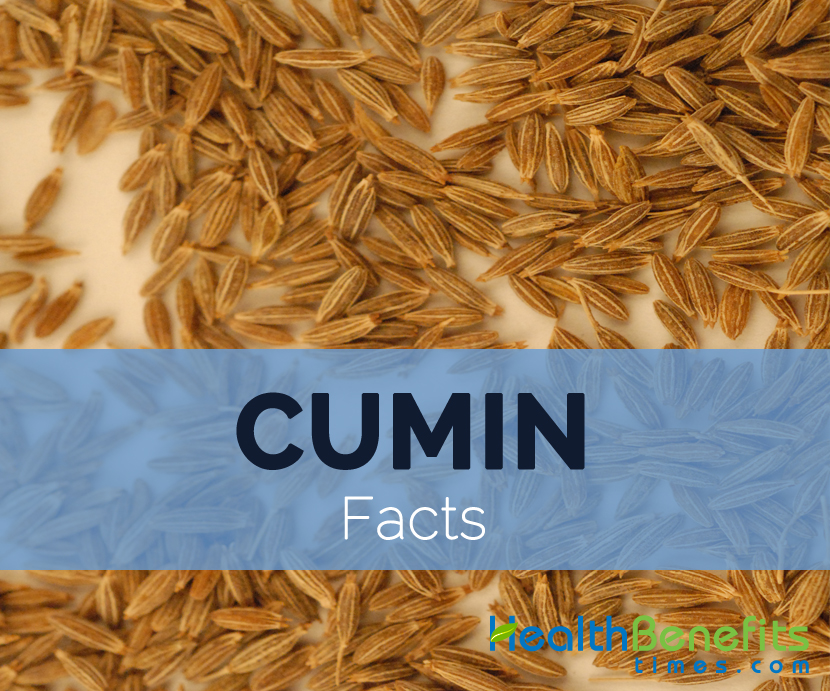
    Cumin-factsCumin seeds are yellow to brown and oblong in shape. It is found in the form of powder and seed. It possess high amount of manganese and iron with fiber, vitamins and calcium. It is used as a spice in sauces, cuisines and curry mixes. India and USA produce the essential oils of cumin in the highest volume.

    Name Cumin
    Scientific Name Cuminum cyminum L.
    Native East Mediterranean to India, The primary cultivation of cumin is in Europe, Asia, the Middle East, and North Africa with India and Iran as the largest cumin producers and exporters.
    Common/English Name Cumin, Cummin, Roman Caraway
    Name in Other Languages Arabic : Al-Kamuwn, Kamun;
    Brazil : Cominho;
    Bulgarian : Kimion, Kimion;
    Burmese : Ziya;
    Chinese : Ou Shi Luo, Ma Ch’in, Xian;
    Croatian : Kumin;
    Czech : Šabrej Kmínovitý, Římský Kmín;
    Danish : Kloeftsvoeb, Spidskommen;
    Dutch : Komijn;
    Eastonian: Vürtsköömen, Juustuköömen;
    Ethiopia : Kemun;
    Finnish : Juustokumina, Maustekumina;
    French : Cumin, Cumin Blanc;
    German : Kreuzkümmel, Weißer Kreuzkümmel;
    Greek : Kiminon, Kimino;
    Hebrew : Camon, Kammon;
    Hungarian : Egyiptomi, Kuminmag;
    Icelandic: Kummin, Ostakúmen;
    India :-
    Bengali : Jira,
    Guerati : Jiru,
    Hindu : Jeera, Ziira,
    Kannada : Jeerige,
    Malayalam : Jeerakam,
    Marathi : Jire,
    Punjabi : Jiira,
    Sanskrit : Jiraka, Jirna, ,
    Tamil : Jirakam, Seeragam,
    Telugu : Jilakarra , Jiraka,
    Urdu : Jirah, Ziraa;
    Iran : Zirah, Zeera,;
    Italian : Comino, Cumino;
    Indonesia : Jintan Bodas , Jintan Putih,;
    Japanese : Kumin, Hime Unikyoo;
    Khmer : Ma Chin;
    Laotian : Thien Khaw;
    Malaysia : Jintan Putih;
    Nepalese: Jiiraa, Jira;
    Newari: Jii
    Norwegian : Spisskummen, Spisskarve;
    Pakistan : Zeera;
    Persian : Zireh, Zire
    Polish : Kmin, Kminek;
    Portuguese : Cominho;
    Russian: Kmin, Kmin Tminovyi;
    Sri Lanka: Duru,  Suduru,
    Sinhala : Maduru;
    Slovašcina : Kumin, Laški Kumin;
    Slovenia : Rasca Rímska, Džíra,;
    Spanish : Comino Blanco, Comino;
    Swahili : Jamda, Kisibiti;
    Swedish : Pepparkummin,  Spiskummin;
    Thai : Thian Khao, Yee Raa;
    Turkish : Kimyon;
    Ukrainian : Kmin, Кмин
    Plant Growth Habit An erect, slender herbaceous, subglabrous annual
    Growing Climate Mediterranean climate
    Soil Fertile and well-drained soil
    Plant Size 30–50 cm (12–20 inch)
    Branchlets Each branch of the plant possesses 2-3 sub branches
    Stem Grey or dark green in color
    Leaf Pinnate or bipinnate, length 5-10 cm (2-4 inches) , thread like leaflets
    Flower Small, white or pink flowers appear on the umbels; shape: oblong or ovate
    Seed shape & size Small, slender, oblong, curved
    Seed color Yellow to brown
    Flavor/aroma Distinct and strong flavor, warm aroma
    Seed Taste Coarse
    Varieties/Types White cumin seeds and Black cumin seeds
    Season Spring
    Major Nutritions Iron, Fe 3.98 mg (49.75%)
    Manganese, Mn 0.2 mg (8.70%)
    Copper, Cu 0.052 mg (5.78%)
    Calcium, Ca 56 mg (5.60%)
    Magnesium, Mg 22 mg (5.24%)
    Phosphorus, P 30 mg (4.29%)
    Total Fat (lipid) 1.34 g (3.83%)
    Vitamin B1 (Thiamin) 0.038 mg (3.17%)
    Zinc, Zn 0.29 mg (2.64%)
    Potassium, K 107 mg (2.28%)
    Protein 1.07 g (2.14%)
    Carbohydrate 2.65 g (2.04%)
    Vitamin B6 (Pyridoxine) 0.026 mg (2.00%)
    Vitamin B3 (Niacin) 0.275 mg (1.72%)
    Total dietary Fiber 0.6 g (1.58%)
    Health Benefits
    • Antioxidants
    • Antimicrobial activity
    • Anticancer activity
    • Hepatoprotective Activity
    • Gastroprotective Activity
    • Nephroprotective Activity
    • Antidiabetic and Antiphyperlipidemic/ Antihyperchlolesterolemic Activities
    • Antiplatelet Activity
    • Osteoprotective Activity
    • Antitussive Activity
    Calories in 1 tbsp (6 g.) 22 Kcal.
    Traditional uses
    • It is used as a diuretic and to settle the stomach and stop flatulence.
    • Effective for treating inflammation, prevent gas, suppress muscle spasms and increase urination.
    • It was also used to cure indigestion, jaundice, diarrhea, and flatulence.
    • Cumin is believed to treat chronic fever, heart disease, vomiting, swellings, poor digestion and tastelessness.
    Precautions
    • It interacts with the medications of diabetes.
    • Cumin has the ability to lower the blood sugar.
    • It also slows down the blood clotting.
    • The breast feeding and pregnant women should avoid the use of cumin.
    • One should consult the professional pharmacist before using the cumin.
    How to Eat
    • The grounded cumin could be added to the sauted or roasted veggies.
    • It could be used to make guacamole or hummus.
    • The warm beverage could be made by adding the cumin seeds in the boiling water and let it steep for about 10 minutes.
    • It could also be sprinkled over the healthy snacks or nuts. It also adds the spice to the lentil soup.
    Other Facts
    • The seeds are being used in traditional medicines to stave-off common cold.
    • Cumin is propagated by seed. It has short vegetative season. Harvest usually takes place 120 days after planting.
    • Cumin produces ovoid-shaped fruit called dry achene. Fruit is single-seeded.

    Comments

    comments

    Facts
    Share. Facebook Twitter Pinterest LinkedIn Tumblr Email
    Previous ArticlePhysalis Facts and Health benefits
    Next Article Physalis Nutritional Value

    Related Posts

    5 Things You Need to Know About Psoriasis

    January 21, 2023

    Toxic Metal: 5 Ways to Protect yourself from Aluminum Toxicity at Home and Eating Out

    October 24, 2019

    Chewing Gum benefits and Risks

    September 10, 2018

    Comments are closed.


    Categories
    • Beverages (78)
    • Dairy (28)
    • Dental Health (15)
    • Equipment (5)
    • Essential OIls (196)
    • Facts (2,939)
    • Foods (255)
    • Fruits (516)
    • Giveaway (1)
    • Grains and Cereals (36)
    • Health & Beauty (763)
    • Herbs and Spices (1,249)
    • Medicines (9)
    • Mental Health (19)
    • Nutritional value (27)
    • Nuts and seeds (73)
    • Oils (81)
    • Pets (4)
    • Poultry & Seafoods (67)
    • Pulses and Beans (16)
    • Reviews (25)
    • supplement (2)
    • Vegetables (304)
    • Weight Loss (22)

    What is Lupin Bean Flour?

    Science Backed Health Benefits of Durian (Durio zibethinus)

    Science Backed Health Benefits of Feijoa (Pineapple Guava) (Acca sellowiana)

    Science Backed Health Benefits of Gac Fruit (Momordica cochinchinensis)

    Science Backed Health Benefits of Amaranth Leaves (Amaranthus spp)

    Science Backed Health Benefits of Arrowhead (Sagittaria sagittifolia)

    ABOUT
    Home
    About us
    Contact us
    Privacy Policy
    Terms & conditions
    Disclaimer
    Direct Communication
    e-mail: [email protected]
    Gmail: [email protected]
    Whatsapp: +977-9841146511
    Viber: +977-9841146511
    Useful
    Health Wiki
    Nutrition
    Facebook Twitter Pinterest
    © 2025 www.healthbenefitstimes.com All rights reserved.

    Type above and press Enter to search. Press Esc to cancel.

    ×

    Log In

    Forgot Password?

    Not registered yet? Create an Account