

Ocular melanoma is a type of cancer that develops in the pigment-producing cells of the eye the same cells responsible for giving color to a person’s skin, hair, and eyes. Though it originates from melanocytes, the same cells involved in skin melanoma, it is considered a distinctly separate cancer. It most commonly affects the middle layer of the eye known as the uvea, which includes the iris, the ciliary body, and the choroid the blood vessel-rich layer at the back of the eye. The disease occurs when these melanin-producing cells mutate and multiply abnormally, forming cancerous tumors. Because most eye melanomas develop in areas not visible to the naked eye, they are often difficult to detect in their early stages. In roughly half of all cases, the cancer spreads to other parts of the body, and while it is treatable, it can be fatal even with medical intervention though early detection significantly improves the chances of a cure. 1. 2.
Causes of Ocular Melanoma
Unraveling the exact origins of this disease reveals a complex intersection of genetics, environmental exposure, and inherent biological traits. While researchers continue to map the precise triggers, several defining factors consistently elevate the likelihood of developing these ocular tumors.
- Genetic Susceptibility and Mutations: Deep within the body’s cellular instructions, specific genetic anomalies significantly increase vulnerability. Inherited or acquired mutations in the BAP1 gene have been heavily documented as a primary driver, disrupting normal cell regulation and predisposing individuals to uveal tract malignancies 3.
- Advancing Age: The natural aging process plays a profound role in the degradation of cellular repair mechanisms. The incidence rate for this specific eye cancer rises progressively as individuals get older, with statistical peaks occurring prominently around the age of 70 4.
- Pigmentary Characteristics: Inherited physical traits dictate how the body responds to environmental stress and cellular damage. Having a inherently fair complexion especially skin that freckles easily, burns rather than tans, and is paired with blue, green, or other light-colored eyes is strongly linked to a higher diagnostic risk 5.
- Oculodermal Melanocytosis: A rare congenital condition can set the stage for future complications. This disorder is characterized by an abnormal excess of pigmentation in the tissues of the eye and surrounding skin, which provides a larger baseline of melanocytes that could potentially turn malignant 6.
- Ultraviolet Light Exposure: Environmental radiation remains a heavily scrutinized element in all pigment-related cancers. Although the direct, undeniable causation between sunlight and internal eye tumors is still being actively investigated through large-scale observational studies, cumulative UV exposure remains a recognized environmental risk factor that warrants protective caution.
Symptoms of Ocular Melanoma
Recognizing the onset of this condition is notoriously difficult, as the tumors frequently grow in hidden areas of the eye without triggering pain or immediate distress. When physical warnings finally emerge, they typically manifest as distinct visual disruptions.
- Unexplained blurred vision that does not improve with corrective lenses or resting the eyes.
- The sudden onset of floaters, which appear as small dark spots, specks, or shadowy strings drifting continuously across your line of sight.
- Brief, unexplained flashes of light or bright visual distortions perceived primarily in the peripheral vision.
- A newly formed, visible dark spot or noticeable pigmentation change on the colored part of the eye, known as the iris.
- An abnormal, often subtle change in the geometric shape or overall size of the dark pupil at the center of the eye.
- A physical displacement or slight bulging of the eyeball within the socket, indicating a growing mass behind the visual structures.
Ocular Melanoma Facts
| Ocular Melanoma Characteristics | Key Details |
| Symptoms |
|
| Causes |
|
| Types of Ocular Melanoma |
|
| How it spreads |
|
| Age Group |
|
| Higher risk exposure if you: |
|
| How doctors diagnose |
|
| Other facts |
|
Alternative Treatments for Melanoma
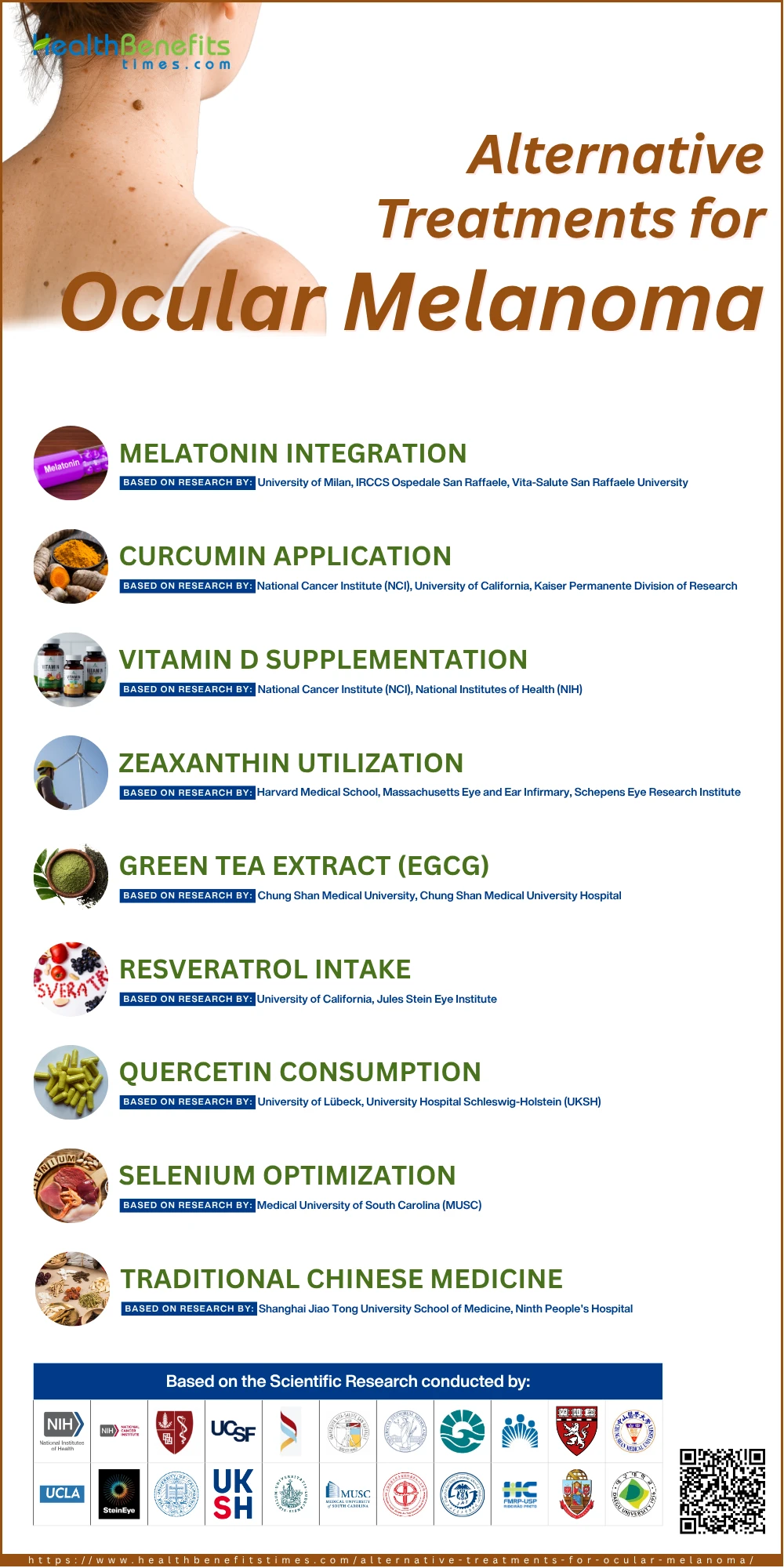
Exploring complementary therapies opens up a fascinating world of cellular support, offering additional layers of defense alongside conventional medical protocols. While traditional oncology relies on targeted therapies and radiation, the integration of natural compounds provides the body with unique biochemical tools to regulate inflammation, inhibit tumor growth, and encourage the natural death of defective cells. These interventions are meticulously studied for their ability to interact with specific cancer pathways without heavily disrupting normal biological functions.
1. Melatonin Integration
Operating primarily as the hormone that dictates human sleep-wake cycles, melatonin also acts as a profound cellular regulator deep within the body. Scientific investigations have revealed that this naturally occurring compound possesses the ability to actively suppress the growth of cancer cells, with some analogs reducing tumor expansion by significant margins in biological models 7. It works on a microscopic level by decreasing the expression of a specific protein called ROCK-1, which is heavily associated with tumor growth and the metastatic spread of diseased cells. Furthermore, melatonin enhances the production of occludin, a crucial protein that maintains tight junctions between healthy cells, thereby creating a physical barrier that prevents cancer from invading nearby tissues. Beyond its structural defense, regular administration has been linked to better overall survival rates and a more resilient response to traditional cytotoxic therapies.
Note: You apply this by taking a precisely dosed oral melatonin supplement roughly thirty minutes before your intended bedtime, ensuring you support both restful sleep and nighttime cellular repair.
 2. Curcumin Application
Extracted directly from the vivid yellow roots of the turmeric plant, curcumin is a heavily researched bioactive compound renowned for its anti-inflammatory properties. Laboratory evaluations have demonstrated that curcumin exerts a selectively potent cytotoxic effect specifically against human uveal melanoma cells, meaning it targets the disease while largely sparing healthy tissue 8. This process occurs because curcumin triggers the mitochondria the powerhouse of the cell to release cytochrome c, a signaling molecule that activates caspase-9 and caspase-3. These caspases act as cellular executioners, initiating a natural, programmed death of the cancer cell. To overcome curcumin’s naturally poor absorption in the human digestive tract, modern biomedical engineering has even developed bioinspired hydrogel systems capable of delivering sustained, localized doses of curcumin directly to affected areas, effectively inhibiting tumor proliferation over several weeks 9.
Note: You can easily eat this by incorporating high-quality turmeric powder, paired with a pinch of black pepper to boost absorption, into warm teas, broths, or daily meals.
3. Vitamin D Supplementation
Generated by the skin in response to sunlight, vitamin D functions more like a systemic hormone than a standard vitamin, heavily influencing the human immune system. Modern oncological research is increasingly shifting focus toward vitamin D as a novel, adjuvant antitumor therapy, particularly for patients managing melanoma 10. Because standard immunotherapies often show limited efficacy against the uveal variations of this cancer, optimizing vitamin D levels offers a crucial biological advantage. It aids in modulating the immune system’s behavior, potentially slowing the rapid division of abnormal cells and encouraging a more robust natural defense mechanism against microscopic disease progression.
Note: You use this by taking a daily oral Vitamin D3 supplement, especially during the darker winter months, and maintaining routine blood tests to ensure your levels remain in the optimal therapeutic range.
4. Zeaxanthin Utilization
Naturally concentrated within the protective tissues of the human eye, zeaxanthin is a dietary carotenoid responsible for filtering harmful light and preventing oxidative stress. Rigorous scientific trials have shown that introducing higher concentrations of zeaxanthin to human uveal melanoma cells significantly reduces their viability, driving the cancer cells toward apoptosis, or programmed cell death 11. Remarkably, this compound accomplishes this by altering the delicate balance of cellular proteins; it decreases the protective, anti-apoptotic proteins (like Bcl-2) and increases the destructive, pro-apoptotic proteins (like Bax). This shift destroys the mitochondrial membrane of the cancer cells, completely shutting down their energy supply. Crucially, zeaxanthin enacts this aggressive cellular destruction without harming normal ocular cells, such as healthy retinal pigment epithelial cells or scleral fibroblasts.
Note: You eat this by maintaining a diet heavily rich in dark, leafy green vegetables like kale and spinach, or by taking specialized, naturally derived vision-support supplements.
5. Green Tea Extract (EGCG)
Brewed for centuries as a medicinal tonic, green tea contains an incredibly powerful polyphenol known as epigallocatechin gallate (EGCG). In the realm of cancer biology, one of the greatest dangers is a tumor’s ability to secrete enzymes called matrix metalloproteinases (MMPs), which act like chemical scissors to cut through healthy tissue and allow the cancer to spread. Studies confirm that EGCG effectively inhibits the migration of human uveal melanoma cells by aggressively downregulating the activity of these destructive MMP-2 enzymes 12. Additionally, EGCG blocks the ERK1/2 signaling pathway, which is a major communication line that tells cancer cells to multiply and move. By cutting off this cellular communication, green tea extract serves as a promising agent for preventing the metastasis and invasive behavior of ocular tumors.
Note: You ingest this by habitually drinking multiple cups of freshly steeped green tea throughout the day, or by taking a concentrated EGCG botanical capsule with a light meal.
6. Resveratrol Intake
Found predominantly in the dark skins of red grapes, berries, and peanuts, resveratrol is a natural defensive compound produced by plants when they are under environmental stress. When applied to human health, resveratrol treatment has been documented to inhibit tumor growth in living models of uveal melanoma 13. The biological mechanism mirrors the body’s natural defense strategies; resveratrol decreases the viability of the tumor cells by forcing them down a mitochondrial pathway that ends in their own destruction. Furthermore, it has been shown to reduce the levels of tumor-necrosis factor (TNF-alpha) and other inflammatory markers in the bloodstream, creating an internal environment that is highly hostile to cancer progression but deeply supportive of healthy tissue regeneration.
Note: You can eat this naturally by enjoying fresh organic berries and red grapes as daily snacks, or by utilizing a standardized resveratrol supplement to ensure a consistent, therapeutic dose.
7. Quercetin Consumption
Acting as one of the most widely distributed flavonoids in the plant kingdom, quercetin is a foundational element of the famously healthy Mediterranean diet. It has demonstrated vast potential in the oncology field by exerting beneficial effects against chronic inflammation, insulin resistance, and cellular damage. Within cancer models, quercetin actively suppresses the metastatic, spreading activities of various tumor types while performing a secondary, equally vital role: protecting normal, healthy cells from the severe toxic side effects often caused by traditional chemotherapy and radiotherapy 14. By reinforcing the structural integrity of normal cells and disrupting the metabolic processes of malignant ones, quercetin provides a dual-action approach to holistic cancer management.
Note: You easily consume this by integrating a vibrant array of red apples, raw red onions, capers, and citrus fruits into your cooking, or by selecting a bioavailable quercetin supplement.
8. Selenium Optimization
Existing as a microscopic trace mineral found in soil and water, selenium is an absolute requirement for the proper function of the human body’s antioxidant enzyme systems. In patients facing uveal melanoma, the over-expression of certain stress proteins (like PRDX3) in tumors is an indicator of aggressive disease. Population-based medical research has discovered that unusually low levels of serum selenium are directly associated with higher mortality rates and faster disease progression in the decade following a melanoma diagnosis 15. Because selenium is a necessary building block for enzymes that neutralize cellular damage, ensuring an optimal supply helps the immune system maintain a strict surveillance over errant, mutating cells before they can establish new tumor sites.
Note: You eat this efficiently by consuming just one or two whole Brazil nuts per day, which naturally fulfill the body’s daily selenium requirement, or by adding a carefully measured trace-mineral drop to your water.
9. Traditional Chinese Medicine (Cinobufagin)
Originating from deeply established Eastern healing traditions, Chan-su is a potent traditional medicine derived from the Asiatic toad, with cinobufagin serving as its primary active anticancer component. Advanced molecular research has confirmed that cinobufagin exerts a remarkably potent, dose-dependent inhibitory effect on the proliferation of ocular melanoma cells 16. It acts by arresting the cancer cell’s life cycle in the G1 phase, physically preventing the cell from dividing and multiplying. Furthermore, it aggressively alters the balance of cellular proteins, downregulating protective layers while upregulating executioner proteins, eventually causing the complete depolarization of the cancer cell’s mitochondrial membrane. This highly specific, mitochondrion-based apoptosis thoroughly dismantles the tumor’s ability to survive.
Note: You utilize this highly specialized medicinal compound strictly under the direct guidance, prescription, and ongoing supervision of a licensed practitioner of Traditional Chinese Medicine.
Is there any exercise or physical activities for Ocular Melanoma
Maintaining a dynamic, physically active lifestyle is a cornerstone of recovery and endurance when facing a cancer diagnosis. Historically, there were concerns about physical exertion, but systematic reviews conclusively show that engaging in physical activity or exercise does not adversely impact the quality of life, cognitive function, or patient-reported outcomes for those managing melanoma 17. In fact, movement creates internal conditions that actively resist tumor development.
1. Moderate Aerobic Exercise
Keeping the heart rate elevated through sustained aerobic effort does much more than burn calories; it fundamentally alters the biological microenvironment of the body. Cancer cells thrive in low-oxygen (hypoxic) conditions, which encourages them to metastasize and spread. Regular treadmill or cycling exercise induces blood vessel normalization within tumors, improving perfusion and reducing the chaotic, oxygen-starved environments that tumors love 18. Furthermore, physical activity triggers the release of epinephrine, which rapidly mobilizes natural killer (NK) immune cells into the bloodstream, directing them to infiltrate and attack tumor masses.
Note: You practice this by dedicating 30 to 45 minutes a day to brisk walking, light jogging, or continuous swimming, ensuring your breathing is elevated but you can still hold a basic conversation.
2. The Otago Exercise Program
Losing partial vision, either through tumor growth or the surgical removal of an eye, dramatically alters a person’s center of gravity and spatial awareness. The Otago exercise program was developed specifically to address these exact physical deficits. It consists of a carefully structured series of muscle strengthening and balance-retraining movements. Clinical studies have confirmed that self-administered exercise programs like Otago are highly effective at restoring gait ability and preventing dangerous falls in patients who are actively adjusting to sudden monocular vision loss or neurological impairment 19.
Note: You do this by performing controlled, repetitive motions such as holding onto a heavy table while doing single-leg stands, heel-to-toe walking, and gentle calf raises in a brightly lit room.
3. Eye-Hand Coordination Drills
When stereopsis the brain’s ability to blend two images into a single 3D picture is compromised, judging the depth and speed of objects becomes incredibly difficult. Because compromised depth perception severely impacts everyday survival skills, targeted visuomotor rehabilitation is required 20. Engaging in specific eye-hand coordination exercises forces the brain to form new neural pathways, allowing it to estimate distances using shadows, object sizing, and motion parallax rather than relying on binocular vision.
Note: You train this by gently tossing a brightly colored ball against a blank wall and practicing catching it with alternating hands, slowly increasing the speed as your single-eye tracking improves.
Foods and Activities to Avoid
Curating your environment and diet is a deeply empowering aspect of managing long-term health. When your cellular systems are already under the immense stress of a cancer diagnosis, it is imperative to eliminate external factors that promote inflammation, suppress immune function, or encourage erratic cell growth.
Foods to Avoid When You Suffer from Ocular Melanoma
- Excessively Salty Processed Foods: You should strictly avoid diets high in sodium chloride. Beyond causing cardiovascular strain, high salt consumption strongly drives systemic autoimmunity and can drastically alter the delicate microbiome of your gut, which is intimately tied to how well your immune system fights cancer 21.
- High-Sugar and Refined Carbohydrates: You must eliminate sugary sodas, candies, and highly refined baked goods. Cancer cells famously utilize a process called the Warburg effect, consuming vast amounts of glucose to fuel their rapid, chaotic growth; cutting their primary fuel source is a vital defensive strategy.
- Trans Fats and Obesity-Inducing Meals: You should avoid heavy, greasy fast foods and synthetic trans fats. Unhealthy weight gain increases the volume of adipose tissue in your body, which in turn elevates the secretion of leptin a hormone frequently observed at high levels in patients with advancing, invasive tumors 22.
- Nitrate-Preserved Meats: You need to pass on commercial hot dogs, deli meats, and heavily smoked bacon. The chemical preservatives used in these meats introduce unnecessary oxidative damage to your cells, distracting your antioxidant enzymes from their primary job of tumor surveillance.
Activities to Avoid When You Suffer from Ocular Melanoma
- Unprotected Sunlight Exposure: You must entirely avoid spending prolonged periods outdoors without proper ultraviolet protection. While the direct link to internal eye cancer is complex, UV radiation is a universal trigger for melanocyte mutations, making premium sunglasses and wide-brimmed hats non-negotiable.
- Prolonged Sedentary Behavior: You should avoid sitting motionless for hours on end. Physical stagnation slows the lymphatic system, reduces the circulation of immune cells, and contributes to the muscle wasting frequently seen during prolonged medical treatments.
- High-Impact or Contact Sports: You must refrain from participating in activities that carry a high risk of blunt force trauma to the face or head. If your visual field or depth perception is compromised, your reaction times are delayed, drastically increasing the risk of severe accidental injury.
- Pushing to Extreme Physical Exhaustion: You should avoid overtraining or pushing your body to the point of severe fatigue. While moderate exercise boosts immunity, extreme physical exhaustion temporarily suppresses the immune system, leaving your body vulnerable when it needs its defenses the most.
Myths and Misconceptions
| Myth | Reality |
| Alternative treatments can completely cure ocular melanoma independently. | Natural remedies and dietary supplements are deeply valuable as supportive, complementary therapies that boost cellular resilience. However, they cannot independently eradicate an established malignant tumor and must be safely integrated alongside standard, evidence-based medical treatments. |
| Physical exercise will increase blood flow and cause the cancer to spread faster. | Decades of clinical reviews consistently demonstrate that physical activity does not adversely impact patient outcomes, nor does it accelerate metastasis. In fact, exercise normalizes tumor blood vessels and increases the infiltration of cancer-killing immune cells into the tumor microenvironment 23. |
| Ocular melanoma is biologically identical to normal skin cancer. | While both cancers involve melanin-producing cells, uveal melanoma possesses a radically distinct molecular profile. It has a much lower somatic mutation density, involves different gene pathways (like BAP1), and completely lacks the massive ultraviolet radiation mutational signature typically found in cutaneous skin melanoma 24. |
| Only people who spend their entire lives working outdoors get eye cancer. | This specific form of cancer frequently occurs entirely independent of a person’s outdoor lifestyle. Internal genetic variables, inherent biological traits like fair skin and light-colored eyes, and age are far more statistically significant risk factors. |
| A physical biopsy is always the mandatory first step to checking an eye tumor. | In the vast majority of modern clinical cases, a highly invasive physical biopsy of the eye tumor is rarely needed to make a definitive diagnosis. Non-invasive, high-resolution imaging and ultrasounds generally provide doctors with sufficient, accurate detail without risking retinal detachment 1. |
Special Considerations
Because every human body is unique, the behavior of cancer and the effectiveness of treatments can vary wildly depending on a patient’s age, biological state, and preexisting health conditions. Acknowledging these special circumstances is critical for safe management.
Children
The occurrence of this disease within the pediatric population is considered an extreme medical rarity, accounting for roughly 1 percent of all diagnosed cases. When it does manifest in youth, comprehensive studies indicate that the median age of diagnosis typically lands during adolescence, at approximately 15 years old 6. Because children and teenagers possess rapidly developing bodies and prolonged life expectancies, therapeutic approaches must be handled with extraordinary precision to preserve long-term vision, facial bone development, and psychological well-being.
Pregnancy
Navigating an oncological diagnosis during gestation introduces profound and delicate clinical complexities. The tremendous physiological shifts experienced by the body during pregnancy, particularly the highly elevated levels of circulating estrogen and progesterone, may unexpectedly influence the clinical features and accelerate the growth rate of hormone-sensitive tumors 25. Furthermore, while exceedingly uncommon, there is a documented, severe clinical risk involving the potential spread of malignant melanoma cells from the mother’s bloodstream directly into the placenta, necessitating highly coordinated care between specialized oncologists and high-risk obstetricians 26.
Chronic Conditions
Patients already managing ongoing, systemic illnesses face a uniquely difficult biological path. Pre-existing conditions such as chronic obesity deeply influence metabolic hormones such as leptin and insulin-like growth factors (IGF-1) which can actively promote tumor cell homing to the liver and complicate the efficacy of standard treatments 22. Additionally, conditions like hypertension or diabetes require medical teams to meticulously tailor both conventional therapies and natural supplements to ensure they do not cause adverse drug interactions or trigger sudden blood sugar crashes.
Elderly
The aging population unquestionably bears the heaviest statistical burden for this disease, with initial diagnosis rates climbing progressively as cells age and DNA repair mechanisms fail, eventually peaking around the age of 70 4. Elderly individuals often process medications differently due to reduced liver and kidney function, and they may suffer from age-related physical fragility. Consequently, exploring supportive, non-invasive alternative treatments and incorporating gentle physical therapies are particularly vital for sustaining their independence and extending their quality of life.
Precaution Before Use of Natural Remedies
Integrating highly active botanical compounds and nutritional supplements into your daily routine requires careful, strategic planning. You must approach natural therapies with the same level of respect and caution as you would a pharmaceutical drug.
- Consult Your Oncology Team First: You must transparently discuss every single supplement, herbal tea, or concentrated extract you intend to consume with your primary cancer specialist before beginning use, ensuring no natural remedy disrupts your clinical care.
- Monitor Your Liver Function Closely: You should actively request periodic blood tests to evaluate your liver enzymes. Because the liver acts as the body’s filter for both clinical drugs and natural supplements, overloading it can be dangerous especially since ocular melanoma frequently targets the liver if it spreads.
- Investigate Potential Drug Interactions: You need to rigorously confirm that high-dose natural antioxidants, such as concentrated Green Tea extract or Vitamin C, will not interfere with the absorption rates or the destructive mechanisms of any prescribed chemotherapies or immunotherapies.
- Source Only High-Quality Products: You must purchase vitamins and herbal remedies exclusively from certified, highly reputable manufacturers that transparently conduct independent, third-party laboratory testing for purity, heavy metals, and accurate dosage.
- Watch for Allergic or Adverse Reactions: You should strictly introduce only one new alternative therapy or supplement at a time, allowing yourself several days to carefully monitor your body for unexpected skin rashes, severe digestive upset, or sudden breathing difficulties.
When to See a Doctor
Remaining fiercely vigilant about sudden changes in your visual or physical health is the absolute most critical factor in long-term safety. You should never ignore subtle shifts in how your eyes feel, function, or appear.
- Sudden or Unexplained Vision Loss: You experience an immediate, frightening drop in your ability to see clearly out of one or both eyes, or a dark curtain appears over a portion of your visual field.
- New, Expanding Pigment Changes: You look in the mirror and notice a new, expanding dark spot or freckle on the colored portion of your eye that was definitely not there before.
- Persistent Flashes and Drifting Floaters: You suddenly begin seeing a massive volume of drifting shadows, cobwebs, or bright, lightning-like flashes of light that do not subside after a few minutes.
- Severe, Deep Eye Pain: You feel a deep, intense throbbing pressure or sharp pain originating from within the eye socket itself, which is a highly abnormal symptom requiring immediate investigation.
- Noticeable Changes in Pupil Shape: You observe that the dark center of your eye has become irregular, asymmetrical, distorted, or no longer reacts normally when exposed to bright light.
- Unusual, Systemic Physical Fatigue: You experience extreme, unexplainable physical exhaustion that prevents you from completing basic daily tasks, potentially indicating that the disease has caused systemic biological shifts.
Comments
This article is based on Scientific Research Conducted by following Research Organization:
- Intraocular (Uveal) Melanoma Treatment (PDQ®)–Patient Version–National Cancer Institute (NCI), United States, National Institutes of Health (NIH), United States
- intraocular melanoma–National Cancer Institute (NCI), United States, National Institutes of Health (NIH), United States
- Genetics of Skin Cancer (PDQ®)–Health Professional Version–National Institutes of Health (NIH), United States, National Cancer Institute (NCI), United States
- Intraocular (Uveal) Melanoma Treatment (PDQ®)–Health Professional Version–National Cancer Institute (NCI), United States, National Institutes of Health (NIH), United States
- Childhood Intraocular (Uveal) Melanoma Treatment (PDQ®)–Health Professional Version–National Cancer Institute (NCI), United States, National Institutes of Health (NIH), United States
- The rationale for treating uveal melanoma with adjuvant melatonin: a review of the literature–University of California, San Francisco (UCSF), United States, Kaiser Permanente Division of Research, United States, Stanford University School of Medicine, United States, National Institutes of Health (NIH), United States
- Curcumin induces cell death in human uveal melanoma cells through mitochondrial pathway–University of Milan, Italy, IRCCS Ospedale San Raffaele, Italy, Vita-Salute San Raffaele University, Italy, San Raffaele Scientific Institute, Italy
- A Long-Acting Curcumin Nanoparticle/In Situ Hydrogel Composite for the Treatment of Uveal Melanoma–National Cancer Institute (NCI), United States, National Institutes of Health (NIH), United States
- Relevance of Vitamin D in Melanoma Development, Progression and Therapy–University of California, San Francisco (UCSF), United States, Kaiser Permanente Division of Research, United States, Stanford University School of Medicine, United States, National Institutes of Health (NIH), United States
- Melanoma Treatment (PDQ®)–Health Professional Version–National Cancer Institute (NCI), United States, National Institutes of Health (NIH), United States
- Zeaxanthin Induces Apoptosis in Human Uveal Melanoma Cells through Bcl-2 Family Proteins and Intrinsic Apoptosis Pathway–Harvard Medical School, United States, Massachusetts Eye and Ear Infirmary, United States, Schepens Eye Research Institute, United States, Brigham and Women’s Hospital, United States
- Epigallocatechingallate inhibits migration of human uveal melanoma cells via downregulation of matrix metalloproteinase-2 activity and ERK1/2 pathway–Chung Shan Medical University, Taiwan, Chung Shan Medical University Hospital, Taiwan
- Botanicals for the prevention and treatment of cutaneous melanoma–University of California, Los Angeles (UCLA), United States, Jules Stein Eye Institute, United States
- Quercetin Impairs the Growth of Uveal Melanoma Cells by Interfering with Glucose Uptake and Metabolism–University of Lübeck, Germany, University Hospital Schleswig-Holstein (UKSH), Germany
- Redox pathways in melanoma–Medical University of South Carolina (MUSC), United States
- Study of Cinobufagin as a Promising Anticancer Agent in Uveal Melanoma Through Intrinsic Apoptosis Pathway–Shanghai Jiao Tong University School of Medicine, China, Ninth People's Hospital, China
- Associations of Physical Activity and Exercise with Health-related Outcomes in Patients with Melanoma During and After Treatment: A Systematic Review–University of São Paulo, Brazil, Hospital das Clínicas de Ribeirão Preto, Brazil
- Impact of Physical Exercise on Melanoma Hallmarks: Current Status of Preclinical and Clinical Research–University of Louisville, United States, University of Louisville School of Medicine, United States
- A Study on the Effects of a Self-Administered Eye Exercise Program on the Balance and Gait Ability of Chronic Stroke Patients: A Randomized Controlled Trial–Daegu University, South Korea
- Binocular Advantage in Established Eye–Hand Coordination Tests in Young and Healthy Adults–University Hospital Cologne, Germany, University of Cologne, Germany, German Sport University Cologne, Germany, Center for Integrated Oncology Aachen–Bonn–Cologne–Düsseldorf, Germany
- Salty Diet Helps Gut Bugs Fight Cancer in Mice: Study–University of Naples Federico II, Italy
- Obesity paradox in uveal melanoma: high body mass index is associated with low metastatic risk–University of California, Los Angeles (UCLA), United States, Jules Stein Eye Institute, United States, UCLA David Geffen School of Medicine, United States
- Associations of Physical Activity and Exercise with Health-related Outcomes in Patients with Melanoma During and After Treatment: A Systematic Review–University of Naples Federico II, Italy
- Uveal Melanoma Study–National Cancer Institute (NCI), United States, National Institutes of Health (NIH), United States
- Accelerated growth of uveal melanoma related to pregnancy: a case report and literature review–Indian Council of Medical Research (ICMR), India, All India Institute of Medical Sciences (AIIMS) Bhopal, India
- Placental metastasis from primary ocular melanoma: a case report–University of Florida College of Medicine, United States