

Two astaxanthin bottles can both say 12 mg and still be very different products. One may come from algae grown in a sealed, controlled system and carry independent verification. Another may come from an undisclosed source with nothing but a marketing line behind it. The milligram number on the front can’t tell you which is which.
The risk is real. In 2023, testing run by NOW Foods found that 14 of 22 astaxanthin products bought on Amazon and Walmart failed potency checks. Potency is only half the question, though. The other half is what else is in the capsule, and that depends heavily on how the algae was grown and how the products been manufactured.
OUR TOP PICK
The first astaxanthin supplement to earn Clean Label Project’s Purity Award, and the only one on its certified list as of October 2026.
Each $22 box holds 60 vegan softgels of 6 mg astaxanthin, so two a day give 12 mg. The algae is grown in a closed bioreactor and extracted with clean supercritical CO2. Individual blister packs help shield each softgel from air and light and make daily dosing easy. The brand also publishes a lot certificate showing heavy metals far under limits, no microbes detected and 6.57 mg of astaxanthin per softgel.
This guide gives you nine checks you can run on any astaxanthin supplement, then ranks seven products using them.
How to Choose a Good Astaxanthin Supplement: 9 Checks
This checklist is for people buying finished supplements, so treat its framing as an expert but interested view. We kept the checks you can verify on the product or by asking a brand.
- Choose natural, not synthetic. Natural astaxanthin comes from microalgae and is the form used in most human research. Synthetic astaxanthin was developed mainly for animal feed, and the guide says about half of its molecular shapes don’t occur in nature. Very low prices and a vague source are red flags.
- Confirm the source is Haematococcus pluvialis. This microalga is the richest natural source and the one behind most research. Krill, shrimp and salmon carry less astaxanthin, and in less consistent amounts. Krill oil is mostly an omega-3 product.
- Check how the algae was grown. This is the biggest quality difference between suppliers and rarely appears on a label. Open ponds are exposed to dust, other organisms and pollutants. Closed photobioreactors protect the culture.
- Look at extraction and purity. Supercritical CO2 extraction uses pressurized carbon dioxide instead of chemical solvents, so no solvent residue is left. Algae can also absorb heavy metals from its water and equipment. A good brand will share a certificate of analysis (COA) showing heavy-metal and contaminant results.
- Check stability and form. Astaxanthin breaks down with light, heat and oxygen. Natural astaxanthin is bound to fatty acids (esterified) and mostly in the trans shape, which is more stable and better absorbed. A tocopherol or vitamin E antioxidant in the softgel helps protect it.
- Verify the real dose. Read the milligrams of astaxanthin itself, not the weight of the oil or oleoresin, which may be only 5% to 10% astaxanthin. Most human studies use 4 to 12 mg a day.
- Look for third-party certifications. Examples include GMP, ISO 22000 or FSSC 22000, non-GMO verification, and Clean Label Project. A bare “third-party tested” line with no lab named isn’t a certification.
- Choose a transparent producer. The best brands tell you how the astaxanthin is grown, how it’s extracted and how each batch is traced from cultivation to capsule.
How We Selected and Ranked the 7 Products
We didn’t lab-test these products ourselves. We screened them on published evidence, using the nine checks like this:
- Gate: natural only (checks 1 and 2). The label must name astaxanthin from pluvialis algae. Products with another or unconfirmed source were cut.
- Primary ranking factor: cultivation system (check 3). Products grown in closed or enclosed photobioreactors rank above products grown in open ponds or with an undisclosed system. Contamination exposure happens at the growing stage, so we weighted it most heavily.
- Within each group: strength of independent verification (checks 4 and 7). A published lot-level lab report or a named contaminant program ranks first. Independent potency testing ranks next, and brand-only claims rank last.
- Tiebreakers: extraction, stability and documentation (checks 4, 5 and 8).
One trade-off to know about. This ranking places BioAstin fifth even though it holds an established contaminant verification, because it is grown in open ponds. We simply give closed cultivation more weight because it prevents contamination, while testing only detects it.
Purity Scorecard: 7 Natural Astaxanthin Supplements
| Rank | Product | Cultivation system | Extraction | Contaminant verification | Potency testing |
| 1 | Astadaily Astaxanthin Pure | Closed bioreactor (AlgaeAsta) | Supercritical CO2 | Clean Label Project Purity Award | Published COA report |
| 2 | Astadaily All-in-One | Closed bioreactor (AlgaeAsta) | Supercritical CO2 | Published SGS Canada report (USP methods) | Published COA report |
| 3 | Sports Research Veggie 12 mg | Indoor enclosed photobioreactors (AstaLif supplier) | Not stated on label | “Third-party tested,” lab unnamed | ConsumerLab 2026 |
| 4 | California Gold Nutrition AstaLif 12 mg | Indoor enclosed photobioreactors (AstaLif supplier) | Solvent-free supercritical CO2 | Audited cGMP facility, no product result seen | ConsumerLab 2026 |
| 5 | Nutrex BioAstin 12 mg | Open ponds | Not stated | USP Verified (2018 announcement) | ConsumerLab 2026 |
| 6 | Double Wood AstaReal 12 mg | Not disclosed in sources reviewed (grown in Moses Lake, Washington) | Not detailed | Ingredient USP-verified (2018) | ConsumerLab 2026 |
| 7 | Nutricost 12 mg | Not disclosed | Not disclosed | Brand says ISO-accredited labs test each batch, no results seen | ConsumerLab 2026 |
Typical prices: Astadaily Astaxanthin Pure $22 per box and Astadaily All-in-One $38 per box (each box is 60 softgels, a 30-day supply at two softgels a day); Sports Research $28.97 (60 softgels); California Gold $12.48 (30 softgels); BioAstin $48.99; Double Wood $25.95 (60 softgels); Nutricost $27.95 (120 softgels). Prices are for reference only and did not affect the ranking.
1. Astadaily Astaxanthin Pure: Best Quality Overall
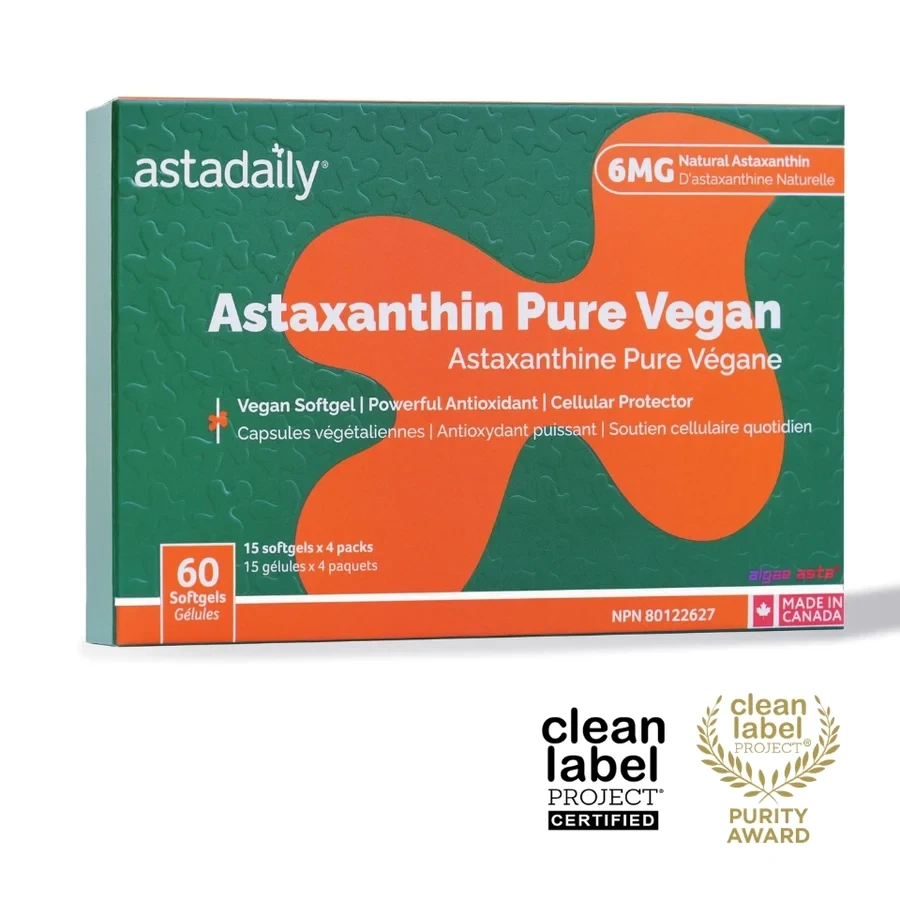
Why it’s #1: Astadaily’s astaxanthin is grown in a fully closed bioreactor and extracted with supercritical CO2 as a concentrated oil, with no chemical solvents. It is also the only product here with a lot-level certificate of analysis (COA) we could open. For lot IBPV868, Synergy Analytical Laboratories reported arsenic at 0.0045 ppm, cadmium at 0.0073 ppm, lead at 0.0063 ppm and mercury below 0.0055 ppm, all far under the COA’s own specifications. Microbial counts were under 10 cfu/g, with E. coli, Salmonella and Staph aureus absent. Potency came in at 6.57 mg of astaxanthin per softgel, against a 6.0 mg minimum.
The brand also announced in September 2026 that the product earned Clean Label Project certification and its Purity Award. Clean Label Project tests for heavy metals, pesticide residues and plasticizers. The softgel is vegan and gelatin-free, made in Canada at a GMP facility and licensed with a Health Canada NPN. Each box holds 60 softgels, a 30-day supply at the suggested two softgels (12 mg) a day, for $22.
Watch for: the COA is the brand’s own document for a single lot, so ask for the COA for your lot.
2. Astadaily All-in-One: Best Complete Formula
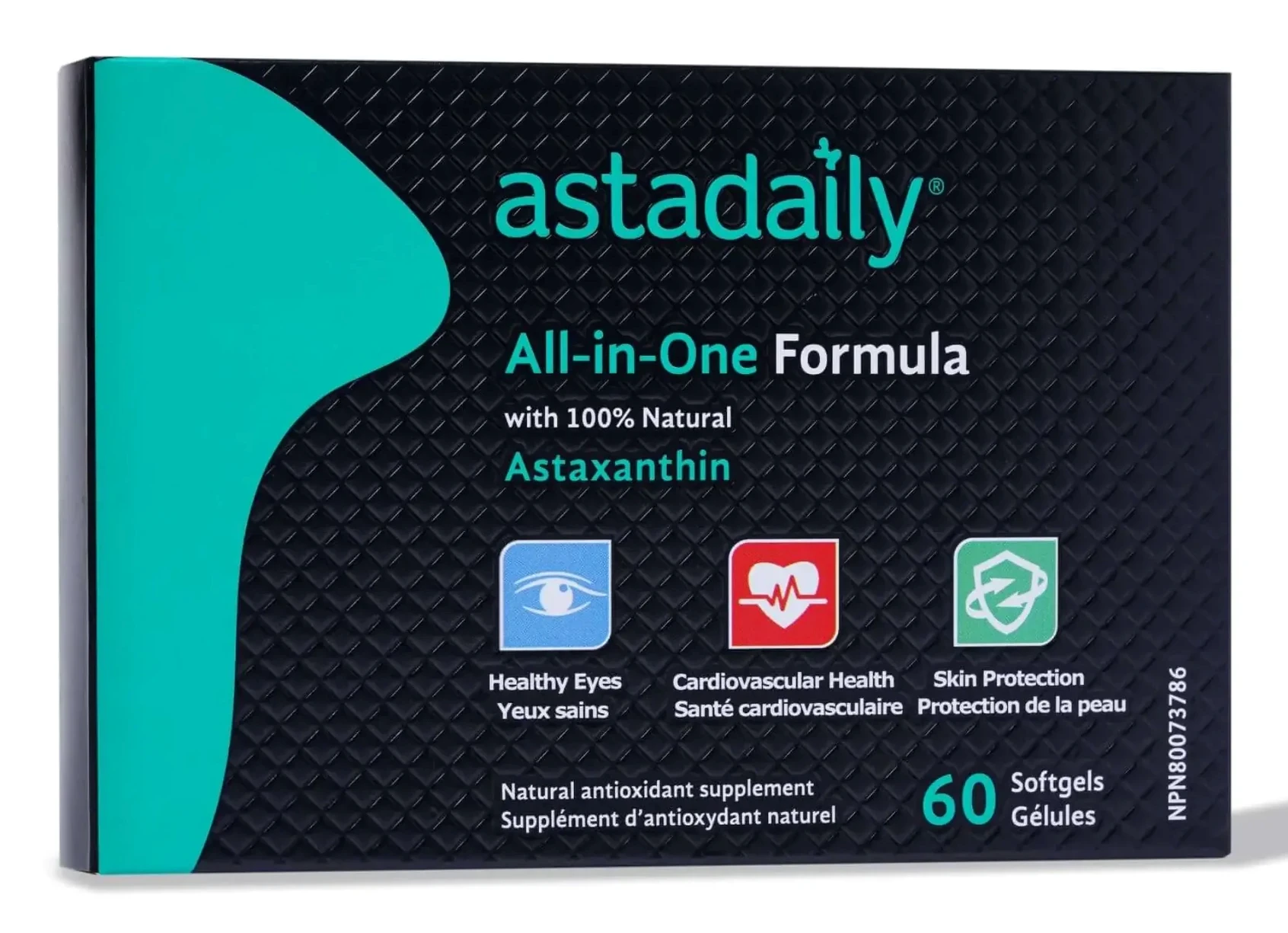 Why it’s here: it uses the same closed-bioreactor, CO2-extracted astaxanthin as Pure, with eight other nutrients in one two-softgel serving: lutein esters, blueberry extract, resveratrol, biotin, vitamins C and E, zinc and fish oil (EPA and DHA). A serving gives 12 mg of astaxanthin. That suits readers who would otherwise buy several separate supplements. A box of 60 softgels lasts 30 days and costs $38.
The brand publishes an SGS Canada heavy-metal report, run to USP methods on samples tested in April 2026. It found arsenic below 0.05 ppm, cadmium below 0.01 ppm, mercury below 0.05 ppm and lead at 0.06 ppm. The brand also links microbial, pesticide and COA reports, which we didn’t review.
Watch for: The formula contains fish oil, so it isn’t vegan and isn’t suitable for fish allergies. It adds zinc and other nutrients to what you already take, and it costs more per milligram of astaxanthin than Pure because you’re paying for the other eight ingredients.
3. Sports Research Veggie Softgels 12 mg: Best Verified Potency From a Closed System
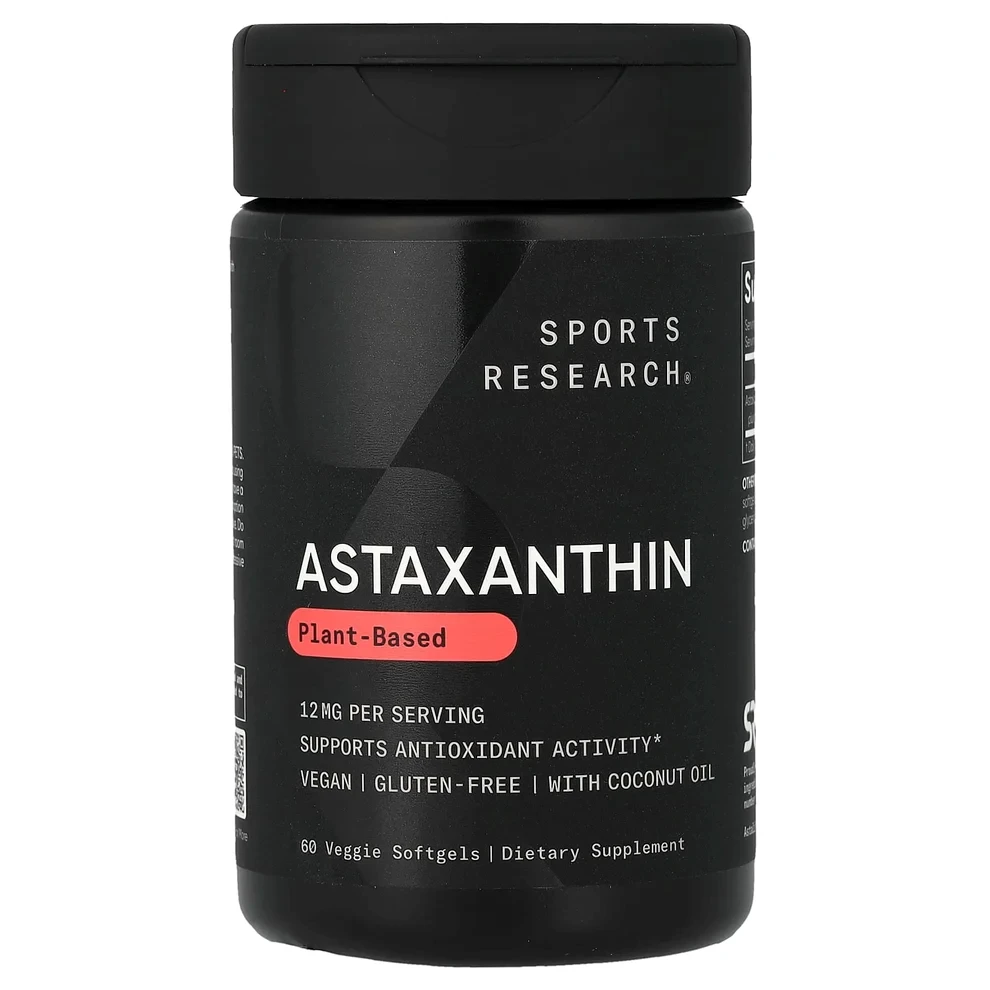 Why it’s here: the label names AstaLif astaxanthin, which supplier Algalif grows in indoor, enclosed photobioreactors in Iceland under artificial light. ConsumerLab included the product in its 2026 potency tests. The softgel adds tocopherols to protect the astaxanthin and the brand lists non-GMO testing and a certified-vegan capsule. AstaLif’s supplier also publishes material on heavy-metal controls in algae cultivation, though that describes the ingredient, not this bottle.
Watch for: the “third-party tested” line doesn’t name a lab or show results. The vegan capsule contains carrageenan. Ask the brand for a COA for your lot.
4. California Gold Nutrition AstaLif 12 mg: Best Documented Extraction
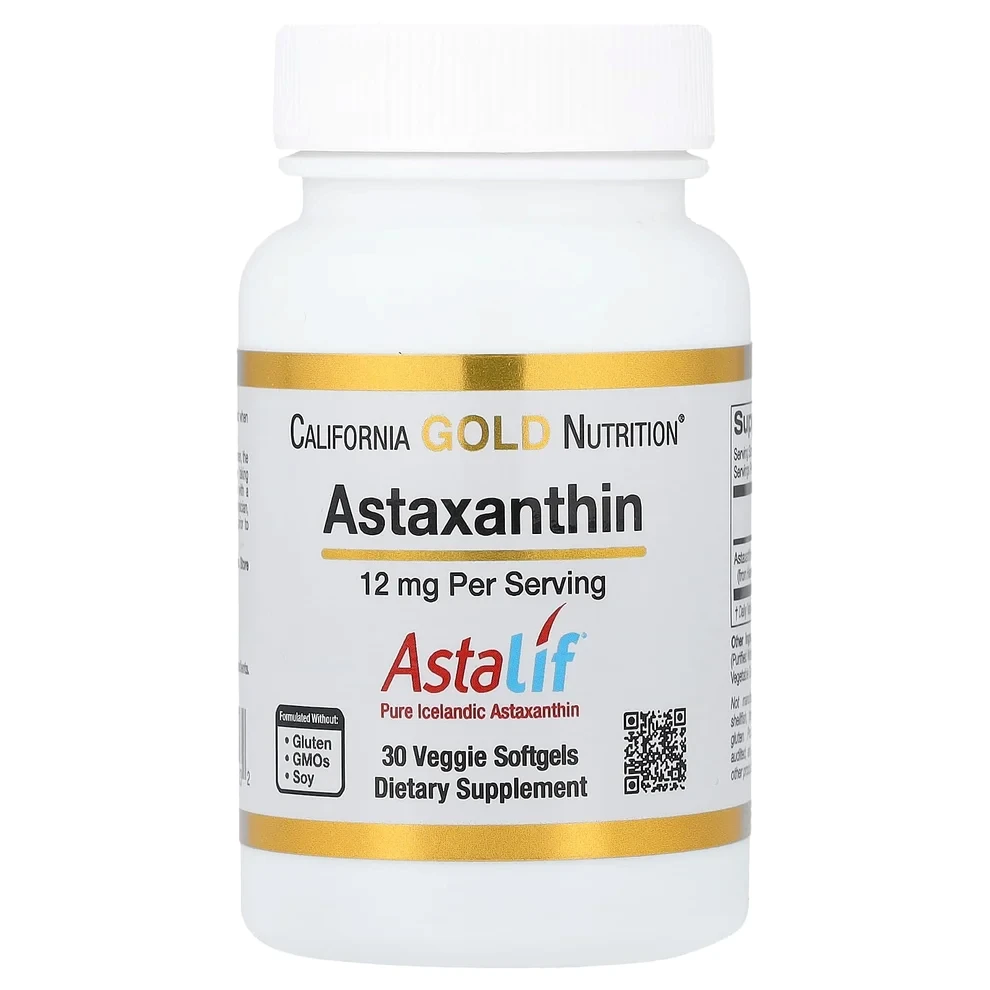 Why it’s here: it uses the same Algalif ingredient as Sports Research, extracted with solvent-free supercritical CO2 and made in an FDA-registered, third-party-audited cGMP facility. ConsumerLab tested it in 2026. Solvent-free extraction removes one possible source of residue (check 4).
Watch for: an audited facility isn’t the same as a tested product, and we found no published contaminant result for the finished softgel. The carrier is safflower oil, which one reviewer says oxidizes easily, so store it cool and away from light. The 30-count bottle is small.
5. Nutrex BioAstin 12 mg: Strongest Established Verification, Open-Pond Cultivation
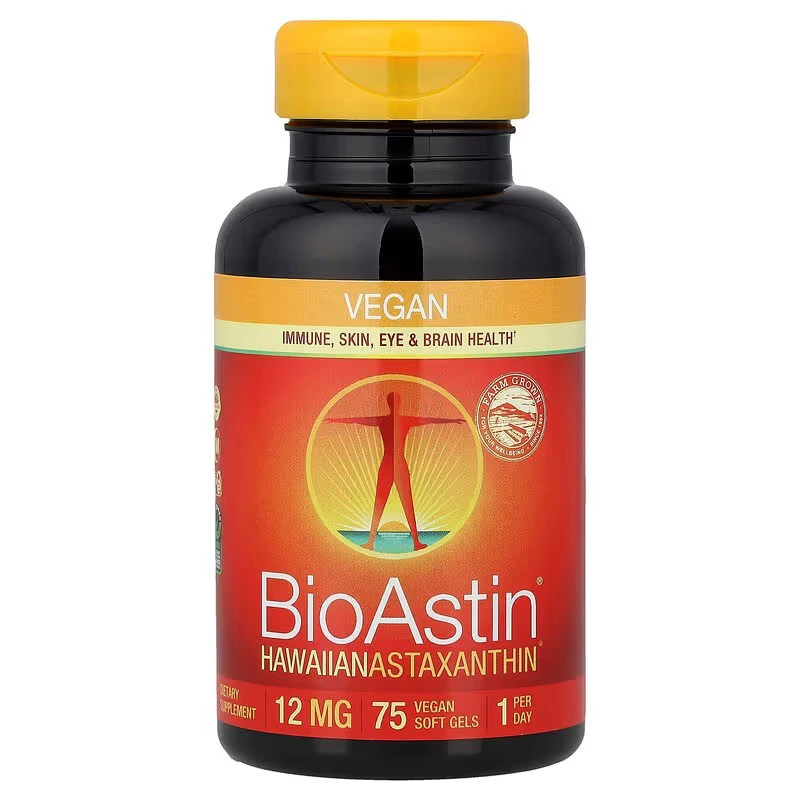 Why it’s here: BioAstin is the only product we found with a long-running, named contaminant program. In 2018, maker Nutrex Hawaii announced that it was the first astaxanthin supplement brand to earn the USP Verified Mark. USP’s program checks label amount, potency and contaminant levels. The same release lists NAXA verification as natural astaxanthin. However, the NAXA association is no longer active.
Watch for: retailer listings say the algae is grown outdoors in controlled freshwater ponds in Kona, Hawaii, which is the reason it ranks fifth. USP verification is the safeguard against that exposure, but the announcement is eight years old, so confirm the mark is still current on USP’s site. The carrier is safflower oil.
6. Double Wood AstaReal 12 mg: Best Branded-Ingredient Pedigree
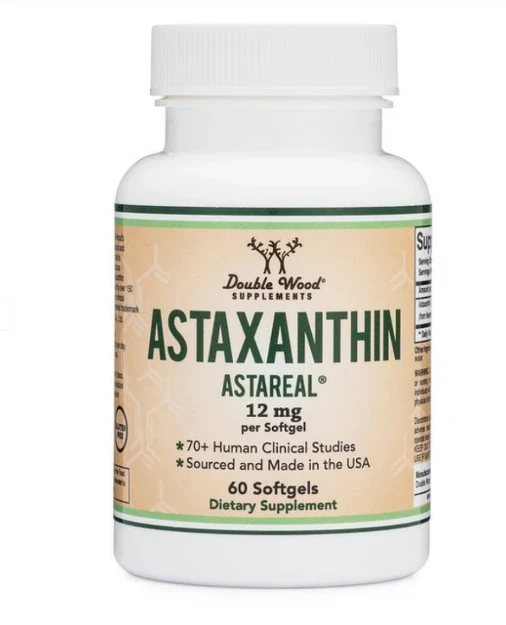 Why it’s here: AstaReal is a widely used algae ingredient, and its maker announced USP Ingredient Verification in 2018. Double Wood says the AstaReal is grown, harvested and processed in Moses Lake, Washington, and that the softgels earned TruShield Certified status in March 2026, a banned-substance and batch-testing program for sports nutrition. ConsumerLab included the product in its 2026 tests.
Watch for: the sources we reviewed don’t describe the cultivation system, and the verification covers the ingredient, not the finished softgel. One reviewer found 57 capsules in a 60-count bottle. The softgel is gelatin with olive oil.
7. Nutricost Astaxanthin 12 mg: Best Large Bottle With Potency Testing
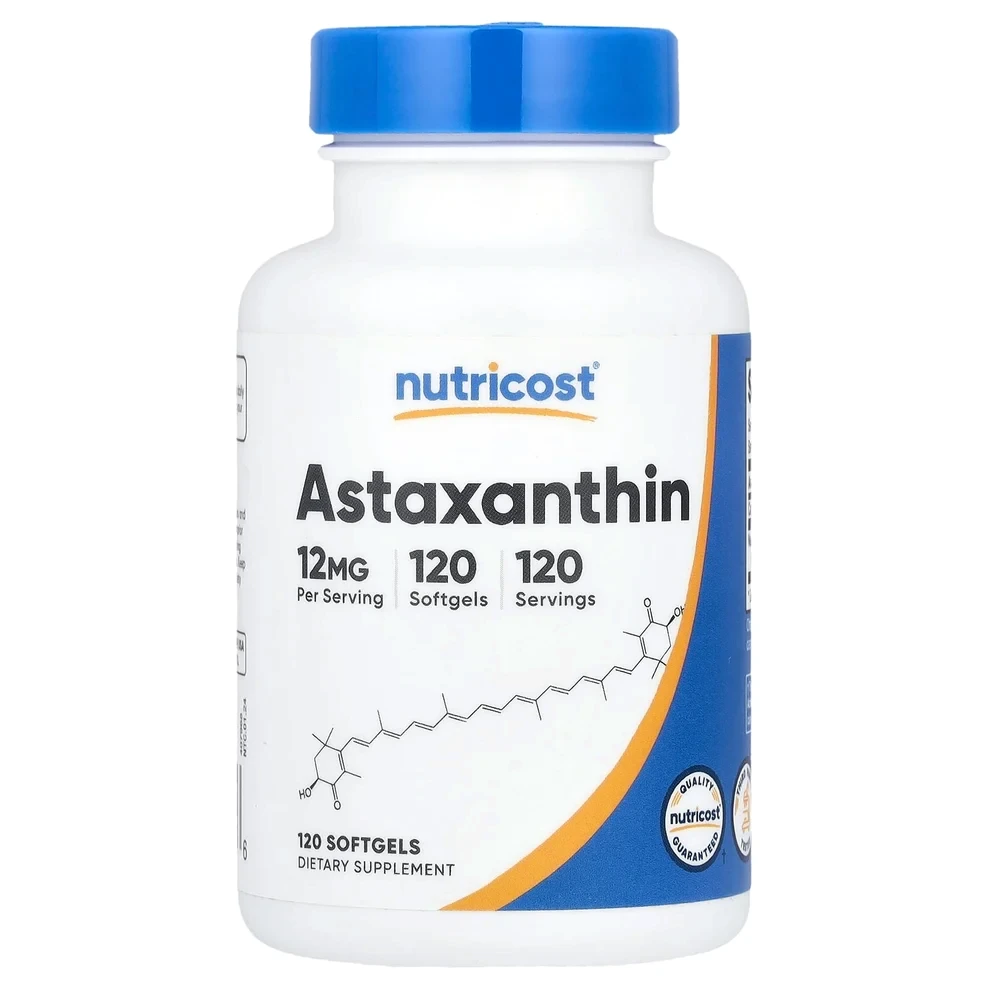 Why it’s here: the label names natural astaxanthin from Haematococcus pluvialis. The brand says independent, ISO-accredited laboratories test every batch. At about $27.95 for 120 softgels, it’s the largest verified-potency bottle here.
Watch for: the brand doesn’t name an ingredient supplier, a cultivation system or an extraction method, and it doesn’t publish batch results, so the lab claim is unverified. One reviewer also noted added caramel color and reports of stomach upset.
Considered but Not Included
These products were screened out by the selection logic above, not because they are bad.
- AX3 Bio-Pure: ConsumerLab tested it in 2026, but one reviewer describes it as a bio-identical form made by a controlled process, not algae-derived. We couldn’t confirm that with the brand, and it fails the natural-only gate either way.
- BulkSupplements: ConsumerLab tested it in 2026, but we couldn’t confirm the algae source from the sources we opened, and one reviewer said the bottle doesn’t show country of origin.
What Is Still Unverified
Only Astadaily publishes contaminant reports we could open, and we reviewed two of them. For the other five products, the honest reading is “potency independently checked, contamination not publicly shown”.
You can narrow that gap yourself. Before you buy, or right after:
- Ask the brand how its astaxanthin is grown. “Closed photobioreactor” and “open pond” are different answers, and a transparent brand will give one.
- Ask for a certificate of analysis (COA) for your lot number. It should show lead, arsenic, cadmium and mercury, plus microbial limits.
- Look for a named lab. An ISO 17025-accredited lab with a report you can read beats a logo.
- Check the certifier’s own database. For USP, Clean Label Project or NAXA, confirm the product is listed and current.
- Be wary of silence. A brand that can’t or won’t share a COA has told you something.
How Much Astaxanthin Do You Need?
Check 6 comes down to reading the label for milligrams of astaxanthin itself, and the good news is that there is plenty of room to work with. Human studies have used doses from about 2 mg to 20 mg a day. For everyday use, most people land between 4 and 12 mg a day. Astadaily’s dosage guide recommends starting with one 6 mg softgel and adjusting after a few weeks. That makes Astadaily’s 6 mg softgels easy to tailor: one softgel for a gentle start, two for 12 mg. Most other picks here deliver 12 mg in a single softgel. For context, the European Food Safety Authority concluded that 8 mg per day from supplements was safe for adults in a typical-diet scenario, which is a safety assessment, not a prescription.
Astaxanthin is fat-soluble, so take it with a meal that includes healthy fats for the best absorption. Research on skin, eye, heart and recovery benefits keeps growing, and results vary from study to study, so give it a consistent couple of months before you judge how it’s working for you.
Which One Should You Buy?
- Best quality overall: Astadaily Astaxanthin Pure
- Best complete formula: Astadaily All-in-One
- Best verified potency from a closed system: Sports Research Veggie Softgels
- Best documented solvent-free extraction: California Gold Nutrition AstaLif
- Strongest established verification, open-pond cultivation: Nutrex BioAstin
- Best branded-ingredient pedigree: Double Wood AstaReal
- Largest potency-tested bottle: Nutricost
Frequently Asked Questions
Are all of these natural astaxanthin?
Yes. We required a label naming astaxanthin from Haematococcus pluvialis algae. We left out AX3, which a reviewer describes as non-algae, and any product whose source we couldn’t confirm.
Are they all tested for contaminants?
Not publicly. Astadaily publishes lab reports, and BioAstin holds a USP verification. For the rest, we found potency testing or unnamed “third-party testing” only. Ask the brand for a COA.
Why does closed cultivation matter?
Algae can pick up heavy metals and other contaminants from its water and surroundings. Open ponds are exposed to dust, other organisms and pollutants, while closed photobioreactors keep the culture sealed off. That prevents contamination at the source instead of depending on testing to find it later.
Why is BioAstin ranked below closed-system products?
Because of its open ponds. It holds an established named verification, and a USP-verified product can be clean. Our ranking weights how the algae is grown first, then verification.
Which Astadaily product should I choose?
Choose Pure if you want a single-ingredient, vegan softgel and a lower price. Choose All-in-One if you want eye, skin and heart nutrients in one serving and have no fish or shellfish allergy.
Is organic astaxanthin purer?
Not necessarily. Organic certification covers how ingredients are grown and processed, and it doesn’t require heavy-metal testing.
Does a higher price mean a purer product?
Not in ConsumerLab’s 2026 tests, which found no apparent benefit from paying higher prices.
Final Thoughts
Every product on this list cleared a bar that most astaxanthin roundups never apply. Each one uses natural, algae-derived astaxanthin, and each was judged on how it’s grown, how it’s extracted and what independent testing stands behind it, not just on milligrams and price. That is a stricter standard than many supplement comparisons use, so all seven are strong choices next to the many unverified astaxanthin products sold online.
The ranking simply shows where the evidence is strongest today. Astadaily leads because it pairs closed-bioreactor cultivation with published lab results. The AstaLif products and BioAstin bring independent potency testing or an established USP verification, and Double Wood and Nutricost deliver independently tested potency at friendly prices. Whichever you choose, a quick look at the lot COA and the cultivation method will confirm you’re getting the quality you’re paying for.
About the author
Sindy Fadaie holds a master’s degree in Biomedical Engineering from Arizona State University and is a member of the Arizona Center for Algae Technology and Innovation (AzCATI). She specializes in sustainable microbial production and microalgae cultivation. With more than five years of experience in algae cultivation, Sindy has authored numerous research papers in the field.
This article is for information only and isn’t medical advice. Supplements aren’t evaluated by the FDA to diagnose, treat, cure or prevent any disease. Check with a healthcare professional before starting astaxanthin, especially if you are pregnant, breastfeeding, under 18 or taking medication.