

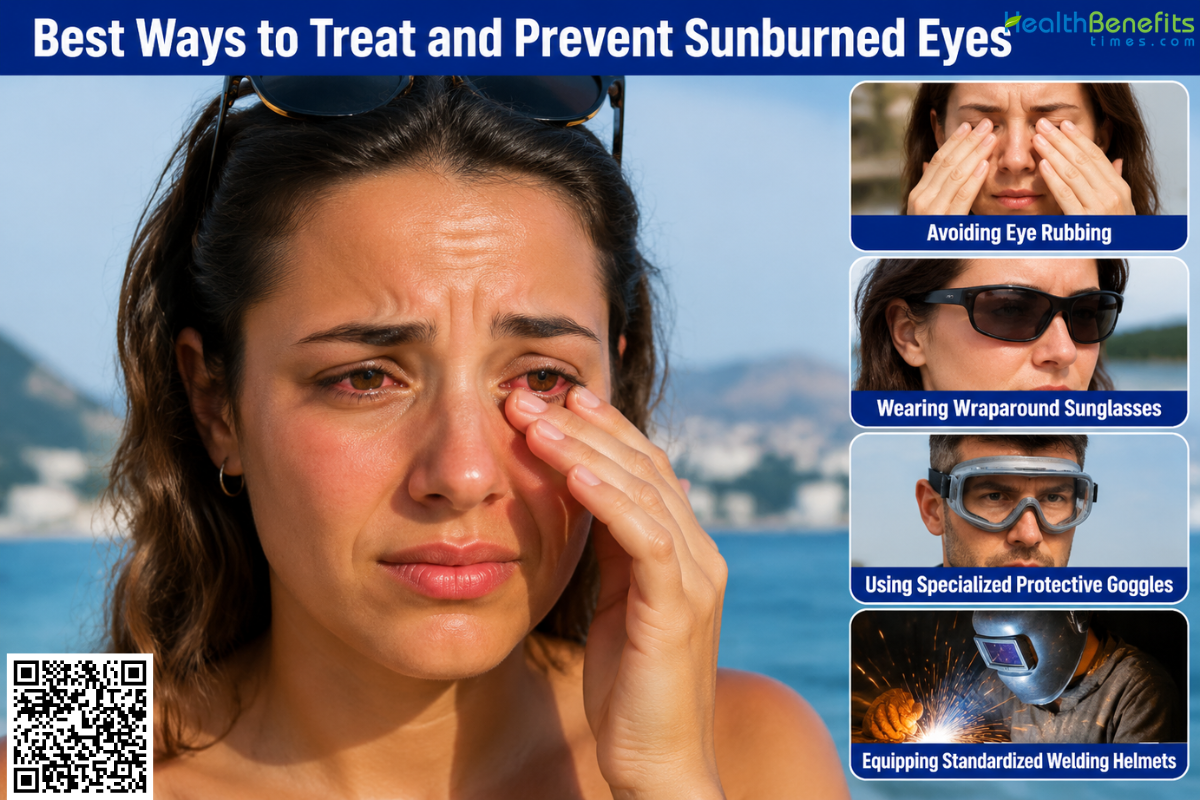
Sunburned eyes, clinically known as photokeratitis, is a painful, temporary condition that occurs when the eye is exposed to excessive ultraviolet (UV) radiation. Like a sunburn on the skin, it damages the clear front layer of the eye (cornea) and the thin tissue covering the white part of the eye (conjunctiva). This injury commonly results from unprotected exposure to intense sunlight, light reflecting off snow or water, or artificial sources like welding arcs and UV lamps 1. Individuals typically do not notice the damage immediately. Symptoms generally emerge several hours after exposure and include significant eye pain, extreme light sensitivity, tearing, and a gritty sensation feeling like sand in the eye. Clinical evidence confirms that while photokeratitis causes sudden cellular damage to the eye’s surface, the condition is typically self-limiting and fully resolves within 24 to 48 hours without causing permanent vision loss 2.
Causes of Sunburned Eyes
- Reflected Sunlight from Snow and Ice: Snow is a highly reflective surface that can bounce up to 80 percent of ultraviolet (UV) radiation back toward the face. This upward reflection causes a specific, intense form of eye sunburn commonly referred to as snow blindness 3.
- Water and Sand Reflection: Open bodies of water and bright white sand also reflect high levels of sunlight. Spending prolonged periods on a boat or at the beach without UV-blocking eyewear significantly increases the amount of UV radiation reaching the eye’s surface.
- Direct Solar Exposure: Staring directly at the sun, particularly during rare events like a solar eclipse, delivers a concentrated, damaging dose of UV rays directly to the clear front tissue of the eye.
- Welding Arcs: Industrial welding machines produce intense, artificial UV light. Looking at a welding arc without a specialized protective helmet rapidly burns the eye surface, leading to a painful condition known as welder’s flash or arc eye 3.
- Tanning Beds and Sunlamps: Indoor tanning devices emit high concentrations of UV rays to simulate sunlight. Failing to wear specialized protective goggles inside a tanning bed directly exposes the outer eye to cellular damage.
- Damaged High-Intensity Lighting: Metal halide lamps, often used in large gymnasiums or sports arenas, contain an inner tube that produces UV light. If the outer protective glass envelope breaks but the lamp continues to operate, it can expose individuals in the vicinity to hazardous UV radiation and cause sudden eye burns 4.
Symptoms of Sunburned Eyes
- Intense Eye Pain: A primary symptom is a sudden, deep ache in both eyes that typically begins 6 to 12 hours after the initial ultraviolet (UV) exposure, rather than immediately during the event 3.
- Foreign Body Sensation: Individuals frequently report a severe, gritty feeling, as if sand, dirt, or eyelashes are trapped underneath the eyelids. This sensation is caused by the sloughing off of damaged surface cells on the cornea 3.
- Extreme Light Sensitivity: The injured eyes become highly intolerant to ambient light (clinically known as photophobia). It often becomes painful to open the eyes in bright outdoor environments or even under normal indoor lighting.
- Excessive Tearing: The eyes produce a continuous, heavy, watery discharge in an involuntary attempt to soothe the irritation and wash the damaged outer surface 3.
- Eye Redness and Swelling: The white part of the eye and the inner lining of the eyelids become noticeably red and bloodshot due to acute tissue inflammation and increased blood flow.
- Involuntary Eyelid Spasms: The significant discomfort and surface irritation can trigger uncontrollable eyelid twitching or a reflex to squeeze the eyes tightly shut, a condition known medically as blepharospasm 3.
- Blurred Vision or Halos: The UV damage disrupts the normally smooth, clear surface of the cornea, which can temporarily scatter incoming light. This disruption often results in blurry vision, reduced visual sharpness, or seeing glowing rings around light sources 2.
Best Ways to Treat and Prevent Sunburned Eyes
1. Removing Contact Lenses Immediately
How it may help
Removing contact lenses immediately stops them from rubbing against the damaged and swollen surface of the eye. Because a sunburned eye sheds its outer layer of protective cells, keeping lenses in can trap dead tissue, increase pain, and delay the natural healing process 3.
What research says
Clinical guidelines emphasize that wearing contact lenses over an injured eye surface greatly increases the risk of severe bacterial infections. Medical consensus confirms that removing lenses promotes essential oxygen flow to the eye and prevents bacteria from multiplying beneath the plastic 3.
How to use it safely
If you suspect an eye sunburn, thoroughly wash and dry your hands before gently taking out your contact lenses. Do not put them back in. Wear standard glasses until an eye doctor confirms the outer layer of your eye has completely healed 3.
Potential precautions or side effects
Never forcefully pull out a lens that feels stuck to the dry eye. Apply preservative-free artificial tears to moisten the surface and loosen the lens before trying again 3.
2. Resting in a Darkened Room
How it may help
Resting in a completely dark room provides immediate relief from extreme light sensitivity, a hallmark symptom of sunburned eyes. By eliminating ambient light and screens, this practice stops the painful reflex of squinting and allows the inflamed eye muscles to relax while the damaged outer surface begins to heal 3.
What research says
Clinical treatment protocols for ultraviolet eye damage prioritize symptom management and environmental modification. Medical evidence supports that avoiding light exposure is a crucial conservative therapy, as reducing visual stimuli minimizes acute pain and supports the natural, 24- to 48-hour cellular repair process of the corneal tissue 3.
How to use it safely
Close all curtains and turn off overhead lights, televisions, and electronic devices. Lie down comfortably and keep your eyes closed as much as possible. If you must leave the darkened space, wear dark, UV-blocking sunglasses indoors to protect your eyes from sudden light exposure.
Potential precautions or side effects
Ensure the dark environment is free of tripping hazards to prevent accidental falls. Do not rub your eyes in the dark, as this worsens tissue damage 3.
3. Applying Cold Compresses Over Closed Eyelids
How it may help
A cold compress provides immediate, temporary relief from the burning pain and severe irritation caused by ultraviolet damage. The cooling effect constricts blood vessels, which helps reduce eyelid swelling, diminishes tissue inflammation, and numbs the surface discomfort associated with sunburned eyes 3.
What research says
Clinical guidelines recommend applying cold compresses as a safe, supportive therapy for managing acute symptoms of corneal ultraviolet injury. Medical literature confirms that localized cold therapy successfully reduces tissue inflammation and eye pain while the damaged outer eye layers naturally heal 3.
How to use it safely
Soak a clean, soft cloth in cold water, wring out the excess, and place it gently over your closed eyelids. Leave it on for 10 to 15 minutes. Repeat this process a few times daily to manage discomfort and swelling.
Potential precautions or side effects
Never place bare ice directly on the eyelids, as extreme cold causes tissue damage. Avoid pressing down forcefully on your injured eyes while holding the compress 3.
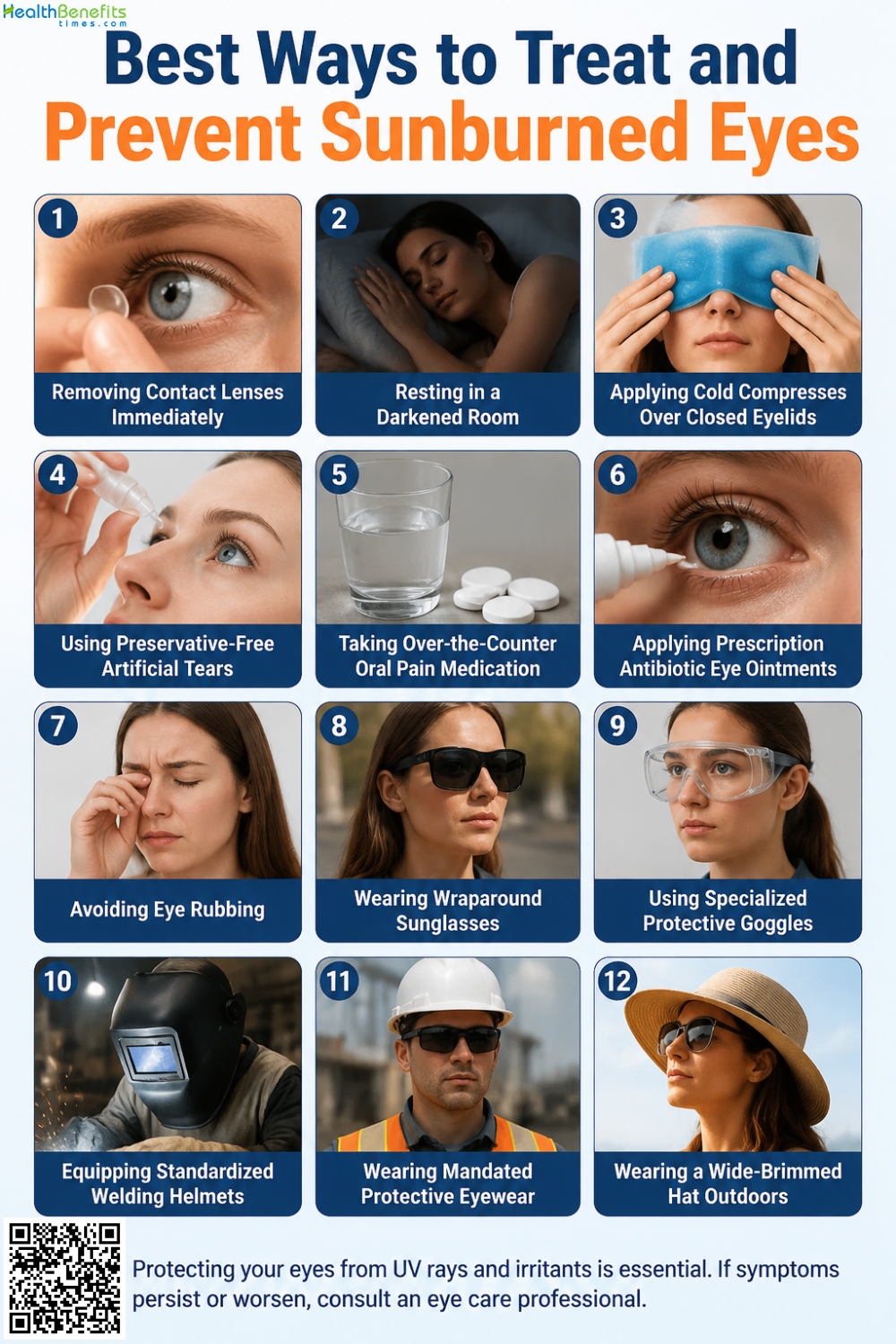
4. Using Preservative-Free Artificial Tears
How it may help
Preservative-free artificial tears provide essential moisture to a sunburned eye, relieving the severe dry and gritty sensation. By lubricating the eye’s surface, these drops reduce painful friction caused by blinking and help wash away damaged surface cells, creating a supportive environment for natural tissue repair 3.
What research says
Clinical treatment guidelines strongly recommend lubricating eye drops as a primary supportive therapy for ultraviolet corneal injuries. Medical evidence confirms that artificial tears maintain necessary eye moisture and promote cellular healing. Experts specifically advise using preservative-free formulas, as chemical preservatives can further aggravate the damaged eye tissue 3.
How to use it safely
Wash your hands thoroughly before applying the drops. Tilt your head back, gently pull down your lower eyelid, and squeeze one drop into the pocket. Because these tears lack irritating preservatives, you can safely apply them as often as needed to maintain comfort throughout the day.
Potential precautions or side effects
Do not let the dropper tip touch your eye or eyelashes to prevent bacterial contamination. You may experience brief blurred vision immediately after applying the drops 3.
5. Taking Over-the-Counter Oral Pain Medication
How it may help
Over-the-counter oral pain relievers, such as ibuprofen or acetaminophen, help manage the intense eye ache associated with ultraviolet damage. Nonsteroidal anti-inflammatory drugs (NSAIDs) specifically work by blocking pain signals and reducing tissue swelling, making the 24- to 48-hour natural cellular healing process much more comfortable 3.
What research says
Clinical protocols for managing acute photokeratitis strongly recommend using oral analgesics to control symptoms. Medical evidence establishes that oral pain medications are highly effective for relieving severe eye discomfort and are strictly preferred over topical anesthetic eye drops, which can dangerously delay tissue healing 3.
How to use it safely
Take these medications exactly as directed on the packaging or by a healthcare provider. Do not exceed the maximum daily dosage. Swallow the pills with a full glass of water, and always consume anti-inflammatory options with food to prevent an upset stomach.
Potential precautions or side effects
High doses can cause stomach irritation, ulcers, or liver strain. Individuals with preexisting kidney issues, heart disease, or bleeding disorders should consult a doctor before using anti-inflammatory medications 5.
6. Applying Prescription Antibiotic Eye Ointments
How it may help
Prescription antibiotic eye ointments create a thick, protective barrier over the damaged outer layer of the eye. This not only soothes intense pain and prevents friction from blinking but also stops harmful bacteria from causing a secondary infection while the sunburned tissue heals 3.
What research says
Clinical guidelines recommend using protective antibiotic treatments for severe ultraviolet eye injuries. Medical evidence shows that ointments are highly preferred over liquid drops because they provide significantly longer-lasting moisture to the injured tissue and effectively reduce the risk of dangerous bacterial infections during the repair process 3.
How to use it safely
Wash your hands thoroughly before use. Gently pull down your lower eyelid to create a small pocket and squeeze a thin ribbon of ointment into it. Close your eyes for a minute to spread the medication. Always complete the entire prescribed course provided by your doctor.
Potential precautions or side effects
Ointments commonly cause temporarily blurred vision immediately after application. Stop use and contact a doctor if you experience worsening redness, swelling, or signs of an allergic reaction 3.
7. Avoiding Eye Rubbing
How it may help
Avoiding eye rubbing prevents further physical damage to the vulnerable, sunburned surface of the eye. Although the condition causes a severe gritty sensation that feels like trapped dirt, rubbing can scrape away fragile healing cells, worsen tissue inflammation, and severely delay the natural recovery process.
What research says
Clinical guidelines for ultraviolet eye injuries strictly advise against touching the affected eye. Medical evidence confirms that rubbing a damaged eye surface significantly increases the risk of creating deeper physical scratches and introducing harmful bacteria, which can lead to severe secondary eye infections 3.
How to practice this safely
Whenever you feel the urge to rub your eyes, consciously stop and apply a cold compress or preservative-free artificial tears instead to soothe the gritty sensation. Keep your hands completely away from your face until the damaged eye tissue has fully healed.
Potential precautions or side effects
If you accidentally rub your injured eye and experience a sudden, sharp increase in pain or worsening vision, seek immediate medical attention to check for deeper tissue scratches 3.
8. Wearing Wraparound Sunglasses
How it may help
Wraparound sunglasses prevent ultraviolet rays from entering the eyes from the front, sides, and top. By completely shielding the eyes from direct and reflected sunlight, these specialized frames protect damaged tissue from further UV exposure and prevent initial cellular burns from occurring in bright outdoor environments 6.
What research says
Public health organizations confirm that effective eye protection must block 100 percent of UVA and UVB radiation. Medical evidence demonstrates that standard sunglass frames allow up to 20 percent of harmful UV light to reach the eye from the sides, making wraparound designs clinically necessary for complete eye surface protection 6.
How to use it safely
Always verify that the sunglasses carry a label stating they block 100 percent of UVA and UVB rays or offer UV400 protection. Wear them consistently outdoors, ensuring the frame fits closely against your face to eliminate gaps where sunlight might penetrate.
Potential precautions or side effects
Never use dark-tinted sunglasses that lack guaranteed UV protection. Dark lenses cause your pupils to dilate, which dangerously allows more harmful UV radiation to enter the unprotected eye 6.
9. Using Specialized Protective Goggles
How it may help
Specialized protective goggles completely seal the eye area, preventing intense, reflected ultraviolet (UV) radiation from reaching the eye’s surface. This physical barrier is crucial in extreme environments, blocking upward-reflecting UV rays from snow, ice, or water that standard sunglasses cannot properly deflect 3.
What research says
Clinical studies establish that snow reflects up to 80 percent of UV radiation, making standard sunglasses insufficient for high-altitude or winter activities. Medical guidelines strongly advise using specialized UV-blocking goggles to completely prevent the acute corneal damage clinically known as snow blindness 3.
How to use it safely
Ensure your goggles are explicitly rated to block 100 percent of UVA and UVB rays. Secure the strap firmly around your head to eliminate any gaps between the protective frame and your face before you enter highly reflective outdoor environments 6.
Potential precautions or side effects
Poorly ventilated goggles can quickly fog up, temporarily impairing your vision. Always verify the UV-blocking rating, as wearing dark, unrated lenses dangerously dilates pupils and increases internal eye damage 6.
10. Equipping Standardized Welding Helmets
How it may help
Standardized welding helmets act as an absolute barrier against the intense, artificial ultraviolet radiation emitted by welding machines. By completely shielding the face and eyes, these specialized helmets prevent the acute corneal damage known as arc eye, stopping severe cellular burns before they occur 3.
What research says
Occupational health guidelines confirm that unprotected exposure to a welding arc causes severe photokeratitis within seconds. Medical experts establish that wearing industry-approved helmets equipped with proper optical filter lenses is the only effective method to fully block the concentrated UV rays responsible for welder’s flash 3.
How to use it safely
Inspect your welding helmet before every use to ensure the filter lens is clean, uncracked, and securely fitted. Verify that the lens shade is correctly rated for your specific welding task. Always keep the helmet fully lowered over your face before striking an arc.
Potential precautions or side effects
Never use a helmet with a damaged or incorrectly rated filter lens. Bystanders in the immediate area must also wear protective UV-blocking eyewear to prevent accidental indirect burns 3.
11. Wearing Mandated Protective Eyewear
How it may help
Using mandated protective eyewear during indoor tanning sessions shields the eyes from highly concentrated, artificial ultraviolet (UV) radiation. Because tanning beds emit UV levels that can exceed natural sunlight, these specialized goggles provide an essential physical barrier that prevents sudden cellular damage and burning of the eye’s outer layer.
What research says
Federal health regulations mandate eye protection during indoor tanning because the devices emit intense UV radiation known to cause severe photokeratitis. The Food and Drug Administration (FDA) warns that simply closing the eyes or using standard sunglasses fails to block the concentrated UV rays emitted by commercial sunlamps 4.
How to use it safely
Always wear the specialized protective goggles provided by the tanning facility or purchase your own FDA-compliant pair. Ensure the eyewear fits snugly over both eyes before turning on the sunlamp, and never remove them while the tanning device is actively emitting light.
Potential precautions or side effects
Never substitute mandated goggles with towels, standard sunglasses, or cotton pads, as these materials do not block severe UV radiation from penetrating the thin eyelid tissue 4.
12. Wearing a Wide-Brimmed Hat Outdoors
How it may help
Wearing a wide-brimmed hat provides a physical barrier that casts a shadow over the upper face. This simple measure blocks direct, overhead ultraviolet rays from reaching the corneal surface, significantly reducing the initial cellular exposure that leads to sunburned eyes.
What research says
Public health experts indicate that a wide-brimmed hat reduces the amount of ultraviolet radiation reaching the eyes by approximately 50 percent. However, clinical guidance emphasizes that hats cannot block UV rays reflecting upward from water, sand, or snow, making them a secondary defense measure 6.
How to use it safely
Select a hat with a tightly woven fabric and a brim extending at least three inches entirely around your head. Always wear it in combination with wraparound, 100 percent UV-blocking sunglasses to ensure comprehensive protection during outdoor activities.
Potential precautions or side effects
Avoid relying solely on standard baseball caps, as they leave the sides of your face exposed to harmful sunlight and provide insufficient peripheral eye protection 6.
Foods to Avoid When You Suffer from Sunburned Eyes
While clinical protocols for sunburned eyes focus on surface lubrication and rest, avoiding substances that cause systemic dehydration or inflammation helps maintain the vital tear film necessary for tissue healing.
1. Alcoholic Beverages
Alcohol acts as a diuretic, reducing natural tear volume. This reduction worsens the painful friction against a healing sunburned cornea and limits essential moisture 7.
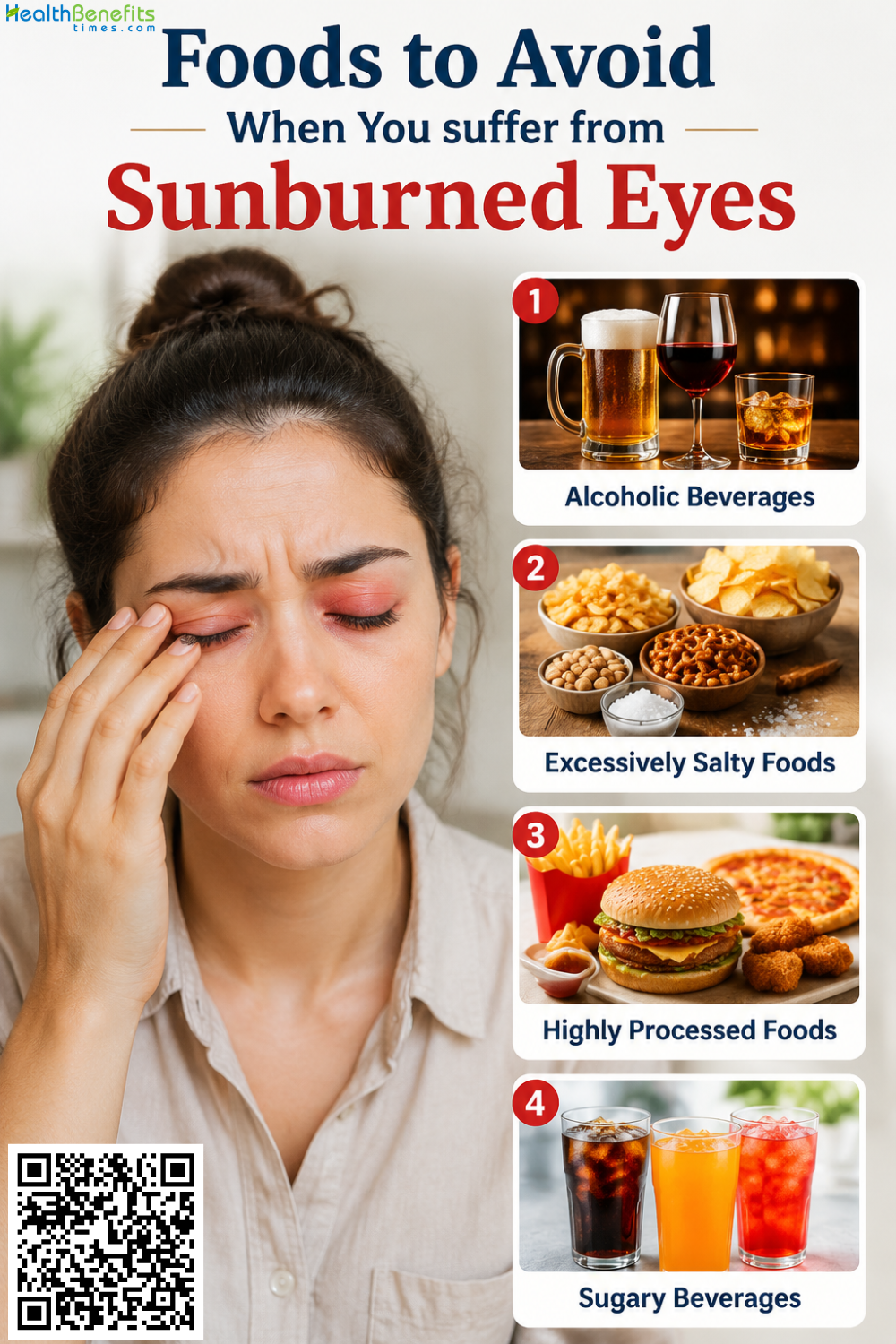
2. Excessively Salty Foods
High dietary sodium alters tear film fluid balance. This imbalance directly exacerbates the severe dryness and gritty sensation caused by acute ultraviolet eye tissue damage 8.
3. Highly Processed Foods
Foods heavy in trans fats promote systemic inflammation. Elevated inflammation can interfere with the body’s natural 24- to 48-hour cellular repair process necessary for healing the injured eye 9.
6. Sugary Beverages
High sugar intake causes blood sugar spikes that trigger inflammatory responses. This systemic inflammation can disrupt healthy circulation and theoretically delay the regeneration of damaged outer eye cells 10.
When to See a Doctor When You Struggle from Sunburned Eyes
While the outer layer of a sunburned eye typically repairs itself naturally within a few days, certain warning signs require immediate professional medical evaluation to prevent permanent vision damage.
1. Pain Persists Beyond 48 Hours
Uncomplicated eye sunburns usually resolve within two days. Pain lasting longer indicates deeper tissue damage or a secondary infection requiring prompt clinical evaluation 3
2. Severe Vision Changes
While brief blurriness is expected, experiencing significant vision loss, persistent halos, or blind spots suggests severe trauma needing emergency treatment 3.
3. Thick or Colored Discharge
A watery eye is a normal reaction, but developing thick, yellow, or green discharge signals a bacterial infection requiring prescription antibiotic intervention 3.
4. Unmanageable Eye Pain
If extreme eye pain does not respond to over-the-counter oral medications or cold compresses, an eye doctor must examine for deeper physical scratches 3.
5. Seeing Flashes of Light
Sudden flashes of light are not standard sunburn symptoms. These visual disturbances indicate potential internal injury to the back of the eye 1.