Health Benefits
    Facebook Twitter Instagram
    Friday, December 5
    Facebook Twitter Pinterest
    Health Benefits
    • Home
    • Dental Health
    • Mental Health
    • Weight Loss
    • Health Wiki
    • Nutrition
    • Healthy Recipe
    • BMI Calculator
    Health Benefits
    Home»Herbs and Spices»Health Benefits of Doctorbush (Plumbago zeylanica)
    Herbs and Spices

    Health Benefits of Doctorbush (Plumbago zeylanica)

    By s mJuly 28, 2019Updated:July 28, 2019No Comments4 Mins Read
    Facebook Twitter Pinterest LinkedIn Tumblr Email

    Doctorbush is a multipurpose medicinal herb of family Plumbaginaceae. It is native to South Asia and is distributed throughout most of the tropics and subtropics. It grows in deciduous woodland, savannas and scrublands from sea level upto 2000 meters altitude. In India, it is widely distributed from Central India to West Bengal, Southern India Maharashtra.

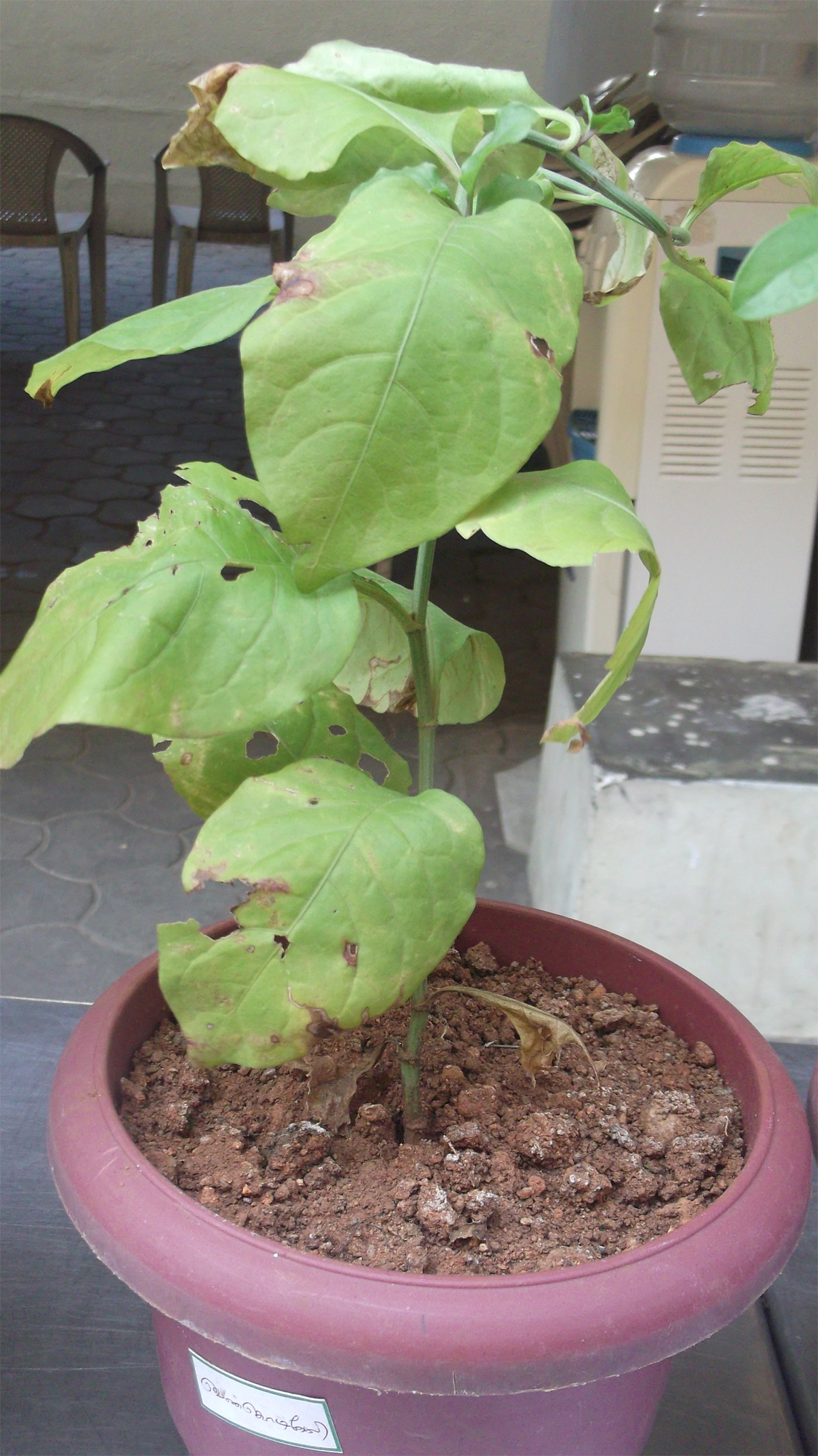
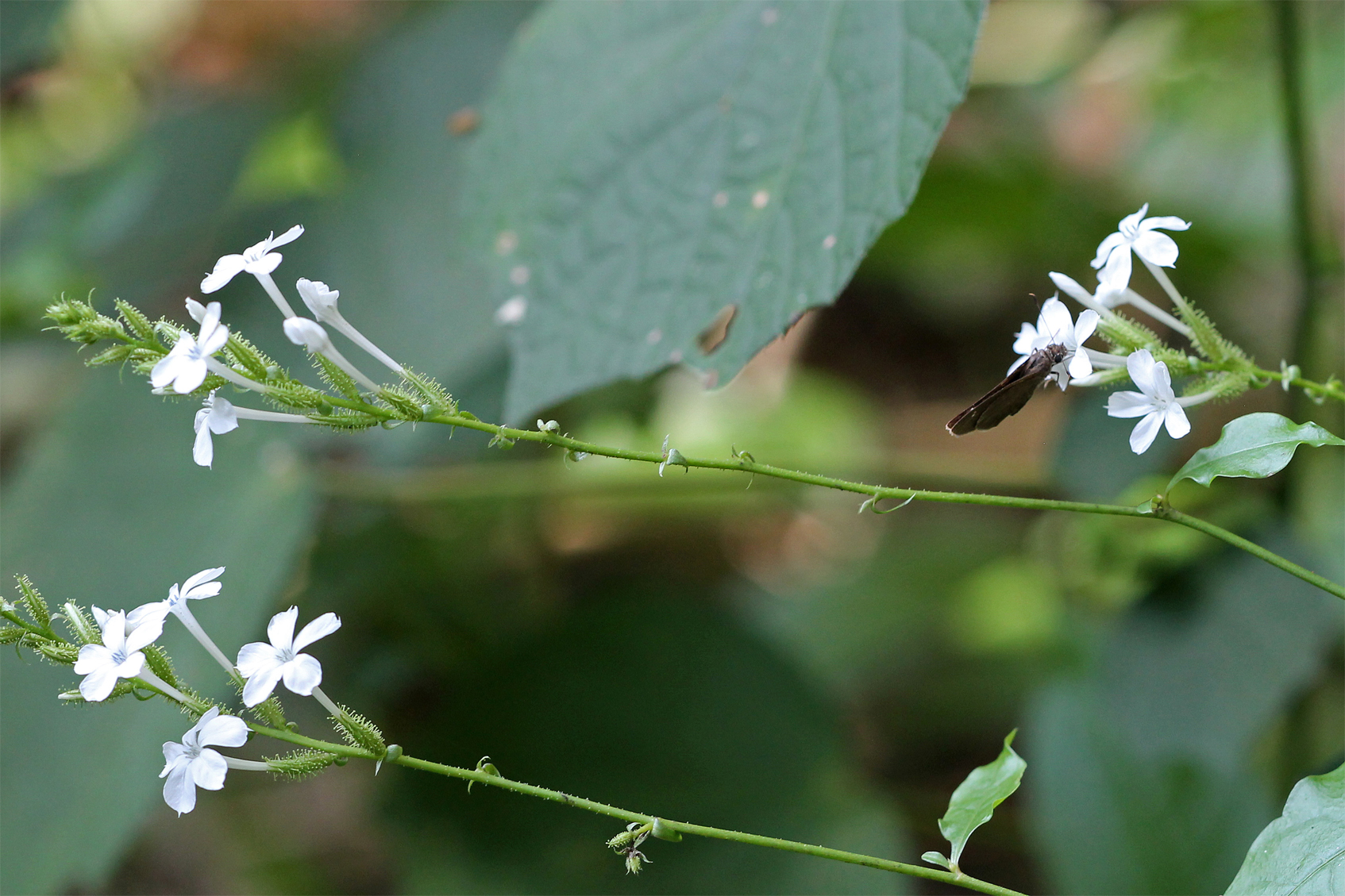
    Doctorbush is a perennial herb which attains the height of 0.5-2 m (1.6-6.6 ft). Leaves are simple, alternate, elliptical or oblong, ovate-lanceolate measuring 0.5–12 cm long with a tapered base and hairy margin. Stipules are absent and petioles are 0–5 mm long, narrow with small auricles in young leaves. Inflorescence is of terminal raceme type, many flowered and about 6-30 cm long. The white flowers borne in axillary and terminal elongated spikes. Usually the flowers are regular, bisexual, sweet scented, pedicellate and pentamerous. Flowers have tubular calyx measuring 7-11 mm long and 5-ribbed having glandular trichomes which secrete a sticky mucilage. The flower blooms year round and pollination occurs by insects. Flowers are followed by oblong, five furrowed, capsule which is 7.5–8 mm long that contains single seed. Seeds are oblong, reddish-brown to dark brown measuring 5-6 mm long. Roots are smooth, straight, unbranched or branched and about 30 cm long and 6 cm in diameter. It is light yellow when fresh and turns reddish-brown on drying.

    Roots

    Roots are stout, friable, cylindrical, blackish red about 30 cm or more in length.  It is yellow colored when fresh and reddish brown when dry, slightly branched or straight unbranched. Roots impart strong, characteristic odor with bitter and acrid taste.

    Stems

    Stems are spreading, somewhat woody, striate, terate and glabous. It is about 0.5-2 m (1.6-6.6 ft). The bark is thin and brown.

    Leaves

    Leaves are simple, alternate, ovate or oblong, about 8 cm long and 3 cm broad. Petioles are narrow and amplexicaul at the base and dilated into stipule like auricles.

    Flowers

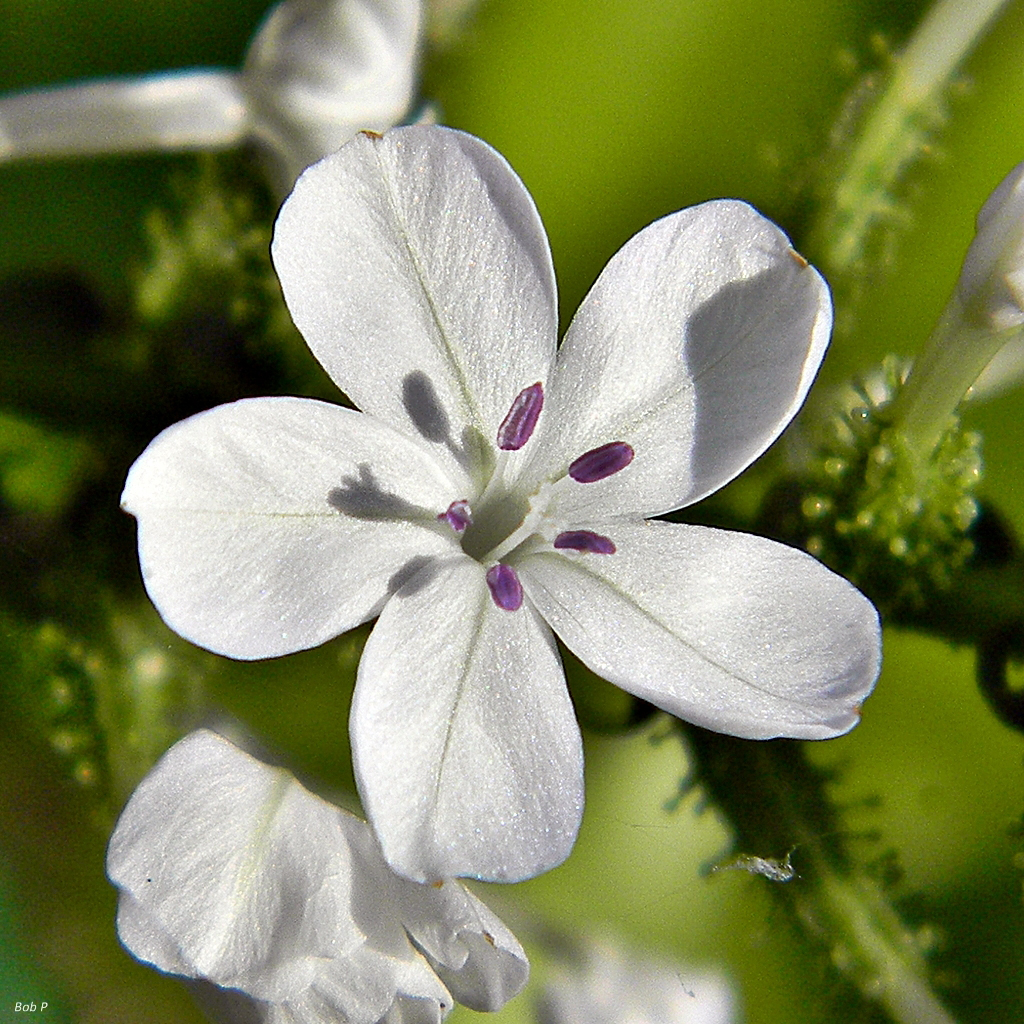
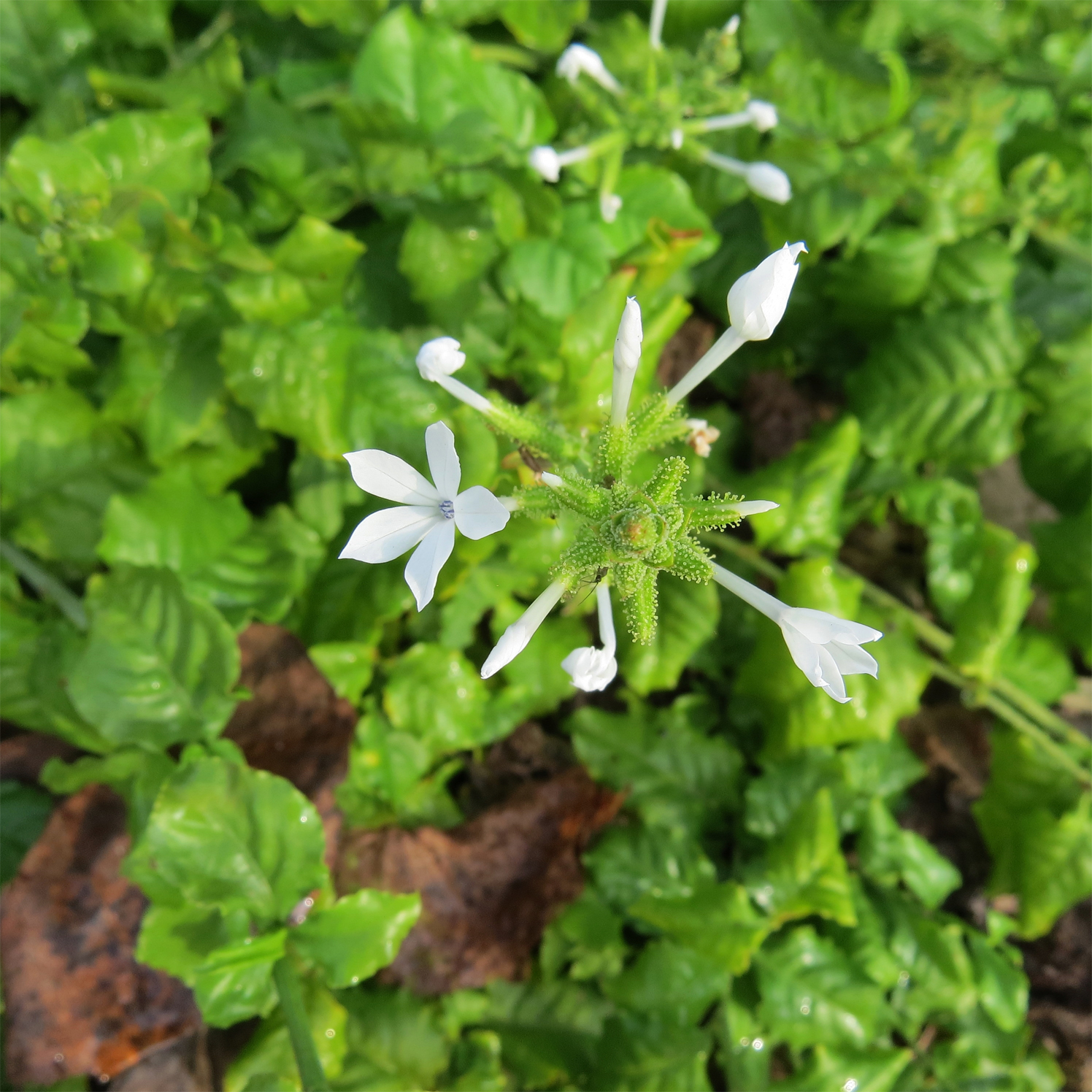
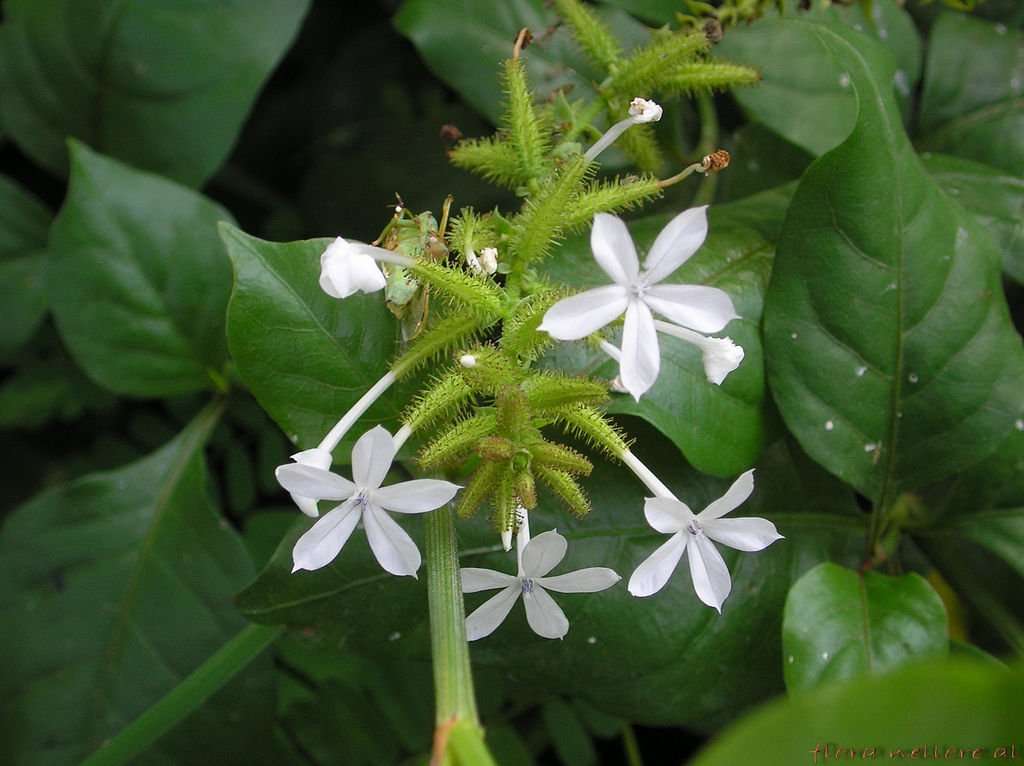
    Flowers are white, about 10-25 cm long, inbracteate, axillary or terminal elongated spikes and bisexual. Calyx is covered with sticky and stalked glands. Corolla is white, slender and tubular.

    Fruit

    It is oblong, five furrowed capsule that contains single seed. Seeds are oblong, 5-6 mm long and reddish- brown to dark brown.

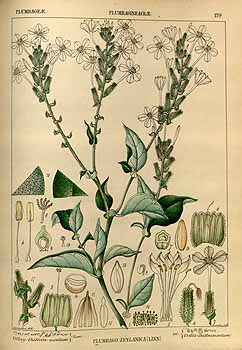
    Close-up-flower Flower-buds Flowers Illustration Plant Stem
    [Show thumbnails]
    Traditional uses

    • The entire plant promotes digestion.
    • The plant is helpful for gastric diseases, diarrhea and skin disorders such as herpes.
    • Milk sap is applied topically for skin problems such as boils and ringworm.
    • Roots are used for phlegm, gas, bile problems, blood purification and deworming.
    • It is used as a cure for leucoderma, dysentery, bloating, lung diseases, aches, pain, wasting and ringworm.
    • Apply the mixture of crushed roots, vinegar, milk and salt topically as an aid for leprosy and other skin infections.
    • Root juice is used to induce sweating.
    • It is an aid for infections, skin diseases, intestinal worms, scabies, leprosy, hookworm, ringworm, acne, dermatitis, ulcers and sores.
    • In West Africa, leaves or roots are crushed with lemon juice and used as vesicant and counter irritant.
    • Take the root infusion orally to treat shortness of breath.
    • Take root decoction with boiled milk for treating inflammation in mouth, chest and throat.
    • In Rodrigues and Mauritius, root decoction is used for treating dyspepsia and diarrhoea.
    • Root juice is used for internal piles.
    • In Nigeria, roots are used with vegetable oil to treat rheumatic swellings.
    • In Ethiopia, root, leaves or bark powder is used for treating rheumatic pain, tuberculosis, syphilis, gonorrhea, wounds and swellings.
    • In Southern Africa, the root paste in milk, vinegar and water for treating influenza and blackwater fever.
    • Take root infusion orally to treat shortness of breath.

    References:

    https://www.itis.gov/servlet/SingleRpt/SingleRpt?search_topic=TSN&search_value=21340#null

    https://botanical.com/botanical/mgmh/p/plumba54.html

    https://www.researchgate.net/publication/266601875_PLUMBAGO_ZEYLANICA_L_A_MINI_REVIEW

    http://www.ijpsr.info/docs/IJPSR14-05-04-008.pdf

    http://www.imedpub.com/articles/ethnomedical-and-pharmacologicalpotentials-of-plumbago-zeylanica-l-areview.pdf

    https://indiabiodiversity.org/species/show/33246

    https://prota4u.org/database/protav8.asp?g=pe&p=Plumbago+zeylanica+L

    https://www.fireflyforest.com/flowers/2164/plumbago-scandens-doctorbush/

    77%
    77%
    Awesome

    Comments

    comments

    D Herbs and Spices
    Share. Facebook Twitter Pinterest LinkedIn Tumblr Email
    Previous ArticleThe Best Ways to Save Money When Dieting
    Next Article Health benefits of Galangal

    Related Posts

    Uses of Monkey Pitcher plant

    April 16, 2024

    Traditional uses and benefits of Wild Marigold

    March 21, 2024

    Traditional uses and benefits of Drooping fig

    March 12, 2024

    Comments are closed.


    Doctorbush Quick Facts
    Name: Doctorbush
    Scientific Name: Plumbago zeylanica
    Origin South Asia
    Shapes Oblong (7.5-8 mm long) five-furrowed capsule
    Name Doctorbush
    Scientific Name Plumbago zeylanica
    Native South Asia
    Common/English Name Chita, Ceylon leadwort, Chitra, Chitrak
    Name in Other Languages English: Lead wort, Ceylon leadwort, Wild Plumbago, White Plumbago, The Ceylon Leadwort Hin Chitrak, White leadwort, Chita;
    Gujarati: Chitrakmula;
    Kannada: Chitrakmula, Bilichitramala;
    Bengali: Chita, Safaid-sitarak;
    Punjabi: Chitra;
    Telugu: Chitramulam;
    Assamese: Agechit, Agyiachit, Ronga-agechit;
    Hindi: Chira, Chitra, Chitrak, Chita, Chitrak (चित्रक);
    Irula: Ottuchedi;
    Kannada: Chitramulika;
    Malayalam: Koduveli, Thumbakoduveli, Vellakoduveli, Thumba, Kottuveli;
    Manipuri: Telhidak Angouba;
    Oriya: Ogni;
    Tamil: Chittiramoolam Karimai (சித்திர மூலம்), Kodivaeli, Chithiramoolam
    Plant Growth Habit Perennial shrub
    Plant Size 0.5-2 m (1.6-6.6 ft)
    Root Straight, smooth, branched or unbranched, 30 cm or more  in length and 6 cm in diameter
    Root colour Light- yellow to reddish-brown
    Root taste Acrid and bitter
    Leaves Ovate  or  ovate-lanceolate,  elliptical  or oblong, 0.5-12  cm  in  length
    Flowering Season Spring, Summer, Fall (early)
    Flower White
    Fruit shape & size Oblong  (7.5-8 mm long)  five-furrowed  capsule
    Seed Oblong, 5-6 mm long  and  reddish-brown to dark  brown

    Doctorbush Scientific Classification

    Scientific Name: Plumbago zeylanica

    Rank Scientific Name & (Common Name)
    Kingdom Plantae (Plants)
    Subkingdom Viridiplantae (Green plants)
    Infrakingdom Streptophyta  (Land plants)
    Superdivision Embryophyta
    Division Tracheophyta  (Vascular plants, tracheophytes)
    Class Magnoliopsida
    Subclass Caryophyllidae
    Order Caryophyllales
    Family Plumbaginaceae  (Leadwort)
    Genus Plumbago L. (Leadwort) 
    Species Plumbago zeylanica L. (Wild leadwort)
    Synonyms
    • Findlaya alba Bowdich
    • Molubda scandens (L.) Raf.
    • Plumbagidium scandens (L.) Spach
    • Plumbago auriculata Bl.
    • Plumbago flaccida Moench
    • Plumbago floridana Nutt.
    • Plumbago floridana Raf.
    • Plumbago lactea Salisb.
    • Plumbago mexicana Kunth
    • Plumbago occidentalis Sw.
    • Plumbago sarmentosa Lam.
    • Plumbago scandens L.
    • Plumbago viscosa Blanco
    • Plumbago zeylanica var. zeylanica
    • Thela alba Lour.
    Categories
    • Beverages (78)
    • Dairy (28)
    • Dental Health (15)
    • Equipment (5)
    • Essential OIls (196)
    • Facts (2,939)
    • Foods (255)
    • Fruits (516)
    • Giveaway (1)
    • Grains and Cereals (36)
    • Health & Beauty (763)
    • Herbs and Spices (1,249)
    • Medicines (9)
    • Mental Health (19)
    • Nutritional value (27)
    • Nuts and seeds (73)
    • Oils (81)
    • Pets (4)
    • Poultry & Seafoods (67)
    • Pulses and Beans (16)
    • Reviews (25)
    • supplement (2)
    • Vegetables (304)
    • Weight Loss (22)

    What is Lupin Bean Flour?

    Science Backed Health Benefits of Durian (Durio zibethinus)

    Science Backed Health Benefits of Feijoa (Pineapple Guava) (Acca sellowiana)

    Science Backed Health Benefits of Gac Fruit (Momordica cochinchinensis)

    Science Backed Health Benefits of Amaranth Leaves (Amaranthus spp)

    Science Backed Health Benefits of Arrowhead (Sagittaria sagittifolia)

    ABOUT
    Home
    About us
    Contact us
    Privacy Policy
    Terms & conditions
    Disclaimer
    Direct Communication
    e-mail: [email protected]
    Gmail: [email protected]
    Whatsapp: +977-9841146511
    Viber: +977-9841146511
    Useful
    Health Wiki
    Nutrition
    Facebook Twitter Pinterest
    © 2025 www.healthbenefitstimes.com All rights reserved.

    Type above and press Enter to search. Press Esc to cancel.

    ×

    Log In

    Forgot Password?

    Not registered yet? Create an Account