Health Benefits
    Facebook Twitter Instagram
    Friday, December 5
    Facebook Twitter Pinterest
    Health Benefits
    • Home
    • Dental Health
    • Mental Health
    • Weight Loss
    • Health Wiki
    • Nutrition
    • Healthy Recipe
    • BMI Calculator
    Health Benefits
    Home»Herbs and Spices»Frangipani facts and benefits
    Herbs and Spices

    Frangipani facts and benefits

    By s mMarch 2, 2018Updated:March 2, 2018No Comments6 Mins Read
    Facebook Twitter Pinterest LinkedIn Tumblr Email

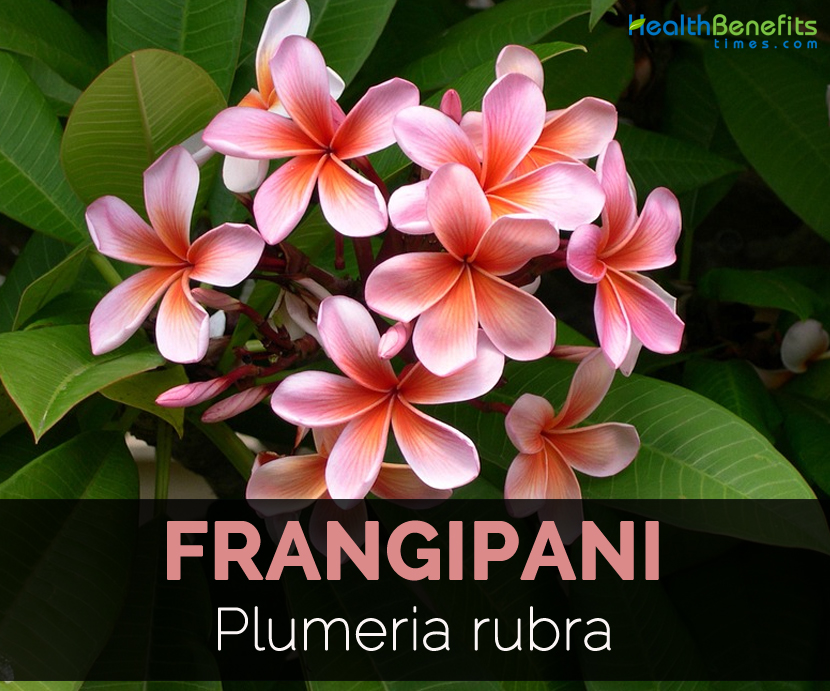
    Plumeria is a genus which contains 7 to 8 species which grow in tropical and subtropical Americas. This genus comprises of mainly deciduous trees and shrubs. Plumeria rubra grows in Central America, Mexico and Venezuela that produces flowers ranging from yellow, white to pink. From Central America and Mexico, it spread to all tropical areas of the world notably Hawaii, where it is grown abundantly.

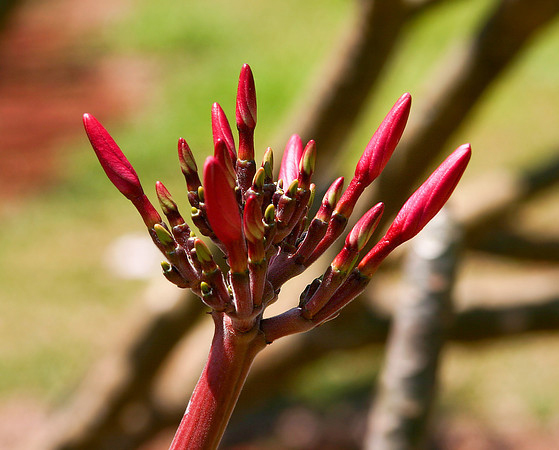
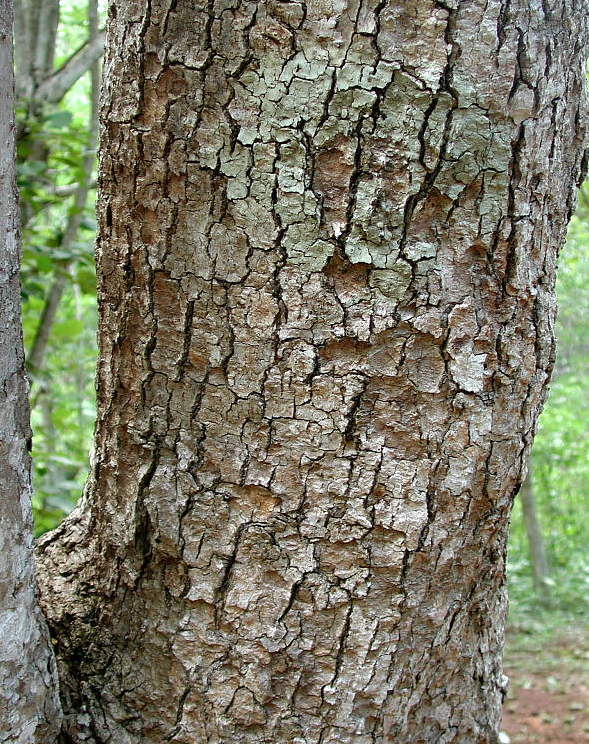
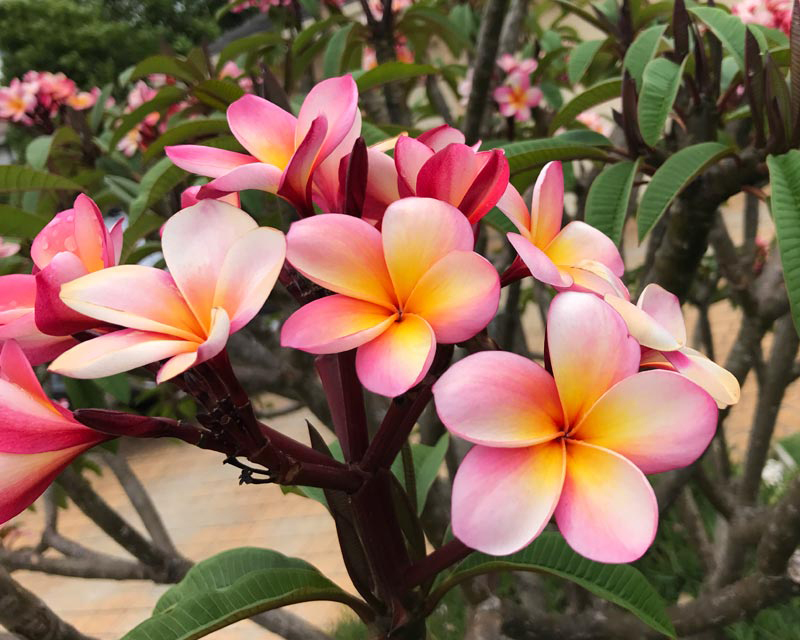
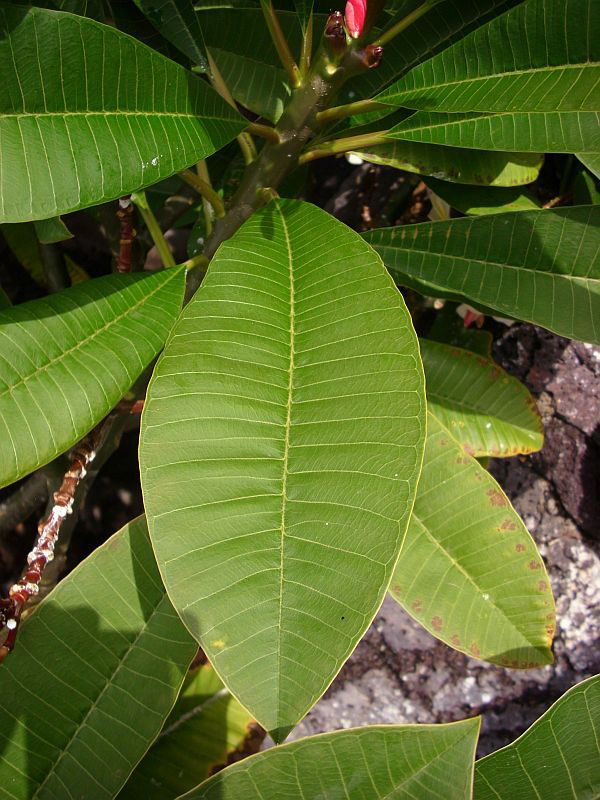
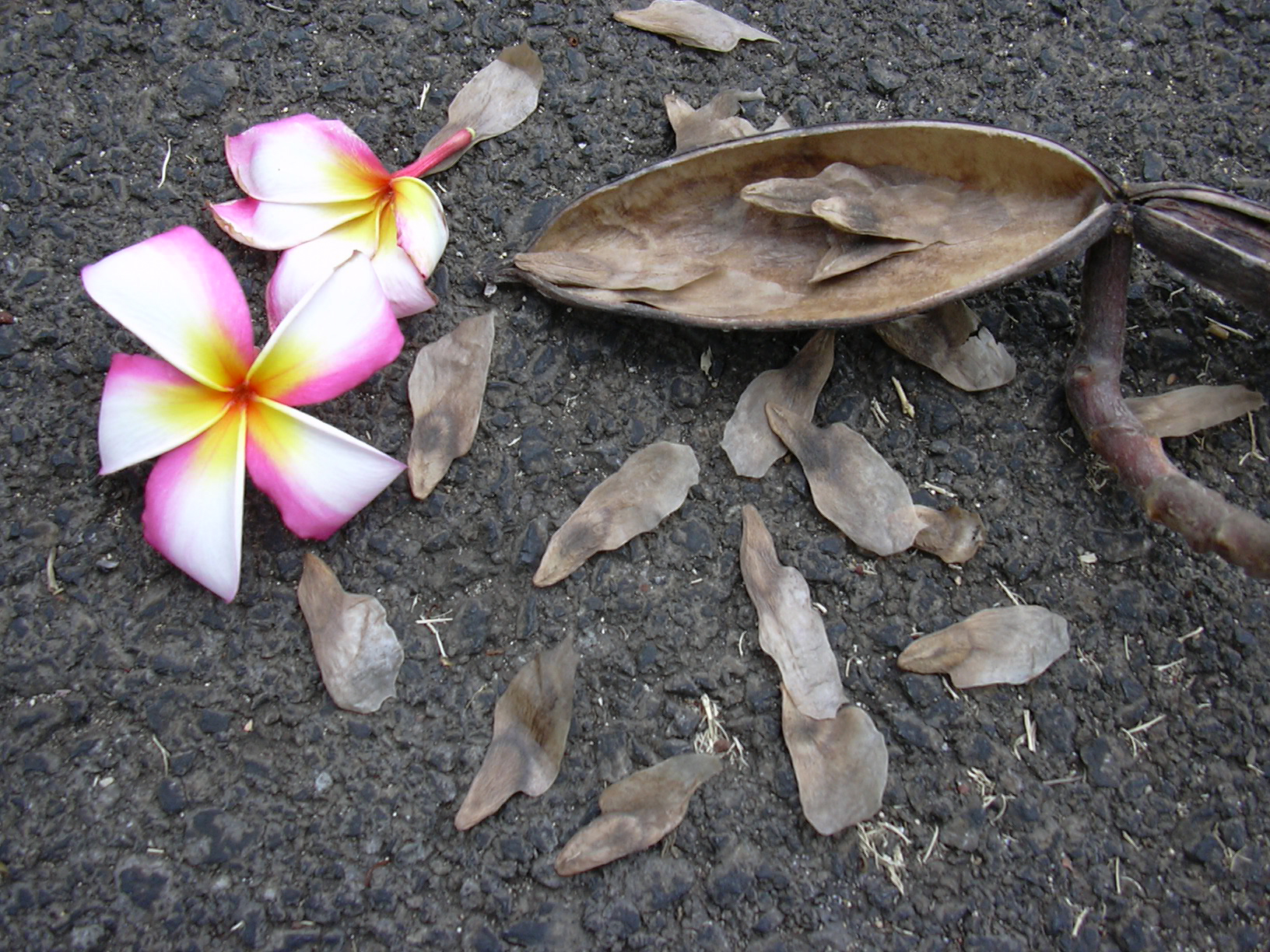
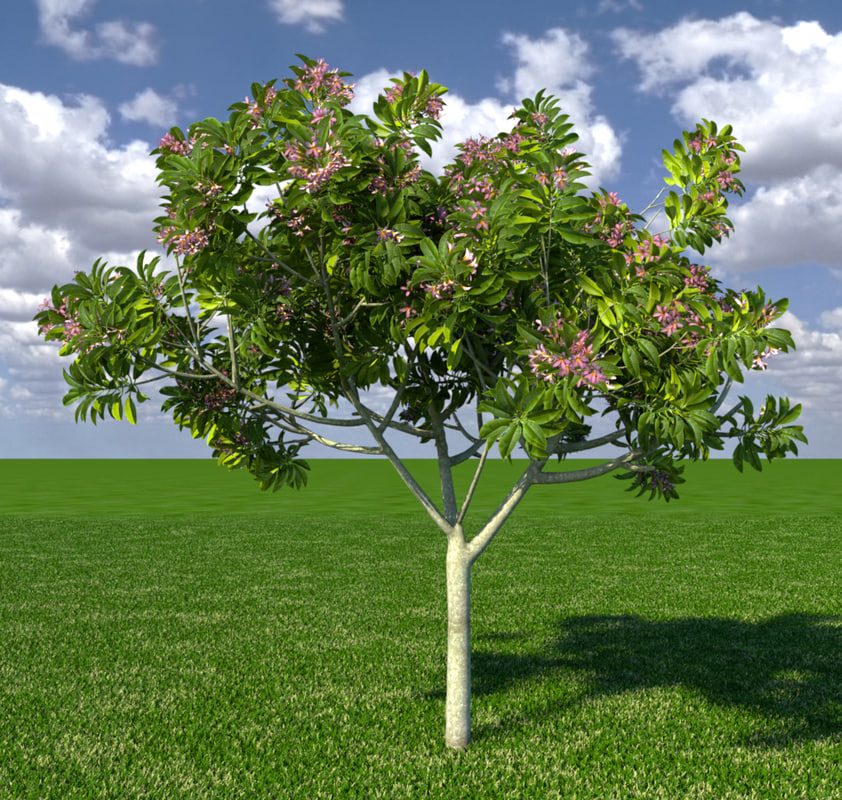
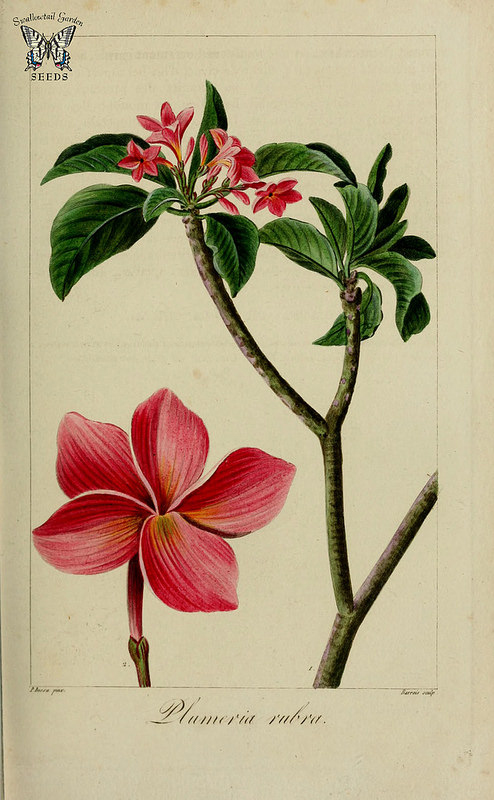
    Frangipani is a small tree or spreading shrub which grows upto the height of 2 to 8 meters and have similar width. The tree has thick succulent trunk and sausage like blunt branches which is covered with thin and grey bark. The branches are brittle which oozes white latex when broken that could be irritating to skin and mucous membranes. Leaves are large, green and measures 30 to 50 cm long and are alternately arranged and clustered at the end of branches. It is deciduous and falls in cooler months of the year. The terminal flowers appear at the end of branches in the summer. The flowers are prominent, have five petals and are strongly fragrant. Its color ranges from common pink to white having shades of yellow in the center of the flower. Before opening out, initially they are tubular. Flowers are 5 to 7.5 cm in diameter and produces seed rarely. Seeds are winged and contained in 17.5 cm (7 in) pod.

    Frangipani Image Gallery
    Flower-bud-of-Frangipani Flower-bud-of-Frangipani
    Frangipani-bark Frangipani-bark
    Frangipani-flowers Frangipani-flowers

    Frangipani-leaves Frangipani-leaves
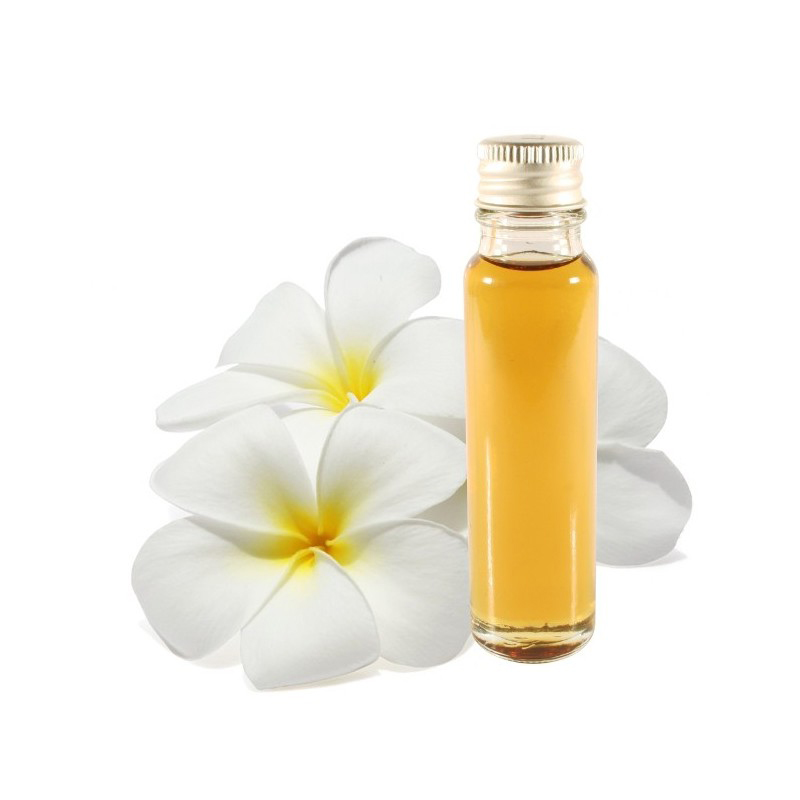
    Frangipani-oil Frangipani-oil
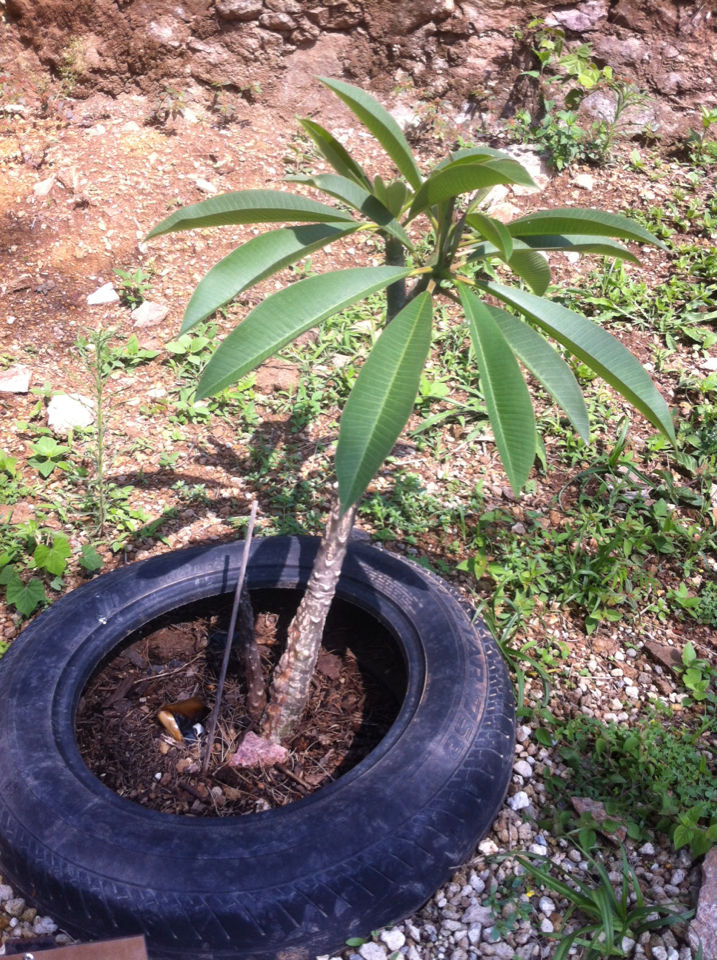
    Frangipani-plant Frangipani-plant

    Frangipani-seeds Frangipani-seeds
    Frangipani-tree Frangipani-tree
    Illustration-of-Frangipani Illustration-of-Frangipani

    Health Benefits of Frangipani essential oil

    Some health benefits provided by Frangipani essential oil are discussed below:

    1. Skin health

    The essential oil of Frangipani acts as astringent. It is used to moisturize skin in massage therapy. The oil assures that the skin remains soft and is helpful for dry and cracked skin. This oil is helpful for treating skin conditions so it is recommended for the people who are suffering from skin problems to add this essential oil to the regular routine. This essential oil contains properties of astringent which causes contraction of skin cells as well as body tissues.

    1. Lowers headache

    The people who have severe problems with headache could find this essential oil to be helpful. Frangipani essential oil possesses anti-inflammatory properties which help to treat extreme headaches as well as other pains such as muscle aches and back pain. It is helpful for the individuals suffering from headache to add this oil to the routine to provide relief from this pain.

    1. Acts as stimulant

    Frangipani essential oil acts as stimulant that assist in maintaining health conditions of circulatory, nervous and other body systems.

    1. Antioxidant activity

    Frangipani essential oil is loaded with antioxidants and anti-inflammatory prperties which assist in healthy functioning of the body. Antioxidants help to eliminate free radicals from the body and lower the disease causing germs away from the body.

    1. Lowers stress

    Frangipani essential oil helps to lower stress in the body and also restores peace. It has sedative effect that provides sound sleep. It calms mind and provides relief from stress.

    Traditional uses

    • In India, the plant is used as a remedy for diarrhea and to cure itch.
    • The milky juice is used for treating rheumatism and inflammation.
    • Bark is used for fever, diarrhea, hard tumors and gonorrhea.
    • Consume the flowers with betel nut to cure ague.
    • Natives of Mexico use it for intermittent fevers, skin complaints and for dispersing dropsies.
    • Bark is used for dropsy, gonorrhea, dysuria in Java and Madura.
    • Milky latex is used for sores and toothache.
    • Apply the decoction made from leaves for cracks, eruptions on sole of feet.
    • The paste made from leaves is used as a poultice for swellings.
    • An infusion made from flower is used as a cosmetic in Thailand.
    • Bark, shoot and flowers are used in Myanmar for pruritis, leprosy and to heal carbuncles, boils and ascites.
    • Leaves and bark are used for abdominal tumors, rheumatism and inflammation.
    • Shoots and flowers are useful for treating Malaria.
    • The flower decoction is used for diabetes in Mexico.
    • Frangipani is used to lower menstrual pain and prevent fainting due to heat stroke or sun exposure.
    • For pain due to cavities, put few drops of sap with the use of cotton swab and place the cotton to aching tooth. Use it one to two times a day.
    • To cure diabetes pus, boil two cups of water with one piece of root of Frangipani trees. Take this herb as much as one cup once a day.
    • For yaws, take two shingles of frangipani skin which is finely ground and boil it with 1 pot of water. Use this water for bathing and rub the injured body part.
    • Use the bruised bark as a plaster over hard tumors.
    • The poultice of heated leaves is helpful for swellings.
    • For asthma, use the leaves as cigarettes to inhale.
    • Scraped bark is used for treating scabies and wounds from poisonous fish.
    • Bark juice is helpful to cure amoebic dysentery.
    • Poultice made from leaves are used for treating muscular swellings.
    • The sap is used for treating stings of bees, wasps and centipede bites.
    • The sap of Frangipani could be used to eliminate moles and warts.

    How to Eat         

    • Brew the flowers as tea.
    • Flowers are also cooked as vegetables.

    Precautions

    • Consult the health practitioner for treating health problems.
    • People having known allergy should avoid it.

    Other Facts        

    • The flowers are yellows, whites, reds, pinks and multiple patels.
    • It possesses poisonous and milky sap which is similar to Euphorbia.
    • The flowering plants could grow as large shrubs or small trees.
    • The plants bear long leather and fleshy leaves in clusters near branch tips.
    • It has widely spaced and thick succulent branches which are pointed or round.
    • The plant is deciduous and also sensitive to cold.
    • The wood is soft, light and white and is used for manufacturing tableware, musical instruments and furniture.

    References:

    https://www.itis.gov/servlet/SingleRpt/SingleRpt?search_topic=TSN&search_value=30200#null

    https://davesgarden.com/guides/pf/go/101478/

    https://simple.wikipedia.org/wiki/Frangipani

    https://www.theflowerexpert.com/content/aboutflowers/tropicalflowers/frangipani

    http://plantsandbenefits.blogspot.com/2014/08/frangipani-flower-benefits-as-antibiotic.html

    http://2beingfit.com/temple-flower-or-frangipani-proven-benefits-uses/#

    http://traditional-medicare.blogspot.com/2011/08/frangipani-plumerin-rubra.html

    http://tropical.theferns.info/viewtropical.php?id=Plumeria+rubra

    http://monika644.blogspot.com/2016/01/the-benefits-of-frangipani-for-healthy.html

    http://www.natural-homeremedies.org/5-amazing-benefits-of-plumeria-essential-oil/

    75%
    75%
    Awesome

    Comments

    comments

    F Herbs and Spices
    Share. Facebook Twitter Pinterest LinkedIn Tumblr Email
    Previous ArticleKnow about the Singapore Plumeria
    Next Article Facts about California Poppy

    Related Posts

    Uses of Monkey Pitcher plant

    April 16, 2024

    Traditional uses and benefits of Wild Marigold

    March 21, 2024

    Traditional uses and benefits of Drooping fig

    March 12, 2024

    Comments are closed.


    Facts of Frangipani

    Frangipani Quick Facts
    Name: Frangipani
    Scientific Name: Plumeria rubra
    Origin It is native to Mexico, Central America and Venezuela.
    Shapes Linear to oblong, 11 to 25 × 2 to 3 cm
    Health benefits Skin health, Lowers headache, Acts as stimulant, Antioxidant activity, Lowers stress
    Name Frangipani
    Scientific Name Plumeria rubra
    Native It is native to Mexico, Central America and Venezuela.
    Common/English Name Common Frangipani, Graveyard Tree, Frangipani, Hawaiian Lei Flower, Nose Gay, Red Frangipani, Pagoda Tree, Red Jasmine, Red
    Jasmine Of Jamaica, Temple Flower, Temple Tree, Red Paucipan, Tree of Life, West Indian Jasmine, Spanish jasmine, Templetree
    Name in Other Languages Arabic: yasmîn hindî;
    Aztec: Cacalloxochitl
    Brazil: Jasmim-De-Caiena, Jasmim-Do-Pará, Jasmin-Do-Pará, Jasmin-Manga;
    Burmese: Mawk-Sam-Ka, Mawk-Sam-Pailong, Sonpaba taing, Tayok-Saga, Tayoksaga-Ani;
    Canary Islands: Flor De Cebo;
    Chinese: Ji Dan Hua, Hong Ji Dan Hua, Kang Nai Xin;
    Chuukese: Seewurun, Seur, 大季花, 红鸡蛋花, 缅栀子, 鸡蛋花,  鸭脚木;
    Cuba: Lirio Colorado;
    Czech: Plumérie Červená, Plumérie Ostrolistá;
    Danish: Mexican Frangipani, Pagodetræ;
    El Salvador: Flor De Mayo;
    Finnish: Rusotemppelipuu;
    French: Frangipanier, Frangipanier rouge;
    German: Roter Frangipani, Frangipani;
    Guatemala: Flor De La Cruz;
    Hawaii: Pumeli, Melia;
    India:-
    Andhra Pradesh: Deva Ganneru,
    Bengali: Frangipani, Goburchampa, Kath Champa, Kath Golap
    Gujarati: Dolochampo, Rhada Champo,
    Hindi: golainchi, Golachin (गुलाचिन), Golenchi (गुलैन्ची), गोलईलायची, Champa (चम्पा), Chameli, Gulachin, Gulechin, Lal Gulachin,
    Konkani: Chaempae,
    Kannada: Sampige (ಸಂಪಿಗೆ),
    Malayalam: Vellachampakam,
    Marathi: Khageleihao Angouba, Khera Chapha, Pandhra Chapha, Sonchampa, Chafa (चाफा),
    Sanskrit: Kishirachampa, kshira champa, Champaka (चंपक), Champeya (चाम्पेय), Hemapushpa (हेमपुष्प),
    Tamil: Arali, Kallim andarai, Perungalli, Sampangi, Nela Sampangi (நெல ஸம்பங்கி),
    Telugu: Vadaganneru,
    Urdu: Achin;
    Indonesia:-
    Java: Kamboja, Sambija, Semboja,
    Sundanese: Kamoja, Samoja,
    Italian: Fragipane, Pomelia;
    Khmer: Champei;
    Kosraen: For;
    Laos: Dok Champa, Champa;
    Malaysia: Kemboja , Bunga Kemboja, Chempaka, Cempaka muliya , Chempa Raya, Chempaka Biru, Pokok Kubur, Bunga Kubur;
    Mexico: Caxtaxanat, Flor De Mayo, Tenech Coahuitl;
    Nicaragua: Sacuanjoche, Flor De Leche;
    Pakistan: Champa;
    Palauan: Chelilai;
    Panama: Caracucho Colorado;
    Persian: Gulacin;
    Peru: Suche, Caracucho;
    Philippines:-
    Bikol: Kalachuche,
    Cebu Bisaya: Kachuchi,
    Iloko: Kalanuche, Kalonoche,
    Tagalog: Kalachuche, Kalasusi, Kalatsutsi, Karachucha Karatuche;
    Pohnpeian: Pwohmaria;
    Portuguese: Flor-De-Santo-Antônio;
    Puerto Rico: Alhelí;
    Sicily: Pomelia;
    Spanish: Alhelí Cimarrón, Suche;
    Sri Lanka: Araliya, Pansal Mal;
    Tahiti: Tipanier;
    Thailand: Champa Lao, Champa Khawm, Rantom, Lantom, Leelawadee;
    Venezuela: Amapola;
    Vietnam: Sú Cúi, Ðai;
    Yapese: Suwur
    Plant Growth Habit Small, deciduous tree
    Growing Climate Subtropical and tropical
    Soil Moist
    Plant Size 8 meters tall
    Bark Pale greenish-brown, smooth, thin
    Leaves Spirally aranged, obovate-oblong, 30 to 50 cm (12 to 20 inches) long
    Flowering Season March-September
    Flower Pink, white and yellow, bisexual, 5 to 7 cm diameter
    Fruit shape & size Linear to oblong, 11 to 25 × 2 to 3 cm
    Seed Oblong
    Fruit Season June to December

    Frangipani Scientific Classification

    Scientific Name: Plumeria rubra

    Rank Scientific Name & (Common Name)
    Kingdom Plantae (Plants)
    Subkingdom Viridiplantae
    Infrakingdom Streptophyta  (Land plants)
    Superdivision Embryophyta
    Division Tracheophyta  (Vascular plants, tracheophytes)
    Class Magnoliopsida
    Order Gentianales
    Family Apocynaceae (Dogbane, apocyns)
    Genus Plumeria L.
    Species Plumeria rubra L. (Frangipani, templetree)
    Synonyms
    • Plum eria rubra f. lutea (Ruiz & Pav.) Woodson
    • Plumeria acuminata W.T.Aiton
    • Plumeria acutifolia Poir.
    • Plumeria acutifolia var. gasparrini A.DC.
    • Plumeria angustifolia A.DC.
    • Plumeria arborea Noronha
    • Plumeria arborescens G.Don
    • Plumeria aurantia Endl.
    • Plumeria aurantia Lodd.
    • Plumeria aurantia Lodd. ex G.Don
    • Plumeria aurantiaca Steud.
    • Plumeria bicolor Ruiz & Pav.
    • Plumeria blandfordiana Lodd. ex G.Don
    • Plumeria carinata Ruiz & Pav.
    • Plumeria conspicua G.Don
    • Plumeria gouanii D.Don
    • Plumeria gouanii D.Don ex G.Don.
    • Plumeria incarnata Mill.
    • Plumeria incarnata var. milleri (G.Don) A.DC.
    • Plumeria jamesonii Hook.
    • Plumeria kerrii G.Don
    • Plumeria kunthiana Kostel.
    • Plumeria lambertiana Lindl.
    • Plumeria loranthifolia Müll.Arg.
    • Plumeria lutea Ruiz & Pav.
    • Plumeria macrophylla Lodd. ex G.Don
    • Plumeria megaphylla A.DC.
    • Plumeria Mexicana Lodd.
    • Plumeria milleri G.Don
    • Plumeria milleri G.Don
    • Plumeria mollis Kunth
    • Plumeria northiana Lodd.
    • Plumeria northiana Lodd. ex G.Don
    • Plumeria purpurea Ruiz & Pav.
    • Plumeria rubra f. acuminata (W.T.Aiton) Woodson
    • Plumeria rubra f. acutifolia (Poir.) Woodson
    • Plumeria rubra f. lutea (Ruiz & Pav.) Woodson
    • Plumeria rubra f. rubra
    • Plumeria rubra f. tricolor (Ruiz & Pav.) Woodson
    • Plumeria rubra f. typica Woodson, nom. inval.
    • Plumeria rubra var. acuminata (W.T.Aiton) R.S.Rao & Balamani
    • Plumeria rubra var. acutifolia (Poir.) L.H.Bailey
    • Plumeria tenorii Gasparr., 1833
    • Plumeria tenuifolia Lodd.
    • Plumeria tenuifolia Lodd. ex G.Don
    • Plumeria tricolor Ruiz & Pav.
    Categories
    • Beverages (78)
    • Dairy (28)
    • Dental Health (15)
    • Equipment (5)
    • Essential OIls (196)
    • Facts (2,939)
    • Foods (255)
    • Fruits (516)
    • Giveaway (1)
    • Grains and Cereals (36)
    • Health & Beauty (763)
    • Herbs and Spices (1,249)
    • Medicines (9)
    • Mental Health (19)
    • Nutritional value (27)
    • Nuts and seeds (73)
    • Oils (81)
    • Pets (4)
    • Poultry & Seafoods (67)
    • Pulses and Beans (16)
    • Reviews (25)
    • supplement (2)
    • Vegetables (304)
    • Weight Loss (22)

    What is Lupin Bean Flour?

    Science Backed Health Benefits of Durian (Durio zibethinus)

    Science Backed Health Benefits of Feijoa (Pineapple Guava) (Acca sellowiana)

    Science Backed Health Benefits of Gac Fruit (Momordica cochinchinensis)

    Science Backed Health Benefits of Amaranth Leaves (Amaranthus spp)

    Science Backed Health Benefits of Arrowhead (Sagittaria sagittifolia)

    ABOUT
    Home
    About us
    Contact us
    Privacy Policy
    Terms & conditions
    Disclaimer
    Direct Communication
    e-mail: [email protected]
    Gmail: [email protected]
    Whatsapp: +977-9841146511
    Viber: +977-9841146511
    Useful
    Health Wiki
    Nutrition
    Facebook Twitter Pinterest
    © 2025 www.healthbenefitstimes.com All rights reserved.

    Type above and press Enter to search. Press Esc to cancel.

    ×

    Log In

    Forgot Password?

    Not registered yet? Create an Account