

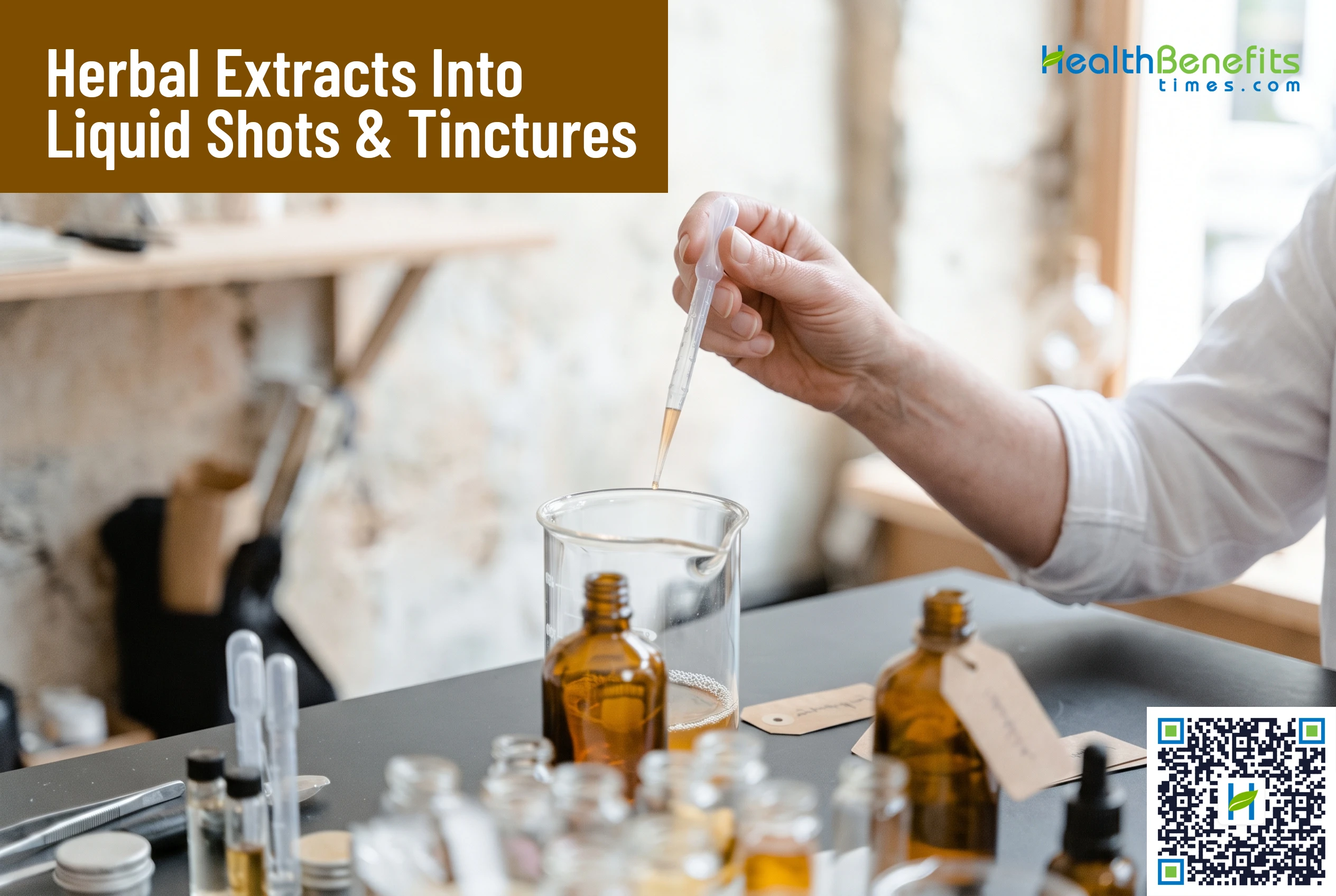
Moving a botanical formula from a capsule into a liquid changes far more than its delivery format. You’ll need to reconsider the extract selection, serving size, flavor, stability, preservation and packaging before the product is even close to ready for commercial production. A sensible development process will address those questions while the necessary changes are still relatively easy to make.
Liquid supplements can give you a distinctive product and a straightforward user experience if instructions are followed properly, but they’re unforgiving of vague specifications. An ingredient that behaves perfectly well as a dry powder can become rather obstinate when it comes to settling, clouding or tasting intensely bitter once it meets water. Your first bench sample could look promising on Friday afternoon and have a layer of strangely colored sediment by Monday morning, which is why your formulation brief needs to describe the finished product rather than simply listing the ingredients you’d like to include.
Start With the Extract, Not the Bottle
Before discussing flavors or label colors, define each botanical precisely in a way that consumers will understand. The common name alone isn’t enough. Your specification should identify the botanical name, plant part, extraction solvent, extract ratio, carrier and any standardized marker compounds. Two extracts carrying the same familiar herb name can do very different things in a liquid form.
You’ll also need to distinguish between whole botanical powders and concentrated extracts. Researching the use of whole herbs versus extracts can give you a useful introduction to that distinction. A concentrated extract can help you fit a suitable quantity into a small serving, although concentration doesn’t automatically make an ingredient appropriate for a shot or tincture.
Ask for technical documents before formulation begins, including the specification sheet, certificate of analysis, allergen statement and information about residual solvents. If a supplier later changes the carrier or particle size, the formula’s taste, appearance and viscosity could change with it. Raw-material consistency should therefore be taken into consideration when you assess suppliers and projected costs.
Decide What Kind of Liquid You’re Making
A 60-milliliter shot and a one-milliliter dropper serving create very different formulation limits. Shots generally allow more room for flavor systems and supporting ingredients, whereas tinctures place a bit more pressure on solubility, concentration and accurate measurement because the serving is much smaller.
The base affects the finished product too. Water is familiar but creates preservation challenges. Glycerin can add sweetness and body, while alcohol can support the solubility of certain constituents but won’t suit every brand position or consumer preference. Oils work for lipophilic ingredients yet require compatible flavors and packaging.
This distinction is especially important for private label energy shots, where founders can be tempted to fit a long ingredient panel into a compact bottle. More ingredients can increase bitterness, interactions and sediment without improving the finished product in the slightest bit. A shorter formula with clear specifications is often easier to manufacture consistently and explain honestly.
Make Sure the Formula Can Survive Production
A sample that mixes smoothly by hand isn’t automatically ready for a full production run. Commercial equipment introduces shear, heat, holding time and filling conditions that can alter the liquid by the end of production. Botanical extracts can also affect pH, color, and viscosity in ways that only become visible after storage.
Moving from bench work to commercial production usually involves a pilot batch rather than one enormous leap. Before choosing a liquid dietary supplement manufacturer, ask how it handles ingredient compatibility, fill tolerances, packaging trials and stability testing. Clear checkpoints give you room to correct problems before you commit to thousands of finished units.
Solubility is only one part of stability. Some products are intentionally suspensions, but they still need an acceptable appearance and reasonably consistent delivery across servings. If settling occurs, determine whether ordinary shaking restores uniformity. You can then decide whether the label needs a clear “shake well” direction.
Preservation requires careful work. Water activity, pH, processing method and packaging all influence microbial control. A preservative that works in one formula can perform differently after another botanical changes the pH. Challenge testing and shelf-life studies can give you better evidence than assuming an ingredient list will behave as expected.
The flavor development should happen alongside this technical work. Sweetness can soften bitterness, although adding sweetener indefinitely creates its own problems. Acidity, aroma and mouthfeel can often produce a more balanced result. Your flavor team needs the final extracts rather than cleaner-tasting substitutes, because masking a placeholder formula tells you very little about the product that customers will receive.
Treat Packaging as Part of the Formula
The container protects the liquid and influences how people use it. Light-sensitive compounds may need amber glass or an opaque bottle. Oxygen exposure can affect color and flavor, while some extracts interact with closure liners, droppers or certain plastics. Packaging compatibility testing helps identify those problems before filled units spend months in storage.
For a shot, confirm the bottle’s usable fill volume, headspace and tamper-evident closure. For a tincture, test whether the dropper or metered pump delivers a consistent amount. “One dropper full” isn’t the best instruction if the volume changes considerably with squeezing technique.
Shipping conditions need consideration as a package that performs well at room temperature can leak or deform during hot-weather distribution. Run transit and temperature testing on the assembled product, including the bottle, closure, label and outer carton. Even beautiful packaging loses its appeal when the bottle arrives sticky.
Build Testing and Claims Into the Timeline
A liquid supplement contract manufacturer should work from agreed specifications for raw materials, production checks and finished goods. Depending on the formula, testing can cover identity, potency, microbial limits, heavy metals and other relevant contaminants. Batch records should document what was weighed, mixed, checked and released so you can investigate deviations properly.
Finally, leave enough time for genuine development. Ingredient sourcing, bench work, pilot production, testing, packaging and label review can overlap, but compressing every stage introduces avoidable uncertainty. A detailed brief gives your manufacturing partner something measurable to build, while documented testing gives you evidence that the approved product can stay consistent after launch.