Health Benefits
    Facebook Twitter Instagram
    Friday, December 5
    Facebook Twitter Pinterest
    Health Benefits
    • Home
    • Dental Health
    • Mental Health
    • Weight Loss
    • Health Wiki
    • Nutrition
    • Healthy Recipe
    • BMI Calculator
    Health Benefits
    Home»Herbs and Spices»Health Benefits of Hounds Tongue
    Herbs and Spices

    Health Benefits of Hounds Tongue

    By s mFebruary 5, 2020No Comments4 Mins Read
    Facebook Twitter Pinterest LinkedIn Tumblr Email

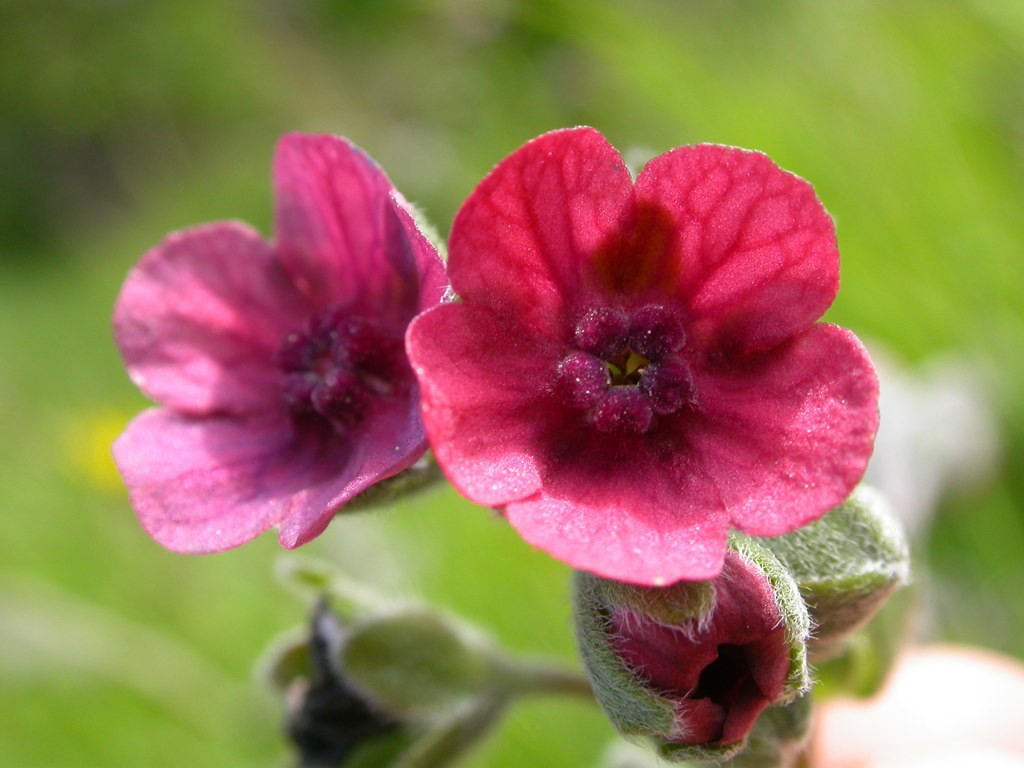
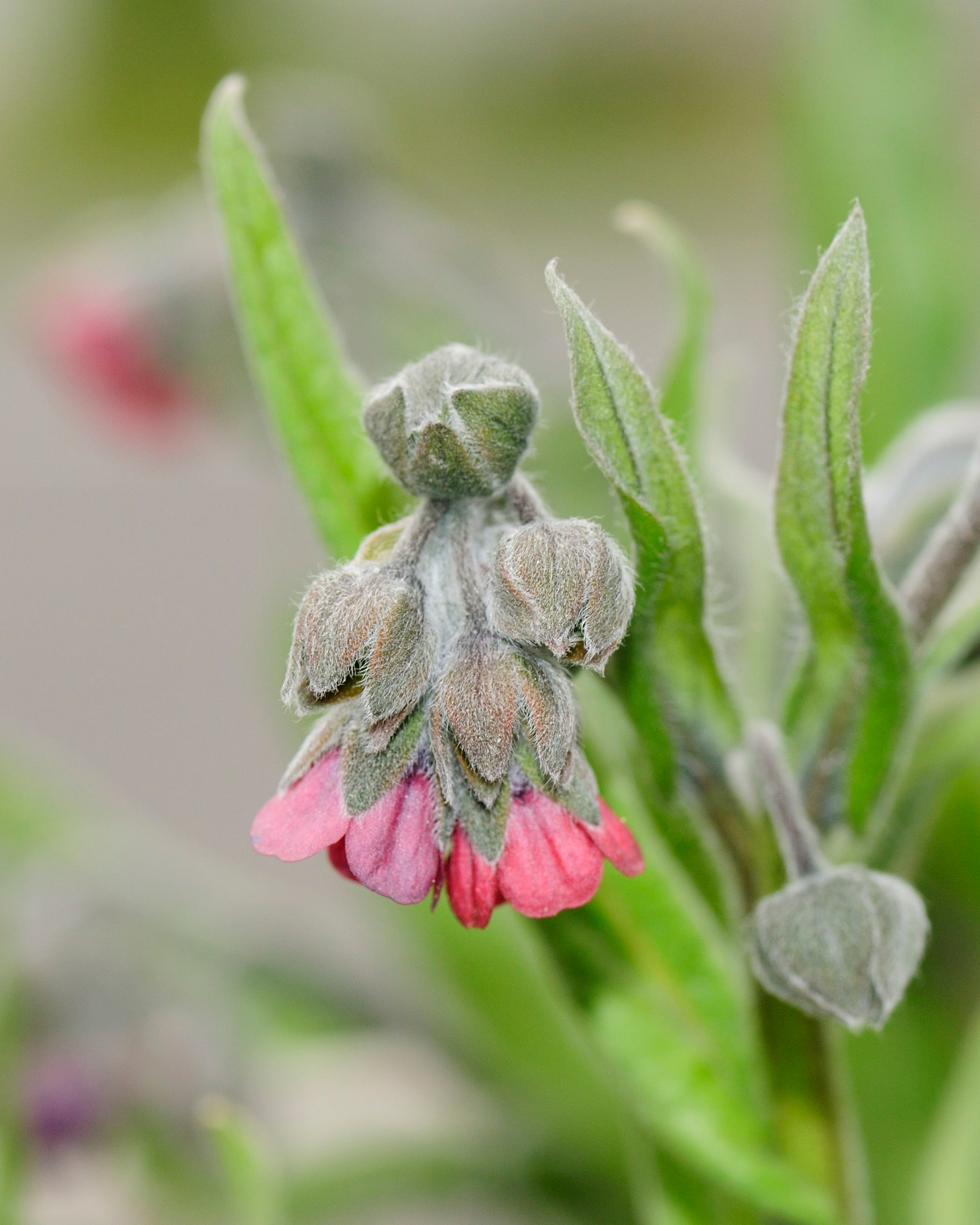
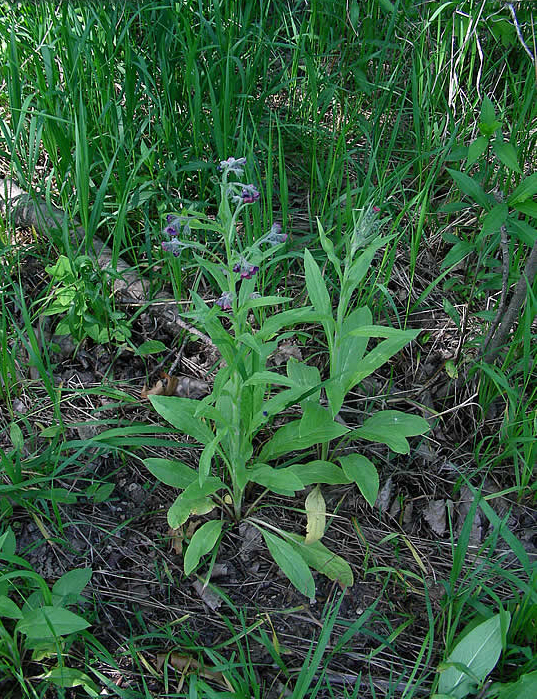
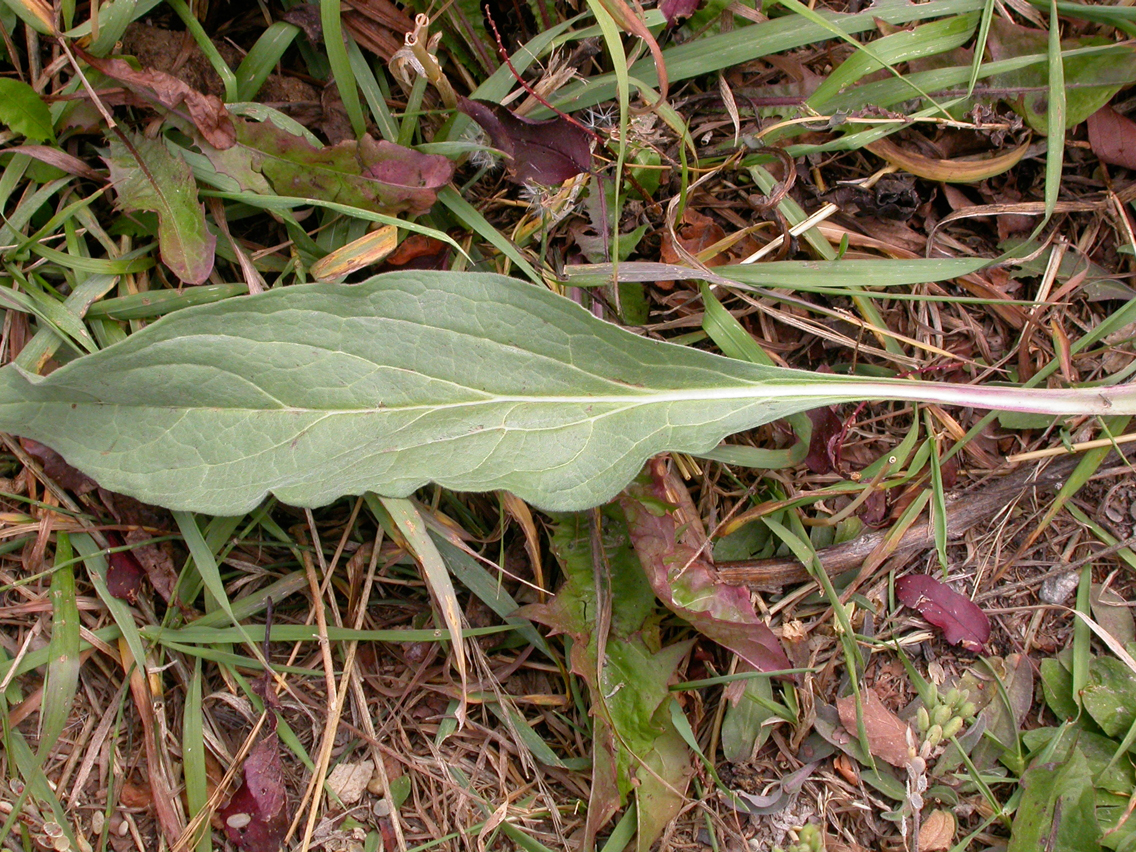
    Hound’s-tongue grows on the roadsides and waste places in both Europe and America. It is a biennial herb rough, bristly and medium in size about 2–3 ft. high. Stems are hairy, leafy about 1-2 feet high, branched above arising from amidst large, radical, narrow and stalked leaves. The leaves are tongue-shaped, hoary with soft down on both sides. Flowers are blue to lavender, funnel form on terminal panicles, growing in clusters. The fruit, like Burdock, when dry sticks to livestock and hunting dogs. The leaves are bitter, and the root when fresh has an unpleasant heavy odour, diminishing when dry. It can be used in both fresh and dry stages, if when gathered it is properly dried and stored. Internally should be used by persons of professional experience.

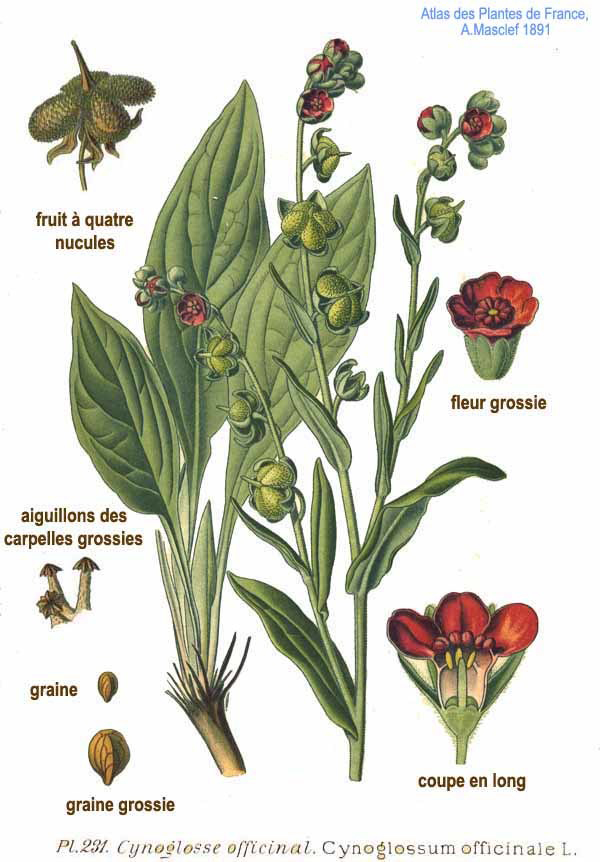
    Close-view-of-Hounds-Tongue-flower Flower-buds-of-Hounds-Tongue Hounds-Tongue-plant Hounds-Tongue-seedlings Plant-illustration-of-Hounds-Tongue Hounds-Tongue-leaves
    [Show thumbnails]
    Flower

    Flowers are regular about 6 mm wide. Corolla is bluish violet initially turning brownish red-dark violet, bell shaped to funnel shaped and five lobed. Calyx is fused, bell shaped, 5-lobed almost till base and soft haired. Calyx lobes are elliptic. Gynoecium is fused and single styled.

    Fruit

    Fruit is a 4-parted schizocarp, tip of carpels fused with body’s conical base. Mericarps are yellowish brown, cup like and outer surface have hooked hairs about 5-8 mm long.

    Facts About Hounds Tongue

    Hounds Tongue Quick Facts
    Name: Hounds Tongue
    Scientific Name: Cynoglossum officinale
    Shapes 1/3 inch long
    Name Hounds Tongue
    Scientific Name Cynoglossum officinale
    Common/English Name Gypsy Flower, Dog’s Tongue, Hounds-tongue, Houndstongue, Hound’s Tongue, Gypsyflower, Gypsy Flower, Rats and Mice, Houndstooth, Dog-bur, Sheep lice, Woolmat
    Name in Other Languages Swedish: koirankieli, Norskt björnbär, Nutkahallon, Sötbjörnbär, Taggbjörnbär, Hundtunga;
    Finnish: koirankieli, Poimuvatukka;
    Danish: Almindelig Brombær, Læge-hundetunge
    Plant Growth Habit Annual or biennial
    Plant Size 30–70 cm (12–30 in.) high
    Leaf Greyish, lanceolate to oblong, 1 to 12 inches long, 1 to 3 inches wide
    Medicinal parts The leaves and root
    Flowering Season May and September
    Flower Reddish-purple funnel, 5-10 mm wide
    Fruit shape & size 1/3 inch long
    Seed Ovoid

    Uses

    • The Indian’s knowledge of Hound’s-tongue was to cook the root for relief in colic, and as a poultice for scalds and burns.
    • It is chiefly valuable for coughs, catarrh, bleeding from the lungs and other disorders of the respiratory apparatus, the action of the root being cooling, drying and binding.
    • It is very soothing to the digestive organs in diarrhoea, dysentery and relief of piles.
    • It is used for dysentery and diarrhea.
    • It is also helpful for coughs, indigestion, catarrh, chronic bronchitis, colic, neuralgia, neuritis, colds and lung problems.
    • Use it externally for burns, scratches, bruises, snakebites, insect bites, tumors, piles, abrasions, scrofula, goiters, boils and difficult wounds.
    • Leaves and roots act as antispasmodic, antihaemorrhoidal, analgesic, digestive, astringent, slightly narcotic and emollient.
    • The plants are helpful to relieve pain.
    • Use it externally as a poultice on wounds, piles, bites, minor injuries and ulcers.
    • It is effective for insomnia.
    • Tea prepared from leaves and roots are used for colds, coughs, hemorrhoids, irritated membranes, dysentery and diarrhea.
    • Use the root decoction or as pills for cough, shortness of breath and colds in head.
    • Use the leaves boiled in wine as a cure for dysentery.

    Externally

    According to Herbalists of long experience, bruised Hound’s-tongue leaves applied to the lesion of a bite from a mad dog is the only medication needed. They also state that loss of hair from high fevers is controlled by bruising the leaves and making a salve with swine’s grease and massaging over the scalp.

    The leaves and root are both applied with great benefit as a poultice to old ulcers, scrofulous tumours, burns, goitres and recent bruises and abrasions.

    Russian Experience

    If the Russian name, Sobachyi Yazik, were translated it would be the same as our common name, Dog’s tongue, but in literature it is used as Chernyi Koren—Black Root. Old Folk Medicine found many uses for Hound’s-tongue: to reduce pain, swelling of boils, cramps, coughs, tuberculosis and stomach aches. The leaves were collected when in flower, May to June; roots in late summer and early autumn. Recent literature usually warns against unexperienced use as it has a toxic effect if improperly administered.

    Externally

    It is used as a poultice for boils, wounds, ulcers and the bite of snakes or mad dogs. The powder mixed with grease, oil or lard as an ointment for rheumatic pains, and as Nastoika (with vodka) for wounds.

    Insecticide

    It is not unusual to find organic material poisonous to troublesome creatures such as insects and rodents. It has been proven that these creatures cannot stand the smell of Dog’s-tongue, and will leave the premises as soon as the aroma reaches them. It is said they will abandon ship and jump into the sea if there is a trace of this used as an insecticide.

    References:

    https://www.itis.gov/servlet/SingleRpt/SingleRpt?search_topic=TSN&search_value=31890#null

    https://botanical.com/botanical/mgmh/h/houndt40.html

    https://en.wikipedia.org/wiki/Cynoglossum_officinale

    http://medicinalherbinfo.org/000Herbs2016/1herbs/hounds-tongue/

    http://montana.plant-life.org/cgi-bin/species03.cgi?Boraginaceae_Cynoglossumofficinale


    82%
    82%
    Awesome

    Comments

    comments

    H Herbs and Spices
    Share. Facebook Twitter Pinterest LinkedIn Tumblr Email
    Previous ArticleBody After Baby: How Far Can Fitness Take You?
    Next Article Tips to Improve Students’ Academic Writing Skills

    Related Posts

    Uses of Monkey Pitcher plant

    April 16, 2024

    Traditional uses and benefits of Wild Marigold

    March 21, 2024

    Traditional uses and benefits of Drooping fig

    March 12, 2024

    Comments are closed.


    Hounds Tongue Scientific Classification

    Scientific Name: Cynoglossum officinale

    Rank Scientific Name & (Common Name)
    Kingdom Plantae (Plants)
    Subkingdom Viridiplantae  (Green plants)
    Infrakingdom Streptophyta  (Land plants)
    Superdivision Embryophyta
    Division Tracheophyta  (Vascular plants, tracheophytes)
    Class Magnoliopsida
    Order Boraginales
    Family Boraginaceae  (Borage, bourraches)
    Genus Cynoglossum L. (Hound’s tongue)
    Species Cynoglossum officinale L. (Houndstongue, gypsy-flower, common houndstongue, hound’s tongue, gypsyflower)
    Synonyms
    • Cynoglossum album Gueldenst.
    • Cynoglossum album Gueldenst. ex Ledeb.
    • Cynoglossum angustifolium hort.
    • Cynoglossum angustifolium hort. ex Steud.
    • Cynoglossum bicolor Willd.
    • Cynoglossum castellanum Pau
    • Cynoglossum foetens Gilib.
    • Cynoglossum hybridum Thuill.
    • Cynoglossum officinale var. scabrifolia Willk.
    • Cynoglossum ruderale Salisb.
    • Cynoglossum suavifolium Pau
    • Cynoglossum vulgare Bubani
    • Cynoglossum vulgare Gueldenst.
    • Cynoglossum vulgare Gueldenst. ex Ledeb
    Categories
    • Beverages (78)
    • Dairy (28)
    • Dental Health (15)
    • Equipment (5)
    • Essential OIls (196)
    • Facts (2,939)
    • Foods (255)
    • Fruits (516)
    • Giveaway (1)
    • Grains and Cereals (36)
    • Health & Beauty (763)
    • Herbs and Spices (1,249)
    • Medicines (9)
    • Mental Health (19)
    • Nutritional value (27)
    • Nuts and seeds (73)
    • Oils (81)
    • Pets (4)
    • Poultry & Seafoods (67)
    • Pulses and Beans (16)
    • Reviews (25)
    • supplement (2)
    • Vegetables (304)
    • Weight Loss (22)

    What is Lupin Bean Flour?

    Science Backed Health Benefits of Durian (Durio zibethinus)

    Science Backed Health Benefits of Feijoa (Pineapple Guava) (Acca sellowiana)

    Science Backed Health Benefits of Gac Fruit (Momordica cochinchinensis)

    Science Backed Health Benefits of Amaranth Leaves (Amaranthus spp)

    Science Backed Health Benefits of Arrowhead (Sagittaria sagittifolia)

    ABOUT
    Home
    About us
    Contact us
    Privacy Policy
    Terms & conditions
    Disclaimer
    Direct Communication
    e-mail: [email protected]
    Gmail: [email protected]
    Whatsapp: +977-9841146511
    Viber: +977-9841146511
    Useful
    Health Wiki
    Nutrition
    Facebook Twitter Pinterest
    © 2025 www.healthbenefitstimes.com All rights reserved.

    Type above and press Enter to search. Press Esc to cancel.

    ×

    Log In

    Forgot Password?

    Not registered yet? Create an Account