

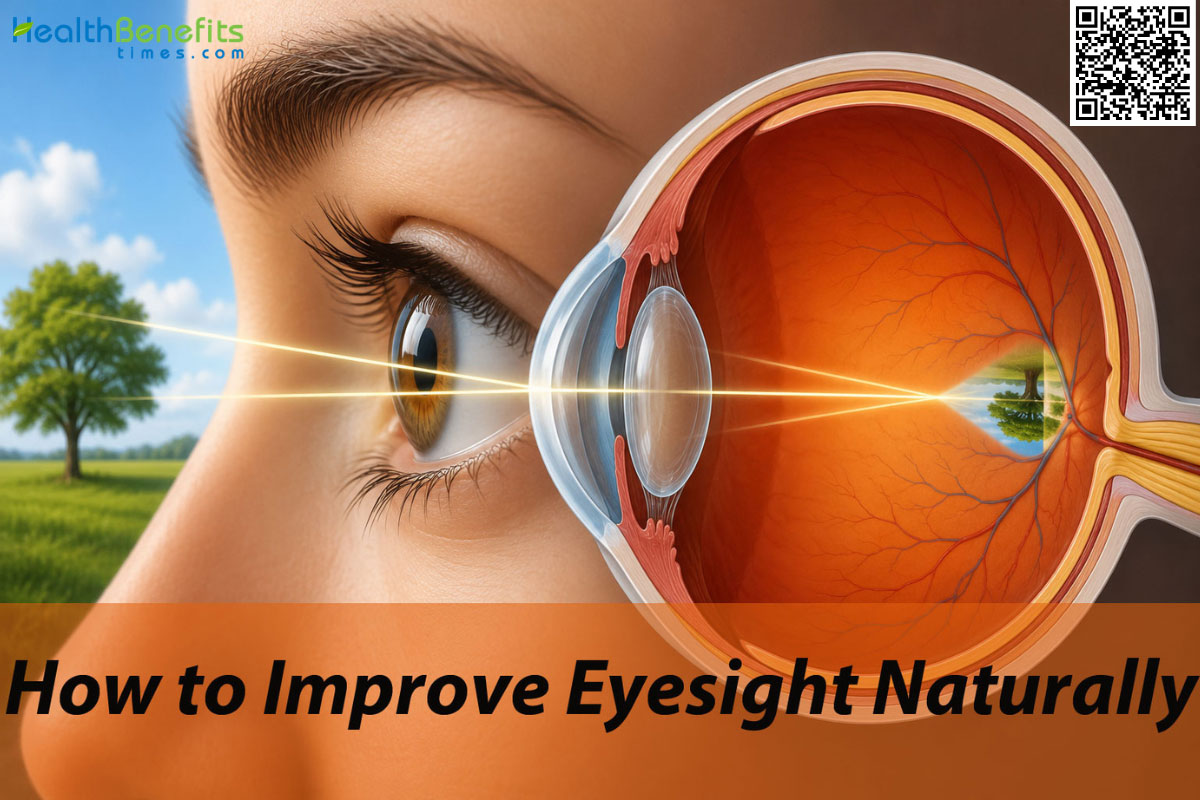
Weak eyesight, medically categorized as visual impairment or diminished visual acuity, is a broad term describing a reduction in a person’s ability to see clearly. This condition occurs when the eye’s anatomical components fail to properly capture and focus light. Most commonly, weak eyesight is the result of refractive errors such as nearsightedness, farsightedness, astigmatism, or age-related focus loss where an irregular eye shape prevents incoming light from landing directly on the light-sensitive retina. In more serious instances, it refers to uncorrectable vision loss caused by degenerative eye diseases like macular degeneration, glaucoma, or cataracts, which physically damage the eye’s delicate tissues or the optic nerve over time. Regardless of the specific structural cause, weak eyesight disrupts the clear transmission of visual signals to the brain, resulting in persistent blurriness, severe eye strain, poor night vision, and difficulty performing standard daily activities like reading or safely driving a motor vehicle independently. 1. 2. 3. 4. 5
Causes of Weak Eyesight
Investigating the root origins of visual degradation reveals a complex intersection of anatomical, environmental, and physiological factors. The human eye operates as a highly calibrated optical instrument, meaning any structural or metabolic deviation can disrupt total visual acuity.
1. Abnormal Eyeball Length (Refractive Errors)
Developing a distorted eyeball shape acts as the primary mechanical driver behind most focusing failures. 2 If the eyeball grows excessively long from the front to the back, incoming light focuses prematurely in front of the retina, resulting in myopia or nearsightedness. 6 Conversely, when the eyeball remains too short, the focal point lands theoretically behind the retina, producing hyperopia or farsightedness. 7
2. Corneal Irregularities
Maintaining a perfectly smooth and spherical curve on the front dome of the eye is essential for accurate light refraction. 3 When the cornea develops an asymmetrical or oblong topography, it scatters light rays across multiple focal planes, leading to the distorted and smeared vision that characterizes astigmatism. 5
3. Aging of the Crystalline Lens
Transitioning into middle age inevitably triggers profound structural changes within the eye’s internal focusing lens. 8 The normally flexible protein tissue gradually loses its youthful elasticity, severely impairing the ciliary muscles’ ability to shift focus onto proximate objects a universal condition known as presbyopia. 9 Furthermore, oxidized proteins can accumulate over decades to form cloudy clusters known as cataracts, obstructing light transmission entirely. 10
4. Elevated Intraocular Pressure
Failing to maintain proper internal fluid drainage causes the aqueous humor to build up, silently increasing internal pressure against the delicate optic nerve. 11 Over an extended period, this unyielding mechanical compression and subsequent vascular restriction inflict irreversible nerve damage, clinically diagnosed as glaucoma. 12
5. Systemic Vascular Damage
Sustaining chronically elevated blood sugar levels wreaks havoc on the microscopic blood vessels supplying vital oxygen to the ocular structures. 13 The resulting diabetic retinopathy leads to persistent vascular leakage, retinal swelling, and eventual oxygen starvation of the photoreceptor cells, culminating in severe visual impairment. 14
Symptoms of Weak Eyesight
Recognizing the clinical manifestations of visual decline remains the first step toward effective management and preservation of eye health. The onset of ocular issues rarely presents uniformly, often emerging through various sensory disruptions.
- Experiencing a noticeable blurriness or haziness when attempting to view objects at varying distances, serving as the hallmark indicator of compromised focal accuracy. 3
- Observing that straight architectural lines, door frames, or text suddenly appear strangely wavy and distorted, pointing toward potential fluid swelling or structural damage in the macular region. 7
- Enduring persistent ocular fatigue, typically characterized by a dull ache around the eye socket or a heavy sensation in the brow, especially following prolonged periods of reading. 15
- Suffering from frequent tension headaches that radiate from the forehead due to the continuous, exhausting contraction of the intraocular muscles attempting to correct focal errors. 16
- Perceiving highly disruptive visual artifacts such as prominent halos, intense glare, or starburst patterns radiating from bright streetlights or headlights during nighttime conditions. 17
- Noticing a persistent sensation of severe dryness, burning, or grittiness on the ocular surface, which is heavily associated with reduced blink rates during visually demanding tasks. 18
How to Improve Eyesight Naturally
Safeguarding your visual health does not always require immediate clinical intervention; numerous foundational improvements stem directly from daily lifestyle choices. While you cannot permanently reshape a steep cornea without surgery, you can optimize your biological environment to maximize ocular function, relieve persistent strain, and aggressively delay age-related tissue deterioration.
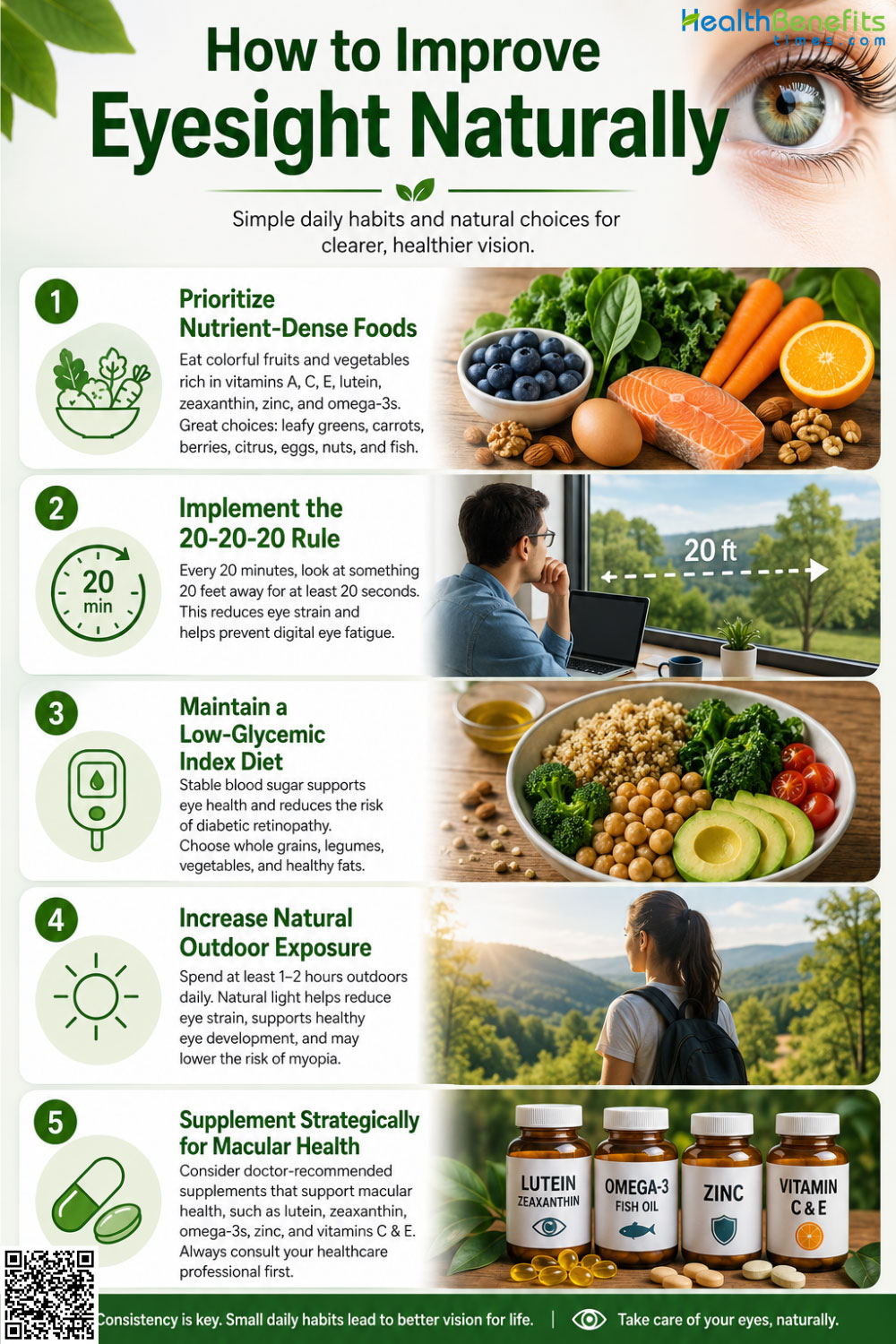
1. Prioritize Nutrient-Dense Foods
Consuming a diet rich in specific ocular nutrients provides the essential building blocks required for long-term retinal preservation. 19 You should actively incorporate dark leafy greens, such as spinach, collards, and kale, which are heavily loaded with the powerful antioxidant carotenoids lutein and zeaxanthin. 20 These specialized plant compounds accumulate directly within your macula, absorbing harmful short-wave blue light and neutralizing destructive free radicals before they can permanently damage your delicate photoreceptor cells. 21
Note: Lutein and zeaxanthin are commonly eaten through leafy green vegetables to naturally fortify the macula and provide medicinal protection against light-induced oxidative stress.
2. Implement the 20-20-20 Rule
Subjecting your visual system to continuous nearby digital screens forces your intrinsic eye muscles into a state of relentless, fatiguing contraction. 15 You can effectively break this cycle of accommodative spasm by setting a strict daily routine to rest your eyes periodically. 22 Every twenty minutes, you must purposefully shift your gaze away from your monitor to look at a physical object at least twenty feet away, holding that relaxed focus for a minimum of twenty seconds. 23
Note: The 20-20-20 rule is commonly applied during prolonged screen use as a remedial habit to alleviate digital eye strain and relax cramped ciliary muscles.
3. Maintain a Low-Glycemic Index Diet
Selecting the appropriate types of carbohydrates plays a vital, yet frequently underestimated, role in sustaining lifetime ocular clarity. 24 You should prioritize complex carbohydrates that release glucose slowly, preventing the sharp blood sugar spikes that inflict widespread vascular damage throughout the body. 25 Lowering your dietary glycemic index actively protects the microscopic retinal capillaries from advanced glycation end products, thereby defending the eye against metabolic retinal diseases. 26
Note: A low-glycemic index diet is commonly eaten for metabolic benefits to minimize systemic glycative stress and drastically reduce the risk of macular degeneration progression.
4. Increase Natural Outdoor Exposure
Stepping outside into bright, natural daylight delivers profound physiological signals to your developing and maintaining visual structures. 27 You should ensure that you and your children spend ample time outdoors, as broad-spectrum sunlight triggers the release of retinal dopamine. 28 This critical neurotransmitter acts as a chemical growth regulator that prevents the eyeball from elongating abnormally, successfully halting the onset and progression of nearsightedness. 9
Note: Ample outdoor time is commonly utilized as an environmental preventative measure to stimulate dopamine production and inhibit myopic progression.
5. Supplement Strategically for Macular Health
Relying solely on whole foods may not suffice if you possess genetic or age-related risk factors for advanced vision loss. 29 You should discuss targeted vitamin formulations with your eye care provider, specifically the AREDS2 combination containing high-dose Vitamin C, Vitamin E, zinc, copper, lutein, and zeaxanthin. 30 Scientific data confirms that consuming this exact nutritional matrix drastically slows the advancement of intermediate age-related macular degeneration. 31
Note: Antioxidant and mineral supplements are commonly applied as a targeted medicinal therapy to delay the progression of severe macular tissue breakdown.
Is There Any Exercise or Physical Activities for Weak Eyesight?
Engaging in specific physical actions can profoundly influence how comfortably and efficiently your eyes operate. While it is a physiological reality that no sequence of eye rolling will cure anatomical nearsightedness, targeted exercises can strengthen neural coordination, alleviate severe muscular fatigue, and promote optimal blood flow to the ocular tissues.
1. Cardiovascular Aerobic Activity
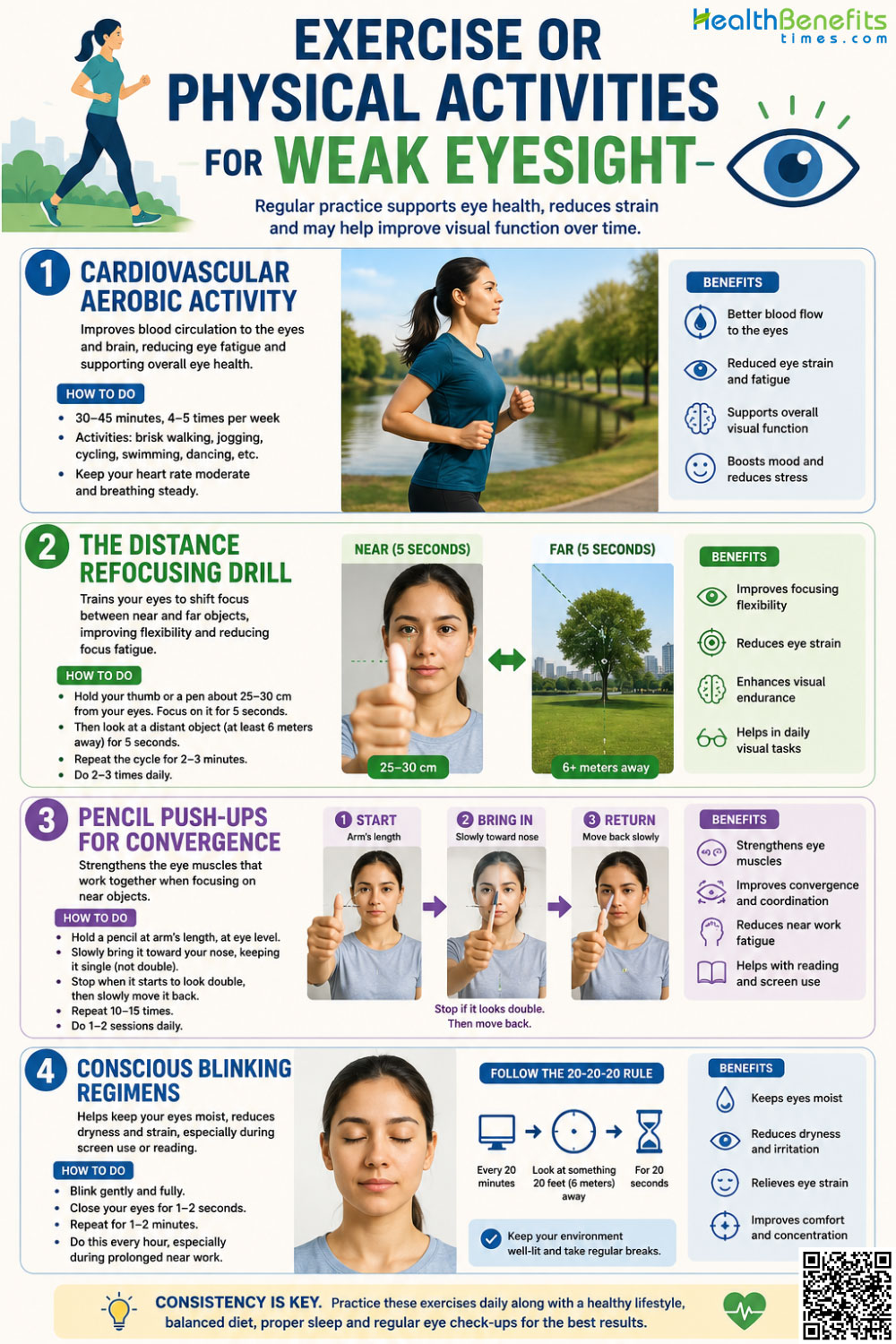
Elevating your core heart rate through systemic fitness routines imparts immediate physiological benefits to the vast vascular networks nourishing your eyes. 32 You should engage in regular aerobic workouts because this physical exertion safely lowers intraocular pressure while simultaneously boosting the delivery of oxygen and vital nutrients to your optic nerve. 33
Note: To do this, you should participate in brisk walking, swimming, or cycling for at least thirty minutes, three to four times a week to optimize ocular blood flow.
2. The Distance Refocusing Drill
Locking your vision onto nearby devices for hours permanently trains your ocular muscles into a rigid, nearsighted posture that resists relaxation. 15 You can actively stretch these intrinsic muscles by purposefully shifting your focal plane back and forth across vastly different distances. 34
Note: To do this, you should hold your thumb six inches from your face, focus on it for ten seconds, then immediately switch your focus to a tree or building in the far distance for ten seconds, repeating the cycle frequently.
3. Pencil Push-Ups for Convergence
Managing convergence insufficiency a condition where your eyes fail to coordinate inward symmetrically when reading requires targeted neuromuscular rehabilitation. 35 You can actively train your medial rectus muscles to work synchronously, effectively eliminating the double vision, jumping text, and intense eye strain associated with close-up tasks. 36
Note: To do this, you should hold a pencil at arm’s length, slowly draw it directly toward the bridge of your nose while maintaining sharp focus on the tip, and stop the moment the image splits into two.
4. Conscious Blinking Regimens
Staring intensely at illuminated digital screens silently programs your brain to suppress your natural blink reflex by over fifty percent. 37 You can combat the resulting dry, burning sensation by manually forcing your eyelids to fully close, which efficiently pumps hydrating oils from the meibomian glands across your exposed cornea. 38
Note: To do this, you should tightly squeeze your eyes shut for three seconds to express the glandular lipids, then open them wide, performing this sequence ten times every hour during screen use.
Foods and Activities to Avoid
Protecting your vision requires identifying and eliminating the hidden environmental and dietary hazards that silently degrade ocular tissues. What you choose to exclude from your daily routine is often just as impactful as the healthy habits you proactively adopt.
Foods to Avoid When You Suffer From Weak Eyesight
1. High-Glycemic Index Carbohydrates
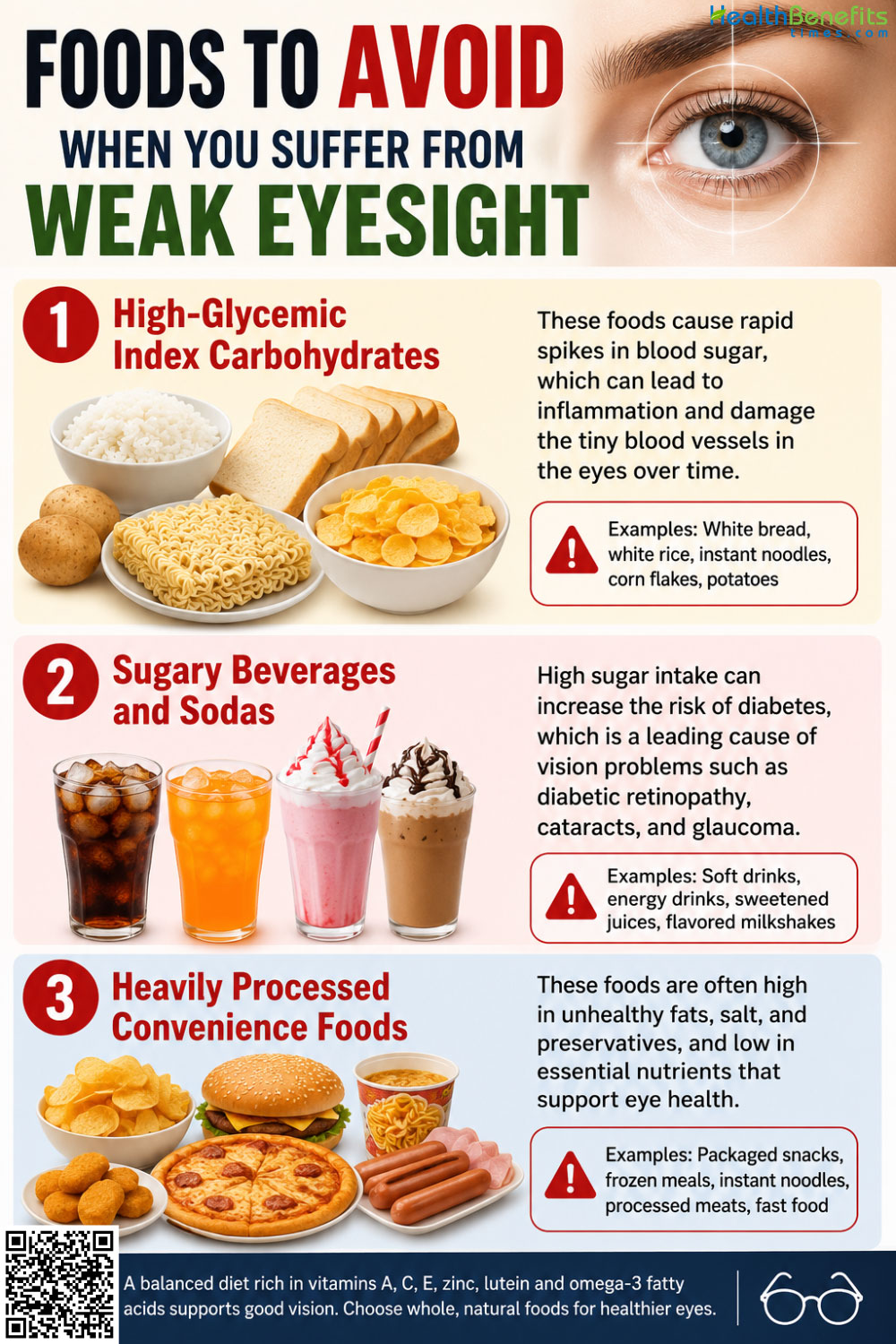
Flooding your digestive system with rapidly processed carbohydrates heavily compromises your retinal vascular integrity. 39 You must avoid consuming large quantities of white bread, refined pastries, and white rice, as the subsequent spikes in blood glucose create widespread glycative stress that accelerates the progression of macular disorders. 26
2. Sugary Beverages and Sodas
Imbibing high-sugar liquids introduces a massive inflammatory burden to your entire circulatory system, including the delicate vessels behind your eye. 25 You should strictly avoid sweetened sodas and artificial fruit juices to prevent the onset of metabolic syndromes that directly multiply your risk for diabetic retinopathy and premature lens clouding. 40
3. Heavily Processed Convenience Foods
Relying on pre-packaged meals deprives your ocular tissues of the diverse antioxidants required for daily cellular repair. 41 You must steer clear of heavily refined snacks devoid of nutritional value, as failing to consume a spectrum of natural vitamins leaves your retina highly vulnerable to chronic oxidative damage. 42
Activities to Avoid When You Suffer From Weak Eyesight
1. Vigorous and Habitual Eye Rubbing
Submitting your eyes to aggressive physical friction is exceptionally hazardous to the structural stability of the front of your eye. 43 You must completely avoid rubbing your eyes, as this mechanical trauma damages the delicate collagen fibers and acts as a leading environmental trigger for keratoconus, a progressive blinding disease. 44
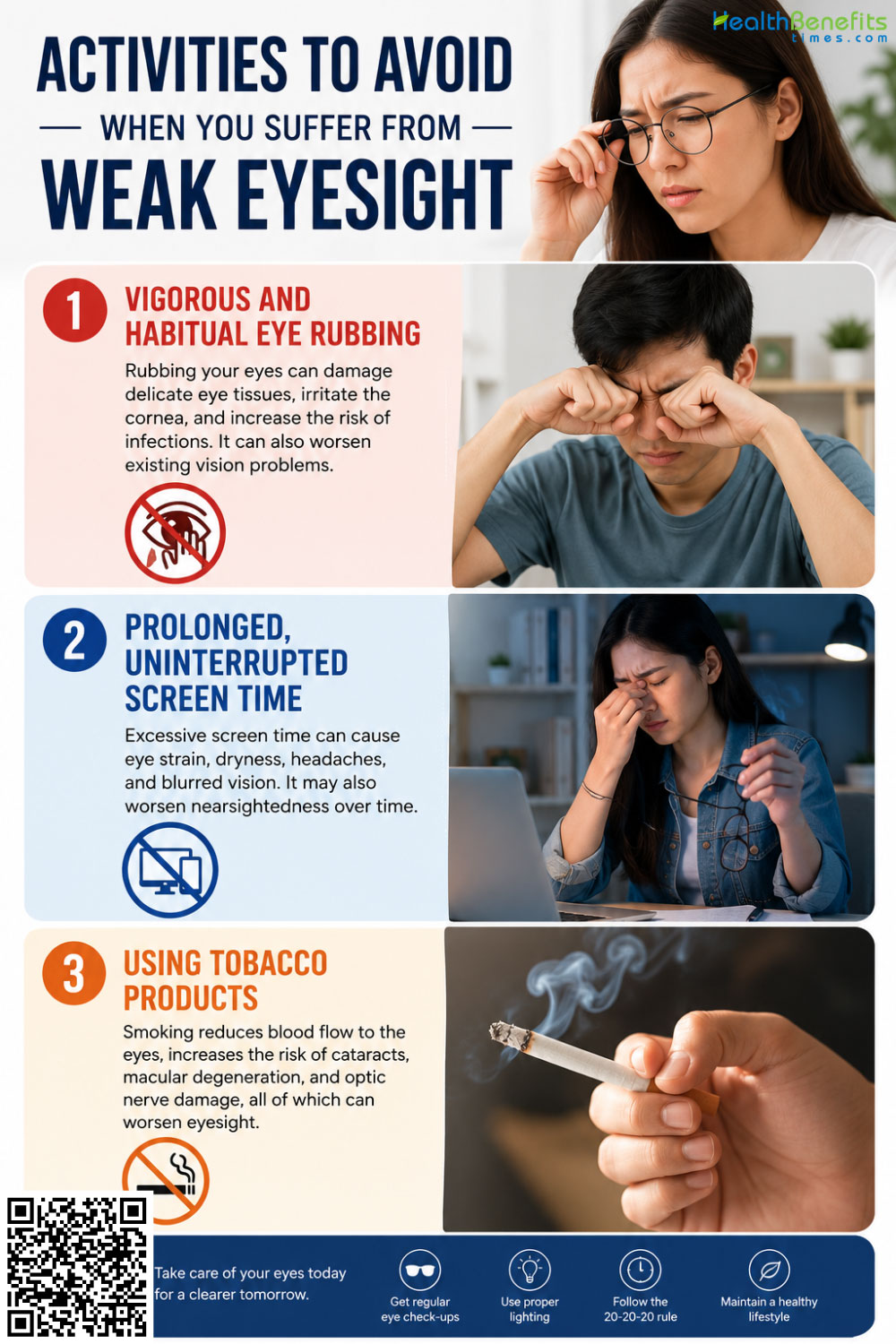
2. Prolonged, Uninterrupted Screen Time
Subjecting your visual apparatus to marathon digital sessions ensures rapid tear evaporation and intense muscular fatigue. 45 You should avoid staring at monitors for continuous hours without pausing, as the intense accommodative strain heavily exacerbates computer vision syndrome and chronic dry eye disease. 46
3. Using Tobacco Products
Inhaling cigarette smoke delivers a concentrated payload of vascular toxins and free radicals directly to the microscopic blood vessels of the eye. 31 You absolutely must avoid smoking, as it severely restricts oxygen flow to the optic nerve and drastically increases the incidence of severe macular degeneration and cataracts. 47
Myths and Misconceptions
Separating scientific reality from persistent cultural folklore is essential for making informed decisions regarding your optical health. Misinformation often leads individuals to abandon effective medical interventions in favor of useless, or sometimes harmful, alternative practices.
| Myth | Reality |
| Gazing directly into the sun naturally heals the body and improves visual well-being. | Staring at the sun without ISO-certified solar filters causes immediate, permanent thermal and photochemical burns to the retina, leading to irreversible central blindness. |
| Sitting very close to the television will physically ruin a child’s developing eyesight. | Sitting close to a screen may signal an existing case of nearsightedness, but the act itself only causes temporary strain, not permanent physical harm to the developing eye. |
| Reading small text in dim lighting will permanently destroy your vision. | Reading in poor light forces the eye to work harder, causing temporary muscle fatigue, eye strain, and mild headaches, but it does not cause any permanent structural damage. |
| Using computers all day will physically wear out and ruin your eyes. | Prolonged computer use causes digital eye strain and dry eyes due to a reduced blink rate, but doing so will not permanently harm the physical hardware of your eyes. |
| Wearing your prescription eyeglasses too often makes your eyes lazy and dependent. | Wearing correct prescription lenses simply allows the visual cortex to process clear images; it does not weaken the eye muscles or accelerate any underlying disease process. |
| Performing daily eye rolling exercises will eliminate the need for prescription glasses. | Exercises cannot modify the anatomical length of the eyeball or cure refractive errors; they are only scientifically valid for specific muscle coordination issues like convergence insufficiency. |
Special Considerations
The fragility of the human visual system fluctuates wildly depending on the specific biological phase of life and the presence of underlying systemic diseases. Recognizing these unique physiological windows is vital for deploying targeted preventative care and managing risk effectively.
1. Children
Monitoring the pediatric visual system remains highly critical because the sensory pathways in the developing brain are exceptionally plastic during the first decade of life. 7 Uncorrected refractive errors or a physical misalignment of the eyes can prompt the brain to permanently ignore input from one eye, triggering an irreversible neural condition known as amblyopia. 14 Furthermore, the sharp global rise in childhood myopia necessitates increased outdoor playtime to ensure that ambient daylight can regulate proper scleral growth metrics. 6
2. Pregnancy
Enduring the profound hormonal cascades of gestation initiates several temporary but highly notable shifts in optical function. 53 Elevated estrogen and progesterone disrupt the tear film’s lipid layer, frequently inducing severe dry eye syndrome that makes contact lens wear highly uncomfortable and abrasive. 54 Simultaneously, systemic fluid retention can subtly thicken the cornea, temporarily altering its refractive index and blurring the mother’s baseline vision. 55
3. Chronic Conditions
Navigating life with systemic metabolic disorders places the fragile microvasculature of the eye under constant physiological threat. 8 Chronic diabetes slowly erodes the retinal capillaries over years, leading to microscopic vascular leakage, fluid accumulation, and the eventual onset of blinding diabetic retinopathy. 56 Consequently, maintaining rigid glycemic control and attending annual dilated eye exams stand as mandatory medical protocols to intercept and prevent irreversible retinal damage. 13
4. Elderly
Advancing into the later decades of life significantly accelerates the physical deterioration of the visual apparatus. 9 The elderly demographic faces an interlocking barrage of challenges, including the opacification of the lens through cataracts, the silent nerve damage of glaucoma, and the central vision destruction driven by macular degeneration. 57 Aggressive nutritional supplementation, routine intraocular pressure checks, and timely surgical interventions become paramount strategies for preserving geriatric independence and quality of life. 58
When to See a Doctor
Certain visual anomalies represent critical neurological or structural emergencies that cannot be managed through diet, rest, or lifestyle modifications. You must immediately abandon natural remedies and seek urgent ophthalmic intervention if you experience specific acute warning signs.
1. Sudden Loss of Vision
Experiencing an abrupt, unexplained blackout or extreme fogginess in your visual field requires immediate clinical evaluation in an emergency setting. 59 You must never ignore sudden vision loss, as it heavily indicates severe neurological events, vascular blockages, or a detached retina. 60
2. Sensation of Intense Ocular Pain
Developing sharp, piercing, or deep aching pain within the eye socket is not a symptom that naturally resolves with rest or time. 61 You should seek emergency medical care if the pain is accompanied by intense nausea or vomiting, as this physiological combination is a classic warning sign of acute angle-closure glaucoma. 17
3. Sudden Onset of Flashes and Floaters
Noticing a rapid explosion of new, dark floating spots or vivid strobe-like flashes darting across your peripheral vision warrants rapid, specialized investigation. 62 You must consult an eye specialist promptly to rule out retinal tears that could progress to a devastating, permanent detachment if left untreated. 5
4. Severe Redness and Purulent Discharge
Waking up to eyelids that are heavily swollen, bright red, and crusted shut with thick discharge signifies an aggressive local infection. 63 You should contact your physician immediately, as deep bacterial or viral infections can swiftly erode the cornea and compromise the entire structure of the eye. 64.