

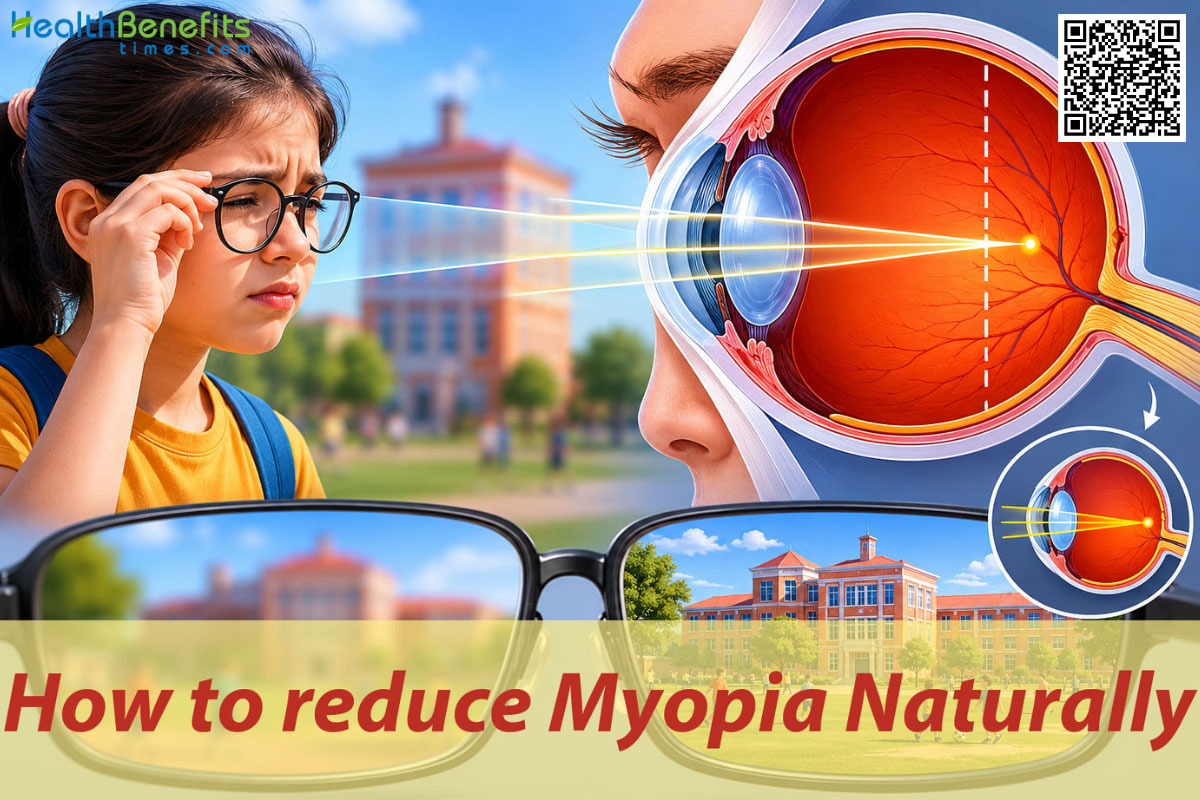
Myopia, commonly known as nearsightedness, is a highly prevalent refractive error of the eye where individuals can clearly see objects up close, but struggle to focus on distant objects, which appear noticeably blurry. This visual impairment occurs when the physical length of the eyeball grows too long from front to back, or when the cornea the clear, dome-shaped front surface of the eye becomes too steeply curved. Because of these physical and structural changes, light rays entering the eye are incorrectly bent (refracted). Instead of focusing perfectly directly onto the light-sensitive retina at the back of the eye, the images focus just in front of it, scattering the light and creating a blurred picture of far-away scenes. Over recent decades, the global prevalence of myopia has surged, largely attributed to genetics combined with environmental factors like increased screen time. Uncorrected myopia can cause persistent eye strain, chronic headaches, and severe squinting. 1, 2, 3, 4.
Causes of Myopia
Investigating the underlying origins of this visual condition reveals a dynamic interplay between inherited traits and modern environmental shifts. The precise mechanisms that trigger the eye to grow abnormally long are influenced by the following factors:
- Genetic Predisposition and Parental History: Having one or both parents with nearsightedness drastically increases a child’s susceptibility to the condition, as genetics establish a baseline risk that amplifies the impact of environmental triggers 5.
- Extensive Near Work and Short Focusing Distances: Spending long, continuous periods focusing on close-up objects, such as reading or intense studying, places chronic accommodative demand on the eyes, encouraging the eyeball to elongate to relieve the focusing stress 3.
- Deficient Outdoor Light Exposure: A lack of exposure to natural, bright daylight deprives the eye of essential growth-regulating neurotransmitters, removing a critical natural barrier against abnormal axial stretching 6.
- Prolonged Digital Screen Immersion: Modern digital lifestyles heavily contribute to the onset of the condition, with population data indicating that even a one-hour daily increment in screen time raises the odds of developing nearsightedness by twenty-one percent 7.
- High Glycemic Dietary Habits: Consuming excessive amounts of refined carbohydrates and sugars leads to chronic hyperinsulinemia, which subsequently elevates growth hormones that alter the structural integrity of the sclera 8.
- Excessive Sodium Consumption: Diets exceedingly high in sodium chloride are linked to fluid retention within the eye’s vitreous chamber, a mechanical factor that may physically encourage the expansion and elongation of the eyeball 9.
- Early Age of Onset: Children who develop mild refractive errors at a very young age possess a higher risk of rapid progression, as the eye undergoes its most dynamic growth phases during early childhood and adolescence 4.
- Educational Demands and Urbanization: Higher educational levels and intensive schooling systems, which require extensive indoor studying and close-up visual tasks, correlate strongly with higher disease prevalence rates worldwide 10.
Symptoms of Myopia
Recognizing the physical manifestations of this refractive error is crucial for timely intervention and preserving long-term ocular health. Individuals experiencing axial elongation typically present with the following symptoms:
- Blurred or fuzzy vision when looking at distant objects, such as road signs, televisions, or classroom whiteboards.
- The frequent need to squint or partially close the eyelids to achieve a sharper, more focused image.
- Experiencing visual fatigue or eyestrain after performing tasks that require distance viewing.
- Headaches resulting from the continuous overexertion of the eye muscles attempting to bring blurry images into focus.
- A noticeable tendency to sit unnaturally close to the television, digital screens, or the front of a classroom.
- Unimpaired, clear vision when engaging in close-up activities like reading a book or examining a smartphone.
- Difficulty seeing clearly in low-light conditions, particularly noticeable during nighttime driving or walking in dim environments.
Myopia Facts
Gathering the essential data regarding this refractive condition provides a clearer picture of its global impact and physiological reality.
| Feature | Details |
| Symptoms |
|
| Causes |
|
| Types of Myopia |
|
| How does spread |
|
| Age Group |
|
| You might be at a higher risk for exposure of this disease if you: |
|
| How doctors diagnose |
|
| Other facts |
|
How to reduce Myopia Naturally
Taking proactive steps to manage your vision requires adopting specific daily habits and modifying your immediate environment. While biological axial elongation cannot be reversed once it has occurred, you can utilize the following scientifically backed strategies to slow its progression and protect your eyes.
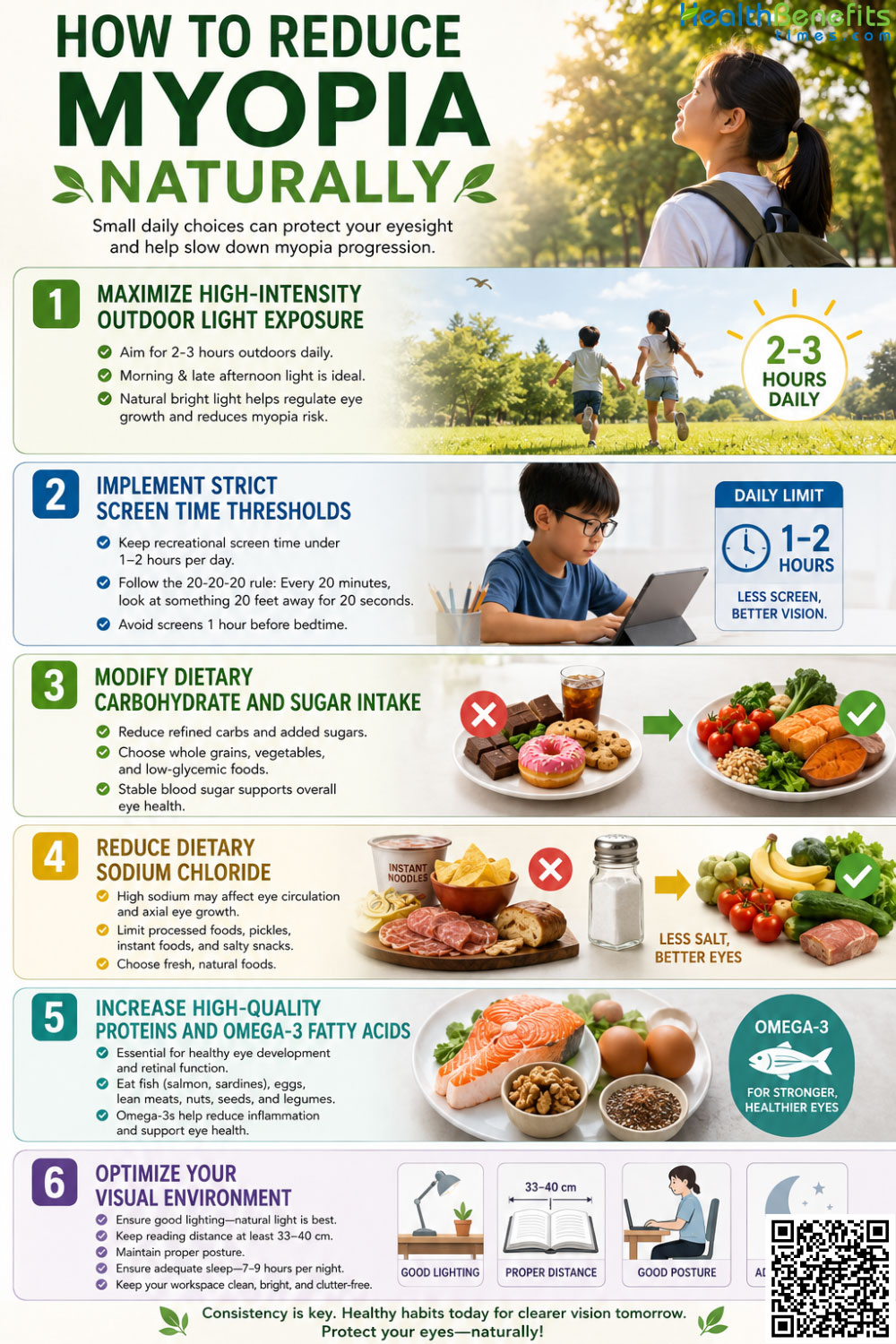
1. Maximize High-Intensity Outdoor Light Exposure
Venturing outdoors is perhaps the single most effective natural intervention available for your ocular health. You should aim to spend significant time outside every day, as bright natural daylight triggers your retina to release dopamine, a powerful neurotransmitter that acts as a biological inhibitor of eye growth 6. Exposing your eyes to high-intensity light naturally stabilizes your sclera and halts abnormal elongation. Furthermore, the specific blue wavelengths present in natural daylight help direct your eye to focus light in a way that discourages the eyeball from stretching further 11.
Note: This intervention is commonly applied as a daily habit of spending at least two hours outdoors to naturally shield the eye from abnormal structural growth.
2. Implement Strict Screen Time Thresholds
Navigating the digital age demands that you consciously manage your use of electronic devices to protect your visual health. Keeping your non-educational digital screen use to less than one hour per day significantly lowers your odds of developing severe nearsightedness 7. Locking your eyes onto a fixed, glowing plane at a short distance creates a localized form of visual stress and peripheral defocus, which tricks your brain into growing the eye longer 12. By strictly minimizing unnecessary digital immersion, you spare your delicate eye muscles from sustained accommodative fatigue.
Note: This strategy is utilized as a preventative behavioral remedy to eliminate the chronic visual strain that triggers structural eye changes.
3. Modify Dietary Carbohydrate and Sugar Intake
Nourishing your body properly plays a surprisingly pivotal role in maintaining the structural integrity of your eyes. You must limit refined sugars, as consuming diets burdened with high glycemic loads causes rapid spikes in your blood glucose and corresponding surges in insulin 8. This chronic hyperinsulinemia elevates Insulin-like Growth Factor 1 (IGF-1), a hormone that softens your scleral tissue and promotes undesirable cellular elongation of the eyeball 13. Transitioning your meals to focus on whole, unprocessed foods stabilizes your insulin levels and mitigates this systemic catalyst for ocular stretching.
Note: This dietary modification is applied to naturally minimize insulin spikes and reduce systemic oxidative stress that degrades ocular tissues.
4. Reduce Dietary Sodium Chloride
Balancing your mineral intake is vital, particularly concerning your daily consumption of salt. You should be aware that epidemiological data indicates a strong positive association between high sodium intake and an increased risk of nearsightedness 9. High levels of sodium chloride in your bloodstream can lead to osmotic imbalances, triggering excessive fluid retention within the vitreous chamber of your eye 14. This internal fluid buildup exerts outward physical pressure on your scleral walls, potentially forcing your eyeball to expand. Lowering your daily salt consumption protects your eyes from these internal biomechanical pressures.
Note: Lowering sodium is commonly used as a dietary remedy to prevent detrimental fluid retention and preserve the natural shape and pressure of the eye.
5. Increase High-Quality Proteins and Omega-3 Fatty Acids
Fortifying your diet with specific structural nutrients provides your eyes with the raw materials necessary to resist abnormal growth. You can achieve a protective effect against the progression of the condition by ensuring an adequate intake of proteins, particularly whole animal and plant-based proteins, which help downregulate IGF-1 pathways 13. Additionally, increasing your intake of omega-3 fatty acids and retinol combats local oxidative stress and supports healthy retinal function, keeping the cellular structures of your eye resilient 14.
Note: These nutrients are eaten to physically reinforce the outer walls of the eye and provide anti-inflammatory benefits to the visual system.
6. Optimize Your Visual Environment
Curating the physical spaces where you read and study influences your eye behavior positively. You should avoid spending all day in indoor environments that feature objects positioned very close to your face, as this creates high dioptric variations that stimulate eye growth 6. Spending more time in wide-open spaces, or simply positioning your desk to face out of a window rather than against a blank wall, provides your eyes with a uniform pattern of visual focus that signals them to stop elongating 3.
Note: This spatial adjustment is applied as an environmental remedy to hack your eye’s focusing mechanics, replacing growth-stimulating blur with growth-inhibiting clarity.
Is there any exercise or physical activities for Myopia
Exploring physical therapies for your vision often leads to questions about eye exercises and muscle training. It is essential to clarify that scientific evidence consistently demonstrates that eye exercises do not reverse the physical elongation of your eyeball 15. However, you can use specific physical activities and targeted therapies to alleviate the severe visual fatigue and muscle spasms that accompany chronic near work.
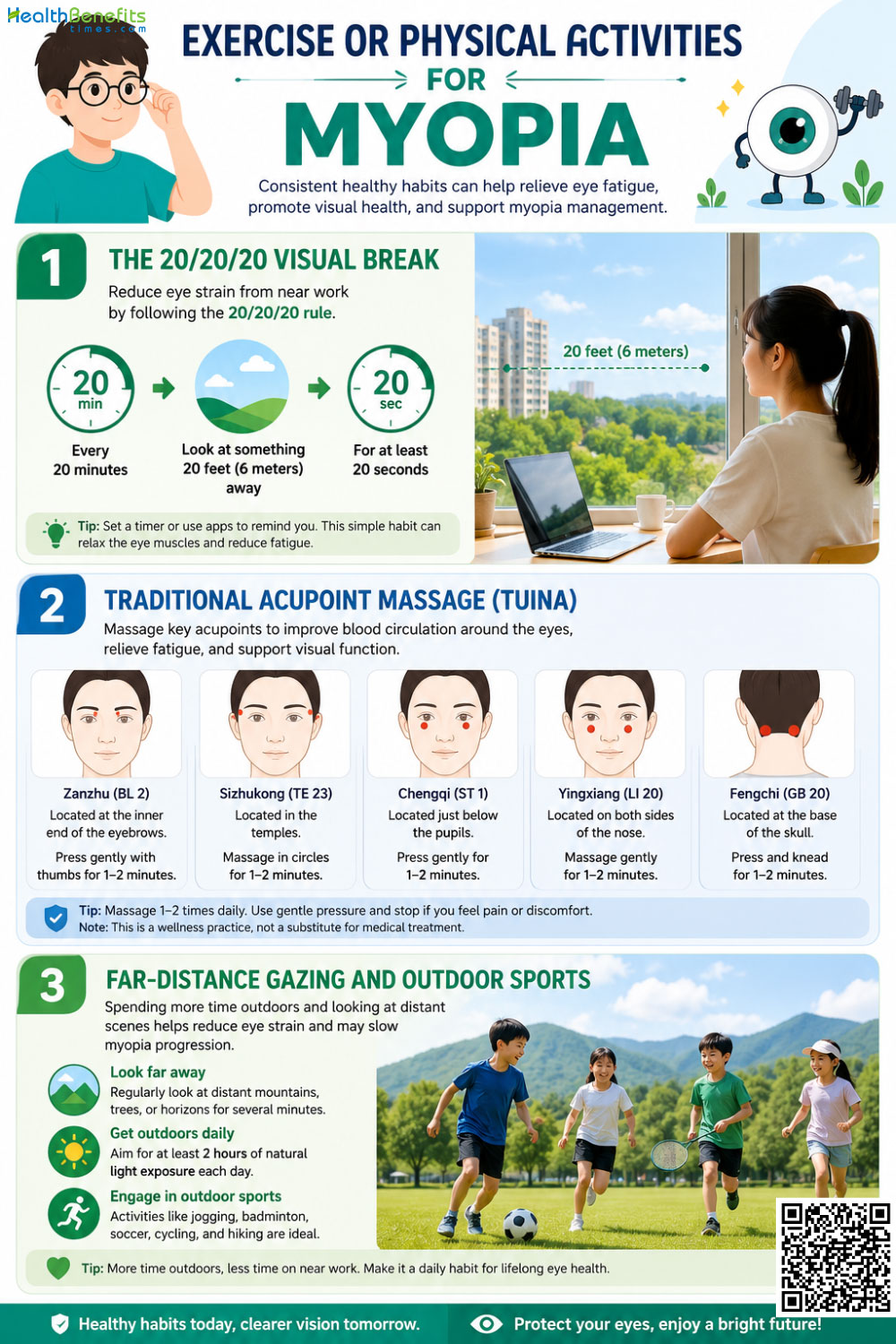
1. The 20/20/20 Visual Break
Breaking the cycle of continuous near focus is the absolute best way to prevent the ciliary muscles inside your eyes from locking into a state of spasm. Sustained close-up work causes severe accommodative fatigue, making distant objects appear blurrier than they actually are due to lingering muscle tension 16.
Note on how to do: Every 20 minutes during near work, pause to look at an object at least 20 feet away for a minimum of 20 seconds to allow the focusing muscles inside your eye to completely relax and reset.
2. Traditional Acupoint Massage (Tuina)
Practicing standard eye exercises involving acupressure is widely utilized in Asian educational systems to improve blood circulation around the orbit. While they cannot reverse your refractive error, high-quality execution of these massage techniques effectively alleviates subjective symptoms of visual fatigue and yields short-term improvements in your binocular accommodative amplitude 17.
Note on how to do: Using clean hands, gently press in circular motions for 30 to 60 seconds on specific facial depressions, such as the inner ends of your eyebrows, the area directly below your pupils, and the flat temples on the sides of your forehead.
3. Far-Distance Gazing and Outdoor Sports
Engaging your visual system in its natural state requires tracking fast-moving objects across varying, distant planes. Participating in outdoor physical activities, such as tennis or soccer, naturally forces your eyes to shift focus rapidly between near and far distances, maintaining the flexibility of your eye’s focusing mechanisms while bathing the retina in protective light 18.
Note on how to do: Spend time daily engaging in outdoor activities that require tracking a ball or scanning the horizon, keeping your eyes continuously moving and focusing on distant targets.
Foods and Activities to Avoid
Preserving your visual health requires identifying and completely eliminating the habits and dietary choices that actively promote ocular deterioration.
Foods to Avoid When You suffer from Myopia and you are prone to Myopia
- Refined Carbohydrates and Sugars: You should avoid white bread, pastries, sugary cereals, and sodas, as they provoke rapid insulin spikes and elevate IGF-1 levels that encourage your eye tissue to stretch 8.
- High-Sodium Processed Foods: You must limit fast food, canned soups, and salty snacks, which lead to systemic fluid retention and increase the osmotic pressure within the vitreous humor of your eyes 13.
- Excessive Dietary Cholesterol: You need to monitor your fat intake, as disproportionately high cholesterol consumption has been statistically associated with an increased risk of ocular refractive errors 9.
- Nutrient-Void Ultra-Processed Snacks: You should stay away from foods lacking in essential vitamins and antioxidants, which leave your eyes vulnerable to oxidative stress and accelerate cellular damage 14.
Activities to Avoid When You suffer from Myopia
- Prolonged Near Work Without Breaks: You must stop reading or focusing intently on tasks for hours at a time, as this causes your focusing muscles to spasm and encourages axial growth 3.
- Reading at Unsafe Distances: You should never hold books, tablets, or smartphones closer than 30 centimeters from your face, which exponentially increases the accommodative strain on your visual system 19.
- Excessive Recreational Screen Time: You need to avoid spending more than one continuous hour per day on digital screens for non-educational entertainment, as it directly correlates with worsening refractive errors 7.
- Sedentary Indoor Lifestyles: You should not forego outdoor recreation in favor of indoor activities, which deprives your retina of the high-intensity light required to produce eye-protecting dopamine 6.
Myths and Misconceptions
Navigating the abundance of information regarding vision care often means confronting deeply entrenched folklore. The table below addresses and clarifies common misconceptions with fact-based reality.
| Myth | Realty |
| Eye exercises can cure nearsightedness so glasses are no longer needed. | Physical elongation of the eyeball cannot be reversed by muscle exercises. Vision therapy only alleviates eye strain and improves muscle coordination, but it has zero efficacy in altering the structural refractive error 15. |
| Wearing glasses makes the eyes weaker and dependent. | Corrective lenses do not weaken the eyes; they simply bend incoming light to focus correctly on the retina. Failing to wear prescribed glasses actually increases eye strain and may accelerate the condition’s progression in children 2. |
| Reading in the dark causes permanent nearsightedness. | Dim light reading causes severe, temporary accommodative fatigue and headaches, but it is not the primary mechanism for permanent axial elongation, which is driven by focus proximity and lack of bright outdoor light 12. |
| Taking high doses of Vitamin D supplements cures the condition. | While high Vitamin D levels in the blood are associated with better vision, research suggests the vitamin acts merely as a biomarker indicating the person spends a lot of time outdoors in the sun. Swallowing a supplement does not replace the physical need for bright light entering the retina 6. |
| Red-light devices sold online safely reverse vision problems. | Unregulated red-light therapy devices lack robust long-term safety data, and ophthalmic experts warn that improper use can cause thermal or photochemical injury to the delicate tissues of the retina 20. |
Special Considerations
The progression and management of refractive errors differ significantly depending on an individual’s stage of life or underlying health status. Tailoring expectations and approaches is vital for these specific groups to ensure optimal visual outcomes.
1. Children
Childhood represents the critical window for intervention, as the eye undergoes its most rapid phases of physical growth before stabilizing in early adulthood 21. Young individuals are exceptionally vulnerable to environmental triggers, making daily outdoor time and the restriction of recreational screen time mandatory for prevention 16. Because the condition can progress at an aggressive rate of 1 diopter or more per year in children, strict adherence to natural preventative habits must be paired with regular clinical monitoring to prevent the onset of high, pathologic myopia.
2. Pregnancy
Expecting mothers frequently experience transient visual disturbances, including a temporary myopic shift of up to one diopter during their pregnancy 22. This phenomenon is driven by systemic hormonal fluctuations, fluid retention affecting the thickness of the cornea, and altered osmotic pressures within the eye 23. Because these changes are strictly temporary and typically resolve completely during the postpartum period, individuals are heavily advised against updating their spectacle or contact lens prescriptions while pregnant 24.
3. Chronic conditions
Individuals living with systemic metabolic conditions, particularly diabetes mellitus, are highly prone to sudden, transient refractive shifts 25. Acute episodes of hyperglycemia (high blood sugar) alter the hydration state and osmotic balance of the eye’s crystalline lens, often inducing a temporary myopic state where distance vision suddenly blurs 26. Maintaining stable, well-regulated blood glucose levels is the only effective way to prevent these erratic fluctuations in visual acuity.
4. Elderly
Advanced age brings structural changes to the internal components of the eye, meaning a sudden worsening of nearsightedness is rarely caused by the eyeball growing longer. Instead, it is most commonly attributed to the formation of nuclear sclerotic cataracts 27. As the crystalline lens inside the eye ages and becomes dense and cloudy, its refractive index changes, causing a “myopic shift” that allows some older adults to suddenly read without their reading glasses. This shift is a direct clinical indicator that a cataract is maturing rather than a true worsening of standard myopia 25.
Precaution before use of natural remedies when you have Myopia
Adopting lifestyle changes and natural habits is highly encouraged, but you must integrate these practices safely without compromising your fundamental visual health.
- Do Not Discard Prescribed Corrective Lenses: You must not rely entirely on natural remedies like diet and outdoor time to magically reverse existing blurriness. Refusing to wear your prescribed glasses causes severe eye strain, impairs your safety while driving, and can accelerate further eye deterioration 2.
- Beware of Commercial “Vision Cures”: You should exercise extreme caution regarding online programs, unregulated eye drops, or pinhole glasses that claim to cure refractive errors naturally. These products lack scientific backing and may delay your necessary medical intervention 28.
- Understand the Limits of Dietary Changes: You must remember that while reducing sugar and sodium supports your scleral health and overall well-being, dietary modification is a supplemental preventative measure, not a standalone medical treatment for advanced ocular elongation 13.
- Avoid Unsupervised Light Therapies: You should never stare directly into the sun or use unregulated, high-intensity red-light devices in an attempt to halt eye growth, as this can cause permanent, irreversible burns to your macula 20.
When to see Doctor
While natural habits are excellent for your daily maintenance and prevention, high degrees of axial elongation carry severe physical risks to the internal structures of your eye. You must seek immediate medical evaluation if any of the following occur:
- Sudden Onset of Floaters: You must seek immediate evaluation if you experience a dramatic increase in dark spots, cobwebs, or strings floating across your vision, which can indicate the vitreous gel is pulling away from your retina 21.
- Flashes of Light: You need to see a professional promptly if you experience unexplained lightning streaks in your peripheral vision, as this is a hallmark warning sign of a retinal tear 2.
- A Dark Curtain or Shadow: You should treat the appearance of a gray curtain falling over any part of your visual field as a strict medical emergency signifying a detached retina, requiring immediate surgical repair 29.
- Rapid Vision Deterioration: You should consult your eye care provider if your vision becomes noticeably blurrier over the span of a few months, as specialized clinical interventions may be necessary to halt aggressive progression 19.
- Pain or Redness: You must seek a prompt examination if you develop an aching sensation behind the eye, severe redness, or sudden light sensitivity, which are vital signs to rule out inflammatory conditions or dangerous spikes in intraocular pressure.