

| Lasia Quick Facts | |
|---|---|
| Name: | Lasia |
| Scientific Name: | Lasia spinosa |
| Origin | Indian subcontinent to Malesia across East Asia. It is naturally distributed in Eastern Asia, Indian subcontinent, Indo-China and Malesia |
| Shapes | Hard, rough surfaced fruits are borne on the axis of the inflorescence |
| Taste | Sweet and slightly astringent (Leaves) |
| Health benefits | Support for lympho-tuberculosis, lymphonoditis, stomach aches, snake and insect bites, injuries, rheumatism, piles, sore throat, bleeding cough and hemorrhoids |
| Name | Lasia |
|---|---|
| Scientific Name | Lasia spinosa |
| Native | Indian subcontinent to Malesia across East Asia. It is naturally distributed in Eastern Asia (China, Taiwan), Indian subcontinent (Bangladesh, Bhutan, India, Nepal, Sri Lanka), Indo-China (Cambodia, Laos, Myanmar, Thailand, Vietnam) and Malesia (Indonesia, Malaysia, Papua New Guinea) |
| Common Names | Geli-geli, Bekil, Spiny Lasia, Lasia, Pimply lasia, Unicorn plant |
| Name in Other Languages | Assamese: Chengmora, Seng-mora, Kanta-kochu, La-ghatua, sibru Bengali: Kantakachu, Kattosh Bodo: Chibru Chinese: Toge imo (刺芋), Shān lián ǒu (山莲藕) English: Lasia, Pimply lasia, Unicorn plant, geli geli, spiny lasia Hindi: Indiver Kand Japanese: Rashia supinosa (ラシア・スピノサ) Laos: pak norm Malay: Ngambing, Sambeng, Geli Geli, Keladi Keris Manipuri: Janum Saru Mizoram: Zawangzang Sanskrit: Laksmana Sinhalese: Kohila (කොහිල ), Maha kohila (මහ කොහිල), Engili kohila Tamil: Mulasari Thai: Phak haam (ผักหาม), Phak naam (ผักนาม) Vietnamese: Chóc gai, Cừa, Móp , Ráy gai |
| Plant Growth Habit | Large, spiny, evergreen, herbaceous perennial plant |
| Growing Climates | Primary Rainforest, Freshwater Swamp Forest, Riverine, Freshwater Pond, Lake, River, riverbanks, ditches, moist places in tropical and subtropical forests, sometimes cultivated along fish ponds and rice fields |
| Soil | Grows best in waterlogged soil that is rich in nutrients |
| Plant Size | Up to 1.5 m tall |
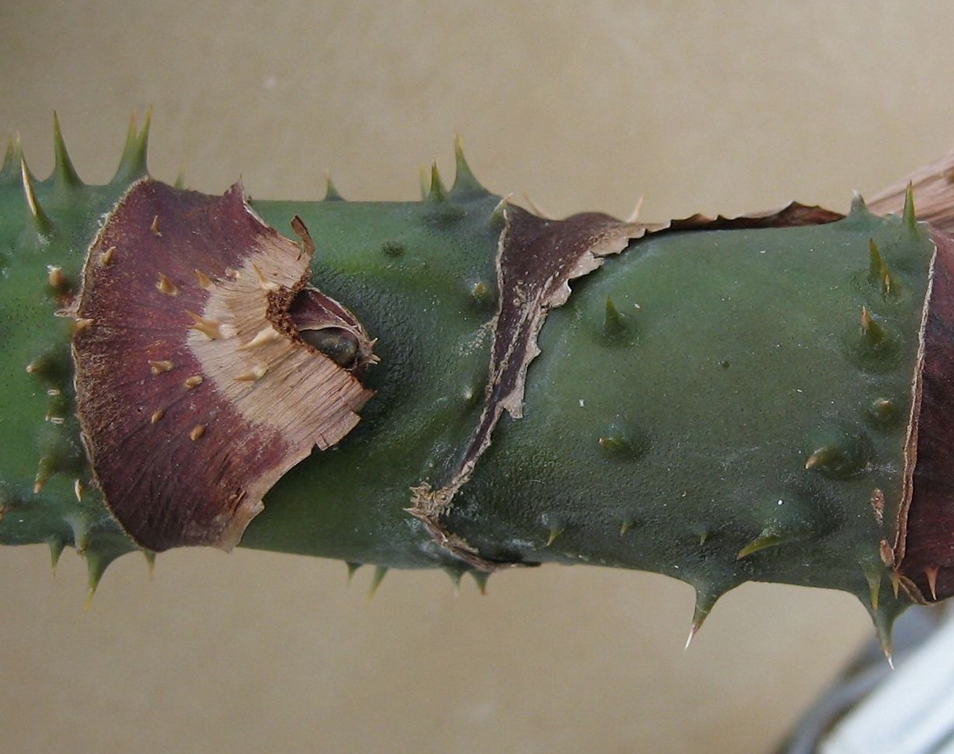
| Stem | Long creeping and stoloniferous, erect or ascending, ca. 2.5cm in diam., internodes with stout prickles |
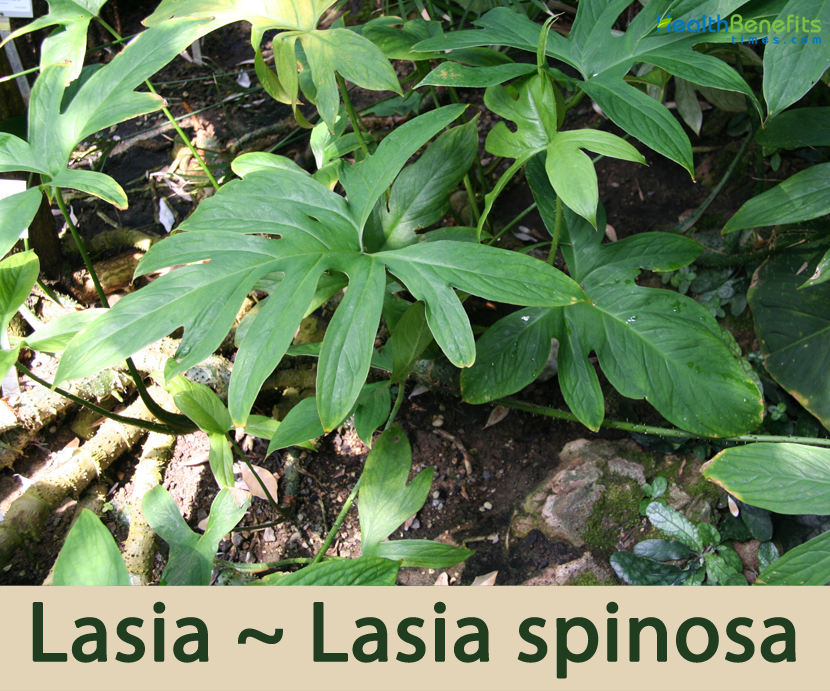
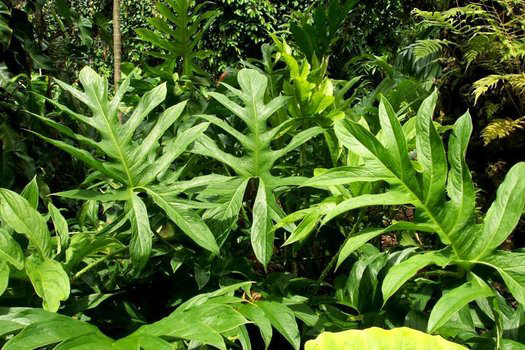
| Leaf | Alternate, long- and spiky-stalked leaves have broad leaf blades that are arrow-shaped and 20-30 cm long when young. The leaves are divided into 4-8 pairs of lance-shaped lobes up to 4 cm wide when mature |
| Flowering season | Jul–Sep |
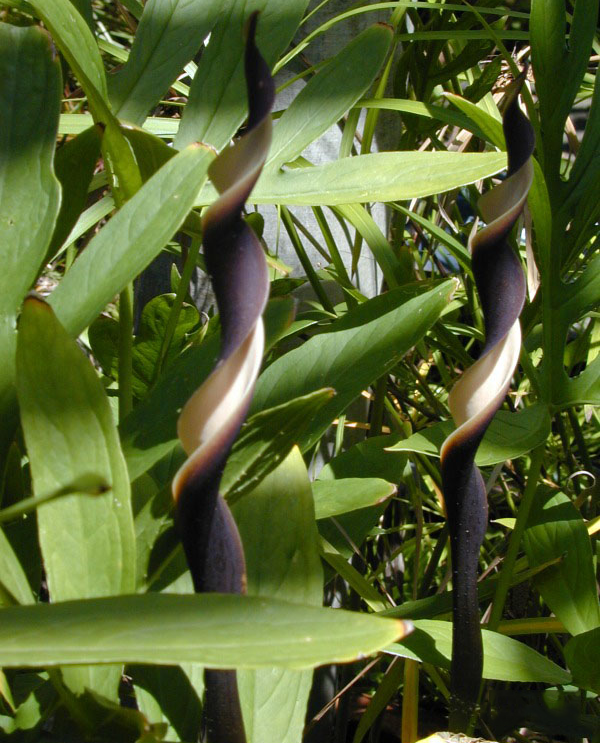
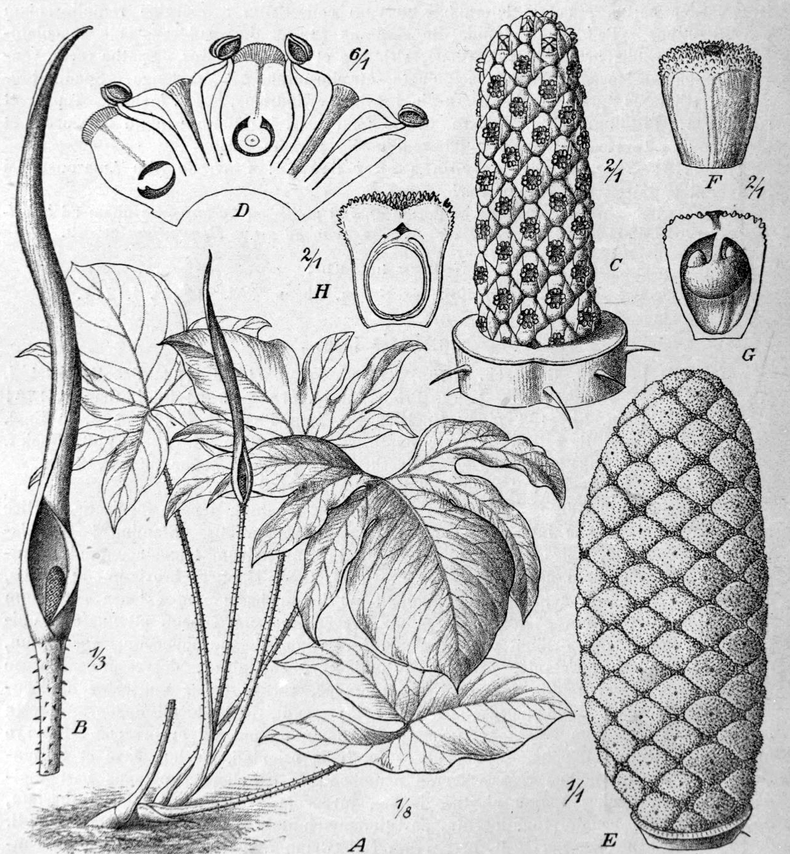
| Flower | Flowers are borne on a yellow or brown, up to 4 cm long, flowering shoot that is enclosed by a 35-40 cm long, modified leaf (spathe) that is purplish on the outside and greenish inside |
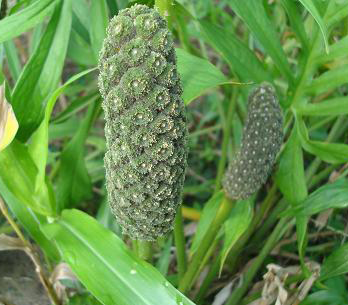
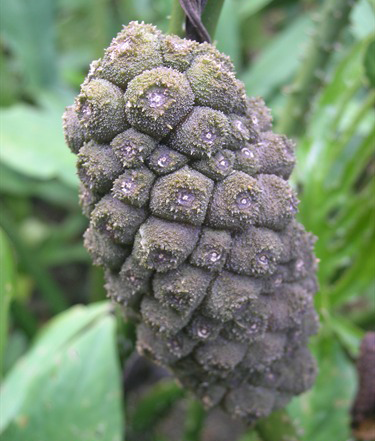
| Fruit Shape & Size | Hard, rough surfaced fruits are borne on the axis of the inflorescence |
| Propagation | By seed or division of the underground stem |
| Taste | Sweet and slightly astringent (Leaves) |
| Plant Parts Used | Root, Stem, Young leaves, Tubers |
Plant Description
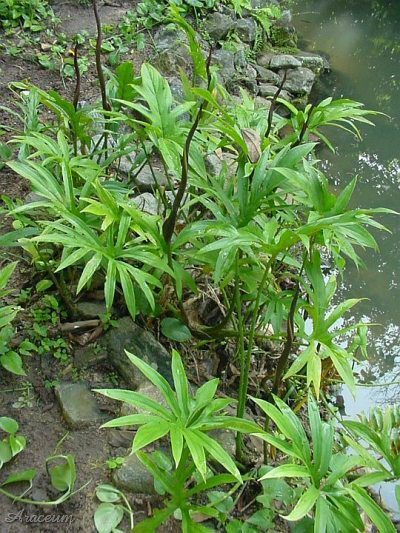
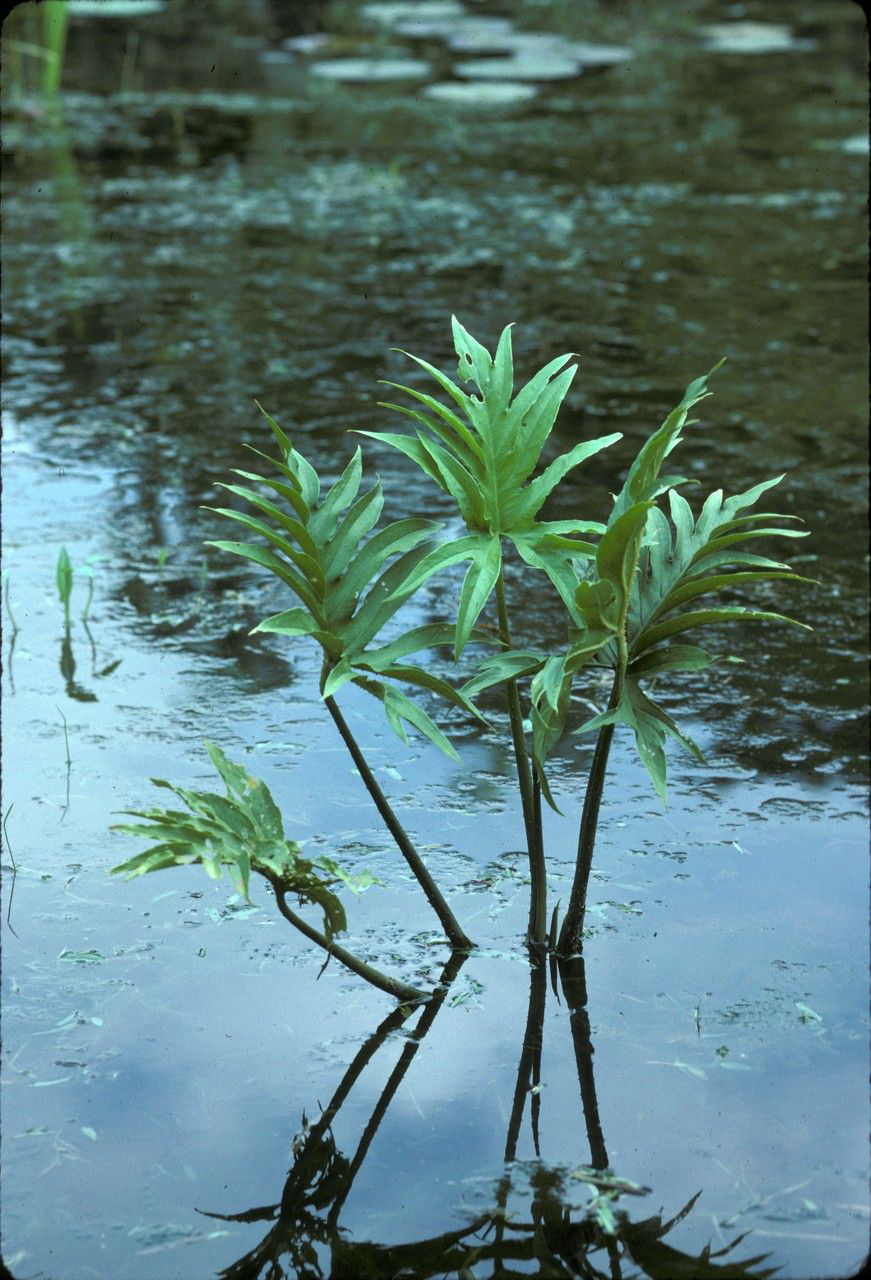
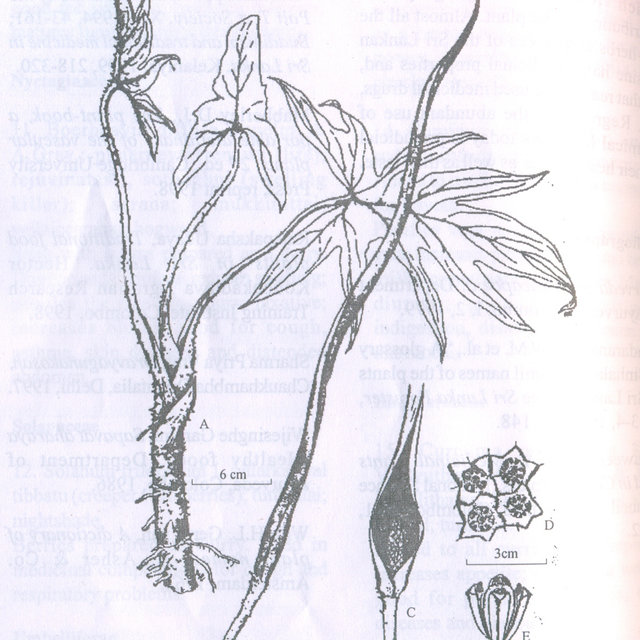
Lasia is a large, spiny, evergreen, herbaceous perennial plant with underground rhizome that normally grows up to 1.5 m tall. The plant is found growing in primary rainforest, freshwater swamp forest, riverine, freshwater pond, lake, river, riverbanks, ditches, moist places in tropical and subtropical forests, sometimes cultivated along fish ponds and rice fields. The plant grows best in waterlogged soils that are rich in nutrients. Lasia plants spread by means of a stem. Stems are long creeping and stoloniferous, erect or ascending, 2.5 cm in diam., internodes with stout prickles. The stem and leaves of the plant are edible and have various medicinal uses.
Leaves
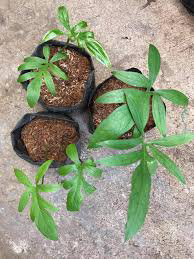
Leaves are alternate, long- and spiky-stalked having broad leaf blades that are arrow-shaped and 20-30 cm long when young. The leaves are divided into 4-8 pairs of lance-shaped lobes up to 4 cm wide when mature. The petiole is 30-40 cm long, veins beneath the petiole and peduncle prickly. It is also sometimes cultivated as a vegetable crop along the margins of ponds.
Flowers
Flowers are borne on a yellow or brown, up to 4 cm long, flowering shoot that is enclosed by a 35-40 cm long, modified leaf (spathe) that is purplish on the outside and greenish inside. Flowering normally takes place in between July and September.
Fruits
Fertile flowers are followed by a hard, rough surfaced fruits that are borne on the axis of the inflorescence.
Traditional uses and benefits of Lasia
- The plant was used as a traditional medicine to treat many inflammatory diseases for centuries.
- Leaves are used for treating coughs, stomachaches, and other pains.
- Rhizomes and leaves are used medicinally for treating lympho-tuberculosis, lymphonoditis, stomach aches, snake and insect bites, injuries, and rheumatism.
- Roots are used in the treatment of throat ailments.
- Leaves and roots are used as a remedy for piles.
- Both the rhizomes and leaves are expectorants.
- The roots are boiled and the water used to bath newborn babies.
- It is also used against stomach ache, colics, rheumatism, and to treat sore throat.
- Lasia spinosa is used ethno-botanically for the treatment of various diseases, including rheumatoid arthritis, inflammation of the lungs, bleeding cough, hemorrhoids, intestinal diseases, stomach pain, and uterine cancer.
- This plant is also recommended as effective for the treatment of sore throat, constipation, to purify the blood, on lung inflammation, bleeding cough, and uterine cancer.
- Rhizomes (roots) are most often used as a remedy for hemorrhoids in Sri Lanka and Malays.
- Root decoction is also useful in gastrointestinal diseases and stomachache, while also stimulating liver function.
- Paste from tender leaves is externally used in burns.
- It is suitable for liver conditions. Due to the high prevalence of fiber, it gives a good motion.
- It reduces unnecessary toxins in the intestines and is effective for other disorders in the intestines.
- Tuber reduces bleeding and is given after indigestion and diarrhea.
- It increases appetite and body weight, reduces urine output and burning sensation in the body.
- It also expels worms.
- In the folk medicine of the Naga tribes of India, the porridge (pudding) of young tender leaves is frequently used to treat intestinal worm infections.
- The tuber reduces bleeding and is given after indigestion and diarrhea (not during).
- Eaten as a food, it increases appetite and body weight, reduces urine output and burning sensation in the body.
- In India, the leaves are used in Ayurvedic medicine to help reduce symptoms of stomachaches, coughs, and asthma.
- The Naga tribes in India have also been known to use them to help treat intestinal worm infections.
- In Sri Lanka, leaves are used in Ancient Sinhalese medicine to help reduce symptoms of digestive problems.
- Bark, seeds, roots and resin are used in medicinal preparations for piles, skin diseases and worm diseases.
- It helps to increase appetite and the function of the kidneys and heart, good for swelling, parasitic diseases and matures tumors.
Medicinal uses of Lasia in selected Asian countries
| Country | Medicinal Uses |
| Bangladesh | · The plant is recommended for colic, rheumatism intestinal diseases. · Corm is used as a remedy for throat affections. · Leaves and corms are given as a cure for piles. · The tuber of plant is used for treatment of rheumatoid arthritis, constipation and to purify blood. |
| India | · The young tender leaves and stalk are used to treat intestinal worm infections and demonstrate profound anti-ceptodal efficacy.
· Furthermore, leaves are used for stomach ache and other pains. · The rhizome is used for treatment of lung inflammation, bleeding cough and the whole plant in uterine. |
| Sri Lanka | · The juice of the rootstock is given as a remedy for piles, hemorrhoids.
· Black Lasia is used as a treatment for chemical poisoning, hemorrhoids and pistula. |
| Vietnam | · The plant is used as an anti-rheumatic and anti-inflammatory remedy. |
| China | · The rhizomes are used medicinally for treating tuberculosis of lymph node, swollen lymph node, stomach, snake and insect bites, injuries, and rheumatism. |
Culinary Uses
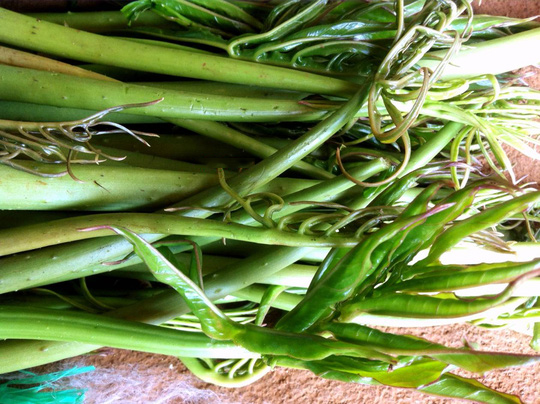
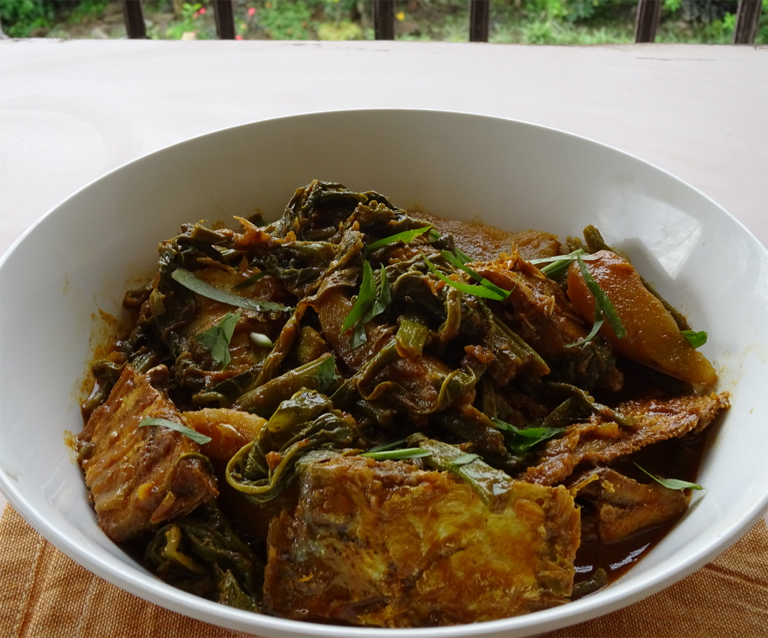
- The peeled leaf stalks (to remove spines) are edible and utilized as a curry flavoring.
- Young leaves and petioles are cooked and used as a vegetable.
- Peeled leaf stalks and young leaves are used as a pot herb.
- They are used in curries and also added to rice.
- In Sri Lanka, the tender leaves, petiole and rhizomes are used as a supplementary dish with staple food rice.
- The peeled rhizomes in raw forms are used to prepare sambal.
- Porridge is also prepared using the rhizomes.
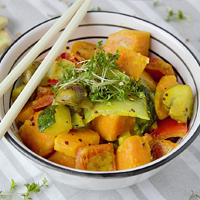
Lasia Stalk curry
Ingredients
- Kohila (Lasia spinosa) about 500g
- 2 Onions
- 5 garlic pieces
- 1 green chili
- few curry leaves
- 1 tsp turmeric powder
- 1/2 tsp chili powder
- salt as you like
- 1/2 tsp curry powder
- coconut milk about 200ml
Direction
- First, remove the outer cover of the plant and wash it very well.
- Then Cut Lasia Stalk into thin slices and to then to small parts.
- Then cut the onions, curry leaves, green chili and mix them to the Lasia Stalk.
- Then and turmeric powder, chili powder, curry powder and mix it.
- Then heat up the pan and add some coconut oil.
- After that add the Lasia Stalk mixture and garlic. Then mix the mixture for about 5 minutes and add the coconut milk.
- Then close the pan lid and let it cook for 20 minutes.
- After that test the salt and deliver to the dish.
Grilled Kohila (Lasia) Kebab

Ingredients
- 2 medium-sized lasia spinosa roots
- 3 medium-sized bell peppers (in different colors)
- 1 large onion
- 1/2 cup of zucchini
- 5 – 6 tbsp. of curd
- 1/2 tsp of turmeric
- 1 tsp of masala powder
- 1/2 tsp of lemon salt
- 1 tsp of salt
- 1/2 tsp of pepper
- 1 tsp of garlic powder
- 1 tsp of onion powder
- 1 tsp of chili powder or paprika
- 1/2 tsp of liquid smoke
- 1 tsp of soy sauce
- 1/2 a lime
Directions
- Wash all the veggies and cut them into 01-inch size cubes/chunks and set aside.
- Add about 2 cups of water to a bowl and add 01 tbsp. of salt and soak the lasia cubes for 10-15 minutes.
- After 15 minutes take the lasia cubes out and leave them on a kitchen towel and pat them dry to reduce the moisture.
- Add curd into a large mixing bowl and mix until it becomes creamy in consistency, and then add turmeric, masala powder, lemon salt, salt, pepper, chili powder, garlic powder, onion powder, soy sauce, and liquid smoke and mix again combining everything evenly.
- Add the lasia cubes and vegetables and mix until everything is well coated with the marinade sauce. Cover the bowl and let it sit for 20-30 minutes to absorb all the flavors.
- Now let’s prepare for grilling; take the skewers and arrange the lasia cubes and veggies as you prefer (make sure you mix up the veggies when arranging them in skewers to look pretty. After all, we eat with our eyes first!
- Now let’s prepare for grilling; take the skewers and arrange the lasia cubes and veggies as you prefer (make sure you mix up the veggies when arranging them in skewers to look pretty. After all, we eat with our eyes first!
- Now let’s prepare for grilling; take the skewers and arrange the lasia cubes and veggies as you prefer (make sure you mix up the veggies when arranging them in skewers to look pretty. After all, we eat with our eyes first!
Tips
- Make sure you soak the lasia cubes in saltwater as it helps them to soften them which in return helps to cook them faster.
- If you don’t want to spend more time grilling these skewers, then make sure you steam the lasia cubes for 05-10 minutes in a steamer so its gets par-cooked which in return takes less time to cook through when grilling.
Other Facts
- Its flowers are pollinated by insects.
- It is suitable for planting on the edges of ponds and water bodies for its attractive inflorescence and leaves.
- Pal noted its use in the treatment of ‘Gargati’, a throat disease of an unspecified animal.
- Perry recorded it as a medicine for elephants.
- In Thailand, it is given orally to male animals for increasing the libido.
Precautions
- Plant consists of oxalate crystals, if eaten, makes the mouth, tongue and throat feel as if hundreds of small needles are digging in to them.
- People with a tendency to rheumatism, arthritis, gout, kidney stones and hyperacidity should take especial caution if including this plant in their diet.
References:
https://www.nparks.gov.sg/florafaunaweb/flora/2/1/2186
http://www.theplantlist.org/tpl1.1/record/kew-108423
http://tropical.theferns.info/viewtropical.php?id=Lasia+spinosa
https://indiabiodiversity.org/species/show/259168
https://powo.science.kew.org/taxon/urn:lsid:ipni.org:names:87418-1
https://en.wikipedia.org/wiki/Lasia
https://www.itis.gov/servlet/SingleRpt/SingleRpt?search_topic=TSN&search_value=811060#null
https://gd.eppo.int/taxon/LBASP
http://uses.plantnet-project.org/en/Lasia_spinosa_(PROSEA)