Health Benefits
    Facebook Twitter Instagram
    Monday, March 23
    Facebook Twitter Pinterest
    Health Benefits
    • Home
    • Dental Health
    • Mental Health
    • Weight Loss
    • Health Wiki
    • Nutrition
    • Healthy Recipe
    • BMI Calculator
    Health Benefits
    Home»Poultry & Seafoods»Lobster-Homarus americanus
    Poultry & Seafoods

    Lobster-Homarus americanus

    By s mDecember 21, 2016Updated:June 18, 2017No Comments4 Mins Read
    Facebook Twitter Pinterest LinkedIn Tumblr Email

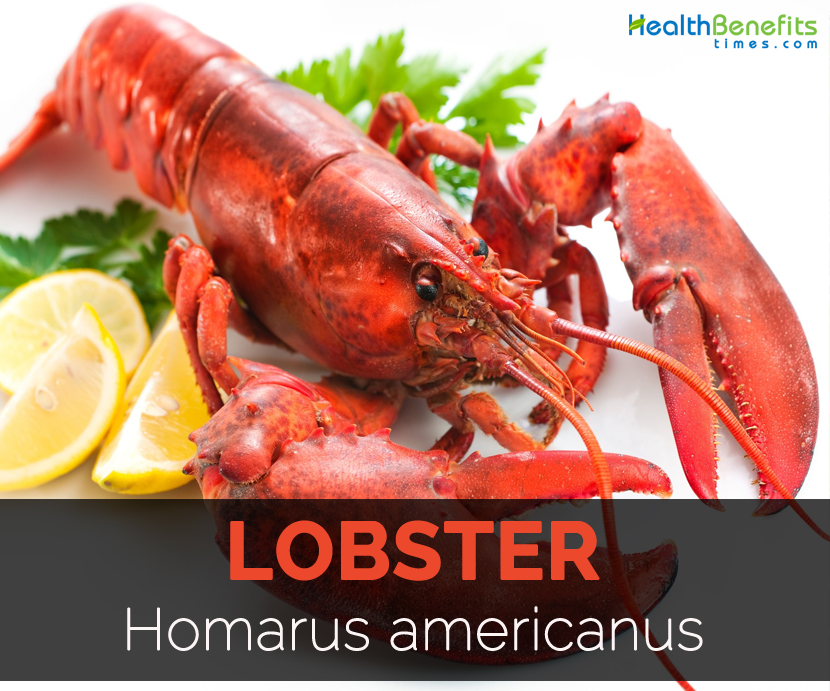
    Lobster is the lobster species that belongs to the family Nephropidae. It is usually found in Atlantic coast of North America from Labrador to New Jersey. They live on the ocean, land and fresh water. It is also called American lobster, Canadian lobster, Northern lobster, True lobster, Maine lobster, Canadian Reds, Blackshell, Buckle shell, Blueshell, Crack backer, Maine lobster, Hard shell lobster, Massach Maine lobster, Northern lobster, New shell, Old shell lobster, Shedder, Northern Atlantic lobster and Softshell. This type of lobsters is bluish green to brown in color having red spines.

    History

    It is found on Atlantic coast of North America from Labrador to New Jersey. It could be found in North Carolina (Cape Hatteras) and Strait of Belle Isle. It is richly available in Gulf of Maine of US and Canada.

    Description

    American lobster measures up to 8-24 inches (200-610 mm) and weighs upto 1-9 pounds (0.45-4.08 kg). It is found in sandy, muddy and rocky bottoms. They live upto 70 years. They have three pairs of antennas which functions as sensory organs.  The eyes of American lobster are sensitive to light and do not see clearly. Their diet is prey, crustaceans, cnidarians and brittle stars.

    Nutritional value

    In 145 grams of lobster, we could find 113.26 g of moisture, 129 calories, 27.55 g of protein, 1.25 g of total fat and 3.1 g of ash. It grants the minerals such as calcium (139 mg), iron (0.42 mg), magnesium (62 mg), phosphorus (268 mg), potassium (334 mg), sodium (705 mg), zinc (5.87 mg), copper(2.248 mg), manganese (0.094 mg) and selenium (106 µg).

    Health benefits of Lobster

    Lobster is delicious that helps to build strong bones, promotes growth, boost brain, lower inflammation, speeds up healing process, prevents heart health and lowers inflammation. The flesh is loaded with various nutrients and minerals but should be consumed in moderate amounts.

    1. Healthy heart

    Lobster possess adequate amount of sodium that helps to prevent atherosclerosis and inflammation. But the people with heart ailments should avoid it due to the presence of omega-6 and 3s. It helps to balance cholesterol if consumed moderately. (1)

    1. Cognitive health

    Lobsters have high amounts of vitamins and minerals such as Vitamin B12 and Vitamin B which is associated to maintain the integrity of nerves. Additionally, it is a great source of choline which raises the formation of neurotransmitters. It also raises the functions of brain. (2)

    1. Provides energy

    It has high amount of protein in the delicious meat. If it is added to diet, it helps to boost energy. (3)

    1. Repairment

    Lobster is a great source of protein which makes the building block in bodies. It repairs the damaged tissues, build new cells and strengthen bones. (4)

    1. Lowers inflammation

    It contains good fat that helps to lower inflammation of the body. The fatty acids such as Omega-3 help to maintain the balance in cholesterol and increase the prostaglandins production. It is vital for cardiovascular conditions, arthritic and circulatory health. (5)

    1. Bone health

    Lobster is great source of phosphorus and calcium which helps to increase the mineral density of bones and prevents osteoporosis as well as age related issues. (6)


    How to Eat         

    • It is consumed by adding it in soups.
    • It is boiled or steamed.
    • It is added to pasta, eggs and mashed potatoes.
    • The minced lobster is used as salad tops.
    • It could be made into burgers or lobster patties.

    Precautions

    The patients of cardiovascular problems, high blood pressure should not use lobster.

    https://www.organicfacts.net/health-benefits/animal-product/health-benefits-lobster.html

    Other Facts        

    • The heaviest American lobster was caught in Nova Scotia, Canada, which weighs about 44.4 lb. (20.1 kg).
    • They smell with the use of their feet.
    • Stomach is divided into two: cardiac stomach and pyloric stomach.
    • The blood of lobster is colorless and turns bluish when it contacts with oxygen.
    • Lobster does not have brains.

    References:

    https://slgo.ca/en/lobster/context/characteristics.html  

    http://www.medicalnewstoday.com/articles/303332.php

    64%
    64%
    Awesome

    Comments

    comments

    L Poultry & Seafoods
    Share. Facebook Twitter Pinterest LinkedIn Tumblr Email
    Previous ArticleTurkey facts and health benefits
    Next Article Crayfish facts and health benefits

    Related Posts

    Health benefits of Lollipop plant

    February 23, 2024

    Health benefits of Locust berry

    November 28, 2023

    Health benefits of Little Medick

    September 17, 2023

    Comments are closed.


    Lobster Scientific Classification

    Scientific Name: Homarus americanus

    Lobster Quick Facts
    Name: Lobster
    Scientific Name: Homarus americanus
    Origin It is found on Atlantic coast of North America from Labrador to New Jersey. It could be found in North Carolina (Cape Hatteras) andn Strait of Belle Isle.
    Colors Bluish green to brown
    Calories 129 Kcal./cup
    Major nutrients Copper, Cu 2.248 mg (249.78%)
    Selenium, Se 106 µg (192.73%)
    Vitamin B-12 (Cobalamine) 2.07 µg (86.25%)
    Tryptophan 0.36 g (81.82%)
    Isoleucine 1.206 g (72.13%)
    Health benefits Healthy heart, Cognitive health, Provides energy, Repairment, Lowers inflammation
    More facts about Lobster
    Rank Scientific Name & (Common Name)
    Domain Eukaryota
    Phylum Arthropoda
    Superphylum Ecdysozoa
    Subphylum Crustacea
    Kingdom Animalia
    Subkingdom Bilateria
    Infrakingdom Protostomia
    Order Decapoda
    Superorder Eucarida
    Suborder Pleocyemata
    Infraorder Astacidea
    Family Nephropidae
    Superfamily Nephropoidea
    Subfamily Nephropinae
    Genus Homarus
    Species Homarus americanus H. Milne
    Class Malacostraca
    Sub Class Eumalacostraca

    [wonderplugin_tabs id=”230″]

    Categories
    • Beverages (78)
    • Dairy (28)
    • Dental Health (15)
    • Equipment (5)
    • Essential OIls (196)
    • Facts (3,000)
    • Foods (259)
    • Fruits (524)
    • Giveaway (1)
    • Grains and Cereals (38)
    • Health & Beauty (761)
    • Herbs and Spices (1,250)
    • Medicines (9)
    • Mental Health (19)
    • Nutritional value (27)
    • Nuts and seeds (73)
    • Oils (81)
    • Pets (4)
    • Poultry & Seafoods (67)
    • Pulses and Beans (17)
    • Reviews (25)
    • supplement (2)
    • Vegetables (306)
    • Weight Loss (23)

    Science backed health benefits of Basil

    Science Backed Health Benefits of Yellow Beans

    Science Backed Health Benefits of Oat Bran

    Science Backed Health Benefits of Yardlong beans (Vigna unguiculata subsp. sesquipedalis)

    Science Backed Health Benefits of Apple Cider Vinegar

    Science Backed Health Benefits of Pigeon peas (Cajanus cajan)

    ABOUT
    Home
    About us
    Contact us
    Privacy Policy
    Terms & conditions
    Disclaimer
    Direct Communication
    e-mail: mail.healthbenefit@gmail.com
    Whatsapp: +977-9841146511
    Viber: +977-9841146511
    Useful
    Health Wiki
    Nutrition
    Facebook Twitter Pinterest
    © 2026 www.healthbenefitstimes.com All rights reserved.

    Type above and press Enter to search. Press Esc to cancel.

    ×

    Log In

    Forgot Password?

    Not registered yet? Create an Account