

Dry mouth caused by medications, medically known as drug-induced xerostomia, occurs when prescription or over-the-counter drugs reduce the amount of saliva your mouth produces 1. Hundreds of common medications cause this side effect, with the most frequent culprits being antidepressants, antihistamines, and blood pressure pills 2. These drugs often interrupt the nerve signals that tell your salivary glands to produce moisture. A chronic lack of saliva is more than just an uncomfortable, sticky feeling; it poses a serious threat to your dental health. Because saliva naturally washes away food particles and neutralizes decay-causing acids, a persistently dry mouth significantly increases your risk for severe cavities, gum disease, and oral fungal infections 3. You might also experience a sore throat, bad breath, and difficulty swallowing dry foods. Management typically involves sipping water frequently, stimulating moisture with sugar-free gum, using artificial saliva substitutes, and consulting your physician to potentially adjust the offending medication 4.
Causes of dry mouth after taking medicine
1. Blocking the “Rest and Digest” Signals (Anticholinergic Effects)
Your salivary glands rely on the parasympathetic nervous system specifically a chemical messenger called acetylcholine to trigger saliva production. Over 600 medications block these specific receptors (known as muscarinic receptors) as an unintended side effect 5. Without this chemical signal, saliva flow drops dramatically.
Common culprits: Antihistamines (allergy meds), overactive bladder medications, antipsychotics, and medications for Parkinson’s disease.
2. Changing Saliva’s Consistency (Sympathomimetic Effects)
Some drugs stimulate the sympathetic nervous system (your “fight or flight” response). Instead of shutting down saliva production completely, these medications alter its composition, making the secretions thick, sticky, and rich in proteins rather than watery 6. This creates the sensation of a gummy, dry mouth.
Common culprits: Decongestants (like pseudoephedrine), asthma bronchodilators, and ADHD stimulants.
3. Altering Brain Chemistry (Neurotransmitter Interference)
Medications that modify serotonin and norepinephrine levels in the brain are excellent for regulating mood, but they can also disrupt the neurological pathways that control the salivary nuclei in the central nervous system. This disruption ultimately leads to reduced salivary gland function 6.
Common culprits: SSRI and SNRI antidepressants.
4. Systemic Fluid Depletion
Saliva is over 99% water. When a medication forces your body to excrete excess fluid, there is simply less systemic water available to keep your mouth lubricated.
Common culprits: Diuretics (“water pills” used for high blood pressure or heart failure).
5. The “Polypharmacy” Multiplier
Taking multiple medications compounds the problem. The risk of medication-induced xerostomia increases significantly when taking three or more prescription drugs daily. Their individual side effects stack together to heavily suppress salivary flow, dramatically increasing the risk of dental decay 7.
List of Medicines that Can Cause Dry Mouth
1. Urological and Bladder Control Medications
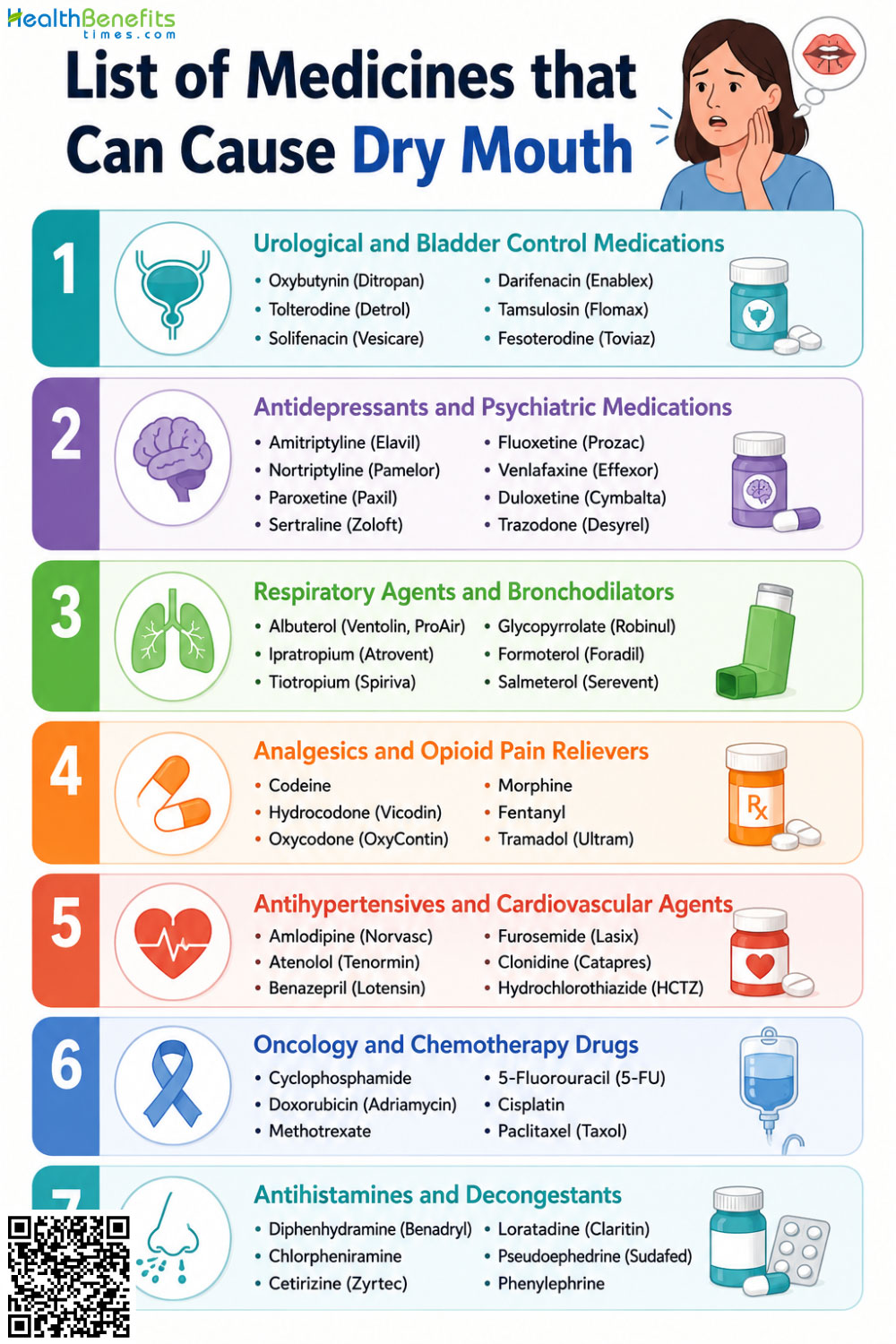
Pharmaceuticals designed to treat overactive bladder and urinary incontinence possess some of the strongest dry mouth-causing profiles in modern medicine 8. These specific drugs are explicitly engineered to relax smooth muscle tissue by blocking muscarinic receptors throughout the body. Because the receptors in the human bladder are biologically identical to those located in the salivary glands, taking these medications results in a profound drying effect across the oral cavity. Specific medications in this category include darifenacin, solifenacin, tolterodine, oxybutynin, and fesoterodine 9.
2. Antidepressants and Psychiatric Medications
Psychiatric interventions, particularly those modulating mood and anxiety, are notorious for fundamentally altering oral hydration levels 10. Tricyclic antidepressants, Selective Serotonin Reuptake Inhibitors (SSRIs), and Serotonin-Norepinephrine Reuptake Inhibitors (SNRIs) frequently induce dry mouth through strong central anticholinergic effects and by increasing active serotonin at the synaptic cleft. Common examples of these medications include amitriptyline, fluoxetine, duloxetine, and bupropion 11.
3. Respiratory Agents and Bronchodilators
Routine treatments for asthma and chronic obstructive pulmonary disease (COPD) frequently result in localized and systemic oral dryness due to their active chemical properties 12. Bronchodilators such as tiotropium, ipratropium, salbutamol, and salmeterol operate primarily as beta agonists or antimuscarinics to open restricted airways. Because many of these essential medications are administered via oral inhalers, a significant portion of the inhaled chemical dose is directly deposited in the mouth, pharynx, and throat, causing immediate localized tissue drying 13.
4. Analgesics and Opioid Pain Relievers
Management of chronic and acute pain often relies heavily on systemic medications that inadvertently depress standard salivary function 14. Opioids and neuropathic pain modulators like tramadol, gabapentin, and pregabalin actively block noradrenaline reuptake within the central nervous system. This specific nervous system blockade directly inhibits the basic salivary reflex arc, effectively preventing the human brain from sending the necessary fluid-production signals to the mouth 15.
5. Anti-hypertensives and Cardiovascular Agents
Controlling high blood pressure generally involves manipulating the body’s overall fluid dynamics and vascular constriction, both of which drastically impact oral moisture 16. Cardiovascular agents such as atenolol, metoprolol, clonidine, and prazosin operate by directly blocking alpha-1 and beta-2 adrenergic receptors. Diuretics, which are also frequently used for daily hypertension management, intentionally force the kidneys to excrete excess fluid, lowering overall systemic hydration and leaving the salivary glands with insufficient biological resources to produce saliva 17.
6. Oncology and Chemotherapy Drugs
Advanced cancer therapeutics aggressively target rapidly dividing cells and tumor growth pathways, but they simultaneously carry severe collateral impacts on glandular tissues 1. Multi-target receptor tyrosine kinase inhibitors, such as sunitinib and cabozantinib, chemically restrict blood flow to the salivary glands, thereby suppressing saliva production. Additionally, targeted inhibitors heavily impact oral mucous membranes and systemic immunity, frequently triggering profound dry mouth as a primary, unavoidable side effect during long-term oncology treatment 18.
7. Antihistamines and Decongestants
Easily accessible over-the-counter and prescription allergy remedies represent some of the most common, widespread triggers of severe xerostomia 19. Sedating antihistamines, including diphenhydramine, doxylamine, and promethazine, possess a remarkably strong central inhibitory action on both histamine type 1 receptors and muscarinic receptors. While highly effective at rapidly drying up nasal secretions during an active allergic reaction or a head cold, these drugs lack targeting specificity and simultaneously dry up the entire oral cavity 20.
How to hydrate mouth Caused by taking medicine?
1. Optimize Your Hydration Habits
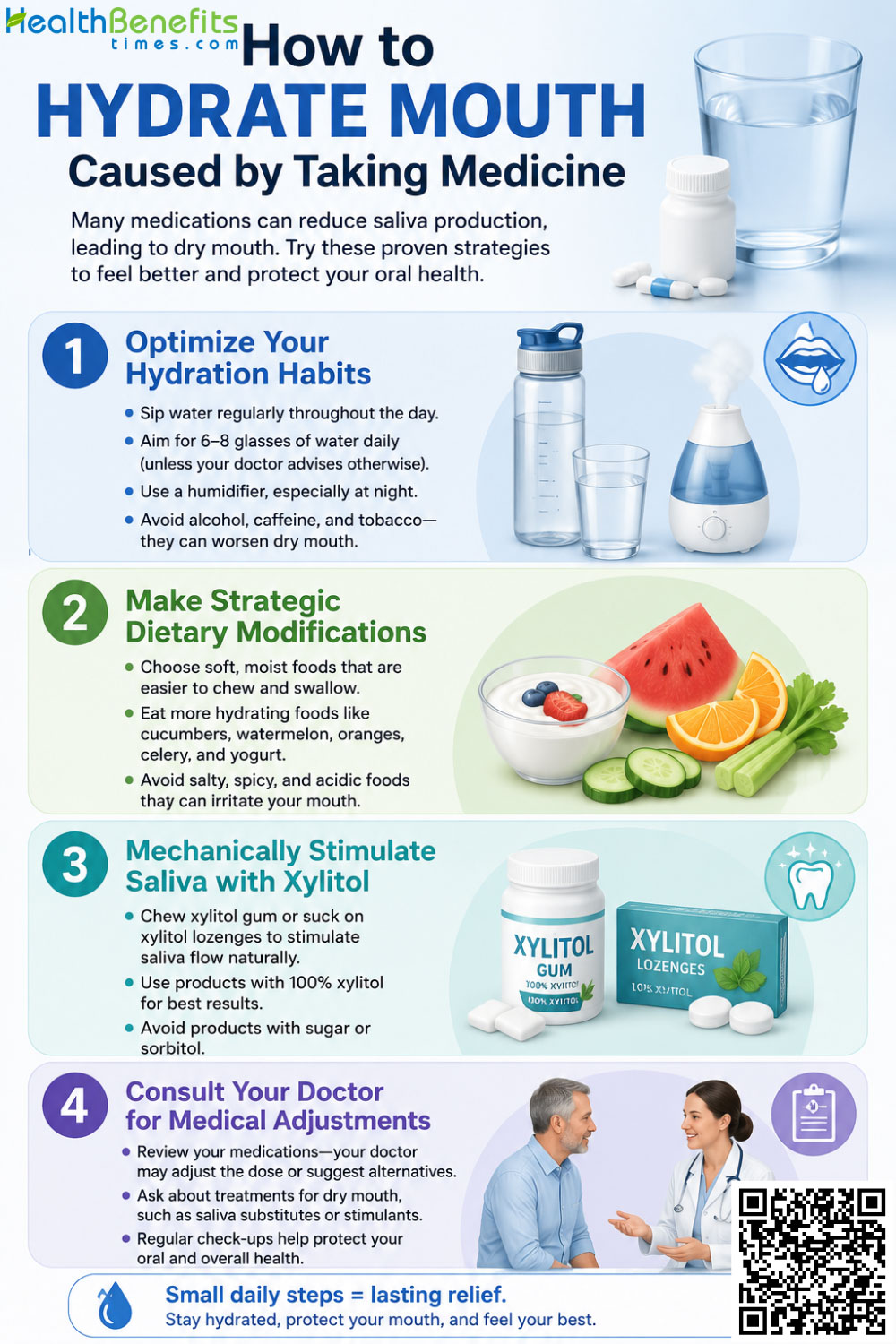
Hydration must be carefully managed rather than maximized through excessive volume. You should frequently sip very small amounts of water throughout the day or allow plain ice chips to slowly dissolve in your mouth to keep the oral tissues continuously lubricated 16. During meals, adopt a rhythmic approach: take a sip of a beverage, take a modest bite of food, and then wash it down with another sip to aid the impaired swallowing process. Avoid compulsive water chugging excessive volumes can actually wash away the delicate, protective oral mucus film lining your mouth, paradoxically making dryness symptoms feel much more severe 1.
2. Make Strategic Dietary Modifications
Without saliva to physically wash away food residue, you must stringently limit your daily intake of fermentable carbohydrates and sticky foods (like cookies, chips, and gummy candies) to prevent rapid dental decay. Furthermore, eliminate highly acidic beverages like carbonated sodas, sports drinks, and lemon products, which aggressively erode tooth enamel in a dry environment. Caffeine and alcohol must also be restricted immediately, as both are mild chemical diuretics that promote bodily fluid loss and significantly worsen the sensation of oral dryness 21.
3. Mechanically Stimulate Saliva with Xylitol
Stimulating whatever functional salivary tissue remains is a highly effective strategy. Chewing sugar-free gum or actively sucking on sugar-free hard candies can forcefully trigger the natural mechanical salivary reflex, prompting immediate fluid release. Look specifically for products formulated with xylitol, a natural therapeutic sweetener 11. Oral bacteria are biologically incapable of using xylitol as a food source, meaning it actively interferes with the aggressive growth of decay-causing microorganisms while simultaneously prompting your glands to produce essential moisture 22.
4. Consult Your Doctor for Medical Adjustments
If lifestyle modifications and over-the-counter interventions fall short, consult your primary physician or dentist. Your doctor may be able to safely alter the dosage of the offending medication or swap it entirely for an alternative drug in a different chemical class that carries a much lower risk of xerostomia 18. In severe cases where glandular tissue is still partially viable, a specialist may prescribe a systemic secretagogue such as pilocarpine or cevimeline which are powerful, FDA-approved medications specifically designed to forcefully stimulate saliva production from within the body 10.
Myths and Misconceptions
Public understanding of dry mouth is frequently clouded by persistent misinformation, leading many individuals to ignore severe clinical symptoms or attempt counterproductive home remedies. Clarifying these fallacies is absolutely essential for proper oral healthcare and effective medication management.
| Myth | Reality |
| Dry mouth is simply a normal, unavoidable part of getting older. | Reality: Aging itself does not significantly reduce physiological saliva production. Xerostomia in older adults is almost entirely driven by the increased use of multiple medications and the presence of systemic diseases, not the biological aging process. |
| Drinking massive amounts of water is the best and only way to cure a dry mouth. 23 | Reality: While staying hydrated is important, continuously washing out the mouth with excessive water strips away the natural, protective mucosal film. Artificial saliva substitutes, specialized lubricating gels, and xylitol stimulants provide far better, long-lasting relief. |
| Only heavy-duty prescription drugs are capable of causing dry mouth. 9. | Reality: Dozens of highly common over-the-counter (OTC) medications, particularly allergy antihistamines and routine cold decongestants, are exceptionally potent triggers of severe oral dryness and tissue dehydration. |
| A dry mouth is just a minor annoyance that doesn’t require professional medical attention. {% https://pmc.ncbi.nlm.nih.gov/articles/PMC9112430/ %} | Reality: Saliva is a critical medical defense fluid. A chronic lack of saliva rapidly leads to aggressive tooth decay, severe fungal infections, malnutrition due to swallowing difficulties, and a severe degradation of overall quality of life. |
| If a medication makes your mouth feel dry, you should immediately stop taking it. 18 | Reality: You should never abruptly discontinue a prescribed medical treatment without direct medical supervision. Doctors can often manage the side effect by precisely adjusting the dosage or carefully substituting the drug for a safer alternative. |