

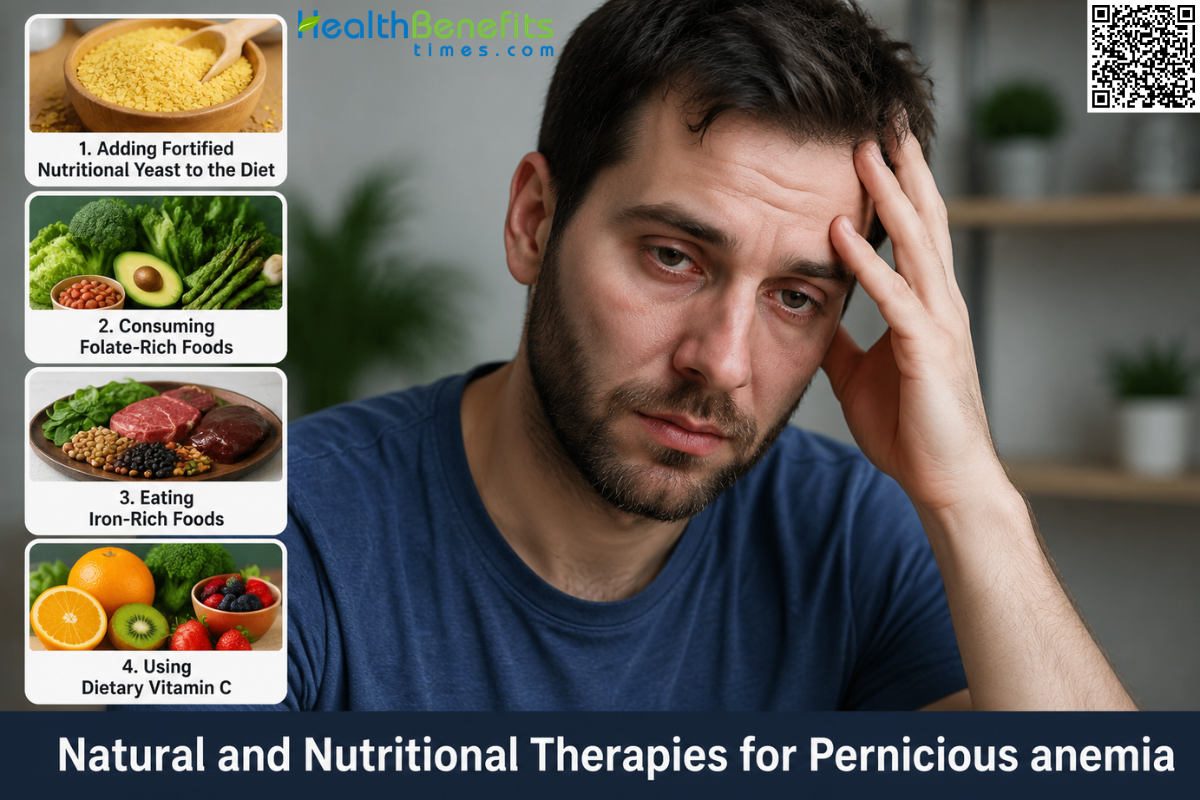
Pernicious anemia is an autoimmune disorder that prevents the body from absorbing dietary vitamin B12, a nutrient essential for producing healthy blood cells and maintaining normal nerve function. In a healthy digestive system, specialized stomach cells produce a protein called intrinsic factor, which is strictly required to carry vitamin B12 into the bloodstream 1. In individuals with pernicious anemia, the immune system mistakenly destroys these stomach cells, halting intrinsic factor production and leading to a severe vitamin deficiency 2. Consequently, the body produces abnormally large, poorly functioning red blood cells that fail to deliver oxygen efficiently 3. Over time, this lack of B12 causes extreme fatigue, physical weakness, and potentially permanent nerve damage, such as numbness in the extremities 4. While it is a lifelong condition primarily affecting adults over 60, standard clinical protocols using regular vitamin B12 replacement therapy effectively restore normal blood function and prevent further neurological complications 3.
Causes of Pernicious anemia
- Autoimmune Destruction of Stomach Cells: The primary cause of pernicious anemia is an abnormal immune response where the body mistakenly attacks its own gastric parietal cells 4. These specialized cells in the stomach lining are required to produce intrinsic factor, and their destruction directly prevents the digestive tract from absorbing vitamin B12 from consumed food 1.
- Intrinsic Factor Antibodies: In addition to attacking stomach cells, the immune system frequently produces specific autoantibodies that target and bind directly to the intrinsic factor protein itself 4. This physical blockage stops dietary vitamin B12 from attaching to the transport protein, meaning the vitamin simply passes through the digestive system and is excreted rather than entering the bloodstream 1.
- Genetic Predisposition and Co-existing Autoimmune Conditions: A genetic vulnerability significantly increases the risk of developing this condition, as pernicious anemia frequently clusters within families 5. Furthermore, the disease is closely tied to broader immune system dysfunction and commonly develops in individuals who already suffer from other autoimmune disorders, such as Type 1 diabetes, autoimmune thyroid disease (Hashimoto’s), or vitiligo 4.
Symptoms of Pernicious anemia
- Extreme Fatigue and Weakness: Because the body lacks enough healthy red blood cells to transport oxygen effectively, individuals experience profound exhaustion, lethargy, and shortness of breath even during light, everyday activities 4.
- Nerve Damage and Tingling: A chronic deficiency of vitamin B12 damages the myelin sheath, the protective covering of the nerves, causing a persistent “pins and needles” sensation, numbness in the hands and feet, and an unsteady, wobbling gait 1.
- Swollen and Smooth Tongue: A common physical sign is a noticeably thick, red, and painfully smooth tongue, a condition clinically termed glossitis, which often leads to a diminished sense of taste and difficulty swallowing 4.
- Cognitive Decline and Mood Changes: The central nervous system relies heavily on vitamin B12, and its absence can trigger significant mental changes, including severe memory loss, ongoing confusion, poor concentration, and psychological symptoms such as depression 4.
- Cardiovascular Strain: To compensate for the severe drop in oxygen-carrying capacity in the blood, the heart is forced to pump faster and harder, resulting in noticeable heart palpitations, an unusually rapid heart rate, and occasional chest pain 1.
- Digestive Issues and Weight Loss: The lack of stomach acid and intrinsic factor frequently disrupts normal digestion, leading to symptoms like nausea, persistent bloating, a loss of appetite, and unintended weight loss over time 4.
Natural and Nutritional Therapies for Pernicious anemia
1. High-Dose Oral Vitamin B12 Supplements
How it may help
In pernicious anemia, the stomach lacks the specific protein needed to absorb standard dietary amounts of vitamin B12. However, taking exceptionally large oral doses forces a small fraction of the vitamin to absorb directly across the intestinal wall, bypassing the need for the missing stomach protein entirely.
What research says
Clinical evidence confirms that high-dose daily oral vitamin B12 supplements are as effective as traditional muscle injections for treating pernicious anemia 6. Research shows that daily doses of 1,000 to 2,000 micrograms successfully restore healthy blood levels and reverse the disease’s physical and neurological symptoms 7.
How to use it safely
You must take daily doses of 1,000 to 2,000 micrograms strictly under medical supervision 8. Work with your healthcare provider to schedule regular blood tests, ensuring this oral approach consistently maintains adequate vitamin levels to protect your long-term nerve and brain health.
Potential precautions or side effects
High-dose oral vitamin B12 is highly safe because the body easily excretes excess amounts in urine 8. In rare cases, individuals may experience mild diarrhea, dizziness, or skin rashes.
2. Under-the-Tongue (Sublingual) Vitamin B12 Therapy
How it may help
Sublingual therapy involves placing a dissolving tablet under the tongue. This method allows vitamin B12 to enter the bloodstream directly through the rich network of mucous membranes. By completely bypassing the stomach and digestive tract, this therapy overcomes the absorption failures that define pernicious anemia.
What research says
Clinical studies demonstrate that sublingual vitamin B12 is highly effective for treating severe deficiencies, performing just as well as standard muscle injections or high-dose oral pills 9. Researchers conclude that sublingual administration successfully restores healthy vitamin levels, making it a reliable, needle-free alternative 10.
How to use it safely
Place the tablet under your tongue and let it dissolve completely without chewing. You must work with a healthcare provider to establish the correct daily dosage and undergo regular blood tests to ensure the therapy maintains healthy vitamin levels 8.
Potential precautions or side effects
Sublingual B12 is exceptionally safe because the body naturally removes unneeded amounts in urine 8. Very rarely, some individuals might experience mild headaches, nausea, or slight tingling sensations.
3. Increasing Intake of Vitamin B12-Fortified Cereals and Grains
How it may help
Fortified grains and cereals contain synthetic vitamin B12 that is not bound to food proteins. This free form of the vitamin bypasses the initial digestive steps requiring stomach acid 8. While it cannot cure pernicious anemia alone, it provides a highly absorbable dietary nutrient to support broader treatment plans.
What research says
Research confirms that fortified cereals provide a highly bioavailable form of vitamin B12 that significantly improves daily nutrient intake 8. However, clinical guidelines emphasize that because pernicious anemia causes severe absorption failures, dietary foods alone cannot supply the massive doses required to reverse the condition without accompanying medical therapy 1.
How to use it safely
Incorporate fortified breakfast cereals or grains into your daily meals as a supportive dietary measure. You must never rely on these foods as a replacement for prescribed medical treatments. Always coordinate your diet with your doctor to ensure you receive adequate clinical therapy 8.
Potential precautions or side effects
Fortified cereals are exceptionally safe and pose no risk of vitamin B12 toxicity. However, relying strictly on food instead of prescribed high-dose clinical treatments will lead to permanent nerve damage 4.
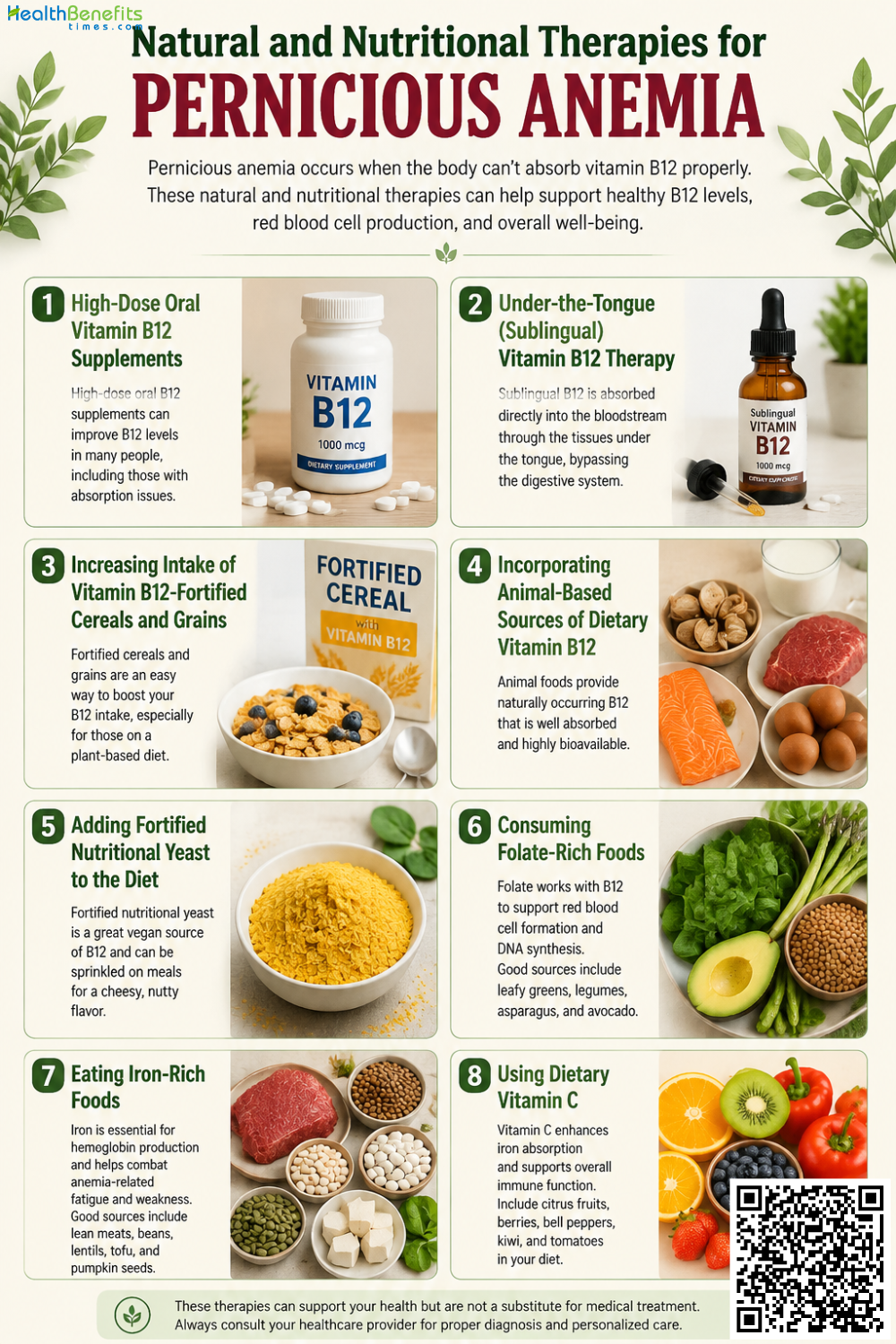
4. Incorporating Animal-Based Sources of Dietary Vitamin B12
How it may help
Animal products like meat, poultry, fish, eggs, and dairy are the primary natural dietary sources of vitamin B12 8. While consuming these foods supports general nutrition, the lack of intrinsic factor in pernicious anemia prevents the digestive system from effectively absorbing this protein-bound vitamin from food alone 1.
What research says
Clinical evidence establishes that naturally occurring vitamin B12 in animal foods requires healthy stomach acid and intrinsic factor for absorption 8. Consequently, researchers conclude that relying solely on an animal-based diet is entirely ineffective for treating pernicious anemia, as the severe absorption failure requires direct, high-dose medical therapies 6.
How to use it safely
Include lean meats, fish, and dairy in your daily meals to maintain general health and provide essential proteins. However, you must never use dietary changes to replace your prescribed vitamin B12 therapies, as food alone cannot cure this specific autoimmune condition 4.
Potential precautions or side effects
The primary danger is relying strictly on food sources, which will result in severe, irreversible nerve damage 4. Additionally, balance your dietary intake to avoid consuming excessive saturated fats.
5. Adding Fortified Nutritional Yeast to the Diet
How it may help
Fortified nutritional yeast provides a plant-based source of synthetic vitamin B12. Because this specific form of the vitamin is not attached to food proteins, it requires less stomach acid for initial digestion 8. It serves as a supportive dietary addition, though it cannot overcome the severe absorption barriers of pernicious anemia alone.
What research says
Research confirms that fortified nutritional yeast effectively supplies highly bioavailable vitamin B12 for healthy individuals 8. However, clinical studies emphasize that without intrinsic factor, the digestive system absorbs roughly one percent of free vitamin B12, making dietary yeast entirely inadequate as a primary treatment for pernicious anemia 1.
How to use it safely
You can safely sprinkle one to two tablespoons of fortified nutritional yeast onto meals daily to boost your general vitamin intake. However, you must continue relying exclusively on your doctor-prescribed, high-dose medical therapies to properly treat and manage pernicious anemia 8.
Potential precautions or side effects
Nutritional yeast is generally safe, but using it to replace prescribed medical treatments will cause irreversible nerve damage 4. Some individuals may occasionally experience mild digestive upset.
6. Consuming Folate-Rich Foods
How it may help
Folate works closely alongside vitamin B12 to synthesize DNA and produce healthy red blood cells 11. Ensuring adequate dietary folate from leafy greens, beans, and lentils supports bone marrow function and helps correct the abnormally large, malfunctioning blood cells characteristic of pernicious anemia 4.
What research says
Research indicates that high folate intake successfully reverses the physical blood abnormalities caused by a vitamin B12 deficiency 12. However, clinical studies explicitly warn that treating pernicious anemia with folate alone merely “masks” the underlying disease, completely failing to stop the severe and irreversible nerve damage that vitamin B12 deficiency causes 13.
How to use it safely
Incorporate natural, folate-rich foods like spinach, asparagus, and legumes into your daily diet to support general blood health. You must always ensure you are simultaneously receiving proper vitamin B12 medical therapy prescribed by your doctor to actively protect your brain and nervous system 13.
Potential precautions or side effects
Never take high-dose folic acid supplements without concurrent vitamin B12 therapy, as this hides the deficiency and allows permanent nerve damage to progress completely unnoticed 14.
7. Eating Iron-Rich Foods
How it may help
Pernicious anemia frequently destroys the stomach cells that produce acid, severely reducing the digestive system’s ability to absorb iron 4. Eating iron-rich foods helps prevent a secondary deficiency. Additionally, when vitamin B12 treatments begin rapidly building new red blood cells, the body requires extra iron to complete this process.
What research says
Clinical studies reveal that up to half of all individuals with pernicious anemia also suffer from an underlying iron deficiency 15. Researchers emphasize that starting vitamin B12 therapy triggers sudden blood cell production that quickly drains existing iron stores, making concurrent iron management essential for a full recovery 15.
How to use it safely
Include natural sources of iron, such as lean meats, lentils, and spinach, in your daily meals. Because pernicious anemia impairs normal absorption, dietary iron might be insufficient. Always work with your healthcare provider to monitor your blood and take targeted iron supplements only if officially prescribed.
Potential precautions or side effects
Taking high-dose iron supplements without a doctor’s prescription can cause severe constipation, stomach cramps, and dangerous organ toxicity 16. Rely primarily on food unless directed otherwise.
8. Using Dietary Vitamin C
How it may help
Pernicious anemia often severely reduces stomach acid, which impairs the body’s ability to absorb iron and causes secondary deficiencies. Consuming dietary vitamin C directly improves the digestive tract’s ability to absorb plant-based iron, ensuring the body has the necessary minerals to build healthy new red blood cells during recovery.
What research says
Research confirms that vitamin C significantly enhances iron absorption by converting dietary iron into a form the intestines can easily process 17. However, clinical studies also warn that consuming excessively high doses of vitamin C can actually break down and destroy dietary vitamin B12 8.
How to use it safely
Include natural vitamin C sources like citrus fruits, bell peppers, and strawberries in your meals, particularly alongside iron-rich foods. To prevent negative interactions, you must separate your nutrients by taking any vitamin C supplements at least two hours after your oral vitamin B12 therapies 8.
Potential precautions or side effects
Taking massive doses of vitamin C supplements can cause severe diarrhea, nausea, and stomach cramps 17. Never take high-dose vitamin C concurrently with oral B12 treatments.
Foods to Avoid When You suffer from Pernicious anemia
1. Alcoholic Beverages
Alcohol damages the stomach lining and liver, severely impairing the body’s remaining ability to absorb and store any available vitamin B12 1.
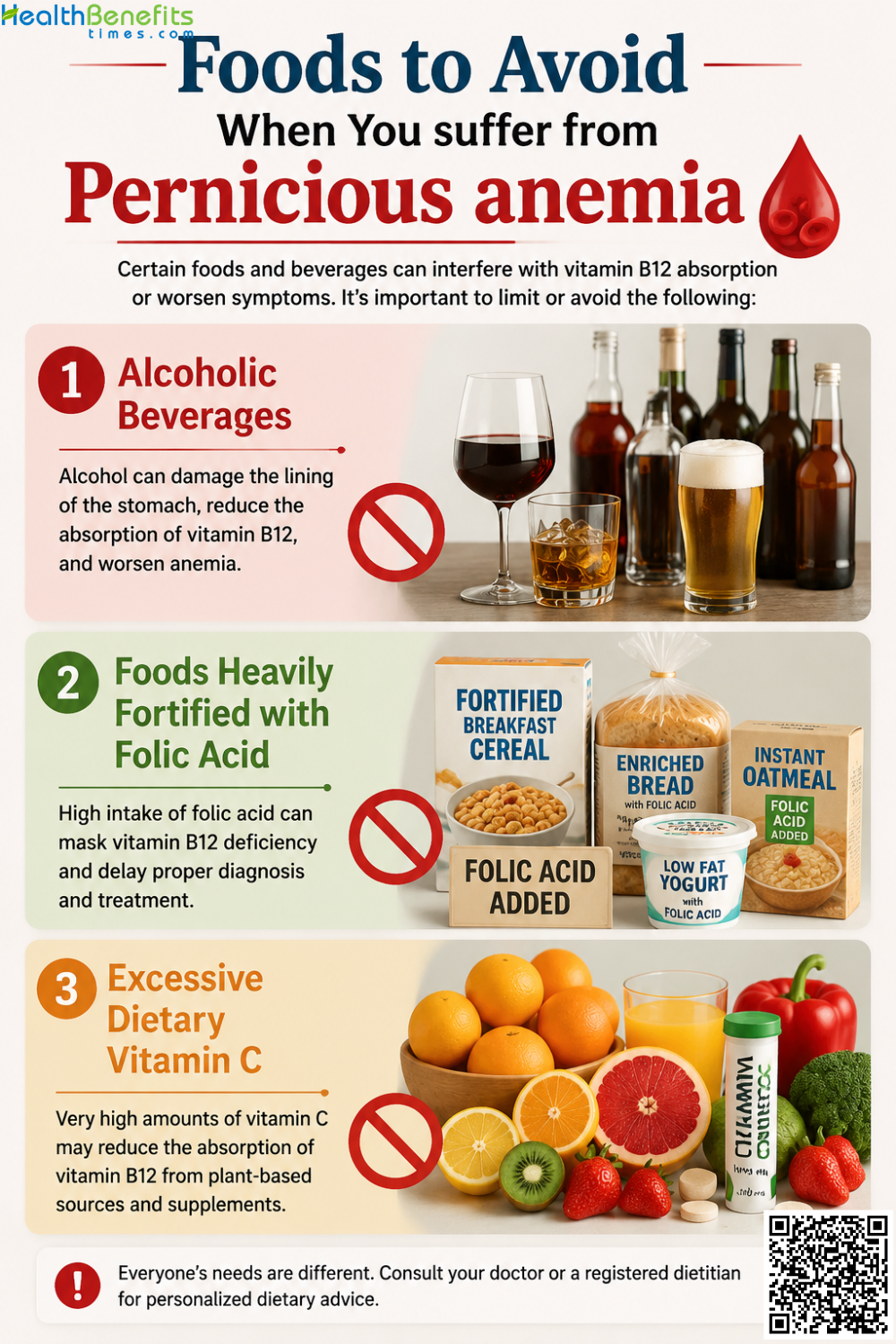
2. Foods Heavily Fortified with Folic Acid
Consuming excessive synthetic folic acid hides the dangerous blood abnormalities of a vitamin B12 deficiency, allowing irreversible nerve damage to progress entirely unnoticed 18.
3. Excessive Dietary Vitamin C
Consuming massive amounts of vitamin C directly alongside meals can chemically break down and destroy the dietary vitamin B12 present in your digestive tract 8.
When to see Doctor when you suffer from Pernicious anemia
1. Nerve Damage Symptoms
Seek medical care if you experience new numbness or tingling in your hands and feet, as this indicates progressive, potentially irreversible nerve damage requiring immediate treatment 4.
2. Cardiovascular Strain
Go to an emergency room if you develop severe shortness of breath, rapid heart palpitations, or chest pain. Severe anemia dangerously forces your heart to overwork 1.
3. Cognitive and Mental Changes
Contact a healthcare provider promptly if you notice sudden confusion, severe memory loss, or profound mood changes, as these strongly signal central nervous system complications 4.
4. Balance and Mobility Issues
Schedule a medical evaluation if you develop an unsteady gait or frequently lose your balance. Unsteadiness implies advanced spinal cord damage caused by severe vitamin B12 deficiency 1.
5. Missed Medical Treatments
Consult your doctor immediately if you miss a scheduled vitamin B12 injection or pill to prevent a dangerous disease relapse and permanent physical damage 3