


Polymyositis is a rare, chronic autoimmune disease that causes progressive muscle inflammation and weakness. It occurs when the immune system mistakenly activates cytotoxic T cells to attack healthy skeletal muscle fibers, leading to persistent tissue damage 1. The condition primarily affects proximal muscles those closest to the trunk, such as the shoulders, hips, and thighs which makes everyday actions like climbing stairs or rising from a chair increasingly difficult. Beyond muscular impairment, polymyositis is a systemic disorder that can trigger severe complications, including swallowing difficulties and interstitial lung disease 2. It most commonly develops in adults between 50 and 70 years old and affects females more frequently than males 3. Because it is an ongoing rheumatological disease, there is no definitive cure. Instead, clinical management requires long-term treatment with high-dose corticosteroids or immunomodulators to suppress the abnormal immune response and preserve physical function 3.
Causes of Polymyositis
1. Autoimmune System Dysfunction
The exact initial cause of polymyositis remains unknown, but the condition is fundamentally driven by a malfunctioning immune response. The immune system incorrectly directs specific white blood cells, known as cytotoxic T cells and macrophages, to target and destroy healthy skeletal muscle antigens 1. This misdirected cellular attack leads to chronic tissue inflammation, the breakdown of muscle fibers, and the progressive physical weakness characteristic of the disease.
2. Viral Infections
Certain viral illnesses can act as environmental triggers that initiate the autoimmune process in susceptible individuals. Medical literature identifies retroviruses, such as the human immunodeficiency virus (HIV) and human T-lymphotropic virus 1 (HTLV-1), as well as the hepatitis C virus, as common infectious catalysts 1. Additionally, clinical case studies document instances of polymyositis developing as an inflammatory complication following recovery from the virus responsible for COVID-19 4.
3. Genetic Susceptibility
An individual’s genetic makeup plays a critical role in their likelihood of developing inflammatory muscle diseases. Researchers have identified that specific hereditary variations in genes related to the major histocompatibility complex (MHC)—a system that normally helps the body recognize foreign threats—strongly increase the risk of an autoimmune misfire 5. This genetic predisposition generally requires an external trigger, such as a viral infection, to actively start the disease process.
4. Associated Systemic Diseases
Polymyositis frequently develops in patients who already suffer from other systemic health issues or immune system disorders. It commonly overlaps with existing connective tissue diseases, such as lupus, rheumatoid arthritis, or Sjogren’s syndrome, which indicates a broader underlying failure in the body’s immune regulation 1. In some cases, the condition also emerges as a secondary complication linked to the presence of hidden underlying cancers.
Symptoms of Polymyositis
- Symmetrical Proximal Muscle Weakness: The most prominent symptom is the gradual, progressive weakening of the muscles closest to the center of the body, specifically the shoulders, hips, thighs, and neck 1. This weakness develops equally on both sides of the body, making everyday physical tasks such as standing up from a chair, climbing stairs, lifting objects, or raising the arms overhead to comb hair increasingly difficult to perform 1.
- Swallowing Difficulties (Dysphagia): As the systemic inflammation spreads, it frequently impairs the muscles of the throat and the upper portion of the esophagus 1. This specific muscular involvement causes dysphagia, which severely restricts a person’s ability to safely swallow solid foods and liquids without choking 1.
- Respiratory and Pulmonary Issues: The autoimmune attack often extends to the respiratory system, frequently leading to interstitial lung disease, a severe complication where the lung tissue becomes inflamed and scarred 1. Consequently, patients regularly experience shortness of breath, a persistent dry cough, and chest tightness, which can be compounded by physical weakness in the chest muscles 1.
- Systemic and Constitutional Symptoms: The continuous abnormal immune response triggers widespread physical stress, resulting in general whole-body symptoms. Individuals commonly experience a persistent low-grade fever, loss of appetite, unintended weight loss, and chronic fatigue 1.
- Joint Pain and Circulatory Problems: Joint pain, known clinically as arthralgia, frequently accompanies muscle weakness and serves as a key indicator of underlying autoimmune activity 1. Furthermore, patients may develop Raynaud phenomenon, a condition where the blood vessels spasm, causing the fingers to suddenly discolor, ache, and tighten when exposed to cold temperatures or emotional stress 1.
Natural Remedies for Polymyositis
1. Supervised Aerobic Exercise Programs
How it may help
Supervised aerobic exercise increases cardiovascular fitness, reduces fatigue, and improves overall muscle endurance without worsening inflammation. By participating in controlled physical activity, individuals can prevent severe muscle wasting, enhance their ability to perform daily tasks, and significantly improve their overall quality of life 6.
What research says
Clinical trials demonstrate that regular aerobic exercise actively reduces muscle inflammation and slows the breakdown of muscle proteins. Studies confirm that patients experience measurable improvements in oxygen uptake and muscle health after completing a supervised 12-week cycling program, proving exercise is a safe, disease-modifying treatment 6.
How to use it safely
Always consult your doctor before starting. Begin with low-impact activities like stationary cycling or walking at a moderate pace. Ensure your program is designed and supervised by a physical therapist familiar with muscle diseases to properly monitor your effort and prevent injury 7.
Potential precautions or side effects
Stop exercising immediately if you experience sharp pain, sudden severe fatigue, or increased weakness. Avoid intense physical activity during active disease flare-ups to prevent additional muscle damage 8.
2. Progressive Resistance Training
How it may help
Progressive resistance training builds muscle strength and preserves joint function without triggering further muscle inflammation. By gradually increasing the weight or resistance used during exercises, individuals can reverse muscle loss, improve their ability to lift objects, and safely restore physical independence in their daily lives 6.
What research says
Clinical studies show that resistance training is safe and highly effective for patients with stable polymyositis. Evidence confirms that structured strength programs significantly increase muscle mass, improve physical performance, and do not elevate blood markers of muscle damage, proving it does not worsen the underlying disease 9.
How to use it safely
Work closely with a physical therapist to create a personalized plan. Start with very light weights or resistance bands, focusing strictly on proper form rather than heavy lifting 9. Gradually increase the resistance only when you can complete movements without pain or excessive fatigue.
Potential precautions or side effects
Avoid strength training during periods of active disease flare-ups. If you experience sharp joint pain, extreme muscle soreness, or worsening weakness, stop lifting immediately and consult your rheumatologist.

3. Clinical Physical Therapy and Rehabilitation
How it may help
Clinical physical therapy focuses on preserving joint flexibility, preventing muscle shortening, and restoring safe movement. By participating in guided rehabilitation, individuals can maintain their range of motion, reduce the physical burden of daily activities, and learn valuable energy conservation techniques to combat chronic fatigue 7.
What research says
Scientific evidence confirms that comprehensive rehabilitation programs significantly reduce long-term disability in patients with inflammatory muscle diseases. Clinical trials demonstrate that supervised physical therapy interventions successfully improve muscular function, enhance mobility, and safely decrease disease-related fatigue without increasing inflammation markers or causing further tissue damage 6.
How to use it safely
Always collaborate with a licensed physical therapist who understands autoimmune muscle diseases. Begin with gentle range-of-motion stretches and functional mobility exercises. Your therapist should consistently adjust your rehabilitation plan to match your daily energy levels, ensuring steady physical progress without dangerous overexertion 7.
Potential precautions or side effects
Discontinue therapy if you experience sharp pain, severe muscle cramps, or extreme exhaustion. Strictly avoid intense stretching or strenuous rehabilitation exercises during active disease flare-ups to prevent tissue tearing.
4. Creatine Nutritional Supplementation
How it may help
Creatine is a naturally occurring compound that helps supply energy to muscle cells. For individuals with polymyositis, creatine supplementation can enhance cellular energy reserves, reduce physical fatigue, and support muscle repair. This helps patients maintain physical strength and improve their overall endurance during daily activities and rehabilitation 10.
What research says
Clinical trials indicate that oral creatine supplementation safely improves muscle performance in patients with inflammatory muscle diseases. Researchers conclude that taking creatine significantly increases muscle functional capacity and physical endurance without worsening underlying immune system inflammation or causing adverse disease flare-ups 10.
How to use it safely
Always consult your rheumatologist before starting any new dietary supplement. If approved, begin with a standard, low dose of creatine monohydrate powder dissolved in water. You must drink plenty of fluids throughout the day to support proper kidney processing and maximize muscle absorption 11.
Potential precautions or side effects
Stop taking creatine and contact your doctor immediately if you experience severe stomach cramping, rapid weight gain from water retention, or if routine blood tests indicate abnormal kidney function.
5. Vitamin D Supplementation
How it may help
Vitamin D supports immune system regulation, muscle tissue repair, and healthy bone density. For individuals with polymyositis, correcting low vitamin D levels helps decrease systemic inflammation, supports muscle endurance, and actively protects against the severe bone loss often caused by high-dose corticosteroid medications used during treatment 12.
What research says
Clinical studies confirm that patients with idiopathic inflammatory myopathies frequently have profound vitamin D deficiencies. Research demonstrates that restoring these levels through targeted supplementation significantly improves muscle metabolism, enhances physical fitness, and helps stabilize the immune response, which correlates with less severe autoimmune disease activity 13.
How to use it safely
Request a blood test from your doctor to accurately measure your baseline levels. If you are deficient, strictly follow your physician’s prescribed dosage of oral Vitamin D3. Always take your supplement alongside a meal containing healthy fats to ensure proper absorption into your body.
Potential precautions or side effects
Excessive doses can cause toxic calcium buildup in your blood. Stop taking it and call your doctor if you experience severe nausea, vomiting, frequent urination, or sharp kidney pain.
6. Calcium Supplementation
How it may help
Polymyositis treatment relies heavily on high-dose corticosteroid medications, which rapidly deplete bone density and increase the risk of severe osteoporosis. Calcium supplementation helps counteract this medication-induced bone loss by supplying the essential minerals needed to maintain structural strength and prevent disabling fractures during ongoing immunosuppressive therapy 14.
What research says
Clinical research indicates that long-term glucocorticoid use in inflammatory myopathies causes rapid skeletal deterioration by actively inhibiting intestinal calcium absorption 15. Studies confirm that early preventive therapy combining calcium with active vitamin D successfully preserves bone mineral density and significantly reduces the incidence of treatment-related fractures 14.
How to use it safely
Always begin calcium supplementation simultaneously with corticosteroid therapy under your doctor’s supervision. Take your daily dose in smaller, divided amounts with meals to maximize absorption. You must pair it with vitamin D, which is required to transport calcium into your bone tissue 15.
Potential precautions or side effects
Do not exceed prescribed doses, as excessive calcium increases the risk of kidney stones 14. Seek medical help if you experience severe constipation, confusion, or sharp abdominal pain.
7. Monitored Dietary and Nutritional Support
How it may help
Monitored dietary support provides the exact nutrients needed to combat disease-related muscle wasting and counteract the side effects of long-term corticosteroid treatments. Proper nutritional adjustments prevent excessive weight gain, preserve existing lean muscle, and help manage common disease complications like severe swallowing difficulties 16.
What research says
Clinical research establishes that chronic muscle inflammation triggers a physical state that rapidly accelerates the breakdown of healthy tissue. Studies conclude that patients receiving structured nutritional guidance to optimize their daily intake of essential nutrients maintain significantly better overall body composition and physical function 16.
How to use it safely
Work directly with a registered clinical dietitian to build a personalized eating plan. If you experience swallowing difficulties, strictly modify food textures by choosing soft or pureed foods to prevent choking. Prioritize high-quality proteins and limit refined sugars to manage weight while taking steroid medications 16.
Potential precautions or side effects
Never attempt severe, restrictive diets, as they accelerate dangerous muscle loss. Seek immediate medical assistance if you experience frequent choking while eating or sudden, unintended weight changes.
Foods to Avoid When You suffer from Polymyositis
When managing polymyositis, dietary modifications are essential to minimize disease complications and counteract the adverse effects of prolonged corticosteroid therapy. While no specific diet cures the autoimmune condition, avoiding certain foods helps prevent severe swallowing emergencies, reduces systemic inflammation, and limits medication-induced metabolic disruptions like weight gain and elevated blood pressure.
1. High-Sodium Foods
Processed meats and canned soups contain excessive sodium. Corticosteroid medications cause rapid fluid retention, and high sodium intake significantly increases the risk of severe drug-induced hypertension 17.
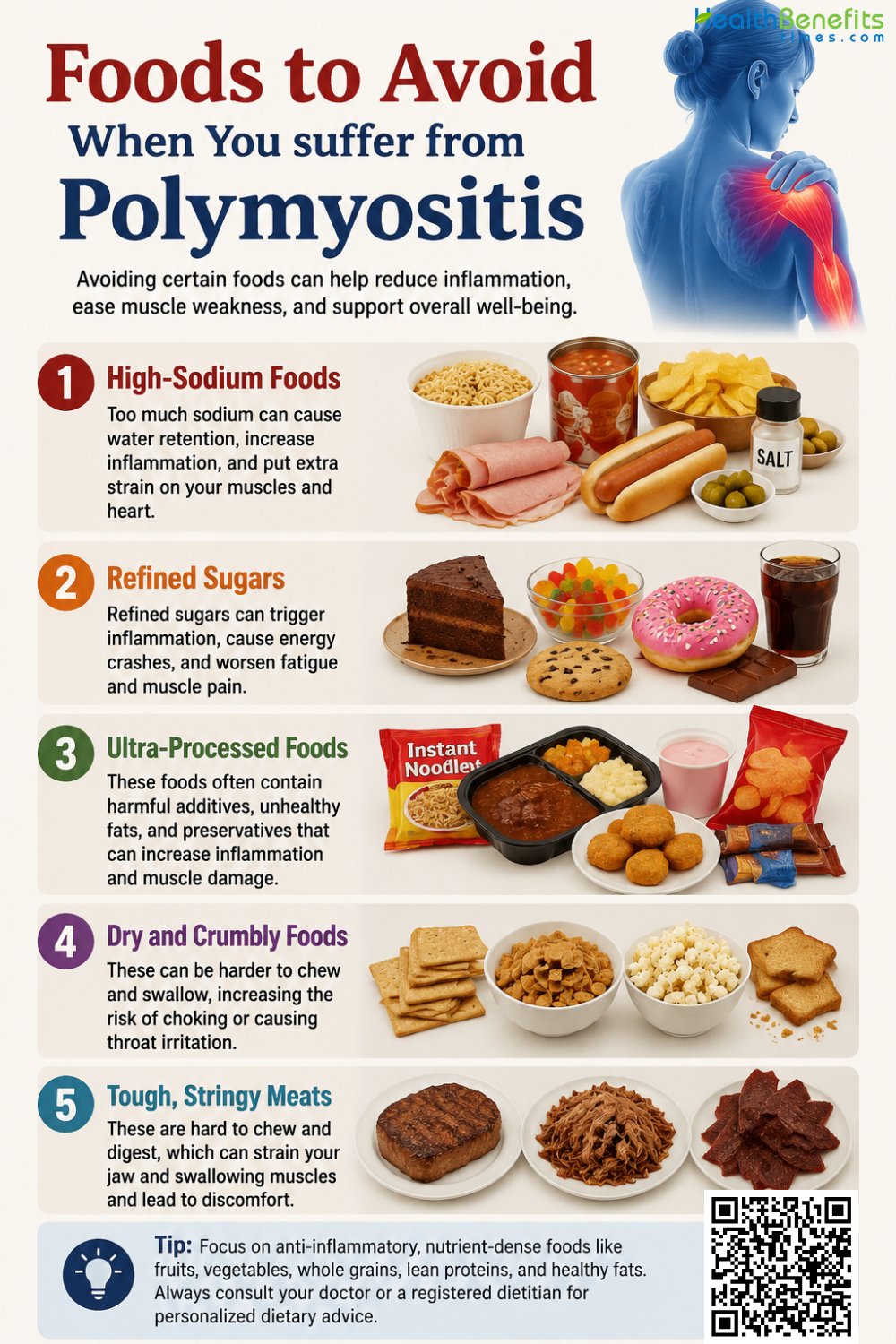
2. Refined Sugars
Sweets, sugary beverages, and pastries cause rapid blood sugar spikes. Steroid treatments directly impair glucose metabolism, making high-sugar diets a leading trigger for medication-induced diabetes 18.
3. Ultra-Processed Foods
Packaged snacks and fast foods promote systemic inflammation. Eliminating these items helps combat the dangerous metabolic side effects and cardiovascular risks associated with long-term immunosuppressive therapies 17.
4. Dry and Crumbly Foods
Crackers, dry bread, and nuts pose severe choking hazards. Polymyositis frequently weakens throat muscles, causing transfer dysphagia that makes swallowing dry textures extremely dangerous and increases aspiration risk 19.
5. Tough, Stringy Meats
Steak and thick meat cuts require extensive chewing. Weakened jaw and esophageal muscles fail to process tough textures safely, often leading to food obstruction and nutritional deficits 19.
When to see Doctor when you suffer from Polymyositis
Continuous medical supervision is critical for individuals managing polymyositis. Because the disease involves an unpredictable autoimmune response and requires powerful immunosuppressive medications, patients must promptly report any sudden physical changes to their rheumatologist. Recognizing the warning signs of disease flare-ups or medication-induced complications ensures timely medical intervention, prevents irreversible tissue damage, and protects vital organ function.
1. Rapidly Worsening Muscle Weakness
Contact your doctor immediately if everyday movements suddenly become harder. Rapid strength loss indicates an active autoimmune flare-up requiring urgent medication adjustments 1.
2. Choking or Swallowing Difficulty
Seek emergency care if you repeatedly choke while eating. Progressive throat weakness significantly increases the risk of life-threatening aspiration pneumonia and severe malnutrition 19.
3. New Shortness of Breath
Consult a physician promptly if breathing becomes difficult. This symptom often signals the onset of interstitial lung disease, a severe and potentially fatal pulmonary complication 2.
4. Fever or Signs of Infection
Report any sudden fever or chills to your healthcare provider. Immunosuppressive treatments drastically lower your body’s defenses, making you highly susceptible to severe, rapid-onset infections 3.
5. Abnormal Heart Rhythms
Seek immediate medical evaluation if you experience chest pain or heart palpitations. Cardiac muscle inflammation is a critical complication that requires emergency cardiological assessment 1.