

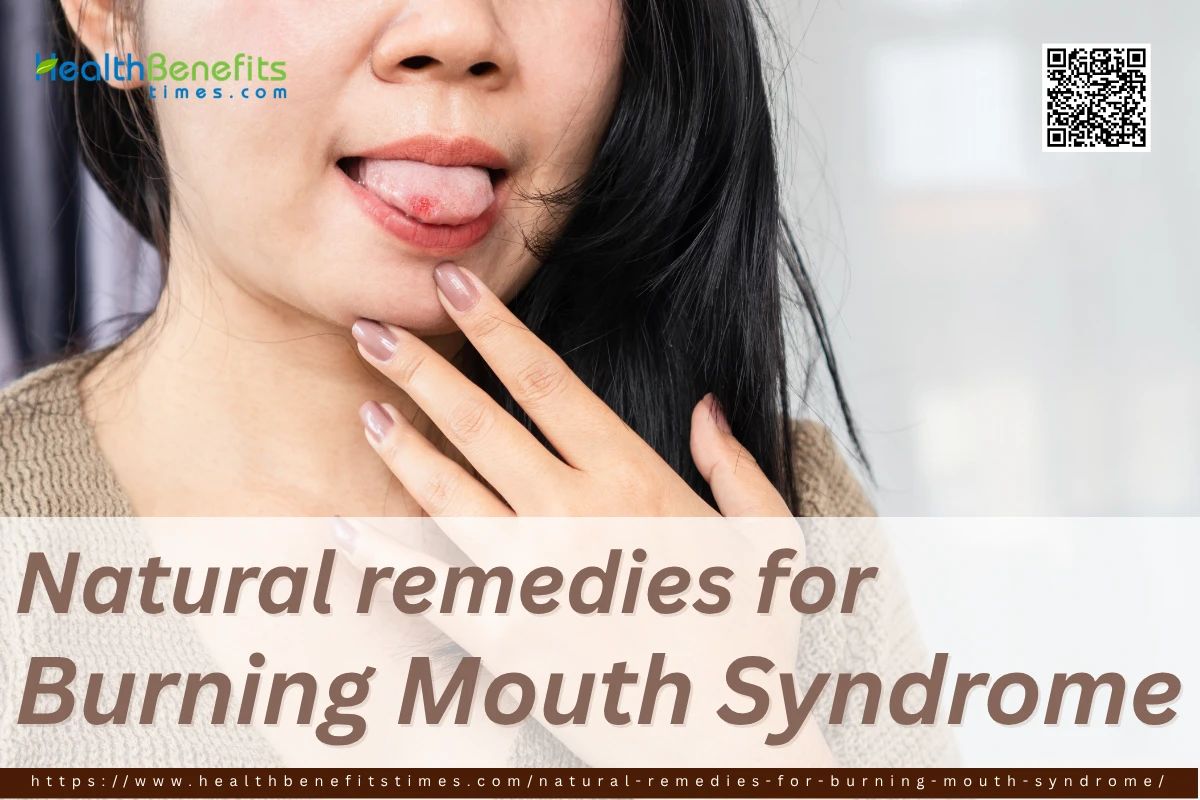
Burning Mouth Syndrome (BMS) is a painful, often frustrating condition characterized by a chronic or recurring burning sensation in the mouth without an obvious visible cause 1. The discomfort typically affects the tongue, lips, gums, inside of the cheeks, or the roof of the mouth, and is frequently described as feeling like you have accidentally scalded your mouth with hot coffee. Alongside the intense burning, individuals may also experience a dry mouth, increased thirst, or noticeable changes in their sense of taste, such as a persistent bitter or metallic flavor. Medical professionals categorize this condition into two types: primary BMS, which is likely caused by subtle damage to the sensory nerves controlling pain and taste, and secondary BMS, which is triggered by an underlying medical issue like a nutritional deficiency, acid reflux, or an oral infection 2. Because the mouth often looks completely healthy, diagnosing BMS can be challenging, but healthcare providers can offer therapies to help manage the persistent nerve pain.
Causes of Burning Mouth Syndrome (BMS)
Understanding the origin of this condition requires dividing the syndrome into two distinct categories: primary (idiopathic) and secondary. Primary BMS arises when no underlying medical condition can be found, pointing directly to nerve damage, whereas secondary BMS is triggered by a specific underlying issue.
- Peripheral and Central Nerve Dysfunction: Damage or altered functioning of the trigeminal nerve pathways can cause the brain to misinterpret normal sensory signals as painful burning sensations.
- Hormonal Fluctuations: Endocrine changes, especially the significant drop in estrogen levels associated with peri-menopause and post-menopause, are heavily linked to the onset of oral burning 3.
- Nutritional Deficiencies: A lack of essential vitamins and minerals, particularly Vitamin B (B1, B2, B6, B12), iron, and zinc, can lead to nerve dysfunction and the atrophy of taste buds 4.
- Parafunctional Oral Habits: Chronic mechanical trauma resulting from subconscious behaviors like bruxism (teeth grinding), jaw clenching, or repeated tongue thrusting can severely irritate the oral tissues.
- Salivary Gland Dysfunction: Conditions like Sjögren’s syndrome or the side effects of certain medications can induce xerostomia (dry mouth), depriving the oral mucosa of its natural lubricating and protective barrier.
- Psychological Factors: Chronic anxiety, prolonged stress, and undiagnosed depression are strongly correlated with the condition, either acting as triggers or exacerbating the brain’s perception of pain.
- Allergic Reactions: Hypersensitivity to certain food additives, flavorings, or dental materials (such as metals used in prosthetics) can provoke a localized inflammatory and neuropathic response.
- Pharmacological Side Effects: Certain prescription medications, particularly angiotensin-converting enzyme (ACE) inhibitors used to lower blood pressure, have been identified as chemical triggers for secondary oral burning.
Symptoms of Burning Mouth Syndrome (BMS)
Individuals suffering from this condition experience a range of sensory distortions that can severely impact their daily quality of life and psychological well-being. The core manifestations typically include the following:
- A constant or fluctuating sensation of burning, scalding, or tingling that predominantly affects the tip and lateral borders of the tongue.
- Pain that frequently spreads to the inner lips, the roof of the mouth (palate), the gums, or the entire oral cavity 5.
- A localized feeling of numbness or a pins-and-needles sensation that comes and goes throughout the day.
- Dysgeusia, which manifests as a persistent altered taste, frequently described by patients as unusually metallic, bitter, or excessively salty.
- Subjective xerostomia, where the mouth feels uncomfortably dry and sticky, even if clinical tests show that actual salivary flow is normal.
- A unique presentation where the intense pain is strangely relieved or momentarily paused during the act of eating or drinking.
- A progressive worsening of discomfort as the day goes on, often peaking in the late afternoon or evening before subsiding during sleep.
Burning Mouth Syndrome (BMS) Facts
Comprehensive clinical data regarding the condition reveals specific demographic trends, diagnostic criteria, and historical classifications.
| Category | Detailed Facts |
| Symptoms |
|
| Causes |
|
| Types of Burning Mouth Syndrome (BMS) |
|
| How does spread |
|
| Age Group |
|
| You might be at a higher risk for exposure of this disease if you: |
|
| How doctors diagnose |
|
| Other facts |
|
Natural Remedies for Burning Mouth Syndrome (BMS)
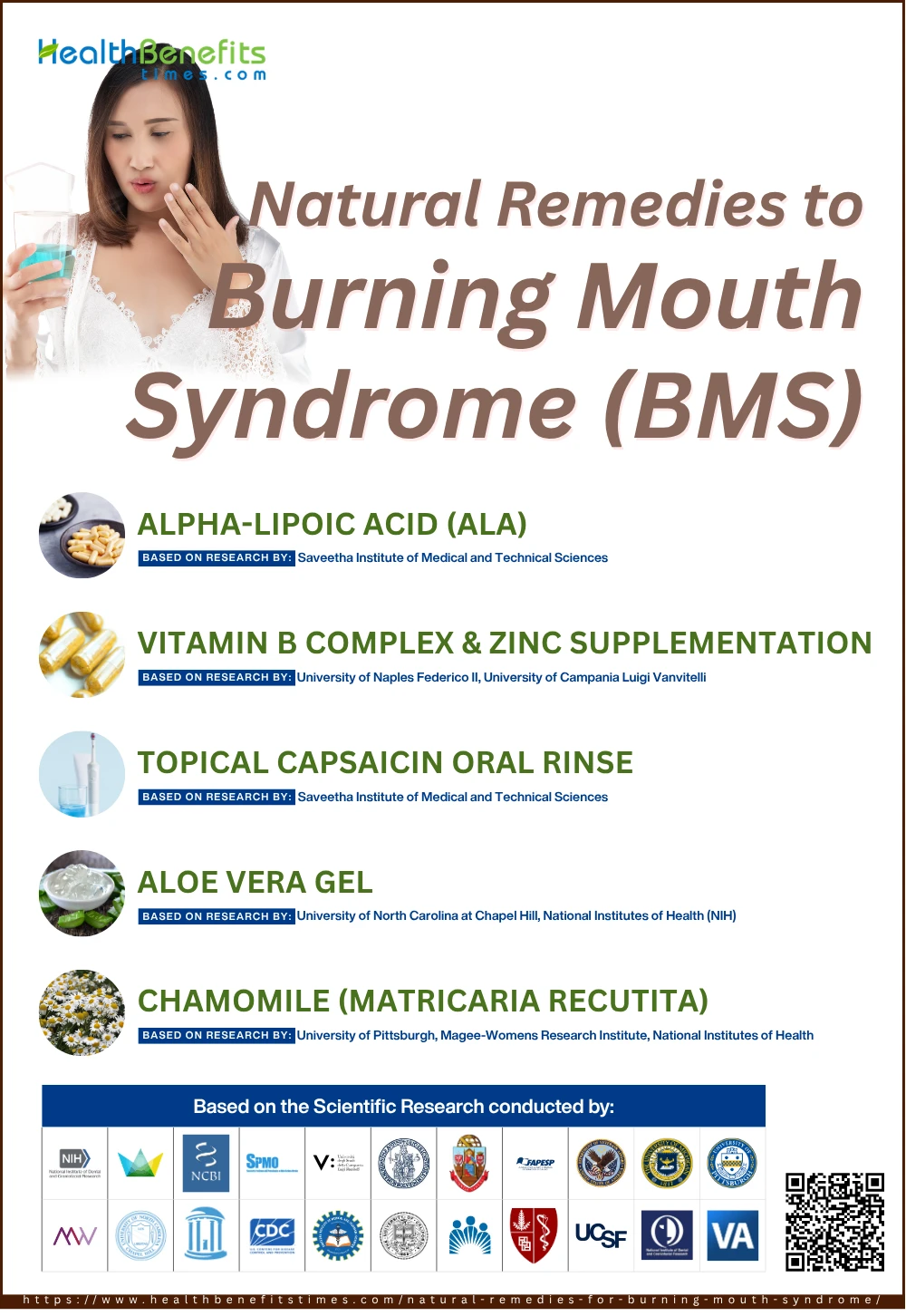
When conventional pharmacological treatments prove inadequate or produce undesirable side effects, natural therapies can be highly effective in managing symptoms. Research indicates that certain natural compounds target the underlying nerve dysfunction, reduce oxidative stress, and soothe the irritated oral mucosa.
1. Alpha-Lipoic Acid (ALA)
Extensive clinical evaluations have highlighted the efficacy of Alpha-Lipoic Acid in treating peripheral neuropathy. ALA is a naturally occurring, potent bioactive antioxidant that neutralizes free radicals and reduces oxidative stress within nerve tissues. By restoring intracellular antioxidant levels, ALA helps to repair damaged nerve fibers and improve the proper conduction of nerve signals. Clinical trials consistently show that utilizing a dosage of 600 mg to 800 mg per day over a period of two months significantly reduces burning sensations in the majority of subjects compared to a placebo 8. Note: You can take this orally as a daily dietary supplement tablet or capsule to provide systemic neuroprotective benefits.
 2. Vitamin B Complex and Zinc Supplementation
Deficiencies in essential micronutrients represent a well-documented secondary cause of oral pain. Vitamin B complex (particularly B1, B2, B6, and B12) is vital for the maintenance of the myelin sheath, which insulates nerves and ensures accurate signal transmission. Simultaneously, zinc plays a critical role in the structural integrity of the oral mucosa and the health of taste buds. Restoring these levels through structured supplementation has been proven to regenerate oral tissues and rapidly decrease neuropathic pain over a short period 9. Note: You should consume these orally as daily vitamin and mineral supplements to correct internal nutritional deficits.
3. Topical Capsaicin Oral Rinse
Capsaicin, the active compound responsible for the heat in chili peppers, is paradoxically utilized to treat severe nerve pain. It functions as a powerful TRPV1 receptor agonist. When applied to the oral mucosa, capsaicin triggers an initial release of substance P, a neurotransmitter responsible for sending pain signals to the brain. However, repeated application eventually depletes the nerve endings of substance P, rendering them temporarily incapable of transmitting pain signals. Clinical protocols successfully use a highly diluted oral rinse (typically a 0.02% concentration) to achieve this numbing effect without causing severe initial discomfort 10. Note: You apply this topically by gently swishing the diluted solution in your mouth and spitting it out to function as a localized nerve desensitizer.
4. Aloe Vera Gel
The thick gel extracted from the aloe vera plant contains mucopolysaccharides and potent anti-inflammatory compounds that are highly effective in promoting tissue epithelialization and accelerating cellular healing. While this specific syndrome does not present with visible physical wounds, the soothing, hydrating nature of aloe vera helps to significantly mitigate the sensation of burning and subjective dryness. Medical studies have successfully utilized 70% concentrated aloe vera applied directly to the tongue, often in conjunction with a physical tongue protector, to provide a biological shield against sensory triggers 11. Note: You can apply the extracted gel topically directly onto your tongue or affected oral tissues to provide a protective, moisturizing, and soothing layer.
5. Chamomile (Matricaria recutita)
Traditional botanical remedies often rely on chamomile for its calming and anti-inflammatory properties, which are largely attributed to the flavonoid apigenin. In the context of oral health, chamomile helps to modulate the local inflammatory response and provides a mild, natural anesthetic effect on the sensitive mucous membranes. Research comparing a dense chamomile infusion against placebo regimens demonstrated that regular application leads to a significant reduction in visual analog scale pain scores over a sustained six-month follow-up period 12. Note: You can utilize this locally by swishing a strong, cooled botanical infusion as a mouthwash multiple times a day.
Is there any exercise or physical activities for Burning Mouth Syndrome (BMS)
Physical movement and targeted exercises play a surprisingly critical role in managing neuropathic discomfort. The central nervous system’s processing of pain is heavily influenced by systemic physical health, baseline stress levels, and localized muscle tension.
1. Yoga and Mindful Meditation
The profound psychological distress caused by chronic oral pain often triggers a continuous cycle of stress that further amplifies the brain’s pain perception. Yoga—an ancient practice uniting physical postures, breath control, and meditation—has been shown to lower cortisol levels, reduce anxiety, and improve interhemispheric brain coherence. By shifting the body out of a heightened state of stress, yoga actively dampens the central sensitization of the nervous system, thereby reducing the perceived intensity of the oral burning sensation 13. Note: You can perform this by engaging in 20 to 30 minutes of guided mindful breathing, gentle stretching, and meditation in a quiet space daily.
2. Acupuncture and Auriculotherapy
Rooted firmly in Traditional Chinese Medicine, acupuncture involves the strategic insertion of ultra-fine needles into specific anatomical points to stimulate blood flow and release natural endorphins. Auriculotherapy applies this same underlying principle to micro-systems located in the ear. Clinical trials indicate that acupuncture provides positive outcomes in reducing burning symptoms by resetting the pain modulatory system and influencing the oral microcirculation 14. Note: You must visit a licensed, professional practitioner to safely receive this targeted needle therapy.
3. Tongue and Jaw Relaxation Exercises
Unconscious parafunctional habits, such as pressing the tongue hard against the teeth or clenching the jaw during concentration, create chronic mechanical tension that severely aggravates the trigeminal nerve. Structured oral exercises, including jaw-retraction, controlled mouth opening and closing, and targeted tongue lifting against the anterior hard palate, help to rebuild proper oral musculature and release myofascial trigger points. Relieving this localized muscular tension directly decreases the mechanical irritation contributing to the painful syndrome 15. Note: You practice this by slowly opening and closing your jaw, followed by consciously resting your tongue gently against the roof of your mouth behind your front teeth to release tension multiple times a day.
4. General Aerobic Activity
Engaging in regular cardiovascular physical activity, such as brisk walking, swimming, or light cycling, is essential for holistic pain management. Aerobic exercise stimulates the immediate release of endogenous opioids, which act as the body’s natural painkillers, and improves overall blood circulation to nourish damaged peripheral nerves. Moving from a sedentary lifestyle to a physically active one has been clinically shown to reduce high perceived stress and actively serve as a systemic treatment option for neuropathic oral pain 16. Note: You should participate in 30 to 45 minutes of moderate-intensity cardiovascular exercise, such as walking or swimming, at least three to five times a week.
Foods and Activities to Avoid
Managing a hypersensitive oral cavity requires vigilant attention to your daily habits and consumption. Small, proactive adjustments in your diet and daily routine can prevent the accidental triggering of severe pain flare-ups.
(i) Foods to Avoid When You Suffer from Burning Mouth Syndrome (BMS)
- Acidic Fruits and Juices: You should avoid citrus fruits (oranges, lemons, grapefruits), tomatoes, and their respective juices because they contain high levels of citric and malic acids that act as aggressive chemical irritants to the vulnerable mucosal lining.
- Spicy Foods: While heavily diluted capsaicin is used medically as a targeted rinse, you must avoid consuming dietary spices directly (like chili powder, hot sauces, or curries) as they will violently overstimulate the already hyperactive thermal and pain receptors in your mouth.
- Alcoholic Beverages: You need to eliminate alcohol intake because it is a known astringent and dehydrating agent that significantly exacerbates subjective dry mouth and causes an immediate burning reaction upon contact with oral tissues 17.
- Excessively Hot Foods and Beverages: You should wait for coffee, tea, or soups to cool down before consuming them; high temperatures can trigger thermal allodynia, a condition where normal heat is perceived as scalding pain.
- Caffeinated Products: You should limit your intake of coffee and energy drinks because high caffeine consumption contributes to systemic dehydration and worsens the frustrating sensation of a dry, sticky mouth.
(ii) Activities to Avoid When You Suffer from Burning Mouth Syndrome (BMS)
- Using Alcohol-Based Commercial Mouthwashes: You must stop using standard mouthwashes that contain harsh chemicals and high alcohol content, as they aggressively strip your mouth of its natural moisture and severely sting sensitive tissues.
- Tobacco Use: You should quit smoking or chewing tobacco entirely, as these habits introduce hundreds of toxic, inflammatory chemicals into your mouth, significantly decreasing local blood flow and delaying any potential nerve healing.
- Teeth Grinding and Clenching (Bruxism): You need to actively prevent these subconscious habits, which place immense mechanical pressure on your jaw joints and the trigeminal nerve. Wearing a custom night guard can protect your mouth while you sleep 18.
- Tongue Thrusting or Biting: You must stop repeatedly rubbing your tongue against your teeth or biting your inner cheeks out of anxiety, as this causes microscopic physical trauma that constantly restarts the neuropathic pain cycle.
Myths and Misconceptions
Because this painful condition does not present with any visible physical signs, it is frequently misunderstood by both the general public and sometimes even medical professionals. Clarifying these common misconceptions is crucial for proper patient validation and accurate care.
| Myth | Reality |
| If the mouth is burning, there must be a visible sore, ulcer, or redness. | Reality: The clinical hallmark of primary BMS is that the oral mucosa looks completely healthy and normal to the naked eye. The pain stems strictly from invisible nerve dysfunction, not tissue damage. |
| Burning Mouth Syndrome is contagious and can be passed through kissing or sharing drinks. | Reality: The condition is entirely non-communicable. It is an internal neuropathic or systemic disorder and cannot be transmitted to others under any circumstances. |
| The pain is “all in the patient’s head” or purely a psychological invention. | Reality: While anxiety and depression can worsen the pain, the physical burning is absolutely real and is caused by documented misfiring of the peripheral and central nervous systems. |
| Standard over-the-counter painkillers like ibuprofen or aspirin will quickly cure the pain. | Reality: Because the pain is neuropathic (nerve-based) rather than inflammatory, traditional anti-inflammatory analgesics are generally highly ineffective. Treatment requires specialized nerve-targeting remedies. |
| It is just a temporary, normal reaction to eating something too hot or spicy. | Reality: While hot food can burn the mouth temporarily, true BMS involves unprovoked pain that occurs daily, lasting for at least four to six months consecutively without healing. |
| Only the tongue is affected by this condition. | Reality: While the tip of the tongue is indeed the most common site, the syndrome can heavily impact the inner lips, the roof of the mouth, the gums, and the throat. |
Special Considerations
The manifestation and management of this syndrome change significantly depending on an individual’s age, biological phase, and overall medical background. Tailoring safe treatment requires acknowledging these vital special considerations.
- Children: Pediatric cases of this syndrome are virtually non-existent. Medical literature notes that primary BMS has never been reliably documented in children or adolescents. If a child complains of a severely burning mouth, it is almost certainly a secondary issue, such as a localized fungal infection (thrush), a viral infection (like Hand, Foot, and Mouth Disease), or a severe allergic reaction that requires immediate pediatric evaluation.
- Pregnancy: The profound and rapid hormonal shifts that occur during pregnancy can occasionally trigger secondary oral burning or bizarre alterations in taste and saliva production. Because the developing fetus is highly sensitive to external substances, pregnant individuals must exercise extreme caution. Even natural supplements like Alpha-Lipoic Acid or high-dose botanical tinctures must never be used without strict, explicit oversight from an obstetrician.
- Chronic Conditions: Patients managing existing chronic autoimmune or neurological diseases require highly specialized care. Conditions such as Sjögren’s syndrome (which systematically destroys moisture-producing glands), Fibromyalgia (which causes widespread chronic pain), and Parkinson’s disease frequently overlap with oral burning. In these complex cases, the mouth pain is merely a secondary symptom of the broader systemic disease, and treating the primary chronic condition is the only logical way to achieve lasting oral relief.
- Elderly: This demographic represents the vast majority of cases, particularly post-menopausal women. Because elderly patients frequently suffer from comorbidities like hypertension and cardiovascular disease, they often take multiple daily medications (polypharmacy). Furthermore, elderly patients metabolize dietary supplements differently, meaning interventions like high-dose Vitamin B or systemic Alpha-Lipoic Acid must be monitored closely to prevent adverse gastrointestinal or cardiovascular interactions 19.
Precaution Before Use of Natural Remedies
While natural remedies generally offer safer profiles than heavy pharmaceuticals, they remain biologically active compounds that command respect and caution. You should consider the following safety protocols before beginning any alternative therapies to treat your mouth.
- Monitor Blood Sugar with Alpha-Lipoic Acid (ALA): You must be aware that ALA has properties that can naturally lower blood glucose levels. If you have diabetes and are already taking insulin or glucose-lowering medications, you must monitor your blood sugar meticulously to avoid dangerous hypoglycemic episodes 20.
- Prepare for Capsaicin Initial Flare-Ups: You should anticipate that using a capsaicin rinse will likely cause a temporary spike in burning and discomfort before the beneficial nerve desensitization effect takes place. You must strictly adhere to safe dilution concentrations to avoid accidental chemical burns.
- Test for Botanical Allergies: You must remember that chamomile belongs to the aster plant family, which is closely related to ragweed and daisies. If you suffer from severe seasonal allergies, you should test a small amount of chamomile infusion on your skin before swishing it in your highly sensitive mouth.
- Avoid Vitamin Toxicity: You must avoid taking massively high doses of Zinc for prolonged periods, as this can severely interfere with your body’s copper absorption and depress your immune function. You should always ensure your dosages remain within the medically recommended therapeutic window.
- Verify Supplement Quality: You should always ensure you source your aloe vera, vitamins, and ALA from reputable, third-party tested manufacturers. The dietary supplement market is not strictly regulated in all regions, and ingesting contaminants could further irritate your delicate oral mucosa.
When to See a Doctor
Because persistent oral pain can occasionally act as a warning sign for more aggressive, undetected pathologies, natural remedies should never completely replace clinical oversight. You should seek immediate medical attention from a doctor or dental specialist under the following circumstances:
- Presence of Visible Lesions: You need to see a doctor immediately if the burning sensation is accompanied by white patches, red sores, spontaneous bleeding, or unusual lumps in your mouth, as these are strong red flags for infections, autoimmune disorders, or oral neoplasms.
- Severe Weight Loss or Malnutrition: You must seek urgent medical pain management if the pain becomes so debilitating that chewing and swallowing normal food are impossible, leading to rapid weight loss or severe dehydration.
- Symptoms Spreading Beyond the Mouth: You should visit a specialist if the burning sensation or numbness aggressively spreads down your throat, deep into your face, or is accompanied by systemic symptoms like a high fever, swollen lymph nodes, or sudden facial paralysis.
- Failure to Respond to Conservative Treatment: You must ask for a diagnostic re-evaluation if natural remedies, strict dietary changes, and stress management techniques yield absolutely no improvement after several months of dedicated effort.
- Worsening Psychological State: You should immediately ask for psychological support or psychiatric referral if you experience overwhelming anxiety, severe panic attacks, or thoughts of self-harm due to the relentless, exhausting nature of the chronic pain.
Comments
This article is based on Scientific Research Conducted by following Research Organization:
- Burning Mouth Syndrome–National Institute of Dental and Craniofacial Research (NIDCR), United States
- C1 Esterase Inhibitor Deficiency(Archived)–StatPearls Publishing, United States, National Center for Biotechnology Information (NCBI), United States
- How Do You Treat Burning Mouth Syndrome in Your Practice?–University of Naples Federico II, Italy, University of Campania Luigi Vanvitelli, Italy, Italian Society of Oral Pathology and Medicine (SIPMO), Italy
- Burning mouth syndrome: etiology–University of São Paulo, Brazil, São Paulo Research Foundation (FAPESP), Brazil
- Burning Mouth Syndrome–University of Michigan, United States, Veterans Affairs Ann Arbor Healthcare System, United States, National Institutes of Health (NIH), United States
- Burning mouth syndrome: a review on diagnosis and treatment–University of Pittsburgh, United States, Magee-Womens Research Institute, United States, National Institutes of Health (NIH), United States
- Burning mouth syndrome: A diagnostic and therapeutic dilemma–University of North Carolina at Chapel Hill, United States, UNC School of Medicine, United States, Centers for Disease Control and Prevention (CDC), United States, National Institutes of Health (NIH), United States
- The efficacy of alpha‐lipoic acid in the management of burning mouth syndrome: An updated systematic review of randomized controlled clinical trials–Saveetha Institute of Medical and Technical Sciences, India, Saveetha Dental College and Hospitals, India
- Vitamin B and Zinc Supplements and Capsaicin Oral Rinse Treatment Options for Burning Mouth Syndrome–University of Naples Federico II, Italy, University of Campania Luigi Vanvitelli, Italy, Italian Society of Oral Pathology and Medicine (SIPMO), Italy
- Burning measure for burning mouth syndrome: a systematic review–Saveetha Institute of Medical and Technical Sciences, India
- Prospective, randomized, double-blind, clinical evaluation of Aloe vera Barbadensis, applied in combination with a tongue protector to treat burning mouth syndrome–University of North Carolina at Chapel Hill, United States, UNC School of Medicine, United States, Centers for Disease Control and Prevention (CDC), United States, National Institutes of Health (NIH), United States
- A successful approach to conrol burning mouth syndrome using matricaria recutita and cognitive therapy–University of Pittsburgh, United States, Magee-Womens Research Institute, United States, National Institutes of Health (NIH), United States
- The precedence and viability of yoga in the lives of D3-dental students, dental practitioners, and dental patients–University of California, United States, Kaiser Permanente Division of Research, United States, Stanford University School of Medicine, United States, National Institutes of Health (NIH), United States
- A systematic review of acupuncture or acupoint injection for management of burning mouth syndrome–University of North Carolina at Chapel Hill, United States, UNC School of Medicine, United States, Centers for Disease Control and Prevention (CDC), United States, National Institutes of Health (NIH), United States
- Salivary Biomarkers for Oral Frailty in Patients With Burning Mouth Symptoms
- Differences in personality, perceived stress and physical activity in women with burning mouth syndrome compared to controls–University of North Carolina at Chapel Hill, United States, UNC School of Medicine, United States, Centers for Disease Control and Prevention (CDC), United States, National Institutes of Health (NIH), United States
- Management strategies for burning mouth syndrome: a comprehensive review–Saveetha Institute of Medical and Technical Sciences, India
- Burning Mouth Syndrome–National Institute of Dental and Craniofacial Research (NIDCR), United States
- Efficacy of alpha lipoic acid in burning mouth syndrome: a randomized, placebo-treatment study–University of North Carolina at Chapel Hill, United States, UNC School of Medicine, United States, Centers for Disease Control and Prevention (CDC), United States, National Institutes of Health (NIH), United States
- Alpha lipoic acid efficacy in burning mouth syndrome. A controlled clinical trial–University of California, San Francisco, United States, Kaiser Permanente Division of Research, United States, Stanford University School of Medicine, United States, National Institutes of Health (NIH), United States