

Caffeine dependence affects roughly 8% of the more than 200 million American adults who consume caffeine daily, and the most effective path to breaking free does not require prescription medication. A growing body of clinical evidence supports natural strategies from gradual tapering and adaptogenic herbs to exercise and sleep hygiene that can ease withdrawal and restore energy without pharmacological intervention. Caffeine is the world’s most widely consumed psychoactive substance, with over 90% of U.S. adults using it regularly and average intake exceeding 200 mg per day. 1 While the DSM-5 does not yet classify caffeine use disorder as an official diagnosis, the World Health Organization has recognized caffeine dependence syndrome since its ICD-10 classification system. 1 Understanding how caffeine hijacks brain chemistry and how to undo it naturally is essential for the millions who want to quit.
How Caffeine Rewires the Brain and Why Quitting Is Hard
Caffeine works primarily as a nonselective antagonist of adenosine receptors, particularly the A1 and A2A subtypes. 2 Adenosine is a neurotransmitter that accumulates during waking hours and promotes drowsiness by slowing neuronal activity. Because caffeine’s molecular structure resembles adenosine, it binds to these receptors without activating them effectively blocking the brain’s natural sleepiness signal and maintaining alertness. 3
Caffeine also indirectly stimulates dopaminergic activity by removing adenosine’s negative modulation of dopamine D2 receptors in the striatum. 1 This produces mild feelings of well-being and increased energy. However, caffeine’s dopamine effect is small compared to truly addictive substances it does not cause the large surge that unbalances the reward circuits necessary for a true addiction. 4 The Cleveland Clinic draws the same distinction, noting the difference between addiction and dependence when it comes to caffeine. 5
The dependence mechanism involves adenosine receptor upregulation. Chronic caffeine exposure prompts the brain to create more adenosine receptors, increasing the body’s sensitivity to adenosine. 6 This drives tolerance the same dose produces less effect and triggers withdrawal symptoms when caffeine intake drops, because the now-abundant receptors are suddenly flooded with unopposed adenosine. Tolerance can develop in as few as 3 to 5 days of consistent daily intake. 7
In the DSM-5, caffeine withdrawal is an officially recognized diagnosis (code 292.0/F15.93), requiring three or more symptoms after abrupt cessation: headache, fatigue, dysphoric mood, difficulty concentrating, and nausea or muscle pain. 8 Caffeine use disorder itself is listed only in Section III as a condition for further study. 9 A Johns Hopkins survey of 1,006 caffeine-consuming adults found that 8% fulfilled the proposed DSM criteria for caffeine use disorder, and these individuals were younger and more likely to be cigarette smokers. 4
Caffeine Addiction Facts at a Glance
| Symptoms 8 |
|
| Causes 7 1 10 |
|
| Types 9 |
|
| How Dependence Develops 6 3 |
|
| Withdrawal Timeline 8 |
|
| Age Groups Most Affected |
|
| Higher Risk If You 8 |
|
| How Doctors Diagnose |
|
| Treatment & Medications |
|
| Prevention 13 10 |
|
| Prevalence |
|
Natural Remedies for Caffeine Addiction
1. Gradual Tapering (The Gold-Standard First Step)
There is no FDA-approved pharmacological treatment specifically for caffeine dependence; management is primarily supportive and symptom-directed. 8 The single most evidence-backed natural strategy is gradual dose reduction. NIH StatPearls guidelines recommend that individuals seeking to eliminate caffeine dependence reduce intake gradually to prevent or mitigate withdrawal symptoms. 8 The Cleveland Clinic advises cutting back by a half-cup per day and mixing caffeinated with decaffeinated coffee to ease the transition. 5 Henry Ford Health recommends a 4- to 6-week tapering period, while other sources suggest reducing intake by approximately 25% each week. 15 The Mayo Clinic simply recommends drinking one fewer can of soda or a smaller cup of coffee each day. 13
A landmark Johns Hopkins clinical trial tested a brief manualized cognitive-behavioral therapy for problematic caffeine use, combining a single one-hour counseling session with five weeks of progressively decreased consumption, and it proved effective for reducing intake in participants averaging 666 mg daily. 16
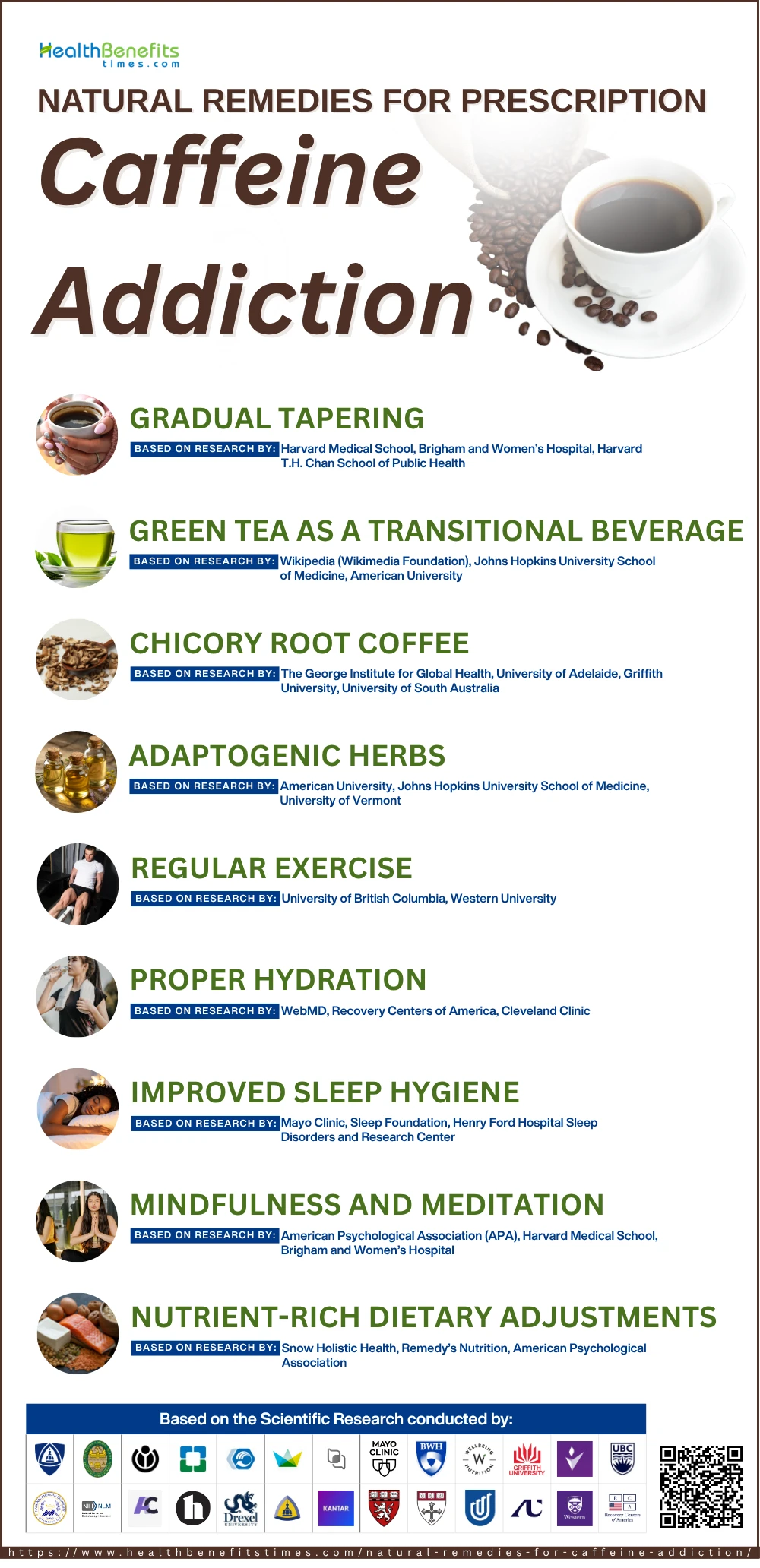 2. Green Tea as a Transitional Beverage
Green tea serves as an ideal stepping stone, containing 30 to 50 mg of caffeine per cup compared to coffee’s 95 to 200 mg. 17 Its key advantage is L-theanine, an amino acid that crosses the blood-brain barrier and increases alpha-wave activity associated with relaxed alertness. A study found that L-theanine combined with caffeine improved attention, working memory, and mood more effectively than either compound alone. 18 As a standalone supplement, 200 to 400 mg of L-theanine daily has shown anxiolytic effects, and the FDA considers it Generally Recognized as Safe at doses up to 250 mg per serving. 19
3. Chicory Root Coffee
Few caffeine-free beverages come as close to mimicking coffee’s taste as chicory root. It contains inulin, a prebiotic fiber comprising 68% of the root, which promotes beneficial gut bacteria growth. 20 Research shows chicory coffee containing up to 5 g of inulin daily for four weeks produced no adverse gastrointestinal symptoms. 21
4. Adaptogenic Herbs (Ashwagandha and Rhodiola)
Among adaptogenic herbs, ashwagandha has the strongest evidence base for the stress and fatigue symptoms that accompany caffeine withdrawal. The Cleveland Clinic notes that ashwagandha helps you relax by calming how your brain responds to stress. 22 A clinical trial found that 240 mg of standardized extract daily for 60 days significantly reduced anxiety scores and morning cortisol levels. 23 Rhodiola rosea targets the fatigue dimension specifically, with strong evidence that SHR-5 rhodiola extract improved attention, cognitive function, and mental performance in fatigue states.
5. Regular Exercise
Exercise has direct evidence for caffeine withdrawal specifically. A 2019 study published in Scientific Reports found that a brisk 20-minute walk after 12 hours of caffeine deprivation reduced withdrawal symptoms measurably making exercise roughly 60% as effective as consuming caffeine itself at alleviating discomfort. 24 Even moderate activity like walking, cycling, or yoga provides natural dopamine and endorphin release that compensates for the mood and energy dip during withdrawal. 25
6. Proper Hydration
You might be surprised how much dehydration mimics the symptoms you are trying to fix with caffeine. The Cleveland Clinic explains that people often drink caffeine because they feel unable to stay awake, but dehydration is frequently the real reason behind low energy. 5 Since caffeine has mild diuretic effects, maintaining 8 to 10 glasses of water daily during withdrawal helps minimize symptoms. 26 Giving up caffeine can also lead to better overall hydration since you tend to replace those cups with water. 27
7. Improved Sleep Hygiene
Poor sleep is often the root cause that drives people to caffeine in the first place, creating a vicious cycle. A study in the Journal of Clinical Sleep Medicine demonstrated that 400 mg of caffeine taken even 6 hours before bedtime significantly disrupted sleep quality. 28 The Sleep Foundation recommends avoiding caffeine at least 8 hours before bedtime and maintaining consistent sleep-wake schedules. 29 The Mayo Clinic emphasizes keeping the bedroom cool, dark, and quiet, and limiting naps to no more than one hour. 30
8. Mindfulness and Meditation
Withdrawal-related anxiety and mood disturbance respond well to mindfulness-based practices. A JAMA Internal Medicine meta-analysis of 47 well-designed trials found moderate evidence that mindfulness meditation improves anxiety, depression, and pain. 31 The APA’s review of more than 200 studies confirmed mindfulness-based therapy was especially effective for reducing stress, anxiety, and depression. 32 Starting with just 10 minutes of daily meditation can help you manage withdrawal cravings and emotional reactivity.
9. Nutrient-Rich Dietary Adjustments
What you eat during caffeine withdrawal matters enormously. Complex carbohydrates, lean proteins, and healthy fats maintain stable blood glucose and prevent the fatigue that triggers caffeine cravings. 26 B vitamins serve as essential cofactors for converting food into cellular energy, though supplementation primarily benefits those with actual deficiencies. 33 Iron is critical for oxygen transport and energy production, and magnesium supports over 300 enzymatic reactions related to energy metabolism. 34
Precautions Before Using Natural Remedies
Several populations must consult a physician before attempting caffeine withdrawal or starting herbal supplements. Individuals with cardiovascular disease, anxiety disorders, seizure history, reduced liver or kidney function, or pregnancy should get medical guidance first. 35 Pregnant women should limit caffeine to 200 mg daily per March of Dimes guidelines, and caffeine’s half-life extends dramatically during late pregnancy.
Herbal supplement interactions with medications pose real risks. Ashwagandha can interact with sedatives, blood pressure medications, diabetes drugs, thyroid medications, and SSRIs. 22 More than 70 reports in the medical literature link ashwagandha to liver injury, ranging from mild hepatitis to acute liver failure requiring transplant. 36 Rhodiola has a strong interaction warning with MAOIs and may enhance serotonin levels dangerously when combined with SSRIs. 37 Both ashwagandha and rhodiola should be avoided during pregnancy and breastfeeding. 38
A fundamental concern is the regulatory gap for dietary supplements. The NCCIH warns that what is listed on the label of a dietary supplement may not match what is actually in the product. 39 Dietary supplements cause an estimated 23,000 emergency room visits annually in the United States. 39 Always select products verified by third-party testing organizations such as USP, NSF International, or ConsumerLab, and inform your doctor about any supplements you take. 40
When to See a Doctor
Not everyone can manage caffeine withdrawal on their own. You should seek professional help if your withdrawal symptoms last beyond two weeks, if you experience severe depression or anxiety during the process, if you have tried multiple times to quit without success, or if you have an underlying medical condition that caffeine may be affecting. 4 Nearly 90% of people seeking treatment for caffeine dependence report prior unsuccessful attempts at quitting. 14 Cognitive-behavioral therapy delivered by a trained counselor has shown clinical effectiveness for caffeine reduction, and your doctor can help rule out other conditions mimicking caffeine withdrawal symptoms. 16
Conclusion
The evidence points to a clear hierarchy of natural approaches for caffeine dependence. Gradual tapering reducing intake by roughly 25% per week over four to six weeks has the strongest clinical support and should form the foundation of any withdrawal plan. Layering in exercise (even a brisk 20-minute walk reduces withdrawal symptoms measurably), improved sleep hygiene, and adequate hydration addresses the physiological disruption directly. 24 Green tea with its natural L-theanine content provides a scientifically validated transitional beverage that smooths the cognitive and mood effects of reduced caffeine. Adaptogenic herbs like ashwagandha and rhodiola show genuine promise for managing withdrawal-related stress and fatigue but carry meaningful drug interaction risks and require caution. 41 The most important insight from the evidence is that caffeine dependence, while clinically real, is self-limiting adenosine receptors normalize within approximately seven days of abstinence. 4 For anyone who has tried and failed to quit, combining these evidence-based natural strategies offers a realistic, medication-free path forward.
Comments
This article is based on Scientific Research Conducted by following Research Organization:
- Caffeine Use Disorder: A Comprehensive Review and Research Agenda–Johns Hopkins University School of Medicine, United States, American University, United States, University of Vermont, United States
- 2Pharmacology of Caffeine–National Center for Biotechnology Information (NCBI), United States
- Caffeine dependence–Wikipedia (Wikimedia Foundation), International
- Caffeine Addiction And Abuse–Addiction Center (Recovery Worldwide, LLC), United States
- How To Quit Caffeine Without a Headache–Cleveland Clinic, United States
- Can you build up caffeine tolerance? The Pharmacology Explained
- Caffeine Tolerance: Fact or Fiction?–Healthline Media, United States
- Caffeine Withdrawal–Harbor UCLA Medical Center, United States, Drexel University, United States, StatPearls Publishing, United States
- New Insight into Caffeine Use Disorder–Johns Hopkins Medicine, United States
- Caffeine Addiction–AddictionHelp.com, United States
- Beverage caffeine intakes in the U.S–Kantar Worldpanel, United States
- Caffeine Withdrawal Headache: Why It Happens and What You Can Do–Healthline Media, United States
- Caffeine: How much is too much?–Mayo Clinic, United States
- Characterization of Individuals Seeking Treatment for Caffeine Dependence–American University, United States, Johns Hopkins University School of Medicine, United States
- How To Quit Caffeine Without The Headache–Henry Ford Health, United States
- A brief manualized treatment for problematic caffeine use: A randomized control trial–Harvard T.H. Chan School of Public Health, United States, Harvard Medical School, Brigham and Women’s Hospital, United States, Harvard Medical School, United States
- How Much Caffeine Is in Green Tea?–Healthline Media, United States
- The effects of l-theanine, caffeine and their combination on cognition and mood–American University, United States, Johns Hopkins University School of Medicine, United States
- Theanine–Wikipedia (Wikimedia Foundation), United States
- Chicory Root: The New Fiber-Rich Ingredient that’s taking over the Health & Wellness World–Wellbeing Nutrition, India
- Back to the Roots: Revisiting the Use of the Fiber-Rich Cichorium intybus L. Taproots–University of South Australia, Australia, Griffith University, Australia, University of Adelaide, Australia, The George Institute for Global Health, Australia
- Benefits of Ashwagandha and How Much To Take–Cleveland Clinic, United States
- An investigation into the stress-relieving and pharmacological actions of an ashwagandha (Withania somnifera) extract: A randomized, double-blind, placebo-controlled study–University of Vermont, United States, Johns Hopkins University School of Medicine, United States, American University, United States
- Effects of Caffeine and Acute Aerobic Exercise on Working Memory and Caffeine Withdrawal–Western University, Canada, University of British Columbia, Canada
- Exercise has the same effect on the brain as coffee–Western University, Canada, University of British Columbia, Canada
- Caffeine Withdrawal–Recovery Centers of America, United States
- What Happens When You Give Up Caffeine–WebMD, United States
- Caffeine Effects on Sleep Taken 0, 3, or 6 Hours before Going to Bed–University of Michigan Sleep Disorders Center, United States, Henry Ford Hospital Sleep Disorders and Research Center, United States
- Caffeine and Sleep–Sleep Foundation, United States
- Sleep tips: 6 steps to better sleep–Mayo Clinic, United States
- Meditation Programs for Psychological Stress and Well-being: A Systematic Review and Meta-analysis–Harvard T.H. Chan School of Public Health, United States, Brigham and Women’s Hospital, United States, Harvard Medical School, United States
- Mindfulness meditation: A research-proven way to reduce stress–American Psychological Association (APA), United States
- Do B Vitamin Supplements Really Give You More Energy?–Remedy’s Nutrition, India
- Top 5 Energy Supplements Without Caffeine–Snow Holistic Health, United States
- Maternal Caffeine Consumption and Its Impact on the Fetus: A Review–Zayed University, United Arab Emirates, United Arab Emirates University, United Arab Emirates, University of Sharjah, United Arab Emirates, Ministry of Health and Prevention (UAE), United Arab Emirates
- LiverTox: Clinical and Research Information on Drug-Induced Liver Injury [Internet].–StatPearls Publishing, United States, University of Florida College of Medicine, United States
- Do Rhodiola Rosea and Ashwagandha Work Well Together?–Healthline Media, United States
- Rhodiola vs Ashwagandha: The Key Differences & Benefits–Momentous, United States
- Using Dietary Supplements Wisely–National Center for Complementary and Integrative Health (NCCIH), United States
- Dietary and Herbal Supplements–National Institutes of Health (NIH), United States
- Herb-Drug Interactions–National Institutes of Health (NIH), United States