

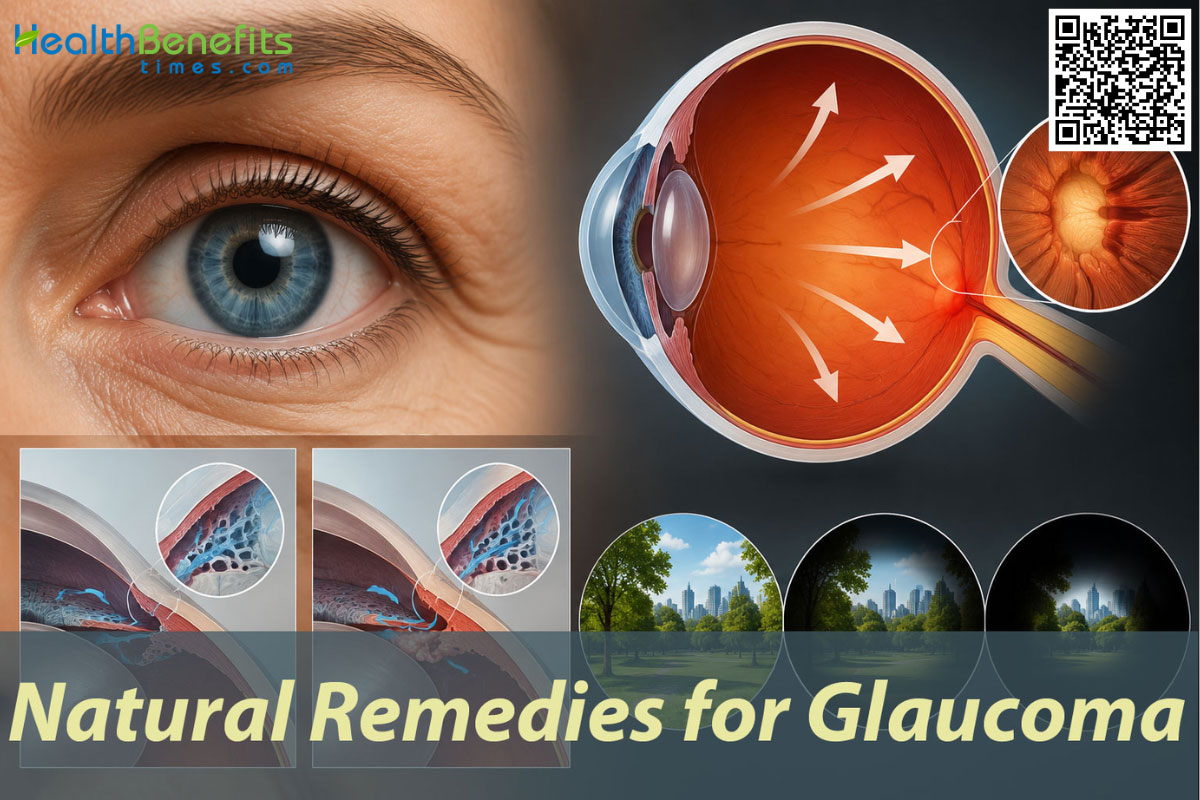
Glaucoma is a group of progressive eye conditions that damage the optic nerve, the vital communication cable that transmits visual images from your eye directly to your brain. This nerve damage is usually linked to an unnatural buildup of fluid pressure inside the eye, though it can occasionally occur even with normal pressure levels. Similar to an overinflated tire under constant strain, this sustained pressure slowly compresses and destroys delicate nerve fibers over time. Because the most common form of the disease develops painlessly and without immediate symptoms, it is often called the “silent thief of sight.” The condition silently degrades your peripheral (side) vision first, gradually working its way inward toward your central focus. Since the damage caused by glaucoma is permanent and cannot be reversed once it occurs, early diagnosis and treatment usually through prescription eye drops or minor surgery to improve fluid drainage are essential to prevent total vision loss. 1, 2, 3, 4.
Causes of Glaucoma
Tracing the exact biological origins of optic nerve damage reveals a multifaceted interplay of mechanical, vascular, and genetic factors.
Primary Mechanical and Fluid Dynamics
- Aqueous Humor Accumulation: The eye continuously produces a nourishing fluid that must drain through a spongy tissue called the trabecular meshwork. When this drainage pathway becomes structurally resistant or physically blocked, fluid builds up, causing internal eye pressure to rise dangerously 5.
- Anatomical Obstructions: In specific anatomical variations, the physical angle between the iris and the cornea is exceptionally narrow, which can cause the iris to physically bulge forward and completely seal off the fluid drainage channels 6.
Vascular and Cellular Dysfunction
- Optic Nerve Hypoperfusion: A critical reduction in the normal blood flow supplying the optic nerve leads to cellular starvation, a mechanism considered the primary culprit in normal-tension glaucoma where internal eye pressure remains within perfectly normal limits 1.
- Oxidative Stress and Glutamate Toxicity: At the microscopic level, an excess of free radicals and toxic levels of the neurotransmitter glutamate trigger a cascade of cellular self-destruction (apoptosis) within the fragile retinal ganglion cells 7.
- Vascular Dysregulation: Systemic issues with how blood vessels constrict and dilate can leave the ocular tissues highly vulnerable to sudden drops in blood pressure, depriving the eye of oxygen during critical periods 8.
Secondary Triggers and Systemic Disease
- Abnormal Blood Vessel Growth (Neovascularization): Advanced, uncontrolled systemic diseases like diabetes or severe hypertension can force the eye to grow fragile, abnormal blood vessels that physically suffocate the drainage structures 5.
- Pigment Dispersion and Exfoliation: Cellular debris, such as flaking pigment from the iris or abnormal protein deposits from exfoliation syndrome, can shed into the eye’s fluid and physically clog the microscopic drainage grates 9.
Symptoms of Glaucoma
Recognizing the clinical manifestations of this ocular neuropathy requires vigilance, as the physical signs depend heavily on the specific variation of the disease.
- Asymptomatic Progression: In primary open-angle glaucoma, the disease initiates silently without any pain, discomfort, or noticeable changes to visual clarity during the first several years 3.
- Peripheral Vision Loss: The earliest detectable visual deficit is the gradual fading, dimming, or disappearing of side vision, typically manifesting first in the visual zones closest to the nose 10.
- Permanent Blind Spots: As the optic nerve sustains further damage, patients develop distinct, mapping-verified patches of total visual void within their field of sight 1.
- Severe Ocular Pain: In the medical emergency known as acute angle-closure glaucoma, the sudden, rapid spiking of intraocular pressure triggers intense, agonizing eye pain 11.
- Gastrointestinal Distress: The extreme physiological stress of a sudden ocular pressure spike frequently induces profound nausea and intense vomiting 12.
- Visual Halos and Blurring: Patients suffering an acute angle-closure attack often observe brilliant, rainbow-colored rings radiating around light sources, accompanied by a sudden clouding of their overall vision 6.
- Pronounced Eye Redness: A visible, deep reddening of the sclera (the white of the eye) serves as a hallmark physical sign of acute pressure elevation 13.
Glaucoma Facts Table
Contextualizing the statistical and demographic realities of this condition helps illuminate its broader public health impact.
| Category | Facts |
| Symptoms |
|
| Causes |
|
| Types of Glaucoma |
|
| How does spread |
|
| Age Group |
|
| You might be at a higher risk for exposure of this disease if you: |
|
| How doctors diagnose |
|
| Other facts |
|
Natural Remedies for Glaucoma
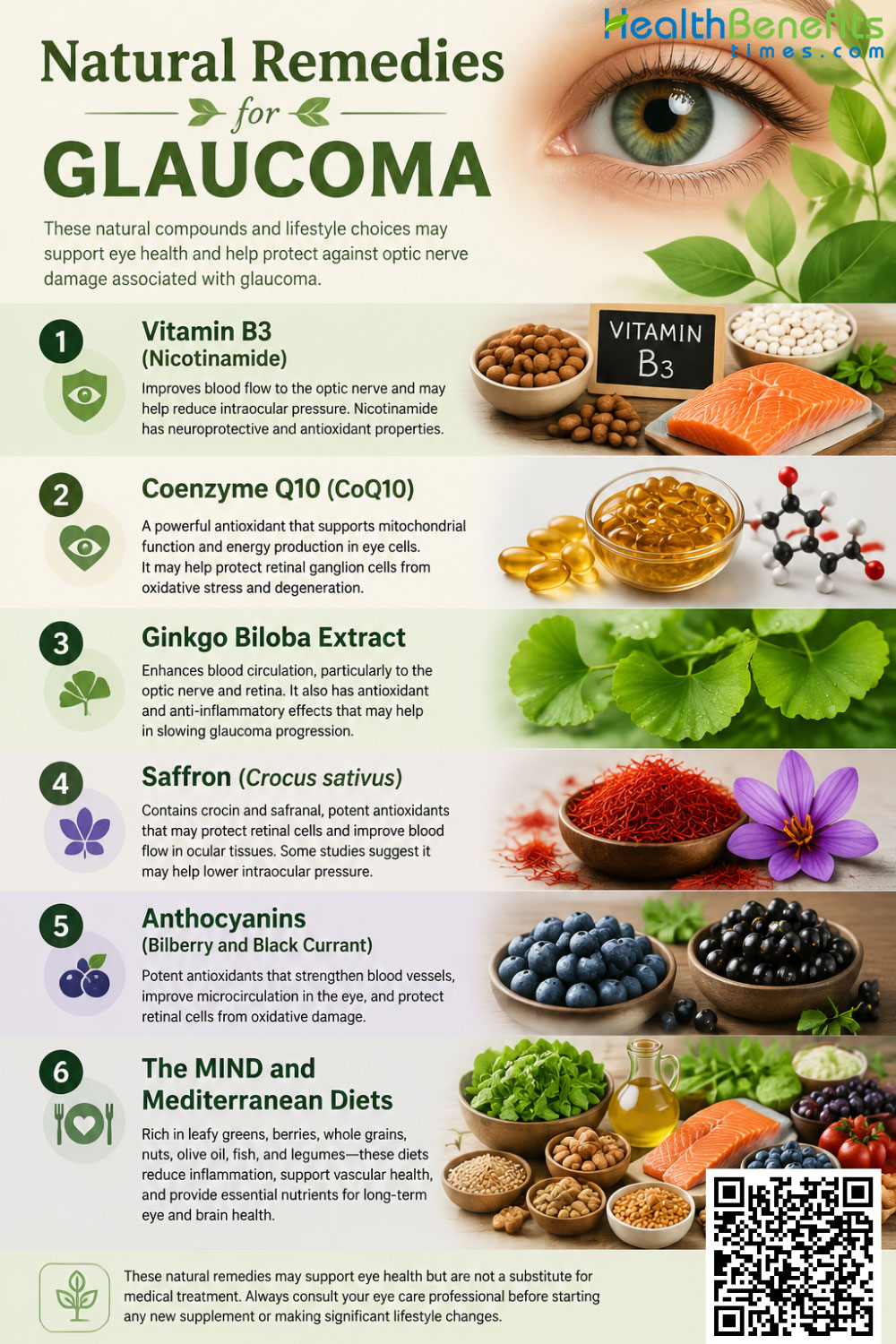
Exploring the intersection of botanical medicine, nutritional supplementation, and neuroprotection reveals a fascinating array of complementary therapies. While no natural compound can replace conventional pharmaceutical interventions or surgical procedures, an expanding body of clinical evidence suggests that specific nutrients can fortify the optic nerve against metabolic stress, enhance ocular blood flow, and provide robust defense against cellular death.
1. Vitamin B3 (Nicotinamide)
Investigating cellular bioenergetics highlights the massive energy demands of the retinal ganglion cells. Nicotinamide, a highly soluble form of Vitamin B3, functions as a critical precursor to Nicotinamide Adenine Dinucleotide (NAD+), a pivotal coenzyme essential for mitochondrial energy production and cellular survival 17. Advanced clinical trials demonstrate that glaucoma patients frequently exhibit depleted plasma levels of this crucial nutrient, leaving their optic nerves metabolically starved 18. By supplementing with high doses of nicotinamide, researchers have observed a statistically significant improvement in inner retinal function and a notable stabilization of visual field mean deviation in heavily progressed patients 19.
Note: It is commonly consumed as a high-dose daily oral capsule supplement alongside traditional pressure-lowering eye drops to support profound cellular energy production within the optic nerve.
2. Coenzyme Q10 (CoQ10)
Delving deeper into mitochondrial health brings focus to Coenzyme Q10, a naturally occurring molecule essential for the creation of cellular adenosine triphosphate (ATP). In the context of glaucomatous damage, excessive activation of glutamate receptors triggers a toxic cascade that forces open the mitochondrial permeability transition pore (MPTP), leading to rapid cell death 7. CoQ10 exerts a specific, highly targeted anti-apoptotic activity by directly holding the MPTP in a closed conformation, preventing the release of destructive enzymes and halting the death of retinal ganglion cells 20. Age-related declines in CoQ10 directly correlate with increased optic nerve vulnerability, making its replenishment a vital neuroprotective strategy 21.
Note: It is applied for remedial benefits either through daily oral dietary supplements or via specially formulated topical ophthalmic solutions (eye drops) to deliver the antioxidant directly to the retinal tissues.
3. Ginkgo Biloba Extract
Tracing the lineage of traditional Eastern medicine uncovers the remarkable vascular properties of the Ginkgo Biloba tree. The extract synthesized from its leaves demonstrates profound vasoactive capabilities, actively regulating capillary permeability, improving blood viscosity, and relaxing constricted blood vessels 22. For patients suffering from normal-tension glaucoma where eye pressure is not the primary issue, but blood supply is severely lacking daily administration of Ginkgo Biloba extract has been clinically documented to improve pre-existing visual field damage by revitalizing the blood flow to the optic nerve head 23.
Note: It is most commonly ingested as a standardized daily oral extract tablet to promote sustained, healthy blood flow to delicate ocular capillary networks.
4. Saffron (Crocus sativus)
Looking at the chemical composition of ancient spices reveals that Saffron possesses potent pharmacological properties far beyond its culinary value. The active compounds in saffron harbor aggressive anti-inflammatory and antioxidative capacities that specifically shield nervous system tissues from degenerative decay 22. Rigorous clinical evaluations have recorded a statistically significant ocular hypotensive (pressure-lowering) effect after just three weeks of continuous saffron extract supplementation in patients living with primary open-angle glaucoma, alongside its noted ability to preserve retinal morphology 23.
Note: It is utilized medicinally as an oral aqueous extract supplement, or carefully integrated into daily meals, to lower eye pressure and neutralize oxidative stress within the optic nerve.
5. Anthocyanins (Bilberry and Black Currant)
Focusing on the deep pigments found in dark fruits uncovers a powerful class of flavonoids known as anthocyanins. Extracted prominently from black currants and bilberries, these compounds are elite free-radical scavengers that neutralize the severe oxidative stress responsible for degrading ocular tissues 24. Long-term, multi-year clinical tracking reveals that consistent consumption of black currant anthocyanins delivers encouraging neuroprotective outcomes, actively slowing the deterioration of visual fields while offering moderate assistance in stabilizing erratic intraocular pressure fluctuations 25.
Note: It is eaten directly through a diet dense in fresh, deeply colored berries, or taken daily as a concentrated botanical capsule to combat cellular inflammation.
6. The MIND and Mediterranean Diets
Evaluating holistic nutritional patterns provides compelling evidence that food synergy exerts a profound impact on neurodegenerative disease progression. The Mediterranean-DASH Intervention for Neurodegenerative Delay (MIND) diet emphasizes the heavy consumption of green leafy vegetables, nuts, berries, and fish, while strictly limiting processed foods 8. These specific food groups provide massive quantities of natural dietary nitrates, Omega-3 polyunsaturated fatty acids, and essential vitamins (A, C, and K1) that collectively regulate ocular blood supply, decrease intraocular pressure, and dramatically lower the overall incidence of open-angle glaucoma 26. Greater adherence to this specific dietary structure has been proven to significantly reduce the risk of incident glaucoma independently of intraocular pressure measurements 27.
Note: It is applied practically by restructuring all daily meals to emphasize whole, unprocessed plant foods, deeply colored vegetables, and healthy fatty fish, while entirely substituting highly processed items.
Is there any exercise or physical activities for Glaucoma
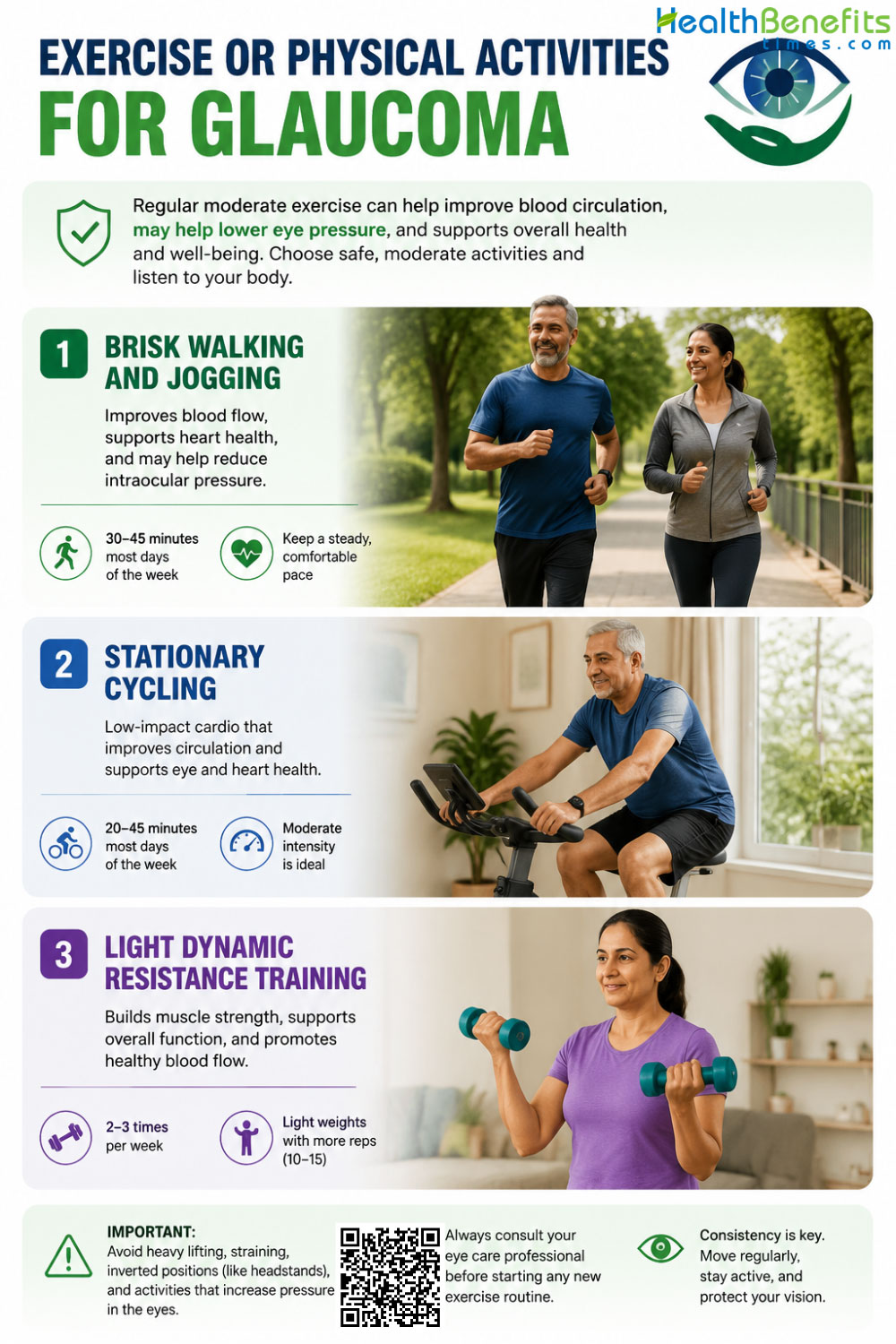
Moving the body through structured physical exertion initiates complex physiological changes that extend protective benefits directly to ocular health. Scientific literature confirms that specific, moderate forms of physical activity are not only entirely safe but highly beneficial for stabilizing intraocular pressure and enhancing critical blood flow to the optic nerve head.
1. Brisk Walking and Jogging
Analyzing the effects of dynamic cardiovascular movement reveals a highly protective mechanism against ocular hypertension. Moderate aerobic exercises, such as sustained brisk walking or light jogging, stimulate the sympathetic nervous system, which in turn induces morphological changes in the trabecular meshwork and Schlemm’s canal, physically increasing the outflow of internal eye fluid 28. Clinical observations demonstrate that the degree of pressure lowering is directly proportional to the duration of the activity, providing a potent, transient reduction in intraocular pressure that helps halt the progression of primary open-angle glaucoma 9.
Note: To do this correctly, engage in 30 to 45 minutes of steady, moderate-paced walking or jogging on flat terrain several times a week, ensuring a continuous, rhythmic breathing pattern is maintained throughout.
2. Stationary Cycling
Observing low-impact endurance training highlights stationary cycling as an exceptionally safe method for boosting cardiovascular function without subjecting the body to jarring impacts. This specific form of steady-state aerobic training reliably decreases intraocular pressure immediately following the exercise session, with reductions lasting up to an hour post-workout 29. By consistently elevating the heart rate, cycling improves overall systemic blood circulation, which indirectly supports the tiny, vulnerable vascular networks supplying oxygen to the optic nerve 30.
Note: To do this properly, ride a stationary bicycle at a moderate, conversational pace for 20 to 30 minutes daily, intentionally avoiding intense, breathless sprinting that causes blood pressure to spike wildly.
3. Light Dynamic Resistance Training
Evaluating muscle-building exercises shows that maintaining low resistance and high repetitions remains highly beneficial for cellular metabolic health. While heavy, explosive weightlifting is strictly contraindicated, dynamic, light resistance training using small dumbbells or elastic bands improves cellular stress responses and mitochondrial function 28. By strictly maintaining proper breathing techniques during light resistance work, patients prevent dangerous pressure spikes while still conferring the systemic benefits of muscular fitness 31.
Note: To do this safely, select very light weights, focus on smooth, continuous, controlled movements, and strictly exhale during the exertion phase to absolutely prevent holding your breath.
Foods and Activities to Avoid
When you evaluate your daily habits, it becomes clear that certain seemingly harmless lifestyle choices can unknowingly sabotage your eye health. You must remain highly vigilant regarding specific routines that inadvertently spike your internal eye pressure or accelerate damage to a fragile optic nerve.
Foods to Avoid When You Suffer From Glaucoma and You Are Prone to Glaucoma
1. High-Salt Foods
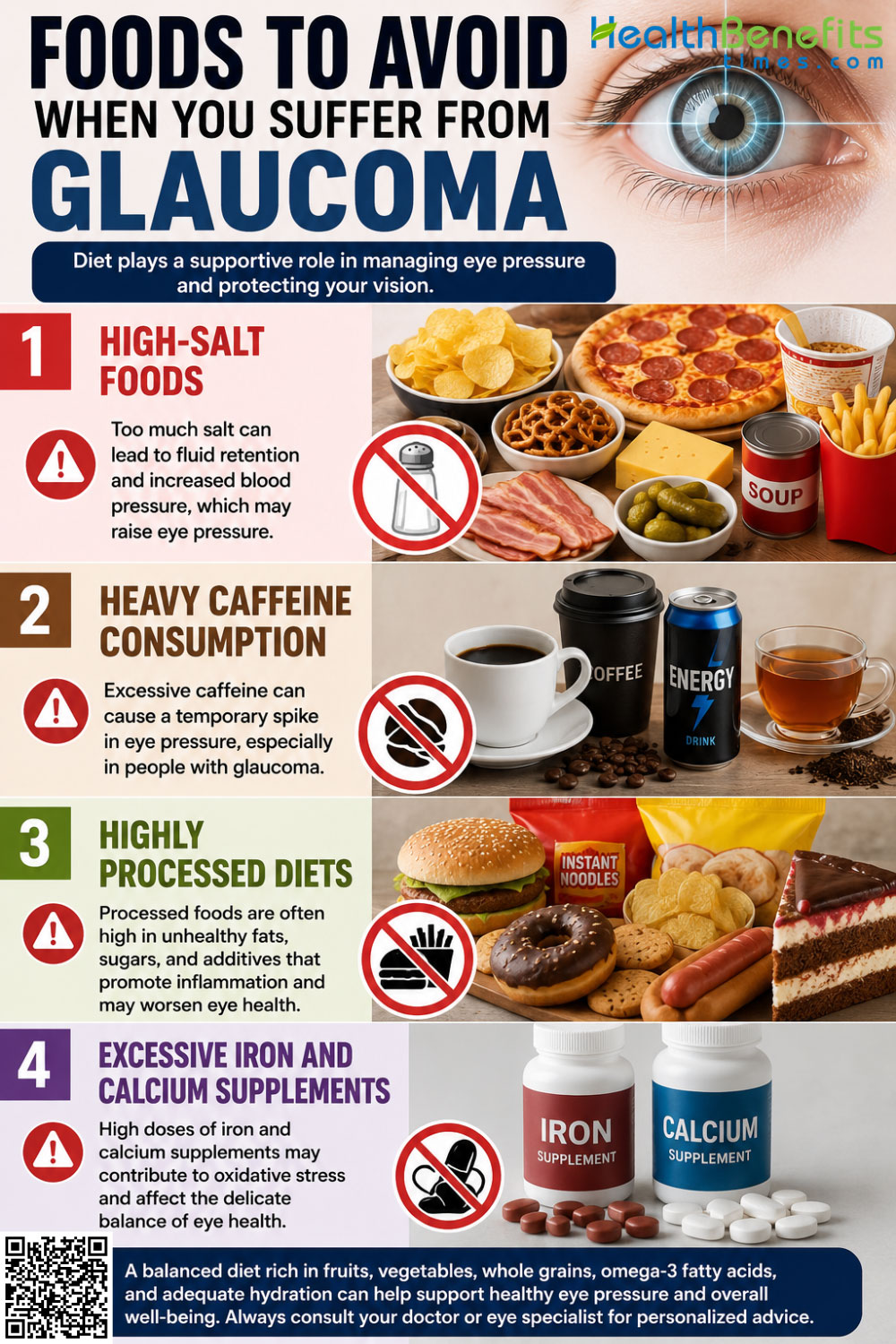
You must strictly avoid consuming excessive amounts of dietary sodium, as a high-salt diet negatively influences your systemic blood pressure, which subsequently impairs the delicate vascular health of your eyes and increases disease prevalence 13.
2. Heavy Caffeine Consumption
You should refrain from rapidly ingesting highly caffeinated beverages like strong coffee or concentrated energy drinks, because massive caffeine intake induces a transient, statistically significant elevation in both your intraocular pressure and ocular perfusion pressure for up to 90 minutes 32.
3. Highly Processed Diets
You must eliminate foods packed with artificial preservatives, refined sugars, and trans fats, as these items promote systemic inflammation and severe oxidative stress, directly exacerbating the death of your retinal ganglion cells 8.
4. Excessive Iron and Calcium Supplements
You should avoid mega-dosing on specific mineral supplements unless directed by a doctor; at excessively high levels, minerals like iron and calcium act as potent oxidants that are associated with an increased risk of optic nerve deterioration 13.
Activities to Avoid When You Suffer From Glaucoma
1. Head-Down Yoga Postures
You must absolutely avoid assuming inverted body positions, particularly traditional poses like the headstand (Sirsasana), downward-facing dog (Adhomukha Svanasana), or the plough pose (Halasana); these postures cause massive fluid shifts toward the head, resulting in a dangerous, twofold increase in your intraocular pressure 33.
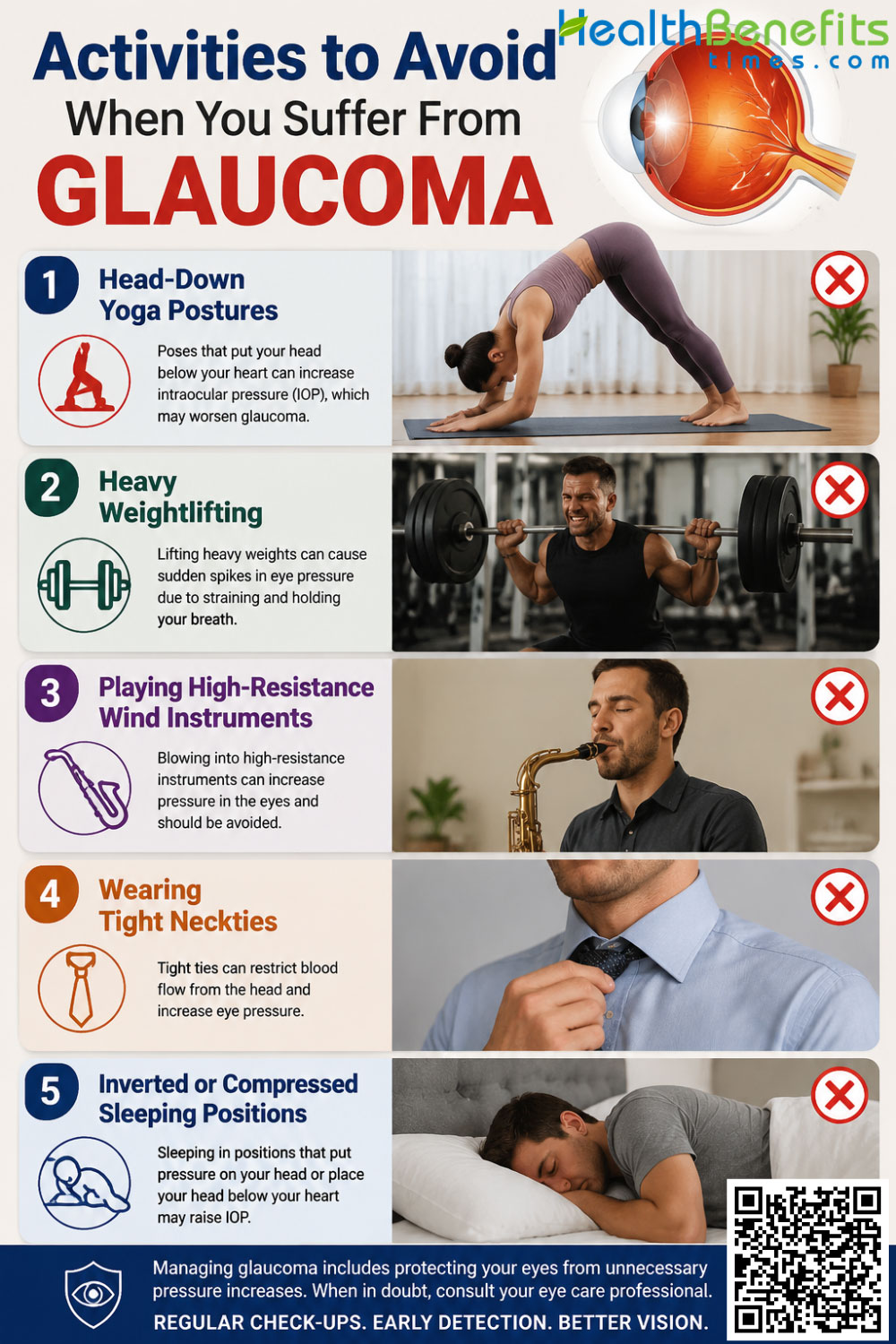
2. Heavy Weightlifting
You should strictly avoid maximum exertion exercises, especially lifting heavy weights while holding your breath (the Valsalva maneuver), because this creates severe spikes in both intracranial and intraocular pressure that physically crush the optic nerve 34.
3. Playing High-Resistance Wind Instruments
You must avoid forcing massive amounts of air through high-resistance musical instruments, such as trumpets, French horns, or oboes, as the intense expiratory effort dramatically increases chest and head pressure, leading to accelerated visual field loss over cumulative life hours 35.
4. Wearing Tight Neckties
You should stop fastening collars or neckties tightly around your throat, as this restricts venous blood return from your head, prompting an immediate and measurable rise in the internal pressure of your eyes 36.
5. Inverted or Compressed Sleeping Positions
You should avoid resting with your head positioned lower than your heart, or sleeping in specific lateral positions that put physical weight and pressure on your affected eye, as this contributes to significant, dangerous pressure fluctuations overnight 37.
Myths and Misconceptions
Separating scientific fact from popular fiction is a vital step in properly managing chronic ocular diseases.
| Myth | Reality |
| Smoking marijuana is the best, most effective natural treatment for the disease. | While cannabinoids temporarily lower eye pressure, the effect lasts only a few hours. The severe cardiovascular side effects (tachycardia, hypotension) and psychological impairments make it entirely unsuitable for the constant, 24/7 pressure control required. |
| If your internal eye pressure measures perfectly normal, you definitely do not have the disease. | Millions of individuals suffer from Normal-Tension Glaucoma, a variation where the optic nerve sustains severe, progressive damage from poor blood supply despite the eye pressure reading well within standard, normal limits. |
| The condition only strikes the elderly, so young people do not need to worry. | While advanced age remains the highest risk factor, the disease can strike at any age. Congenital forms affect newborn infants, and secondary forms frequently impact young adults with underlying health conditions. |
| You will definitely feel severe pain or discomfort if your eye pressure is dangerously high. | The vast majority of cases (Primary Open-Angle) progress completely silently. The eye can sustain massive, permanently destructive pressure levels for years without the patient feeling even the slightest physical discomfort. |
| Doctors require a brand-new diagnosis or new symptoms to bill for an intermediate eye visit. | Ongoing, stable conditions evaluated during a routine encounter fully qualify for intermediate eye visits; routine monitoring of a known disease requires no new symptoms. |
Special Considerations
Vulnerable populations demand highly tailored, cautious approaches to disease management. Standard pharmaceutical treatments and seemingly benign natural remedies can behave radically differently depending on age, hormonal states, and co-existing physiological conditions.
1. Children
Pediatric manifestations of this disease are incredibly rare and notoriously complex to treat medically. The anatomical immaturity of infants makes them exceptionally vulnerable to the systemic side effects of common topical eye drops 41. For instance, the widely prescribed alpha-agonist drop brimonidine is strictly cautioned against in young children because it rapidly crosses their underdeveloped blood-brain barrier. This causes severe central nervous system toxicity, resulting in extreme lethargy, profound hypotonia, unarousable states, and life-threatening apneic episodes 42. Conversely, alternative agents like apraclonidine are generally considered safer for short-term pediatric use, rarely producing severe systemic depression 43. The age and weight of the child are the most critical factors in predicting central nervous system side effects, mandating extreme medical precision 44.
2. Pregnancy
Hormonal shifts during gestation naturally lower intraocular pressure for many women, yet roughly 10% will experience dangerous pressure elevations that threaten their vision 12. The pharmacological management of pregnant patients is fraught with peril, as no topical anti-glaucoma agents have strong, definitive evidence of complete safety for the fetus 45. Most common medications, including prostaglandin analogues and carbonic anhydrase inhibitors, are classified as FDA Category C, meaning they demonstrate teratogenic effects in animal studies and carry risks of causing spontaneous abortion or fetal anomalies during the critical first trimester of organogenesis 46. Category B drugs, such as brimonidine, are generally considered the safest options during early pregnancy 47. Furthermore, if beta-blockers are utilized, they must be strictly discontinued several days before delivery to prevent the newborn from suffering dangerous bradycardia and respiratory depression upon birth 48.
3. Chronic Conditions
Individuals battling systemic vascular diseases, particularly advanced diabetes, obstructive sleep apnea, and severe hypertension, must aggressively manage their baseline health to protect their eyes. Failure to control chronic blood sugar or blood pressure frequently triggers a catastrophic secondary complication known as neovascular glaucoma 6. In this severe variation, the oxygen-starved eye frantically grows fragile, abnormal blood vessels that physically scar and suffocate the natural drainage structures, leading to rapid, excruciating blindness that is exceptionally difficult to treat both medically and surgically 6.
4. Elderly
Advanced age inherently brings a steep, natural decline in mitochondrial function and cellular bioenergetics, drastically depleting natural reserves of neuroprotective compounds like Coenzyme Q10 20. This makes the aging optic nerve exceptionally susceptible to even minor fluctuations in pressure. Furthermore, elderly patients frequently suffer from chronic ocular surface disease and dry eye syndrome, which are vastly exacerbated by the daily instillation of pharmaceutical eye drops containing harsh preservatives 49. Elderly populations are also at a significantly higher risk for dangerous polypharmacy interactions; introducing natural remedies like Ginkgo Biloba can provoke severe bleeding events if the patient is concurrently taking prescription systemic blood thinners for cardiac health.
Precaution Before Use of Natural Remedies When You Have Glaucoma
Safety must unequivocally remain your primary focus when incorporating dietary supplements and herbal compounds into your daily health regimen. You must understand that natural does not inherently mean safe, especially when dealing with delicate neurological and ocular systems.
- Consult a Healthcare Provider: You must always secure explicit, documented medical clearance from your licensed ophthalmologist before beginning any new vitamin, botanical herb, or dietary supplement to ensure it will not biochemically interfere with your traditional therapies 50.
- Never Discontinue Prescribed Medications: You must view botanical extracts and vitamins strictly as complementary additions; abandoning your prescribed, pressure-lowering pharmaceutical eye drops in favor of natural remedies directly invites irreversible blindness 23.
- Beware the Risks of Medical Marijuana: You must recognize that while cannabis temporarily lowers eye pressure, its systemic cardiovascular effects—including severe tachycardia and blood pressure drops alongside its psychological impairments and addictive properties, mean its deleterious effects far outweigh its benefits for constant pressure management 38.
- Ensure Consistent Clinical Exams: Because natural remedies lack the potent, immediate, measurable pressure-lowering capabilities of prescription drugs, you must maintain regular tonometry and visual field testing to objectively verify that the disease is not silently progressing behind the scenes 22.
- Monitor for Systemic Interactions: You must remain acutely aware that potent natural compounds like Ginkgo Biloba heavily influence blood circulation; if you are taking blood pressure medication or anticoagulants, mixing these can trigger dangerous physiological crises.
When to See Doctor
Recognizing definitive emergency signs and maintaining strict, routine clinical surveillance constitute your final line of defense against permanent vision loss. You must act immediately when specific visual disturbances arise.
- Routine Baseline Screenings: If you have a family history of the disease, are African American over age 40, or are part of the general population over age 60, you must schedule a comprehensive, dilated eye exam every one to two years, regardless of how perfectly clear your vision currently seems 16.
- Sudden, Agonizing Eye Pain: If you experience extreme, unrelenting physical pain in or around your eyeball, you must treat it as an absolute medical emergency indicative of an acute angle-closure attack and proceed to a hospital immediately 3.
- Cloudy or Blurry Vision: The sudden, unexplained onset of hazy, clouded vision, especially when accompanied by a distinctly red or bloodshot eye, demands immediate evaluation by a specialist to prevent rapid nerve death 6.
- Nausea Accompanying Visual Changes: If you suffer severe stomach upset or vomiting that occurs simultaneously with sudden visual disturbances, you must recognize this as a hallmark sign of a rapid, dangerous spike in intraocular pressure 3.
- Visible Halos Around Lights: If you begin seeing bright, rainbow-like rings surrounding streetlamps or headlights at night, it strongly suggests that corneal swelling has occurred due to unmanaged, exceedingly high eye pressure, requiring urgent intervention 6.
- Noticeable Blind Spots: Any perceived darkening, tunneling, or missing patches appearing in the peripheral edges of your vision warrants a prompt, thorough visual field evaluation by your eye doctor to map and halt the progression 3.