

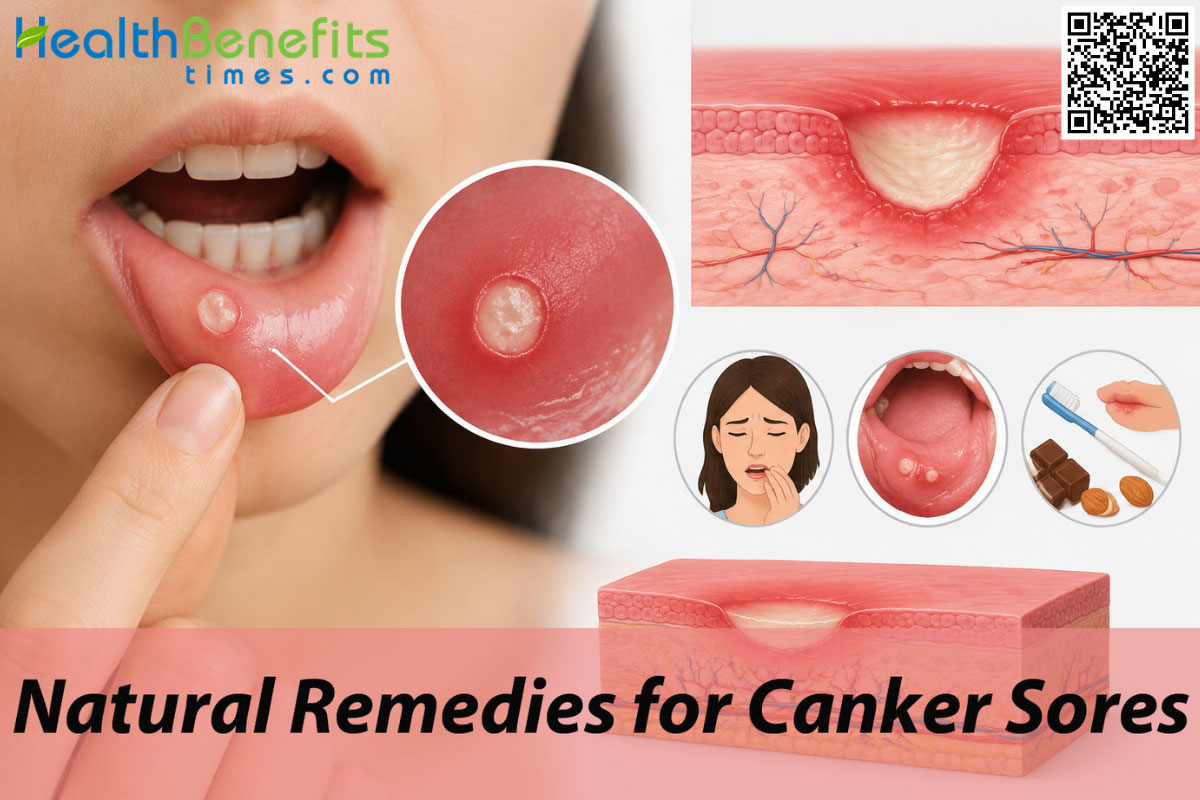
Canker sores have a way of showing up at the worst possible moment right before a big presentation, a school exam, or a family dinner. The good news is that they almost always heal on their own, and a handful of gentle, well-studied natural remedies can ease the pain while your mouth does its repair work. This guide walks you through what canker sores actually are, why they appear, the medical and home options available, and the smart precautions that keep simple sores from turning into something more serious.
What Are Canker Sores?
Canker sores, medically known as aphthous ulcers or recurrent aphthous stomatitis (RAS), are small, shallow lesions that form on the soft tissues inside the mouth or at the base of the gums, and unlike cold sores they are not contagious and do not appear on the outer surface of the lips. Most look like a white or yellowish oval crater surrounded by a bright red halo, and they tend to appear inside the cheeks, on the tongue, inside the lips, or on the soft palate. About 1 in 5 people get canker sores regularly, with women slightly more affected than men, possibly because of hormonal differences. Some research suggests the condition can affect up to 60% of North Americans at some point in life, making it one of the most common mucosal disorders worldwide 1.
Causes of Canker Sores (Why They Pop Up)
While the exact trigger is still unclear, doctors have identified several common culprits behind most outbreaks.
- Minor mouth trauma— accidentally biting your cheek, aggressive brushing, sports injuries, or irritation from dental appliances can damage the lining of the mouth.
- Toothpastes and rinses containing sodium lauryl sulfate (SLS)are a well-known irritant for many recurrent sufferers.
- Food sensitivities and acidic foods— chocolate, coffee, eggs, nuts, cheese, strawberries, citrus, pineapple, and tomatoes commonly trigger sores.
- Nutritional deficiencies— low levels of vitamin B12, folic acid, iron, or zinc are repeatedly linked to recurrent ulcers.
- Emotional stress and lack of sleep, which can weaken immune defenses inside the mouth.
- Hormonal changes, particularly around menstruation and pregnancy 2.
- Underlying conditions such as celiac disease, Crohn’s disease, ulcerative colitis, Behçet’s disease, HIV/AIDS, and other immune disorders.
- Helicobacter pylori, the same bacterium connected to peptic ulcers, has also been associated with recurrent canker sores.
Symptoms of Canker Sores
Spotting one is usually straightforward here is what to watch for:
- A tingling or burning sensation inside the mouth a day or two before the sore actually appears.
- One or more round or oval ulcers with a white, gray, or yellowish center and a red border.
- Sores located on the tongue, inner cheeks, inner lips, base of gums, or soft palate.
- Pain that worsens when eating spicy, salty, acidic, or crunchy foods.
- In severe outbreaks: fever, swollen lymph nodes, and a general feeling of being unwell. Difficulty talking, brushing teeth, or swallowing when sores are large.
Canker Sores Facts Table
| Symptoms | • Painful round/oval ulcers with red border • White or yellow center • Tingling/burning before sore appears • Possible fever and swollen glands in severe cases |
| Causes {% https://newsnetwork.mayoclinic.org/discussion/mayo-clinic-q-and-a-canker-sores-often-go-away-on-their-own-are-not-contagious/ |
• Minor mouth trauma • SLS in toothpaste • Acidic/spicy foods • Nutritional deficiencies • Stress and hormonal shifts |
| Types | • Minor (<1 cm, heal in ~1 week, no scar) • Major (>1 cm, deep, can scar, weeks to heal) • Herpetiform (clusters of tiny ulcers, 10–100 at once) |
| How it spreads | • Not contagious — cannot be passed through kissing, sharing utensils, or saliva |
| Age group | • Most common between ages 10–20 for minor sores • Herpetiform type usually first appears in adulthood |
| Risk factors | • Family history • Female sex • Stress • Nutrient deficiencies • Autoimmune/GI conditions |
| How doctors diagnose | • Visual exam — no specific test required • Bloodwork if recurrent or severe, to check for deficiencies or systemic illness |
| Other facts | • Up to 60% of North Americans affected at some point • Recurrence rates near 50% in those affected • Unrelated to herpes virus |
Natural Remedies for Canker Sores
If you prefer to start with what is in your kitchen cupboard, several home remedies have respectable evidence behind them. Use these gently, and stop anything that increases pain.
1. Warm salt water rinse
A classic, this rinse reduces bacteria, encourages the sore to dry out, and supports healing, mix one teaspoon of salt in half a cup of warm water and swish for 15–30 seconds before spitting it out 8. You can repeat this two or three times a day; expect a brief sting, especially the first time.
2. Baking soda rinse or paste
Baking soda neutralizes acid and calms inflammation; dissolve one teaspoon in half a cup of warm water as a rinse, or mix with a drop of water to form a paste you can dab directly onto the sore 9. Many longtime sufferers find the paste especially helpful overnight.
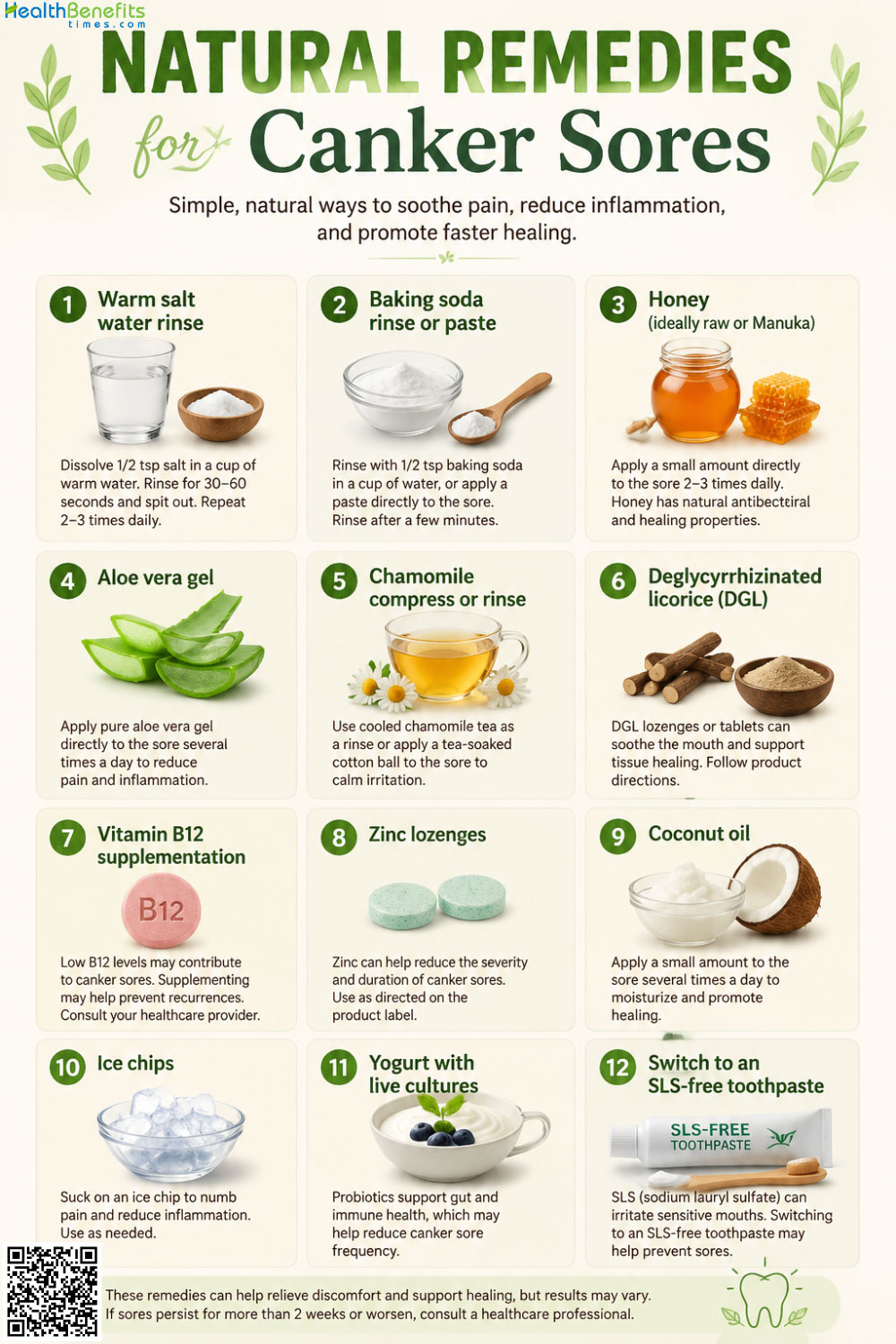
3. Honey (ideally raw or Manuka)
Honey has natural antibacterial and anti-inflammatory properties and small placebo-controlled trials have shown it can shorten healing time and reduce pain when applied directly to the sore 10. Dab a small amount onto the ulcer with a clean cotton swab three to four times a day. Honey is not safe for babies under 12 months because of the botulism risk.
4. Aloe vera gel
Pure aloe creates a soothing protective layer over the sore that may reduce pain and speed healing, and the National Center for Complementary and Integrative Health considers it generally safe to use 11. Apply a pea-sized amount of food-grade, alcohol-free gel to the sore two to three times daily.
5. Chamomile compress or rinse
Chamomile has long-standing use for inflammation and pain; steep a tea bag in warm water, let it cool slightly, and either rinse with the cooled tea or hold the moist bag directly against the sore for a few minutes 11. Children often tolerate this remedy well because it is gentle and food-based.
6. Deglycyrrhizinated licorice (DGL)
This special licorice extract has compounds that soothe the lining of the mouth and gastrointestinal tract, and clinical reports describe significant pain relief and faster healing when DGL lozenges are dissolved in the mouth or rinsed as a slurry 10. Look for the “DGL” form, the glycyrrhizin has been removed to avoid blood-pressure side effects.
7. Vitamin B12 supplementation
A double-blind clinical trial conducted at Ben-Gurion University found that a nightly 1000-mcg sublingual dose of vitamin B12 significantly reduced the frequency, duration, and pain of recurrent canker sores, even in people whose B12 levels were normal 12. This is one of the better-supported supplemental approaches for prevention.
8. Zinc lozenges
Several clinical studies suggest that zinc supplementation in the 12–45 mg range supports immune function, tissue repair, and faster oral healing 13. Dissolve a lozenge in the mouth rather than swallowing it whole.
9. Coconut oil
Coconut oil has mild antimicrobial and anti-inflammatory properties; dab a small amount on the sore with a clean finger or swab two to three times a day for a soothing barrier 14.
10. Ice chips
Allowing an ice chip to slowly melt against the sore numbs pain and reduces local swelling — a quick, drug-free option that is especially helpful for children 3.
11. Yogurt with live cultures
Although evidence is preliminary, plain unsweetened yogurt containing live Lactobacillus cultures may help restore healthy oral flora and ease inflammation 10. Eat a small amount and let it linger in the mouth before swallowing.
12. Switch to an SLS-free toothpaste
Toothpastes free of sodium lauryl sulfate, such as those marketed as gentle or sensitive formulations, may reduce recurrence significantly in people sensitive to the foaming agent 15.
Myths and Misconceptions
| Myth | Reality |
| Canker sores are contagious like cold sores | Canker sores are not infectious and cannot be spread by kissing, sharing utensils, or saliva |
| Canker sores are caused by the herpes virus | Despite the name “herpetiform,” this subtype has no link to herpes simplex virus |
| Only adults get canker sores | They most often appear between ages 10 and 20, and even young children can develop them |
| Canker sores are a sign of poor hygiene | They occur in people with excellent oral care too; trauma, genetics, and nutrition matter more than brushing habits |
| Spicy food causes the sore itself | Spicy and acidic foods irritate existing sores but are not the underlying cause for most people |
| Antibiotics will cure them | Standard oral antibiotics are not first-line because canker sores are not a typical bacterial infection |
Special Considerations — Children, Pregnancy, Chronic Conditions, and Elderly
Different groups need a slightly different approach.
1. Children
Kids develop the same kind of sores adults do, red bordered, white or yellow centered, painful and they may refuse food or drink because of the discomfort 9. Stick to mild remedies like salt water rinses (if old enough to spit), cool yogurt, ice chips, and aloe gel; avoid topical lidocaine in young children unless a clinician advises it, because excessive amounts can cause toxicity 19. Never give honey to a child under one year of age.
2. Pregnancy
Hormonal shifts in the first trimester, plus immune changes and nutrient demands, make canker sores noticeably more common during pregnancy 2. Pregnant people should always check before using any medicated product, including steroid pastes and lidocaine rinses; gentle salt-water rinses, baking-soda rinses, aloe, and a balanced diet with adequate iron and B-vitamins are generally safe first steps.
3. Chronic conditions
Recurrent or unusually severe canker sores can be a clue to celiac disease, Crohn’s disease, ulcerative colitis, Behçet’s disease, lupus, or HIV 4 . If you or someone in your family has one of these, treat new outbreaks as a signal to check disease activity with your physician.
4. Elderly adults
Older adults may face slower healing because of dentures, dry mouth from medications, and lower vitamin absorption; well-fitted dentures, a soft-bristled toothbrush, hydration, and screening for B12 and iron deficiencies often help 15.
Precautions before Using Natural Remedies When You Have Canker Sores
Even gentle remedies can backfire if used the wrong way, so keep these in mind.
- Patch-test first. If you have known allergies to honey, propolis, chamomile, or aloe, try a tiny amount on the lip or inner cheek before applying to the sore.
- Skip alcohol-based mouthwashes. They sting badly and can delay healing on raw mucosa {% https://www.healthline.com/health/dental-and-oral-health/how-to-get-rid-of-canker-sores.
- Use apple cider vinegar sparingly. It is acidic enough to erode tooth enamel if overused; if you try it, dilute heavily and rinse with plain water afterward {% https://www.colgate.com/en-us/oral-health/mouth-sores-and-infections/5-ways-to-get-rid-of-canker-sores-naturally.
- Do not exceed recommended doses of supplements. Excess zinc can cause nausea and copper deficiency, and high-dose iron should only be taken with a confirmed deficiency.
- Avoid honey in infants under 12 months because of the risk of infant botulism.
- Tell your doctor about herbal remedies. Licorice, even DGL, and high-dose B vitamins can interact with medications 10.
- Stop anything that increases pain or burning within a day or two this signals irritation rather than healing.
- Mind the temperature. Hot drinks and food applied directly may worsen sores; let things cool first 11.
When to See a Doctor
Most canker sores melt away in one to two weeks, but some warrant professional attention.
- A sore that lasts longer than two weeks without improvement 3.
- An unusually large sore (greater than about 1 cm) or one that is spreading.
- Sores that keep coming back, especially three or more times per year 20.
- High fever, swollen lymph nodes, or feeling generally unwell along with the sore 21.
- Severe pain that interferes with eating or drinking, or signs of dehydration.
- Difficulty swallowing or breathing.
- Sores that extend to the outer lips, which may be cold sores or something else.
- A sore in someone with a known systemic condition like Crohn’s, celiac, lupus, HIV, or Behçet’s.
- Any sore that bleeds easily, looks unusual, or simply does not look like a typical canker sore, a dentist or physician can rule out oral cancer with a quick exam 22.
Canker sores are rarely dangerous, but they are absolutely worth treating kindly. Between gentle home rinses, soothing pantry remedies like honey and aloe, smart nutrient support such as B12 and zinc, and the medical tools available when sores get out of hand, you have a complete toolkit for keeping your mouth comfortable while it heals. Listen to your body, watch for the warning signs above, and do not hesitate to ask a dentist or doctor when something feels off that simple step is often the difference between a passing nuisance and an early clue to something bigger.