

Guilt is widely recognized as a complex psychological response. In clinical terms, it is defined as a self-conscious emotion triggered when an individual perceives that their specific actions, thoughts, or inactions have violated internal moral standards or caused harm to others 1. It differs fundamentally from shame; while shame involves a negative assessment of one’s entire identity, guilt focuses strictly on the problematic behavior 2. Psychologically, this discomfort serves an adaptive interpersonal purpose by generating remorse and motivating reparative actions, such as apologizing, to restore social bonds 3. At a physiological level, experiencing guilt activates a mixed response in the autonomic nervous system, producing measurable changes in heart rate, digestion, and skin conductance 4. While appropriate levels of guilt promote cooperative behavior and social cohesion, disproportionate or chronic guilt is frequently linked to broader psychological distress and anxiety.
Causes of Guilt
1. Moral and Ethical Violations
Guilt frequently emerges when individuals violate their own internalized moral standards, ethical beliefs, or established societal rules. The difference between personal values and actual behavior triggers an emotional response that highlights a failure to meet specific behavioral expectations 5. Clinical research concludes that this form of subjective guilt functions as a cognitive signal to prevent future violations of moral codes 2.
2. Interpersonal Harm and Conflict
The realization that one’s specific actions or inactions have caused emotional or physical harm to another person is a primary cause of guilt. Studies indicate that this emotion serves an adaptive social purpose by generating remorse, which directly motivates individuals to apologize, offer restitution, and repair damaged relationships 4.
3. Underlying Psychological Disorders
Disproportionate or irrational guilt is a core clinical symptom in several mental health conditions, most notably major depressive disorder and obsessive-compulsive disorder (OCD). In these clinical contexts, patients typically experience unhealthy guilt characterized by an intense need to obsessively monitor their behavior or assume excessive responsibility for negative events beyond their direct control 5.
4. Trauma and Survivor’s Guilt
Individuals who survive a severe, life-threatening event—such as a natural disaster, accident, or combat—often develop intense guilt if others did not survive. Researchers conclude that survivor’s guilt is a severe psychological burden directly associated with post-traumatic stress disorder (PTSD), characterized by persistent thoughts that the survivor did not do enough to prevent the tragedy or did not deserve to survive 6.
Symptoms of Guilt
1. Persistent Rumination
Persistent rumination is a primary cognitive symptom of guilt, characterized by an inability to stop thinking about a specific past action, mistake, or perceived failure. Clinical research concludes that this continuous, obsessive mental looping significantly increases psychological distress, sustains negative mood states, and prevents emotional resolution 7.
2. Exaggerated Self-Blame
Individuals experiencing pathological or unhealthy guilt often assume intense, disproportionate responsibility for negative events that are largely outside of their direct control. Studies indicate that this symptom is highly correlated with clinical depression, where patients routinely exhibit feelings of worthlessness and irrationally believe they deserve punishment for perceived shortcomings 5.
3. Physical and Somatic Distress
Because intense self-conscious emotions activate the body’s acute stress response, guilt frequently produces noticeable physical symptoms. Researchers conclude that the autonomic nervous system’s reaction to chronic guilt can manifest physically as generalized muscle tension, gastrointestinal discomfort, elevated heart rate, and severe sleep disturbances 4.
4. Avoidance and Social Withdrawal
While healthy levels of guilt typically motivate individuals to apologize or make amends, chronic or overwhelming guilt often leads to defensive avoidance behaviors. Clinical observations confirm that individuals paralyzed by guilt may actively withdraw from social relationships or avoid specific locations and situations that trigger painful reminders of their transgressions {% https://pmc.ncbi.nlm.nih.gov/articles/PMC4119878
Natural Remedies for Guilt
1. Cognitive Restructuring
How it may help
Cognitive restructuring helps manage guilt by identifying and modifying exaggerated or irrational thoughts regarding personal responsibility. It teaches individuals to replace overly critical self-blame with more balanced, realistic perspectives. This process reduces the emotional burden associated with past actions and prevents normal remorse from becoming chronic distress.
What research says
Clinical studies confirm that cognitive restructuring effectively decreases excessive guilt, particularly in individuals experiencing depression or trauma-related distress 8. Researchers conclude that directly challenging negative thoughts about personal responsibility significantly lowers psychological distress and improves overall emotional regulation 9.
How to use it safely
To use this technique safely, start by writing down your guilt-inducing thoughts when they arise. Examine the evidence for and against these thoughts without self-judgment. For the safest results, practice these exercises under the guidance of a licensed mental health professional 10.
Potential precautions or side effects
Confronting deep-seated negative thoughts may initially cause temporary emotional discomfort or anxiety. Individuals with severe trauma should avoid practicing this independently to prevent emotional flooding or re-traumatization 11.
2. Self-Compassion and Self-Forgiveness Practices
How it may help
Self-compassion and self-forgiveness involve treating oneself with kindness rather than harsh judgment following a mistake. This approach shifts the focus from intense self-blame to acceptance. It helps individuals release chronic guilt and reduce the psychological burden of past actions without abandoning personal responsibility.
What research says
Research demonstrates that high self-compassion significantly reduces feelings of guilt and shame by enhancing emotional resilience 12. Clinical studies conclude that targeted self-forgiveness interventions effectively decrease psychological distress and interrupt toxic cycles of rumination, leading to measurable improvements in overall mental health 13.
How to use it safely
To safely practice these techniques, acknowledge your past actions objectively without minimizing any harm caused. Speak to yourself with the same empathy you would offer a friend. Consider seeking guidance from a licensed therapist to ensure your approach remains balanced and constructive 14.
Potential precautions or side effects
Misapplying self-forgiveness may occasionally lead to avoiding necessary accountability. Individuals with severe depression might experience worsened self-criticism if practicing alone, making professional clinical supervision highly recommended 15.
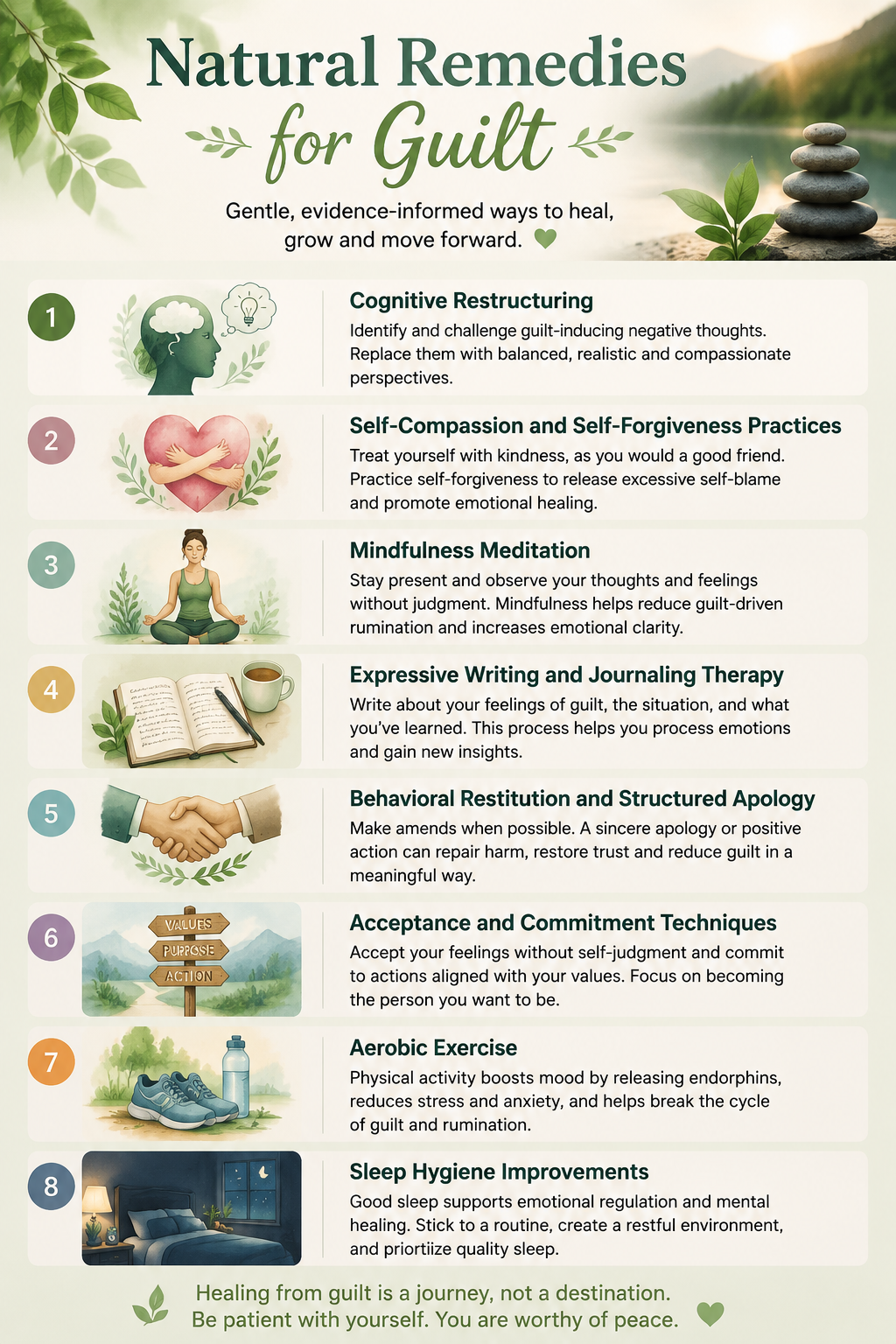
3. Mindfulness Meditation
How it may help
Mindfulness meditation helps control guilt by training the brain to observe distressing thoughts without immediate judgment or emotional reaction. This practice interrupts the continuous cycle of obsessive overthinking about past mistakes. By staying grounded in the present moment, individuals can detach from overwhelming feelings of self-blame.
What research says
Clinical research demonstrates that mindfulness-based interventions significantly reduce rumination and alleviate symptoms of negative emotional states 16. Studies conclude that regular mindfulness practice directly alters emotional regulation pathways, decreasing the frequency and intensity of self-conscious emotions like guilt and shame 17.
How to use it safely
To practice safely, begin with brief, five-minute daily sessions focusing purely on your breathing. Use guided programs from credible mental health organizations to maintain focus. If intrusive thoughts become too intense, open your eyes and ground yourself in your physical surroundings 18.
Potential precautions or side effects
Unsupervised meditation may occasionally trigger increased anxiety or surface unresolved traumatic memories. Individuals with severe trauma or psychiatric conditions should only practice under clinical supervision 19.
4. Expressive Writing and Journaling Therapy
How it may help
Expressive writing helps control guilt by allowing individuals to structure and process complex emotions. Translating internal distress into written words creates psychological distance from the source of self-blame. This process reduces continuous overthinking and provides a private outlet to confront negative feelings, making intense emotions more manageable.
What research says
Clinical research demonstrates that expressive writing significantly reduces psychological distress and symptoms of depression 20. Studies conclude that putting emotional experiences into words lowers autonomic nervous system reactivity and improves emotional regulation, which directly diminishes the intensity of self-conscious emotions like guilt 21.
How to use it safely
To practice this safely, write continuously for 15 to 20 minutes a day about your deepest feelings regarding the guilt-inducing event. If you become overwhelmingly distressed, stop writing immediately. Keep your journal private to ensure a completely safe space for honest reflection 20.
Potential precautions or side effects
You may experience a temporary increase in sadness immediately after writing. Individuals with severe trauma should only practice this under professional clinical supervision to avoid emotional re-traumatization 22.
5. Behavioral Restitution and Structured Apology
How it may help
Behavioral restitution and structured apologies help control guilt by transforming passive remorse into direct, constructive action. These practices focus on repairing specific harm caused to others. By taking tangible steps to make amends, individuals restore broken social bonds, effectively relieving the psychological burden of their transgression.
What research says
Clinical research indicates that providing a comprehensive, sincere apology effectively resolves interpersonal conflict and promotes social reconciliation 23. Experts conclude that direct restitution reduces guilt intensity because it realigns behavior with moral standards, significantly lowering the emotional distress associated with the original transgression 24.
How to use it safely
Ensure your apology focuses entirely on the harmed party’s feelings rather than relieving your own distress. Offer specific, tangible actions to repair the damage. Always respect the other person’s boundaries if they decline your apology or request space 25.
Potential precautions or side effects
Forced or self-serving apologies can cause additional harm to the victim. If the injured party rejects your apology, you may experience a temporary increase in personal emotional distress.
6. Acceptance and Commitment Techniques
How it may help
Acceptance and commitment techniques help control guilt by encouraging individuals to accept difficult emotions rather than fighting them. Instead of obsessing over past mistakes, this approach helps individuals clarify their personal values and take positive actions. This reduces the paralyzing effect of guilt and promotes emotional adaptability.
What research says
Clinical research demonstrates that Acceptance and Commitment Therapy (ACT) significantly improves the ability to manage difficult emotions and reduces overall distress 26. Studies conclude that accepting negative thoughts without judgment effectively decreases the severity and impact of chronic self-conscious emotions like guilt 27.
How to use it safely
To safely apply these techniques, start by identifying your core values and choosing small, constructive actions that reflect them. Because navigating intense emotions is challenging, it is highly recommended to learn these strategies with the guidance of a licensed behavioral therapist 14.
Potential precautions or side effects
Actively accepting distressing emotions may temporarily increase feelings of vulnerability. Individuals with severe trauma should only practice this under clinical supervision to avoid becoming emotionally overwhelmed 26.
7. Aerobic Exercise
How it may help
Aerobic exercise helps manage guilt by reducing the physiological symptoms of stress and interrupting cycles of mental rumination. Physical activity provides a healthy cognitive distraction from obsessive self-blame and stimulates the release of mood-enhancing chemicals in the brain, making it easier to process complex negative emotions.
What research says
Clinical studies confirm that regular aerobic exercise significantly decreases symptoms of psychological distress, anxiety, and depression 28. Researchers conclude that physical activity alters brain chemistry by increasing serotonin and endorphins, which directly improves emotional regulation and reduces the intensity of negative thought patterns 29.
How to use it safely
For optimal mental health benefits, aim for at least 150 minutes of moderate-intensity aerobic exercise, like brisk walking or cycling, each week 30. Start slowly to build endurance, and combine this routine with professional therapeutic support if your guilt remains overwhelming 25.
Potential precautions or side effects
Excessive exercise can cause physical injury, joint strain, or chronic fatigue. Individuals with underlying cardiovascular conditions should consult a healthcare provider before starting a new physical fitness routine 31.
8. Sleep Hygiene Improvements
How it may help
Improving sleep hygiene helps control guilt by stabilizing emotional reactivity and enhancing brain function. Chronic sleep deprivation impairs the brain’s ability to process complex negative emotions, often intensifying self-blame and obsessive rumination. Consistent, high-quality rest restores cognitive balance, making it easier to manage distress and maintain a realistic perspective.
What research says
Clinical research concludes that poor sleep quality significantly worsens psychological distress and increases emotional reactivity 32. Studies show that adequate, restorative sleep is essential for the brain to effectively process negative emotions, directly reducing the severity of rumination and self-conscious feelings like guilt 33.
How to use it safely
To improve sleep safely, establish a consistent daily bedtime and wake schedule, even on weekends. Keep your bedroom cool, dark, and quiet, and strictly avoid electronic screens or caffeine at least one hour before attempting to sleep 34.
Potential precautions or side effects
Obsessively tracking sleep metrics can unintentionally increase bedtime anxiety. If severe insomnia persists alongside overwhelming guilt, professional medical evaluation is necessary to rule out underlying sleep disorders 35.
Foods to Avoid When You suffer from Guilt
1. High-Sugar Foods
Diets high in added sugars cause rapid blood glucose fluctuations. Research concludes this significantly worsens mood instability and depressive symptoms associated with chronic emotional distress 36.
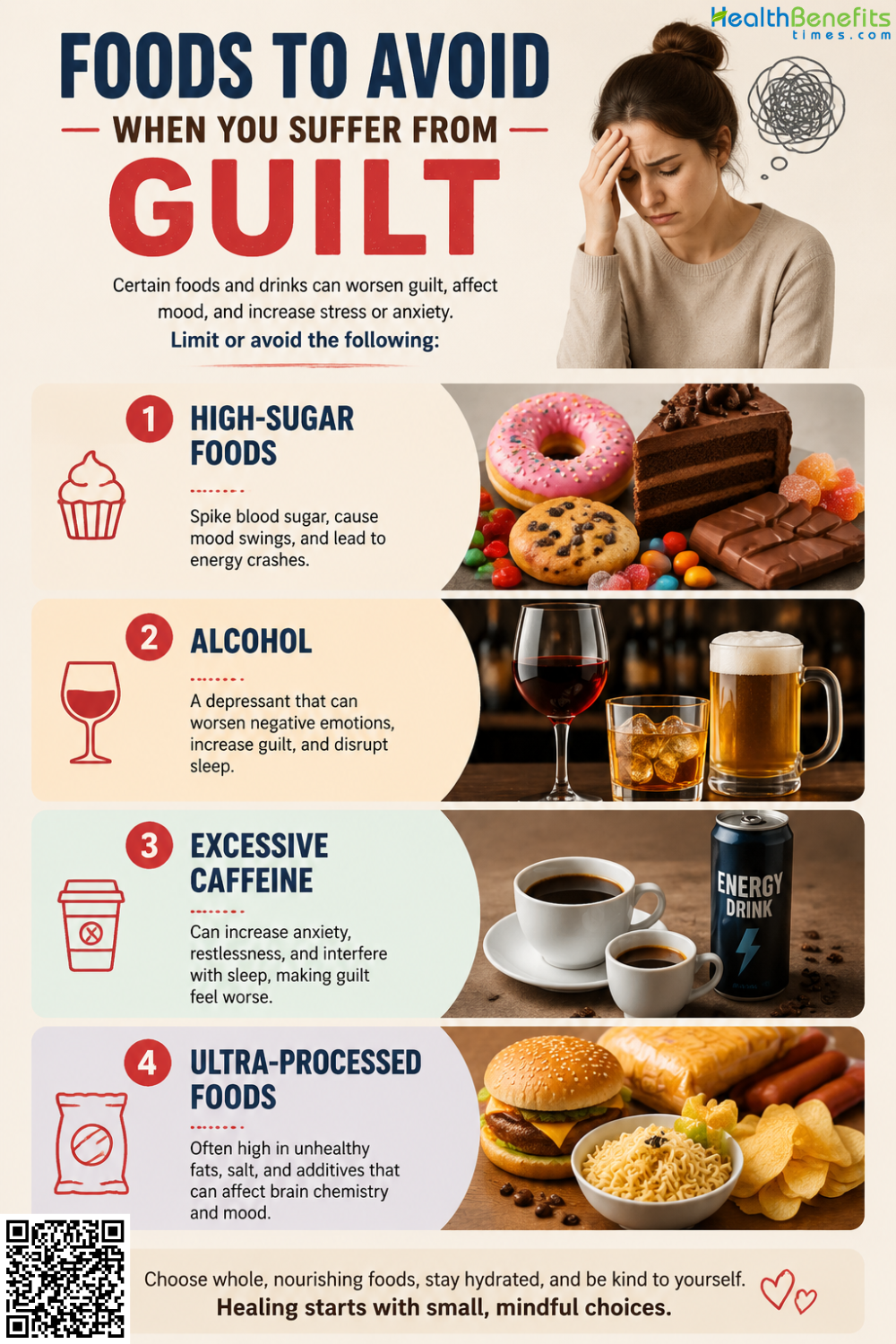
2. Alcohol
Alcohol acts as a central nervous system depressant. Clinical studies confirm it intensifies negative thought patterns, worsens depressive rumination, and degrades emotional regulation necessary for processing psychological distress 37.
3. Excessive Caffeine
High caffeine intake overstimulates the autonomic nervous system. Researchers conclude this overstimulation directly amplifies physical symptoms of anxiety, making emotional burdens like guilt feel significantly more severe 38.
4. Ultra-Processed Foods
Diets heavy in ultra-processed foods lack essential brain nutrients. Clinical research demonstrates these diets are strongly linked to an increased severity of anxiety and persistent negative emotional states 39.
When to see Doctor when you suffer from Guilt
1. Persistent Daily Impairment
Seek professional help if pervasive guilt disrupts daily functioning, causing an inability to maintain employment, academic performance, or social relationships. Clinical guidelines identify this as requiring intervention 25.
2. Thoughts of Self-Harm
Immediate psychiatric evaluation is required if intense guilt triggers thoughts of suicide or self-harm. Clinical guidelines establish this as a psychiatric emergency requiring immediate medical intervention 40.
3. Duration Exceeding Two Weeks
Consult a doctor if overwhelming guilt persists daily for more than two weeks. This duration is a primary diagnostic criterion for clinical depression requiring professional medical treatment 41.
4. Severe Somatic Symptoms
Medical evaluation is necessary when guilt causes severe physical decline, including chronic insomnia or significant weight loss. Clinical guidelines emphasize these somatic symptoms require professional treatment 42.