

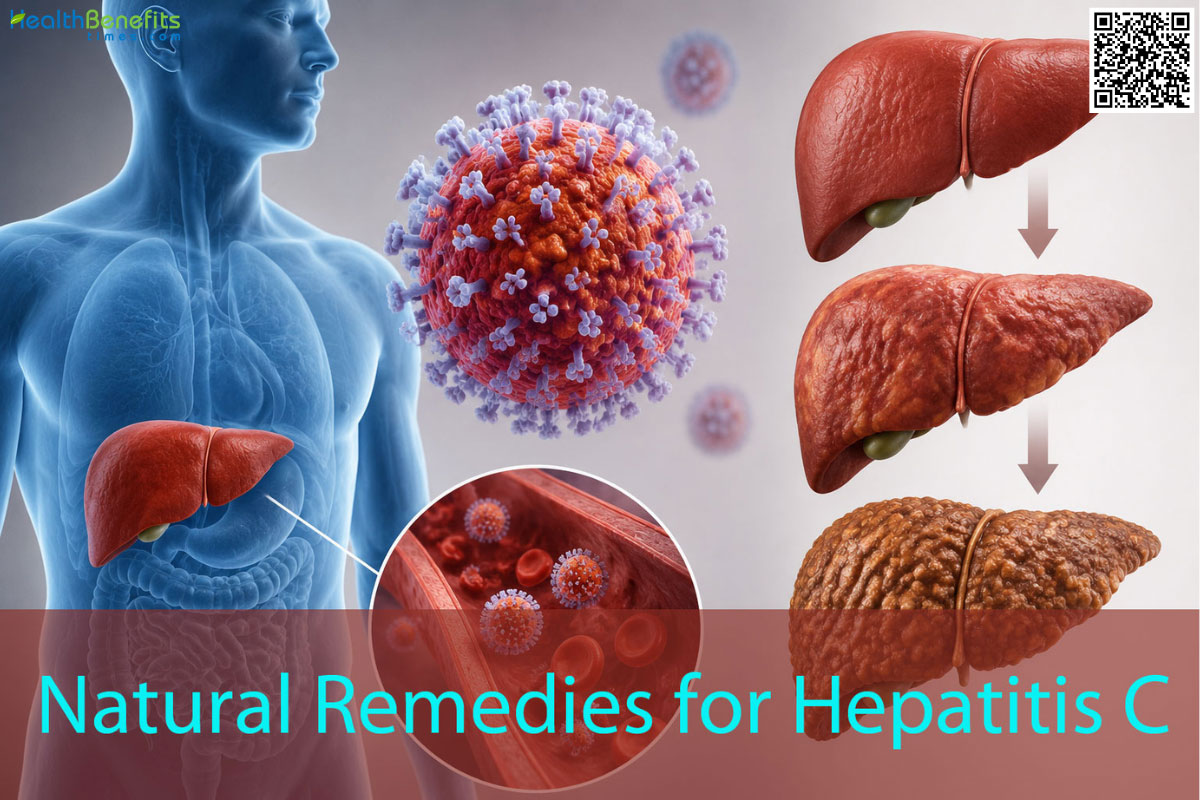
Hepatitis C is one of the leading causes of chronic liver disease worldwide, affecting an estimated 50 million people with roughly one million new infections added every year 1. The virus targets the liver directly, causing inflammation that interferes with its ability to filter toxins and process food. The infection typically moves through two phases. First comes an acute phase short-term, and often silent. Many people have no symptoms at all. If the virus isn’t cleared, it progresses into a chronic phase that can last a lifetime without treatment. In the United States, up to 4 million people are currently living with chronic hepatitis C 2. The good news is that treatment has come a long way. Oral antiviral medications can now cure the vast majority of infections turning what was once a serious, open-ended diagnosis into something highly treatable.
Causes of Hepatitis C
Curiosity about how illnesses spread helps communities stay safe and informed. The hepatitis C virus is strictly a bloodborne pathogen, which means it only spreads when blood from an infected individual directly enters the bloodstream of someone who is uninfected.
1. Sharing Injection Equipment
The most frequent cause of new infections today occurs when people share needles, syringes, or other equipment used to prepare and inject recreational drugs 3.
2. Unregulated Tattoos and Piercings
Receiving a body piercing or a tattoo in an informal setting that fails to properly sterilize its needles poses a significant risk of transmitting infected blood.
3. Healthcare Exposures
Medical professionals, emergency responders, and hospital staff occasionally contract the virus through accidental needle-stick injuries while treating patients 4.
4. Mother-to-Baby Transmission
A pregnant person living with the virus has a small but real chance of passing the infection to the infant during the birthing process.
5. Historical Blood Transfusions
Before the medical community implemented rigorous screening of the blood supply in 1992, many individuals contracted the virus by receiving donated blood, clotting factors, or organ transplants.
6. Sexual Contact
Although it is considered much less common than direct blood exposure, the virus can occasionally spread during sexual activity, particularly if broken skin or other sexually transmitted infections are present.
Symptoms of Hepatitis C
Listening to the gentle signals the body sends can lead to earlier care and better health outcomes. This virus is famous for staying silent, meaning symptoms usually only appear after the liver has already sustained significant damage over many years.
1. Profound Fatigue
An overwhelming, unexplainable tiredness that does not improve with a good night’s sleep is one of the most widely reported early warning signs.
2. Jaundice
The skin and the whites of the eyes may take on a distinct yellowish tint, which happens when the damaged liver struggles to filter out a natural yellow waste product called bilirubin 5.
3. Easy Bleeding and Bruising
Because a healthy liver produces the proteins necessary for blood clotting, a damaged liver leaves the body highly prone to spontaneous bruising and difficult-to-stop bleeding 6.
4. Digestive Distress
Individuals frequently experience a total loss of appetite, alongside mild to severe nausea, vomiting, and dull stomach aches.
5. Changes in Waste
Bathroom habits often change noticeably, specifically resulting in urine that looks dark like tea and bowel movements that appear gray or clay-colored.
6. Fluid Buildup (Ascites)
In advanced stages of liver scarring, severe fluid accumulation can occur, causing the legs, ankles, and abdomen to swell uncomfortably.
7. Cognitive Confusion
The buildup of unfiltered toxins in the bloodstream can eventually travel to the brain, causing drowsiness, slurred speech, and mental fog.
8. Itchy Skin
The accumulation of bile salts underneath the skin often triggers intense, full-body itching that is difficult to soothe with standard lotions.
Hepatitis C Facts
| Symptoms |
|
| Causes |
|
| Types of Hepatitis C |
|
| How does spread |
|
| Age Group |
|
| You might be at a higher risk for exposure of this disease if you: |
|
| How doctors diagnose |
|
|
|
Natural Remedies of Hepatitis C
Exploring natural ways to support the body often brings a wonderful sense of comfort and empowerment during a health journey. While there is absolutely no substitute for prescription antiviral medications to cure the virus entirely, many natural remedies can help soothe uncomfortable symptoms, reduce painful inflammation, and support the liver’s natural ability to function. The following natural remedies are widely recognized for their supportive benefits.
1. Milk Thistle (Silymarin)
When herbalists discuss liver health, a tall, prickly plant known as milk thistle is almost always the very first recommendation. The secret to this plant’s reputation lies in its seeds, which contain a powerful active compound known as silymarin. This natural chemical acts as a heavy-duty antioxidant for the body’s cells, working to neutralize harmful free radicals that cause tissue damage.
Silymarin is believed to work by wrapping a microscopic protective shield around liver cells, which helps block harmful toxins from entering while encouraging the organ to regenerate tissue that has already been damaged. While scientific studies show mixed results regarding its ability to lower hepatitis C viral levels directly, research indicates that it can significantly improve liver enzyme profiles in patients suffering from fatty liver disease and general liver inflammation 9. Note: Milk thistle is commonly swallowed as a daily dietary capsule, taken as a concentrated liquid extract dropper, or steeped gently in hot water to create a soothing herbal tea.
2. Turmeric (Curcumin)
Bringing a bright, cheerful yellow hue to the kitchen, turmeric is far more than just a tasty culinary spice. Its profound healing power comes from curcumin, a highly active chemical that aggressively fights off swelling, viruses, and bacteria inside the body. For someone living with chronic liver inflammation, curcumin acts like a natural fire extinguisher, calming irritated tissues.
By reducing systemic oxidative stress, turmeric gives the overworked liver a much-needed resting period. Research demonstrates that curcumin supplements can help lower elevated liver enzymes, acting as a protective barrier against the progressive tissue scarring that hepatitis C causes over time 10. Note: Turmeric is frequently eaten as a flavorful seasoning in savory curries, blended into warm milk to create a comforting “golden milk” beverage, or taken as a concentrated dietary pill for maximum absorption.
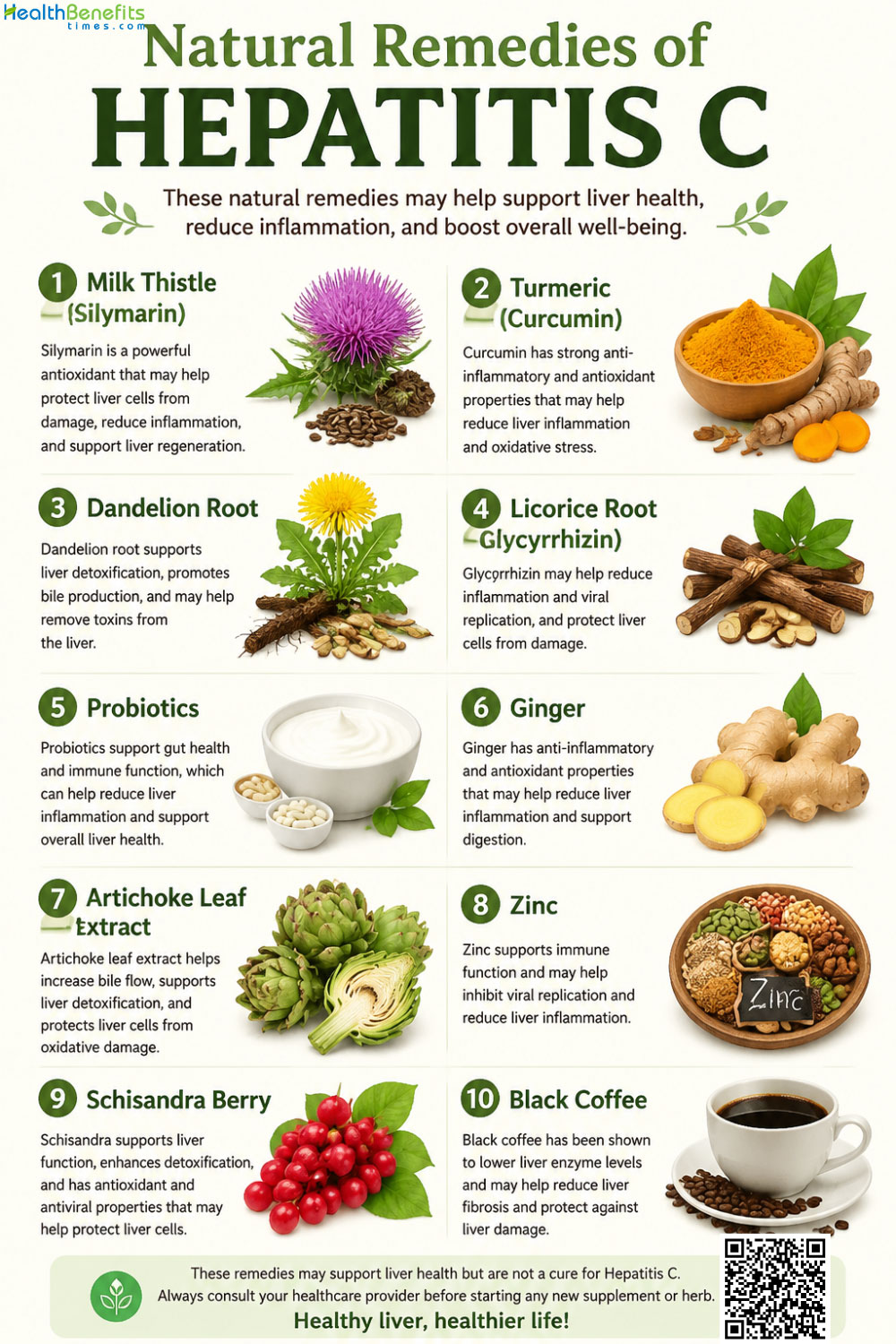
3. Dandelion Root
Gardeners might view dandelions as stubborn lawn weeds, but traditional medicine views them as a profound source of internal cleansing and support. Dandelion root extract has been shown to offer deep protective effects for the liver by naturally stimulating the production of bile. Bile is the essential digestive fluid the liver uses to carry away waste products and break down dietary fats.
By keeping this vital fluid moving freely, dandelion root helps the liver efficiently flush out the daily toxins that accumulate when the body is fighting off a chronic viral infection. Laboratory studies have highlighted that dandelion root extracts possess significant protective effects on liver cells, helping to shield them from chronic failure and oxidative stress 11. Note: Dandelion root is commonly roasted and brewed as a rich, earthy coffee substitute, dried and steeped into a restorative hot tea, or taken as a blended herbal capsule.
4. Licorice Root (Glycyrrhizin)
Stepping far away from the candy aisle, natural licorice root has been a highly respected staple in traditional Eastern medicine for centuries. The plant’s root contains a highly active, sweet-tasting compound called glycyrrhizin. This unique natural chemical possesses potent anti-inflammatory and potential antiviral properties that help reinforce the body’s defense mechanisms.
Research indicates that glycyrrhizin may actually slow down the growth and spread of liver-damaging cells and reduce the likelihood of developing liver cancer, which is a major complication of long-term hepatitis C infections 12. However, it must be used with careful observation, as high amounts can alter sodium levels in the blood. Note: Licorice root is most often enjoyed by sipping it as a sweet, throat-soothing tea, taking it as a liquid tincture, or using it in chewable herbal lozenges for digestive comfort.
5. Probiotics
Looking after the liver means it is equally important to look after the gut. Probiotics are tiny, friendly bacteria that live naturally in the digestive tract, helping to break down food, fight off bad germs, and balance the entire immune system. Because the liver and the digestive system are directly connected by a major blood vessel, a healthy, smoothly running gut significantly reduces the workload on the liver.
When the body is not struggling to process poor digestion or fight off intestinal inflammation, the liver has far more energy to focus on repairing the cellular damage caused by the hepatitis C virus. Clinical reviews show that balancing gut bacteria with probiotics helps maintain a healthy internal community of microorganisms, reducing the amount of dietary toxins the liver must filter 13. Note: Probiotics are easily eaten by enjoying daily servings of cultured yogurt, drinking fermented kefir, or swallowing them directly as an over-the-counter dietary capsule.
6. Ginger
The average kitchen pantry holds another powerful, aromatic ally in the fight against liver inflammation. Ginger root is densely loaded with natural antioxidants that help lower insulin resistance and reduce the levels of certain liver enzymes that spike when the organ is under extreme stress.
By lowering these critical enzymes, ginger acts to calm down the overall systemic inflammation that accompanies a long-term viral infection. Clinical trials involving patients with fatty liver disease have shown that ginger supplementation successfully reduces liver enzyme levels and improves overall inflammatory biomarkers, making it a wonderful supportive herb for liver function 14. Note: Ginger is delightfully consumed by grating the fresh root into hot water for a spicy tea, blending it into morning fruit smoothies, or tossing it into savory vegetable stir-fries.
7. Artichoke Leaf Extract
It might surprise many to learn that the spiky leaves of the artichoke plant are packed with incredible liver-loving nutrients. Artichoke leaf extract features strong antioxidant properties that shield liver cells from damage and encourage them to regenerate at a healthier pace.
Similar to dandelion, artichoke leaf acts as a powerful choleretic, meaning it significantly boosts bile production. This ensures that the body efficiently shuttles harmful waste products out of the digestive system rather than letting them build up in the bloodstream. Studies have demonstrated that artichoke extract can reduce overall cholesterol markers and improve ultrasound liver parameters in individuals suffering from liver distress 15. Note: Artichoke leaf is generally taken as a concentrated herbal capsule or squeezed into water from a liquid extract dropper, as eating the tough raw leaf is quite difficult.
8. Zinc
Sometimes, the most important healing steps involve simply replacing what an illness takes away. Chronic liver diseases heavily deplete the body’s natural stores of zinc, an essential dietary mineral needed for a strong immune system and proper cellular division.
When the liver is inflamed by hepatitis C, it loses its ability to store and distribute this vital nutrient properly. Taking a high-quality zinc supplement can help correct this deficiency, easing some of the deep fatigue, poor appetite, and bodily weakness that make living with a viral liver infection so difficult day to day. Preliminary research shows that restoring zinc levels can improve a patient’s overall biological response to medical treatments 16. Note: Zinc is strictly used as an oral dietary supplement tablet, capsule, or dissolvable lozenge, and is swallowed daily with food to avoid an upset stomach.
9. Schisandra Berry
Reaching into the deep traditions of ancient herbalism, the bright red schisandra berry is celebrated worldwide as a powerful adaptogen. An adaptogen is a natural substance that helps the body gracefully resist physical, chemical, and environmental stress.
For the liver specifically, schisandra promotes the regeneration of damaged tissue and greatly improves the organ’s natural detoxification pathways. By helping to clear out reactive metabolites and inducing the production of glutathione, the body’s master antioxidant, it acts as a deep-cleaning agent for the vital filtering organ. Research confirms it possesses strong anti-inflammatory and pro-regenerative properties that mitigate the pathways driving chronic liver diseases 17. Note: Schisandra is typically consumed by mixing the dried, tart berry powder into juices, brewing it as an herbal tea, or taking it as a concentrated daily supplement pill.
10. Black Coffee
The morning routine of brewing a warm cup of coffee actually provides a surprising benefit to liver health. Caffeinated black coffee contains unique compounds that actively protect the liver against developing tough scar tissue.
A series of robust medical studies have found that drinking regular, caffeinated coffee can have a highly positive impact on individuals suffering from chronic liver disease. The research shows that daily coffee consumption can lower elevated liver enzymes, reducing the overall level of liver inflammation and slowing the progression of fibrosis and cirrhosis 18. Note: Coffee is simply consumed as a hot or iced brewed beverage, and is best enjoyed plain without excessive added sugars, heavy creams, or artificial syrups.
Foods and Activities to Avoid When You Suffer from Hepatitis C
Avoid all alcoholic beverages: You must completely eliminate beer, wine, and liquor from your life, as alcohol acts as a direct poison to the liver and dramatically speeds up the development of dangerous scarring and liver cancer.
1. Skip raw or undercooked shellfish
You should avoid eating raw oysters, clams, and mussels, as they frequently carry unique ocean bacteria and other forms of hepatitis viruses that your weakened liver simply cannot fight off 19.
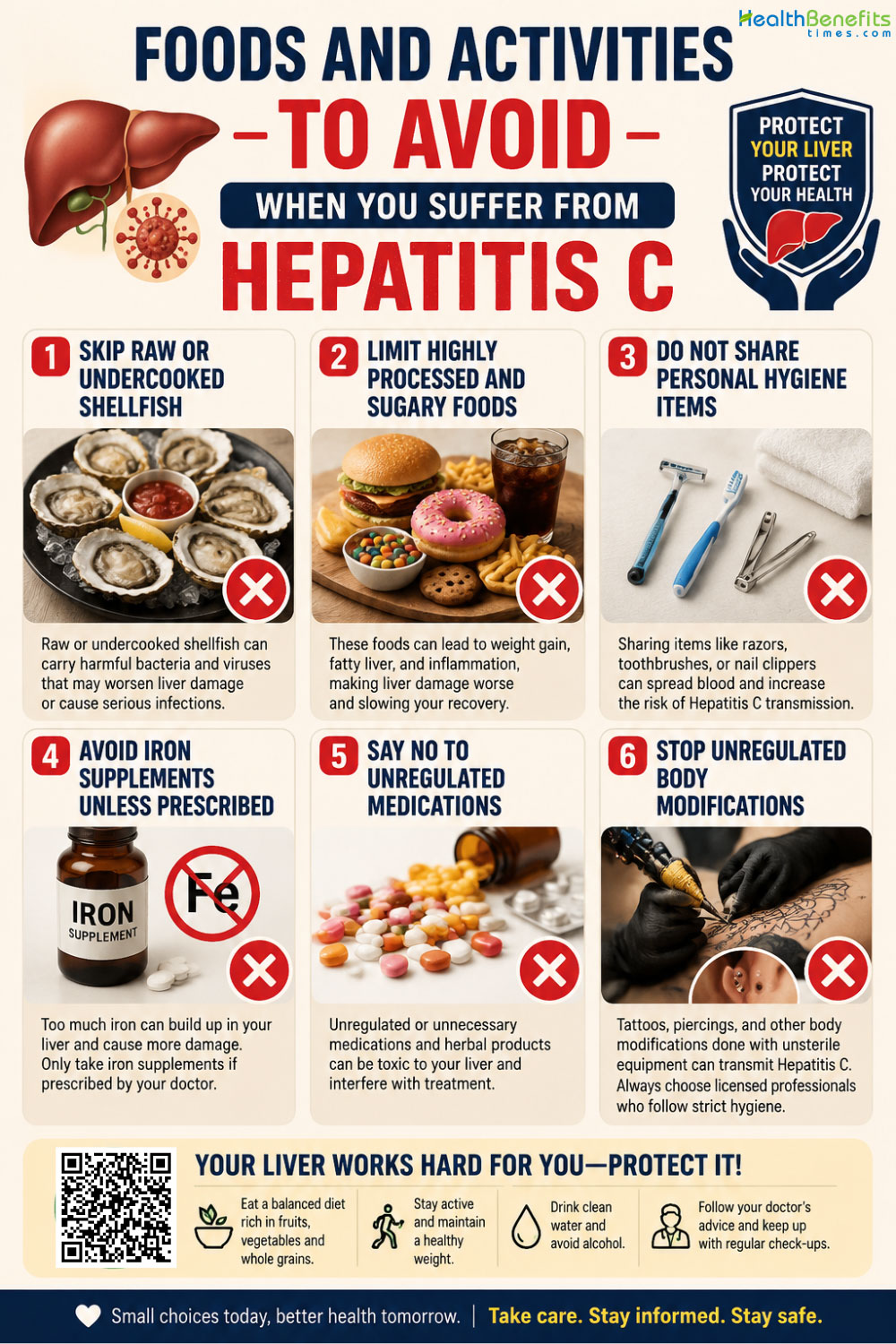
2. Limit highly processed and sugary foods
You need to cut back on fast food, sugary sodas, and snacks loaded with saturated fats, as these foods contribute to fatty liver disease, which acts as a heavy second blow to an infected organ.
3. Do not share personal hygiene items
You must ensure you never share toothbrushes, razors, or nail clippers with anyone else, because even microscopic droplets of blood on these items can easily transmit the virus to your loved ones 3.
4. Avoid iron supplements unless prescribed
You should not take over-the-counter iron pills, as many people with hepatitis C naturally experience an iron overload, and excess iron builds up painfully in the liver tissue.
5. Say no to unregulated medications
You should never take large doses of over-the-counter pain relievers like acetaminophen without your doctor’s blessing, as these common drugs are filtered directly through the liver and can cause sudden failure if the organ is already weak.
6. Stop unregulated body modifications
You should strictly avoid getting any new tattoos or piercings unless you are absolutely certain the facility uses medical-grade sterilization and single-use, disposable needles.
Myths and Misconceptions
Sorting facts from fiction brings a wonderful peace of mind and stops unnecessary worry from clouding a health journey. Because hepatitis C has been widely misunderstood by the public for decades, many false beliefs continue to circulate today.
One of the most widespread and damaging myths is that the virus can be caught through casual, everyday contact. In reality, individuals cannot catch hepatitis C by hugging, kissing, holding hands, sneezing, or sharing a meal or a toilet seat with an infected person. The virus strictly requires direct blood-to-blood contact to spread from one human to another 20. Furthermore, mosquitoes and other biting insects absolutely do not transmit the virus.
Another dangerous misconception is that the virus will simply go away on its own if ignored. While it is true that roughly 25% of people possess immune systems strong enough to clear the virus naturally in the first six months, the vast majority of patients will develop a chronic, lifelong infection that silently destroys the liver if they do not seek medical treatment 21.
Many people also falsely believe that hepatitis C is a condition that solely affects the liver. In truth, because the liver is deeply connected to so many bodily systems, the virus can trigger a cascade of whole-body issues, including painful joint arthritis, chronic kidney disease, severe blood disorders, and an increased risk for developing type 2 diabetes 22. Finally, a lingering myth insists that treating the disease is a torturous process requiring months of painful injections. Today, the disease is easily and quickly cured in nearly all patients with simple, well-tolerated oral pills taken for just eight to twelve weeks.
Special Considerations
Every stage of life brings its own unique puzzle pieces to the healthcare picture, and hepatitis C behaves quite differently depending on a patient’s age and existing health conditions.
1. Children
It is a heartbreaking reality that infants can be born with the virus if their mother is infected during pregnancy. Because their tiny immune systems are still developing and they cannot speak up about symptoms, the medical community strongly recommends that all perinatally exposed infants undergo specific RNA nucleic acid testing between 2 and 6 months of age to determine if they carry the virus 23. Early detection ensures these children are linked to pediatric care long before permanent liver damage can begin.
2. Pregnancy
For expecting mothers, balancing personal health with the baby’s safety is always the highest priority. Fortunately, mothers carrying the virus can safely breastfeed their infants without the fear of transmitting the disease through their breast milk. However, breastfeeding must be temporarily paused if the mother’s nipples become cracked or begin to bleed, as the virus can easily be transmitted through those tiny droplets of maternal blood 24.
3. Chronic Conditions
Living with multiple health issues requires a highly delicate medical balancing act. Patients who have both hepatitis C and diabetes face a much faster progression of liver scarring, as the virus actively causes insulin resistance, which in turn severely worsens liver tissue damage 25. Similarly, patients with chronic kidney disease (CKD) must have their antiviral medications expertly tailored by specialists, as damaged kidneys struggle to filter out the chemical byproducts of standard drug dosages. Furthermore, hepatitis C increases systemic inflammation, which heightens the risk of cardiovascular diseases like atherosclerosis.
4. Elderly
As the human body ages, fighting off long-term viral invaders becomes increasingly difficult. Older adults living with the virus often have highly advanced stages of cirrhosis because they have unknowingly carried the silent disease for decades. Additionally, elderly patients usually take a daily cocktail of medications for other common ailments like heart disease, high blood pressure, or arthritis. This reality makes them highly susceptible to dangerous drug-to-drug interactions when introducing new liver treatments or even simple herbal supplements 26.
Precaution before use of natural remedies when you have Hepatitis C
Your safety should always sit firmly in the driver’s seat when you explore herbal supports and alternative supplements. Just because a remedy comes directly from a plant does not automatically mean it is harmless for a sick body.
1. Talk to your doctor first
You must consult your primary healthcare team before swallowing any new herbal capsule, tincture, or tea, as your liver’s filtering capacity is already compromised and may struggle to process complex plant chemicals 27.
2. Beware of dangerous drug interactions
You need to closely monitor how natural herbs interact with your prescription drugs; for example, taking the popular herb St. John’s wort can completely cancel out the effectiveness of the life-saving antiviral medications used to cure hepatitis C 28.
3. Never use colloidal silver
You should strictly avoid any dietary product claiming that colloidal silver cures liver disease, as it offers zero health benefits and causes permanent, irreversible side effects, including turning your skin a permanent shade of blue-gray 29.
4. Watch your blood pressure with Licorice
You must be incredibly cautious with natural licorice root if you have a history of heart issues, as high doses can cause severe spikes in blood pressure and highly irregular heartbeats.
5. Only buy from reputable brands
You should only purchase supplements that feature strict third-party testing labels, as many unregulated herbal products sold online contain hidden heavy metals, pesticides, or prescription drugs that act as poison to a struggling liver.
6. Do not delay actual medical treatment
You must never use natural remedies as an excuse to avoid or delay conventional medical care, as natural herbs alone cannot cure the virus and delay can lead to fatal liver failure.
When to see Doctor
Recognizing the exact moments when your body needs urgent professional help is a profound act of self-care. Because this virus acts as a silent destroyer for many years, waiting for severe symptoms to simply “get better” is a dangerous gamble.
- You should immediately schedule a medical appointment if you experience a sudden, alarming yellowing of your skin or the whites of your eyes, which indicates your liver is rapidly failing to process natural waste.
- You must seek emergency care if you notice your abdomen rapidly swelling with fluid, making your clothes feel incredibly tight and causing unexplained shortness of breath.
- You need to see a doctor if you find yourself bruising massively from minor bumps, or if you have frequent nosebleeds and minor skin cuts that refuse to stop bleeding.
- You should get help right away if you suffer from severe mental confusion, overwhelming drowsiness, or suddenly find yourself slurring your words during a normal conversation.
- You should contact a specialist if you experience extreme, unexplained weight loss paired with an absolute disgust for the foods you normally enjoy eating.
- You must consult your healthcare provider if you are ready to begin any kind of new herbal, natural, or alternative remedy regimen and need a professional to review your exact dosages to ensure your liver remains safe 30.