

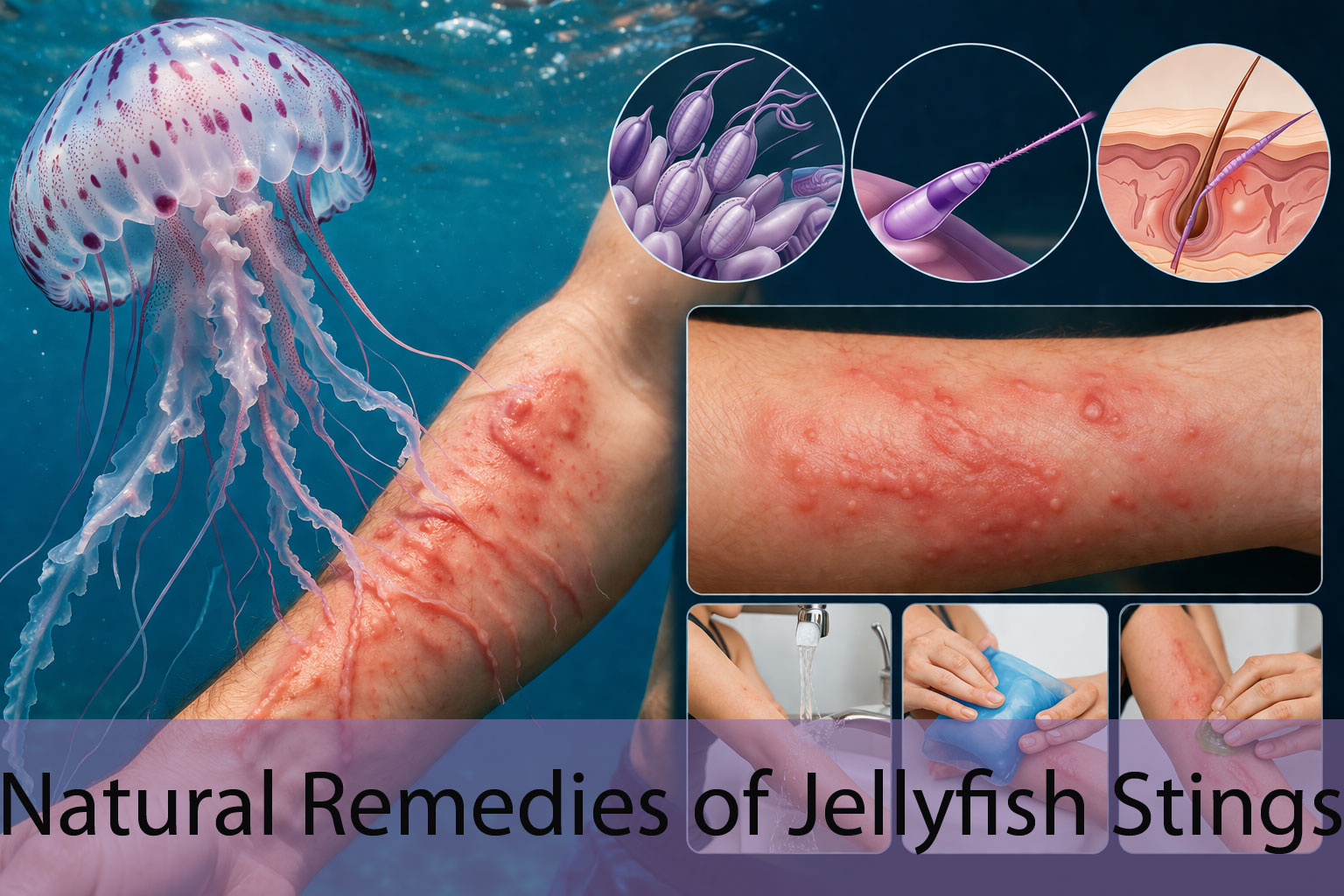
Most people don’t think twice about jellyfish until they feel that sudden, sharp burn in the water. A jellyfish sting happens when your skin touches the trailing tentacles of these nearly invisible ocean creatures. Their tentacles are covered in thousands of tiny, harpoon-like stinging cells called nematocysts, built to catch prey and ward off threats 1. When you brush against them, small triggers on the surface release a coiled tube that pierces your skin in an instant. That tube injects venom directly into your body, affecting the area around the sting and sometimes reaching your bloodstream 2. You may not even see the jellyfish beforehand their see-through tentacles can trail several feet through the water. Most stings leave you with a painful but harmless rash. Still, knowing what’s actually happening under your skin is the first step toward finding relief quickly.
Causes of Jellyfish Stings
Diving into the ocean comes with hidden risks, and understanding how you might get stung can help you avoid these painful encounters. The primary causes of jellyfish stings go far beyond simply bumping into a live animal while swimming.
1. Direct Contact in the Ocean
Swimming or wading in the ocean is the most common way people encounter jellyfish, which drift with the currents and cannot actively avoid you 3.
2. Encountering Detached Tentacles
Jellyfish tentacles can break off due to waves, propellers, or natural shedding and float invisibly in the water, but they can still sting you if they touch your bare skin 4.
3. Stepping on Washed-Up Jellyfish
When walking barefoot on the beach, be careful where you step, because jellyfish that have washed ashore can still sting you if you step on them or touch them with bare hands 1.
4. Swimming Near Artificial Coastal Structures
Swimming near docks, piers, or seawalls increases your risk of jellyfish stings because jellyfish often grow on these structures during their early life stages, causing large numbers of them to gather in nearby waters 5.
5. Changing Ocean Temperatures
Rising ocean temperatures due to climate change are causing jellyfish populations to surge, increasing the chances of stings for beachgoers during warm-weather swims 6.
Symptoms of Jellyfish Stings
The moment you realize you have been stung, your body will rapidly signal that something is wrong. Depending on the species and how much venom was injected, your symptoms can range from a mild nuisance to a severe medical emergency.
1. Instant Burning and Prickling Pain
As soon as you touch a jellyfish, you feel a sharp burning or stinging pain because thousands of tiny barbs inject venom into your skin all at once 1.
2. Visible Skin Welts and Discoloration
Jellyfish stings typically leave raised, discolored welts or linear marks on the skin that mirror the path of the tentacle across the body 7.
3. Intense Itchiness and Local Swelling
After the initial pain fades, the sting area typically becomes very itchy and swollen because your immune system is reacting to the toxins injected into your skin. 8
4. Radiating Discomfort and Muscle Spasms
The sting can cause throbbing pain that spreads through your arm or leg, and depending on the species, it may also lead to muscle cramps, abdominal pain, or aching well beyond the sting site 9.
5. Severe Systemic and Allergic Reactions
In rare cases, a sting can cause serious body-wide reactions such as nausea, trouble swallowing, or anaphylactic shock, which requires immediate emergency medical care. 10
Jellyfish Stings Facts Table
Understanding the broader context of your injury can help you manage it more effectively. Below is a comprehensive breakdown of the essential facts you need to know about jellyfish stings.
| Symptoms |
|
| Causes |
|
| Types of Jellyfish Stings |
|
| How does spread |
|
| Causes of Jellyfish Stings |
|
| Age Group |
|
| You might be at a higher risk for exposure of this disease if you: |
|
| How doctors diagnose |
|
| Remedies for Jellyfish Stings |
|
| Other facts |
|
Natural Remedies of Jellyfish Stings
Finding immediate relief is your top priority when dealing with the intense pain of a sting. Thankfully, several natural, scientifically-backed remedies can neutralize the stinging cells and drastically reduce your discomfort.
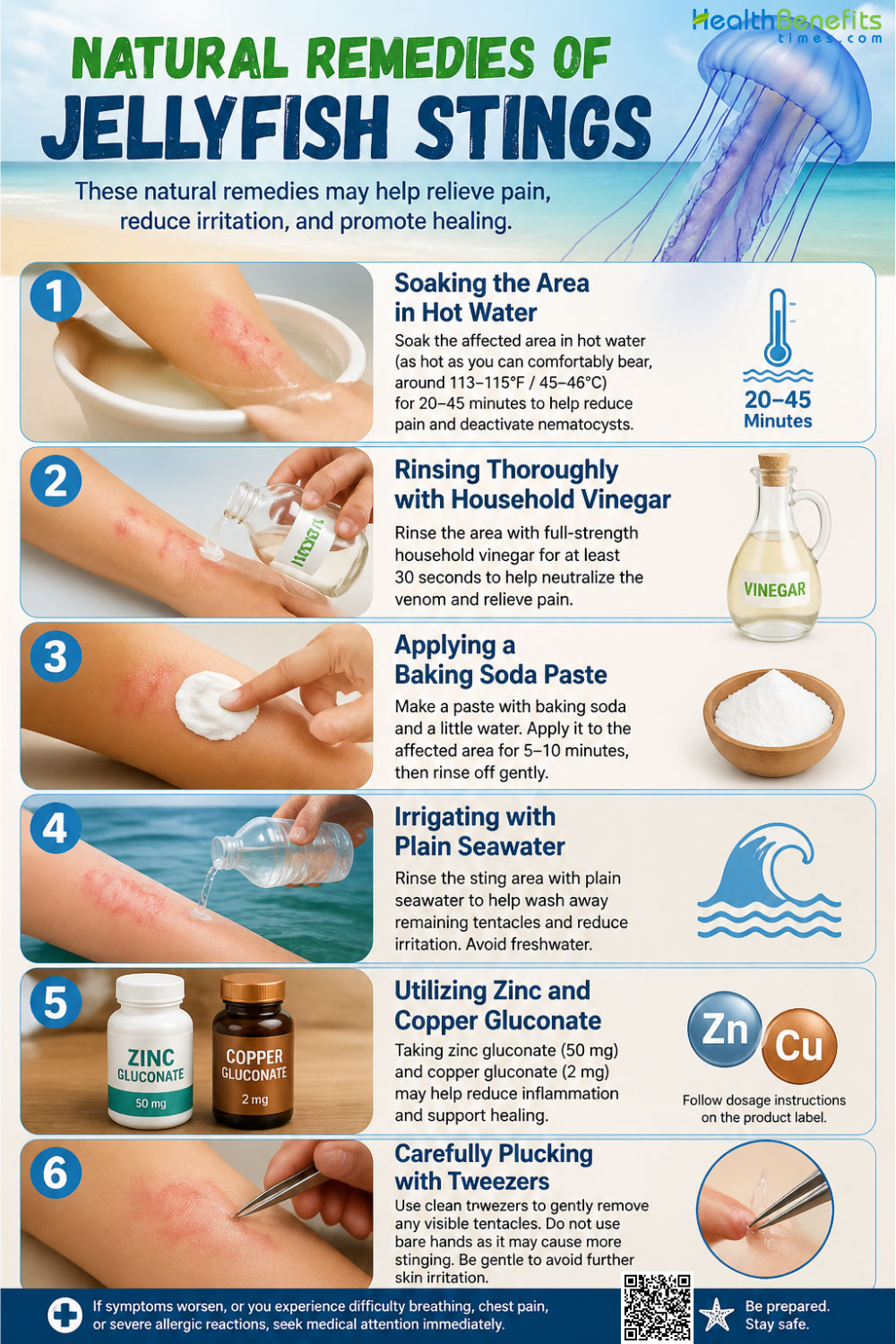
1. Soaking the Area in Hot Water
The way hot water affects jellyfish venom comes down to a relatively simple mechanism heat breaks down the venom’s structure so it can no longer cause pain. Soak the stung area in hot water, or stand under a hot shower. The water should be between 110 and 113°F (43 to 45°C) hot enough to be effective, but not so hot that it burns your skin 11. Keep your skin in the water for 20 to 45 minutes. This permanently changes the venom’s structure, which stops the toxic activity that’s causing your pain 12.
2. Rinsing Thoroughly with Household Vinegar
That bottle of white vinegar sitting in your kitchen could be one of the most useful things you pack for a beach trip. If you get stung, rinse the affected area with vinegar for at least 30 seconds. This does something important it stops the remaining stinging cells from releasing more venom into your skin 13. Once that happens, you can safely peel away the tentacles without triggering another round of stings. The reason it works is straightforward: vinegar is mildly acidic, and that acidity deactivates the tiny triggers on stinging cells that haven’t fired yet 14.
3. Applying a Baking Soda Paste
If vinegar isn’t handy, a simple paste works surprisingly well. Mix baking soda with seawater to form a slurry and apply it directly to the sting. This is especially effective for sea nettle stings, as it helps stop the stinging cells from firing 15. Let the paste sit for a moment it neutralizes the area, making it safer to scrape or pluck out any remaining stingers 16.
4. Irrigating with Plain Seawater
If you’re stuck on the beach with nothing else on hand, the ocean itself is your safest first move. Rinse the sting generously with seawater it helps wash away venom and any loose tentacles still clinging to your skin 17. The stinging cells are already used to saltwater, so it clears them off gently without causing them to fire again.
5. Utilizing Zinc and Copper Gluconate
At the cellular level, zinc and copper gluconate interact with your red blood cells in ways that may reduce the damage caused by jellyfish venom 18. Here’s what happens: jellyfish toxins try to tear holes in your blood cells, causing potassium to leak out rapidly. Zinc and copper gluconate can block that process. By preventing this potassium loss, they help protect your cells from breaking down and that translates to better pain relief at the sting site 19.
6. Carefully Plucking with Tweezers
The real-world question isn’t whether you should remove jellyfish tentacles most experts agree you should but how to do it without making things worse. Once you’ve rinsed the area with vinegar or seawater, use fine tweezers to carefully pluck off any tentacles still clinging to your skin. This stops them from pumping more venom into you 20. Whatever you do, don’t grab them with your bare hands. Unless you’re wearing thick protective gloves, the tentacles will just sting your fingers instead.
Foods and Activities to Avoid When You Have Jellyfish Stings
Making the wrong move after a sting can instantly multiply your pain and complicate your recovery. To keep the venom from spreading and to calm your immune system, there are specific actions and foods you absolutely must avoid.
1. Rinsing the Sting with Fresh Water
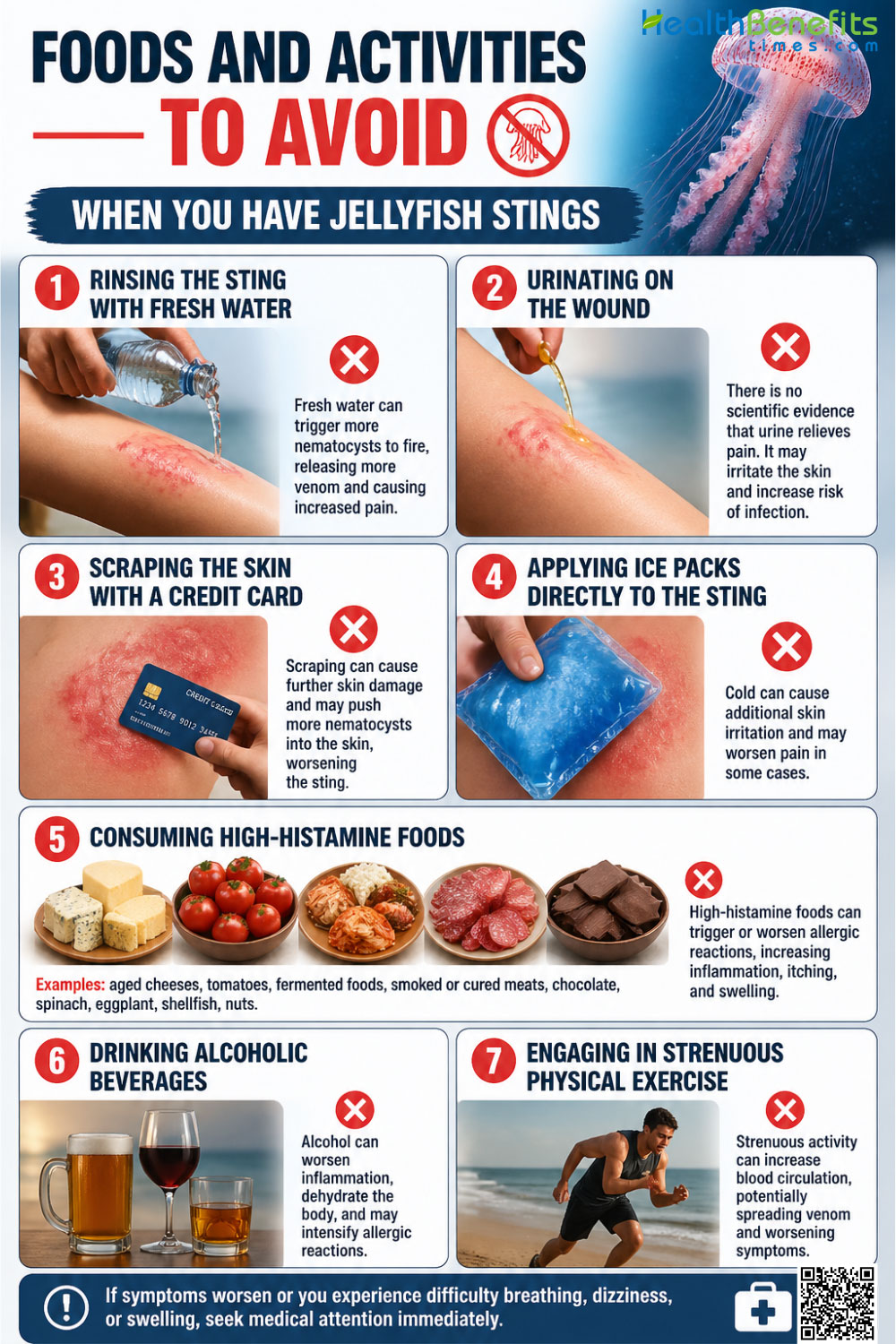
Most people assume fresh water is safe to rinse any wound. But that assumption doesn’t hold up when it comes to jellyfish stings. The tiny stinging cells left on your skin are sensitive to changes in salt concentration. When you splash fresh water on them, it triggers those cells to release even more venom into your skin 21. So skip the drinking water bottle or the beachside shower. Use saltwater or vinegar instead to clean the area.
2. Urinating on the Wound
The idea that peeing on a jellyfish sting helps is so widespread that most beachgoers accept it without question. It’s also completely wrong. There’s no scientific evidence that urine relieves the pain. In fact, because urine is mostly water, it can actually trigger unfired stinging cells still sitting on your skin. That means more venom, more inflammation, and a lot more pain 22. You’re much better off reaching for plain white vinegar instead.
3. Scraping the Skin with a Credit Card
Most people assume scraping the stingers off with a hard edge is the smart move. But that assumption doesn’t hold up when you look at what actually happens beneath your skin. Pressing a credit card or rubbing a towel across the sting only pushes harder on the area and that extra pressure forces the stinging capsules to release even more venom deeper into your tissues. 13 In short, what feels like a fix actually makes things worse.
4. Applying Ice Packs Directly to the Sting
Most people assume ice is the right move for any painful sting or burn. It makes sense cold numbs pain, and you probably have a cooler nearby at the beach. But jellyfish stings don’t work like regular burns. Ice doesn’t break down the venom proteins causing the pain. Worse, lab studies show that extreme cold can actually cause more tissue damage than doing nothing at all 12. So skip the ice pack it won’t help, and it might make things worse.
5. Consuming High-Histamine Foods
What you eat during recovery matters more than most people realize certain foods can quietly make that itchy rash worse. Some foods like strawberries, chocolate, tomatoes, pineapple, and citrus fruits push your body to release extra histamine, the same compound that drives allergic reactions. Until your skin heals, it’s best to skip them 23. You’ll also want to steer clear of processed or fermented foods like aged cheese, cured meats, and sauerkraut. These are already loaded with histamine on their own, and eating them just adds fuel to the fire 24.
6. Drinking Alcoholic Beverages
You probably already know that alcohol isn’t great for healing. What you might not know is how directly it can worsen a jellyfish sting. Drinks like wine and beer are loaded with histamines compounds that ramp up your body’s inflammatory response 25. That means more redness, more swelling, and more itching around the sting site. So if you’re tempted by a beachside cocktail, it’s best to hold off until your skin has had time to recover.
7. Engaging in Strenuous Physical Exercise
Your body responds to jellyfish venom in a specific way one that makes staying still right after a sting more important than most people realize. The venom enters your tissues and travels through your lymphatic system. Unlike your blood, which your heart pumps automatically, lymph fluid depends on muscle movement to flow 34. That means the more you move, the faster the venom spreads. Keep the stung area as still as possible. This helps slow the venom from reaching your bloodstream, where it can cause wider, more serious pain throughout your body 27.
Precaution before use of natural remedies
Before you start pouring vinegar or stepping into a hot shower, you need to pause and evaluate the severity of the situation. Taking the right precautions ensures you do not accidentally turn a manageable sting into a life-threatening crisis.
1. Checking for Severe Allergic Reactions
The real-world question isn’t whether home remedies can help with stings many of them can but whether it’s safe for you to use them in the first place. Before you reach for any topical treatment, you need to rule out a severe allergic reaction. If your tongue is swelling, you’re having trouble swallowing, or your muscles are cramping badly, skip the home care entirely. Call an ambulance immediately 28. Your airway and breathing always come first.
2. Identifying the Type of Jellyfish
The relationship between jellyfish species and the right treatment looks simple on the surface, but gets more complicated the deeper you look. The wrong remedy can actually make things worse, depending on which jellyfish stung you. Vinegar, for example, works well for highly lethal box jellyfish stings. But if you’re certain a Portuguese man-of-war stung you, skip the vinegar. It can trigger that species to release even more venom into your skin 17.
3. Protecting Your Eyes and Face
For people stung near the eyes or face, the usual home remedies carry risks that go beyond general first aid advice. A sting in this area needs professional help not DIY treatment. If you get stung on or near your eye, don’t reach for vinegar or hot water. Instead, gently flush the eye with seawater. Then get to an emergency room as quickly as you can. Doctors there can manage the pain and help protect your vision 20.
4. Monitoring for Delayed Syndromes
In tropical waters, the danger doesn’t always end when the pain fades. You might feel fine at first stable, even relieved. But if severe symptoms like lower back pain or an overwhelming sense that something is terribly wrong appear within 30 minutes, that’s a red flag. This pattern points to Irukandji syndrome, and it calls for emergency medical attention right away 29.
5. Seeking Support from Addiction and Wellness Resources
Good physical health habits proper nutrition, safe exercise, and appropriate health care make up the foundation of your overall wellness 30. That foundation matters just as much as knowing first aid when you’re spending time at the coast. If you or a loved one is dealing with substance use issues that could impair your ability to stay safe in the water, SAMHSA’s National Helpline offers a free, confidential treatment referral service 31. Comprehensive care facilities, like Florida’s premier mental health and addiction treatment center, can provide the holistic support needed to maintain a safe and fulfilling lifestyle long after you leave the shoreline 32. Centers offering a non-12 step holistic approach to drug and alcohol rehab can also provide compassionate, expert care tailored to your specific wellness journey 33.