


An aching back can stop you in your tracks, even simple movements like bending to tie your shoes can feel like a struggle. Your spine is essentially a column of bones held together by muscles, tendons, and ligaments, all cushioned by soft, shock-absorbing disks 1. When something goes wrong in any part of this system, the pain can range from a dull ache to something sharp enough to keep you in bed. For most people, back pain is temporary. It usually clears up on its own within about six weeks, no surgery or major treatment needed. And you’re far from alone: eight out of ten adults in the United States will deal with back pain at some point 2. Knowing what’s going on in your back is the first step toward finding relief, preventing future injuries, and getting back to the things you enjoy.
Causes of BACK PAIN
1. Muscle or Ligament Strain
Lifting heavy objects improperly, twisting awkwardly, or making sudden movements can overstretch your back muscles and spinal ligaments, often leading to painful muscle spasms, especially if you’re not in good physical shape 3.
2. Bulging or Ruptured Disks
The disks in your spine act as soft cushions between the bones, and when their inner material bulges out or ruptures, it can press on nearby nerves and cause pain 4.
3. Osteoarthritis
As people age, osteoarthritis can develop in the lower back, gradually wearing down the cartilage that cushions and protects the spine.
4. Skeletal Irregularities (Scoliosis)
Scoliosis is an abnormal sideways curve of the spine that changes how your body moves and puts uneven stress on one side, which can lead to long-term pain over time.
5. Osteoporosis
Osteoporosis is a condition in which bones gradually become weak and brittle over time, making the spine’s vertebrae prone to painful fractures even from normal everyday activities.
6. Ankylosing Spondylitis
Ankylosing Spondylitis Ankylosing spondylitis is an inflammatory disease that can permanently fuse the bones in your spine, reducing flexibility and locking your posture.
7. Spondylolisthesis
Spondylolisthesis is a spinal condition in which one vertebra slips forward over the one below it, causing structural instability and pressure on the nerves.
8. High Body Mass Index (BMI)
Excess body weight increases the risk of lower back problems by placing extra stress on the spine and changing the way you walk 5.
Symptoms of BACK PAIN
1. Muscle Ache and Stiffness
Many people experience persistent, widespread muscle pain and stiffness that significantly reduces their flexibility and range of motion 6.
2. Shooting or Stabbing Pain
Sharp, intense back pain can feel like a sudden jolt or electric shock, especially when bending, twisting, or standing up straight, and it often stops you immediately in your tracks 7.
3. Radiating Leg Pain (Sciatica)
Lower back problems can cause pain that travels along the sciatic nerve, spreading from the spine through the buttock and down the back of the leg 8.
4. Numbness and Tingling
When a nerve is compressed, you may feel tingling, pins and needles, or numbness in your lower legs, similar to the sensation of a limb falling asleep. 9
5. Muscle Weakness
Compression of a major nerve root can block movement signals to the leg muscles, causing weakness and balance problems that should not be ignored 10.
6. Worsening Pain with Specific Movements
When your spine is affected, everyday actions such as bending, lifting, prolonged standing, coughing, or sneezing can make the pain noticeably worse 30.
7. Bowel or Bladder Dysfunction
In rare but serious cases, new difficulty controlling your bowel or bladder signals severe nerve compression that requires immediate emergency medical attention.
BACK PAIN Facts table
| Category | Facts |
| Symptoms |
|
| Causes |
|
| Types of BACK PAIN
12, |
|
| How does spread |
|
| Age Group |
|
| You might be at a higher risk for exposure of this disease if you: |
|
| How doctors diagnose
15, |
|
| Remedies for BACK PAIN |
|
| Other facts |
|
Natural Remedies of BACK PAIN
1. Turmeric and Curcumin
Turmeric doesn’t just provide antioxidants, it also appears to influence how your body’s inflammatory signaling pathways switch on and off. The compound responsible is curcumin, which gives turmeric its bright yellow color. Curcumin works as a natural antioxidant that helps reduce swelling and calm irritation at the cellular level. Research from Harvard Health suggests that curcumin supplements can relieve functional pain symptoms about as well as standard acid-reducing or anti-inflammatory medications 20. There’s one catch, though. Your body has a hard time absorbing curcumin on its own. Taking it with healthy fats or a bit of black pepper makes a real difference in how much actually gets into your system.
2. Devil’s Claw
In southern Africa, devil’s claw has been used for centuries as a natural remedy for inflammation. Now, researchers are examining those traditional claims more closely. Despite its intimidating name, this plant is actually known for easing joint stiffness and soreness. Studies show that taking a standardized daily dose reduces pain more effectively than a placebo. 21 That makes it a reasonable option if you’re looking for a natural way to manage ongoing back pain.
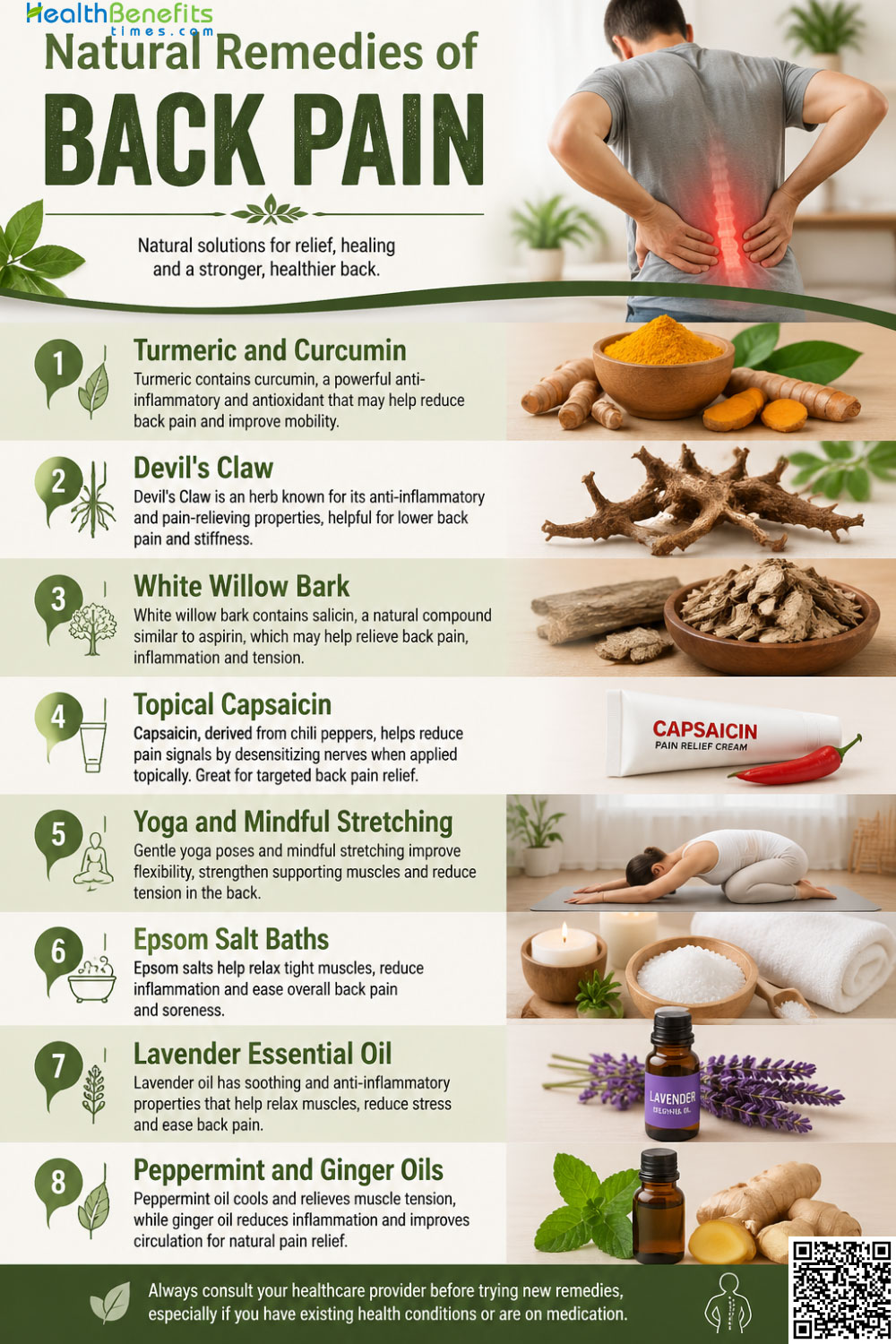
3. White Willow Bark
Few foods have had their reputation reversed as dramatically as white willow bark. Once just another tree, it’s now recognized as nature’s original aspirin. The thick bark of the white willow tree contains a chemical called salicin. When you take it, your body converts salicin into salicylic acid, the same compound that reduces inflammation and eases deep muscle pain. Studies show that standardized doses of white willow bark can lower pain levels about as well as conventional painkillers, giving you a natural option for managing everyday back pain 22.
4. Topical Capsaicin
The way capsaicin relieves pain comes down to a relatively simple mechanism: it temporarily desensitizes the nerve receptors in your skin that send pain signals to your brain. That’s why rubbing a cream made from cayenne pepper extract into sore areas of your back can noticeably reduce pain intensity 23. It sounds counterintuitive, using the compound that makes chili peppers hot to calm down nerve pain, but the science behind it is straightforward.
5. Yoga and Mindful Stretching
If you’ve ever wondered why your back feels better after a good stretch than after hours on the couch, the answer often comes back to how movement affects your spine and the muscles around it. Yoga pairs slow, deliberate postures with deep breathing to gently stretch your spine and build core strength. Poses that open up your hips can improve your range of motion without putting extra strain on your lower back 24. Practices like Tai Chi and yoga, done regularly, also lead to real, if modest, improvements in how well your back functions day to day 25.
6. Epsom Salt Baths
If you’ve ever wondered why a hot bath feels so much better than just sitting on the couch after a long day, the answer often comes back to circulation. Epsom salts are made of magnesium and sulfate, two minerals people have relied on for centuries as a simple home remedy. When you soak in warm water, it boosts blood flow and helps ease the tension in the muscles along your spine 26. It’s one of those remedies that’s stuck around for a reason.
7. Lavender Essential Oil
Calming an anxious mind often calms a tense body, too. Lavender essential oil is well known for its relaxing scent, but it does more than smell good. It also has mild pain-relieving properties when applied directly to the skin. When used in acupressure massage, pure lavender oil can reduce how much pain you feel and even improve your walking time and spinal flexibility.
8. Peppermint and Ginger Oils
If you’ve ever wondered why a dab of peppermint oil feels so relieving on sore muscles, the answer comes back to menthol, a natural compound that creates a cooling, pain-relieving sensation on the skin. Ginger oil works differently. It helps reduce inflammation in the joints, which is often what’s driving the ache in the first place. To use them, mix a few drops of either oil with a carrier oil like almond or coconut oil, then massage the blend into your back. This can help relax tight muscles and ease spasms 27.
Foods and Activities to Avoid When You Have Back Pain
1. Red and Processed Meats
That steak dinner or quick hot dog might hit the spot, but it could also be making your back pain worse. Red and processed meats, think bacon, sausage, and salami, are high in saturated fats, which fuel inflammation throughout your body. When you eat these regularly, your inflammatory markers tend to climb. And for someone already dealing with chronic back discomfort, that extra inflammation can make things noticeably worse.
2. Sugary Snacks and Beverages
You probably already know that sugary foods aren’t great for your health. What you might not know is how directly they affect your back. Diets high in added sugar can lead to weight gain, and that extra weight puts real pressure on your lower spine. At the same time, sugar triggers inflammation throughout your body, which can make existing back pain worse.
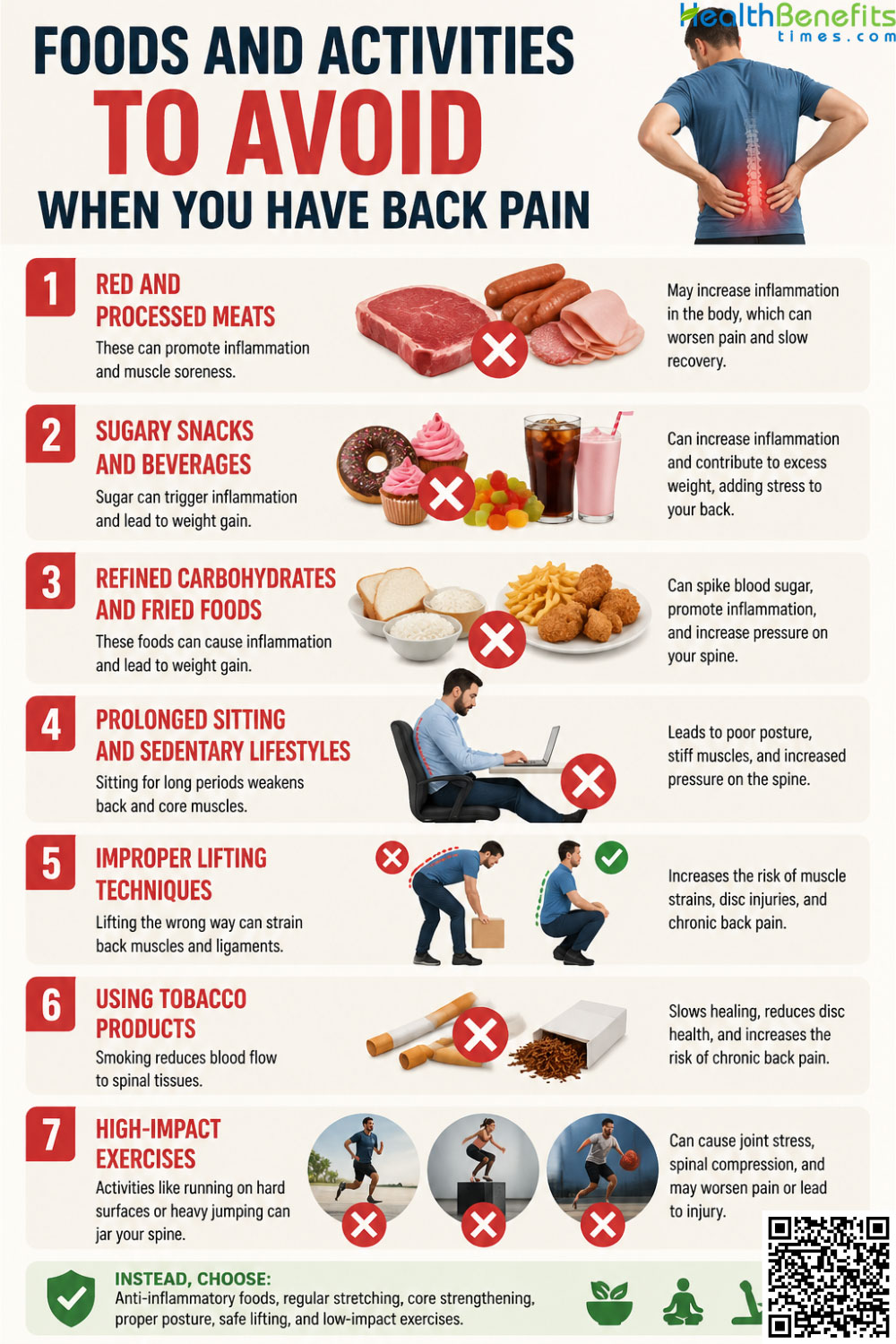
3. Refined Carbohydrates and Fried Foods
The relationship between your diet and muscle pain looks simple on the surface, but gets more complicated the deeper you look. White bread, pastries, and fried foods don’t just lack nutrients, they actively push your body toward chronic inflammation. That ongoing inflammation is what keeps your muscles sore and stiff, day after day.
4. Prolonged Sitting and Sedentary Lifestyles
Most people assume back pain is just about what they lift or how they sleep. But that assumption doesn’t hold up when you look at how daily habits, especially sitting, shape your spinal health. Staying glued to your office chair for eight straight hours is one of the worst things you can do for your back. When you sit for that long without moving, your core muscles gradually weaken. At the same time, your spinal disks are under constant pressure. Over time, that combination makes your back more vulnerable to pain and injury.
5. Improper Lifting Techniques
If you’ve ever wondered why your back seized up after grabbing a heavy box off the floor, the answer often comes back to how you bent down to pick it up. Bending straight from the waist to heave something heavy is one of the fastest ways to hurt your back. Twisting your body while you lift makes it even worse. Both movements put intense strain on the ligaments and muscles that support your spine. Instead of rushing through it, slow down, bend at your knees, and let your legs do the work.
6. Using Tobacco Products
The way smoking affects your back comes down to a relatively simple mechanism: nicotine narrows blood vessels, which reduces the flow of nutrient-rich blood to your spinal discs. That means your spine gets fewer of the nutrients it needs to repair itself. Over time, this slows healing and makes you more likely to develop chronic back pain. And the damage isn’t limited to your lungs, your entire spine pays the price every time you light up.
7. High-Impact Exercises
If you’ve ever wondered why your back feels worse after a tough workout, the answer often comes back to repeated stress on already irritated tissues. Your usual routine might include running, jumping, or other intense exercises, and normally, that’s fine. But during a painful flare-up, these activities can actually slow your recovery. Each impact sends a jolt through your spine, putting extra pressure on the area that’s already hurt. So for now, it’s worth stepping back from high-impact moves until the pain settles down.
Precaution before use of natural remedies
1. Risk of Bleeding with Willow Bark
Just because a remedy is natural doesn’t mean it’s gentle, some botanicals act on the body much like prescription blood thinners. White willow bark is a good example. It contains salicin, which your body processes the same way it processes aspirin. That means it carries a real risk of internal bleeding, especially if you’re already vulnerable. You should avoid it entirely if you take anticoagulant medications, are pregnant, or have a known allergy to aspirin 28.
2. Cardiovascular and Diabetic Interference
For most people, herbal supplements seem perfectly safe. For those with heart conditions or diabetes, however, devil’s claw warrants a closer look before adding it regularly. This herb can change your resting heart rate. If you have a circulatory condition, that shift could be risky. It may also lower your blood sugar in ways that are hard to predict. So if you have diabetes, you need to keep a close eye on your levels while using it.
3. Gastrointestinal Complications
For most people, Devil’s claw is safe and helpful for joint pain. There are, however, a few situations where caution makes sense, especially if you have a sensitive stomach. Strong herbal extracts can be rough on your digestive system. Devil’s claw, in particular, ramps up the production of stomach acid and digestive juices. That’s fine for many people, but if you’re dealing with gallstones or peptic ulcer disease, it can make things worse. In those cases, it’s best to skip it entirely.
4. Skin Irritation from Essential Oils
For most people, essential oils are safe when used correctly. There are, however, a few situations where caution makes sense, especially when it comes to direct skin contact. Essential oils are highly concentrated. That means they can irritate or even burn your skin if you apply them undiluted. Oils like peppermint or wintergreen should never go directly on bare skin. Always dilute them in a carrier oil first. Before using any new oil, do a small patch test on your inner arm. Wait 24 hours. If you notice redness, itching, or irritation, that’s a sign your skin is reacting, and you should avoid using that oil.
5. Hidden Medication Interactions
The idea that “natural” means “safe” is so widespread that most people accept it without question. It’s also largely incorrect 17. Many popular herbal products can quietly interfere with your prescriptions. Some cancel out the intended effects. Others amplify them to dangerous levels. Always talk to your doctor before adding any new natural remedy to your routine, especially if you’re managing a chronic condition 29.