

Sleeping pill addiction affects millions of Americans, but a growing body of research shows that natural interventions — from cognitive behavioral therapy to herbal supplements — can help people break free from sedative dependence. An estimated 18.4% of U.S. adults took sleep medication in the past 30 days as of 2020, with 8.4% using it daily or most days. 1 Approximately 30% of chronic sleeping pill users develop addiction, and in 2021, 4.9 million Americans aged 12 and older reported misusing prescription tranquilizers or sedatives. 2 3 Abruptly stopping these medications can trigger seizures and other life-threatening complications, making medically supervised withdrawal essential. 4 Yet evidence-based natural alternatives — particularly cognitive behavioral therapy for insomnia (CBT-I), now recommended as the first-line treatment for chronic insomnia by every major sleep medicine organization — offer durable, non-addictive pathways to recovery. 5
What Is Sleeping Pill Addiction?
The American Society of Addiction Medicine defines addiction as a treatable, chronic medical disease involving complex interactions among brain circuits, genetics, the environment, and an individual’s life experiences. 6 The DSM-5-TR classifies sleeping pill addiction under Sedative, Hypnotic, or Anxiolytic Use Disorder, diagnosed when you meet at least 2 of 11 criteria — including tolerance, withdrawal, failed attempts to quit, and continued use despite harm — within a 12-month period. 7 The condition is formally coded under the same framework used for all substance use disorders in the DSM-5-TR. 8
What makes sleeping pill addiction so tricky is that it often starts with a legitimate prescription. You take a pill for a rough patch of sleeplessness, and within just 2–4 weeks, your brain adapts to the drug’s presence. 9 Rebound insomnia — where sleeplessness returns worse than before — reinforces the belief that the drug is indispensable, creating a vicious cycle that’s hard to break without help. 10
Sleeping Pill Addiction Facts
| Symptoms 11 12 |
|
| Causes 4 13 |
|
| Types of Sleeping Pills Involved |
|
| How Addiction Develops |
|
| Age Groups Affected |
|
| You Might Be at Higher Risk If You |
|
| How Doctors Diagnose |
|
| Treatment and Medications |
|
| Prevention |
|
| Prevalence 1 |
|
| Withdrawal Timeline 21 22 |
|
| FDA Safety Warnings |
|
How Sleeping Pills Hijack Your Brain Chemistry
Understanding how these drugs work helps explain why breaking free is so difficult — and why natural alternatives can genuinely help.
Benzodiazepines, including temazepam and triazolam, bind non-selectively to GABA-A receptors, amplifying your brain’s primary inhibitory neurotransmitter and producing sedation. 4 With repeated use, your GABA receptors downregulate within weeks, forcing dose escalation to achieve the same effect. 13 Z-drugs — zolpidem, zaleplon, and eszopiclone — were marketed in the 1990s as supposedly safer alternatives, but their negative side effects turned out to be not so different from benzodiazepines. 12 Barbiturates carry the highest addiction risk, with tolerance developing rapidly and withdrawal potentially being fatal; they are now rarely prescribed for sleep. 4 Even OTC antihistamines like diphenhydramine can foster psychological dependence over time. 24
Withdrawal from sleeping pills produces symptoms ranging from rebound insomnia, anxiety, sweating, and nausea to grand mal seizures, hallucinations, and delirium — a medical emergency that makes unsupervised cold turkey cessation dangerous. 4 Symptoms typically peak at days 2–4 and largely resolve within two weeks, though psychological effects can persist for months. 22
Natural Remedies for Sleeping Pill Addiction
Here are the most evidence-backed natural remedies that can support your recovery from sleeping pill dependence. None of these should replace medical supervision — they work best as part of a comprehensive plan guided by your healthcare provider.
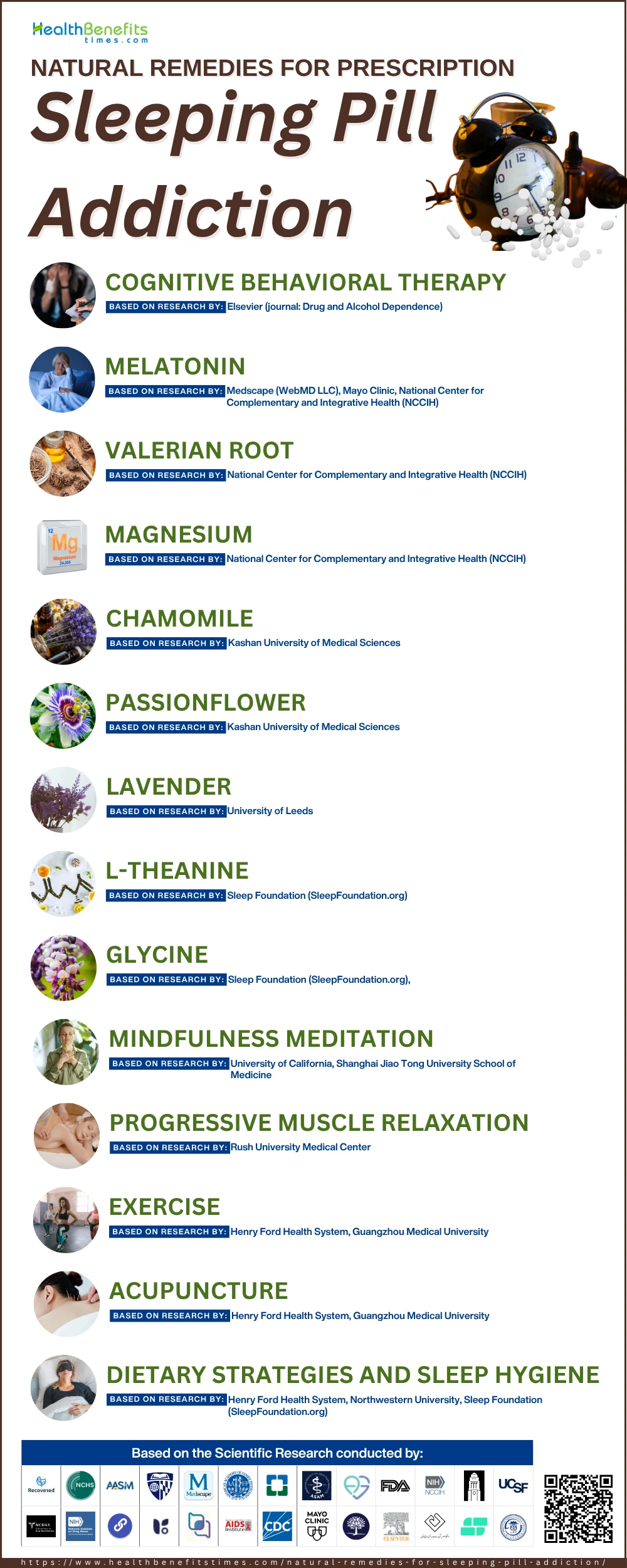
1. Cognitive Behavioral Therapy for Insomnia (CBT-I)
CBT-I is hands-down the most effective non-drug treatment for insomnia and sleeping pill dependence. The American Academy of Sleep Medicine gives CBT-I a strong recommendation as the primary treatment for chronic insomnia. 5 The World Sleep Society endorsed this position for global practice. 25
It’s a structured 4–8 session program combining five components: sleep restriction, stimulus control, cognitive restructuring, relaxation training, and sleep hygiene education. 26 About 70–80% of patients who complete CBT-I achieve meaningful improvement, and around 40% achieve full remission . 26 A 10-year follow-up study showed benefits maintained a full decade later, with 64–66% of participants remaining below the clinical insomnia threshold. 27
When it comes to sleeping pill tapering specifically, adding CBT-I to gradual dose reduction raises success rates from roughly 40% to approximately 80%. 26 Digital CBT-I programs are also expanding access — SleepioRx, an FDA-authorized platform, showed participants had 5.8 times greater odds of remission compared to sleep hygiene education alone. 28
 2. Melatonin
Melatonin has the strongest direct evidence among supplements for helping with benzodiazepine withdrawal. A controlled trial found that 14 of 18 patients on controlled-release melatonin (2 mg) successfully stopped benzodiazepines versus only 4 of 16 on placebo. 29 Chronic benzodiazepine use suppresses your body’s natural melatonin production, and supplementation may help correct this disruption. 29
Low doses of 0.5–3 mg taken about an hour before bedtime are generally recommended. 30 Short-term use is safe for most adults, though label accuracy varies widely in unregulated products. 31
3. Valerian Root
Valerian works by inhibiting GABA breakdown, a mechanism that overlaps with how benzodiazepines function. 32 A systematic review of 16 randomized controlled trials found statistically significant sleep quality benefits in multiple studies. However, the NCCIH notes that the evidence on whether valerian is helpful for sleep problems is inconsistent. 33
Doses of 300–600 mg daily for up to 6 weeks are generally considered safe, but you should not combine valerian with alcohol or sedatives, and withdrawal symptoms can occur after chronic use. 33
4. Magnesium
Magnesium acts as a natural NMDA receptor antagonist and GABA agonist in your brain. 32 A randomized controlled trial in elderly participants found that 500 mg magnesium daily for 8 weeks significantly improved sleep time, sleep efficiency, and insomnia severity, while increasing serum melatonin and decreasing cortisol. 32 Roughly half of Americans do not consume adequate dietary magnesium. 32 Magnesium glycinate is preferred for sleep due to fewer gastrointestinal side effects.
5. Chamomile
Chamomile contains apigenin, a flavonoid that binds GABA-A receptors similarly to benzodiazepines. 32 A meta-analysis of randomized trials showed significant sleep quality improvement. 34 One clinical trial found 200 mg chamomile extract twice daily for 28 days significantly improved sleep quality in elderly patients compared to placebo. 35 Drinking chamomile tea 30–60 minutes before bed is a simple, low-risk starting point.
6. Passionflower
Passionflower modulates GABA receptors through flavonoids like chrysin and vitexin. 32 A double-blind trial demonstrated significant increases in total sleep time versus placebo on polysomnography, and the herb compared favorably to the benzodiazepine oxazepam for generalized anxiety over 28 days, with less impairment of job performance. 36 32
7. Lavender
Oral lavender extract (Silexan, 80 mg/day) proved as effective as paroxetine for anxiety and comparable to low-dose lorazepam — with no withdrawal symptoms upon discontinuation. 37 Inhaled lavender aromatherapy is a low-risk option and may enhance relaxation before sleep. 32
8. L-Theanine
L-theanine, an amino acid found naturally in tea, increases alpha brain waves and modulates GABA, dopamine, and serotonin at doses of 100–400 mg. 38 However, a 2025 review cautions that the scientific evidence does not yet fully support the level of enthusiasm around this supplement, and rigorous human trials remain limited. 39
9. Glycine
Taking 3 grams of glycine before bedtime improved both subjective and objective sleep quality without altering sleep architecture or causing morning grogginess. 32 The mechanism involves peripheral vasodilation and core body temperature reduction — a fundamentally different pathway from sleeping pills.
10. Mindfulness Meditation
Mindfulness meditation offers measurable sleep benefits backed by rigorous trials. A landmark study found that mindfulness-based interventions reduced total wake time by 43.75 minutes compared to just 1.09 minutes in controls. 40 A JAMA Internal Medicine trial demonstrated that a community mindfulness program improved sleep quality in older adults more effectively than structured sleep hygiene education. 41 Mindfulness-Based Therapy for Insomnia (MBTI) produced large reductions in insomnia even in treatment-resistant patients, with 61% showing no relapse at 6–12 month follow-up. 42
11. Progressive Muscle Relaxation (PMR)
PMR is recognized by the AASM as a recommended treatment for chronic insomnia. 43 A 2025 systematic review and meta-analysis confirmed that PMR markedly improves overall sleep quality, reduces anxiety, and improves quality of life. 44 You tense and release each muscle group from toes to head, training your nervous system to shift from fight-or-flight into rest mode.
12. Exercise
A meta-analysis of 22 randomized trials found exercise significantly improved sleep quality, insomnia severity, and daytime sleepiness. 45 A massive 81-trial network meta-analysis determined that mind-body exercise like yoga and tai chi ranked best for subjective sleep quality, while aerobic exercise excelled at improving sleep efficiency. 46 At least 8 weeks of regular exercise is needed for significant improvements. 47 Exercise improves sleep through adenosine accumulation, post-exercise body temperature decline, anxiety reduction, and increased melatonin secretion. 48
13. Acupuncture
A 2025 systematic review with trial sequential analysis found acupuncture significantly improves subjective sleep quality versus sham acupuncture. 49 A meta-analysis of 25 trials comparing acupuncture to Western medication found greater symptom improvement and fewer adverse reactions with acupuncture. 50
14. Dietary Strategies and Sleep Hygiene
Tryptophan-rich foods like turkey, milk, eggs, and nuts serve as precursors to serotonin and melatonin. 51 A Mediterranean-style diet is associated with better sleep quality and lower insomnia risk. Caffeine should be avoided within 12 hours of bedtime due to its long half-life. 51 Morning bright light therapy at 10,000 lux for 30–90 minutes helps reset circadian rhythms disrupted by chronic sleeping pill use.52
Precautions Before Using Natural Remedies
Natural does not mean risk-free. If you are recovering from sleeping pill dependence, keep these critical precautions in mind.
Never stop sleeping pills abruptly. The ASAM’s 2025 Joint Clinical Practice Guideline on Benzodiazepine Tapering — developed by 10 medical societies — recommends gradual, individualized dose reduction not exceeding 5–10% of the current dose every 4 weeks. 19 The common physician practice of 25% weekly reduction is considered too rapid and fails 32–42% of patients. 53 NIDA states that people addicted to prescription CNS depressants should not attempt to stop taking them on their own. 4
Watch out for drug interactions. Valerian should not be taken alongside benzodiazepines, barbiturates, or alcohol, and should be stopped 2 weeks before surgery. 54 33 Melatonin interacts with benzodiazepines by increasing sedation, and also interacts with anticoagulants, antihypertensives, and diabetes medications. 55 30 Magnesium interacts with diuretics, antibiotics, and gabapentin. 56 Never combine any sleep aid — natural or prescription — with alcohol. 15
Be cautious if you fall into a special population. Valerian and melatonin are not recommended during pregnancy or breastfeeding due to insufficient safety data. 33 55 Older adults face heightened fall risk and cognitive impairment from both OTC antihistamines and supplements; diphenhydramine and doxylamine are explicitly not recommended for older populations. 57
Don’t assume supplement quality is guaranteed. Under DSHEA (1994), supplements are regulated as food, not drugs, meaning the FDA does not conduct premarket review for safety or efficacy. 58 A study found significant variability in actual melatonin content compared to what labels claim. 31 Look for products tested by USP, NSF, or ConsumerLab for quality assurance.
Always talk to your doctor first. Before starting any natural remedy — especially if you are currently taking sleeping pills or other medications — have an open conversation with your healthcare provider. What works for one person may not work for you, and certain combinations can be genuinely dangerous. 20
When to Seek Professional Help
Certain warning signs demand immediate medical attention: seizures, hallucinations, severe confusion, rapid heartbeat, or inability to function during withdrawal. 11 There are currently no FDA-approved medications specifically for sedative use disorder, making behavioral interventions like CBT-I and supervised tapering the cornerstone of treatment. 4
If you or someone you know is struggling with sleeping pill dependence, these resources are available around the clock:
- SAMHSA’s National Helpline: 1-800-662-HELP (4357) — free, confidential, 24/7, 365 days per year
- FindTreatment.gov: Searchable treatment locator by zip code 59
- 988 Suicide and Crisis Lifeline: Call or text 988 for 24/7 crisis support
Comments
This article is based on Scientific Research Conducted by following Research Organization:
- Sleep Medication Use in Adults Aged 18 and Over: United States, 2020–National Center for Health Statistics (NCHS), United States
- Drug Abuse Statistics–National Center for Drug Abuse Statistics (NCDAS), United States
- Signs of Sleeping Pill Abuse–Recovered.org, United States
- Misuse of Prescription Drugs Research Report Overview–National Institute on Drug Abuse (NIDA), United States
- Behavioral and psychological treatments for chronic insomnia disorder in adults: an American Academy of Sleep Medicine clinical practice guideline–American Academy of Sleep Medicine (AASM), United States
- New ASAM Definition of Addiction–American Society of Addiction Medicine (ASAM), United States
- Sedative, Hypnotic, or Anxiolytic (Benzodiazepine) Use Disorder–PsychDB, Canada
- Substance Use Screening, Risk Assessment, and Use Disorder Diagnosis in Adults [Internet].–Johns Hopkins University, United States
- Using medication: Learn More – What can help when trying to stop taking sleeping pills and sedatives?
- Signs Of Sleeping Pill Addiction And Abuse–Addiction Center, United States
- Sedative, Hypnotic, Anxiolytic Use Disorders Clinical Presentation–Medscape (WebMD LLC), United States
- Sleeping Pill Addiction–Addiction Help (AddictionHelp.com), United States
- Benzodiazepine Use Disorder: Common Questions and Answers–American Academy of Family Physicians (AAFP), United States
- Misuse of Prescription Drugs Research Report–New York State Department of Health AIDS Institute (NYSDOH AI), United States
- Sleeping Pills–Cleveland Clinic, United States
- Sleeping Pill Statistics–Addiction Help (AddictionHelp.com), United States
- Prescription Sleep Aid Use Among Adults: United States, 2005–2010–National Center for Health Statistics (NCHS), United States
- “Sedative, Hypnotic, Anxiolytic Use Disorders”–Medscape (WebMD LLC), United States
- The Joint Clinical Practice Guideline on Benzodiazepine Tapering: Considerations When Benzodiazepine Risks Outweigh Benefits–American Society of Addiction Medicine (ASAM), United States
- Prescription sleeping pills: What's right for you?–Mayo Clinic, United States
- Sleeping Pill Addiction: Risks & Withdrawal–Addiction Group, United States
- Sleeping Pill Withdrawal And Detox–The Recovery Village, United States
- Certain Prescription Insomnia Medicines: New Boxed Warning - Due to Risk of Serious Injuries Caused by Sleepwalking, Sleep Driving and Engaging in Other Activities While Not Fully Awake–U.S. Food and Drug Administration (FDA), United States
- Sleeping pills addiction–EBSCO Information Services, United States
- World sleep society international sleep medicine guidelines position statement endorsement of “behavioral and psychological treatments for chronic insomnia disorder in adults: An American Academy of sleep medicine clinical practice guidelines”–Elsevier (journal: Drug and Alcohol Dependence), International
- Cognitive-Behavioral Therapy for Insomnia: An Effective and Underutilized Treatment for Insomnia
- Very long-term outcome of cognitive behavioral therapy for insomnia: one- and ten-year follow-up of a randomized controlled trial
- The Effectiveness of Digital Cognitive Behavioral Therapy to Treat Insomnia Disorder in US Adults: Nationwide Decentralized Randomized Controlled Trial
- Melatonin for Insomnia During Benzodiazepine Discontinuation–Medscape (WebMD LLC), United States
- Melatonin–Mayo Clinic, United States
- Anxiety and Complementary Health Approaches–National Center for Complementary and Integrative Health (NCCIH), United States
- Herbal and Natural Supplements for Improving Sleep: A Literature Review
- Valerian–National Center for Complementary and Integrative Health (NCCIH), United States
- Therapeutic efficacy and safety of chamomile for state anxiety, generalized anxiety disorder, insomnia, and sleep quality: A systematic review and meta-analysis of randomized trials and quasi-randomized trials
- The effects of chamomile extract on sleep quality among elderly people: A clinical trial–Kashan University of Medical Sciences, Iran
- Effects of Passiflora incarnata Linnaeus on polysomnographic sleep parameters in subjects with insomnia disorder: a double-blind randomized placebo-controlled study
- Silexan in anxiety disorders: Clinical data and pharmacological background–University of Leeds, United Kingdom
- L-Theanine for Sleep–Sleep Foundation (SleepFoundation.org), United States
- l-theanine: From tea leaf to trending supplement – does the science match the hype for brain health and relaxation?
- A Randomized Controlled Trial of Mindfulness Meditation for Chronic Insomnia–University of California, San Francisco
- Mindfulness Meditation and Improvement in Sleep Quality and Daytime Impairment Among Older Adults With Sleep Disturbances
- Mindfulness-based therapy for insomnia alleviates insomnia, depression, and cognitive arousal in treatment-resistant insomnia: A single-arm telemedicine trial–Shanghai Jiao Tong University School of Medicine, China
- Mindfulness-Based Therapy for Insomnia–Rush University Medical Center, United States
- Progressive muscle relaxation technique improves sleep quality and mental health: A systematic review and meta-analysis of randomized controlled trials
- Effects of Exercise on Sleep Quality and Insomnia in Adults: A Systematic Review and Meta-Analysis of Randomized Controlled Trials–Henry Ford Health System, United States
- Effects of exercise on sleep quality in general population: Meta-analysis and systematic review
- Optimal exercise dose and type for improving sleep quality: a systematic review and network meta-analysis of RCTs–Guangzhou Medical University, China
- Exercise can improve sleep quality: a systematic review and meta-analysis
- Acupuncture for chronic insomnia disorder: a systematic review with meta-analysis and trial sequential analysis
- Clinical efficacy and safety of acupuncture versus Western medicine for insomnia: a systematic review and meta-analysis
- Sleep Quality: A Narrative Review on Nutrition, Stimulants, and Physical Activity as Important Factors–Henry Ford Health System, United States, Northwestern University, United States
- Light Therapy for Insomnia Sufferers–Sleep Foundation (SleepFoundation.org), United States
- Joint Clinical Practice Guideline on Benzodiazepine Tapering: Considerations When Risks Outweigh Benefits
- Valerian–National Institutes of Health (NIH), United States
- Melatonin - Uses, Side Effects, and More–WebMD LLC, United States
- 7 Natural Sleep Aids That Don’t Always Mix With Prescription Drugs–AARP (American Association of Retired Persons), United States
- Sleep aids: Understand options sold without a prescription–Mayo Clinic, United States
- Dietary Supplements–U.S. Food and Drug Administration (FDA), United States
- Millions of Americans have mental and substance use disorders. Find treatment here.–Substance Abuse and Mental Health Services Administration (SAMHSA), United States