

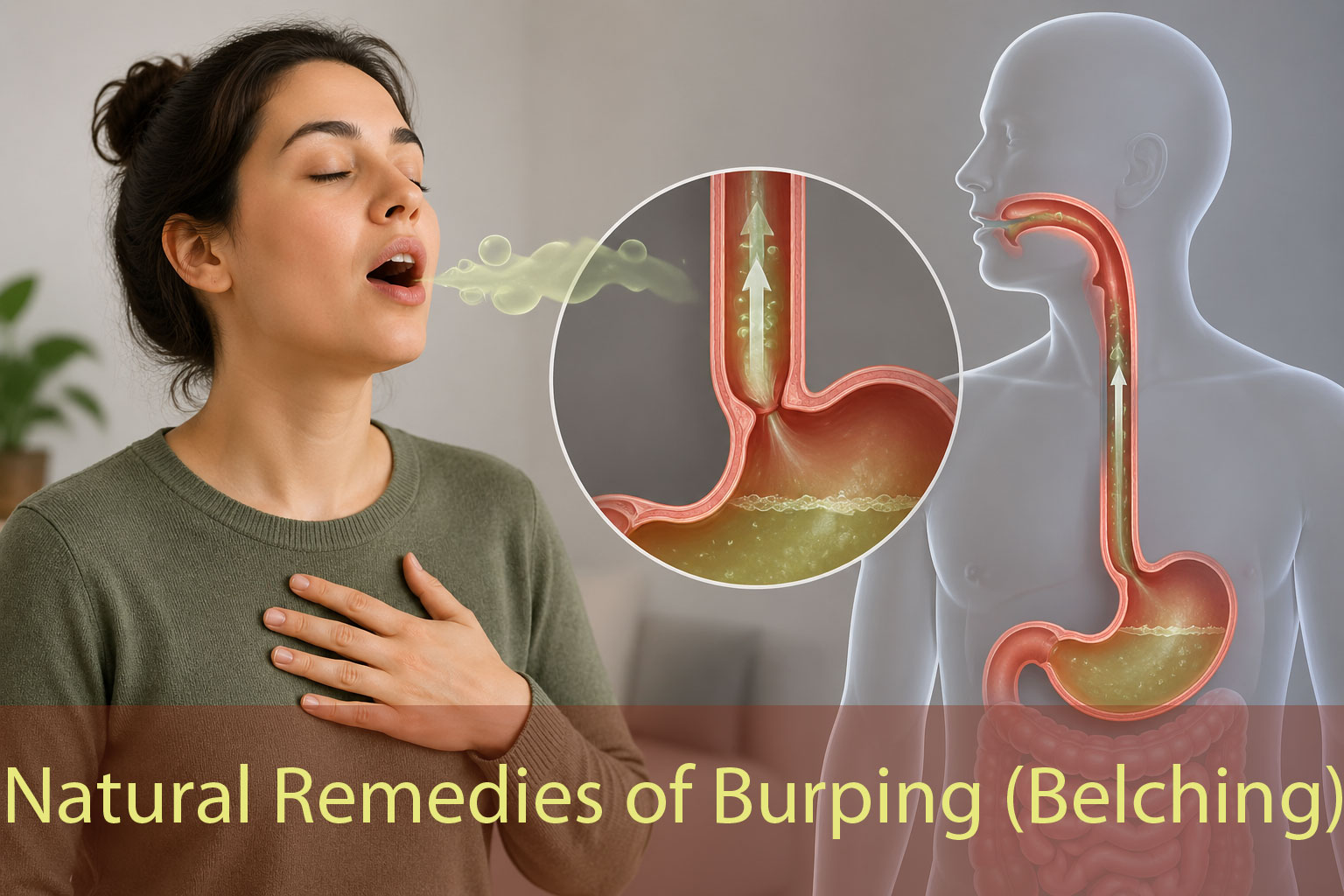
Most of us deal with bloating or stomach discomfort at some point. Burping, or eructation, as doctors call it, may be one of the more practical ways your body handles it. Every time you eat, drink, or even talk during a meal, you swallow small amounts of air without realizing it. That air builds up in your stomach. Once there’s enough pressure, a muscle at the bottom of your esophagus briefly relaxes and lets the air travel back up and out 1. It’s completely normal and actually helpful, it keeps you from feeling painfully bloated. But if you’re burping excessively throughout the day, it may be worth paying closer attention to what your digestive system is trying to tell you.
Causes of Burping
Figuring out exactly why you are constantly burping requires looking closely at your daily habits and your underlying digestive health. Below are the most common triggers that force your body to continuously expel air.
1. Swallowing Excess Air (Aerophagia)
Eating too quickly, chewing gum, drinking through a straw, or sucking on hard candies causes you to swallow excess air, which often gets trapped in the esophagus and is released as a burp 2.
2. Acid Reflux and GERD
Acid Reflux and GERD Acid reflux, or GERD, causes stomach acid to flow back into the esophagus, which irritates it and makes you swallow more often to clear the acid, sending extra air into your stomach and leading to frequent belching. 3
3. Stomach Inflammation (Gastritis)
Chronic stomach lining irritation from causes like heavy alcohol use or Helicobacter pylori infection disrupts digestion, delays stomach emptying, and leads to gas buildup, belching, and hiccups. 4
4. Supragastric Belching
Supragastric belching is a subconscious habit where air is sucked into the esophagus and immediately pushed back out without ever reaching the stomach, often triggered by stress or anxiety, resulting in repetitive, rapid bursts of belching. 5
5. Food Intolerances and Fermentation
When your body lacks the enzymes to fully digest certain foods like complex carbohydrates or dairy, the undigested particles reach the colon where gut bacteria ferment them, producing large amounts of gas that cause cramping and burping 6.
Symptoms of Burping
Chronic burping can cause uncomfortable physical sensations that affect daily life and may signal underlying digestive issues.
1. Abdominal Bloating and Distension
Trapped gas in the digestive tract can make your stomach feel tight, swollen, and uncomfortably full after eating, and when the pressure pushes your abdominal wall outward so that your stomach looks visibly larger, doctors call this distension, which can also cause sharp, moving pains as gas travels through the intestines. 7
2. Heartburn and Acid Taste
When you burp, the muscle between your stomach and throat relaxes, which can allow small amounts of acidic stomach fluid to travel upward, causing a burning feeling behind your breastbone and a sour or bitter taste in the back of your mouth. 8
3. Chest Pressure and Discomfort
Frequent supragastric belching can strain the chest and diaphragm muscles, causing chest pressure and upper-abdominal discomfort that may feel alarming because it can mimic heart-related symptoms. 9
4. Nausea and Loss of Appetite
Excess gas in the stomach, often worsened by conditions like alcohol-induced gastritis that inflames the stomach lining, can make you feel artificially full and nauseous, destroying your appetite and leading to fatigue over time 10.
5. Flatulence (Passing Gas)
Air that goes into your digestive tract ultimately has to find a way out, and whatever does not escape through your mouth will inevitably travel downward. Chronic belching is almost always accompanied by an increase in flatulence, as the swallowed oxygen and nitrogen mix with the fermented bacterial gases deep in your intestines 11. This combination creates uncomfortable lower abdominal pressure that can strike at the most inconvenient times.
Burping Facts
| Symptoms
12. |
|
| Causes |
|
| Types of Burping
13. |
|
| How does spread |
|
| Caused of Burping |
|
| Age Group 6. |
|
| You might be at a higher risk for exposure of this disease if you: |
|
| How doctors diagnose
14. |
|
| Remedies for Burping |
|
| Other facts
15. |
|
Natural Remedies of Burping
When over-the-counter medications aren’t cutting it, natural botanicals and simple behavioral changes can make a real difference. Here are the most effective, research-backed natural remedies to calm your digestion and stop the constant burping.
1. Ginger Root Extract
In Southeast Asia and India, ginger has been used for centuries as a natural remedy for stomach trouble. Now, researchers are examining those traditional claims more closely, and the science backs them up 16. Ginger contains natural compounds that work directly on your digestive tract. They speed up how quickly your stomach empties food into the small intestine. Clinical trials show that adding ginger to your diet can noticeably reduce that heavy, overly full feeling after meals, along with chronic belching 16. When food moves through faster, gut bacteria have less time to ferment it into trapped gas. You can take ginger in capsule form before eating, or steep fresh ginger root in boiling water for about ten minutes to make a soothing tea.
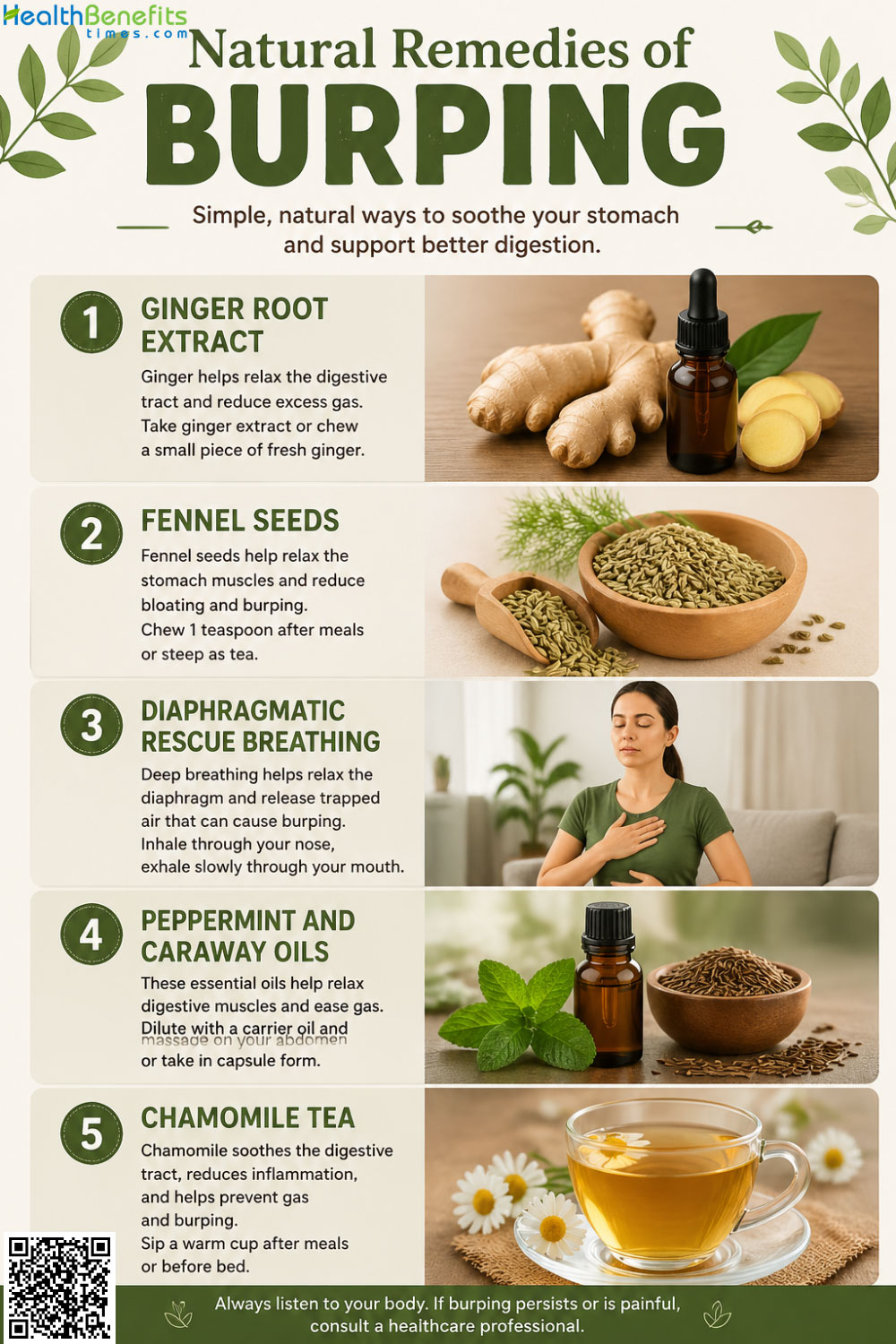
2. Fennel Seeds
In many parts of Asia, fennel seeds have been chewed after meals for centuries as a natural digestive aid. Now, researchers are looking more closely at why this simple habit actually works 17. The key lies in a compound called anethole. It acts as an antispasmodic, meaning it helps relax the muscles in your digestive tract. When those muscles loosen up, trapped air moves through more easily instead of building up and triggering a big belch. Fennel seeds are also a good source of dietary fiber. That fiber helps keep your bowel movements regular, which reduces the kind of internal slowdown that often leads to extra gas.
3. Diaphragmatic Rescue Breathing
If you’re dealing with behavioral supragastric belching, herbal tea isn’t going to help. That’s because the problem isn’t in your stomach, it’s in your nervous system. The good news? Speech-language pathologists have come up with a “rescue breathing” technique that can stop the urge to burp almost instantly. Here’s how it works: the moment you feel that familiar pressure building in your chest, open your mouth slightly. Rest your tongue gently behind your upper front teeth. Then take a slow, deep breath straight into your belly 18. This forces your diaphragm to expand smoothly instead of jerking. And when your diaphragm moves that way, your body physically can’t suck in the quick bursts of air it needs to produce a supragastric belch.
4. Peppermint and Caraway Oils
The way peppermint and caraway oils ease bloating comes down to a relatively simple mechanism: they work as carminatives, meaning they help relax intestinal spasms and release trapped gas 19. The menthol in peppermint blocks calcium channels in your smooth muscle, which helps loosen the tension that holds gas in your upper stomach. There’s one catch, though. Raw peppermint can sometimes relax the valve between your stomach and esophagus a bit too much, leading to acid reflux. That’s why enteric-coated capsules are usually the better option, they skip past your stomach and dissolve in your intestines instead.
5. Chamomile Tea
That warm cup of chamomile before bed does more than help you sleep. It actually works on your digestive system in a pretty specific way. Chamomile has anti-inflammatory compounds that coat and calm the irritated lining of your stomach and esophagus 20. It’s also a natural anxiolytic, which just means it helps quiet your nervous system. This matters because stress and anxiety often cause you to swallow extra air without realizing it. So by easing that tension, chamomile goes after one of the underlying reasons you might be burping so much in the first place.
Foods and Activities to Avoid When You Have Burping
Getting rid of burping isn’t just about what you do, it’s also about what you stop doing. Natural remedies can help, but they work best when you also cut out the everyday habits that fill your stomach with extra air. Here are some of the biggest culprits to watch out for.
1. Carbonated Beverages
That refreshing soda or sparkling water? It’s basically a delivery system for gas. Every bubble in a carbonated drink is dissolved carbon dioxide. The moment that cold liquid hits the warmth of your stomach, the gas expands rapidly 21. Your stomach can only stretch so far. When it can’t hold any more gas, it pushes the air back up through your esophagus, and out comes a belch.
2. High-FODMAP and Gas-Producing Foods
For a food with so few downsides, vegetables like beans, broccoli, cabbage, and bran can cause a surprising amount of digestive trouble, especially if you’re already dealing with bloating. These foods contain complex carbohydrates that your body simply can’t break down on its own 22. So instead, these fibers travel intact to your large intestine. Once there, your gut bacteria go to work fermenting them. That process produces hydrogen gas, which builds up and pushes upward, leading to more burping.
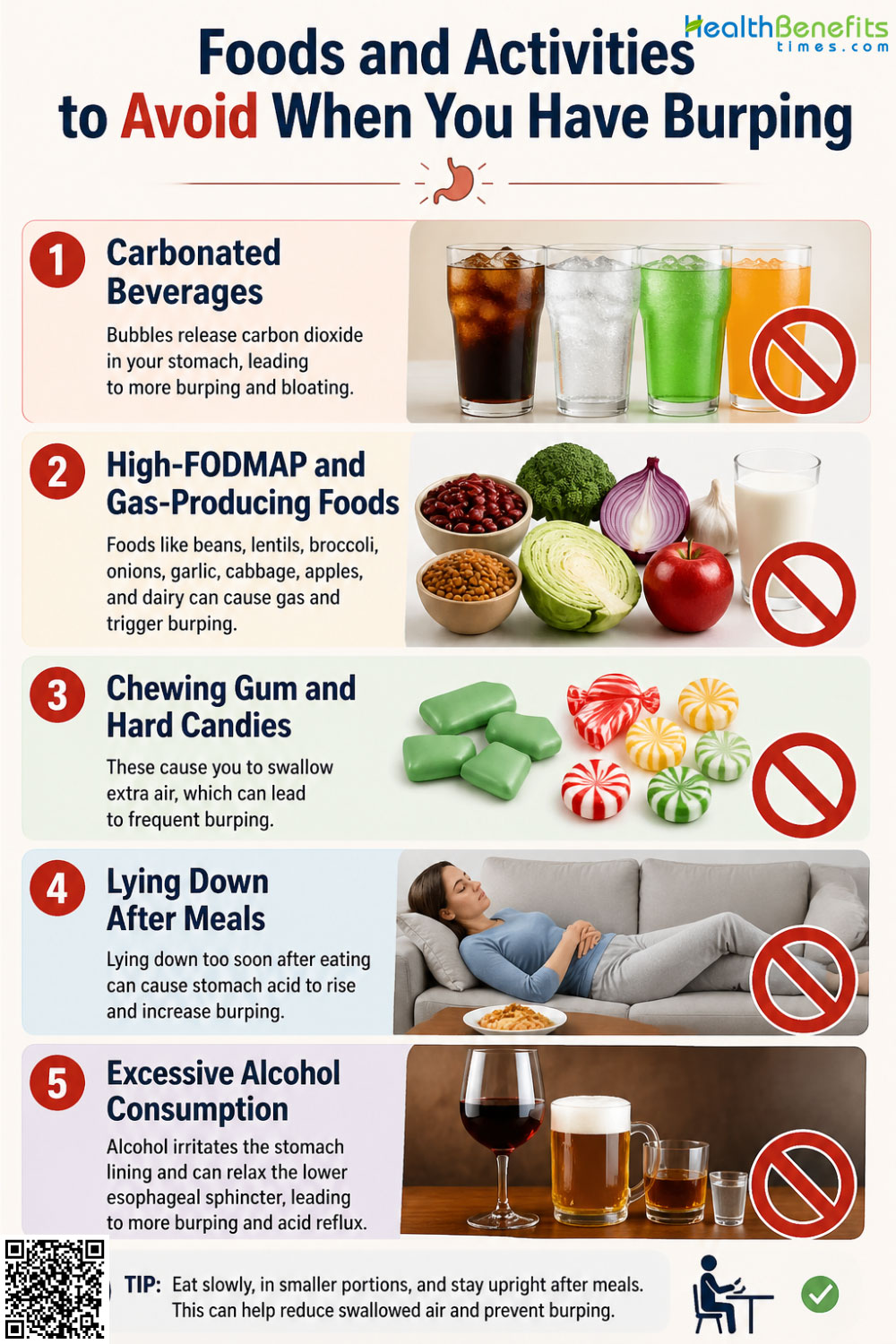
3. Chewing Gum and Hard Candies
If you’ve ever wondered why you keep burping even when you haven’t eaten anything unusual, the answer might be sitting right in your pocket. Chewing gum and sucking on hard candies make you swallow more often than you normally would 23. Each time you swallow, a small amount of air goes down with your saliva. Do that dozens of times over the course of an hour, and all that trapped air has to go somewhere, back up as a burp.
4. Lying Down After Meals
Your body responds to gravity in a specific way, one that naturally keeps food and stomach acid moving downward, while letting trapped air rise and escape on its own. When you lie down right after a big meal, you take that advantage away completely 24. In a flat position, your stomach contents push against the valve at the top of your stomach. That makes acid reflux, and the burping that comes with it, much more likely.
5. Excessive Alcohol Consumption
The relationship between alcohol and digestion looks simple on the surface, but gets more complicated the deeper you look. Heavy or frequent drinking doesn’t just upset your stomach, it actively damages the protective lining that keeps stomach acid from harming your stomach walls 25. Without that barrier, irritation builds up. This also slows down the muscle contractions that normally move food into your intestines. When food sits in your stomach too long, it starts to ferment, and that’s what leads to more gas and burping.
Precaution before use of natural remedies
The idea that natural remedies are always safe is so widespread that most people accept it without question. It’s also largely incorrect — especially when you’re using concentrated herbs to manage a potentially serious digestive issue. Before relying on teas and botanical supplements alone, you need to watch carefully for certain warning signs that call for medical attention, not home remedies.
1. Monitoring for Unexplained Weight Loss
Losing weight without changing your diet or exercise habits is something you should never brush off, or try to fix with ginger tea. If your chronic belching comes with a sudden, noticeable drop in weight, it likely means your digestive system isn’t absorbing nutrients the way it should 26. This can point to serious conditions like inflammatory bowel disease, hidden parasitic infections, or even undiagnosed gastrointestinal cancers that need proper screening right away.
2. Watching for Signs of Internal Bleeding
Natural antispasmodics can ease cramping, but they won’t do a thing for a bleeding wound buried deep in your stomach lining. Certain warning signs point to a serious internal bleed, and you need to recognize them. Bright red blood in your vomit is one. Dark, grainy material that looks like coffee grounds is another. Stools that turn pitch black and tarry also signal trouble. These symptoms often mean a severe hemorrhage from an advanced peptic ulcer or acute alcoholic gastritis 27. If you notice any of them, get to a hospital immediately. This is a medical emergency, not something herbal remedies can handle.
3. Recognizing Severe Chest Pain
The relationship between gas pain and heart attack symptoms looks simple on the surface, but gets more complicated the deeper you look. Calling intense chest pain “just a trapped gas bubble” is a dangerous assumption. Yes, gas stuck in the upper left colon can send sharp pains up into your chest. But here’s the problem, that feeling closely mimics the symptoms of a heart attack 28. If your chest pressure comes with shortness of breath, heavy sweating, or pain radiating down your left arm, skip the natural remedies. Call emergency services right away.
4. Evaluating Swallowing Difficulties (Dysphagia)
If you’ve ever felt like food is physically getting stuck behind your breastbone every time you eat, that’s not something to brush off as simple indigestion. That sensation has a name, dysphagia, and it usually points to something blocking your esophagus 29. The cause could be a stricture, heavy scar tissue from long-term acid reflux, or even a growing tumor. What matters is that it’s a physical problem. And physical blockages don’t respond to herbal teas or breathing exercises. You need an upper endoscopy, and the sooner, the better.