

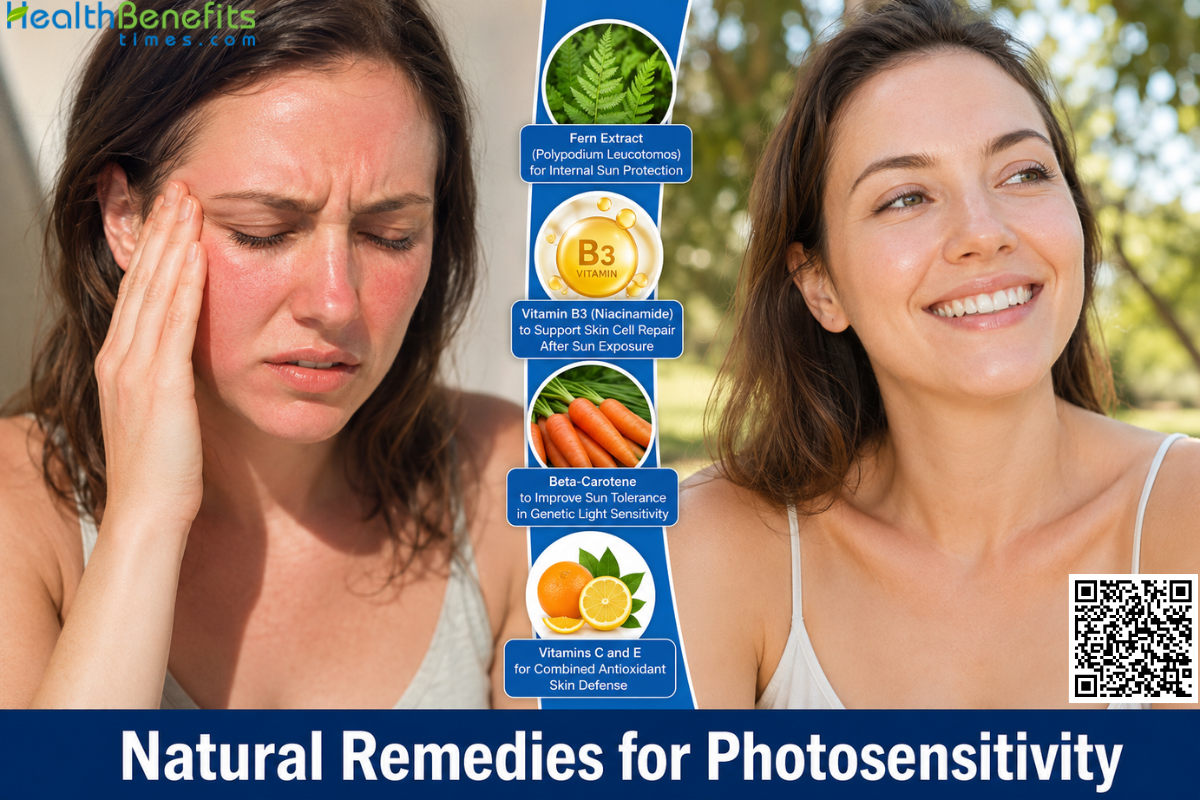
Photosensitivity is an abnormal immune or chemical reaction of the skin to sunlight, specifically ultraviolet (UV) radiation or visible light. While standard sunburns affect anyone exposed to excessive sunlight, individuals with this condition develop severe sunburn-like symptoms, blistering, peeling, or rashes after minimal exposure. Clinical experts categorize this condition into two primary types: phototoxicity and photoallergy 1. Phototoxicity occurs when an ingested medication or applied chemical absorbs UV rays and causes direct, non-immune cellular damage to the skin 2. In contrast, photoallergy is a delayed immune system response where light exposure alters a chemical’s structure, prompting the body to treat it as an invading threat. These severe reactions can be triggered by underlying autoimmune diseases, such as systemic lupus erythematosus, or by common prescriptions including certain antibiotics, diuretics, and nonsteroidal anti-inflammatory drugs 3.
Causes of Photosensitivity
1. Medications (Drug-Induced Photosensitivity)
Certain prescription and over-the-counter medications represent the most frequent triggers for light sensitivity. These include specific antibiotics like tetracyclines, nonsteroidal anti-inflammatory drugs, diuretics, and topical retinoids. These substances absorb ultraviolet light and release energy that directly damages surrounding skin cells, causing a sudden phototoxic reaction.
2. Autoimmune Conditions
Systemic lupus erythematosus (SLE) and related autoimmune diseases frequently cause the immune system to react abnormally to sunlight. In these conditions, ultraviolet radiation triggers localized immune system flares, leading to distinct skin rashes, such as a prominent rash across the cheeks and the bridge of the nose, and can worsen internal inflammation 4.
3. Genetic and Metabolic Disorders
Rare inherited conditions can severely disrupt how the skin tolerates sunlight. Porphyria, a group of metabolic disorders, causes a buildup of natural chemicals in the skin that react strongly to light, resulting in immediate burning pain, redness, and severe blistering 5. Another genetic condition, xeroderma pigmentosum, prevents the body from repairing cellular damage caused by ultraviolet rays, leading to extreme sun sensitivity and cellular destruction upon minimal exposure 6.
4. Plants and Topical Chemicals
Direct skin contact with specific plant juices or skincare agents causes a localized reaction known as phytophotodermatitis. Natural oils from plants like giant hogweed, wild parsnip, and citrus fruits contain compounds called psoralens, which make the skin temporarily hyper-reactive to ultraviolet light, causing severe, delayed blistering precisely where the substance touched the skin 7.
Symptoms of Photosensitivity
1. Exaggerated Sunburn
The most common sign is an abnormally severe sunburn appearing rapidly after very brief exposure to sunlight. The affected skin becomes intensely red, swollen, warm to the touch, and unusually painful compared to a typical sunburn.
2. Itchy Rashes and Raised Bumps
Delayed allergic reactions to sunlight often manifest as intensely itchy, eczema-like red rashes. These rough, raised bumps typically emerge 24 to 72 hours after sun exposure and can occasionally spread to areas of the skin that were covered by clothing.
3. Severe Blistering and Peeling
Extreme sensitivity causes the skin tissue to develop painful, fluid-filled blisters shortly after UV exposure. As the damaged skin attempts to heal, these blisters rupture, leading to extensive scaling and peeling of the outer skin layer.
4. Skin Discoloration (Hyperpigmentation)
After the initial severe redness and tissue inflammation resolve, the affected areas frequently heal by leaving behind irregular dark patches or brown discoloration that can persist on the skin for months.
5. Systemic Physical Flares
For individuals with underlying autoimmune conditions such as lupus, exposure to ultraviolet light often triggers widespread bodily symptoms that go beyond skin surface damage. This can include the sudden onset of profound fatigue, joint pain, muscle aches, and fever alongside a characteristic rash across the face.
 Natural Remedies for Photosensitivity
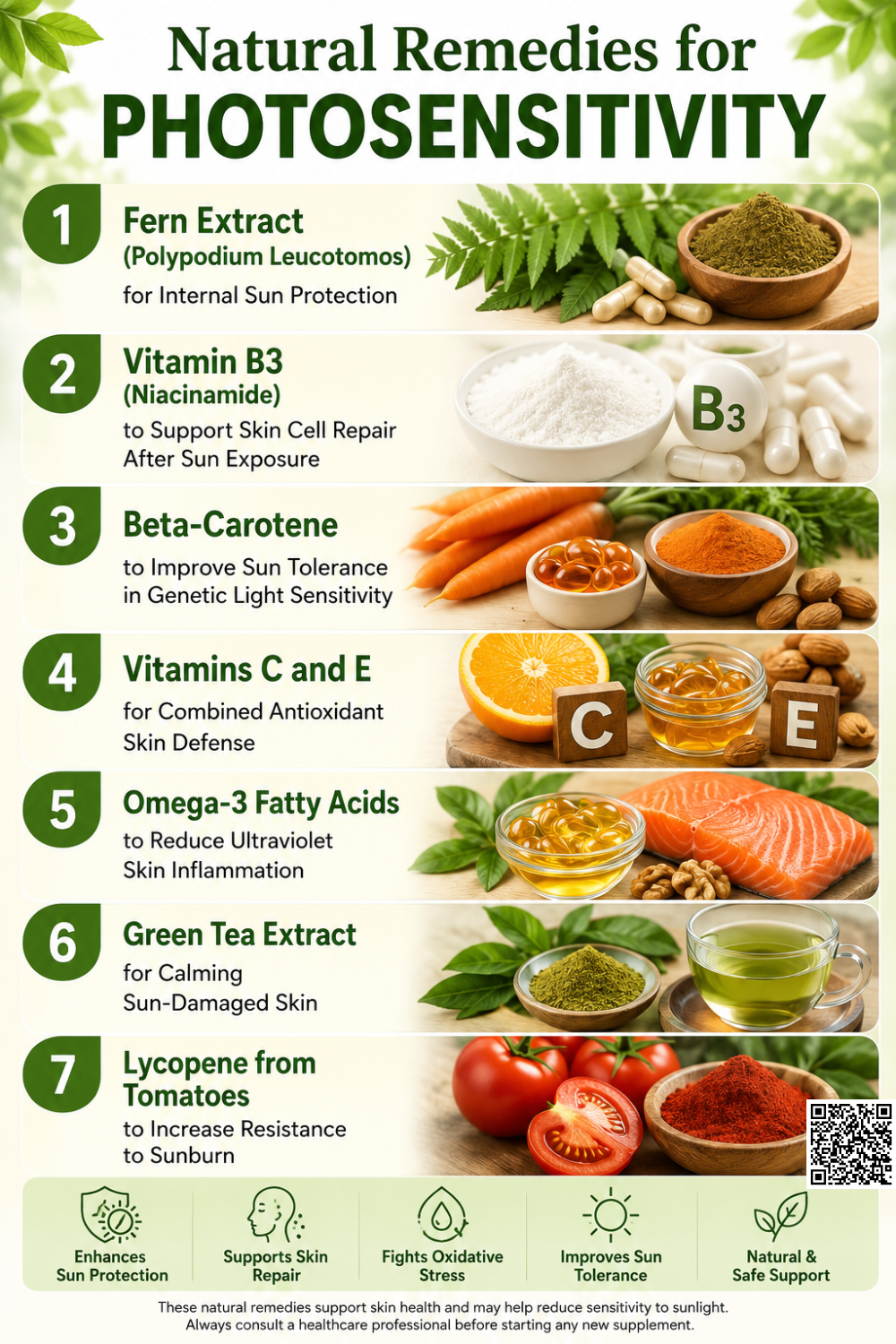
1. Fern Extract (Polypodium Leucotomos) for Internal Sun Protection
How it may help
Fern extract from Polypodium leucotomos is a natural plant compound. It acts as an internal antioxidant that neutralizes harmful molecules generated by ultraviolet light and protects skin cell DNA from direct damage 8. This systemic defense mechanism reduces tissue inflammation and increases the skin’s overall tolerance to sunlight 9.
What research says
Clinical trials demonstrate that oral fern extract significantly decreases initial skin redness and prevents ultraviolet-induced cellular death. Research further concludes it effectively reduces sunlight-triggered allergic skin reactions and itchy rashes in patients diagnosed with polymorphic light eruption, a common photosensitivity disorder.
How to use it safely
Take oral fern extract supplements in the morning shortly before expected sun exposure. You must always use this alongside broad-spectrum sunscreen and protective clothing, because oral supplements only strengthen internal cellular defenses and cannot physically block ultraviolet radiation from striking your skin.
Potential precautions or side effects
It is generally safe, causing only rare, mild stomach upset. Avoid use if you are pregnant or breastfeeding, as conclusive safety data for these groups remains unavailable.
2. Vitamin B3 (Niacinamide) to Support Skin Cell Repair After Sun Exposure
How it may help
Vitamin B3, specifically in the form of nicotinamide, restores energy to skin cells depleted by ultraviolet radiation. This energy boost enables the cells to efficiently repair damaged DNA and prevents the immune system from shutting down after severe sun exposure, thereby reducing overall light sensitivity and tissue damage 10.
What research says
Clinical studies conclude that oral nicotinamide significantly enhances DNA repair and reduces ultraviolet-induced immune suppression in the skin. Furthermore, research proves it dramatically lowers the development of precancerous skin spots and common skin cancers in high-risk individuals with extensive prior sun damage 11.
How to use it safely
Take oral nicotinamide supplements as directed by a healthcare provider, often recommended at 500 milligrams twice daily for targeted sun protection. Ensure you choose nicotinamide rather than standard niacin to avoid uncomfortable skin flushing, and always combine this supplement with daily sunscreen application.
Potential precautions or side effects
Nicotinamide is generally highly safe and well-tolerated. However, taking excessively large doses may occasionally cause mild nausea, diarrhea, or rare liver irritation.
3. Beta-Carotene to Improve Sun Tolerance in Genetic Light Sensitivity
How it may help
Beta-carotene is a natural plant pigment and powerful antioxidant that safely accumulates in the skin. In rare genetic disorders like erythropoietic protoporphyria, abnormal bodily chemicals react severely to sunlight. Beta-carotene neutralizes these toxic chemical reactions by quenching unstable molecules, lessening internal tissue damage and preventing painful burning 12.
What research says
Clinical studies demonstrate that high doses of oral beta-carotene significantly increase sunlight tolerance for a large majority of patients suffering from erythropoietic protoporphyria 13. The pigment effectively reduces the severity of extreme light-sensitive reactions, preventing immediate stinging, intense swelling, and severe skin lesions after sun exposure 14.
How to use it safely
Take beta-carotene supplements strictly under a doctor’s supervision, as genetic photosensitivity requires specific, high medical doses ranging from 30 to 300 milligrams daily 15. You must continue applying broad-spectrum sunscreen and wearing protective clothing outdoors, as this supplement improves light tolerance but cannot physically block rays.
Potential precautions or side effects
High medical doses frequently cause a harmless yellow-orange skin tint. Importantly, long-term, high-dose beta-carotene supplementation increases the risk of lung cancer, particularly if you currently smoke tobacco.
4. Vitamins C and E for Combined Antioxidant Skin Defense
How it may help
Vitamins C and E act as a powerful antioxidant combination that neutralizes harmful molecules generated by ultraviolet light. While vitamin C defends the watery parts of skin cells, vitamin E protects cellular fat membranes. Together, they prevent direct ultraviolet damage and reduce severe sunburn responses 16.
What research says
Clinical research concludes that combining vitamins C and E significantly increases the skin’s natural resistance to ultraviolet radiation. Studies demonstrate this pairing reduces initial tissue redness and decreases ultraviolet-induced DNA damage much more effectively than utilizing either vitamin independently.
How to use it safely
Consume standard daily doses through oral supplements or apply clinical-grade topical serums containing both vitamins directly to your skin. You must always use these alongside broad-spectrum sunscreen, as they enhance your natural defenses but cannot replace physical sunblock.
Potential precautions or side effects
These vitamins remain exceptionally safe. However, excessive oral vitamin C causes stomach upset, while extreme vitamin E intake increases bleeding risks, particularly if you take blood-thinning medications 17.
5. Omega-3 Fatty Acids to Reduce Ultraviolet Skin Inflammation
How it may help
Omega-3 fatty acids incorporate directly into the skin’s cellular membranes to reinforce structural integrity. They help by actively suppressing the production of localized inflammatory chemicals triggered by sunlight 18. This biological shift calms the localized immune response and increases the skin’s natural threshold against severe burning.
What research says
Clinical trials demonstrate that regular oral omega-3 supplementation significantly decreases ultraviolet-induced skin redness and cellular inflammation. Research confirms that individuals consuming consistent therapeutic doses of these specific fats require substantially longer durations of direct sun exposure to develop an initial sunburn compared to placebo groups.
How to use it safely
Take oral fish oil or algae-based omega-3 supplements daily alongside a meal to maximize intestinal absorption. Standard clinical doses range from one to three grams daily. You must always combine oral supplementation with the application of broad-spectrum sunscreen, as pills cannot physically block solar radiation.
Potential precautions or side effects
Supplements occasionally cause mild stomach upset or a fishy aftertaste. Because high doses naturally inhibit platelet clustering, they increase bleeding risks if you currently take prescription blood-thinning medications 19.
6. Green Tea Extract for Calming Sun-Damaged Skin
How it may help
Green tea extract contains powerful plant chemicals called polyphenols, primarily one known as EGCG. These compounds act as deep tissue antioxidants that neutralize unstable molecules created by ultraviolet light. By blocking these harmful molecules, the extract reduces severe skin swelling and limits direct damage to cellular DNA 20.
What research says
Clinical studies demonstrate that both topical application and oral consumption of green tea polyphenols significantly decrease ultraviolet-induced skin redness. Researchers conclude that regular use effectively protects against structural skin damage and prevents the localized immune system shutdown that typically follows excessive sun exposure.
How to use it safely
Apply clinical-grade topical creams containing green tea extract directly to your skin, or consume standardized oral supplements daily. Because extracts only boost internal antioxidant defenses, you must continually use them in conjunction with standard broad-spectrum sunscreen and physical sun protection.
Potential precautions or side effects
Topical application is highly safe. However, high doses of oral green tea extract can occasionally cause stomach upset, caffeine jitteriness, and rare instances of liver irritation 21.
7. Lycopene from Tomatoes to Increase Resistance to Sunburn
How it may help
Lycopene is a natural red pigment and potent antioxidant found abundantly in tomatoes. Once absorbed, it accumulates in the skin and neutralizes tissue-damaging molecules generated by ultraviolet light. This internal antioxidant defense minimizes severe cellular stress, directly lowering the skin’s physical reactivity to sunlight 22.
What research says
Clinical studies reveal that consuming lycopene-rich tomato paste daily for ten to twelve weeks significantly increases natural sunburn resistance. Researchers conclude that individuals maintaining consistent lycopene intake experience noticeably less skin redness, tissue inflammation, and cellular damage following direct ultraviolet exposure compared to those without supplementation 23.
How to use it safely
Incorporate cooked tomato products, such as tomato paste, into your diet, as heat processing makes lycopene much easier for your body to absorb. You must always continue using broad-spectrum sunscreen, as dietary lycopene only supplements, rather than replaces, physical ultraviolet protection.
Potential precautions or side effects
Lycopene is highly safe through standard dietary intake. Consuming extremely large amounts over time may cause a harmless, reversible orange discoloration of the skin known as lycopenodermia 24.
 Foods to Avoid When You Suffer from Photosensitivity
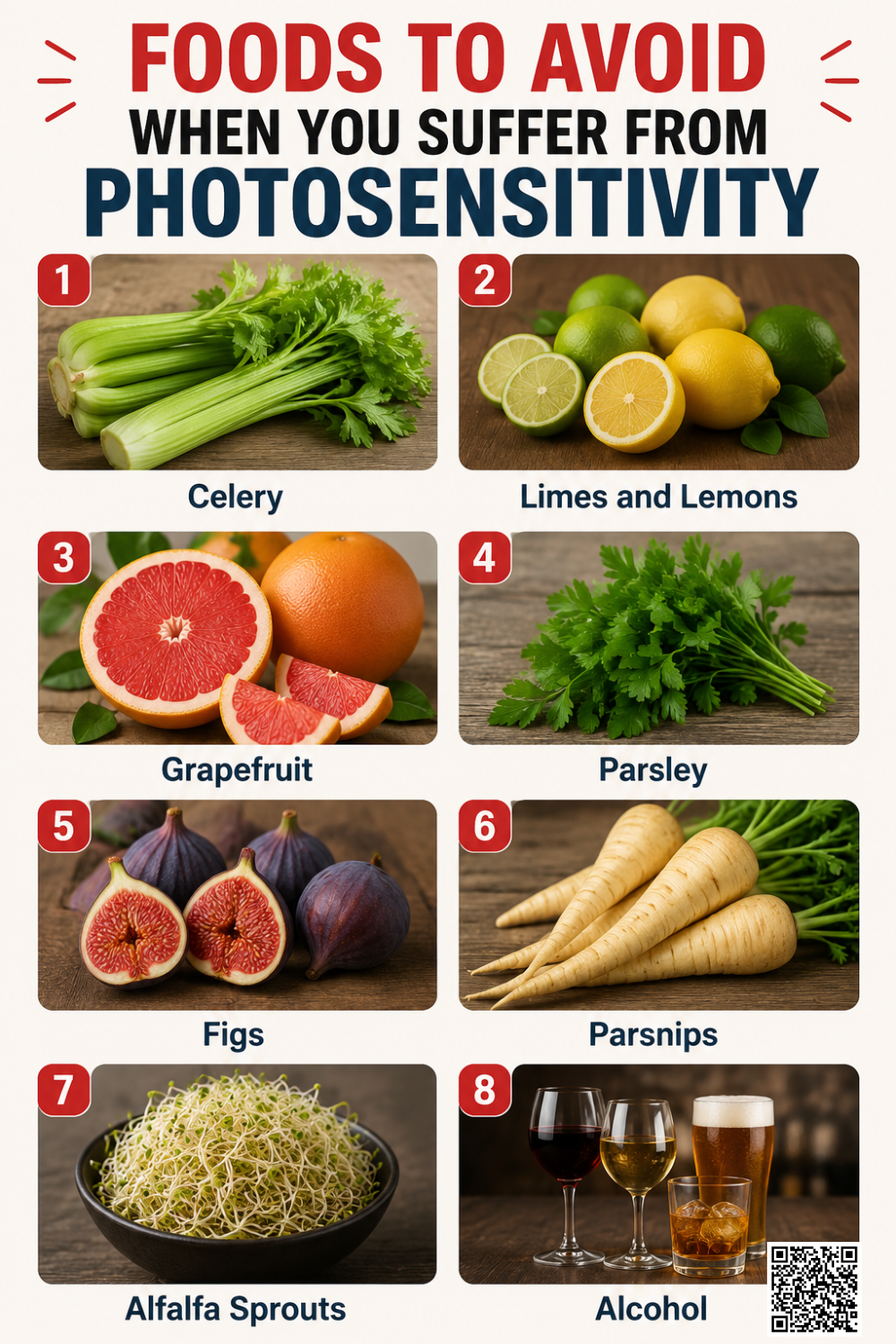
1. Celery
Consuming large quantities introduces high levels of furocoumarins into your body, which react with ultraviolet light and can cause systemic phototoxic skin reactions 25.
2. Limes and Lemons
These citrus fruits contain potent photosensitizing compounds called psoralens that increase your skin’s susceptibility to severe sunburns and delayed blistering.
3. Grapefruit
This fruit has exceptionally high concentrations of organic phototoxins that absorb sunlight and trigger direct cellular damage in exposed skin tissues.
4. Parsley
This common herb is rich in natural furocoumarins that can activate under sunlight, increasing the risk of widespread skin inflammation and burning.
5. Figs
Ingesting large amounts of figs exposes the body to psoralens, drastically increasing the skin’s reactivity to natural and artificial ultraviolet light 26.
6. Parsnips
This root vegetable contains plant-based photosensitizers that, when absorbed into the bloodstream, interact with solar radiation to damage skin cell membranes 27.
7. Alfalfa Sprouts
These sprouts contain L-canavanine, an amino acid known to trigger systemic immune flares and worsen photosensitive skin rashes in individuals with lupus 28.
8. Alcohol
Excessive alcohol consumption disrupts liver function and increases internal porphyrin accumulation, triggering extreme light sensitivity and blistering in patients with porphyria.
When To See a Doctor When You Suffer from Photosensitivity
1. Severe Blistering
Seek medical care if you develop severe, painful blisters covering a large portion of your body, as this indicates a serious burn requiring clinical treatment 29.
2. Systemic Symptoms
Consult a doctor immediately if your skin reaction includes a high fever, severe chills, nausea, or confusion, which signal dangerous systemic distress or sun poisoning.
3. Signs of Infection
Contact a healthcare provider if your sun-damaged skin shows signs of bacterial infection, such as increased warmth, yellow pus, or red streaks spreading from open blisters.
4. Medication Triggers
Schedule a medical evaluation if an abnormal sunburn or itchy rash develops shortly after you start taking a new prescription medication, preventing further drug-induced phototoxicity.
5. Facial Swelling
Seek urgent care if you experience severe swelling around your eyes, lips, or face, as this extreme inflammatory response requires prompt professional medical intervention.