

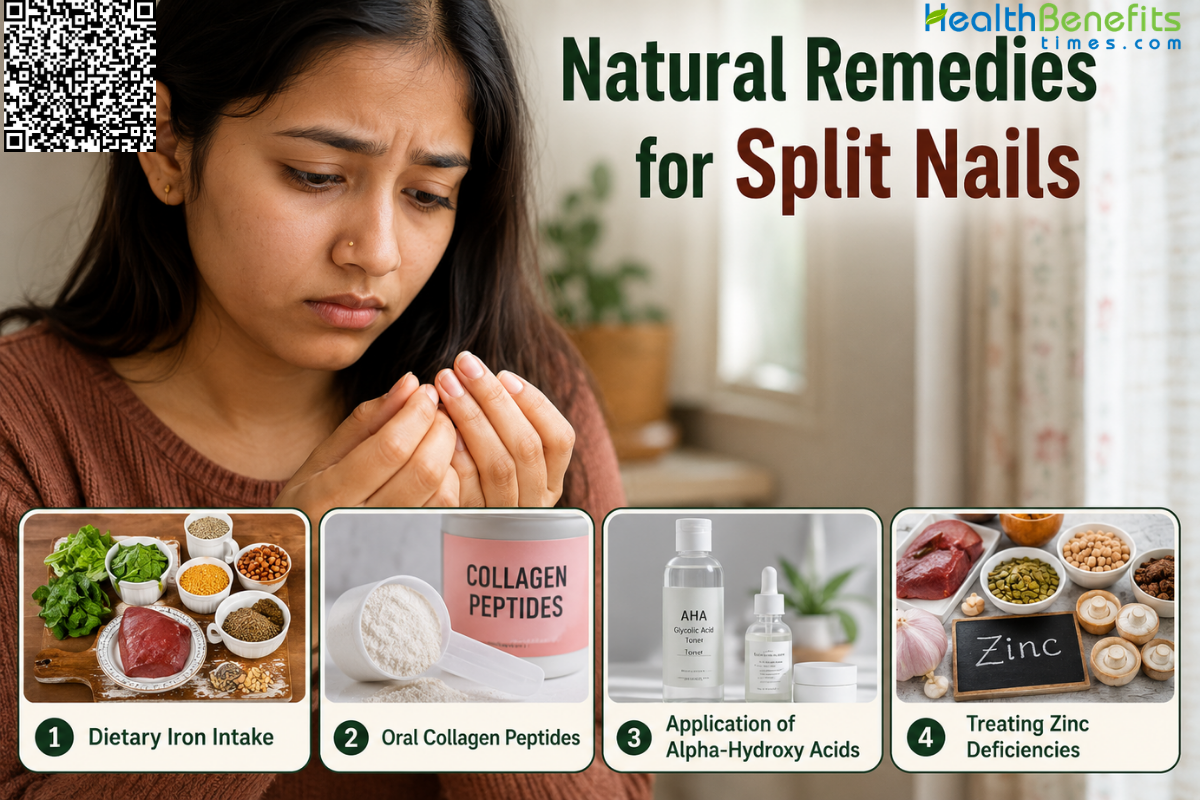
Split nails, clinically known as onychoschizia, is a condition characterized by the horizontal peeling or splitting of the nail plate’s outer edge. This form of nail fragility frequently presents alongside brittle, thin, or unusually soft nails. Dermatologic research indicates that the primary cause is environmental, most notably the repeated cycle of wetting and drying the hands, which is often worsened by exposure to harsh cleaning detergents or frequent application of nail polish 1. Beyond external wear, internal factors such as advanced age, underlying systemic diseases, and specific nutritional deficiencies in minerals like iron, zinc, and selenium can severely impair normal nail growth and structural integrity 1. The condition occurs at least twice as often in women than in men, and effective clinical management fundamentally relies on consistent hydration of the nail paired with protective physical barriers to prevent further moisture loss 1.
Causes of Split Nails
1. Repeated Wetting and Drying
The most frequent environmental cause is the constant cycle of wetting and drying the hands. Activities such as frequent handwashing or dishwashing cause the nail cells to expand when wet and contract when dry, which breaks down the structural bonds of the nail plate and leads to horizontal splitting 2.
2. Chemical Exposure
Routine contact with harsh household cleaning agents, industrial solvents, or heavy detergents strips the nails of their natural protective oils, causing severe dehydration 2. Additionally, the frequent application of acetone-based nail polish removers and certain cosmetic adhesives chemically degrades the keratin protein, leaving the nail edge highly fragile 3.
3. Nutritional Deficiencies
An internal lack of vital nutrients, particularly iron deficiency anemia, restricts optimal oxygen delivery to the nail matrix, which disrupts healthy nail formation and results in peeling 4. Insufficient blood levels of other essential trace minerals, such as zinc, calcium, and selenium, further impair the physical strength and structural integrity of the growing nail 4.
4. Systemic Medical Conditions
Hormonal imbalances, specifically an underactive thyroid gland (hypothyroidism), slow down cellular metabolism and reduce blood flow to the fingers, causing the nails to become exceptionally dry and prone to breaking 4. Dermatological diseases that directly affect the nail bed, such as psoriasis or fungal infections, also weaken the nail structure and promote splitting 2.
5. Advanced Age
The natural biological aging process is a significant internal factor. As individuals grow older, the body’s ability to retain moisture and produce essential lipid oils decreases, leading to fingernails that are inherently drier, thinner, and significantly more likely to split at the free edges 2.
6. Physical Trauma
Repeated mechanical stress, such as chronic nail-biting, using the nails as tools to pry open objects, or typing forcefully over long periods, creates micro-injuries in the nail plate that eventually cause the delicate outer layers to separate and peel 2.
Symptoms of Split Nails
- Horizontal Layer Separation: The primary physical sign is the distinct separation of the nail plate into multiple, thin horizontal layers directly at the furthest tip, a specific clinical presentation known as onychoschizia 1.
- Extreme Brittleness: The overall structural integrity of the nail becomes severely compromised, causing the nails to snap, break, or crumble under minimal mechanical pressure rather than growing out normally 1.
- Ragged and Tearing Edges: As the outer layers peel away, the tips of the affected nails develop uneven, jagged edges that frequently snag on fabrics and tear further during routine daily activities 2.
- Abnormal Thinning and Softening: When the splitting is heavily influenced by excessive moisture or chemical exposure, the remaining nail plate often feels unusually soft, noticeably thinner, and excessively flexible instead of maintaining its natural rigidity 5.
- Co-occurring Vertical Ridging: The horizontal peeling at the tips frequently presents alongside onychorrhexis, a related condition characterized by pronounced vertical ridges or deep grooves that run lengthwise down the surface of the nail bed 1.
Natural Remedies for Split Nails
1. Daily Biotin Supplementation
How it may help
Biotin, or vitamin B7, aids in producing keratin, the essential structural protein that forms human nails. By reinforcing this cellular infrastructure, regular biotin intake helps strengthen the nail plate, making it notably harder and less susceptible to physical breaking or splitting over time 6.
What research says
Clinical evidence demonstrates that daily biotin supplementation effectively treats brittle nail syndrome. Research confirms patients consuming up to 2.5 milligrams of biotin daily show a significant increase in overall nail thickness and a measurable decrease in surface splitting and ridging 7.
How to use it safely
To safely improve your nail health, you should take a standard clinical dose of 2.5 milligrams daily. Always consult your healthcare provider before starting this supplement to ensure it does not interact negatively with your existing daily medications 8.
Potential precautions or side effects
High daily doses of biotin can interfere with laboratory blood tests, producing false readings for thyroid hormones and cardiovascular markers 9. Always inform your doctor about your biotin use.
2. Topical Application of Petroleum Jelly
How it may help
Petroleum jelly acts as a powerful occlusive agent that seals moisture into the nail plate and surrounding tissue. By creating a protective physical barrier against frequent water exposure, this topical treatment prevents severe dehydration, which is a primary underlying cause of brittle and splitting nails 10.
What research says
Clinical dermatological studies confirm that petrolatum is an exceptionally effective occlusive moisturizer. Research demonstrates it significantly reduces water loss from epidermal and nail structures by up to 99 percent. This sustained hydration directly improves overall nail flexibility and noticeably decreases the occurrence of structural splitting 11.
How to use it safely
To safely treat your split nails, you should apply a thin layer of petroleum jelly directly to your nails and cuticles immediately after washing your hands. For optimal overnight results, cover your treated hands with soft cotton gloves to lock in the moisture 12.
Potential precautions or side effects
You must ensure your nails are thoroughly clean before application, as petroleum jelly can trap harmful bacteria. Discontinue use if you experience any rare, localized allergic skin reactions 13.
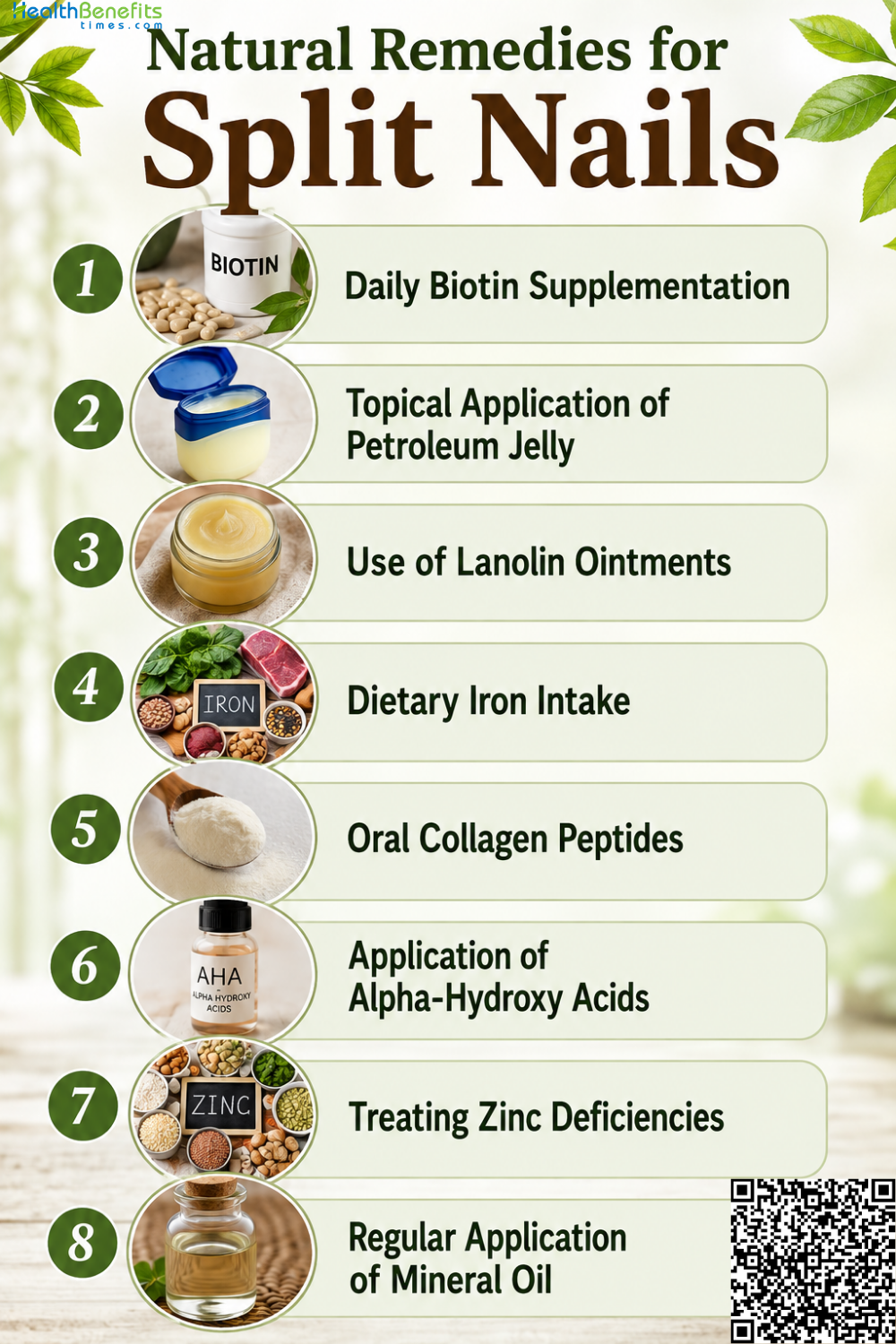
3. Use of Lanolin Ointments
How it may help
Lanolin is a natural wax extracted from sheep wool that functions as an intensive emollient. It deeply penetrates the nail plate to replenish essential lipids and restore the protective moisture barrier. This process prevents severe cellular dryness, directly stopping the nail tissue from fracturing and splitting over time 14.
What research says
Clinical research concludes that applying lanolin-based emollients significantly increases the water-binding capacity of nail keratin. Scientific evaluations demonstrate that consistent lanolin treatment improves overall nail flexibility and structurally repairs the nail plate, making it a highly effective therapeutic approach for managing brittle nail syndrome 15.
How to use it safely
To safely repair your split nails, you should massage a small amount of purified lanolin ointment into your damp nails and cuticles daily. Apply it immediately after washing your hands to successfully seal necessary hydration within the nail matrix 16.
Potential precautions or side effects
You must avoid this topical treatment if you have a diagnosed wool allergy. Stop using the ointment immediately if you develop contact dermatitis, including redness or localized itching 17.
4. Dietary Iron Intake
How it may help
Dietary iron plays a crucial role in forming hemoglobin, the primary protein responsible for delivering oxygen to nail cells. Adequate cellular oxygenation is necessary for healthy tissue growth. Correcting an iron deficiency strengthens the structural integrity of the nail plate, effectively preventing the nails from becoming brittle, thinning, and splitting 18.
What research says
Clinical studies confirm that depleted iron stores directly contribute to brittle nail syndrome and structural abnormalities. Dermatological research concludes that restoring proper iron levels through dietary intake significantly improves nail plate thickness and completely resolves splitting and surface ridging in patients diagnosed with iron deficiency anemia 19.
How to use it safely
To safely improve your nail strength, you should consume iron-rich foods like lean meats, lentils, and spinach daily. Pair these with vitamin C sources to maximize nutrient absorption. Always request a blood test from your doctor before taking iron pills to confirm a true deficiency 20.
Potential precautions or side effects
Consuming excess iron through unprescribed supplements can cause severe constipation, abdominal pain, and dangerous organ toxicity. You must avoid self-prescribing high-dose iron pills without clinical medical supervision 21.
5. Oral Collagen Peptides
How it may help
Oral collagen peptides supply essential amino acids that act as fundamental building blocks for human nail tissue. By nourishing the nail bed from within, these peptides promote the continuous production of keratin, which directly enhances the structural integrity of the nail plate and prevents physical splitting 22.
What research says
Clinical trials demonstrate that daily supplementation with bioactive collagen peptides significantly improves brittle nail syndrome. Research confirms that patients consuming 2.5 grams daily experience a measurable increase in the nail growth rate and a 42 percent reduction in the frequency of nail splitting and breakage 23.
How to use it safely
To safely strengthen your split nails, you should consume 2.5 grams of hydrolyzed collagen powder daily, mixed completely into your preferred liquids. Always consult your healthcare provider before starting this regimen to verify product safety and ensure it aligns with your specific dietary needs 24.
Potential precautions or side effects
Collagen supplements can occasionally cause mild gastrointestinal discomfort, including transient bloating. You must strictly avoid marine-sourced collagen products if you have a diagnosed medical allergy to fish or shellfish 25.
6. Application of Alpha-Hydroxy Acids
How it may help
Alpha-hydroxy acids, specifically lactic and glycolic acids, act as effective humectants that actively draw moisture into the nail plate. By increasing water retention within the cellular keratin structure, these compounds improve structural flexibility and prevent the severe dehydration that leads to physical cracking and splitting 19.
What research says
Dermatological research confirms that topical alpha-hydroxy acid formulations successfully treat brittle nail syndrome. Clinical studies demonstrate that regular application of lotions containing lactic acid significantly increases the water-binding capacity of nail keratin, leading to a measurable reduction in surface peeling and structural splitting 15.
How to use it safely
To safely hydrate your split nails, you should apply a specialized nail lotion containing a low concentration of alpha-hydroxy acid directly to your nail plates. Massage the treatment into your cuticles daily before bedtime to maximize overnight moisture absorption 12.
Potential precautions or side effects
You must avoid applying these acids to torn cuticles to prevent intense stinging. Stop use immediately if you develop localized redness or persistent skin irritation 26.
7. Treating Zinc Deficiencies
How it may help
Zinc is a vital mineral required for continuous protein synthesis and rapid cellular division. Because the nail matrix relies on these biological processes to produce strong keratin, correcting a systemic zinc deficiency directly supports the creation of structurally sound nail plates, effectively preventing them from becoming fragile and splitting 27.
What research says
Clinical dermatological studies confirm that inadequate zinc levels disrupt normal keratinization. Research concludes that medically supervised zinc supplementation successfully restores proper nail tissue growth and structural density, resolving chronic splitting, brittleness, and surface ridging in patients clinically diagnosed with a deficiency 19.
How to use it safely
To safely repair your split nails, you should increase your dietary intake of zinc-rich foods, including roasted pumpkin seeds, lentils, and lean meats. Always request a diagnostic blood test from your healthcare provider to confirm a true deficiency before taking oral zinc pills 28.
Potential precautions or side effects
Consuming excess zinc through unprescribed supplements can cause acute nausea and induce a dangerous secondary copper deficiency. You must avoid high-dose pills without direct clinical supervision 29.
8. Regular Application of Mineral Oil
How it may help
Mineral oil functions as an effective occlusive moisturizer that traps existing water within the nail plate. By creating a physical protective barrier over the tissue, it actively prevents the severe cellular dehydration that directly causes healthy nails to become dry, structurally brittle, fracture, and split over time 15.
What research says
Clinical dermatological studies confirm that applying heavy occlusive agents like mineral oil significantly reduces water loss from epidermal and nail structures. Research concludes that this sustained hydration successfully improves overall nail flexibility and acts as a proven therapeutic intervention to noticeably decrease physical nail splitting 11.
How to use it safely
To safely hydrate your split nails, you should gently massage a few drops of pure, unfragranced mineral oil directly into your nails and cuticles. Apply it immediately after washing your hands or bathing to effectively lock the necessary moisture into the nail bed 12.
Potential precautions or side effects
You must ensure your hands are entirely clean before application to avoid trapping harmful bacteria. Discontinue use immediately if you experience rare skin redness or localized irritation 30.
Foods to Avoid When You Suffer from Split Nails
1. Alcohol
Chronic alcohol consumption causes severe dehydration and blocks the absorption of essential nail-building nutrients like biotin and zinc, directly worsening brittle and splitting nails 31.
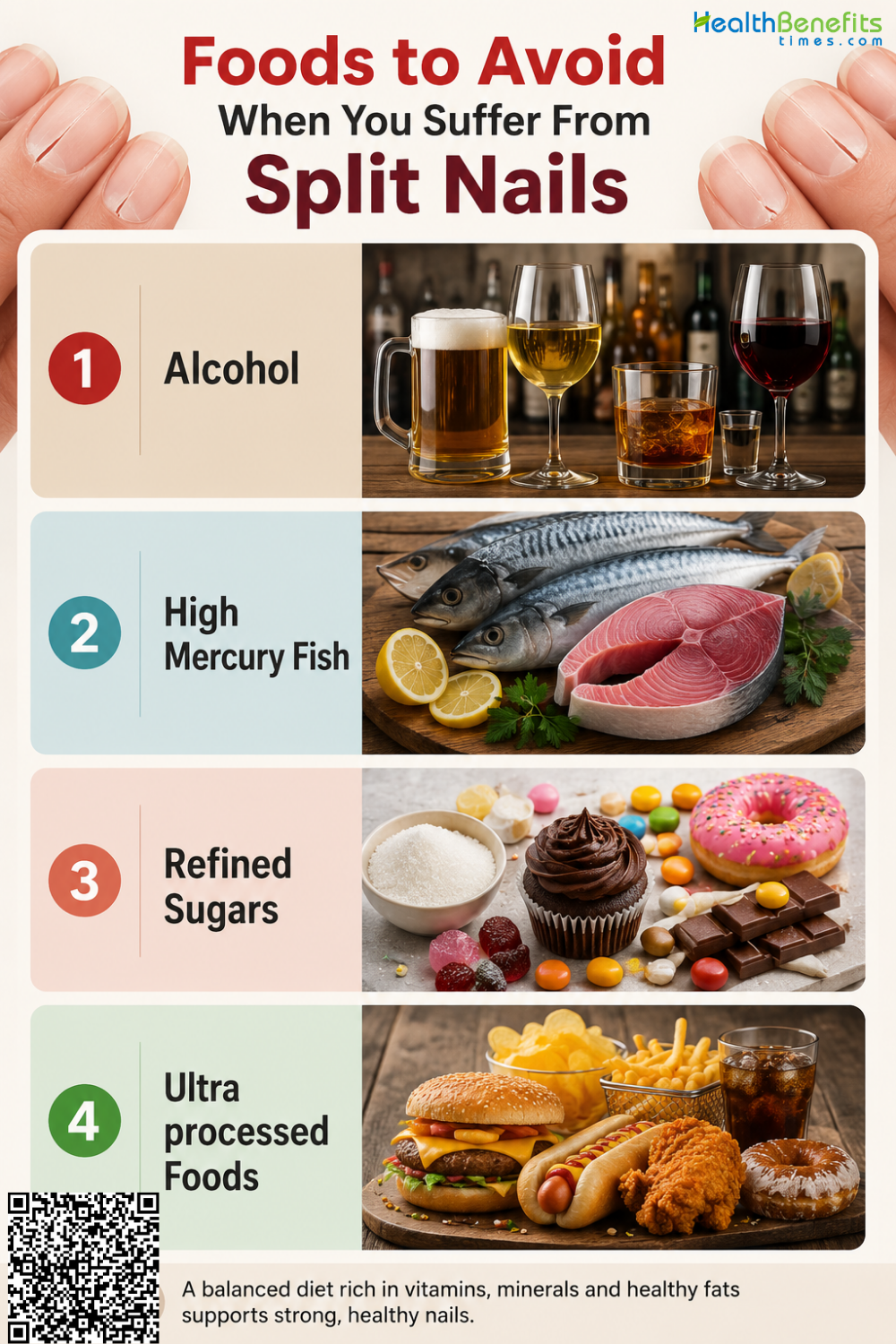
2. High-Mercury Fish
Consuming excess swordfish or king mackerel causes heavy metal accumulation. Mercury toxicity actively disrupts protein synthesis, directly resulting in severe structural nail brittleness and persistent splitting 32.
3. Refined Sugars
High dietary sugar intake degrades structural proteins like collagen and keratin through a chemical process called glycation. This weakens the nail matrix, increasing vulnerability to physical splitting 33.
4. Ultra-Processed Foods
Heavily processed foods lack vital minerals. Displacing whole foods with these nutrient-poor options causes systemic nutritional deficiencies that directly prevent healthy, structurally sound nail plate formation 19.
When to See a Doctor When You Struggle from Split Nails
1. Signs of Infection
You should consult a doctor if the surrounding skin becomes red, swollen, or painful. These symptoms strongly indicate an acute bacterial infection requiring prompt clinical antibiotic treatment 34.
2. Dark Discoloration
You must seek immediate medical evaluation if dark brown or black streaks appear beneath a splitting nail. This specific pigmentation change can clinically indicate a severe skin cancer 35.
3. Nail Bed Separation
See a physician if your splitting nail begins lifting completely off the underlying tissue. This physical separation often requires medical intervention to treat underlying psoriasis or fungal pathogens 36.
4. Systemic Health Symptoms
Schedule a clinical evaluation if persistent nail splitting occurs alongside chronic fatigue or hair loss. These paired symptoms frequently signal an undiagnosed thyroid disorder or severe systemic nutritional deficiency 19.