

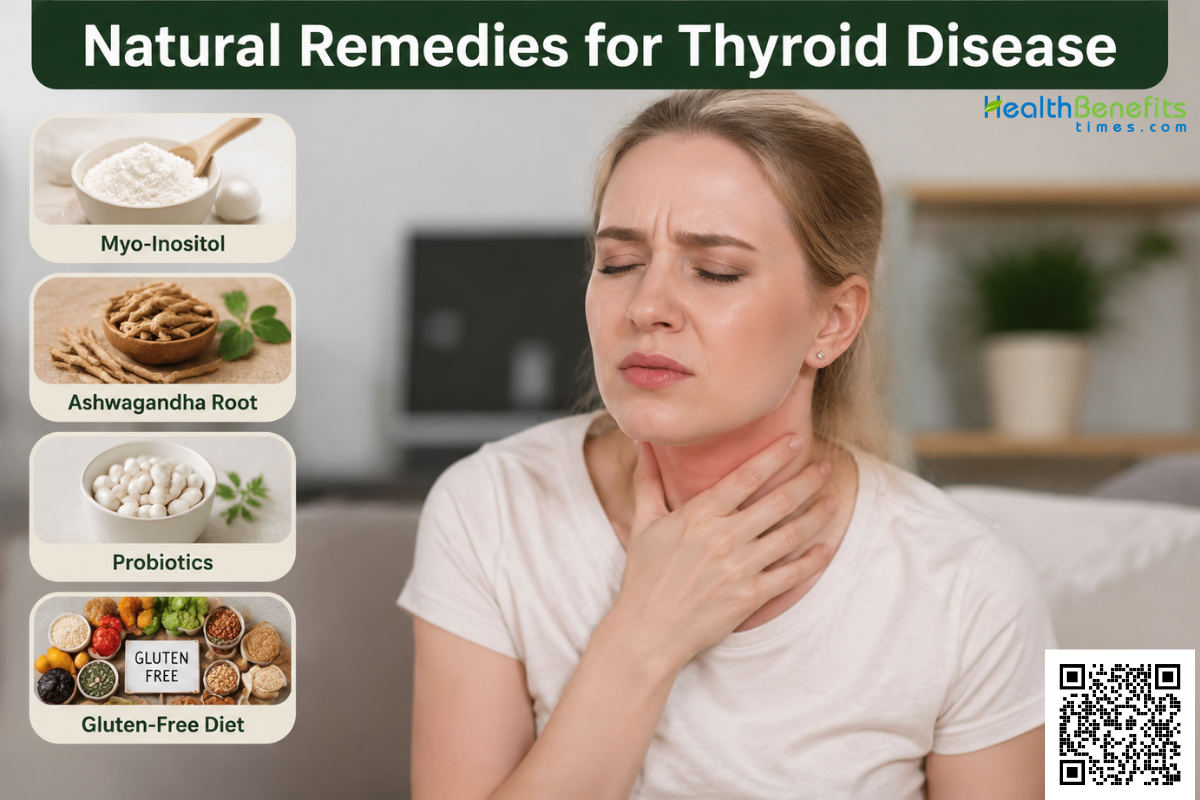
Thyroid disease refers to a group of medical conditions that prevent your thyroid gland—a small, butterfly-shaped organ located at the base of your neck—from producing the correct amount of hormones. These hormones control how your body uses energy, affecting nearly every major organ, including your heart, brain, and muscles. When the gland produces too many hormones, a condition known as hyperthyroidism occurs, speeding up your body’s metabolism and causing symptoms like rapid heartbeat, sudden weight loss, and anxiety. Conversely, when it produces too few hormones, known as hypothyroidism, your metabolism slows down, often leading to fatigue, weight gain, and sensitivity to cold. According to the National Institutes of Health, these disorders are typically diagnosed through standard blood tests that measure hormone levels and can be effectively managed with proper medical treatment 1.
Causes of Thyroid Disease
- Autoimmune Disorders: The immune system mistakenly attacks the thyroid gland, which is the leading cause of both underactive thyroid via Hashimoto’s disease and overactive thyroid via Graves’ disease 2.
- Iodine Imbalance: Consuming too little or too much iodine disrupts the gland’s ability to manufacture proper amounts of hormones 3.
- Medical Treatments: Undergoing neck radiation therapy or surgical removal of part or all of the thyroid gland can permanently impair hormone production 3.
- Thyroid Inflammation: Viral or bacterial infections can cause the gland to swell and release stored hormones abnormally, leading to temporary spikes followed by underactivity 3.
- Medications: Certain drugs, including lithium and specific heart medications, can interfere with normal thyroid function 3.
- Pituitary Gland Malfunction: Rare pituitary conditions can prevent the brain from producing enough signaling hormones to properly direct the thyroid gland 3.
Symptoms of Thyroid Disease
- Fatigue and Low Energy: Persistent exhaustion and a lack of physical energy that do not improve with adequate rest are hallmark signs of an underactive thyroid 3.
- Unexplained Weight Changes: Experiencing sudden weight gain despite normal eating habits points toward an underactive thyroid, whereas rapid weight loss despite an increased appetite typically indicates an overactive thyroid 3.
- Temperature Intolerance: Feeling unusually cold when others are comfortable signals a slow metabolism from an underactive thyroid, while feeling persistently hot and excessively sweaty points to a fast metabolism from an overactive thyroid 3.
- Heart Rate Alterations: A noticeably slow resting heart rate often accompanies an underactive thyroid, whereas a rapid, pounding heartbeat or irregular rhythm is frequently caused by an overactive thyroid 4.
- Mood Fluctuations: Experiencing frequent irritability, nervousness, or anxiety is commonly linked to an overactive thyroid, whereas feelings of depression, sluggishness, or memory fog often accompany an underactive thyroid 3.
- Changes in Skin, Hair, and Nails: Developing dry, coarse skin, brittle hair, or thinning eyebrows often signifies a sluggish thyroid gland 3.
Natural Remedies for Thyroid Disease
1. Dietary Iodine Optimization
How it may help
Iodine is an essential building block that the body needs to make thyroid hormones. When iodine levels are balanced, the thyroid gland can produce enough hormones to regulate metabolism, energy levels, and overall cell growth. Getting the right amount of dietary iodine prevents the gland from becoming underactive.
What research says
Clinical evidence establishes that iodine deficiency is the primary cause of underactive thyroid worldwide 5. Conversely, research warns that excessive iodine intake can trigger or worsen autoimmune thyroid conditions, resulting in either an overactive or underactive thyroid gland 6.
How to use it safely
You should focus on eating iodine-rich foods like fish, dairy products, and iodized salt rather than taking concentrated supplements 7. Always consult your healthcare provider for a simple urine test to check your current iodine levels before making major dietary changes.
Potential precautions or side effects
Excessive iodine can cause a swollen thyroid, throat pain, or worsen existing thyroid problems 7. Avoid iodine supplements completely if you have Hashimoto’s or Graves’ disease.
2. Selenium Supplementation
How it may help
Selenium is a vital mineral that helps convert inactive thyroid hormones into their active, usable form. It also acts as a powerful antioxidant, protecting the thyroid gland from damage caused by chronic inflammation and immune system attacks. The thyroid actually holds the highest concentration of selenium in the human body.
What research says
Clinical studies show that daily selenium supplementation significantly lowers thyroid antibody levels in patients with autoimmune Hashimoto’s disease 8. Furthermore, research confirms that selenium improves eye symptoms and overall quality of life in patients suffering from mild Graves’ disease 9.
How to use it safely
You should aim for the recommended daily amount of 55 micrograms, easily obtained by eating Brazil nuts, seafood, and eggs 10. If you choose to take supplements, never exceed the safe upper limit of 400 micrograms per day to prevent toxicity 11.
Potential precautions or side effects
Taking excess selenium over time causes toxicity, leading to hair loss, brittle nails, nausea, and nerve damage 10. Always ask your doctor before adding this supplement to your routine.
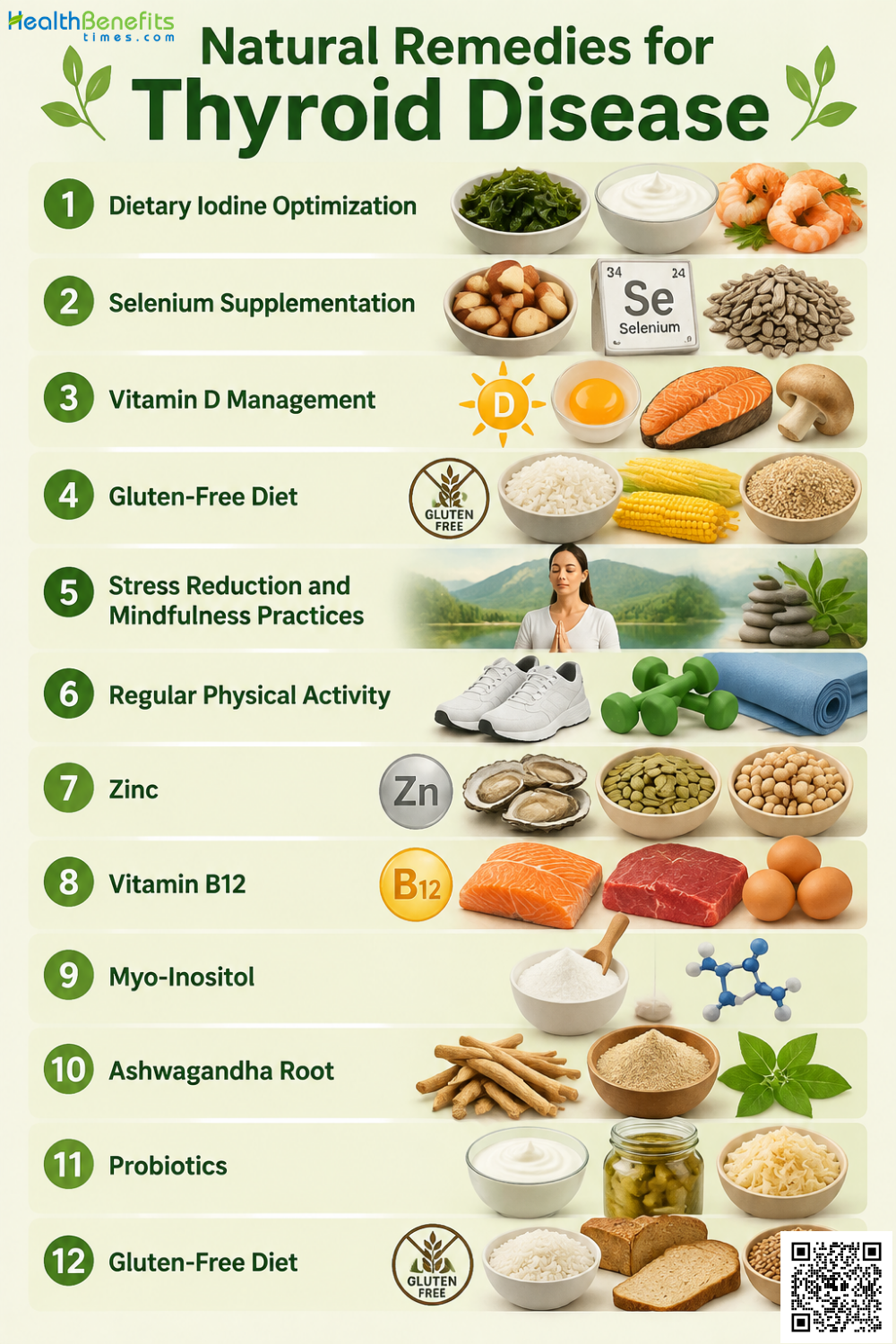
3. Vitamin D Management
How it may help
Vitamin D functions more like a hormone than a typical vitamin, playing a crucial role in balancing the immune system. For people with thyroid issues, maintaining proper Vitamin D levels helps calm inflammation and prevents the immune system from mistakenly attacking healthy thyroid tissues.
What research says
Clinical studies consistently show a strong link between severe Vitamin D deficiency and an increased risk of autoimmune thyroid conditions like Hashimoto’s disease 12. Furthermore, research concludes that Vitamin D supplementation significantly reduces thyroid antibody levels and improves overall thyroid function in deficient patients 13.
How to use it safely
You should request a simple blood test from your doctor to check your baseline levels before starting supplements 14. While sunlight and fortified foods provide some Vitamin D, oral Vitamin D3 supplements are typically the most reliable way to correct a diagnosed deficiency 15.
Potential precautions or side effects
Taking too much Vitamin D causes a dangerous buildup of calcium in the blood, which can lead to kidney stones, confusion, muscle weakness, and heart rhythm problems 14.
4. Gluten-Free Diet
How it may help
Gluten, a protein found in wheat, shares a structural makeup with thyroid tissue. For individuals with autoimmune thyroid conditions, consuming gluten can trigger molecular mimicry, causing the immune system to mistakenly attack both the gluten proteins and the healthy thyroid gland, thereby increasing inflammation.
What research says
Clinical research demonstrates that patients with autoimmune thyroid disease have a significantly higher risk of co-occurring celiac disease 16. Furthermore, studies conclude that adopting a strict gluten-free diet effectively reduces thyroid antibody levels and decreases systemic inflammation in patients diagnosed with Hashimoto’s thyroiditis 17.
How to use it safely
You should completely eliminate wheat, barley, and rye from your meals and replace them with naturally gluten-free whole foods like rice, quinoa, and vegetables 18. Always consult a registered dietitian to ensure your daily diet remains balanced and nutritionally complete.
Potential precautions or side effects
Relying heavily on highly processed gluten-free products can lead to unintended weight gain and serious nutritional deficiencies, particularly in essential B vitamins, iron, and dietary fiber 19.
5. Stress Reduction and Mindfulness Practices
How it may help
Chronic stress increases cortisol levels, which can block the body from converting inactive thyroid hormones into the active form cells need. Mindfulness practices directly lower cortisol production. This helps reduce systemic inflammation and prevents the immune system from becoming overactive and attacking the thyroid gland.
What research says
Clinical studies establish that prolonged psychological stress significantly suppresses thyroid-stimulating hormone and triggers autoimmune thyroid diseases like Graves’ disease 20. Furthermore, research concludes that mindfulness-based stress reduction effectively lowers cortisol levels and improves overall quality of life in patients managing chronic autoimmune disorders 21.
How to use it safely
You should incorporate 15 to 30 minutes of deep breathing, meditation, or gentle yoga into your daily schedule. Start with guided programs provided by certified professionals to build a consistent habit 22. Never use relaxation techniques to replace prescribed thyroid medications.
Potential precautions or side effects
Mindfulness is extremely safe, though focusing quietly on your thoughts can occasionally trigger temporary anxiety 22. It must always complement, rather than replace, standard medical treatments.
6. Regular Physical Activity
How it may help
Regular physical activity directly combats the slow metabolism, weight gain, and severe fatigue caused by an underactive thyroid. Exercise increases how well tissues respond to circulating thyroid hormones, helping cells burn energy efficiently. It also strengthens the cardiovascular system, which is often weakened by chronic thyroid disease.
What research says
Clinical studies conclude that structured aerobic exercise significantly decreases severe fatigue and improves the overall quality of life in patients with an underactive thyroid 23. Furthermore, research demonstrates that routine physical training maximizes the body’s ability to utilize available thyroid hormones effectively 24.
How to use it safely
You should begin with low-impact activities like brisk walking or swimming to prevent joint strain 25. Aim for 150 minutes of moderate exercise each week. Always pace yourself and rest immediately if you experience sudden exhaustion or muscle weakness.
Potential precautions or side effects
Overexercising when your thyroid hormones are completely unbalanced can trigger dangerous heart rhythm abnormalities or severe joint pain 3. Always prioritize rest during active symptom flare-ups.
7. Zinc
How it may help
Zinc is an essential mineral that the body requires to produce thyroid hormones. It also acts as a critical trigger, helping to convert inactive thyroid hormones into the active form that cells need for energy. Maintaining proper zinc levels ensures the thyroid gland functions efficiently and supports overall immune health.
What research says
Clinical studies establish that a zinc deficiency significantly impairs thyroid function and lowers resting metabolic rates 26. Furthermore, research concludes that targeted zinc supplementation effectively restores healthy thyroid hormone levels and improves overall symptoms in patients suffering from an underactive thyroid gland 27.
How to use it safely
You should obtain zinc primarily through a balanced diet including oysters, beef, chicken, and beans 28. If your doctor recommends supplements, adults should aim for 8 to 11 milligrams daily and never exceed the safe upper limit of 40 milligrams to avoid toxicity 29.
Potential precautions or side effects
Taking excessive zinc long-term blocks your body from absorbing copper, which can cause severe nerve damage, chronic nausea, and a weakened immune system 29.
8. Vitamin B12
How it may help
Vitamin B12 is crucial for maintaining healthy nerve cells and producing cellular energy. Many people with autoimmune thyroid conditions struggle to absorb this vitamin properly. Restoring optimal B12 levels helps eliminate the severe exhaustion, memory issues, and muscle weakness that frequently occur alongside an underactive thyroid gland.
What research says
Clinical studies reveal that up to forty percent of patients with an underactive thyroid also suffer from a severe Vitamin B12 deficiency 30. Furthermore, research concludes that correcting this specific deficiency significantly improves physical energy and mental clarity in patients managing autoimmune thyroid diseases 31.
How to use it safely
You should ask your doctor to test your Vitamin B12 levels when diagnosed with a thyroid condition 32. While meat and fish provide natural B12, diagnosed deficiencies typically require daily oral supplements or routine injections to restore healthy levels effectively 33.
Potential precautions or side effects
Vitamin B12 is highly safe because the body naturally excretes excess amounts through urine 32. However, taking extremely high supplement doses can occasionally cause mild diarrhea or skin breakouts.
9. Myo-Inositol
How it may help
Myo-inositol is a naturally occurring compound that helps the body process cellular signals. For the thyroid, it acts as a crucial messenger that allows the gland to correctly respond to thyroid-stimulating hormone (TSH). This improved communication helps the thyroid gland produce hormones more efficiently and balances immune responses.
What research says
Clinical studies demonstrate that combining myo-inositol with selenium significantly lowers thyroid antibody levels in patients with autoimmune Hashimoto’s thyroiditis 34. Furthermore, research concludes this specific combination effectively reduces elevated TSH levels and restores thyroid function better than using a selenium supplement alone 35.
How to use it safely
You should consult your doctor about taking myo-inositol alongside selenium, as they work best together for thyroid health. Clinical protocols typically recommend a daily dosage of 600 milligrams of myo-inositol combined with 83 micrograms of selenium to improve thyroid function 35.
Potential precautions or side effects
Myo-inositol is generally very safe and well-tolerated. However, taking excessively high doses can occasionally cause mild stomach upset, nausea, or temporary fatigue 36.
10. Ashwagandha Root
How it may help
Ashwagandha is a traditional herb that helps the body manage stress by lowering cortisol levels. By calming the stress response, it supports the endocrine system and directly stimulates the thyroid gland to produce more hormones. This action helps improve energy in individuals with an underactive thyroid.
What research says
Clinical trials demonstrate that daily ashwagandha root extract significantly increases blood levels of active thyroid hormones in patients with a mildly underactive thyroid 37. Furthermore, researchers conclude the herb successfully normalizes elevated thyroid-stimulating hormone safely during short-term treatment 37.
How to use it safely
You should consult your doctor before trying this herb. Clinical protocols typically use 600 milligrams of ashwagandha root extract daily for mild thyroid support 37. Always choose supplements tested by independent laboratories to avoid dangerous heavy metal contamination 38.
Potential precautions or side effects
Because ashwagandha stimulates hormone production, it can trigger a dangerously overactive thyroid 39. Pregnant women must completely avoid this herb because it can cause miscarriages {%
11. Probiotics
How it may help
Probiotics are beneficial bacteria that maintain a healthy digestive system. A healthy gut is essential because it absorbs the nutrients needed for hormone production and converts inactive thyroid hormones into their active form. Furthermore, a balanced gut microbiome regulates the immune system, preventing it from attacking the thyroid gland.
What research says
Clinical research establishes a strong connection between an imbalanced gut microbiome and autoimmune thyroid diseases like Hashimoto’s 40. Furthermore, studies conclude that beneficial gut bacteria decrease systemic inflammation and reduce the specific antibodies that mistakenly attack healthy thyroid tissue 40.
How to use it safely
You should focus on adding naturally fermented foods like yogurt, kefir, and sauerkraut to your daily meals 41. If you choose to take a probiotic supplement, consult your doctor to select a high-quality product containing diverse bacterial strains that support your specific digestive needs.
Potential precautions or side effects
Probiotics are extremely safe but may initially cause mild gas or bloating. You must avoid them if you have a severely weakened immune system to prevent rare bacterial infections 41.
12. Gluten-Free Diet
How it may help
Gluten is a protein found in wheat that closely resembles thyroid tissue. In individuals with autoimmune thyroid conditions, eating gluten can confuse the immune system. This process, called molecular mimicry, causes the body to mistakenly attack both the gluten proteins and the healthy thyroid gland, worsening inflammation.
What research says
Clinical studies establish that individuals with autoimmune thyroid diseases have a statistically higher risk of also having celiac disease 16. Furthermore, research concludes that strictly following a gluten-free diet successfully reduces thyroid antibody levels and lowers systemic inflammation in patients with Hashimoto’s thyroiditis 17.
How to use it safely
You should completely remove wheat, rye, and barley from your meals and substitute them with naturally gluten-free whole foods like quinoa, rice, and fresh vegetables 18. Always work with a registered dietitian to ensure your new dietary pattern remains nutritionally complete.
Potential precautions or side effects
Relying on highly processed gluten-free packaged foods can cause unintended weight gain and severe nutritional deficiencies, particularly in dietary fiber, iron, and essential B vitamins 19.
Foods to Avoid When You Suffer from Thyroid Disease
1. Raw Cruciferous Vegetables
Raw cabbage and broccoli contain goitrogens that block the thyroid from absorbing essential iodine, decreasing hormone production 42. Cooking destroys these harmful compounds.
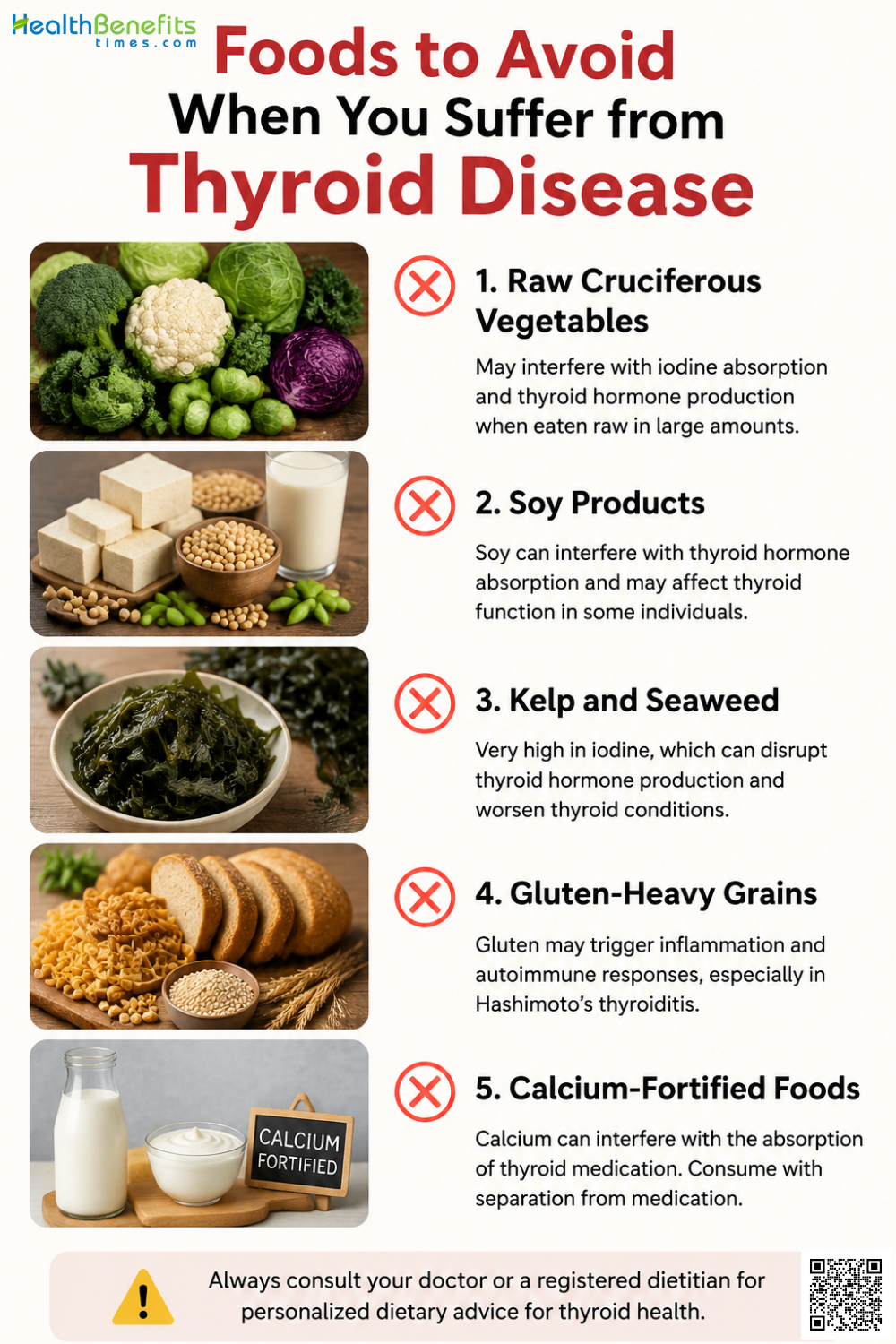
2. Soy Products
Soy contains isoflavones that disrupt thyroid hormone synthesis and significantly block the absorption of prescribed thyroid medications in the digestive tract 43.
3. Kelp and Seaweed
These marine plants contain massive, unpredictable amounts of iodine. Consuming excessive iodine severely worsens both underactive and overactive autoimmune thyroid conditions 6.
4. Gluten-Heavy Grains
Wheat proteins trigger severe inflammation in patients with autoimmune thyroid disorders. Eliminating gluten strictly reduces thyroid antibodies and protects the gland from immune attacks 17.
5. Calcium-Fortified Foods
High calcium concentrations physically block the stomach from absorbing synthetic thyroid hormones. You must wait four hours between taking daily medication and consuming calcium-fortified products 44.
When to see Doctor when you struggle from Thyroid Disease
1. Visible Neck Swelling
A noticeable lump or swelling at the base of your neck indicates nodules or a goiter, requiring immediate clinical evaluation to rule out thyroid cancer 45.
2. Rapid or Irregular Heartbeat
Experiencing a suddenly fast or pounding resting heartbeat suggests dangerous thyroid overactivity, which significantly increases the immediate risk of severe cardiovascular complications and requires urgent care 4.
3. Difficulty Swallowing or Breathing
If an enlarged thyroid gland physically compresses your windpipe or esophagus, it causes dangerous breathing blockages that require immediate medical intervention to restore airway function 46.
4. Severe Unexplained Weight Changes
Rapid, unexplained weight loss or sudden, drastic weight gain despite normal eating habits indicates a severe failure in thyroid hormone regulation that demands immediate clinical testing 3.
5. Extreme Fatigue and Muscle Weakness
Debilitating exhaustion and sudden muscle weakness that prevent normal daily functioning signal critically low thyroid hormone levels, requiring urgent blood testing and prescribed medication adjustments 3.