


Urinary incontinence is the involuntary loss or leakage of urine resulting from a loss of bladder control. While it is a common condition, it is not a disease itself but rather a symptom of an underlying issue within the urinary tract. The condition develops when the muscles and nerves responsible for holding and releasing urine fail to coordinate properly 1. Healthcare providers classify incontinence into several primary types based on the specific physiological triggers. Stress incontinence occurs when physical pressure—such as coughing, sneezing, or heavy lifting—forces urine out of the bladder 2. Urge incontinence involves a sudden, intense need to urinate followed by immediate, uncontrolled leakage 3. Finally, overflow incontinence happens when the bladder does not empty completely, leading to constant dribbling 4. Identifying the exact type of incontinence is essential for determining the most effective clinical intervention.
Causes of Urinary Incontinence
1. Dietary Triggers and Beverages
Certain everyday drinks and foods act as diuretics, meaning they increase urine production and stimulate the bladder. Common triggers include alcohol, caffeine, carbonated beverages, and artificial sweeteners 5.
2. Medication Side Effects
Various prescription drugs can directly interfere with bladder control. Heart medications, blood pressure drugs, muscle relaxants, and sedatives can either increase urine volume or relax the sphincter muscles too much, leading to unwanted leakage 6.
3. Urinary Tract Infections (UTIs)
Bacterial infections can severely irritate the inner lining of the bladder. This irritation triggers strong, sudden urges to urinate and frequently results in temporary incontinence until the infection is treated 7.
4. Pregnancy and Childbirth
Hormonal shifts and the physical weight of a growing fetus put significant, prolonged stress on the pelvic floor muscles. Vaginal delivery can further weaken these muscles and damage the supportive nerves, frequently resulting in stress incontinence 8.
5. Aging and Menopause
As people age, the bladder muscle naturally loses some of its capacity to store urine efficiently. In women, the sharp decline in estrogen levels during menopause causes the tissues lining the urethra and bladder to deteriorate, directly reducing their ability to hold in urine 9.
6. Prostate Conditions
In older men, an enlarged prostate gland—a condition known as benign prostatic hyperplasia (BPH)—frequently obstructs the urinary tract, preventing the bladder from emptying fully and causing overflow incontinence 10. Additionally, surgical treatments for prostate cancer can damage the sphincter muscles, leading to chronic leakage 11.
7. Neurological Disorders
The bladder relies on complex nerve signals from the brain to coordinate storing and releasing urine. Diseases or injuries that damage the central nervous system, such as multiple sclerosis, Parkinson’s disease, stroke, or spinal cord injuries, interrupt these signals and cause severe loss of bladder control 12.
Symptoms of Urinary Incontinence
1. Leakage During Physical Exertion
Small to moderate amounts of urine leak involuntarily when sudden physical pressure is applied to the bladder. This commonly happens while coughing, sneezing, laughing, exercising, or lifting heavy objects.
2. Sudden and Uncontrollable Urges
A sudden, intense need to urinate strikes with little to no warning. This overwhelming urge frequently results in immediate urine leakage before a person can reach a restroom.
3. Frequent and Nighttime Urination
The bladder requires emptying more often than normal, typically more than eight times a day. This includes waking up multiple times during the night to urinate, a symptom that significantly disrupts normal sleep patterns 13.
4. Continuous Dribbling of Urine
A constant or frequent dripping of urine occurs throughout the day. This symptom usually develops because the bladder fails to empty completely during regular bathroom visits, causing it to overfill and leak.
5. Bedwetting
Involuntary urine leakage occurs while a person is asleep. While common in early childhood, it can also affect adults and indicates an underlying issue with nighttime bladder capacity or nerve signaling.
Natural Remedies for Urinary Incontinence
1. Pelvic Floor Muscle Training
How it may help
Pelvic floor muscle training strengthens the essential muscles that support the bladder, urethra, and other pelvic organs. By improving the endurance and tone of these tissues, the exercises enhance the body’s physical ability to keep the urethra tightly closed during physical stress and suppress sudden urges to urinate.
What research says
Clinical guidelines recommend routine pelvic floor muscle training as a highly effective, first-line treatment for women experiencing stress, urge, or mixed urinary incontinence 14. Consistent daily practice significantly reduces involuntary leakage episodes, completely resolves symptoms in many patients, and vastly improves overall quality of life.
How to use it safely
To perform these exercises safely, first identify the correct muscles by attempting to stop your urine stream mid-flow. Once identified, contract these muscles for three to five seconds, then fully relax. Aim for three sets of ten repetitions daily while avoiding tensing your abdomen, thighs, or buttocks.
Potential precautions or side effects
Do not regularly practice these contractions while urinating, as interrupting the flow can prevent complete bladder emptying and significantly increase your risk of bacterial urinary tract infections 15.
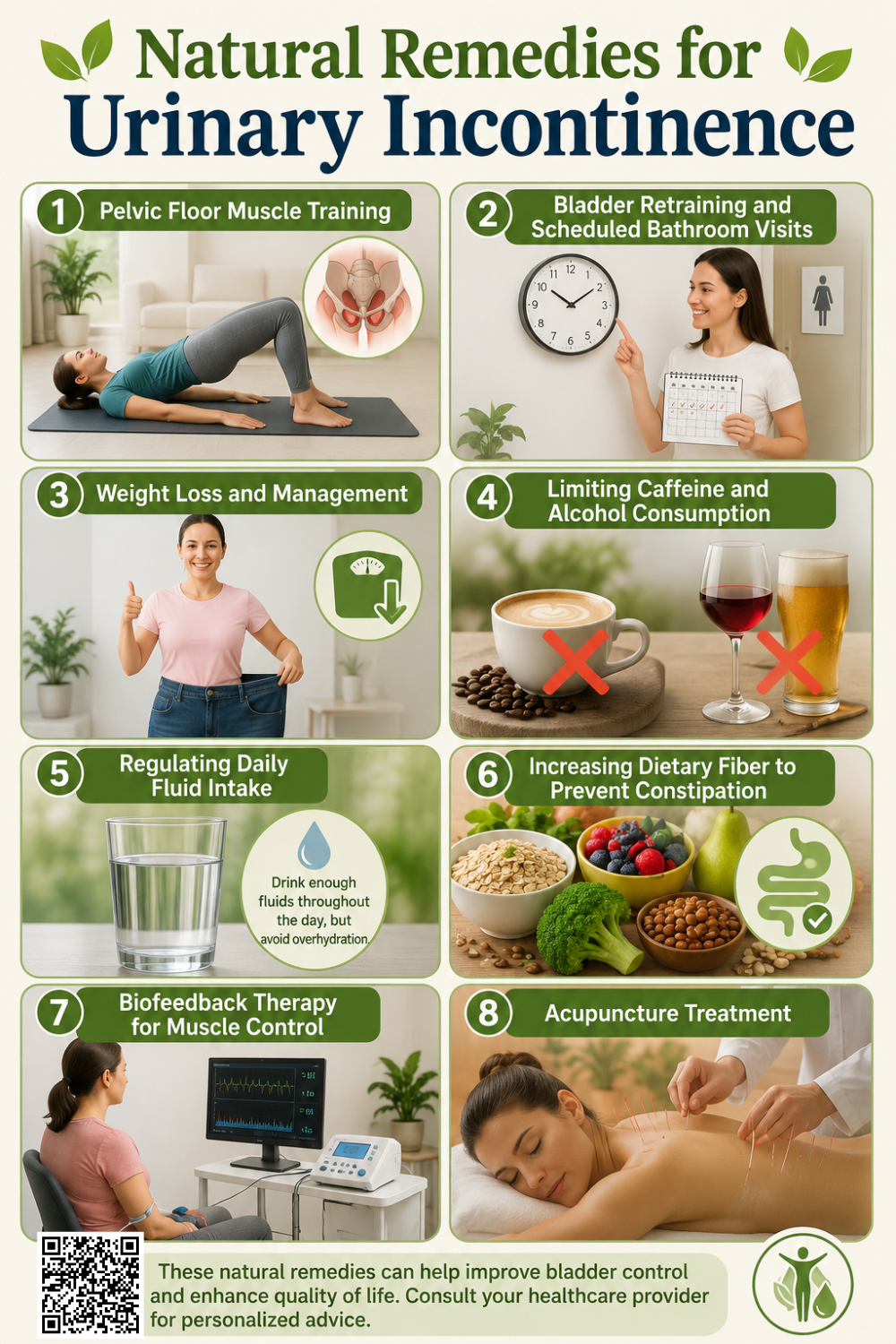 2. Bladder Retraining and Scheduled Bathroom Visits
How it may help
Bladder retraining gradually increases the volume of urine the bladder can comfortably store. By adhering to a strict urination schedule rather than responding to an urge, this method resets the brain-bladder connection. It effectively trains the central nervous system to suppress premature urgency signals, ultimately reducing involuntary urinary leakage.
What research says
Clinical guidelines highlight bladder retraining as a primary, effective behavioral therapy for managing urge and mixed incontinence 16. Evidence shows that extending voiding intervals significantly decreases the frequency of leakage episodes and restores normal bladder capacity without the risks associated with medication.
How to use it safely
Start by recording your typical bathroom habits in a diary. Set a baseline schedule, such as emptying your bladder every two hours while awake. When an early urge occurs, pause and relax. Gradually extend the time between your scheduled bathroom visits by 15 minutes each week.
Potential precautions or side effects
Do not increase the time between visits too rapidly, as aggressively overfilling the bladder can cause abdominal pain, increase the risk of infection, or temporarily worsen sudden leakage symptoms.
3. Weight Loss and Management
How it may help
Carrying excess body weight creates continuous physical pressure on the abdomen and pelvic region. This extra weight presses heavily on the bladder and strains the supportive pelvic floor muscles. Losing weight directly reduces this internal pressure, easing the mechanical burden on the urinary tract and preventing accidental leakage.
What research says
Clinical studies demonstrate that weight reduction is a highly effective treatment for overweight individuals with urinary incontinence. Losing just five to ten percent of total body weight significantly decreases the daily frequency of urine leakage episodes, particularly for those experiencing stress incontinence 17.
How to use it safely
Achieve weight loss gradually through a balanced, nutrient-rich diet and regular physical activity. Consult a healthcare provider to create a personalized plan. Focus on low-impact exercises, such as swimming, cycling, or walking, which burn calories without placing additional strain on your pelvic floor.
Potential precautions or side effects
Avoid high-impact exercises like jumping, running, or heavy weightlifting while attempting to lose weight, as these intense activities can severely stress the pelvic muscles and temporarily worsen urine leakage.
4. Limiting Caffeine and Alcohol Consumption
How it may help
Both caffeine and alcohol act as strong diuretics, which means they force the kidneys to produce more urine at a faster rate. Additionally, these chemicals directly irritate the inner lining of the bladder. Reducing their intake prevents sudden muscle spasms and lowers the total volume of urine the bladder must hold.
What research says
Clinical evidence shows that high caffeine intake is directly linked to an increased risk and severity of urgency and urine leakage 18. Experts conclude that significantly reducing or eliminating daily caffeine and alcohol consumption successfully decreases bladder spasms and lowers the overall frequency of overactive bladder symptoms.
How to use it safely
Gradually decrease your intake of coffee, tea, and alcohol over several weeks rather than stopping abruptly. Replace these triggers with plain water or caffeine-free herbal teas. Read beverage labels carefully, as hidden caffeine is often present in sodas and energy drinks.
Potential precautions or side effects
Stopping caffeine too quickly can cause severe withdrawal symptoms, including intense headaches, extreme fatigue, and irritability. Always reduce your daily consumption slowly to allow your nervous system to adjust comfortably.
5. Regulating Daily Fluid Intake
How it may help
Regulating daily fluid intake balances hydration needs with bladder capacity. Reducing excessive fluid consumption prevents the bladder from overfilling rapidly, which directly decreases urinary urgency and involuntary leakage. Conversely, maintaining adequate hydration ensures urine does not become highly concentrated, a condition that severely irritates the bladder lining.
What research says
Clinical reviews demonstrate that targeted fluid intake modification is an effective lifestyle intervention for managing overactive bladder symptoms. Evidence confirms that moderately reducing excessive daily fluid intake—and specifically restricting fluids before bedtime—measurably decreases both daytime urinary frequency and nighttime incontinence episodes without compromising overall health 19.
How to use it safely
Aim to drink a moderate amount of water, spacing your glasses evenly throughout the day rather than consuming large volumes at once. Stop drinking all fluids at least two hours before bedtime to minimize sleep disruptions. Monitor your urine color to ensure it remains pale yellow.
Potential precautions or side effects
Do not severely restrict your water intake. Extreme fluid restriction causes dehydration, constipation, and highly concentrated urine, which paradoxically worsens bladder irritation and increases the risk of bacterial infections.
6. Increasing Dietary Fiber to Prevent Constipation
How it may help
The rectum and bladder share close physical proximity and nerve pathways. When severe constipation occurs, hard stool builds up and physically presses against the bladder. This continuous pressure reduces bladder capacity and triggers involuntary nerve spasms. Increasing dietary fiber promotes regular bowel movements, directly relieving this mechanical pressure on the urinary tract.
What research says
Clinical research demonstrates a direct link between chronic constipation and worsening lower urinary tract symptoms. Medical studies conclude that actively resolving constipation through dietary interventions significantly decreases the severity of overactive bladder and reduces the overall frequency of daily urinary incontinence episodes.
How to use it safely
Gradually add fiber-rich foods to your daily meals over several weeks. Focus on consuming fresh fruits, vegetables, beans, and whole grains. You must simultaneously increase your daily water intake, as fiber requires adequate fluid to soften stool and pass smoothly through the digestive tract.
Potential precautions or side effects
Adding too much dietary fiber too quickly can cause severe bloating, abdominal cramping, and excess gas. Without drinking enough water, high-fiber diets can actually worsen constipation and increase bladder pressure.
7. Biofeedback Therapy for Muscle Control
How it may help
Biofeedback therapy uses electronic sensors to monitor muscle activity and display it on a screen. This real-time visual or auditory feedback helps individuals accurately identify their pelvic floor muscles. By seeing exactly how these muscles respond, patients learn to properly contract and strengthen them to prevent involuntary urine leakage.
What research says
Clinical studies indicate that biofeedback therapy significantly improves the success rates of pelvic floor exercises. Medical research concludes that patients using biofeedback experience a greater reduction in urinary leakage episodes compared to those performing unguided exercises, as it ensures precise muscle engagement and accelerates muscle strengthening 20.
How to use it safely
You should perform biofeedback therapy under the direct supervision of a trained physical therapist or specialized healthcare provider. They will safely place painless sensors on your skin or internally to monitor muscle activity. Follow their specific clinical instructions to ensure you are targeting the correct pelvic tissues.
Potential precautions or side effects
Biofeedback is highly safe and non-invasive. However, if internal sensors are utilized during the therapy sessions, there is a minor risk of mild tissue irritation or temporary bacterial infection.
8. Acupuncture Treatment
How it may help
Acupuncture involves inserting thin, sterile needles into specific points on the lower back and legs. This mild physical stimulation alters the nerve signals traveling between the bladder, spinal cord, and brain. By modulating these specific pathways, acupuncture suppresses involuntary muscle contractions and successfully calms an overactive bladder 21.
What research says
Clinical studies indicate that acupuncture effectively reduces the daily frequency of urination and involuntary leakage episodes. Evidence shows it improves bladder control and enhances quality of life, demonstrating therapeutic effectiveness comparable to standard prescription medications but with a significantly lower risk of adverse side effects.
How to use it safely
You should seek treatment only from a licensed and certified acupuncturist. Discuss your complete medical history before starting. Standard clinical protocols generally require weekly treatment sessions for one to two months 22. Ensure the practitioner strictly uses single-use, sterilized needles to prevent any risk of infection.
Potential precautions or side effects
Acupuncture is highly safe. Minor side effects occasionally include mild pain, temporary bruising, or pinpoint bleeding at the insertion sites. Avoid this therapy if you have a bleeding disorder.
 Foods to Avoid When You suffer from Urinary Incontinence
1. Caffeinated Beverages
Coffee, tea, and energy drinks act as diuretics, increasing urine production and stimulating bladder spasms, which frequently worsens sudden urinary urgency and involuntary leakage 23.
2. Alcoholic Drinks
Alcohol disrupts brain-to-bladder nerve signals and acts as a strong diuretic. It rapidly fills the bladder and impairs the physical ability to control sudden urges 24.
3. Carbonated Beverages
The dissolved carbon dioxide in sparkling water, sodas, and seltzers chemically irritates the sensitive bladder lining, often triggering sudden, uncontrollable muscle spasms and urinary leakage.
4. Spicy Foods
Dishes containing hot peppers, chili, or strong spices can severely inflame the bladder lining. This internal irritation frequently exacerbates pelvic discomfort and sudden urinary urgency 25.
5. Tomato-Based Products
Tomatoes, including ketchup and pasta sauces, possess high acidity. Consuming these highly acidic foods can irritate the urinary tract and significantly worsen overactive bladder symptoms.
6. Artificial Sweeteners
Synthetic sugar substitutes, such as aspartame and saccharin found in diet sodas, are recognized clinical bladder irritants that measurably increase the frequency of unexpected leaks.
When To See a Doctor When You Suffer from Urinary Incontinence
1. Visible Blood in Urine
Seek immediate medical evaluation if you notice blood in your urine. This symptom requires urgent testing to rule out serious underlying conditions, including active infections or bladder cancer.
2. Sudden Loss of Control
Consult a physician if incontinence begins abruptly. A sudden loss of bladder control frequently indicates an acute issue, such as a severe bacterial infection or a neurological complication.
3. Pain or Burning Sensations
Schedule an examination if you experience pain or burning while urinating. These sensations strongly suggest an active urinary tract infection requiring prescription antibiotics to prevent potential kidney damage.
4. Weakness or Numbness in Legs
Go to an emergency room immediately if incontinence is accompanied by leg weakness or genital numbness. These symptoms indicate severe spinal nerve compression, which requires emergency surgical intervention 26.
5. Inability to Empty the Bladder
Seek urgent care if you feel a strong urge to urinate but cannot pass any urine. Acute urinary retention can cause permanent bladder damage if not drained immediately 27.
6. Disruption of Daily Life
Consult a healthcare provider when urine leakage restricts daily activities or social interactions. Clinical guidelines recommend medical intervention when incontinence symptoms significantly degrade your overall quality of life.