

High-density lipoprotein (HDL) is commonly known as “good” cholesterol because it plays a vital, protective role in maintaining cardiovascular health. Unlike harmful fats that build up inside blood vessels, HDL acts as a scavenger in the bloodstream. It actively absorbs excess cholesterol from the blood and carries it back to the liver, where it is processed and safely flushed from the body 1. By clearing away these excess fats, HDL helps prevent the formation of dangerous, artery-clogging plaques. Because of this continuous cleaning process, health authorities emphasize that maintaining high levels of HDL cholesterol directly reduces the long-term risk of developing heart disease, suffering a heart attack, or experiencing a stroke 2.
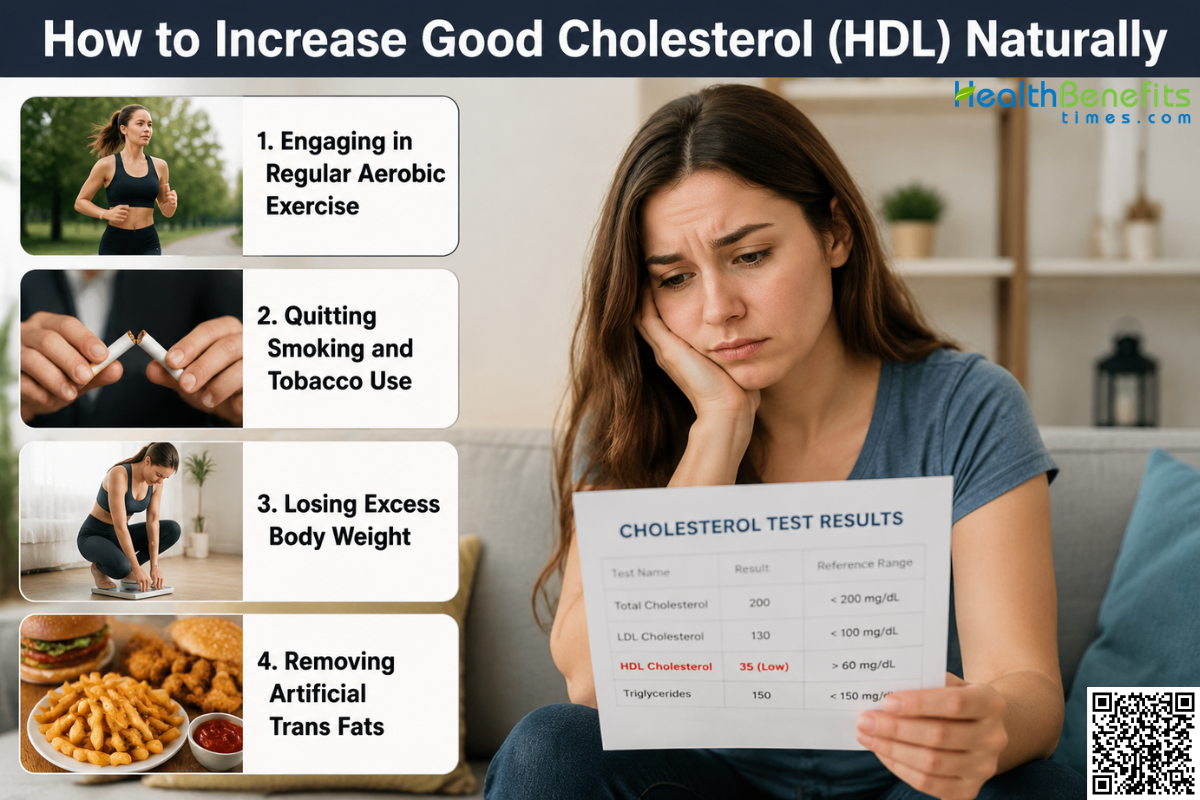
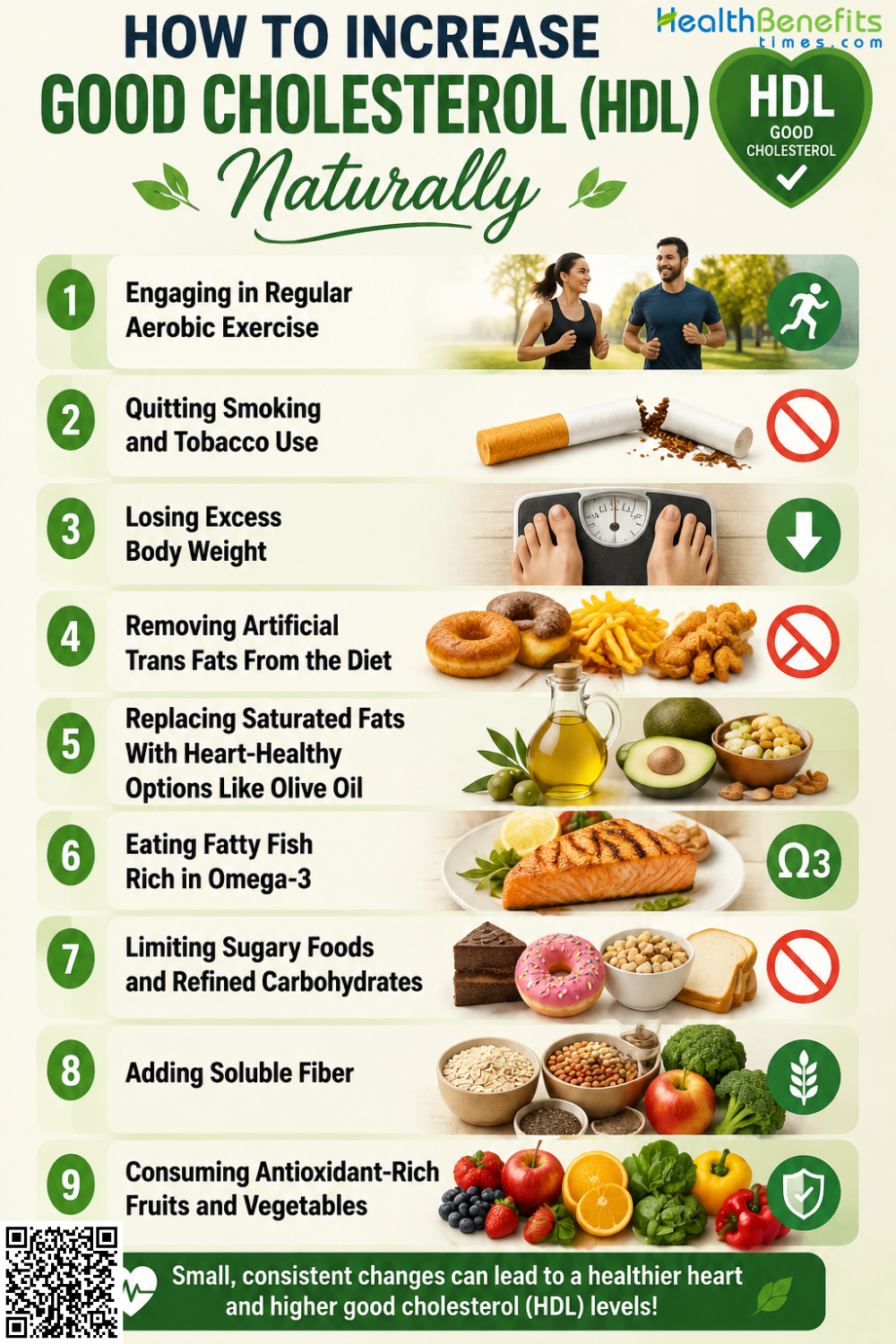
How to Increase Good Cholesterol (HDL) Naturally
1. Engaging in Regular Aerobic Exercise
How it may help
Aerobic physical activity forces the heart to pump faster, which stimulates the body to produce and release more high-density lipoprotein (HDL) into the bloodstream. This newly created HDL actively collects excess fats from the blood vessels and transports them back to the liver for safe removal.
What research says
Clinical research demonstrates that participating in at least 150 minutes of moderate-intensity aerobic exercise each week significantly raises HDL cholesterol levels 3. Furthermore, evidence indicates that the total duration and consistency of the exercise matter more than the intensity for effectively increasing good cholesterol 4.
How to use it safely
Aim for 30 minutes of moderate activity, such as brisk walking, swimming, or cycling, five days a week. If you are new to exercising, start slowly with 10-minute sessions and gradually increase the time as your endurance improves to prevent joint or muscle strain.
Potential precautions or side effects
Consult a healthcare provider before starting a new routine if you have existing heart conditions. Stop immediately if you experience chest pain, severe shortness of breath, or sudden dizziness.
2. Quitting Smoking and Tobacco Use
How it may help
Chemical compounds in cigarette smoke directly interfere with the body’s ability to maintain healthy cholesterol levels. By stopping tobacco use, the body restores its natural high-density lipoprotein (HDL) production, significantly improving its capacity to clear harmful fats from the bloodstream and protect blood vessels.
What research says
Clinical evidence confirms that quitting smoking rapidly elevates HDL cholesterol levels, often showing significant improvement within just a few weeks of cessation 5. Health authorities note that this restored cholesterol balance directly reduces the long-term risk of cardiovascular disease and heart attacks 6.
How to use it safely
Work with a healthcare provider to develop a structured quitting plan. Utilize FDA-approved nicotine replacement therapies, such as patches or gums, to manage cravings effectively. Avoid replacing traditional cigarettes with unregulated electronic cigarettes, as their long-term cardiovascular impacts remain unsafe.
Potential precautions or side effects
Nicotine withdrawal commonly causes temporary irritability, anxiety, headaches, and increased appetite. Additionally, certain prescription cessation medications may produce unexpected mood changes or sleep disturbances.
3. Losing Excess Body Weight
How it may help
Carrying excess body fat, particularly around the waist, disrupts normal metabolic functions and suppresses high-density lipoprotein (HDL) production. By losing excess weight, the body restores healthy metabolic processes, allowing the liver to produce more good cholesterol to effectively clear harmful fats from the bloodstream.
What research says
Clinical research demonstrates that losing just five to ten percent of total body weight significantly increases HDL cholesterol levels 7. Furthermore, studies confirm that maintaining this moderate weight reduction yields long-term improvements in cardiovascular health and continuous increases in good cholesterol production 8.
How to use it safely
Aim to lose weight gradually, targeting one to two pounds per week through a combination of balanced meals and regular physical activity. Avoid extreme crash diets, as they can deprive your body of essential nutrients and disrupt your metabolic health.
Potential precautions or side effects
Rapid or extreme weight loss can lead to muscle depletion, nutritional deficiencies, and the formation of gallstones. Always consult a healthcare provider before beginning any restrictive weight loss program.
4. Removing Artificial Trans Fats From the Diet
How it may help
Artificial trans fats are uniquely harmful because they lower beneficial high-density lipoprotein (HDL) while simultaneously raising bad cholesterol. By eliminating these manufactured fats—often found in processed and fried foods—the liver can resume normal fat processing, allowing healthy HDL levels to naturally recover and protect blood vessels.
What research says
Clinical evidence confirms that artificial trans fats significantly reduce protective HDL levels. Health authorities emphasize that strictly eliminating industrial trans fats from your diet is one of the most effective nutritional changes to restore healthy cholesterol balance and reduce long-term cardiovascular risk 9.
How to use it safely
Read ingredient labels carefully and avoid products listing “partially hydrogenated oils,” even if the front packaging claims zero trans fats. Focus on eating whole foods and cooking with natural, heart-healthy options like olive oil to safely support your cholesterol balance.
Potential precautions or side effects
When removing processed foods from your diet, avoid replacing them with items high in refined sugars or unhealthy saturated fats, as these can also negatively impact overall cholesterol.
5. Replacing Saturated Fats With Heart-Healthy Options Like Olive Oil
How it may help
Swapping heavy saturated fats, like butter or fatty meats, for heart-healthy monounsaturated fats, such as olive oil, improves how the liver processes lipids. This dietary shift helps maintain and support the protective functions of high-density lipoprotein (HDL) cholesterol, allowing it to efficiently clear harmful fats from the bloodstream.
What research says
Clinical studies confirm that replacing saturated fats with monounsaturated fats, particularly extra virgin olive oil, enhances both the levels and the protective, anti-inflammatory functions of HDL cholesterol 10. Health experts emphasize that this fat substitution directly lowers the risk of developing heart disease and improves overall blood vessel health.
How to use it safely
Replace butter, lard, or tropical oils with olive oil when cooking, roasting, or preparing salad dressings. Because all dietary fats are high in calories, carefully measure your portions—typically one to two tablespoons per meal—to prevent unintended weight gain while supporting heart health.
Potential precautions or side effects
Consuming excessive amounts of healthy oils can lead to weight gain due to their high calorie content. Additionally, avoid overheating extra virgin olive oil, which degrades its beneficial properties.
6. Eating Fatty Fish Rich in Omega-3
How it may help
Consuming fatty fish provides the body with essential omega-3 fatty acids. These nutrients improve the quality and function of high-density lipoprotein (HDL). By enhancing HDL particles, omega-3s make good cholesterol more effective at gathering harmful fats from the bloodstream and returning them to the liver for safe disposal.
What research says
Clinical studies indicate that regular consumption of marine omega-3 fatty acids moderately increases HDL cholesterol levels while significantly lowering harmful blood fats called triglycerides 11. Health authorities emphasize that this combined effect improves overall blood vessel health and lowers the long-term risk of cardiovascular disease.
How to use it safely
Eat two servings of fatty fish, such as salmon, mackerel, or sardines, each week. To maximize the heart-healthy benefits, choose to bake, grill, or steam your fish instead of frying it in unhealthy fats, which can counteract the positive effects on your cholesterol.
Potential precautions or side effects
Certain large fish contain high levels of mercury. Pregnant individuals and young children should avoid king mackerel, swordfish, and tilefish to prevent heavy metal exposure.
7. Limiting Sugary Foods and Refined Carbohydrates
How it may help
Consuming excess sugar and refined carbohydrates forces the liver to produce more harmful blood fats while simultaneously reducing high-density lipoprotein (HDL) production. By limiting these simple sugars, the body restores a healthy metabolic balance, allowing protective good cholesterol levels to naturally increase and function properly.
What research says
Clinical research demonstrates that diets high in added sugars and refined carbohydrates are directly associated with significantly lower levels of HDL cholesterol 12. Health experts conclude that reducing daily sugar intake not only raises good cholesterol but also decreases harmful triglycerides, improving overall cardiovascular health.
How to use it safely
Replace sugary drinks and refined foods, such as white bread and pastries, with complex carbohydrates like whole grains, beans, and vegetables. Always check nutrition labels for hidden added sugars in packaged foods, and choose water or unsweetened beverages to maintain a balanced, heart-healthy diet.
Potential precautions or side effects
Suddenly cutting out all carbohydrates can cause temporary fatigue, headaches, or intense sugar cravings. Ensure you replace these calories with healthy fats and proteins to maintain stable energy levels.
8. Adding Soluble Fiber
How it may help
Soluble fiber dissolves in water to form a gel in the digestive tract. While its main job is removing bad fats before they enter the bloodstream, this clearing process improves overall metabolic health. This balanced environment supports the liver in maintaining and naturally elevating protective high-density lipoprotein (HDL) levels.
What research says
Clinical evidence demonstrates that consuming adequate dietary fiber significantly improves overall blood fat profiles. While soluble fiber primarily lowers harmful cholesterol, health authorities confirm that a high-fiber diet optimizes metabolic function, directly supporting the body’s natural ability to maintain healthy HDL levels 13.
How to use it safely
Gradually add soluble fiber sources, like oats, beans, apples, and Brussels sprouts, to your daily meals. Increase your intake slowly over several weeks to let your body adjust. Always drink plenty of water, as soluble fiber requires fluids to move smoothly through the digestive tract.
Potential precautions or side effects
Adding fiber too rapidly can cause bloating, gas, or stomach cramps. Without sufficient water intake, a sudden increase in dietary fiber may lead to constipation.
9. Consuming Antioxidant-Rich Fruits and Vegetables
How it may help
Antioxidants found in fruits and vegetables protect high-density lipoprotein (HDL) from damage caused by harmful molecules called free radicals. By preventing this cellular damage, antioxidants ensure that good cholesterol remains intact, active, and highly effective at clearing unhealthy fats out of your bloodstream.
What research says
Clinical studies show that consuming diets rich in antioxidant-packed foods, such as berries and dark leafy greens, improves the overall function and concentration of HDL cholesterol. Research confirms that these plant compounds reduce internal inflammation, which directly supports elevated levels of protective good cholesterol 14.
How to use it safely
Incorporate a colorful variety of whole fruits and vegetables into your daily meals. Focus on dark leafy greens, berries, and citrus fruits. Eat them raw or lightly cooked to preserve their nutrients, and avoid highly processed fruit juices that remove beneficial fiber and contain extra sugar.
Potential precautions or side effects
Consuming excess fruit can unintentionally increase your daily sugar intake. If you take blood-thinning medication, consult your doctor before significantly increasing your intake of dark leafy greens.