

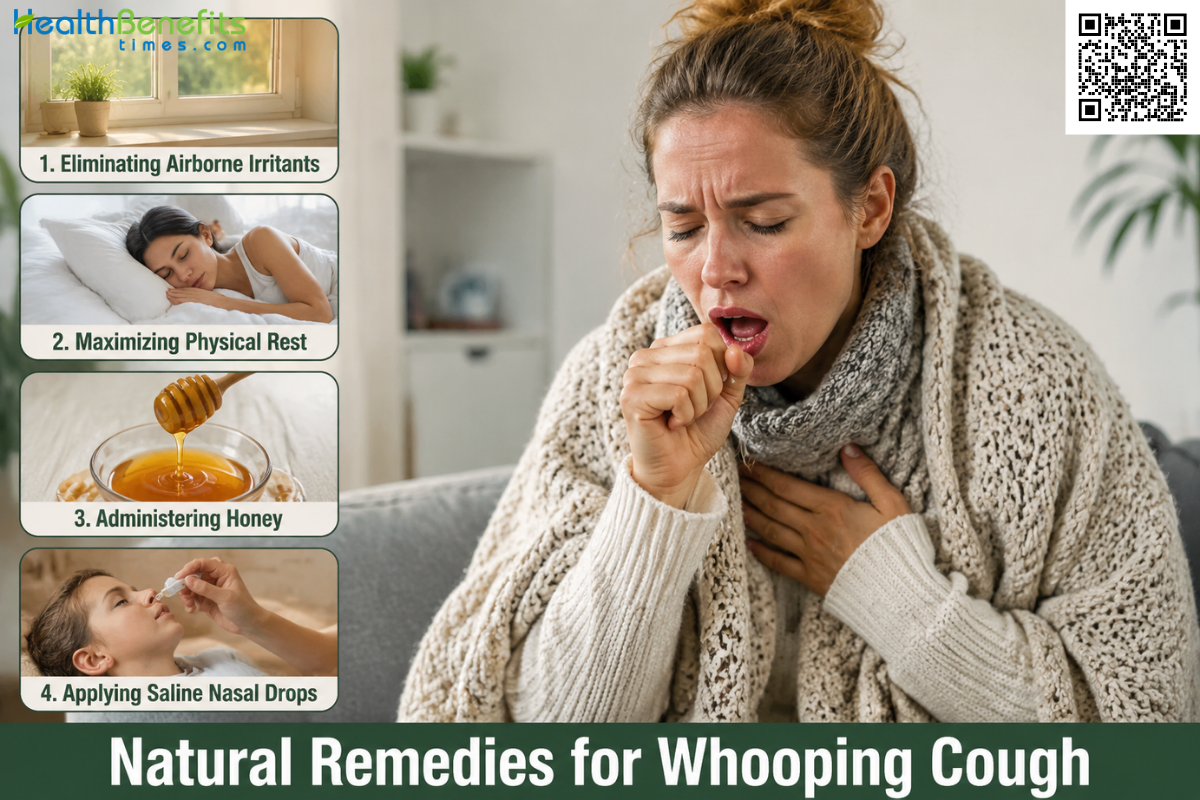
Whooping cough, medically known as pertussis, is a highly contagious infection of the respiratory system. It is caused by a type of bacteria called Bordetella pertussis, which attaches to the upper airways and releases toxins that cause severe swelling 1. The illness is primarily characterized by uncontrollable, violent coughing fits that make it difficult to breathe, often ending in a distinctive, high-pitched “whoop” sound when the person finally gasps for air. While this infection can affect individuals of any age, it is most severe and potentially life-threatening for babies under one year old. Major health organizations conclude that completing the recommended vaccination schedule is the most effective clinical method to prevent the disease, reduce symptom severity, and protect vulnerable infants from serious complications 2.
Causes of Whooping Cough
- Bacterial Infection: The primary cause of whooping cough is a highly contagious bacterium known as Bordetella pertussis 1.
- Toxin Release: Once inhaled, the bacteria attach to the tiny hair-like structures (cilia) that line the upper respiratory system. The bacteria then release toxins that damage these structures and cause severe swelling in the airways, which triggers the violent coughing fits 1.
- Airborne Transmission: The bacteria spread rapidly from person to person through the air. An individual contracts the disease by breathing in microscopic, infected droplets that are released when a sick person coughs, sneezes, or talks in close proximity to others 3.
- Alternative Bacterial Strains: In some cases, a similar but distinct bacterium called Bordetella parapertussis can cause a comparable, though generally milder, respiratory infection that mimics the symptoms of classic whooping cough 4.
Symptoms of Whooping Cough
Early-Stage Symptoms (First 1 to 2 Weeks)
The initial symptoms of whooping cough usually appear within five to ten days after bacterial exposure and closely mimic a common cold. During this early phase, the clinical signs include:
- A runny or severely stuffed nose 5.
- A low-grade fever, typically below 100.4 degrees Fahrenheit 6.
- A mild, occasional cough that gradually becomes more persistent over time 7.
In infants, early symptoms often present differently. Many infected babies do not cough at all; instead, they may experience apnea, which refers to life-threatening pauses in their breathing 5. This sudden lack of oxygen can cause cyanosis, a medical condition where the baby’s skin temporarily turns a blue or purplish color 5.
Advanced-Stage Symptoms (Weeks 2 to 10)
As the infection progresses, the illness enters a severe phase characterized by rapid, violent, and uncontrolled coughing fits, known clinically as paroxysms, which can last for up to ten weeks or longer 6. The hallmark symptoms during this advanced stage include:
- A distinct, high-pitched “whoop” sound made when the person gasps for air immediately after a coughing fit 8.
- Vomiting that occurs during or immediately after the severe coughing spells 8.
- Extreme exhaustion and physical fatigue following a coughing attack, even though the individual may appear completely normal and healthy between fits 8.
- Significant difficulty breathing and struggling to sleep at night due to the frequency of the respiratory attacks 8.
- In severe cases, the extreme physical force generated by the coughing fits can result in fractured ribs 8.
Natural Remedies for Whooping Cough
1. Increasing Daily Fluid Intake
How it may help
Drinking plenty of liquids helps thin the thick, sticky mucus in the respiratory tract, making it easier to clear the airways. Furthermore, it replaces essential fluids lost through post-cough vomiting, rapid breathing, and fever, directly preventing severe dehydration during the illness 9.
What research says
Public health authorities emphasize that managing hydration is a critical supportive therapy for pertussis. The Centers for Disease Control and Prevention concludes that maintaining high fluid intake prevents dehydration, especially in infants and children who frequently vomit after severe coughing fits 9.
How to use it safely
Provide water, clear broths, or medically formulated oral rehydration solutions throughout the day. To avoid triggering a coughing fit or subsequent vomiting, you should encourage taking small, frequent sips rather than drinking large amounts of liquid all at once 9.
Potential precautions or side effects
You must watch closely for severe dehydration signs, such as decreased urination, dry mouth, or crying without tears, which require immediate emergency medical intervention 9.
2. Using a Cool-Mist Humidifier
How it may help
Adding moisture to indoor air helps soothe irritated breathing passages. This extra humidity works to loosen thick, stubborn mucus in the respiratory tract, making it much easier to cough up and clear out, which ultimately reduces the severity of breathing difficulties 9.
What research says
Clinical guidelines from the Centers for Disease Control and Prevention support using a cool-mist humidifier as an effective home treatment for whooping cough. Health experts conclude that maintaining moist indoor air safely relieves coughing fits and aids in mucus clearance without the burn risks associated with hot-water vaporizers 9.
How to use it safely
You should place a cool-mist humidifier in the room where the patient rests or sleeps. Ensure you clean the device daily and change the water exactly as the manufacturer directs to prevent harmful mold and bacteria from growing inside the tank 9.
Potential precautions or side effects
You must strictly avoid using warm-mist humidifiers or hot-water vaporizers, as the heated water and steam create a severe burn risk for infants and young children 9.
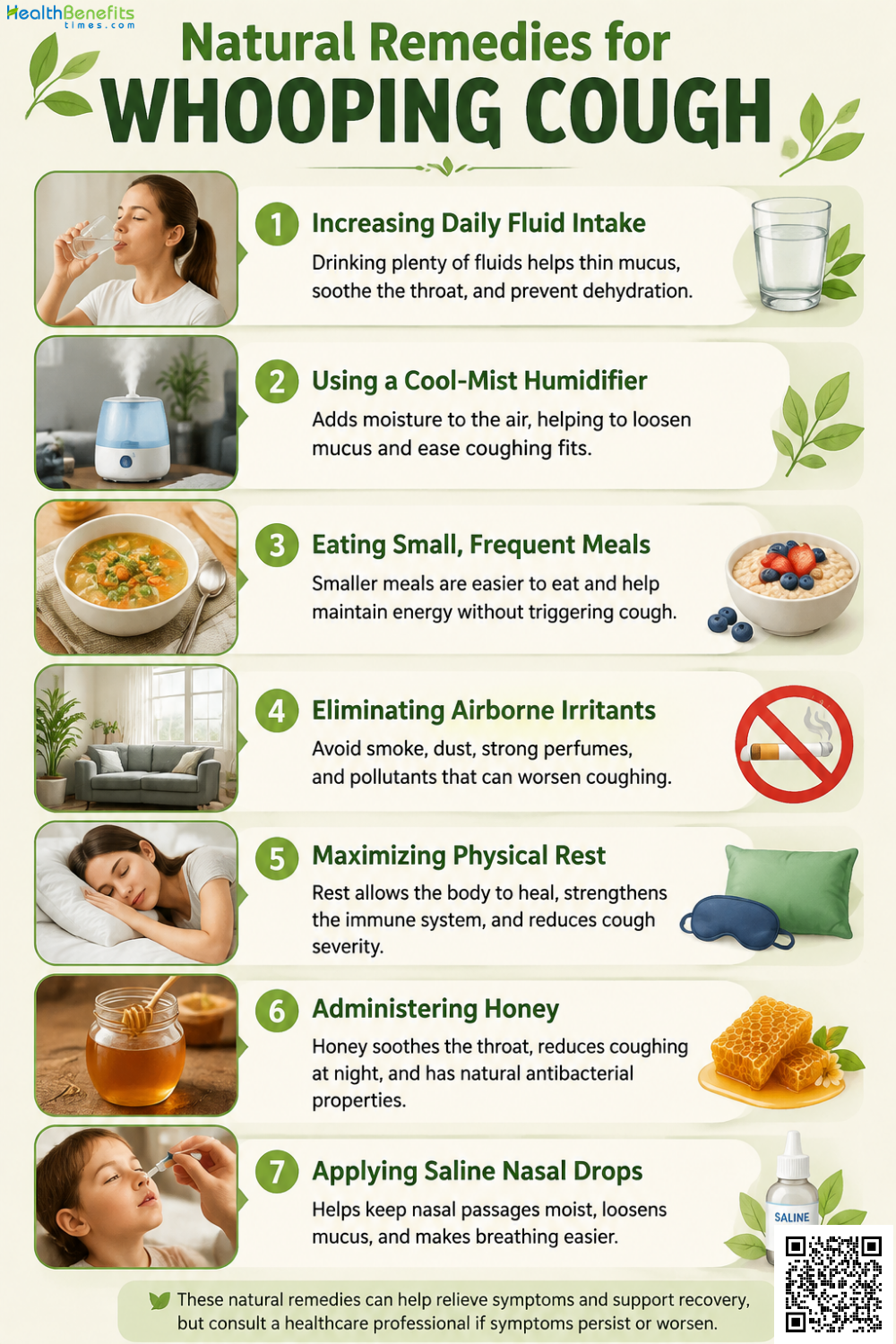
3. Eating Small, Frequent Meals
How it may help
Eating large amounts of food at once heavily fills the stomach, making it much easier to vomit during violent coughing fits. Consuming smaller portions keeps the stomach less full, which significantly reduces the physical risk of vomiting while ensuring the body still receives essential nutrition to heal 9.
What research says
Clinical guidance from the Centers for Disease Control and Prevention identifies post-cough vomiting as a frequent complication of whooping cough. Health authorities conclude that adjusting dietary habits to include smaller, more frequent meals effectively minimizes this vomiting risk and helps prevent dangerous weight loss and dehydration 9.
How to use it safely
You should divide daily food intake into five or six small snacks instead of three large meals. Focus on providing soft, easily digestible foods, and encourage the patient to eat slowly while sitting upright to further decrease stomach pressure and reduce nausea 9.
Potential precautions or side effects
If you or your child cannot keep any food or liquids down due to continuous vomiting, you must seek immediate medical attention to prevent severe dehydration and malnutrition 9.
4. Eliminating Airborne Irritants
How it may help
Removing particles from the air prevents sudden spasms in the respiratory tract. Since whooping cough makes the airways highly sensitive, inhaling smoke, dust, or chemical fumes easily triggers violent, uncontrollable coughing fits. Keeping the indoor environment clean directly reduces the frequency and severity of these exhausting respiratory attacks 9.
What research says
Public health guidelines emphasize environmental management as a crucial supportive treatment for pertussis. The Centers for Disease Control and Prevention concludes that keeping the home completely free from airborne irritants, particularly tobacco smoke and fireplace fumes, is vital for minimizing severe coughing spasms during the recovery period 9.
How to use it safely
You should enforce a strict no-smoking policy inside your home and around the infected person. Additionally, avoid using strong chemical cleaning sprays, burning candles, or lighting wood fireplaces, as these release microscopic particles that directly irritate the lungs and trigger coughing 9.
Potential precautions or side effects
While regular cleaning reduces dust, you must avoid sweeping or vacuuming while the patient is in the room, as this temporarily stirs up irritants that can worsen breathing difficulties 9.
5. Maximizing Physical Rest
How it may help
Conserving physical energy allows the immune system to focus on fighting the bacterial infection. Because physical exertion and rapid breathing frequently trigger severe coughing episodes, remaining calm and resting quietly directly prevents these exhausting respiratory attacks and helps the body heal more efficiently 9.
What research says
Clinical treatment guidelines from the Centers for Disease Control and Prevention emphasize rest as a foundational supportive therapy for whooping cough. Health authorities conclude that maximizing rest is essential to help patients recover from the extreme physical exhaustion caused by prolonged, violent coughing spells 9.
How to use it safely
You should create a quiet, comfortable environment and encourage the patient to stay in bed or sit calmly. Avoid any strenuous physical activities, running, or heavy lifting, as elevated heart rates and rapid breathing can immediately provoke severe coughing attacks 9.
Potential precautions or side effects
While resting, you must ensure the patient is not abnormally lethargic, as extreme unresponsiveness can indicate a dangerous lack of oxygen requiring immediate emergency care 8.
6. Administering Honey
How it may help
Honey acts as a natural demulcent, meaning it physically coats the throat and soothes irritated mucous membranes. This protective layer helps calm the inflamed respiratory tract and reduces the urge to cough, providing temporary relief from the persistent coughing spells associated with whooping cough 10.
What research says
Clinical studies demonstrate that honey effectively reduces cough frequency and severity in children. Researchers conclude that administering a single dose of honey before bedtime is often more effective than standard over-the-counter cough suppressants for improving sleep quality and suppressing nighttime respiratory symptoms 10.
How to use it safely
You can give a half to one teaspoon of honey directly to the patient or mix it into a cup of warm water. For the best results, you should administer the honey right before bedtime to help minimize exhausting nighttime coughing fits 10.
Potential precautions or side effects
You must never give honey to infants under one year old, as it carries a severe risk of infant botulism, a rare but life-threatening bacterial condition 11.
7. Applying Saline Nasal Drops
How it may help
Saline drops gently thin and loosen thick, sticky mucus trapped in the nasal passages. This makes it significantly easier to clear the nose, allowing infants and young children to breathe more comfortably and feed without severe interruption during the early stages of the illness 12.
What research says
Clinical research demonstrates that isotonic saline safely reduces nasal congestion in respiratory infections. Experts conclude that using saline drops to clear the nasal airways effectively improves breathing and sleep quality in infants, while also preventing further complications from severe mucus buildup 12.
How to use it safely
You should squeeze two to three drops of sterile saline solution into each nostril. Wait a few moments to allow the mucus to soften, then use a soft rubber bulb syringe to gently suction the loosened mucus and fluid out of the nose 12.
Potential precautions or side effects
You must only use commercially prepared, sterile saline. Avoid suctioning the nose too aggressively, as this can easily damage delicate nasal tissues and cause mild bleeding 12.
Foods to Avoid When You suffer from Whooping Cough
Whooping cough, or pertussis, is a severe bacterial respiratory infection that causes violent coughing fits, extreme exhaustion, and frequent vomiting. Clinical observations indicate that the physical act of eating can directly trigger these sudden coughing attacks 13. Consequently, nutritional deficiencies often arise during active infections due to feeding difficulties and repeated vomiting after coughing 14. To manage symptoms and sustain energy, diet changes must focus on eliminating foods that irritate the throat or promote acid reflux, which is known to worsen breathing problems 15. If you or your child are recovering from whooping cough, strictly avoid specific dietary triggers to minimize coughing episodes.
1. Large, Heavy Meals
Eating large portions fills the stomach too much, increasing the risk of vomiting during intense coughing fits 14. You should eat small, frequent meals instead.
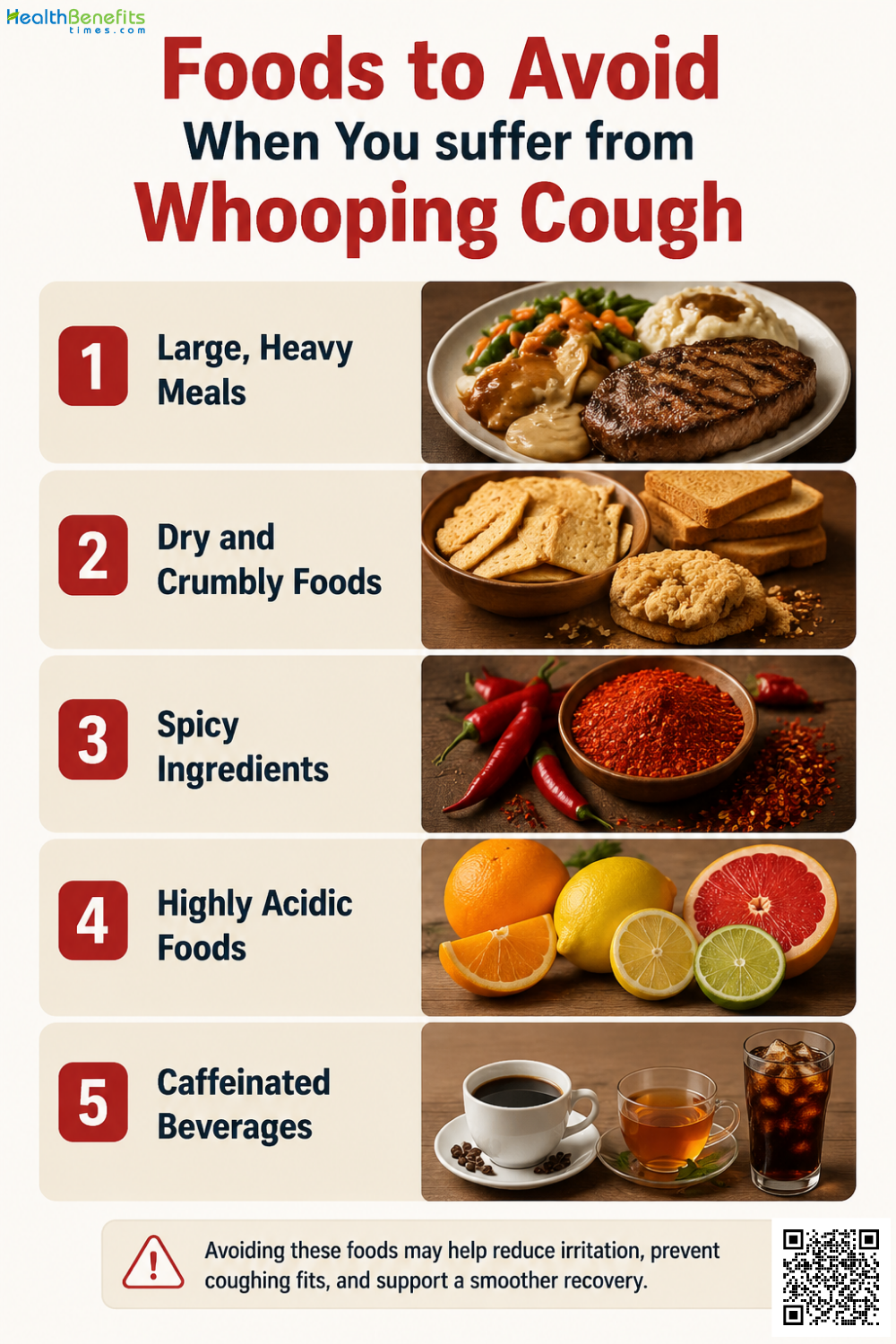
2. Dry and Crumbly Foods
Foods like dry toast, crackers, and nuts leave small crumbs in the throat. These physical irritants can provoke a choking reflex and immediately trigger severe coughing attacks 16.
3. Spicy Ingredients
Spicy foods can severely irritate inflamed tissues in the breathing passages. They also promote stomach acid reflux, which is proven to worsen chronic and acute coughing fits 15.
4. Highly Acidic Foods
Citrus fruits and tomatoes can relax the stomach valve, causing acid to travel upward and irritate the vocal cords, which directly worsens the cough reflex 15.
5. Caffeinated Beverages
Drinks containing caffeine, such as coffee and tea, can trigger stomach acid reflux. This acid backup acts as a known trigger for severe breathing problems and coughing fits 15.
When to see Doctor when you struggle from Whooping Cough
While whooping cough usually starts with mild cold-like symptoms, the condition can rapidly escalate, especially for young children and infants. Since early treatment significantly reduces the severity of the infection, it is essential to monitor symptoms closely and know when to seek professional medical care.
1. Breathing Difficulties
Go to an emergency room immediately if the person struggles to breathe, stops breathing, or gasps for air. In infants, whooping cough frequently causes dangerous pauses in breathing (apnea) without any coughing.
2. Skin Color Changes
Seek immediate emergency care if the person’s face, lips, or skin turns blue, purple, or pale. This condition, called cyanosis, indicates a critical lack of oxygen during coughing fits or breathing pauses.
3. Violent Coughing Fits
Call a doctor if the cough becomes rapid and violent or lasts for weeks. In advanced stages, coughing attacks can cause extreme exhaustion, high-pitched “whooping” sounds, and difficulty sleeping.
4. Vomiting After Coughing
Contact a healthcare provider if severe coughing fits consistently cause vomiting. Frequent vomiting increases the risk of dangerous dehydration and weight loss, particularly in infants and young children.
5. Signs of Dehydration
Seek medical attention if the person exhibits signs of dehydration, such as crying without tears, severe dry mouth, or urinating less frequently. This often occurs due to post-cough vomiting and reduced fluid intake.