

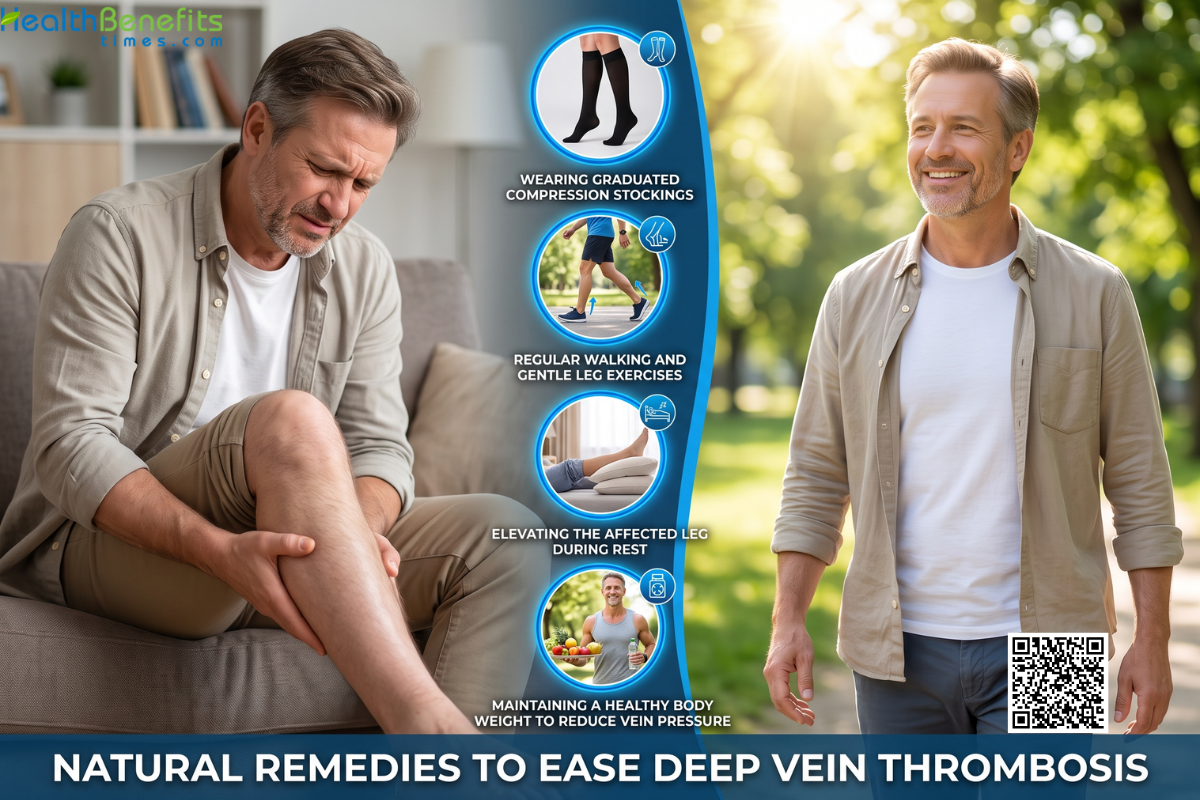
Deep vein thrombosis (DVT) is a condition where a blood clot forms in a vein deep inside the body, typically in the lower leg, thigh, or pelvis. These clots restrict normal circulation, causing localized swelling, severe pain, tenderness, and discolored skin 1. Primary risk factors include prolonged periods of inactivity, recent surgical procedures, physical trauma, and underlying genetic blood clotting disorders 2. The most significant clinical danger arises if a portion of the clot breaks loose, travels through the bloodstream, and lodges in the lungs. This event, called a pulmonary embolism (PE), creates a life-threatening blockage that immediately disrupts breathing and oxygen delivery 3. Because of this severe risk, early medical evaluation and prompt treatment with anticoagulant medications, commonly known as blood thinners, are strictly required to stabilize the clot, prevent its growth, and avoid fatal complications.
Causes of Ease Deep Vein Thrombosis
1. Prolonged Immobility
Sitting for long periods, such as during lengthy travel or extended bed rest due to illness, slows normal blood flow in the legs, which significantly increases the chance of a clot forming.
2. Surgery and Physical Trauma
Major surgical procedures, especially on the hips or knees, and severe bone fractures can directly damage veins and trigger the body’s natural blood-clotting defense system, leading to dangerous internal clots 4.
3. Genetic Clotting Disorders
Certain inherited conditions, such as Factor V Leiden, alter the normal makeup of the blood and make it abnormally prone to clotting, even without other external triggers 5.
4. Chronic Medical Conditions
Severe illnesses, particularly various forms of cancer and heart failure, release substances into the bloodstream that promote clotting or disrupt normal blood circulation.
5. Hormonal Changes
Increased levels of estrogen caused by pregnancy, combined oral birth control pills, or hormone replacement therapy alter blood chemistry, making it much easier for blood cells to stick together and form a clot.
Symptoms of Ease Deep Vein Thrombosis
1. Localized Swelling
The most frequent sign is sudden, unexplained swelling that typically occurs in only one leg, ankle, or foot, directly indicating a blockage of normal blood flow in that specific area.
2. Pain and Cramping
Individuals often experience intense pain or deep tenderness that usually starts in the calf muscle; this discomfort is frequently described as feeling like a severe muscle cramp or a persistent ache that does not go away with rest 6.
3. Skin Discoloration
The skin over the affected vein may change color, taking on a red, purplish, or bluish tint as blood pools behind the clot instead of circulating properly back toward the heart.
4. Unusual Warmth
The specific area of the leg containing the blood clot often feels noticeably warmer to the touch than the surrounding healthy skin on the same limb.
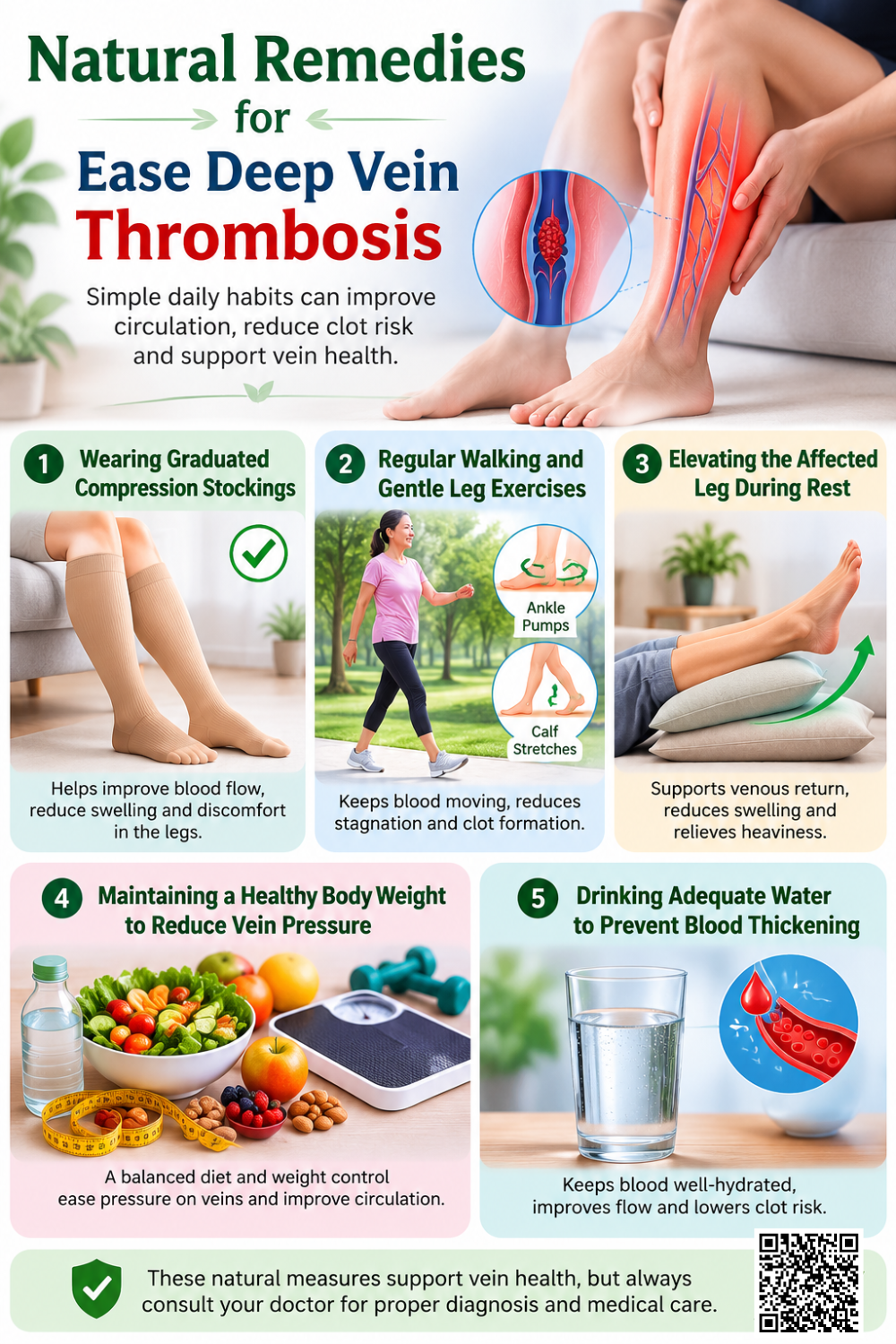 Natural Remedies for Ease Deep Vein Thrombosis
1. Wearing Graduated Compression Stockings
How It May Help
Graduated compression stockings apply gentle, continuous pressure to the lower legs. This pressure helps prevent blood from pooling, increases blood flow back toward the heart, and reduces the uncomfortable swelling and leg pain frequently caused by deep vein thrombosis 7.
What Research Says
Clinical studies provide mixed results, but evidence suggests wearing compression stockings can lower the risk of developing post-thrombotic syndrome, a chronic condition causing long-term leg pain and swelling after a clot 8. Stockings do not dissolve existing blood clots and cannot replace prescribed anticoagulant medications.
How to Use It Safely
Wear the stockings during the daytime when you are active and remove them before going to sleep. A healthcare professional must properly measure and fit the stockings to ensure they apply the correct amount of pressure, typically highest at the ankle and decreasing upward.
Potential Precautions or Side Effects
Poorly fitted stockings can restrict circulation or worsen existing arterial issues. Side effects may include skin irritation, itching, blistering, or allergic reactions to the specific stocking fabric.
2. Regular Walking and Gentle Leg Exercises
How It May Help
Gentle leg exercises and regular walking actively stimulate the calf muscles to push blood back toward the heart. This continuous movement prevents blood from pooling in the lower legs, which directly helps reduce the localized swelling and severe pain caused by deep vein thrombosis.
What Research Says
Clinical studies demonstrate that early walking, when paired with prescribed blood-thinning medications, is extremely safe. Research confirms that early ambulation does not increase the risk of a clot breaking loose and traveling to the lungs, but instead relieves acute leg pain faster than strict bed rest 9.
How to Use It Safely
Begin walking as soon as your healthcare provider approves it following an illness or surgery. When sitting for extended periods, raise your heels and toes repeatedly, tighten your leg muscles, and take brief walks every one to two hours to maintain proper circulation.
Potential Precautions or Side Effects
Always secure medical clearance before increasing physical activity. Stop exercising immediately and seek emergency care if you experience sudden chest pain, severe dizziness, or unexplained shortness of breath.
3. Elevating the Affected Leg During Rest
How It May Help
Elevating the affected leg uses gravity to help pooled blood flow back toward the heart. This physical positioning significantly reduces pressure within the leg veins, which directly relieves the painful swelling, throbbing, and fluid buildup commonly associated with deep vein thrombosis 10.
What Research Says
Clinical guidelines confirm that leg elevation is an effective supplementary therapy for managing acute deep vein thrombosis. While it cannot dissolve the clot itself, medical consensus agrees that consistent elevation safely reduces lower limb swelling and lowers the risk of developing chronic post-thrombotic syndrome 11.
How to Use It Safely
While resting in bed or on a sofa, prop your affected leg on pillows or a wedge so it rests above the level of your heart. Do this for 15 to 20 minutes several times a day to maintain healthy circulation.
Potential Precautions or Side Effects
Do not place a pillow directly behind your knee, as this compresses the vein and restricts blood flow. Ensure your entire leg remains fully supported to avoid strain.
4. Maintaining a Healthy Body Weight to Reduce Vein Pressure
How It May Help
Carrying excess body weight significantly increases intra-abdominal pressure, which compresses the veins in the pelvis and restricts blood returning from the legs. Maintaining a healthy weight directly reduces this pressure, improves overall blood circulation, and lowers the risk of blood pooling and clotting in the lower extremities 12.
What Research Says
Clinical studies establish that obesity is a strong, independent risk factor for developing deep vein thrombosis. A high body mass index triggers chronic inflammation, increases blood clotting proteins, and physically slows venous blood flow, which can more than double the likelihood of forming a dangerous clot 13.
How to Use It Safely
Focus on gradual, sustainable weight loss by maintaining a balanced diet and performing regular moderate physical activity, like brisk walking, for at least 150 minutes per week. Always consult a healthcare professional to create a personalized, safe weight management plan tailored to your medical history 14.
Potential Precautions or Side Effects
Avoid extreme crash diets, severely restrictive eating plans, or suddenly starting high-intensity workouts without medical clearance, as rapid changes can stress your body and potentially exacerbate underlying health conditions 15.
5. Drinking Adequate Water to Prevent Blood Thickening
How It May Help
Severe dehydration reduces overall blood volume, causing the blood to become thicker and more viscous. Drinking adequate water maintains normal fluid balance, prevents blood cells from clumping together, and helps ensure steady circulation, directly reducing the likelihood of clot formation in the deep veins 16.
What Research Says
Clinical research indicates that dehydration contributes to venous thromboembolism. Studies confirm that inadequate fluid intake increases blood viscosity and promotes coagulation, especially during extended periods of immobility such as long-distance travel, which actively elevates the risk of developing deep vein thrombosis 17.
How to Use It Safely
Drink plain water consistently throughout the day, particularly during long flights or illnesses. Avoid excessive alcohol and highly caffeinated beverages, as they act as diuretics and can worsen dehydration, which may increase your risk of blood clots 18.
Potential Precautions or Side Effects
If you have severe kidney disease or heart failure, consult your healthcare provider before increasing fluid intake to prevent dangerous fluid accumulation in the body 19.
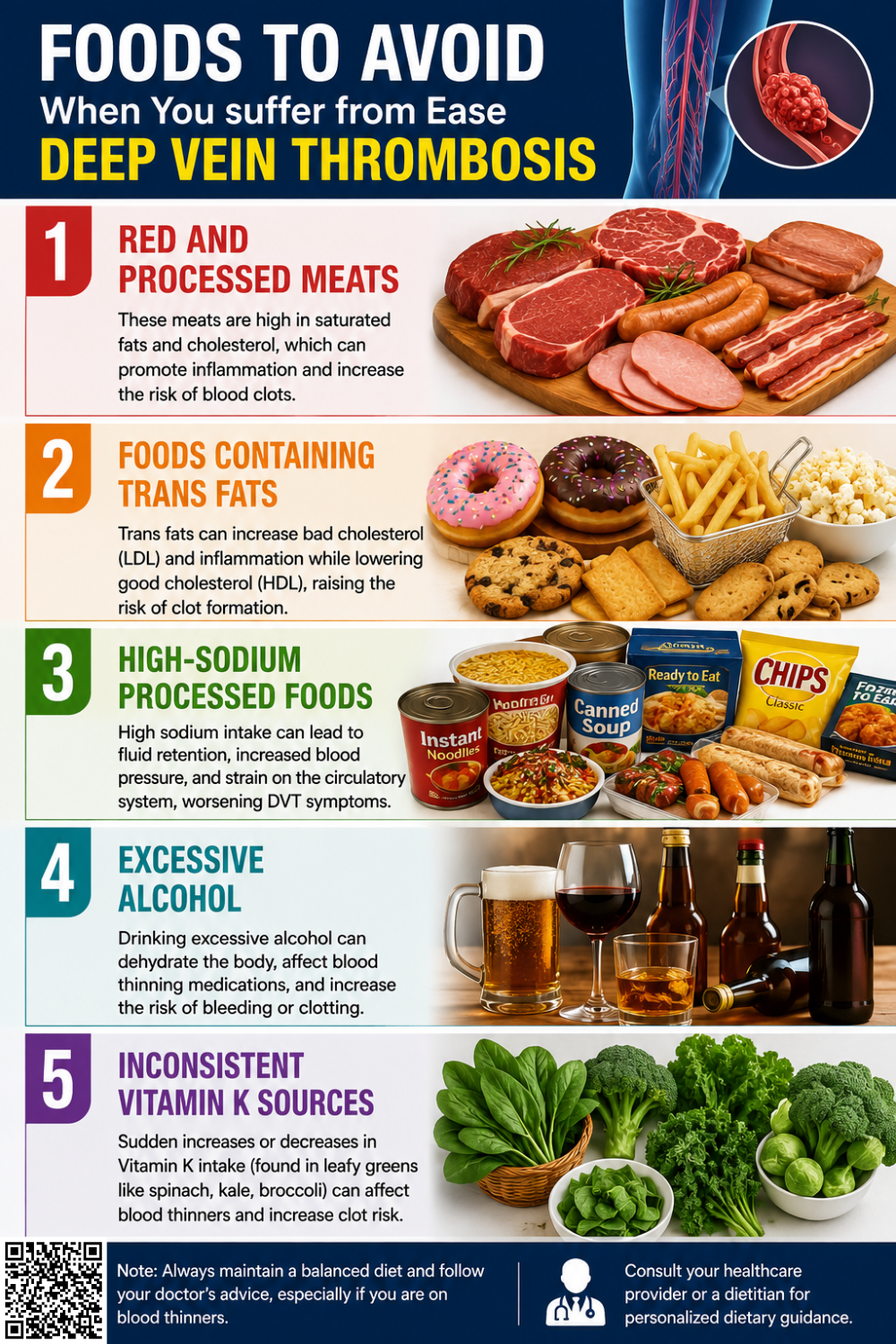 Foods to Avoid When You suffer from Ease Deep Vein Thrombosis
1. Red and Processed Meats
High in saturated fats, these meats increase blood platelet aggregation and systemic inflammation, which directly elevates the risk of forming new blood clots 20.
2. Foods Containing Trans Fats
Artificial trans fats found in fried foods promote chronic inflammation and impair cardiovascular health, negatively affecting venous circulation and exacerbating clotting risks.
3. High-Sodium Processed Foods
Excessive dietary salt elevates blood pressure and strains the cardiovascular system, complicating normal blood flow and hindering vascular recovery during thrombosis treatment 21.
4. Excessive Alcohol
Heavy alcohol consumption causes dehydration, leading to thicker, more viscous blood, and can dangerously alter the effectiveness of prescribed blood-thinning medications.
5. Inconsistent Vitamin K Sources
For patients prescribed warfarin, drastically altering the daily consumption of vitamin K-rich leafy greens directly disrupts the medication’s ability to safely regulate blood clotting 22.
When To See a Doctor When You Suffer from Ease Deep Vein Thrombosis
1. Sudden Shortness of Breath
Seek immediate emergency care for sudden difficulty breathing. This indicates the clot has reached the lungs, causing a life-threatening pulmonary embolism.
2. Sharp Chest Pain
Go to an emergency room if you develop sharp chest pain that worsens when breathing deeply or coughing, signaling a critical lung blockage.
3. Coughing Up Blood
Call emergency services if you suddenly begin coughing up blood. This is a severe warning sign of pulmonary damage caused by a migrating clot.
4. Worsening Leg Swelling
Contact a provider immediately if you notice sudden swelling or severe throbbing in one leg, indicating a growing blockage requiring urgent evaluation.
5. Fainting or Dizziness
Seek urgent medical help if you experience sudden fainting or lightheadedness, as a massive lung clot can cause a dangerous, rapid drop in blood pressure.