


Clumsiness is a physical manifestation of impaired motor coordination, characterized by a lack of balance, unsteady movements, and difficulty controlling voluntary muscles. Medically, chronic clumsiness is often associated with conditions like ataxia or developmental coordination disorders, which occur when the nervous system fails to transmit signals accurately between the brain and the body 1. This disruption frequently involves the cerebellum, the specific region of the brain responsible for regulating smooth and precise movements 1. While occasional uncoordinated movements are normal and often result from fatigue or distraction, persistent clumsiness can significantly interfere with daily activities. In children, a clinical coordination disorder frequently presents as an inability to hold objects safely, unsteady walking, or struggling with fine motor skills like tying shoelaces 2. When poor coordination is severe or gets progressively worse, healthcare professionals recommend comprehensive neurological evaluations to identify underlying conditions and determine if treatments like physical therapy are necessary 1.
Causes of Clumsiness
1. Developmental Coordination Disorder (DCD)
Children with this condition experience delayed motor skill development, making routine physical tasks like writing, tying shoes, or walking appear uncoordinated and clumsy without any underlying intellectual disability 2.
2. Cerebellar Damage and Ataxia
The cerebellum is the specific brain region responsible for movement regulation and balance. When it is damaged by genetic mutations, head trauma, or neurodegenerative diseases, it causes a severe lack of voluntary muscle control clinically known as ataxia 1.
3. Peripheral Neuropathy
This condition involves damage to the peripheral nervous system, causing numbness, tingling, and weakness primarily in the hands and feet. This loss of physical sensation prevents the brain from accurately tracking limb position in space, leading to frequent stumbling or dropping of objects 3.
4. Stroke
A stroke cuts off blood supply to parts of the brain, instantly damaging the tissues that command voluntary muscle actions. This sudden neurological damage often presents as acute clumsiness, loss of coordination, or unilateral weakness on one side of the body 4.
5. Vestibular Disorders
Infections or structural problems in the inner ear disrupt the vestibular system, which is the body’s primary mechanism for maintaining spatial orientation. This disruption causes vertigo, severe dizziness, and a profound loss of physical balance that mimics general clumsiness 5.
Symptoms of Clumsiness
1. Unsteady Walking and Frequent Falls
Individuals often experience difficulty maintaining physical balance while walking, resulting in a wide, unstable stance, frequent tripping, and a significantly increased risk of falling 1.
2. Impaired Fine Motor Skills
A lack of precise muscle coordination makes small, detailed movements difficult, causing noticeable struggles with routine daily tasks such as writing clearly, buttoning clothing, or tying shoelaces 2.
3. Frequent Dropping of Objects
Disrupted nerve signals and poor grip coordination cause individuals to frequently mishandle, fumble, or accidentally drop everyday items, such as eating utensils, drinking glasses, or keys, during normal use 2.
4. Misjudging Physical Distances
Also known clinically as dysmetria, this symptom involves an inability to accurately judge the distance or scale of a physical action, causing a person to consistently overreach or underreach when attempting to grab an object 1.
5. Difficulty with Rapid or Alternating Movements
Affected individuals may struggle to execute fast, repetitive physical motions, such as quickly flipping their hands palm-up and palm-down, due to delays in the neurological signaling required to synchronize opposing muscle groups 1.
Natural Remedies to Help Overcome Clumsiness
1. Engaging in Physical Therapy and Balance Training
How it may help
Physical therapy addresses clumsiness by strengthening muscles, improving joint stability, and enhancing proprioception—the body’s ability to sense its position in space. Targeted balance exercises train the nervous system and muscles to communicate more effectively, resulting in smoother walking, better posture, and a significant reduction in frequent trips or falls.
What research says
Clinical evidence shows that physical therapy is a primary treatment for movement and coordination disorders. Neurological research confirms that customized balance training effectively improves motor function, increases core stability, and helps the brain adapt to sensory deficits, thereby reducing physical instability and the risk of injury 1.
How to use it safely
Always begin balance training under the supervision of a licensed physical therapist who can design a customized exercise program. Perform exercises in a clear, hazard-free area, and use a sturdy chair, handrail, or wall for immediate support to prevent accidental falls.
Potential precautions or side effects
Overexertion during therapy may cause muscle fatigue or soreness, which can temporarily worsen your coordination and increase the risk of accidental falls while practicing.
2. Practicing Tai Chi
How it may help
Tai Chi utilizes slow, deliberate movements and deep breathing to enhance physical stability. By requiring focused weight transfers and continuous postural adjustments, this practice strengthens leg muscles and improves spatial awareness. Over time, these controlled motions help individuals develop better coordination and reduce general clumsiness.
What research says
Clinical studies consistently demonstrate that practicing Tai Chi improves balance and significantly reduces the risk of falls, particularly in older adults or those with mild coordination issues. Researchers attribute these benefits to the practice’s ability to safely enhance proprioception and strengthen the lower body 6.
How to use it safely
Enroll in a beginner’s class led by a certified instructor who can modify the movements to match your current physical abilities. Wear comfortable clothing and flat, supportive shoes. If you experience balance issues, practice near a wall or use a chair for stability.
Potential precautions or side effects
While generally safe, improper form may cause mild muscle soreness or knee strain. Individuals with severe balance disorders should consult a doctor before starting to prevent accidental falls.
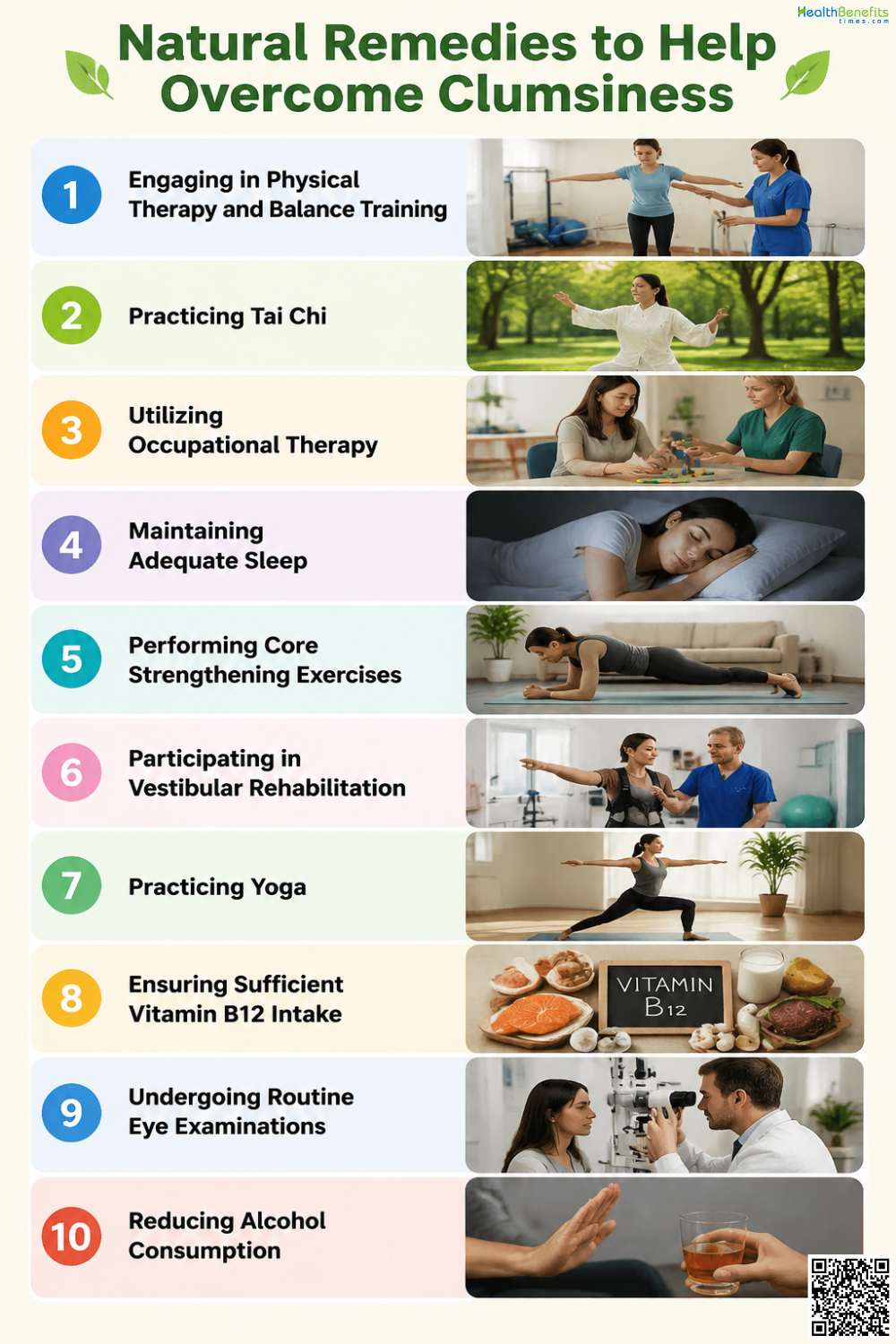
3. Utilizing Occupational Therapy
How it may help
Occupational therapy focuses on improving fine motor skills and hand-eye coordination required for daily activities. By practicing specific, repetitive tasks like writing, using utensils, or buttoning clothing, this therapy trains the brain and hands to work together, significantly reducing episodes of fumbling and dropping objects.
What research says
Clinical guidelines establish occupational therapy as a primary intervention for individuals with Developmental Coordination Disorder and general motor clumsiness. Research confirms that targeted fine motor training effectively improves physical dexterity and helps individuals successfully perform routine daily tasks with greater independence and fewer accidents 2.
How to use it safely
Work directly with a licensed occupational therapist to develop a customized skill-building plan. Practice your exercises slowly and in a distraction-free environment. Use adaptive tools, such as weighted pens or utensils with thick grips, to safely build coordination without excessive strain.
Potential precautions or side effects
Repetitive fine motor exercises can cause mental fatigue, hand cramps, or frustration. Take frequent, short breaks during your practice sessions to avoid overworking your muscles and nervous system.
4. Maintaining Adequate Sleep
How it may help
Maintaining adequate sleep restores the central nervous system, ensuring the brain can efficiently process spatial awareness and execute voluntary muscle movements. Proper rest prevents neurological fatigue, which directly slows reaction times and impairs the physical coordination necessary to avoid tripping or dropping objects.
What research says
Medical research demonstrates that sleep deprivation significantly impairs cognitive and motor functions. Clinical studies confirm that lacking adequate rest creates neurological deficits similar to alcohol intoxication, severely delaying reaction times and disrupting the fine motor coordination required to prevent physical accidents and clumsy behavior 7.
How to use it safely
Establish a consistent sleep schedule by going to bed and waking up at the same time daily, even on weekends. Ensure you achieve seven to nine hours of continuous rest each night to allow your nervous system to fully recover its motor control capabilities.
Potential precautions or side effects
Excessive sleep can trigger sleep inertia, a state of prolonged grogginess that temporarily worsens physical coordination and balance immediately after waking.
5. Performing Core Strengthening Exercises
How it may help
Core strengthening exercises stabilize the muscles in the abdomen, pelvis, and lower back. By creating a strong central foundation, these exercises improve physical posture and the body’s ability to maintain balance during movement. This stability prevents the sudden shifts in weight that typically cause stumbling and clumsy behavior.
What research says
Clinical guidelines from the National Institute on Aging confirm that strengthening the core and lower body muscles directly improves physical balance and spatial coordination. Research demonstrates that consistent strength training significantly reduces the incidence of falls and motor unsteadiness in individuals experiencing balance or mobility issues 8.
How to use it safely
Begin with gentle, low-impact movements like abdominal braces or pelvic tilts on a flat, supportive surface. Focus on maintaining steady breathing and proper alignment rather than speed. If you have existing back problems, consult a physical therapist for a personalized exercise plan.
Potential precautions or side effects
Using improper form or overexerting yourself can cause painful lower back strains and muscle spasms. Stop immediately if you experience sharp or shooting pain during the exercises.
6. Participating in Vestibular Rehabilitation
How it may help
Vestibular rehabilitation is a specialized exercise-based program designed to improve balance and reduce dizziness. By training the brain to compensate for inner ear deficits, it helps individuals maintain spatial orientation and physical stability, directly reducing instances of stumbling, falling, and general clumsiness.
What research says
Clinical research indicates that vestibular rehabilitation successfully treats clumsiness caused by inner ear disorders. Medical experts confirm that specific head, body, and eye exercises effectively retrain the central nervous system to process balance signals, significantly decreasing vertigo and physical unsteadiness in affected individuals 5.
How to use it safely
Consult a physical therapist specializing in vestibular disorders for a clinical evaluation. Perform the prescribed habituation and gaze stabilization exercises precisely as directed. Practice these movements in a safe, clear environment where you can immediately sit down if you feel disoriented.
Potential precautions or side effects
The exercises intentionally provoke dizziness to retrain the brain. This process can temporarily worsen nausea and physical unsteadiness immediately following a session, increasing the short-term risk of falls.
7. Practicing Yoga
How it may help
Practicing yoga involves holding specific physical postures that demand focus, flexibility, and muscle control. This mindful movement significantly enhances proprioception—the body’s ability to sense its position in physical space. By increasing body awareness and strengthening stabilizing muscles, yoga helps individuals move with greater precision and avoid clumsy behaviors.
What research says
Clinical reviews conducted by health authorities conclude that practicing yoga effectively improves balance, mobility, and motor control. Research demonstrates that the physical postures safely enhance proprioception and neuromuscular coordination, making it a recognized complementary approach for reducing physical unsteadiness and preventing falls 9.
How to use it safely
Begin with gentle, beginner-level classes led by a certified instructor. Use supportive props, such as yoga blocks or a chair, to help maintain your balance during difficult poses. Focus on proper alignment and steady breathing rather than attempting advanced, complex stretches immediately.
Potential precautions or side effects
Forcing your body into inflexible positions can cause severe muscle strains and joint sprains. If you experience dizziness or sharp joint pain, immediately release the pose and rest.
8. Ensuring Sufficient Vitamin B12 Intake
How it may help
Vitamin B12 is essential for maintaining a healthy central nervous system. It helps form the protective coating around nerves, ensuring brain signals travel quickly and accurately to muscles. Preventing a deficiency keeps nerve communication intact, which prevents the numbness, weakness, and physical clumsiness associated with nerve damage.
What research says
Clinical research demonstrates that Vitamin B12 deficiency causes severe neurological complications, including peripheral neuropathy and poor muscle coordination. Medical experts state that restoring adequate B12 levels effectively repairs nerve damage and reverses the physical unsteadiness, balance issues, and clumsy movements associated with this nutritional deficiency 10.
How to use it safely
Consume foods naturally rich in Vitamin B12, such as fish, meat, poultry, eggs, and dairy. If you follow a strict vegan diet or have absorption issues, consult your doctor about taking a daily oral supplement or receiving routine B12 injections to maintain healthy nerve function.
Potential precautions or side effects
Vitamin B12 supplements are generally safe, but taking extremely high doses can occasionally cause mild diarrhea, itching, or skin rashes. Always follow your doctor’s recommended dosage.
9. Undergoing Routine Eye Examinations
How it may help
Uncorrected vision problems severely impair depth perception and spatial awareness. The brain relies on accurate visual input to judge distances and navigate physical surroundings safely. By identifying and correcting refractive errors or eye diseases, routine eye exams prevent the stumbling, tripping, and uncoordinated movements frequently mistaken for general clumsiness.
What research says
Clinical evidence establishes a direct link between visual impairment and physical instability. Medical research confirms that comprehensive dilated eye exams effectively detect hidden conditions affecting depth perception and peripheral vision. Correcting these visual deficits significantly improves physical mobility and drastically reduces the risk of accidental falls and clumsy behavior 11.
How to use it safely
Schedule a comprehensive dilated eye examination with a licensed optometrist or ophthalmologist every one to two years. Consistently wear your prescribed corrective lenses or update your prescription as directed to maintain optimal depth perception and prevent physical accidents.
Potential precautions or side effects
Adjusting to new eyeglasses can cause temporary dizziness and misjudged distances. Additionally, the dilating drops used during examinations temporarily blur your vision and increase sensitivity to bright light.
10. Reducing Alcohol Consumption
How it may help
Reducing alcohol consumption directly protects the cerebellum, the brain region responsible for physical coordination and balance. Because alcohol acts as a central nervous system depressant, eliminating it restores normal brain signaling. This improves reaction times, stabilizes your gait, and prevents the uncoordinated muscle movements that cause severe clumsiness.
What research says
Clinical research demonstrates that alcohol toxicity profoundly disrupts neural pathways, leading to impaired motor control. Medical experts confirm that eliminating alcohol intake allows the nervous system to recover, significantly decreasing episodes of physical instability and preventing chronic, alcohol-induced cerebellar ataxia 12.
How to use it safely
Gradually decrease your alcohol intake by setting strict limits or substituting alcoholic beverages with water or non-alcoholic alternatives. If you find it difficult to reduce consumption independently, speak with a healthcare provider or counselor to develop a structured cessation plan.
Potential precautions or side effects
If you consume alcohol heavily, stopping abruptly can cause dangerous withdrawal symptoms, including severe tremors and seizures. Always consult a medical professional before drastically altering your alcohol habits.
Foods to Avoid When You suffer from Clumsiness
1. Alcoholic Beverages
Alcohol directly impairs the cerebellum, the brain’s main coordination center, by disrupting the electrical nerve signals required for balance, walking, and general physical stability 13.

2. High-Sugar Foods
Consuming excessive sugar can cause a severe drop in blood glucose, triggering sudden shakiness, dizziness, and muscle weakness that temporarily compromise physical control 14.
3. High-Mercury Fish
Predatory marine fish contain methylmercury, a severe neurotoxin that accumulates in the nervous system over time to cause permanent tremors, walking difficulties, and physical unsteadiness 15.
4. Gluten-Containing Grains
In individuals with gluten ataxia, eating wheat or barley triggers an abnormal immune response that destroys brain cells, leading to chronic and irreversible clumsiness 16.
When to see Doctor when you struggle from Clumsiness
1. Sudden Onset with Numbness
If clumsiness appears instantly alongside facial drooping, arm weakness, or speech difficulty, it strongly indicates an acute stroke requiring immediate emergency medical intervention.
2. Progressive Loss of Balance
Clumsiness that worsens steadily over weeks may signal underlying neurological conditions like multiple sclerosis, where the immune system damages protective nerve coatings.
3. Accompanying Severe Headaches
Frequent tripping or dropping items combined with chronic morning headaches or vomiting can indicate increased pressure inside the skull from a growing brain tumor.
4. Unexplained Muscle Tremors
When physical unsteadiness is paired with involuntary shaking at rest or muscle rigidity, it suggests early stages of neurodegenerative diseases such as Parkinson’s disease.